Petra's Secrets: Pre-Dawn Treasury, the Hidden Wadi Muthlim Entrance & Byzantine Mosaics
Go beyond the standard Petra visit—arrive at 5:30 am to reach the Treasury plaza alone as first light strikes the rose-red facade, enter via the alternative Wadi Muthlim slot canyon that almost no visitors use, read the Nabataean building process in the unfinished tomb carved top-to-bottom without scaffolding, and find the Byzantine church with extraordinary mosaic floors and a papyri archive burned in 600 AD.
- 1
The Treasury at Sunrise – The Ultimate Petra Moment
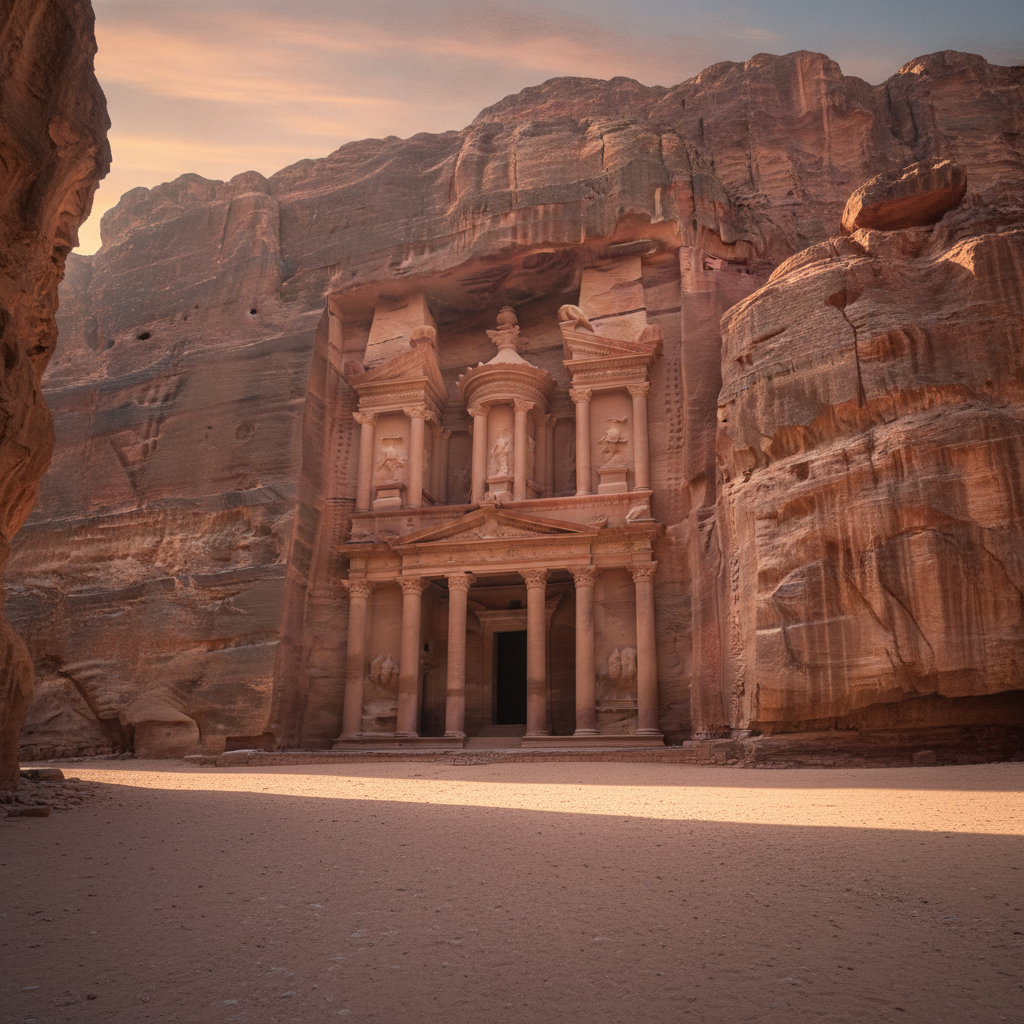
The Treasury at sunrise—arriving at the Siq entrance at 5:30 am to walk through the canyon in pre-dawn darkness and emerge at the Treasury as the first light strikes the facade—is the most sought-after experience in Petra. The site technically opens at 6 am but the gate is usually staffed from 5:30 am; early arrival is informal rather than official. For 20–30 minutes after first light, the Treasury plaza is often empty of other visitors. The sandstone colours shift from deep shadow through rose-pink to gold as the sun rises.
- 2
The Back Route – Wadi Muthlim Alternative Entrance
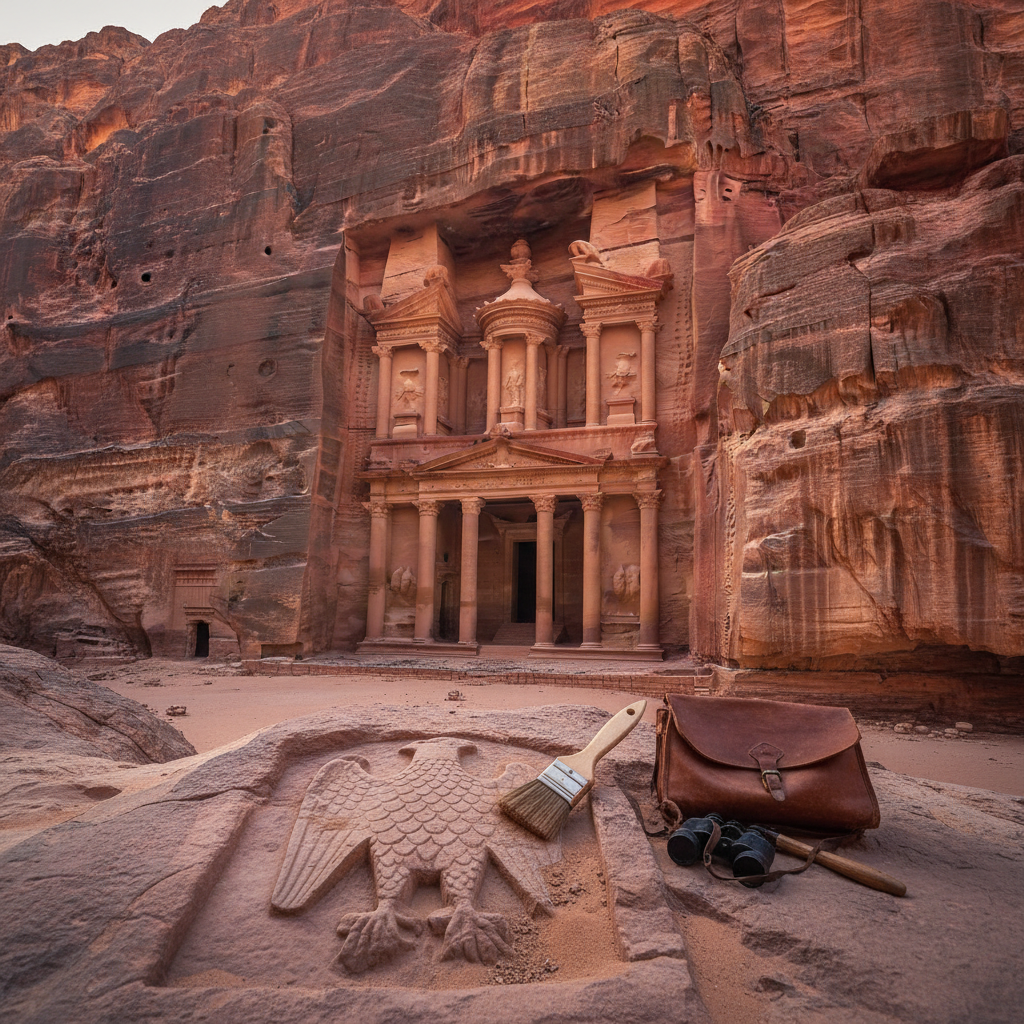
The Wadi Muthlim route—an alternative entrance to Petra through a shorter but equally dramatic slot canyon north of the main Siq—is unknown to most visitors and receives almost no foot traffic. The 2.5 km route requires a torch and involves wading through sections of the narrow canyon before emerging near the Theatre. The route passes several carved niches and a carved Nabataean eagle. Entry requires the standard Petra ticket; the route is occasionally closed after rain due to flash flood risk.
- 3
The Unfinished Tomb & Petra's Construction Secrets
Petra's unfinished tomb (near the Siq entrance, left side) reveals the Nabataean construction process in extraordinary detail: the facade was carved top-down from the cliff face, so the top capitals are finished and the lower course is bare rock. This sequence—work progressing from top to bottom—explains how the elaborate facades were carved without scaffolding falling on finished sections. The tomb was apparently abandoned mid-construction, leaving a perfect cross-section through the building process.
- 4
Triclinia & Nabataean Banquet Culture
Petra contains dozens of triclinia—rock-cut dining rooms carved adjacent to tomb facades for the funerary banquets that Nabataean culture held at burial sites. The biclinium (two-couch dining room) at Little Petra retains its painted ceiling showing Eros figures and vine garlands—rare evidence of Nabataean figurative art. The proximity of dining rooms to tombs reflects the Nabataean belief that the dead joined the living at communal meals; the tradition continued in the Nabataean 'marzeah' drinking clubs that held regular banquets for the dead.
- 5
The Snake Monument & Hidden Petra Trails
The Snake Monument—a carved stone snake head protruding from the rock above the Wadi Farasa descent from the High Place of Sacrifice—is one of Petra's most enigmatic carvings, its significance debated by archaeologists. The descent via Wadi Farasa passes the Garden Tomb (named for the unusual garden terracing carved around it), the Lion Triclinium, and the Roman Soldier Tomb—the only Nabataean tomb with a painted interior. These sites see a fraction of the Treasury's visitor numbers despite their equal quality.
- 6
Petra's Christian Byzantine Layer – The 4th–7th Centuries
Petra's Nabataean and Roman layers are well known; less visited is the Byzantine period (4th–7th centuries AD) when Petra became the seat of a Christian bishop. The Qasr al-Bint Temple was converted into a church; the Urn Tomb was converted into a cathedral (the dedicatory inscription is still legible); and the Byzantine church (discovered 1990) preserves extraordinary mosaic floors depicting personifications of seasons, ocean, earth, and wisdom. The church's archive papyri (discovered burned in the fire that destroyed the church c. 600 AD) provide unique documentary evidence of Byzantine Petra's daily life.
Walk this route with audio
Stories play automatically as you reach each stop — no tapping needed.
More in Petra
Petra Day Trips: Little Petra Free, Wadi Rum's Martian Landscape & Dana Canyon Trek
Petra Essential: The Siq Canyon, the Treasury Al-Khazneh, the Street of Facades, the High Place of Sacrifice, the Monastery Ad-Deir, and the Nabataean Capital
Petra's Jordan: The King's Highway, Byzantine Mosaics & the Grand Canyon of Wadi Mujib
Petra Deep Dive: Only 15% Excavated, the Nabataean Water System & Indiana Jones

Petra Geology: The Rose-Red Sandstone Colors, the Nabataean Water Engineering, the Desert Ecology, and the Natural Environment