Phuket's Identity: The Hokkien Heroines of 1785, Hi-So Surin Beach & the Island That Contains All Contradictions
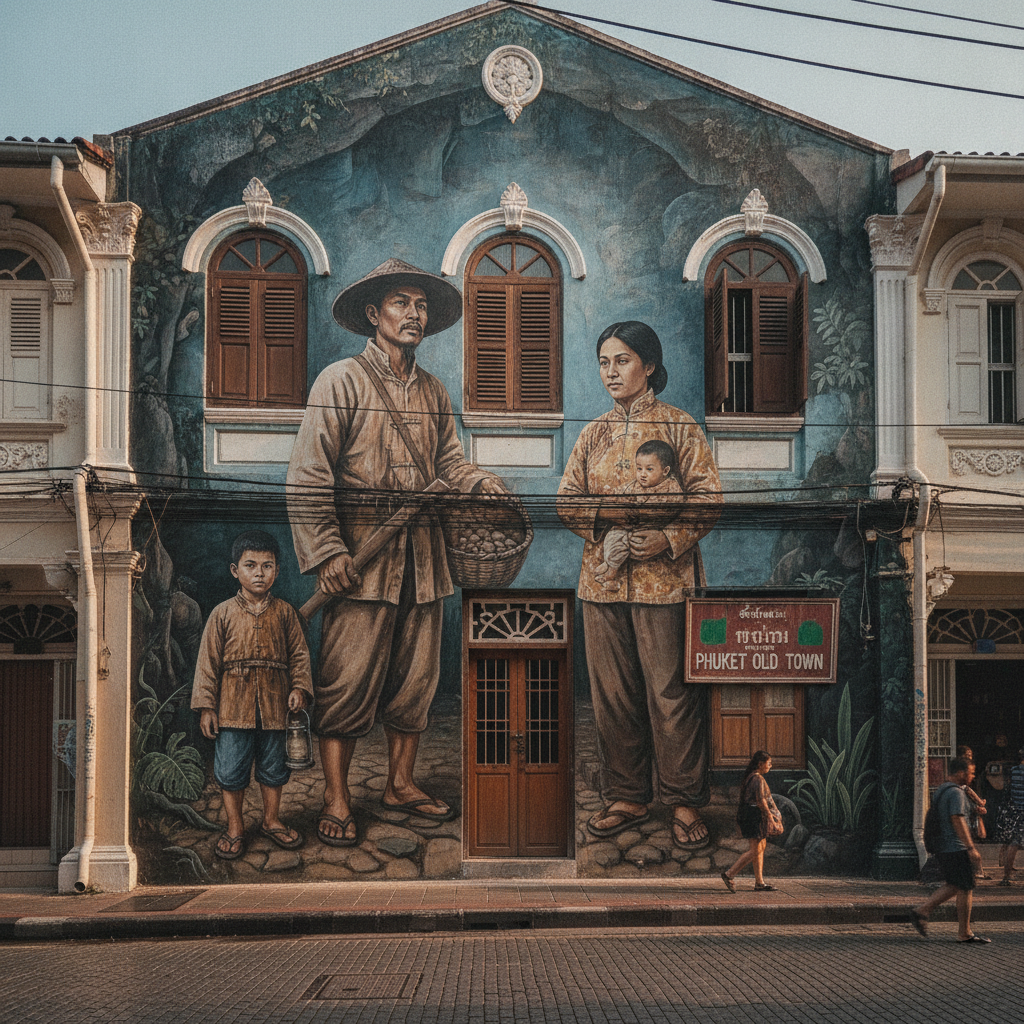
The deeper Phuket—the Hokkien tin-mining community's 200 years of cultural distinctiveness (Vegetarian Festival body-piercing that has no mainland Chinese equivalent, Baba Malay nearly extinct, more connected to Penang than Bangkok until Rama V's centralisation), Chan and Mook's bronze monument at Thalang honouring the widow and her sister who bluffed a Burmese army into withdrawal in 1785, Surin Beach's Millionaire's Mile villa estates and Hi-So Thai beach clubs at the north, Phuket's British international school community of 2,000 expat families, the 900 tonnes of waste per day the island's system cannot adequately process, and an island that has reinvented its economy four times in 60 years now facing the casino debate and the climate question.
- 1
Phuket's Relationship with Mainland Thailand – Island Autonomy & Identity
Phuket's relationship with the Thai mainland—from which it is separated by only 700 metres at the Sarasin Bridge over Phang Nga Bay—has historically involved a degree of cultural and political distinctiveness that exceeds its physical separation from the mainland. The island's predominantly Chinese-heritage community (descendants of the Hokkien tin-mining immigrants who became Phuket's economic and social leaders by the 19th century) created a culture that was, for most of Phuket's history, more connected to Penang, Singapore, and the broader Nanyang (overseas Chinese) world than to Bangkok. The Chakri dynasty's centralisation project of the late 19th century (under King Chulalongkorn/Rama V)—which converted semi-autonomous provincial powers into a uniform bureaucratic state—brought Phuket formally into the Thai administrative structure, but the Phuket Chinese community retained its distinct identity, language (Hokkien-based Phuket Baba Malay, now nearly extinct), cuisine, and festivals (the Vegetarian Festival is not celebrated anywhere in mainland China).
- 2
The Heroines of Phuket – Chan & Mook's 1785 Defence
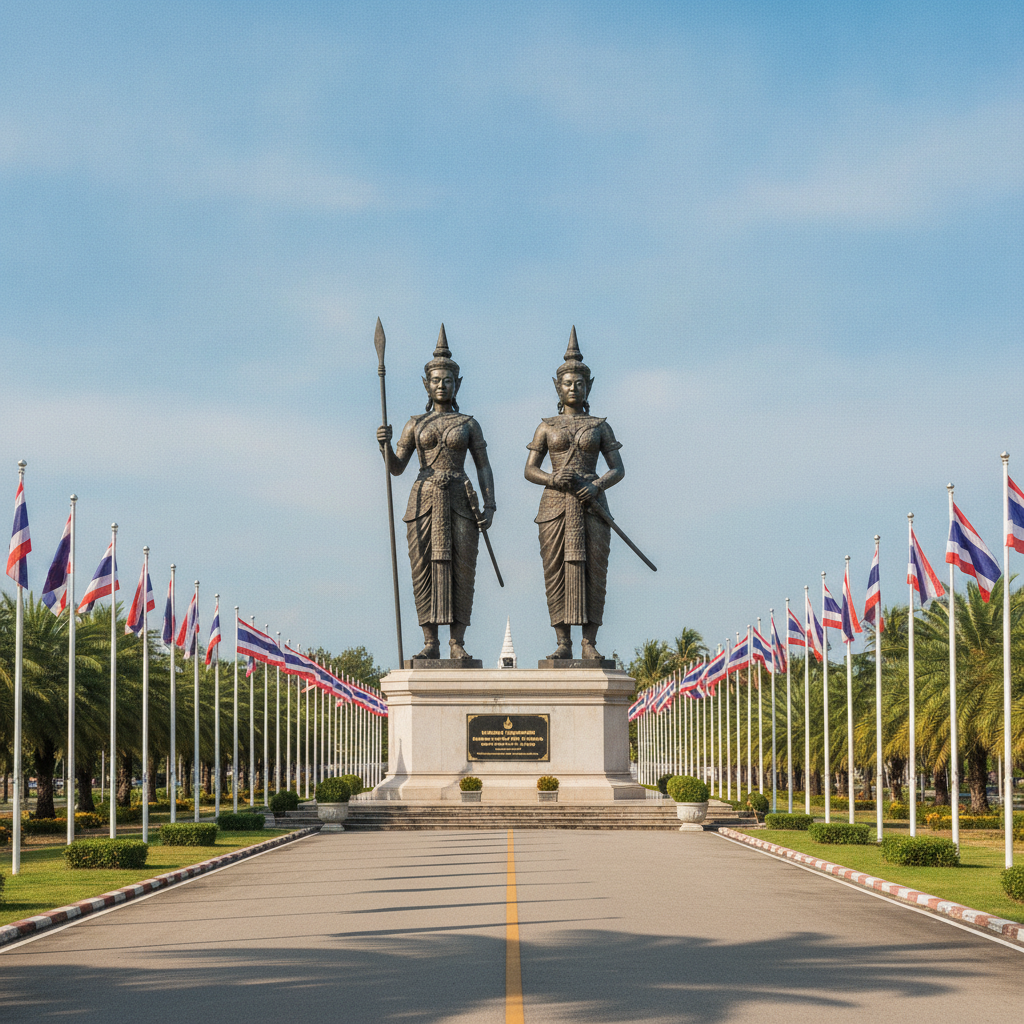
The Heroines' Monument—two 3-metre bronze statues of women in traditional dress at the entrance to Thalang town, 13 km north of Phuket Town—commemorates one of the most remarkable events in Thai-Burmese history and one of the few explicitly female military heroes recognised in Thai national mythology. The event: in March 1785, a Burmese army besieged Phuket Town (then called Thalang) following the death of the Thai governor. The governor's widow, Chan (Thao Thep Kasattri), and her sister Mook (Thao Si Sunthon) organised the civilian defence of the city, reportedly ordering women dressed as soldiers to march in public to deceive the Burmese into believing that relief forces had arrived. The Burmese besieged the city for one month before withdrawing. The authenticity of some details is historically debated, but Chan and Mook are honoured as national heroines with a monument that is one of Phuket's most important heritage sites. The Thalang National Museum adjacent to the monument covers the full history of the tin-mining era and Phuket's pre-tourist society.
- 3
Surin Beach & the Hi-So Thai Scene
Surin Beach—a quiet, 600-metre beach on Phuket's northwest coast, 24 km north of Patong—has evolved into the island's most upmarket residential and beach-club destination, associated with the Thai 'Hi-So' (high society) visitor demographic. The development: the Surin Phuket hotel (a modernist hillside property above the beach, formerly the Chedi), the Café del Mar beach club at Kamala immediately south, and a cluster of private beach clubs operating on the beach itself (the legality of private beach clubs on Thai public beaches is technically contested—the 2018 Phuket beach enforcement push cleared some clubs, but the area has partially reverted). The residential properties behind Surin (the 'Millionaire's Mile' of villa developments in Kamala and Surin hills) house the most expensive private residences on the island—several exceeding ₹100 million baht/€2.75 million. The beach itself: a small, sheltered cove with good swimming, calmer than Patong, with a population that skews toward wealthy Thai families, expat residents, and the yacht crowd from Royal Phuket Marina.
- 4
Phuket's International Schools & Expat Family Life
Phuket has developed, alongside its resort tourism economy, a significant infrastructure for expatriate family life: the international schools serving the children of long-term resident expats (corporate assignees, remote-working families, retirees with younger spouses and children) have grown from a single small international school in the 1990s to a cluster of several institutions offering British, American, and IB curricula. The main schools: British International School Phuket (BISP—founded 1996, the largest, offering full IB and British National Curriculum from age 2 to 18, the most established in the expat community), HeadStart International School, and QSI International School. The combined international school enrolment represents a community of 2,000–3,000 families, primarily concentrated in the Bang Tao, Laguna, and Cherng Talay areas of the north where villa estates and international shopping (Boat Avenue Market, Porto de Phuket) cater to the expat demographic. The combination of warm weather, beach access, low cost relative to Hong Kong or Singapore, and international school infrastructure makes Phuket one of Asia's most popular family expat postings.
- 5
Phuket's Water & Waste Challenges
Behind the turquoise water promoted in every beach resort photograph, Phuket faces serious infrastructure challenges related to water supply, wastewater management, and solid waste that are consequences of its rapid, underplanned development. Water supply: Phuket relies on reservoirs and groundwater for the majority of its water supply; during dry-season peak tourism (December–February), the island's water demand from hotels, resort facilities, and the tourism economy creates pressure that has led to supply shortages in some areas. Wastewater: the island's sewage treatment capacity was built for a much smaller permanent population and does not adequately serve the peak tourist load; partially treated or untreated wastewater entering coastal waters is the primary cause of beach water quality advisories. Solid waste: Phuket generates approximately 900 tonnes of waste per day at peak tourism; the waste management system (collection, sorting, composting, and the Saphan Hin waste processing facility) is chronically over capacity. The waste visible on beaches after heavy rainfall is largely inland waste that has entered waterways.
- 6
Leaving Phuket – The Island That Keeps Reinventing Itself
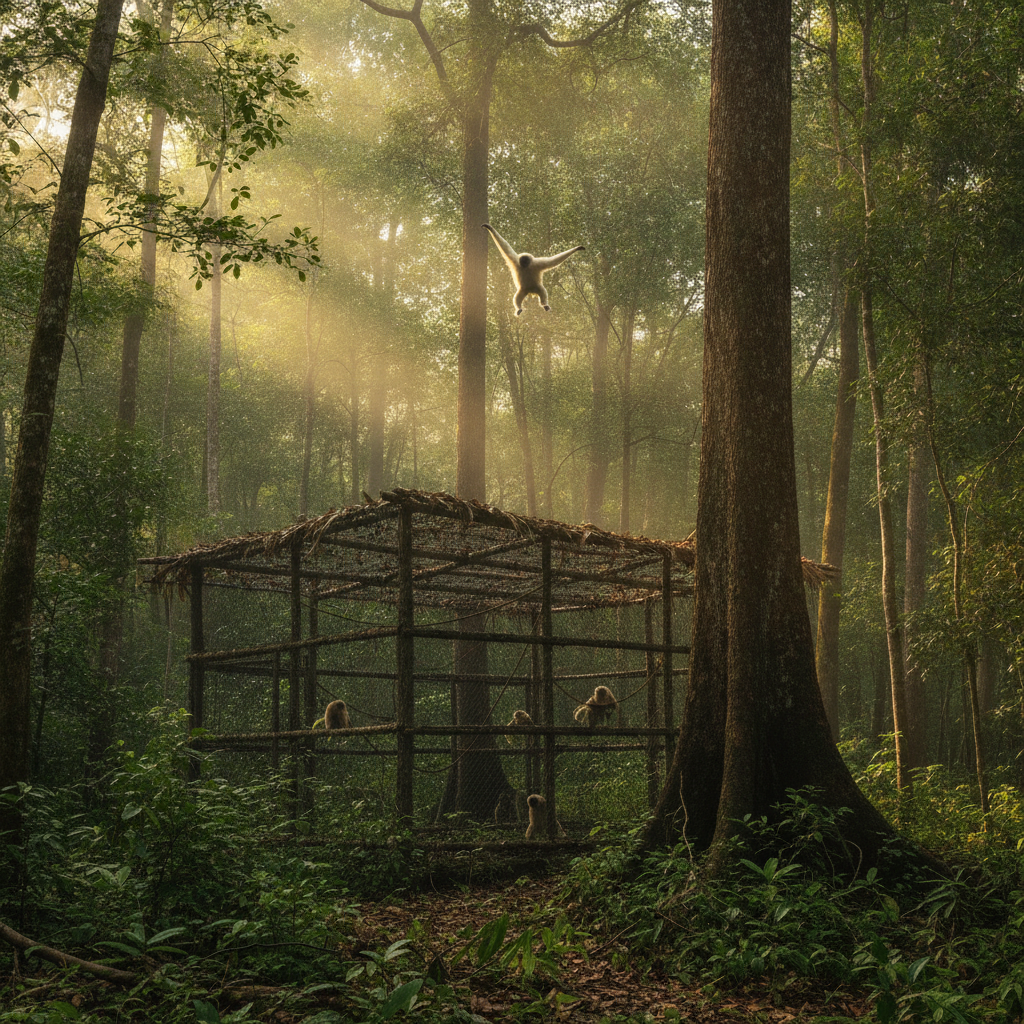
Phuket is unusual among major beach destinations in its capacity to contain simultaneously contradictory experiences: the backpacker budget guesthouse and the Aman suite that charges more per night than many travellers spend per month; the Bangla Road strip and the Khao Phra Thaew gibbon forest 20 km away; the Hokkien heritage of the Vegetarian Festival's body-piercing ritual and the beach club DJ set. This contradictory density is both the island's commercial strength (it serves visitor demographics that would never occupy the same resort in the Mediterranean or Caribbean) and its developmental challenge (the infrastructure required to serve all these simultaneously is difficult to build, maintain, and fund without overcrowding and environmental degradation). Visitors leave Phuket with strong opinions—it is rarely recalled as a moderate experience. The island that was a tin-mining settlement in 1960, a backpacker stop in 1985, a mass-market beach destination in 2000, and a luxury-villa market by 2010 is already evolving again: the next Phuket will be shaped by the casino legislation debate, climate change's impact on the Andaman Sea, and who can afford to fly there.
Walk this route with audio
Stories play automatically as you reach each stop — no tapping needed.
More in Phuket
Phuket's Lesser-Known Faces: Khao Lak's Police Boat Tsunami Memorial, Gibbons in the Last Forest & Sailing the Andaman
Phuket Complete: Phang Nga Bay's James Bond Island, Sino-Portuguese Old Town & the Andaman Sea's Leopard Sharks
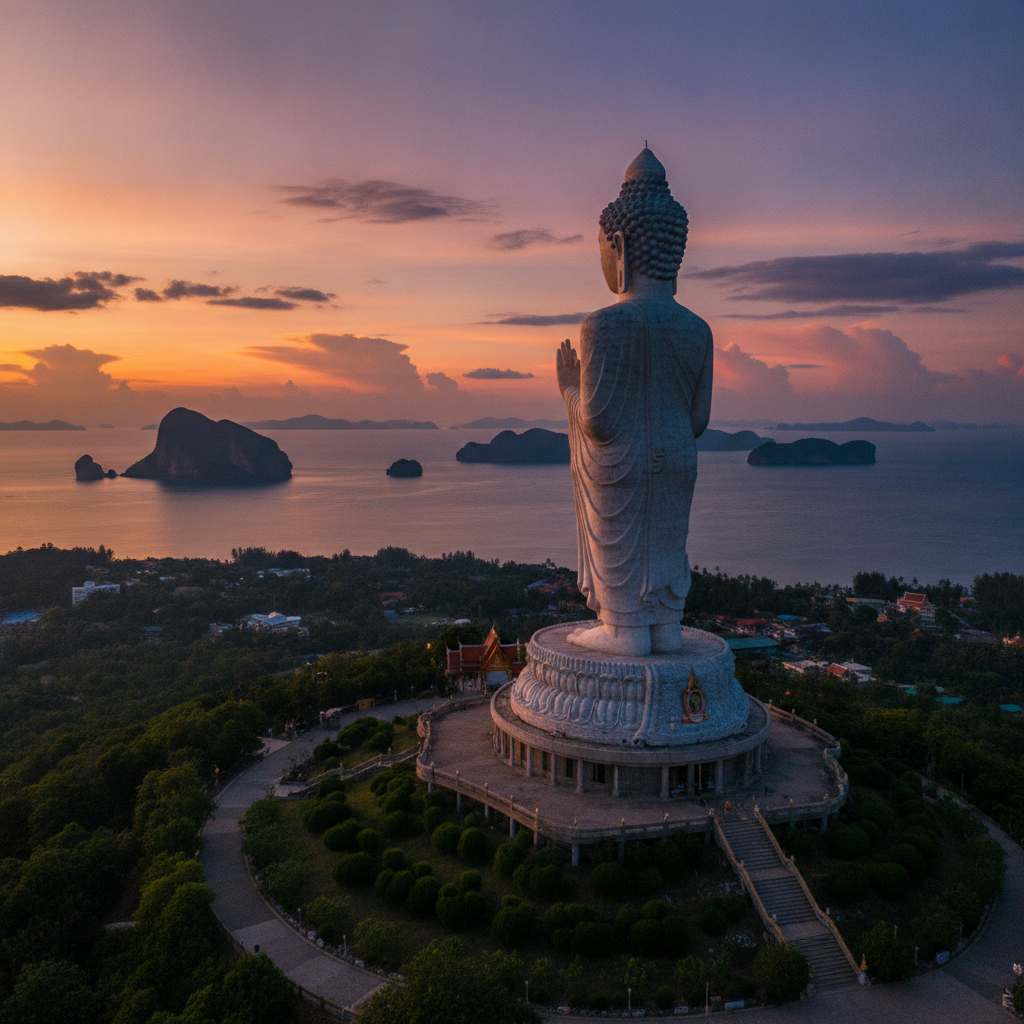
Phuket's Other Side: Big Buddha Views, Southern Thai Khao Yam & the Amanpuri Resort That Defined Luxury Tourism
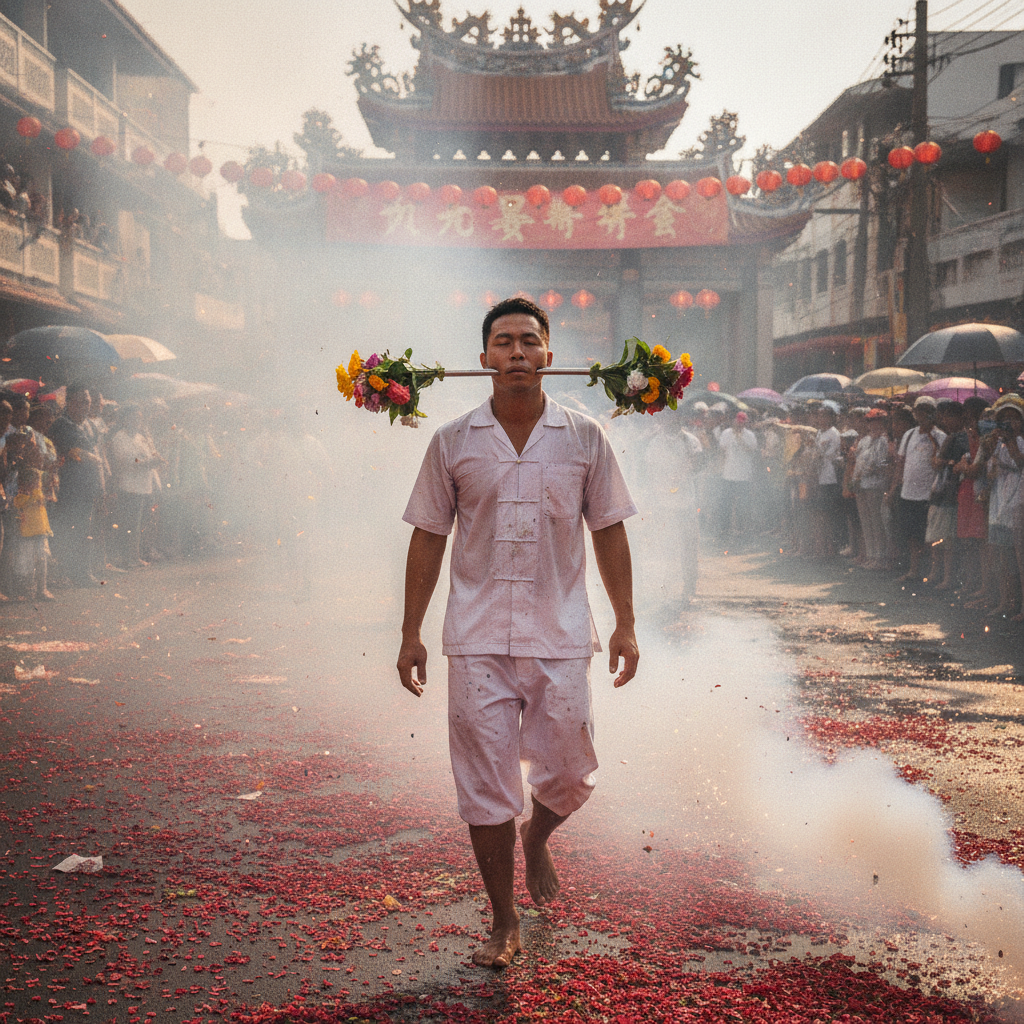
Phuket's Hidden Depth: Tin Miners' Shophouses, Body-Piercing Vegetarian Festival & Ko Phi Phi's Overcrowding Crisis