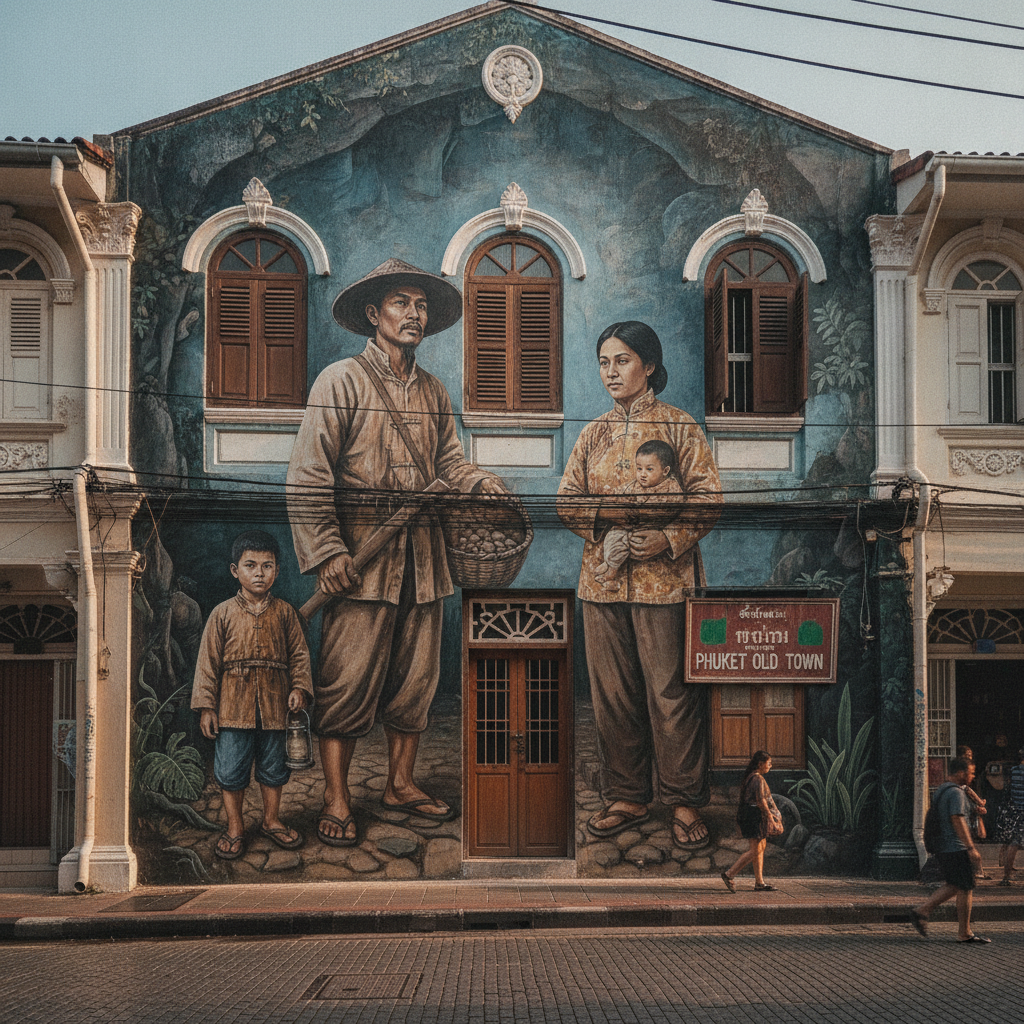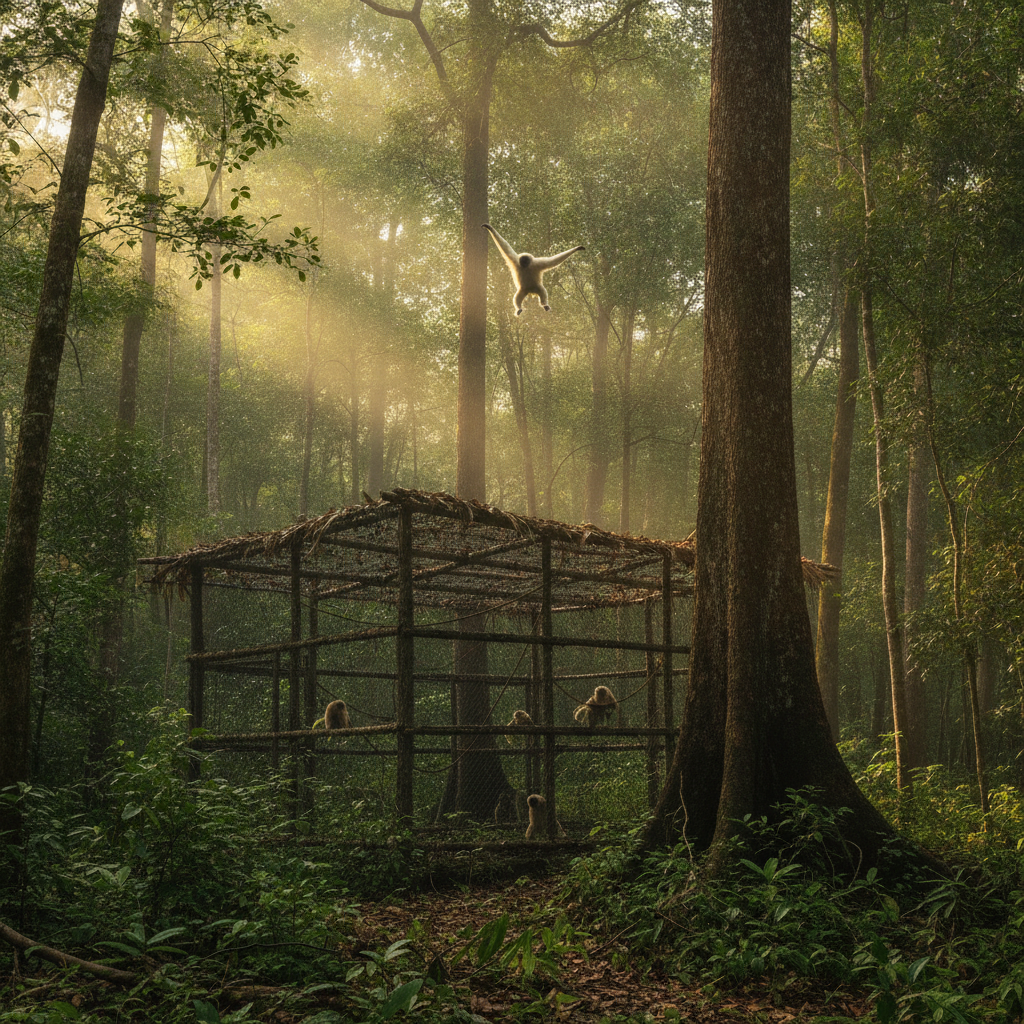
Phuket's Lesser-Known Faces: Khao Lak's Police Boat Tsunami Memorial, Gibbons in the Last Forest & Sailing the Andaman
Phuket extended—Khao Lak's 10-metre tsunami wave that killed 4,000 and left Police Boat 813 two kilometres inland (now the memorial centrepiece), Phuket's King's Cup Regatta drawing 100 yachts to the Andaman Sea in December, the Gibbon Rehabilitation Project returning captured ex-tourist-photo gibbons to the island's last 23 km² of primary rainforest, the Café del Mar beach club at Kamala and the Kata cliff-top sunset bar for the visitor who has found Bangla Road, Blue Elephant Cooking School's southern Thai gaeng leung (coconut-milk-free turmeric fish curry) in the former governor's mansion, and the property law paradox allowing thousands of foreign villas on land Thais cannot legally sell them.
- 1
Khao Lak – The Hardest Hit & the Tsunami Museum
Khao Lak—a beach resort area in Phang Nga province, 80 km north of Phuket—suffered the highest tourist-area casualties of the 2004 Indian Ocean tsunami in Thailand: an estimated 3,000–4,000 deaths in the area (including a particularly high number of Scandinavian tourists at the Sofitel Magic Lagoon and Le Meridien Khao Lak), compared to approximately 250 deaths on Phuket island to the south. The difference in wave height and impact was a function of local bathymetry—the shallow gradual slope of the seabed off Khao Lak amplified the wave to heights of 10–12 metres, while Phuket's deeper waters delivered a smaller wave. The International Tsunami Museum (Tsunami Memorial—built on the site of Royal Thai Navy Patrol Boat 813, carried 2 km inland by the wave and left where it came to rest as a permanent memorial): an outdoor memorial site with the police boat as centrepiece, surrounded by memorial gardens and an exhibition on the tsunami's formation and global impact.
- 2
Phuket's Sailing & Yachting Scene
Phuket has developed into Southeast Asia's foremost yachting hub—a position built on the combination of the Andaman Sea's sailing conditions (steady northeast monsoon from November–April, the primary sailing season), the island's geography (sheltered anchorages in Chalong Bay, marina infrastructure, and access to a thousand islands within a 200 km radius), and the King's Cup Regatta (held annually in December—one of Asia's most prestigious offshore races, attracting 80–100 yachts from 30+ countries to race in the Andaman Sea around Koh Racha). The infrastructure: Yacht Haven Marina (north of the island near the airport), Royal Phuket Marina (east coast—the most luxurious, with a marina hotel and retail complex), Chalong Bay (the traditional anchorage, more basic, used by longer-term cruisers). Charter options: bareboat yacht charter (for qualified sailors), skippered charter (for those without certificates), and day-sailing on traditional wooden boats. The sailing charter infrastructure—Sunsail, Moorings, and dozens of local operators—offers access to the Similan Islands, Phang Nga Bay, and Langkawi (Malaysia) on extended passages.
- 3
The Gibbon Rehabilitation Project – Phuket's Conservation Success
The Gibbon Rehabilitation Project (GRP)—operating since 1992 in the Khao Phra Thaew Non-Hunting Area in Phuket's north (the last patch of primary rainforest on the island, 23 km², containing wild populations of the White-handed Gibbon)—is one of Thailand's oldest and most successful wildlife rehabilitation programmes. Gibbons in Thailand face two primary threats: the pet trade (baby gibbons are captured from the wild for the tourist photo trade—beach gibbons, photographed with tourists for payment, represent animals that were captured as infants after their mothers were killed; this practice is illegal but persists) and habitat loss. The GRP receives confiscated and surrendered gibbons, provides medical care and behavioural rehabilitation, and releases rehabilitated animals back into the Khao Phra Thaew forest. Visitor access: tours to the project's educational centre (but not to the rehabilitation enclosures, to prevent human contact that would impede rehabilitation). The Thalang National Museum (near the GRP) covers Phuket's pre-tourist history including the Heroines' Monument—two women (Thao Thep Kasattri and Thao Si Sunthon) who successfully defended Phuket Town against a Burmese siege in 1785.
- 4
Phuket's Nightlife Beyond Patong – Quiet Phuket After Dark
Visitors who base themselves outside Patong—in Kata, Kamala, Surin, Rawai, or Phuket Town—encounter a very different nocturnal Phuket from the Bangla Road strip. Kata Beach night scene: a cluster of beachfront bars, rooftop restaurants with sea views, and the After Beach Bar (a cliff-top bar above Kata Noi with the island's best sunset view); small-scale, family-friendly by 22:00, the bars close relatively early. Kamala: upscale—the Café del Mar beach club (the Ibiza-associated brand's Asian outpost, the most globally known club in Phuket), and several sunset beach clubs catering to the villa crowd. Rawai: local Thai bars, seafood restaurants, and the Rassada Pier area with its fishing community atmosphere. Phuket Town's nightlife: the old town's Dibuk and Yaowarat street bar scene, the Blu Jazz bar (live music in a restored shophouse setting—jazz and soul Thursday–Saturday). The contrast with Patong is stark enough that some visitors stay in Patong purely to access the nightlife and spend their days elsewhere.
- 5
Phuket's Property Market & the Foreign Ownership Paradox
Phuket has one of Asia's most active foreign-owned residential property markets despite Thailand's legal prohibition on foreign ownership of land—a paradox resolved through several legal mechanisms. Thai law: foreigners may not own land directly; they may own condominium units (in buildings where foreign ownership does not exceed 49% of total floor area); they may own through a Thai-registered company (with a Thai majority shareholder—a structure widely used but legally ambiguous); or they may hold a long-term lease (30 years, renewable). Despite these restrictions, Phuket has attracted substantial foreign investment in villa and condominium development: the north (Surin, Layan, Bang Tao) is the luxury villa market (properties regularly selling for ₹20–100 million baht/€550,000–2.75 million); the mid-island Patong and Kata areas have a denser condominium market for investment rental properties (properties marketed on projected rental yield during the tourism season). The Russian-Ukrainian war created a specific market disruption: Russian-owned properties (bought during the 2010s boom) faced ownership and sales complications under international sanctions.
- 6
Cooking Southern Thai Food – A Phuket Kitchen Course
Southern Thai cooking—as taught in Phuket's cooking schools—differs from the more common central Thai cooking curriculum (pad thai, green curry, som tam) taught in Bangkok and Chiang Mai. The southern-specialist curriculum: turmeric rice (khao mok—the Thai Muslim biryani-influenced rice dish, cooked with chicken and turmeric, served with cucumber relish and tomato sauce), fish curry with fresh turmeric (gaeng leung—a sharp yellow curry made without coconut milk, unusual in Southeast Asian cooking, built from fresh turmeric paste and sour tamarind), southern-style satay with peanut sauce (the southern version is richer and spicier than the Bangkok version), and the essential khao yam rice salad. The best Phuket cooking school experiences: Blue Elephant Cooking School (in the former governor's mansion, the most prestigious setting—expensive but architecturally extraordinary), Siam Nipa Cooking Class (Phuket Town, market tour included), and several smaller operations in Kata and Kamala. The lesson in southern Thai cuisine is that Thai food is far more regionally varied than its international reputation suggests.
Walk this route with audio
Stories play automatically as you reach each stop — no tapping needed.
More in Phuket
Phuket Complete: Phang Nga Bay's James Bond Island, Sino-Portuguese Old Town & the Andaman Sea's Leopard Sharks
Phuket's Identity: The Hokkien Heroines of 1785, Hi-So Surin Beach & the Island That Contains All Contradictions
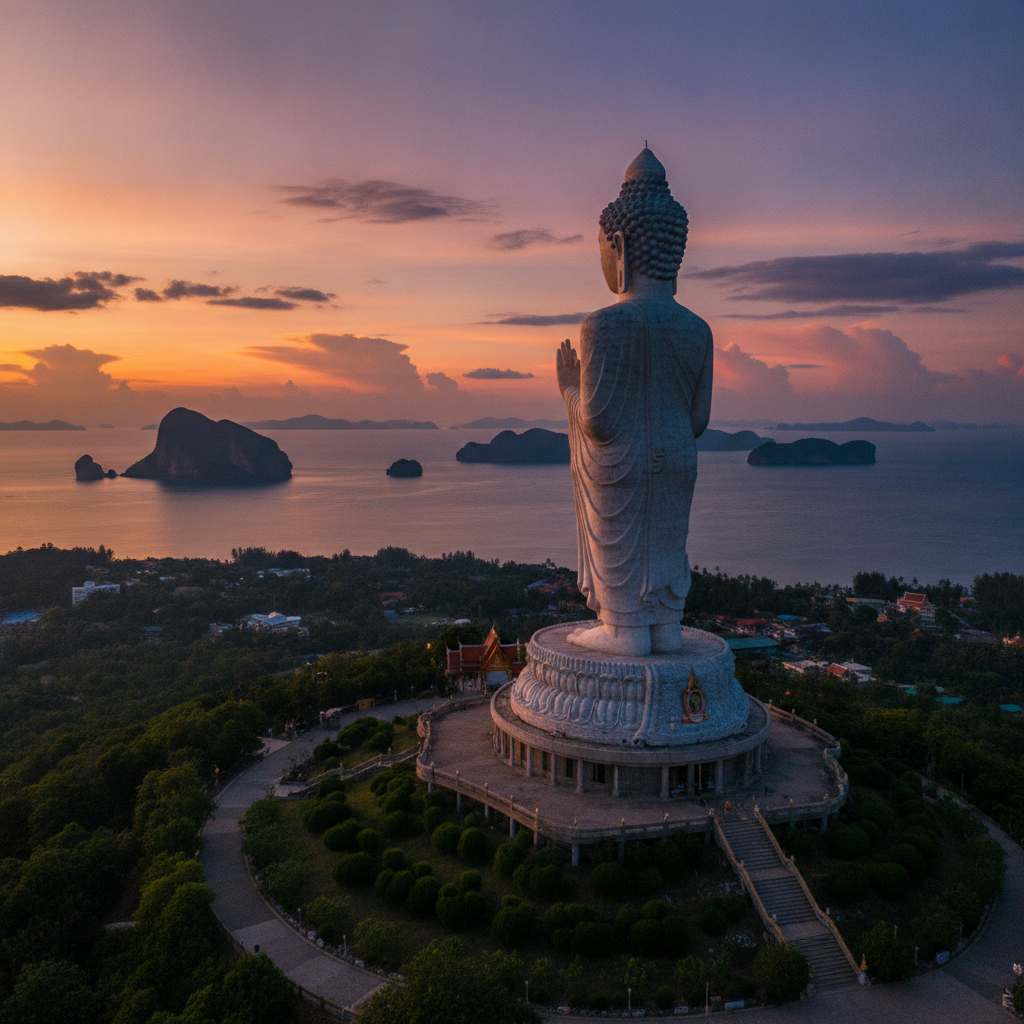
Phuket's Other Side: Big Buddha Views, Southern Thai Khao Yam & the Amanpuri Resort That Defined Luxury Tourism
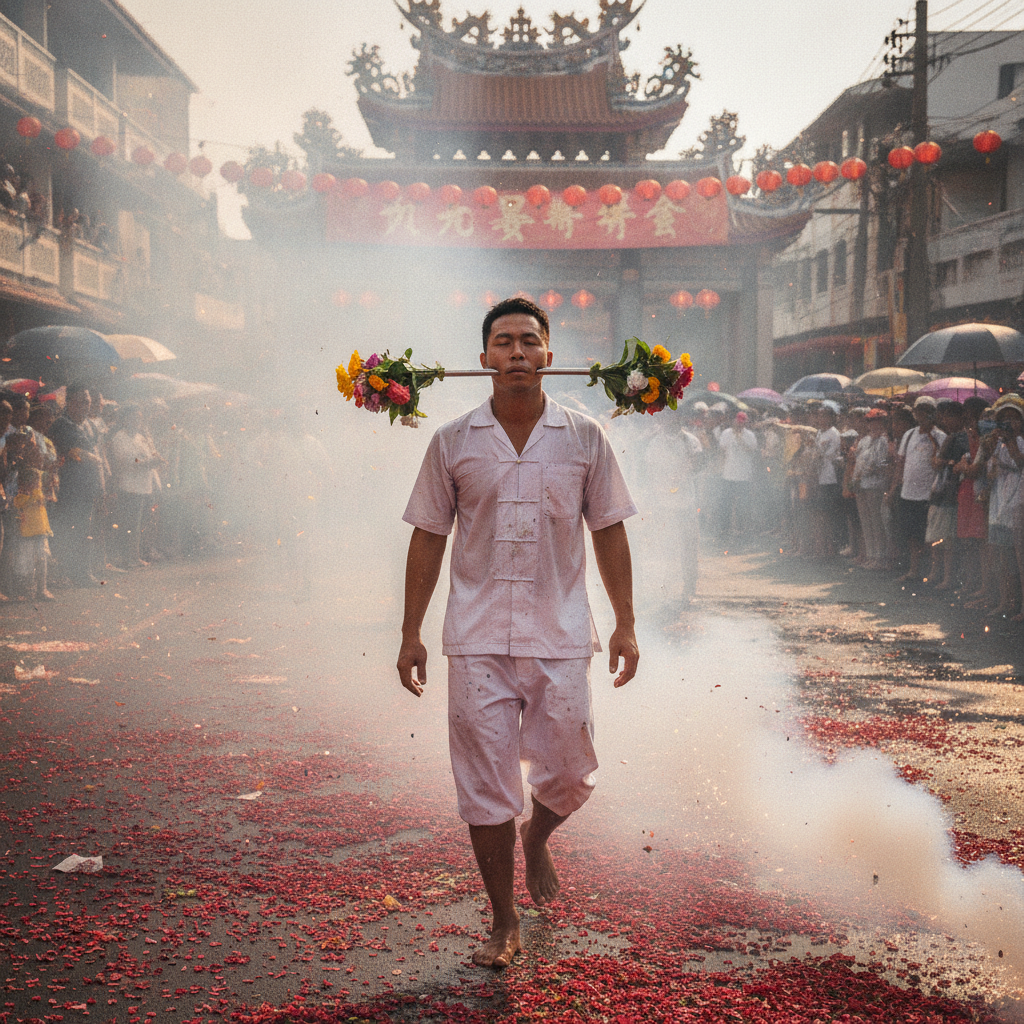
Phuket's Hidden Depth: Tin Miners' Shophouses, Body-Piercing Vegetarian Festival & Ko Phi Phi's Overcrowding Crisis