Phuket Beneath the Surface: Rubber Tappers Before Dawn, Muslim Fishing Villages & the Similan Islands' 30-Metre Visibility
Phuket beyond the resort economy—rubber tappers beginning their diagonal-groove cuts at 3am in Thalang district's plantation forest before the tourists wake, the east coast Muslim fishing villages where roti mataba and teh tarik define a different island rhythm, Old Town Thalang Road's tin-mining murals on Sino-Portuguese shophouse facades drawing more Instagram traffic than any beach, the Similan Islands' granite boulders and 30-metre visibility that make them a top-ten global dive site (closed monsoon season), the mangrove clearance that left coastal communities without tsunami buffer in 2004, and how COVID's 18-month border closure recovered Phuket's reefs faster than 20 years of conservation planning.
- 1
Phuket's Rubber Economy – The Other Plantation Crop
Alongside tourism and the historic tin mining industry, rubber is Phuket's third economic pillar—and the one most connected to the island's rural character and the lives of its Thai residents outside the resort economy. Rubber (Hevea brasiliensis—the Para rubber tree, introduced to Southeast Asia from Brazil via the British Kew Gardens in the 1870s) is cultivated across Phuket's forested interior, particularly in the Thalang district (the north of the island, where the resort development is thinner and the land retains some of its agricultural character). Tapping rubber—cutting a precise diagonal groove in the bark each day before dawn to collect the latex that weeps into a cup—is a skill demanding early rising (tappers begin at 3–4am to catch the coolest temperatures when latex flow is highest) and physical precision. Thailand is the world's largest rubber producer; Phuket's production is a small fraction of the national total but represents an important income supplement for families who also work in tourism services.
- 2
Phuket's Mosque Communities & Southern Thai Muslim Identity
Phuket's Muslim community—approximately 35% of the island's permanent Thai population, concentrated in the fishing villages of the east coast and the Saphan Hin area of Phuket Town—represents the most significant religious and cultural minority on the island and connects Phuket to the broader Thai-Malay Muslim identity of the southern provinces. The mosques: the oldest, Masjid Mukaram Bang Tao (Ban Saphan Hin area), and the central Phuket Masjid, serve communities whose ancestors were among the earliest permanent settlers of the island before the Chinese tin-mining wave. The Muslim food culture in Phuket: roti mataba (a stuffed flaky flatbread from the Indian-influenced Muslim kitchen—filled with egg, onion, and minced meat), biryani (served at Muslim market stalls primarily on Friday), satay (the grilled meat-on-skewer tradition brought from the Malay Peninsula), and the strong tea tradition (teh tarik—pulled tea with condensed milk). The distinction between Thai Buddhist and Thai Muslim community life is most visible in the east coast fishing villages, which operate on significantly different social rhythms.
- 3
Phuket's Street Art & Creative Culture Scene
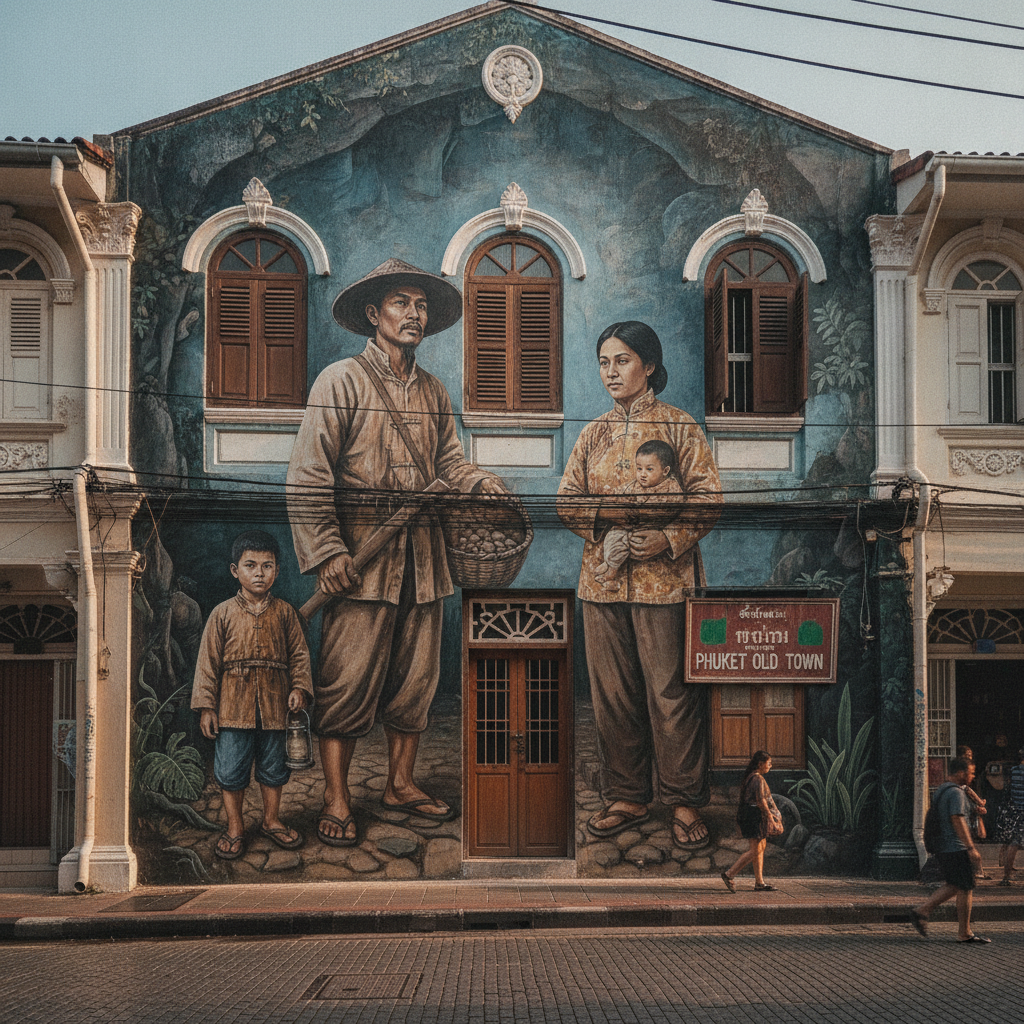
Phuket Old Town—beyond its Sino-Portuguese architectural heritage—has developed into one of Thailand's most active street art destinations, a development accelerated by the Phuket Old Town Festival (held annually in February, with live music, heritage walks, and street food) and the deliberate municipal support for mural art as a heritage tourism draw. The Old Town murals (concentrated on Thalang, Dibuk, Phang Nga, and Yaowarat roads) include large-scale painted scenes of Phuket's Chinese settler history, tin-mining past, and local cultural life—some of the most photographed (and most shared on social media) public art in southern Thailand. The Phuket Old Town's café culture: the cluster of specialty coffee shops, vintage furniture stores, and boutique guesthouses in restored shophouses (La Gaetane, Dino Cafe, the Bookhemian bookshop-café) creates a Nimman-equivalent creative district at a fraction of Chiang Mai's cost and with a stronger heritage-architecture backdrop.
- 4
Phuket's Marine National Parks – Beyond the Island
Phuket serves as the departure point for the two most significant marine national parks in Thailand's Andaman Sea region. The Similan Islands Marine National Park (Mu Ko Similan—9 islands, 100 km northwest of Phuket, accessible by speedboat in 2 hours or by overnight liveaboard): one of the top ten diving destinations in the world by multiple international rankings, with visibility regularly exceeding 30 metres, granite boulder underwater formations unlike the coral reef landscapes of most other Thai dive sites, and concentrations of manta rays and whale sharks during the March–May season. The park closes June–October (monsoon season; sea conditions too dangerous for access). Ko Lanta Marine National Park (accessible from Krabi, 2 hours south of Phuket): a quieter, less visited alternative with excellent diving at Hin Daeng and Hin Muang (two seamounts with the best chances for manta ray encounters in Thailand). The Koh Phi Phi and Koh Racha sites can be reached on day trips from Phuket in 30–90 minutes.
- 5
Phuket's Controversial Development History
Phuket's rapid transformation from a quiet tin-mining and fishing island (1960s: population 80,000, limited international visitors) to one of Asia's most visited beach destinations (2019: 15 million visitors, including 7 million international arrivals) has involved development decisions that remain sources of contention between the tourism industry, local communities, and environmental advocates. The mangrove destruction: Phuket's east coast mangrove forests (critical habitat for juvenile fish, nursery for the fishing communities' catch, natural coastal protection) were partially converted for shrimp farms in the 1980s–1990s and for marina and resort development since; the remaining mangroves in Phang Nga Bay are now protected. The 2004 tsunami exposed the consequences of removing coastal mangrove buffers—areas with intact mangroves suffered measurably lower wave damage. The casino debate: proposals for legal casino resorts in Phuket (part of Thailand's ongoing 'Entertainment Complex' legislation debate) would, if approved, fundamentally alter the island's visitor demographic and development trajectory.
- 6
Phuket's Future – Sustainability, Overtourism & the Carbon Question
Phuket's 15-million-visitor year of 2019—followed by the near-complete tourism collapse of 2020–2021 (COVID-19 closed Thailand's borders, and Phuket's visitor numbers fell to near zero for 18 months)—provides an unusual perspective on the relationship between mass tourism and the environment. During the border closure, Phuket's beaches recovered: coral returned to previously bleached areas, water clarity improved, marine wildlife reappeared (sea turtles nesting on previously abandoned beaches, reef sharks returning to dive sites). The recovery was measurable within months. The lesson—that tourism at Phuket's pre-COVID volume was causing ongoing environmental damage that reversed visibly when the visitors stopped—has not translated into post-COVID visitor limits or enforceable sustainability requirements. The Thai government's post-COVID strategy focused on attracting higher-spending visitors (the 'quality not quantity' target promoted but not enforced) while the practical result was a return to volume-driven mass market tourism by 2023–2024.
Walk this route with audio
Stories play automatically as you reach each stop — no tapping needed.
More in Phuket
Phuket's Lesser-Known Faces: Khao Lak's Police Boat Tsunami Memorial, Gibbons in the Last Forest & Sailing the Andaman

Phuket Complete: Phang Nga Bay's James Bond Island, Sino-Portuguese Old Town & the Andaman Sea's Leopard Sharks
Phuket's Identity: The Hokkien Heroines of 1785, Hi-So Surin Beach & the Island That Contains All Contradictions
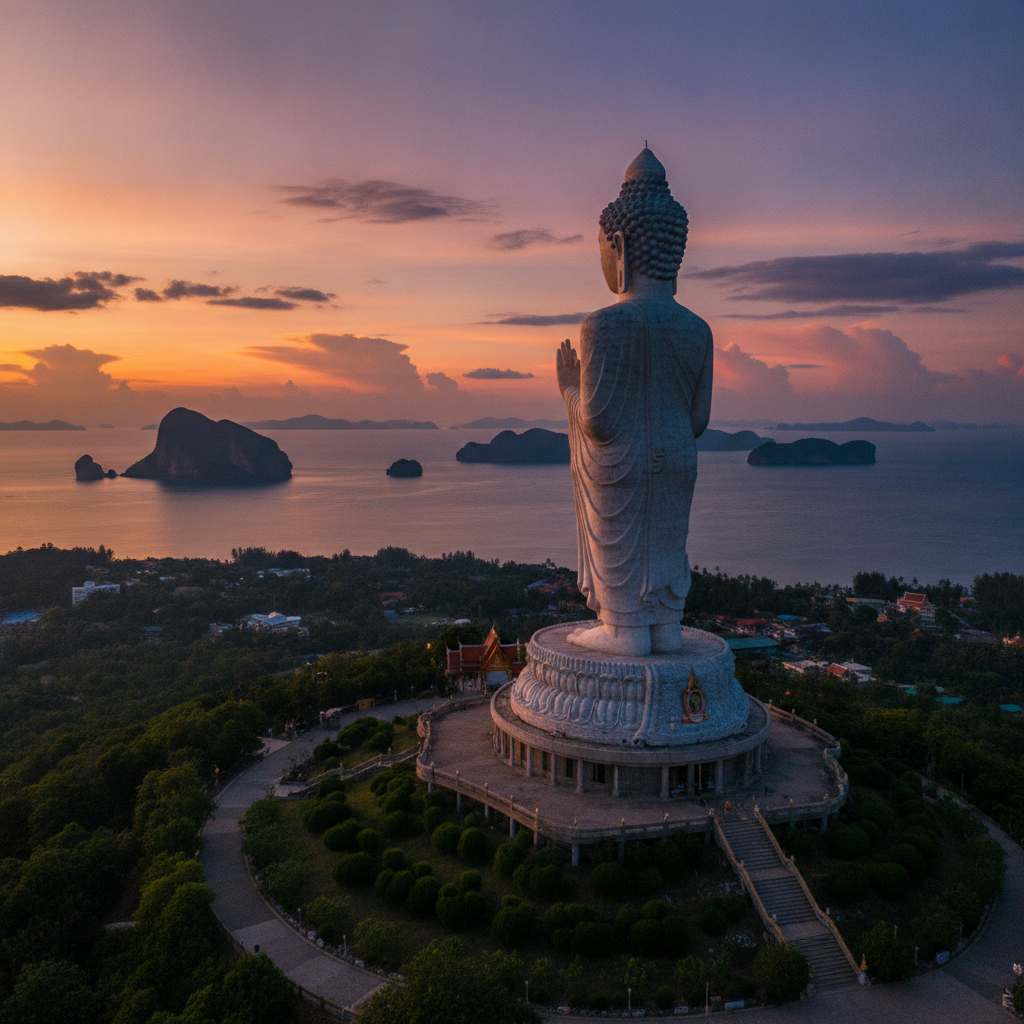
Phuket's Other Side: Big Buddha Views, Southern Thai Khao Yam & the Amanpuri Resort That Defined Luxury Tourism