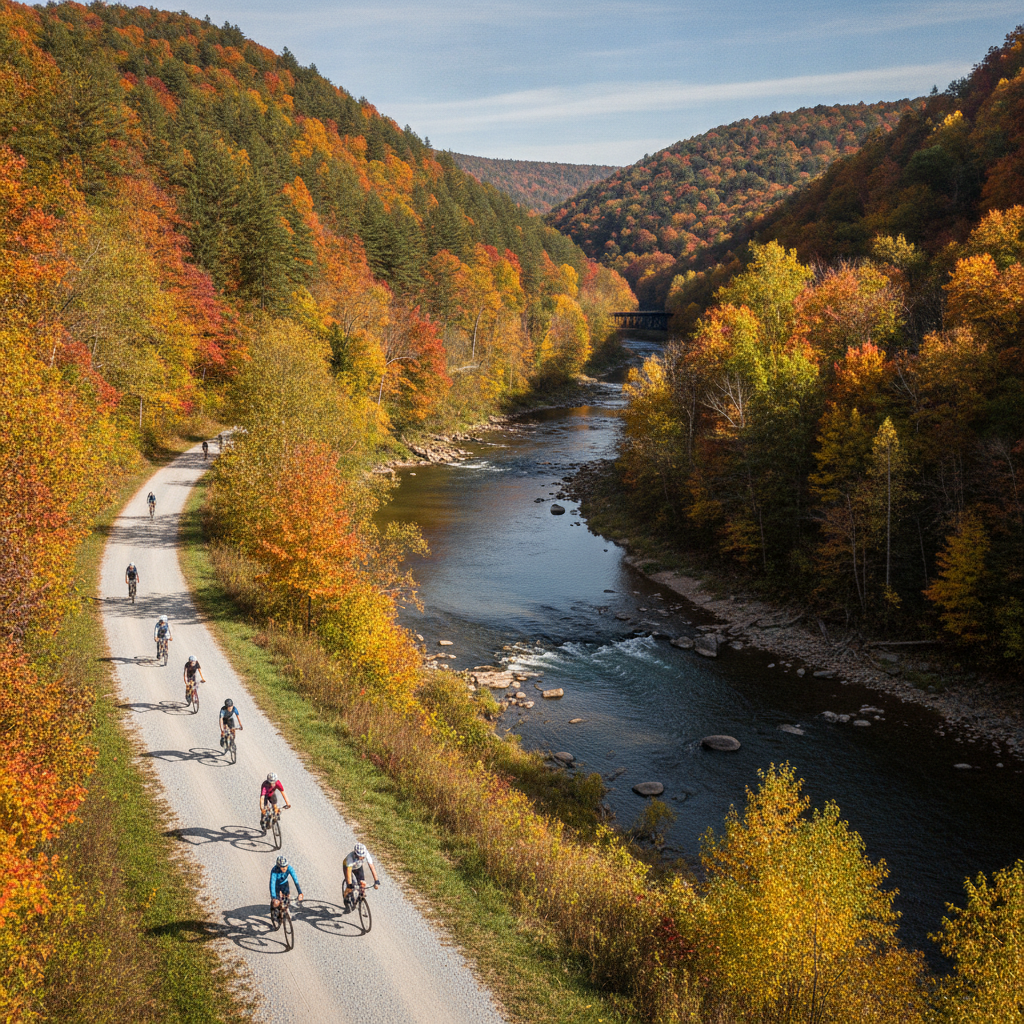
Pittsburgh R3: Food heritage (pierogies haluski stuffed cabbage, Lenten fish fry Catholic tradition, Wholey's Market Strip District 1912, Gaucho Argentina Cure Lawrenceville James Beard), Hill District and August Wilson (Crossroads of the World jazz era, 2 Pulitzer Prizes Fences Piano Lesson, Crawford Grill Coltrane Horne, Civic Arena 1961 demolished 1,300 buildings displaced 8,000), PPG Place and glass (Philip Johnson 1984 Gothic Revival glass towers, PPG Industries 1883 Fortune 500, Westinghouse AC defeated Edison DC War of Currents, Niagara Falls hydroelectric 1895), Pittsburgh Coal Seam (most economically significant US geological deposit, Edgar Thomson Works Homestead Strike July 6 1892 10 dead 40 years setback labor), Fallingwater day trip (1935 designed age 68, cantilevered over waterfall, UNESCO 2019, structural reinforcement 1997-2002, Kentuck Knob, Flight 93 Memorial 110km), Immigration heritage (300,000 Slovaks, Maxo Vanka murals Millvale 1937-1941, Greek Food Festival Annunciation Cathedral)
Pittsburgh R3: food heritage (pierogies haluski stuffed cabbage, Lenten fish fry thousands of church halls, Wholey's Market 1912 Strip District, Pittsburgh wings with fries coleslaw on top, Cure Lawrenceville James Beard), Hill District (Crossroads of the World 1920s-1950s, August Wilson 2 Pulitzer Prizes Fences Piano Lesson Century Cycle 10 plays set in Hill District, Crawford Grill Coltrane Horne, Civic Arena 1961 demolished 1,300 buildings displaced 8,000 Black residents), Pittsburgh glass and PPG Place (PPG Industries 1883 now Fortune 500, Philip Johnson 1984 Gothic Revival 19,750 glass panels, Westinghouse AC vs Edison DC War of Currents, Niagara Falls generators 1895), Pittsburgh Coal Seam (most significant US geological deposit, Edgar Thomson Works US Steel still operating, Homestead Strike July 6 1892 10 dead labor setback 40 years), Fallingwater (FLW age 68 1935 designed, cantilever over waterfall UNESCO 2019, structural reinforcement 1997-2002, Kentuck Knob, Flight 93 Memorial 110km), immigration (300,000 Slovaks, Maxo Vanka murals Millvale greatest US ethnic church murals, Greek Food Festival Oakland).
- 1
Pittsburgh Food Beyond Primanti - Pierogies and Ethnic Heritage
Pittsburgh ethnic food heritage: Pittsburgh's remarkable ethnic diversity (the result of the steel industry recruiting workers from across Eastern Europe, Southern Europe, and the American South) has produced one of the most distinctive and underrated regional food cultures in the United States. The Eastern European heritage in Pittsburgh food: the pierog (the Polish dumpling), the haluski (the Slovak dish of fried cabbage and egg noodles with butter), the stuffed cabbage (halupki or galumpki), kielbasa, and the Pittsburgh-specific church basement fish fry (the Catholic Lenten tradition of weekly fish fries at church halls throughout western Pennsylvania, with thousands of fish fries operating on Fridays in Lent). The Pittsburgh fish fry: the most beloved Pittsburgh food tradition, with churches, fire stations, and VFW halls serving fried fish sandwiches and pierogies on Fridays during Lent, attended by enormous queues of Pittsburgh residents regardless of religious affiliation. Wholey's Market (at 1711 Penn Avenue, Strip District, founded 1912): the most beloved fish and seafood market in Pittsburgh, selling live fish, crabs, lobsters, and the freshest seafood in western Pennsylvania to both retail and restaurant customers. The Pittsburgh wing: Pittsburgh-style chicken wings are served with a side of french fries and coleslaw piled directly on top of the wings (the same philosophy as the Primanti sandwich), and are the most ordered item at Pittsburgh sports bars. Gaucho Parrilla Argentina (at 1601 Penn Avenue, Strip District): the Argentine barbecue restaurant that has become one of the most acclaimed restaurants in Pittsburgh. Cure (at 5336 Butler Street, Lawrenceville): the charcuterie-focused restaurant that launched Lawrenceville's restaurant renaissance and has been nationally recognized by the James Beard Foundation.
- 2
Pittsburgh African American Heritage and Hill District
The Hill District (the neighborhood approximately 1 km east of downtown Pittsburgh, above the Crawford Street corridor): the most historically significant African American neighborhood in Pittsburgh and one of the most important African American cultural communities in the northern United States from the early 20th century through the 1950s. The Hill District in its golden era (1920s-1950s): the neighborhood was known as the Crossroads of the World, as its jazz clubs, theaters, and nightlife attracted virtually every major African American entertainer who toured the East Coast. August Wilson (born Frederick August Kittel, April 27, 1945, Hill District, Pittsburgh; died October 2, 2005, Seattle): the Pulitzer Prize-winning playwright who set his entire Century Cycle (the 10-play series covering the African American experience in each decade of the 20th century) in the Hill District of Pittsburgh. Wilson won 2 Pulitzer Prizes for Drama (Fences, 1987, and The Piano Lesson, 1990), a Tony Award, and the Heinz Award; he is considered one of the 2-3 greatest American playwrights of the 20th century. The August Wilson African American Cultural Center (at 980 Liberty Avenue, Cultural District, Pittsburgh): the cultural institution dedicated to Wilson's legacy, with performance spaces and archives. The Crawford Grill (the historic jazz club on Wylie Avenue in the Hill District, where Art Tatum, Lena Horne, and John Coltrane performed): the most important jazz venue in Pittsburgh history. The Hill District community development crisis: the construction of the Civic Arena (1961) demolished 1,300 buildings in the Lower Hill District and displaced approximately 8,000 African American residents, one of the most destructive urban renewal acts in any American city.
- 3
Pittsburgh Glass and Industrial Design Heritage
Pittsburgh as the glass capital of the world: from the 1870s to the 1960s, Pittsburgh and the surrounding Allegheny County were the world's leading producers of window glass, plate glass, and specialty glass products, with companies including PPG Industries (Pittsburgh Plate Glass, founded 1883, now a Fortune 500 global coatings company headquartered at One PPG Place, Pittsburgh) and Libbey-Owens-Ford. PPG Place (at One PPG Place, Downtown Pittsburgh, completed 1984): the six-building glass tower complex designed by Philip Johnson and John Burgee in a Gothic Revival skyscraper style, with 19,750 individual glass panels — making it one of the most striking and unusual office complexes in the United States, blending 19th century architectural forms with the most advanced glass technology of the 1980s. The PPG Place complex includes the winter Garden atrium (a glass-enclosed public space that becomes an ice rink in December and January). The Westinghouse legacy: George Westinghouse (born 1846, Schenectady; died 1914, New York): the inventor who made Pittsburgh his laboratory, founding Westinghouse Air Brake Company (1869, the air brake that made railroad safety possible) and Westinghouse Electric Company (1886, the company that commercialized alternating current and defeated Thomas Edison's direct current system in the War of Currents, enabling the electrification of the United States). The Westinghouse Electric Company and Nikola Tesla: the AC system that electrified America was based on Tesla's patents, which Westinghouse purchased for approximately USD 1 million; the two men collaborated to build the hydroelectric generators at Niagara Falls (completed 1895), which became the model for all subsequent large-scale electrical generation.
- 4
Pittsburgh and the Great Pittsburgh Coal Seam
Pittsburgh and coal: the Pittsburgh Coal Seam (the geological coal deposit underlying most of southwestern Pennsylvania and extending into Ohio and West Virginia): the single most economically significant geological deposit in American industrial history, fueling both the Pittsburgh steel industry and the American industrial revolution for over a century. The Pittsburgh Coal Seam characteristics: the seam averages approximately 2 meters in thickness (making it economically mineable at relatively low cost) and lies at a depth of approximately 300 meters in the Pittsburgh area, appearing at the surface in the river valleys of the Monongahela and Youghiogheny. The Youghiogheny River Coal region: the Mon Valley (the Monongahela River Valley, south of Pittsburgh): the most intensively industrialized river valley in American history, with the Carnegie Steel Company's Edgar Thomson Works (in Braddock, 16 km southeast of Pittsburgh, still operating as US Steel's Edgar Thomson Plant), the Homestead Steel Works site (in Homestead, 13 km southeast), and dozens of other steel mills lining the river for 40 km. The Battle of Homestead (July 6, 1892): the 12-hour battle between Pinkerton agents hired by Henry Clay Frick (acting for Andrew Carnegie, who had conveniently left for Scotland) and the striking steelworkers of the Amalgamated Association of Iron and Steel Workers at the Homestead Steel Works. 10 people were killed (7 Pinkerton agents and 3 steelworkers), the strike was ultimately broken by the Pennsylvania National Guard, and the defeat of the union set back the cause of organized labor in the American steel industry by 40 years.
- 5
Pittsburgh Day Trips - Fallingwater Ohiopyle and Frank Lloyd Wright
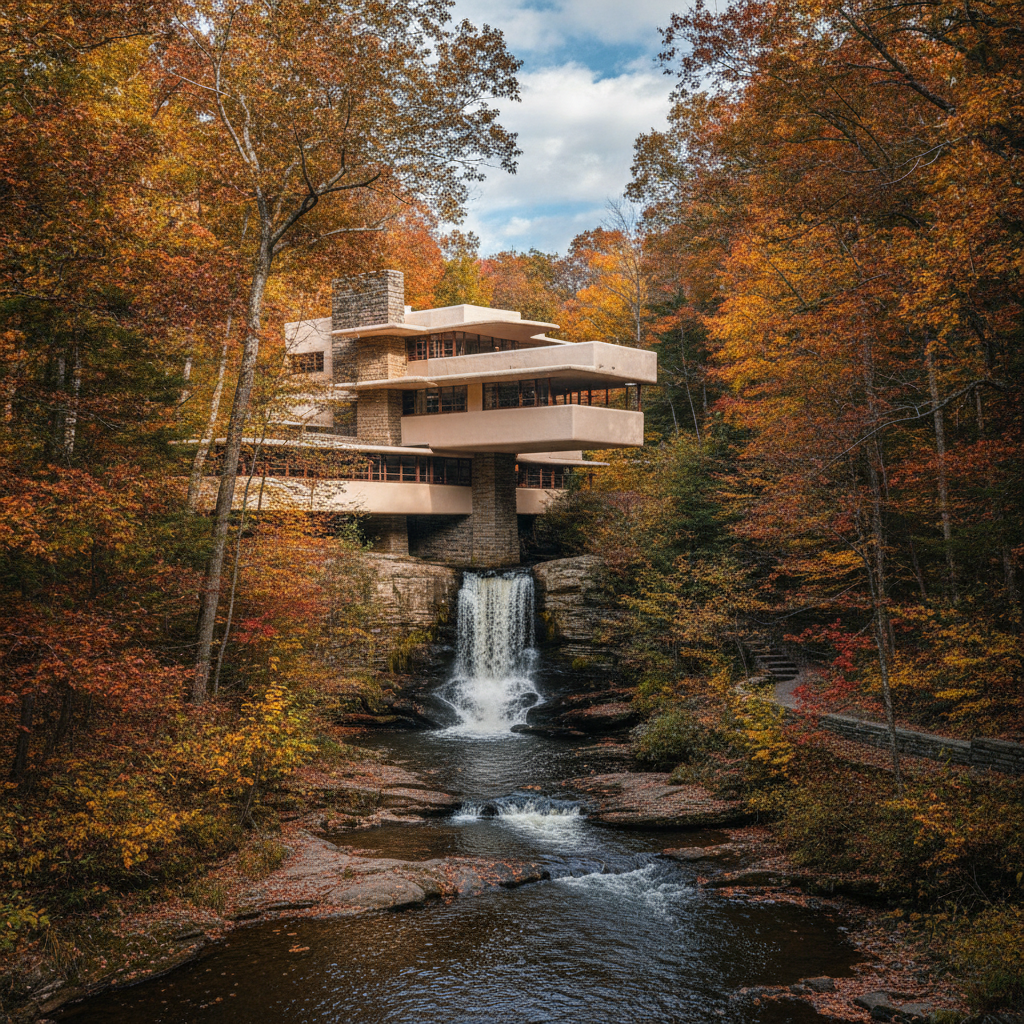
Frank Lloyd Wright's Fallingwater (at 1491 Mill Run Road, Mill Run, Fayette County, Pennsylvania, 90 km southeast of Pittsburgh in the Laurel Highlands): the most famous private residence in the world, designed by Frank Lloyd Wright in 1935 at age 68 (after a 6-year creative drought) and built in 1936-1939 over Bear Run Creek waterfall. Fallingwater background: Edgar Kaufmann Sr. (the owner of Kaufmann's department store in Pittsburgh) commissioned Wright to design a weekend retreat for his family. Wright designed the house as a series of cantilevered concrete terraces extending over the falls, with the living room floor incorporating the natural rock ledge of the stream bed — an example of organic architecture in which the building does not merely overlook the landscape but is embedded in it. Fallingwater engineering: the original structural calculations for the main cantilevers were insufficient, and the house has required extensive structural reinforcement since construction (in 1997-2002, post-tensioned steel cables were installed in the main cantilever), in one of the most significant historic preservation engineering projects in American history. UNESCO World Heritage Site inscription: Fallingwater was inscribed as part of the The 20th-Century Architecture of Frank Lloyd Wright UNESCO World Heritage Site in 2019. Kentuck Knob (at 723 Kentuck Road, Ohiopyle, 6 km from Fallingwater): the second Frank Lloyd Wright house in the Laurel Highlands, designed 1953 for the Hagan family, a Usonian house on a hillside with views across the Youghiogheny gorge. The Laurel Highlands: the most accessible mountain hiking region for Pittsburgh residents, with the Flight 93 National Memorial (at 6424 Lincoln Hwy, Shanksville, 110 km from Pittsburgh) — the memorial to the passengers and crew of United Airlines Flight 93 who prevented the hijacked plane from reaching Washington DC on September 11, 2001.
- 6
Pittsburgh Diversity and Immigration Heritage
Pittsburgh immigration heritage: Pittsburgh was one of the most ethnically diverse industrial cities in the United States at the peak of the steel era, with immigrants recruited from dozens of countries to fill the labor needs of the Carnegie and other steel companies. Slovak immigrants: the largest single immigrant community in Pittsburgh's steel history, with approximately 300,000 Slovak immigrants settling in Pittsburgh and the surrounding Mon Valley between 1880 and 1920. The Slovak community established St. Michael's Church in Homestead (one of the most elaborate ethnic Catholic churches in western Pennsylvania), the Slovak Catholic Sokol athletic clubs, and the Slovak-American press. Croatian and Serbian communities: both communities established significant presences in the Pittsburgh area, particularly in Millvale (the Croatian neighborhood with the St. Nicholas Croatian Catholic Church, whose interior murals by Croatian artist Maxo Vanka — painted 1937-1941 — are considered the most important mural cycle in any American ethnic church). Greek community: the Greek community of Pittsburgh is one of the oldest and most established in the United States, with the Greek Food Festival at the Annunciation Greek Orthodox Cathedral (at 409 Boulevard of the Allies, Oakland) being one of the most beloved Pittsburgh food events. The Chinese-American community: Pittsburgh's first Chinese restaurant was established in 1900, but the modern Chinese-American community is centered around Carnegie Mellon University and the University of Pittsburgh, where thousands of Chinese international students have settled permanently. The Three Rivers Film Festival (one of the oldest independent film festivals in the United States, founded 1981, held each November in the Pittsburgh Cultural District): one of the most respected regional film festivals in the country.
Walk this route with audio
Stories play automatically as you reach each stop — no tapping needed.
More in pittsburgh
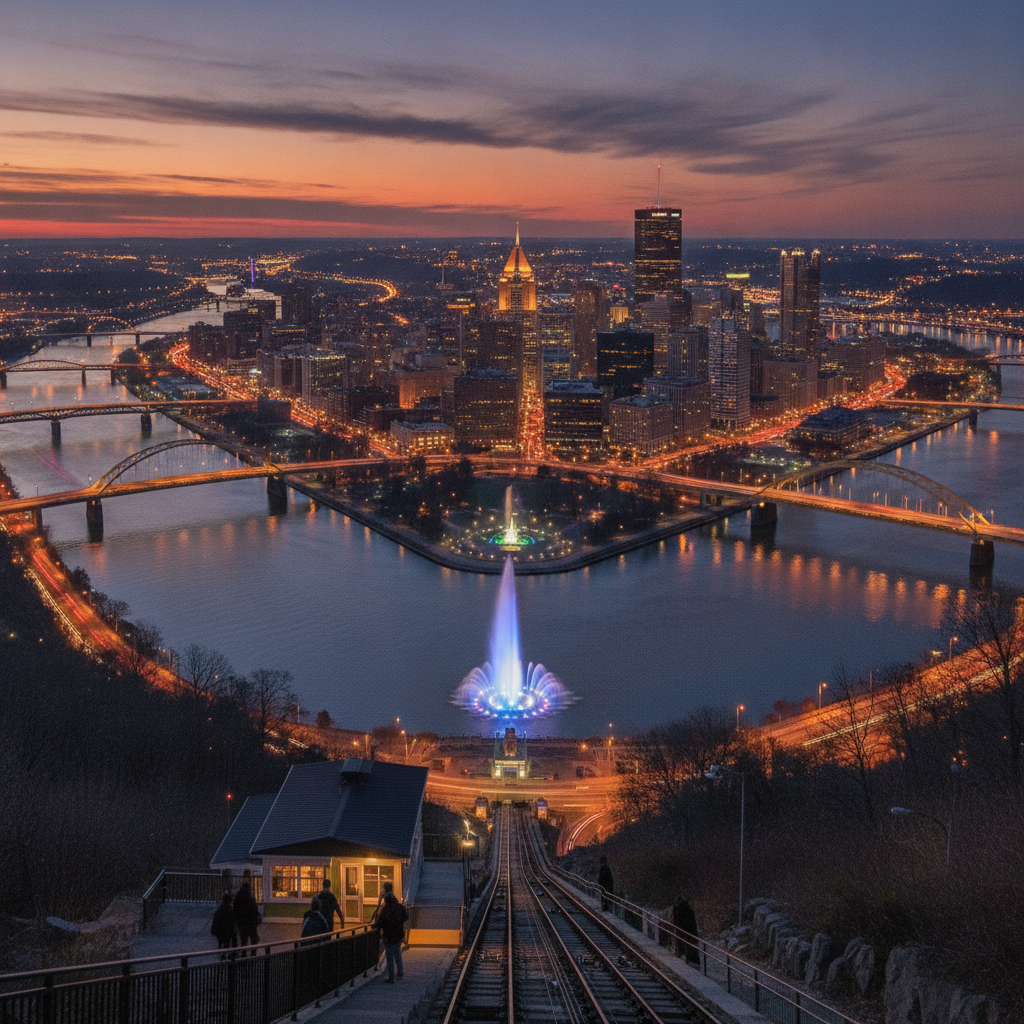
Pittsburgh: Steel legacy (446 bridges most in world, Carnegie Steel to US Steel 1901, 150,000 jobs lost 1979-1988, Homestead Strike 1892), Mount Washington inclines (Duquesne Incline 1877, Monongahela 1870 oldest continuous, Golden Triangle view three rivers confluence, Point State Park Fort Pitt 1758), Carnegie Museums (Natural History Diplodocus carnegii, Mary Cassatt Impressionist born Allegheny City, Andy Warhol Museum 900 works Campbell's Soup Marilyn Elvis), Pittsburgh sports (Steelers 6 Super Bowls Steel Curtain Immaculate Reception, Penguins 5 Stanley Cups Crosby, Pirates Mazeroski 1960 walk-off HR, PNC Park most beautiful stadium), Strip District and food (Primanti Brothers 1933 fries-in-sandwich, Pennsylvania Macaroni 1902, pierogi Pierogi Race Pirates), Practical (CMU computer science drama, Cathedral of Learning 42 stories tallest educational Western Hemisphere, autonomous vehicles Uber Waymo, Fallingwater 90km Fallingwater masterpiece)
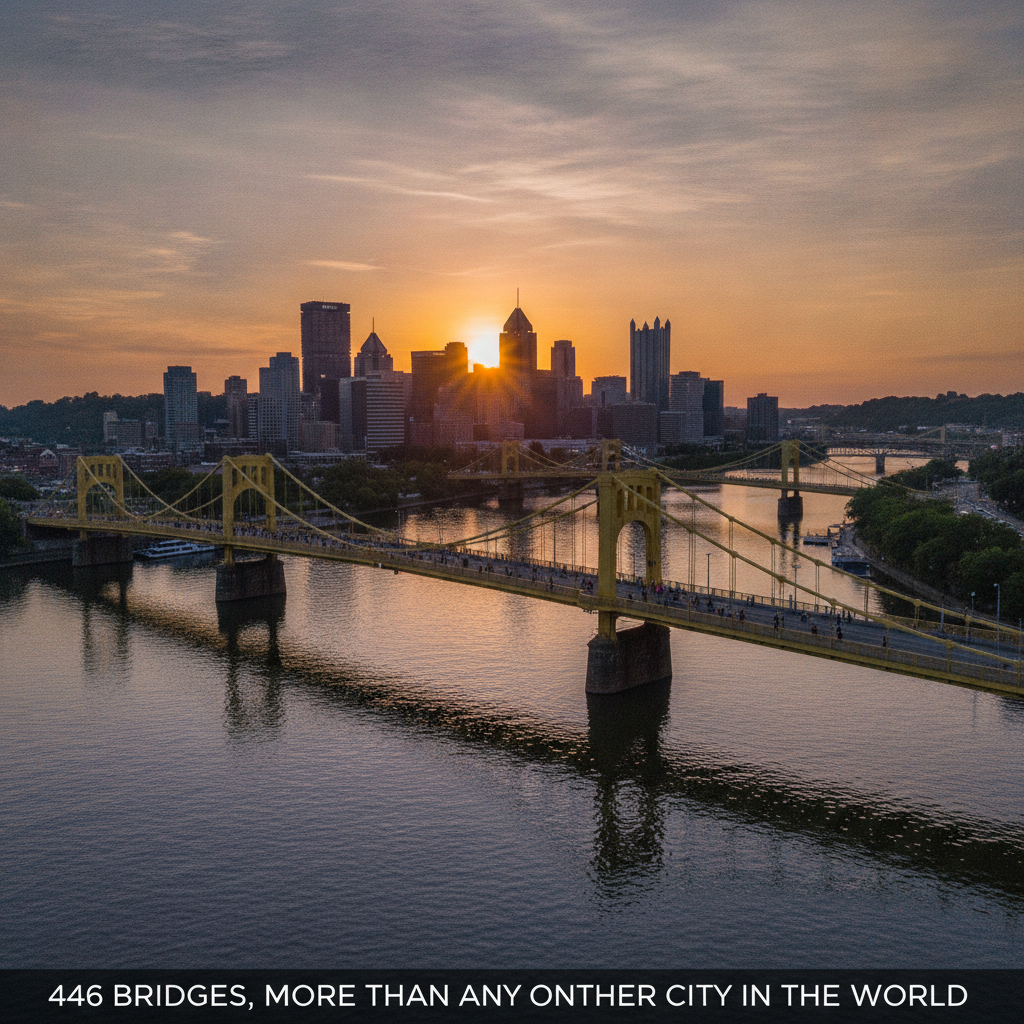
Pittsburgh R4: Oakland (Cathedral of Learning 42-story tallest educational Western Hemisphere, 30 Nationality Classrooms, Phipps Conservatory 1893 LEED Platinum, Schenley Park Mary Schenley 1889), Steelers dynasty (Chuck Noll 4 Super Bowls 1974 draft greatest in NFL history, Steel Curtain, Immaculate Reception 1972, Terrible Towel 1975, Yinzer Pittsburghese yinz jagoff), Penguins (Lemieux lymphoma 1993 hatrick 3 days after radiation, saved team from bankruptcy 1999, Crosby 3 Stanley Cups 2010 Olympic golden goal), Pittsburgh bridges 446 (Three Sisters self-anchored unique trio, Fort Pitt Tunnel arrival greatest urban moment, bridge engineering CMU Pitt), Roberto Clemente (18 seasons .317 BA 12 Gold Gloves 3,000 hits, died December 31 1972 Nicaragua earthquake relief, Hall of Fame 1973 no waiting period, MLB 21 retired league-wide 2023), Pittsburgh today (Google Duolingo 500M users von Ahn CMU, median home USD 200-250K affordable, carbon neutrality 2030 commitment)
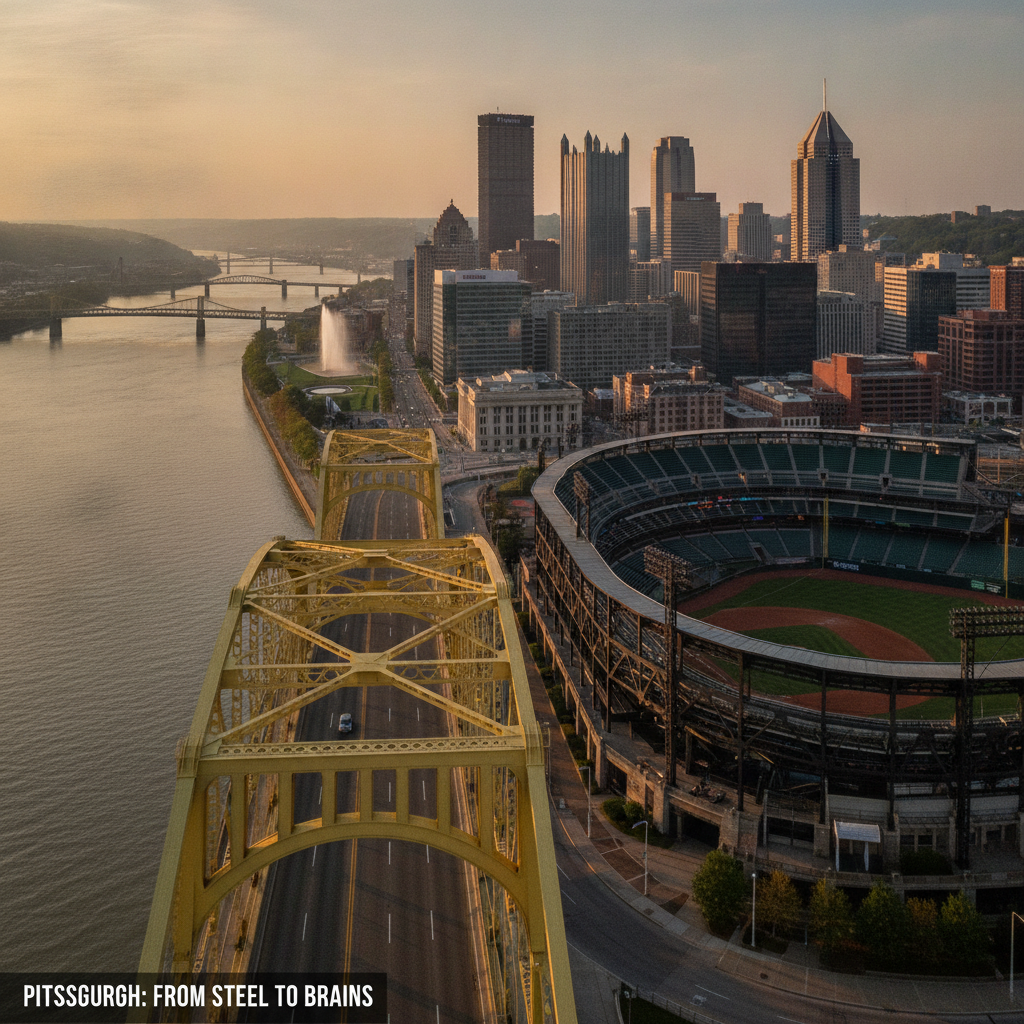
Pittsburgh R2: Neighborhoods (Squirrel Hill Tree of Life shooting October 2018 deadliest US antisemitic attack, Lawrenceville craft beer arts gentrification, Mexican War Streets Victorian), Rust Belt recovery (UPMC 92,000 employees USD 26B largest PA employer, CMU UM 55,000 students USD 3B, robotics Uber ATG Argo AI Aurora), Three Rivers outdoor (Heritage Trail 45km, Three Rivers Regatta largest free inland, Ohiopyle Class III-IV rapids Yough), Pittsburgh history (Fort Duquesne 1754 French Indian War George Washington first mission, Forbes captures 1758 Fort Pitt, Frick Westinghouse Mellon Gilded Age, Richardson Courthouse 1888 greatest 19th century American architecture), Warhol and arts (7-story museum Silver Clouds Time Capsule 600 boxes, Benedum Center Stanley Theater 1987, Pittsburgh Glass Center largest public US, Pittsburgh Symphony Orchestra), Practical (T light rail free downtown, PIT airport 1992 most advanced, 160-165 sunny days cloudiest major US city, Three Rivers Arts Festival 300,000 June)
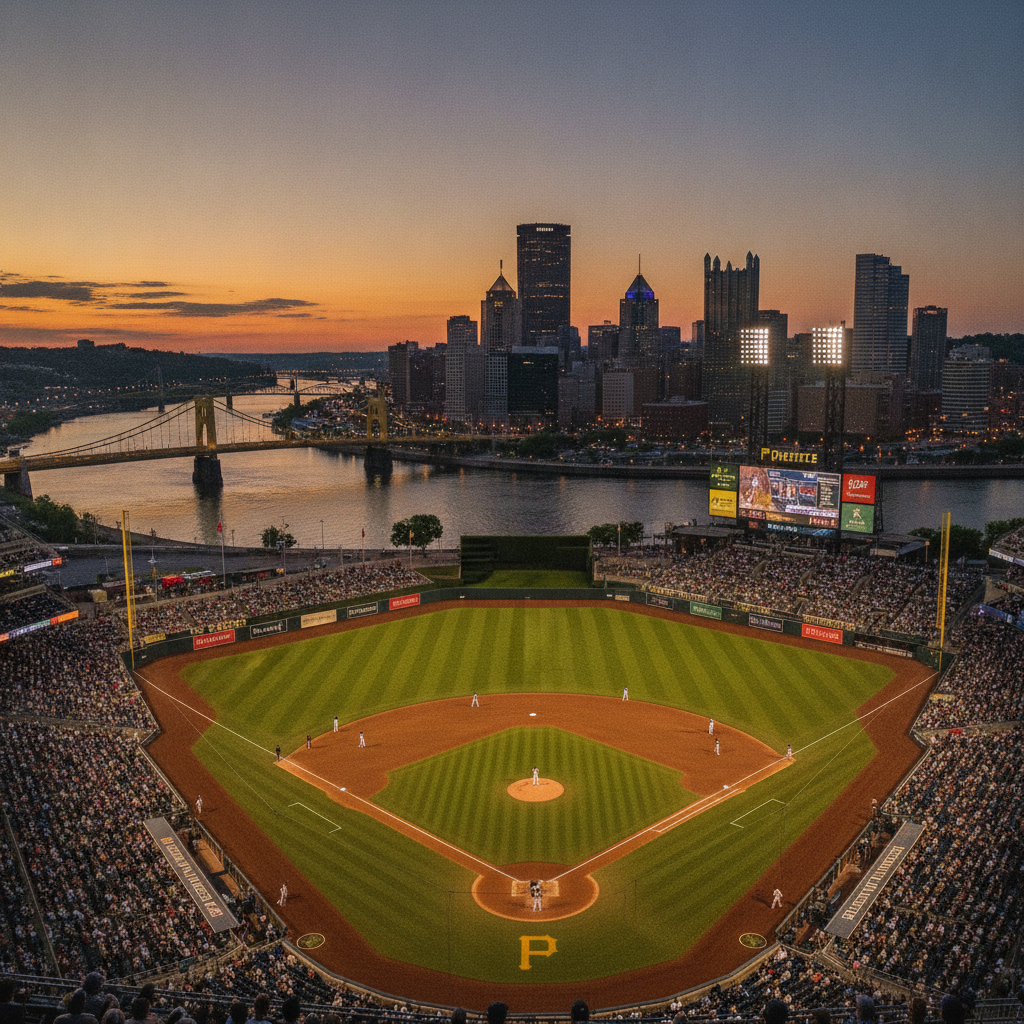
Pittsburgh: Fallingwater in the Forest, Glass Hothouses and the City That Reinvented Itself
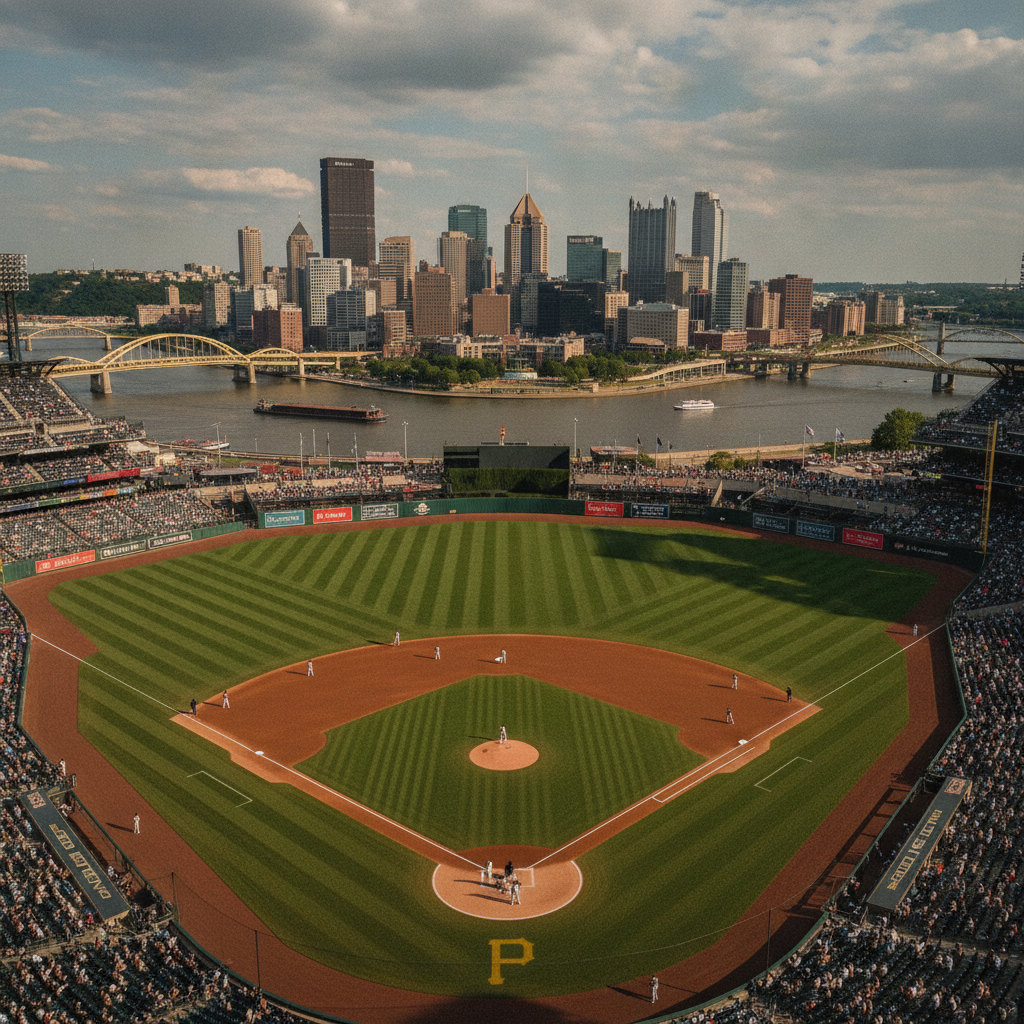
Pittsburgh: Six Super Bowls, Diplodocus Given to Kings and Fries Inside the Sandwich