Portland Maine R2-R5: Arts District (Portland Museum of Art 1882 18,000 works Winslow Homer collection, I.M. Pei wing 1983, First Friday Art Walk 10,000 monthly, Portland Observatory 1807 only remaining US maritime signal tower, State Theatre 1929 Art Deco 1600 seats); Literary (Harriet Beecher Stowe Uncle Tom's Cabin 1851-1852 best-selling 19th century US after Bible 300,000 copies year one Lincoln so you started this great war, Stephen King born Portland 1947 Bangor bat-gate house, Sarah Orne Jewett Country Pointed Firs 1896, E.B. White Charlotte's Web Maine saltwater farm); Casco Bay Islands (Peaks Island 15min 1000 residents Battery Steele WWII 1942 graffiti murals, Cliff Island 60 residents 90min no stores roads, Eagle Island Peary North Pole April 6 1909 summer home 1904, Maine Island Trail 375 miles 7000 kayakers); Wilderness (90% forested 7M hectares, moose 75,000-80,000 largest contiguous US, Baxter 83,371ha Governor Baxter 37 donations 1931-1962, Katahdin 1606m AT northern terminus 3540km 1000-1500 thru-hikers/year, Moosehead Lake 483km2 largest NE); Architecture (Great Fire July 4 1866 1500 buildings 10,000 homeless most destructive US before Chicago 1871, rebuilt 1867-1875 most coherent Victorian streetscape US, Victoria Mansion 1858 finest Italian Villa US, City Hall Carrere Hastings 1909); Seasonal (summer book 2-4 weeks advance, Lobster Festival July, Sunday River 135 trails, Sugarloaf best natural snow).
Portland Maine R2-R5: arts (PMA 1882 18,000 works Homer collection, I.M. Pei 1983, First Friday 10,000 monthly, Observatory 1807 only US maritime signal tower, State Theatre 1929), literary (Stowe Uncle Tom's Cabin 1851 best-selling 19th C Bible, Lincoln so you started this war, King born Portland 1947 Bangor, Jewett Country Pointed Firs 1896, E.B. White Charlotte's Web Maine), Casco Bay (Peaks Island 15min 1000 Battery Steele 1942 graffiti, Cliff Island 60 residents 90min no stores, Eagle Island Peary April 6 1909 North Pole, Maine Island Trail 375 miles 7000 kayakers), wilderness (90% forested 7M ha, moose 75-80,000 largest contiguous US, Baxter 83,371ha 37 donations 1931-1962, Katahdin AT terminus 3540km 1000-1500 thru-hikers, Moosehead 483km2 largest NE), architecture (Great Fire July 4 1866 1500 buildings most destructive US before Chicago, Victoria Mansion 1858 finest Italian Villa US, City Hall Carrere Hastings 1909), seasonal (summer book 2-4 weeks, Lobster Festival July, Sunday River 135 trails, Sugarloaf natural snow).
- 1
Portland Arts District and Congress Street
The Portland Arts District (centered on Congress Street between Monument Square and the Portland Museum of Art): the cultural heart of Portland, with the highest concentration of galleries, performance spaces, and public art of any neighborhood in northern New England. The Portland Museum of Art (at 7 Congress Square, at the intersection of Congress, High, and Free Streets, founded 1882): the largest art museum in Maine, with a permanent collection of approximately 18,000 works, including the definitive collection of American impressionist work from the Winslow Homer studio (Homer lived and worked at Prouts Neck, 22 km south of Portland, from 1883 until his death in 1910, and his studio there is now a national historic landmark). The museum's modern wing (designed by I.M. Pei's firm in 1983): one of the few I.M. Pei buildings in New England, with the red brick and glass facade complementing the adjacent Federal and Victorian commercial buildings. First Friday Art Walk (the monthly gallery walk on the first Friday of each month): the most-attended recurring cultural event in Maine, with approximately 10,000 participants moving through the Old Port, Arts District, and East End galleries. The State Theatre (at 609 Congress Street, built 1929, restored 2010): the most important concert venue in Maine, presenting nationally touring acts in a 1,600-seat Art Deco theater. Space Gallery (at 538 Congress Street): the non-profit contemporary arts organization that has been the center of Portland's avant-garde art scene since 2002. The Wex (Westbrook Performing Arts Center): the major performing arts venue in the Portland suburbs. Munjoy Hill (the neighborhood at the eastern end of the Portland peninsula, rising to the Eastern Promenade, with the Portland Observatory at 138 Congress Street — the only remaining maritime signal tower in the United States, built 1807, now a museum with views of Casco Bay and the White Mountains).
- 2
Maine's Literary Heritage and Harriet Beecher Stowe
Maine's literary heritage: Maine has produced a disproportionate share of America's most important writers, from the 19th-century giants to contemporary literary stars. Harriet Beecher Stowe (born June 14, 1811, Litchfield, Connecticut; died July 1, 1896, Hartford, Connecticut): the author of Uncle Tom's Cabin (published serially in the National Era newspaper from June 1851 to April 1852, then as a book in March 1852 — the best-selling novel in American history after the Bible in the 19th century, with 300,000 copies sold in its first year in the United States and 1 million copies in Great Britain). Stowe wrote Uncle Tom's Cabin while living in Brunswick, Maine (where her husband Calvin Stowe was a professor at Bowdoin College), in a house at 63 Federal Street that is now a hotel (the Harriet Beecher Stowe House). When Abraham Lincoln met Stowe at the White House in 1862, he reportedly said: So you are the little woman who wrote the book that started this great war. Stephen King (born September 21, 1947, Portland, Maine): the most commercially successful novelist in American history, born in Portland and living for most of his career in Bangor, Maine (the house at 47 W Broadway, Bangor, with the famous bat-and-spider-web iron gates, is a Stephen King landmark). King's Maine settings: most of King's novels are set in fictional Maine locations (Castle Rock, Derry, Jerusalem's Lot) that clearly draw on Maine landscapes, culture, and communities. Other Maine writers: Sarah Orne Jewett (born September 3, 1849, South Berwick, Maine; died June 24, 1909): the master of local-color fiction of the Maine coast, whose The Country of the Pointed Firs (1896) is considered one of the finest works of American regional literature. E.B. White (born July 11, 1899, Mount Vernon, New York; died October 1, 1985, North Brooklin, Maine): the author of Charlotte's Web and Stuart Little, who lived on a saltwater farm in Maine for the second half of his life.
- 3
Casco Bay Islands - Peaks Island and Beyond
The Casco Bay Islands (the Calendar Islands, named for the (incorrect) belief that there were 365 of them — one for each day of the year — there are actually approximately 4,600 in Casco Bay): the archipelago of islands in Portland Harbor and the outer bay, ranging from small seasonal summer colonies to year-round communities with permanent ferry service. Peaks Island (the closest island to Portland, 15 minutes by Casco Bay Lines ferry from the Commercial Street terminal, year-round population approximately 1,000, summer population 5,000-6,000): the most accessible and most visited of the Casco Bay islands, with 11 km of roads and a vibrant summer community. The Museum of Contemporary Art Maine (on Peaks Island): the small contemporary art gallery that hosts summer exhibitions by Maine and national artists. The Battery Steele (the World War II coastal artillery battery on the western end of Peaks Island): the concrete gun emplacements from 1942, abandoned after the war and now covered in graffiti murals, one of the most unusual urban exploration destinations in the Portland area. Cliff Island (the outermost year-round inhabited island in Casco Bay, 90 minutes by ferry from Portland, population approximately 60 year-round): the most remote and untouched of the regular ferry stops, with no stores, no restaurants, and no paved roads — pure Maine island life. Eagle Island (accessible only by private charter, 45 minutes from Portland): the island where Rear Admiral Robert Peary (the Arctic explorer who is generally credited with reaching the North Pole first, on April 6, 1909) built his summer home in 1904 (now preserved as a Maine Historic Site). The Maine Island Trail (the 375-mile water trail along the Maine coast, from Casco Bay to Machias Bay): the most extensive sea kayaking trail in the United States, used by approximately 7,000 kayakers and boaters per year.
- 4
Maine's Natural Environment - Moose, Baxter State Park, and the Wilderness
Maine's wilderness: Maine is the most forested state in the eastern United States (approximately 90% of the state is covered by forest — more than 7 million hectares), and is home to approximately 75,000-80,000 moose (the largest moose population in the contiguous United States). The Maine moose: the moose (Alces alces) is the largest member of the deer family (bulls weighing 450-600 kg, standing 1.8-2.1 m at the shoulder, with antlers spanning up to 1.8 m), and is so central to Maine's identity that it appears on the state seal and is the subject of an entire tour industry (moose-spotting tours, particularly in the Rangeley Lakes region and Moosehead Lake area, 3-4 hours north of Portland). Baxter State Park (at Balsam Drive, Millinocket, Maine, 5 hours north of Portland): the 83,371-hectare wilderness park donated to the state of Maine by Governor Percival Proctor Baxter (who donated the land in 37 separate conveyances from 1931 to 1962), with Katahdin (the 1,606-m peak, the highest point in Maine and the northern terminus of the Appalachian Trail) at its center. The Appalachian Trail: the 3,540-km hiking trail from Springer Mountain, Georgia to Katahdin, Maine is the most famous long-distance hiking trail in the world, with approximately 3 million hikers per year (mostly day hikers on accessible sections) and approximately 1,000-1,500 thru-hikers completing the full trail each year. Katahdin: approaching from the south after a 5-6 month thru-hike, reaching the Katahdin summit is the emotional culmination of one of the most demanding physical and psychological journeys available to a human being — the moment when thru-hikers touch the summit sign is the most photographed moment in American hiking culture. Moosehead Lake (the largest lake in New England, at 483 km2): the remote lake in central Maine accessible from Greenville, 4 hours north of Portland.
- 5
Portland Maine Historic Districts and Architecture
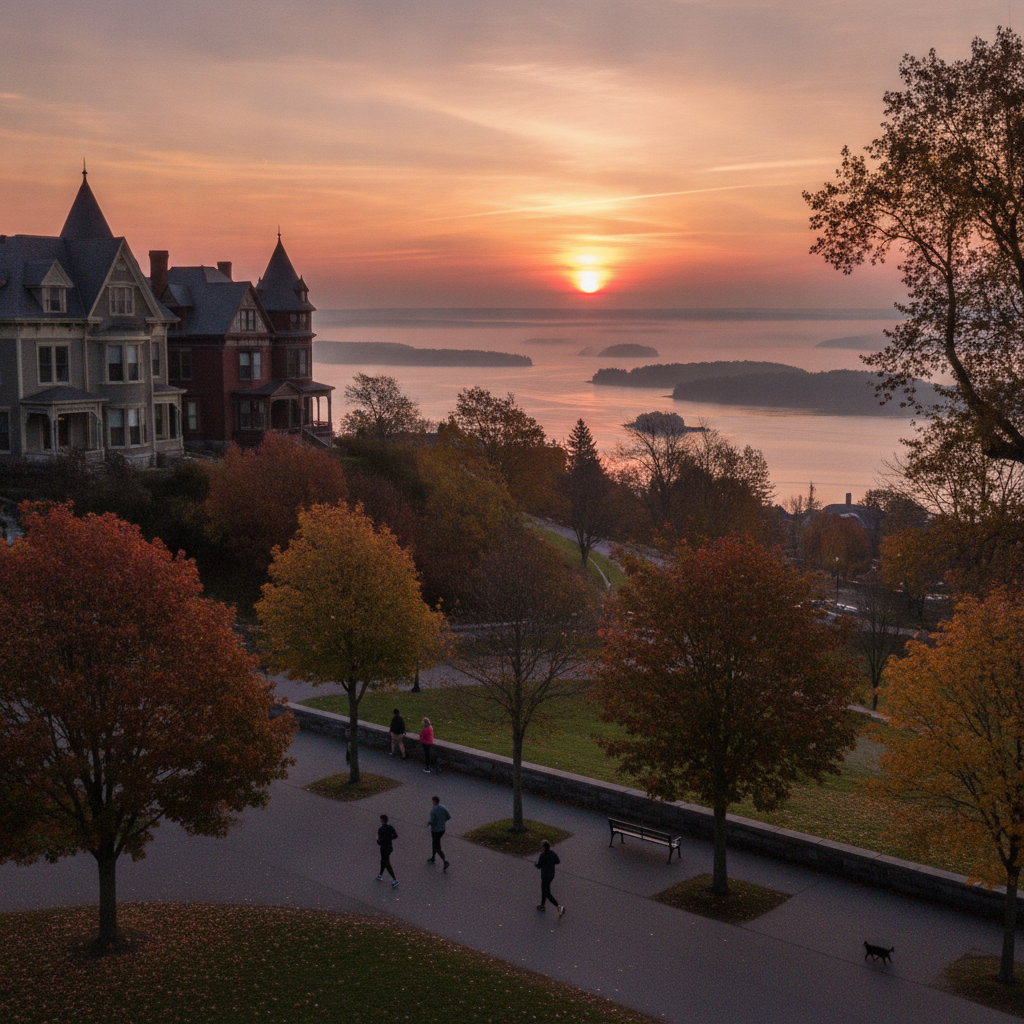
Portland's architectural heritage: the city was rebuilt almost entirely in Victorian-era brick following the Great Fire of July 4, 1866 (the fire that destroyed approximately 1,500 buildings in the city center — the most destructive urban fire in American history before the 1871 Chicago Fire, destroying 58 blocks and leaving 10,000 of Portland's 32,000 residents homeless). The Victorian rebuilding: the speed of rebuilding (most structures were completed within 2-3 years of the fire) means that Portland has one of the most coherent Victorian-era streetscapes in America — virtually the entire Old Port and Congress Street commercial districts date from 1867-1875. The Victoria Mansion (at 109 Danforth Street, Portland, built 1858-1860, designed by Henry Austin): the finest example of Italian Villa residential architecture in the United States, with an interior that is the most intact example of Victorian decorative arts in America (the original wallpapers, painted ceilings, parquet floors, marble fireplaces, and furniture by Gustave Herter are all original to the 1858 construction). The Portland City Hall (at 389 Congress Street, built 1909, designed by Carrere and Hastings — the same firm that designed the New York Public Library): the Beaux-Arts municipal building with a clock tower visible from much of the waterfront. The Wadsworth-Longfellow House (see above): the first brick building in Portland, surviving the 1866 fire because of its brick construction. The Eastern and Western Promenades (the park promenades along the eastern and western edges of the Portland peninsula): the most beautiful urban park walks in Maine, with the Eastern Promenade offering views of Casco Bay and the islands and the Western Promenade offering views of the White Mountains of New Hampshire on clear days.
- 6
Portland Maine Seasonal Guide and Practical Tips
Portland Maine seasonal guide. Summer (late June through early September): the peak tourist season, with the highest restaurant reservations demand (book 2-4 weeks in advance for the top Old Port restaurants in July-August), the most active Old Port bar scene, the Portland Lobster Festival (the three-day festival at the Commercial Street waterfront, typically held in late July, with whole steamed lobster, lobster rolls, and live music), and the most reliable weather (average highs 25-28 degrees Celsius, average rainfall 90mm per month). The Portland Farmers Market at Deering Oaks Park on Saturday (the most important outdoor market in northern New England, with local produce, cheese, honey, and prepared food, open mid-May through November). Fall (September-October): the foliage season, when the Maine interior (Sebago Lake area, Rangeley Lakes, Baxter State Park drive) peaks in mid-October, the best lobster season for size and quality (summer lobsters are harder-shelled and considered by many chefs inferior to the sweeter fall moulting-season lobster), and the most comfortable temperatures for hiking and cycling. Winter (November through March): the off-season for tourism but an excellent time for the Portland Museum of Art without crowds, the Allagash and Bissell Brothers brewery taprooms, and the local food scene at its most innovative (Portland chefs tend to push their most ambitious cooking in winter when summer tourist crowds are absent). Portland Ski: Sunday River (at 15 South Ridge Road, Newry, Maine, 120 km north of Portland) is the most comprehensive ski resort in the eastern United States outside of Vermont, with 135 trails and consistent snowmaking. Sugarloaf (at 5092 Access Road, Carrabassett Valley, Maine, 200 km north of Portland) is the most authentic Maine ski mountain, with the best natural snow in the state.
Walk this route with audio
Stories play automatically as you reach each stop — no tapping needed.
More in portland-maine
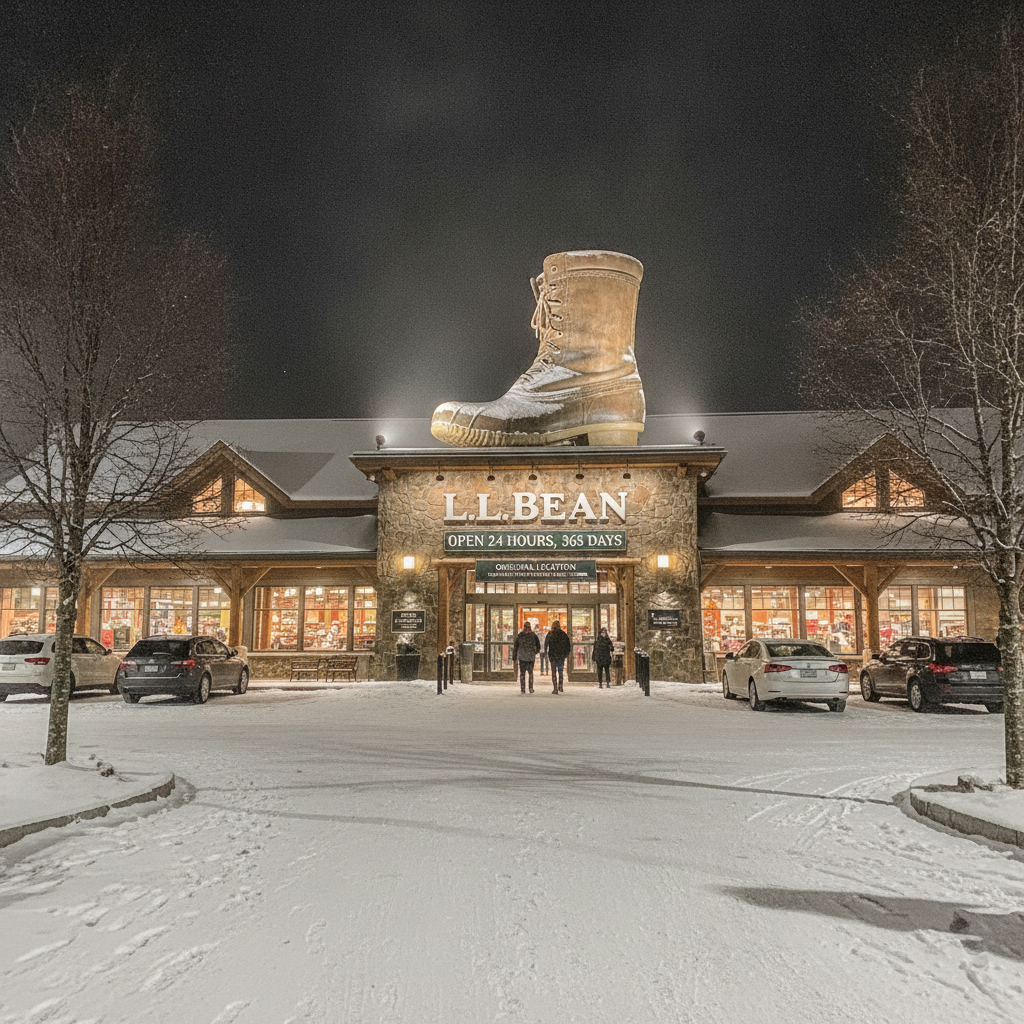
Portland Maine R5: Great Fire July 4 1866 (firecracker boatshop 4pm 1500 buildings 10,000 homeless 2 dead, rebuilt by 1870 most architecturally unified Victorian streetscape US, Italianate brick bracketed cornices, Maine granite Vinalhaven Deer Isle Crotch Island most important US stone industry 1820-1900), Civil War (70,000 Maine men 70% male population, 20th Maine Gettysburg July 2 1863, Chamberlain born 1828 Brewer bayonet charge Little Round Top saved Union left Medal of Honor awarded June 11 1900 37 years later, 54th Massachusetts Fort Wagner July 18 1863 Glory 1989 Denzel Washington Oscar), Bowdoin (1794 Brunswick 40km, Hawthorne Scarlet Letter 1850, Longfellow, Franklin Pierce 14th President Kansas-Nebraska Act 1854, Chamberlain, Peary North Pole, Peary-MacMillan Arctic Museum, University of Maine 1865 Orono 11,000), Freeport L.L. Bean (1912 Leon Bean Maine Hunting Shoe 100 pairs refunded, 24hrs 365 days since 1912, 3M visitors/year, 200 outlet stores, Desert of Maine overfarmed glacial silt 50 acres), Literature (Thoreau Maine Woods 1864 Katahdin 1846, E.B. White Charlotte's Web North Brooklin farm 1938-1985, Robert McCloskey born 1914 died Deer Isle 2003 Make Way Ducklings 1941 Caldecott 1942 Blueberries Sal), Economy (Aroostook 18-20% poverty 30% population loss since 1960, logging Penobscot River, paper mills Millinocket East Millinocket Lincoln Rumford closed 2008-2014 5000 jobs, cannabis 2016 2020 retail USD 150M 800 retailers, remote work COVID top 10 inflows).
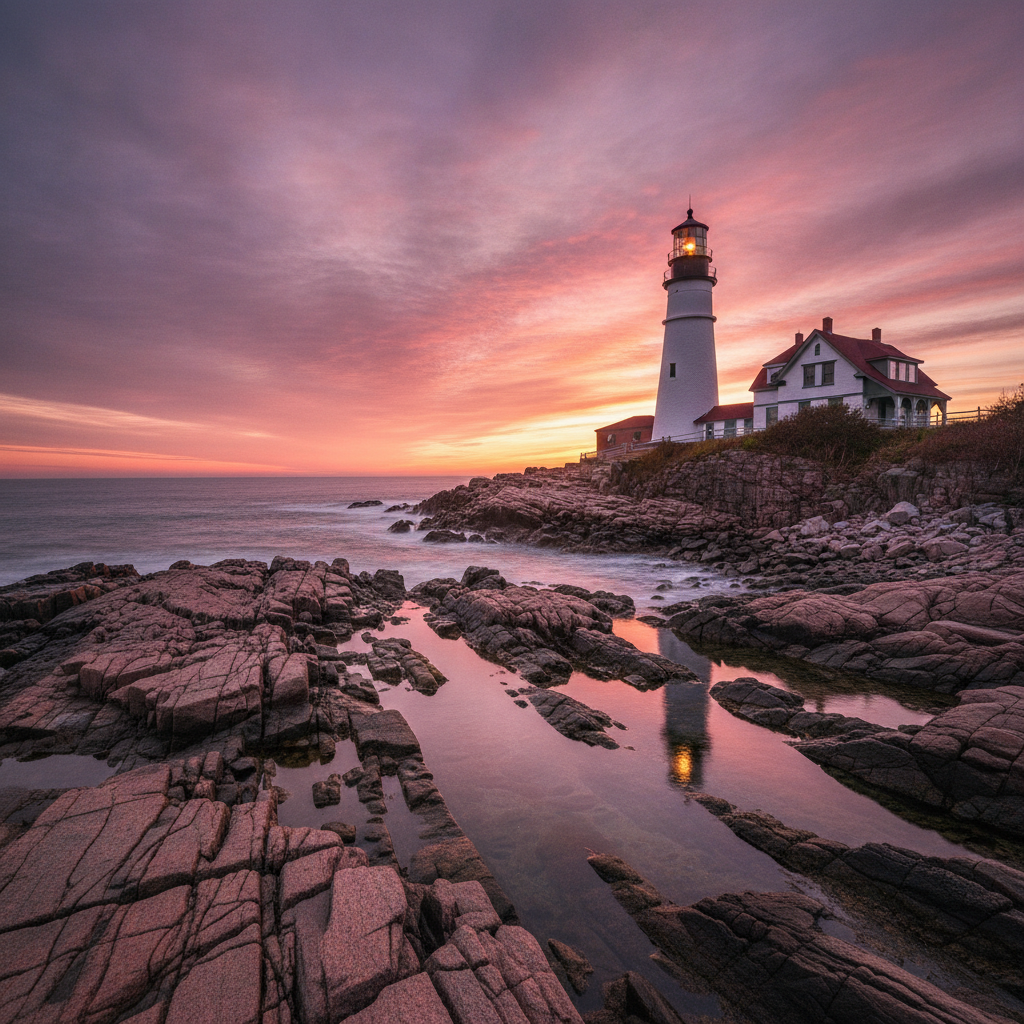
Portland Maine: Old Port, lighthouses, lobster industry, food scene, Acadia, and practical guide
Portland Maine R4: Winslow Homer (born 1836 moved Prouts Neck 1883, Northeaster 1895 Blue Boat 1892 Eight Bells 1886, studio National Historic Landmark opened 2012, Farnsworth Museum Rockland finest NE regional art NC Wyeth died railroad crossing 1945, Andrew Wyeth Christina's World 1948 Olson House Cushing, Jamie Wyeth 1946 dynastic family), outdoors (sea kayaking premier eastern US, Maine Island Trail 600km 200 island campsites, L.L. Bean Freeport 1912 open 24hrs 365 days since 1951, Mount Battie 475m Camden Hills, Sugarloaf 1291m above treeline), Congress Street (Maine Historical Society 1822 oldest institution 2M items, Monument Square Civil War memorial Simmons 1891, Portland Press Herald 1862, West End Victorian Federal Greek Revival Italianate Queen Anne), Rangeley Lakes (180km north, 650km2 lake chain, Victorian resort 1880s Rangeley Lake House 500 guests, brook trout 6-8kg depleted, Wilhelm Reich Museum 1897-1957 orgone FDA censored destroyed publications 1954-1956 most significant scientific censorship US), Lobster roll (cold Mayo Maine-style vs warm drawn butter CT-style, Reds Eats Wiscasset 41 Water Street 45-90min lines full pound no mayo, Lukes Lobster 2009 Holden, Eventide brown butter bao, Five Islands lobster shacks), Wabanaki (Penobscot Passamaquoddy Maliseet Mi'kmaq Abenaki 12,000 years, Indian Island Old Town 2500 members, birchbark canoe 400kg capacity 20kg weight, Maine Indian Claims Settlement 1980 USD 81.5M 60% of Maine largest US Native settlement at time, Abbe Museum Bar Harbor).