Bohemian Bohemia: Vinohrady, Žižkov & the Baby Tower
East of the Old Town, two neighborhoods tell the story of Prague's middle classes and its revolutionary spirit. Vinohrady — 'the vineyards' — is the city's most elegant fin-de-siècle residential district, its broad streets lined with Art Nouveau apartment buildings. Žižkov, named after the one-eyed Hussite general Jan Žižka, is its working-class counterpart — scruffier, more creative, home to more pubs per capita than anywhere else in Prague, and crowned by the most surreal landmark in the city.
- 1
Náměstí Míru
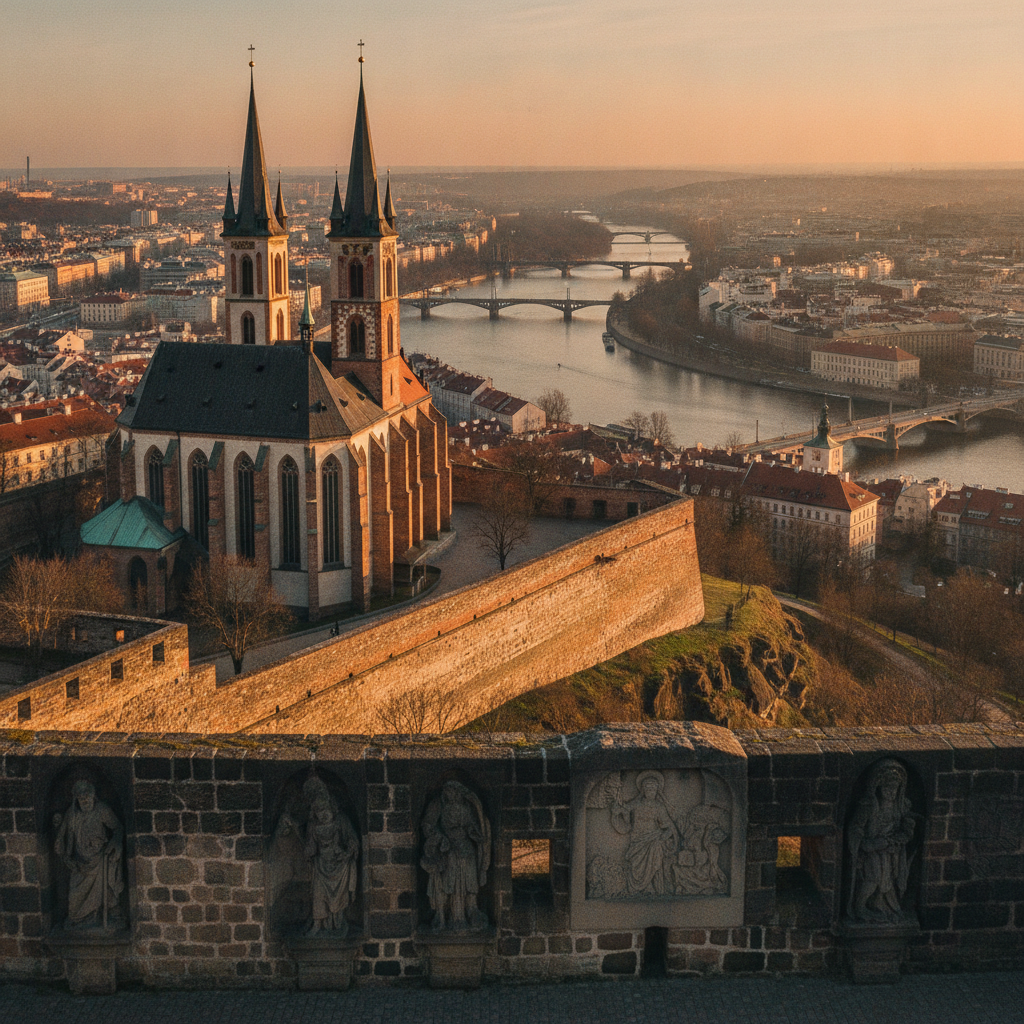
The main square of Vinohrady, Náměstí Míru — 'Peace Square' — is the social heart of Prague's most livable neighborhood. The square's centerpiece is the Church of St. Ludmila (1888–1893), a twin-towered Neo-Gothic church designed by Josef Mocker, the same architect responsible for the final spires on Týn Church. The square itself is surrounded by some of the finest Art Nouveau apartment buildings in Prague, their ornate stucco facades and ironwork balconies entirely intact. The Vinohrady Theatre on the square's northern side is a gorgeous example of Czech Art Nouveau public architecture, its facade covered in allegorical figures representing Drama, Opera, and Music.
- 2
Church of St. Ludmila
Standing at the center of Náměstí Míru, the twin Neo-Gothic towers of the Church of St. Ludmila rise 60 meters above the square. The church was built to serve the rapidly growing population of Vinohrady — a new neighborhood that sprang up in the 1880s and 1890s on the vineyards southeast of the Old Town, quickly becoming Prague's most fashionable residential address. The interior mosaics and stained glass windows, added in the early 20th century, are excellent examples of Czech Symbolist religious art. The church's quiet side garden is a pleasant spot for a rest on the way between the square and Riegrovy sady park.
- 3
Riegrovy Sady Park
Vinohrady's main park, Riegrovy sady, sits on a hillside with one of the best views over the city center available anywhere — looking across the Nusle valley toward the Old Town, with the roof of the National Theatre visible and, on clear days, the white flash of the castle far beyond. The park's famous beer garden, open in warm weather, is packed with locals on summer evenings — the least tourist-facing outdoor drinking spot in central Prague. The park's upper meadow hosts open-air cinema screenings in summer; the lower slopes have playgrounds and a rose garden.
- 4
Žižkov Television Tower
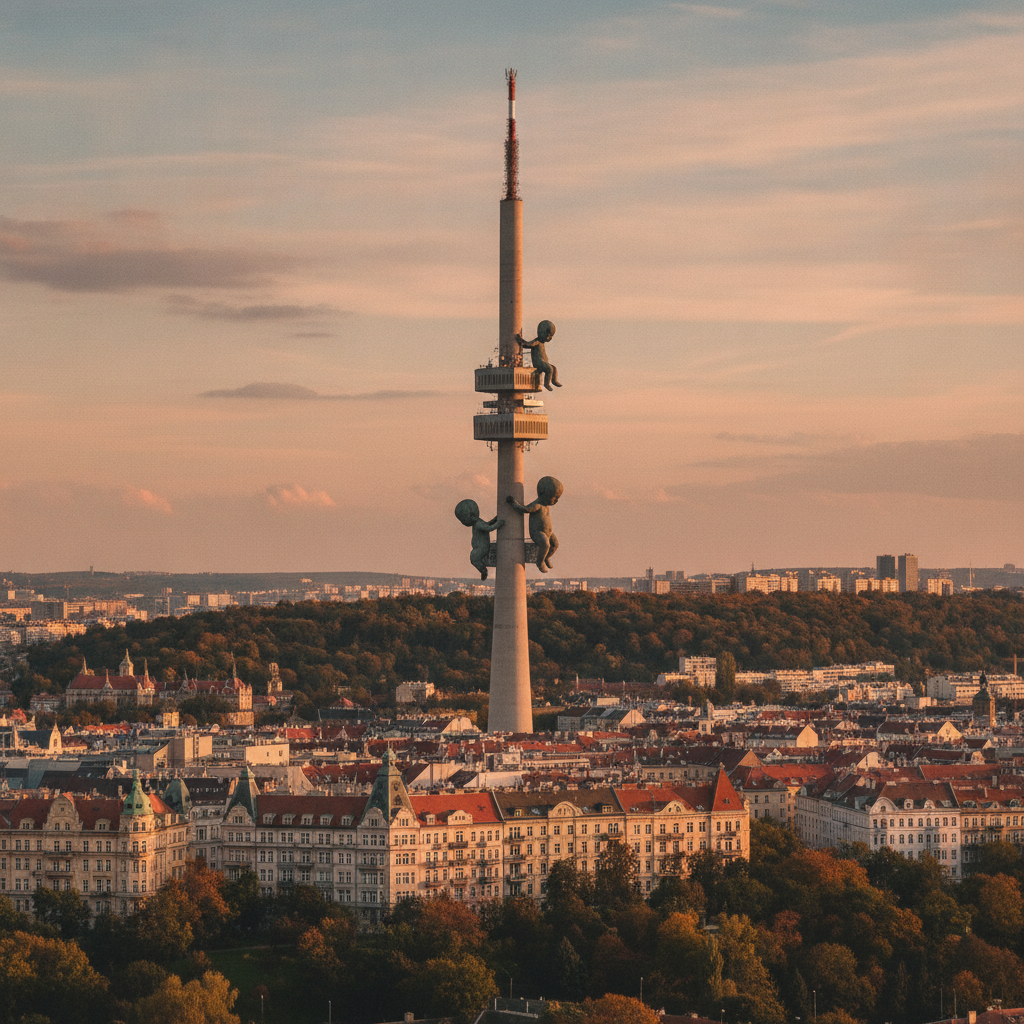
Built between 1985 and 1992 during the final years of Communist rule, the Žižkov Television Tower is 216 meters tall and visible from almost every point in Prague. Architecturally, it is either a masterpiece of late-Socialist Brutalism or a concrete abomination, depending on your point of view—David Černý's 1995 addition of ten giant crawling baby sculptures clinging to the tower's legs has made it one of the most recognized and divisive landmarks in Central Europe. A single luxury hotel suite inside the tower offers what is probably the most extraordinary bedroom view in Prague. The observation deck on the 93-meter level is open to visitors and gives a complete 360-degree panorama of the city.
- 5
Olšany Cemetery
The vast Olšanské hřbitovy — Olšany Cemetery — is the largest cemetery in Prague, with over two million burials on 50 hectares of wooded ground. Founded in 1680 during a plague epidemic, it expanded through the 18th and 19th centuries into a catalog of Prague's architectural history: Baroque family chapels, Neo-Gothic tombs, Art Nouveau grave sculptures, and Functionalist mausoleums. The cemetery is a peaceful working-class counterpart to the more famous Vyšehrad Cemetery; its regular visitors are local families tending graves, not tourists. Among those buried here are painter Josef Mánes and writer Jan Neruda, after whom Pablo Neruda took his pen name.
- 6
Seifertova Street & Žižkov
The main street of Žižkov runs through one of Prague's most authentic neighborhoods — a working-class district that grew up in the 19th century and retains a character unchanged since the Communist era. The neighborhood is famous for its extraordinary density of pubs — historically, Žižkov had more bars per capita than any other place in the world, a legacy of its proletarian culture and political radicalism. Today it is also home to studios, galleries, and the city's most creative small restaurants. The Jan Žižka equestrian statue on the hill above — the largest equestrian bronze statue in the world — stands before the National Memorial on Vítkov hill, a monument to Czech independence that doubles as a mausoleum.
Walk this route with audio
Stories play automatically as you reach each stop — no tapping needed.
More in prague
The High Ground: Letná Park, Holešovice & Prague's Creative Quarter
Memory & Stone: Prague's Jewish Quarter (Josefov)
Stone Saints & Hidden Gardens: Charles Bridge & Malá Strana
Bohemian Crown: Prague Castle & Hradčany
River & Gardens: Troja Chateau, Prague Zoo & the Wild North