Puebla Day Trips Cuetzalan Cloud Forest Izucar de Matamoros Matamoros Tlaxiaco and the Sierra Norte de Puebla Where Indigenous Communities Maintain a Living Culture in Mexico's Most Biodiverse Mountain Range
The Sierra Norte de Puebla, the mountain range that descends from the high plateau of the Puebla-Tlaxcala valley to the humid Gulf Coast lowlands, is one of the most biodiverse regions of Mexico, containing cloud forest ecosystems with over 400 orchid species, endemic birds including the resplendent quetzal in the highest cloud forest zones, and the indigenous communities of Nahua, Totonac, and Tepehua peoples who have maintained their languages, ceremonial traditions, and agricultural systems through 500 years of colonial and post-colonial transformation. Cuetzalan del Progreso, the colonial and indigenous market town 170 kilometres northeast of Puebla city in the Sierra Norte cloud forest, is the primary ecotourism and cultural tourism destination in the sierra, with the Sunday tianguis market where Nahua women in white quechquemitl blouses sell produce and crafts alongside the mestizo vendors, the coffee and vanilla plantations of the cloud forest slopes, the Voladores de Papantla ceremony performed on the central plaza pole, and the archaeological site of Yohualichan 3 kilometres from the town center. The Totonac archaeological site of Yohualichan, whose ball courts, platforms, and the distinctive Totonac niche facade architecture document the cultural connections between the Sierra Norte communities and the Gulf Coast Totonac civilization of El Tajin, provides the pre-Hispanic cultural depth that the Cuetzalan tourism circuit requires beyond the colonial church and market experience. The Sierra Negra Observatory, operated by the National University of Mexico on the extinct volcano of the Sierra Negra at 4,600 metres elevation 90 kilometres southeast of Puebla, houses the Large Millimeter Telescope, the world's largest single-dish millimeter wave telescope at its 2011 completion, whose operation at extreme altitude with the stable atmospheric conditions of the high plateau has made it a significant instrument for the global radio astronomy community.
- 1
Cuetzalan Cloud Forest and Totonac Heritage
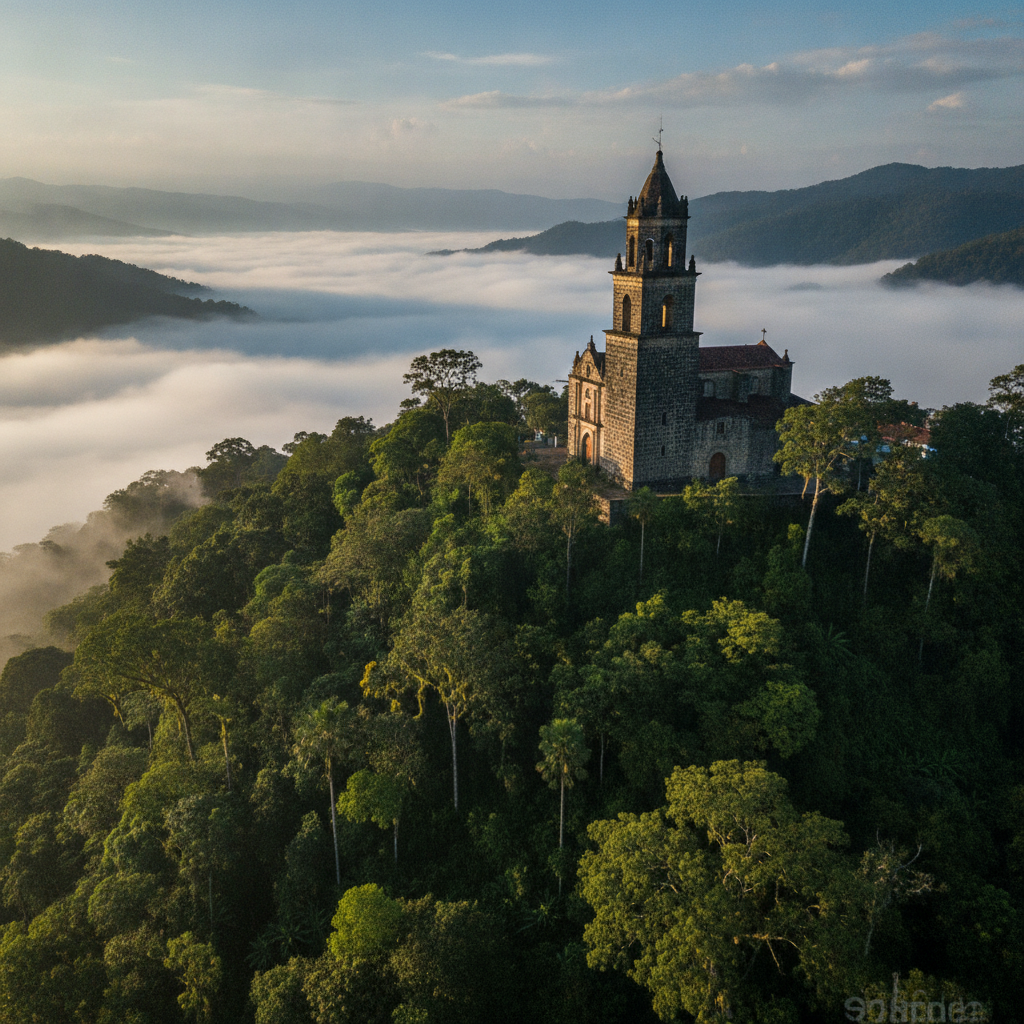
Cuetzalan del Progreso, the colonial mountain town in the Sierra Norte de Puebla at 1,000 metres elevation in the transition zone between the high plateau climate and the humid cloud forest of the Gulf Coast slope, is the most visited ecotourism and cultural tourism destination in the Puebla sierra, combining the colonial urban heritage of the 16th-century Dominican mission with the living indigenous culture of the surrounding Nahua communities and the cloud forest ecology of the tropical montane forest. The Sunday market of Cuetzalan, where Nahua women from the surrounding communities descend to sell the produce of their milpa agriculture, the artisan textiles of the back-strap loom tradition, and the vanilla, coffee, and honey of the sierra economy, is the primary cultural event of the week, creating the social gathering that has functioned as the regional exchange system since the pre-Hispanic tianguis tradition. The Totonac archaeological site of Yohualichan, 3 kilometres from Cuetzalan on a ridge with views over the cloud forest valley, presents the niche architecture of the Totonac tradition - the talud-tablero pyramid forms with decorative niches cut into the tablero walls - that connects the Sierra Norte communities to the Gulf Coast Totonac civilization of El Tajin in Veracruz. The cloud forest surrounding Cuetzalan, preserved by the ejido community lands and the national biosphere area protections, supports over 400 orchid species, the resplendent quetzal in the highest zones, ocelots, and the rich bird diversity of the Mexican cloud forest that draws birdwatchers from the international ornithological community to the area. The vanilla production of the Cuetzalan region, using the traditional Totonac method of hand-pollination of the vanilla orchid vine rather than the artificial open-air pollination of the commercial vanilla operations, produces a quality product that the premium vanilla market increasingly seeks as the vanilla flavor market differentiates quality producers from commodity suppliers.
- 2
Voladores Ceremony and Totonac Culture
The Voladores ceremony of the Totonac and Nahua communities of the Sierra Norte de Puebla and the adjacent Veracruz sierra is one of the most visually dramatic indigenous ceremonial performances in Mexico, involving four men and a music player ascending a wooden pole of 30 metres, with the four flyers attaching themselves to ropes wound around the top of the pole and then launching themselves backwards to descend slowly in a spiral as the ropes unwind, completing 13 rotations each for a total of 52 rotations that represent the 52-year cycle of the Mesoamerican calendar. The ceremony originated among the Totonac communities of the Gulf Coast sierra as a petition to the sun deity for rain and agricultural fertility, and has been maintained as a living ceremonial practice in the communities where trained volador groups perform both for community ceremonies and for tourism audiences. UNESCO recognized the Voladores ceremony as an Intangible Cultural Heritage of Humanity in 2009, acknowledging both its cultural significance and the threat of discontinuation as the knowledge required to perform the ceremony safely - the rope construction, the pole preparation, the musical coordination, and the physical training - becomes harder to transmit in communities where young people migrate to urban employment. The performance of the Voladores in Cuetzalan is conducted by a trained group of Totonac men from the Cuetzalan community who perform in the central plaza on Sunday market days and for tourism groups on other days, distinguishing the contemporary mixed-audience performance from the purely ceremonial context of the community festivals. The volador groups of Papantla in Veracruz, adjacent to the El Tajin archaeological site, perform the ceremony in a more tourist-oriented format that has made the image of the rotating voladores one of the iconic photographs of Mexican indigenous culture.
- 3
Cacaxtla Mural Paintings and Tlaxcala State Heritage
Cacaxtla, the Late Classic period Maya-influenced archaeological site 18 kilometres west of Puebla near the city of San Martin Texmelucan, is the site of the most significant pre-Hispanic mural paintings surviving in central Mexico outside of Teotihuacan, with the Battle Mural and the Bird Mural in the acropolis of the site presenting figurative painting of extraordinary quality that documents a complex cultural mixture of Maya, Teotihuacan, and local central Mexican traditions at a moment of political transition in the 7th and 8th centuries CE. The Cacaxtla murals, discovered in 1975 by looters whose digging exposed the painted surfaces and led to the emergency archaeological intervention by INAH, show warriors in jaguar and bird costumes engaged in a battle scene that has been interpreted as documenting the political conflict between competing city-states in the Tlaxcala-Puebla valley following the collapse of Teotihuacan around 650 CE. The Maya-influenced style of the Cacaxtla paintings, whose artists had clearly studied the figurative conventions of the Maya Classic period while working in a central Mexican political context, reflects the long-distance cultural connections of Mesoamerica and the movement of artistic traditions through the trading networks that connected the Gulf Coast to the highland cities. The adjacent site of Xochitecatl, the earlier ceremonial center visible on the hill above Cacaxtla, presents the Spiral Pyramid and the Pyramid of the Flowers, structures of the pre-Classic period whose unusual forms have been interpreted as connected to fertility and water ceremonies of the agricultural communities of the Tlaxcala valley. Both sites are accessible on a single visit from Puebla or Tlaxcala city, making the Cacaxtla-Xochitecatl day trip one of the best archaeological excursions in the Puebla region for the combination of mural art quality and archaeological context.
- 4
African Oaxaca Connection the Mixteca Pueblana and the Route to Veracruz
The colonial road from Mexico City to Veracruz, passing through Puebla and descending through the sierra to the Gulf Coast port, was the most important commercial route in New Spain, carrying the silver of the Bajio mines, the cochineal dye of Oaxaca, the cacao of Tabasco, and the Asian goods of the Manila Galleon to the Veracruz port for export, and bringing European goods, African enslaved workers, and the colonial administrative correspondence from Veracruz to the capital. The Mixteca Poblana, the southern area of Puebla state bordering Oaxaca, shares the cultural and archaeological heritage of the Mixtec civilization with the adjacent Oaxacan Mixteca Alta, with the pre-Hispanic sites of Huamelulpan, Teposcolula, and the colonial-era Dominican convents of the Mixteca circuit extending into Puebla state. The Dominican convents of the Mixteca circuit, a regional heritage tourism route connecting the 16th-century open-air chapel convents of Teposcolula, Yanhuitlan, Coixtlahuaca, and the Puebla-side community of Acatlan, represent one of the most significant concentrations of early colonial Domincan architecture in Mexico, with the Teposcolula capilla abierta, the open-air chapel of the 1550s, being the largest surviving open-air chapel in the Americas. The market of Tehuacan, the city in the arid Tehuacan-Cuicatlan valley at the southern edge of Puebla state, is the center of the mineral water industry whose Peñafiel and Bonafont brands are among the most consumed mineral waters in Mexico, drawing on the limestone aquifer of one of the driest regions of the country. The Tehuacan-Cuicatlan Valley UNESCO World Heritage biosphere, shared between Puebla and Oaxaca states, is recognized for the highest density of columnar cacti in the world and for the archaeological evidence of the earliest domestication of corn in Mesoamerica at the Guilá Naquitz cave.
- 5
Puebla Sierra Norte Birdwatching and Ecotourism
The Sierra Norte de Puebla cloud forest is one of the priority birding destinations in Mexico, recognized by the international birdwatching community for the combination of endemics, neotropical migrants, and the highland forest specialists that the cloud forest ecosystem supports at the transition zone between the temperate plateau and the humid Gulf slope. The endemic species of the Sierra Norte de Puebla include the fulvous owl, the white-naped brush finch, the chestnut-capped brushfinch, and the numerous hummingbird species of the cloud forest understory that the low human pressure on the forest allows to maintain breeding populations accessible to observers on the community ecotourism trails. The community ecotourism infrastructure of the Sierra Norte, developed since the 1990s through the Tonatico and other indigenous community ecotourism cooperatives, provides guided trail access, basic accommodation in community lodges, and the local knowledge of community-trained guides who can locate endemic species and explain the ecological and cultural relationships of the cloud forest landscape. The Las Brisas ecological corridor in the Cuetzalan municipality, where the forest transitions from cloud forest to lower montane forest, is the optimal birding zone for the full-day observation circuit that the community guides organize, with early morning mist and the chorus of endemic forest birds providing the conditions that the international birding tourism market seeks. The butterfly diversity of the Sierra Norte, including the spectacular Morpho and Papilio species of the lower cloud forest and the high-altitude alpine meadow butterflies of the upper slopes, adds an entomological dimension to the ecotourism circuit that the general naturalist visitor finds as compelling as the bird list.
- 6
Puebla Practical Guide Getting There Neighborhoods and the Mexico City Connection
Puebla is the most accessible major colonial heritage city from Mexico City, located 130 kilometres east on the cuota highway with a travel time of 90 minutes to two hours by car or ADO first-class bus, making Puebla the primary day trip destination from the capital for the Mexico City population and for international visitors based in Mexico City who want a colonial heritage experience without an overnight stay. The ADO bus service from the TAPO terminal in Mexico City departs every 15 to 20 minutes throughout the day, with the one-hour and 50-minute journey on the modern highway making it faster and more convenient than the equivalent connection to Queretaro or Cuernavaca. The Puebla historic center, centered on the Zocalo within walking distance of all major churches, the Biblioteca Palafoxiana, the Barrio del Artista, and the Mercado El Alto, is compact enough to be navigated on foot in a full day, though the heat of the afternoon in the dry season from March through May requires the midday rest that the restaurant lunch culture provides. The accommodation market of Puebla, less developed for international tourism than Oaxaca or San Miguel, offers historic center boutique hotels in colonial buildings at rates of 60 to 150 dollars per night, with the Hotel El Meson del Angel, the Quinta Real, and the Casa Reyna being the primary options for the premium market. The eating strategy for Puebla is to save the mole negro and chile en nogada for the sit-down restaurant circuit of the Barrio del Artista in the evening, and to eat the cemita and chalupa from the Mercado El Alto stalls in the morning, capturing both dimensions of the Puebla culinary tradition in a single day. The best photography light for the Puebla Zocalo and cathedral is in the late afternoon when the western facade is in full sun, and the evening illumination of the plaza provides the golden-light composition for the nighttime cathedral photograph.
Walk this route with audio
Stories play automatically as you reach each stop — no tapping needed.
More in Puebla
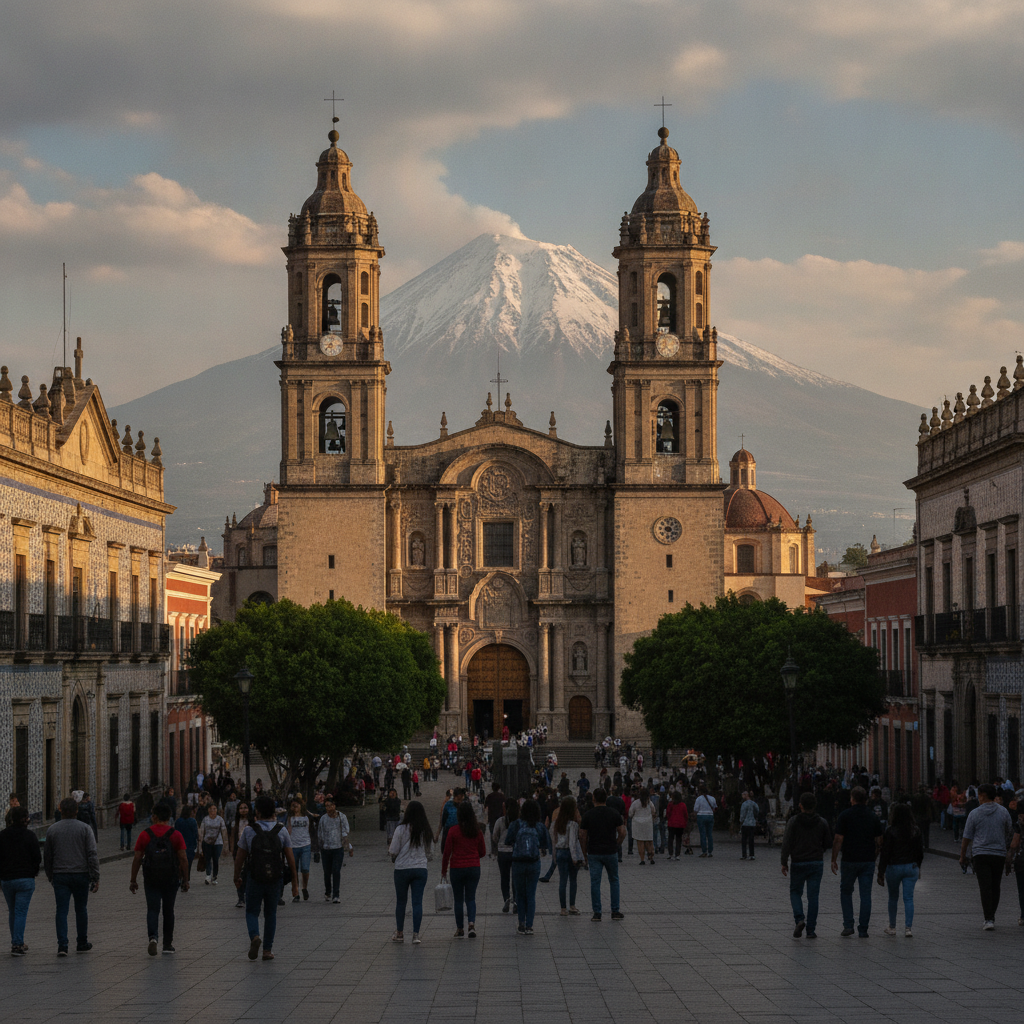
Puebla Cathedral Capilla del Rosario Talavera Tiles Mole Poblano Cholula Pyramid and the City That Was Founded by Angels and Destroyed by the Volcano That Still Watches Over It
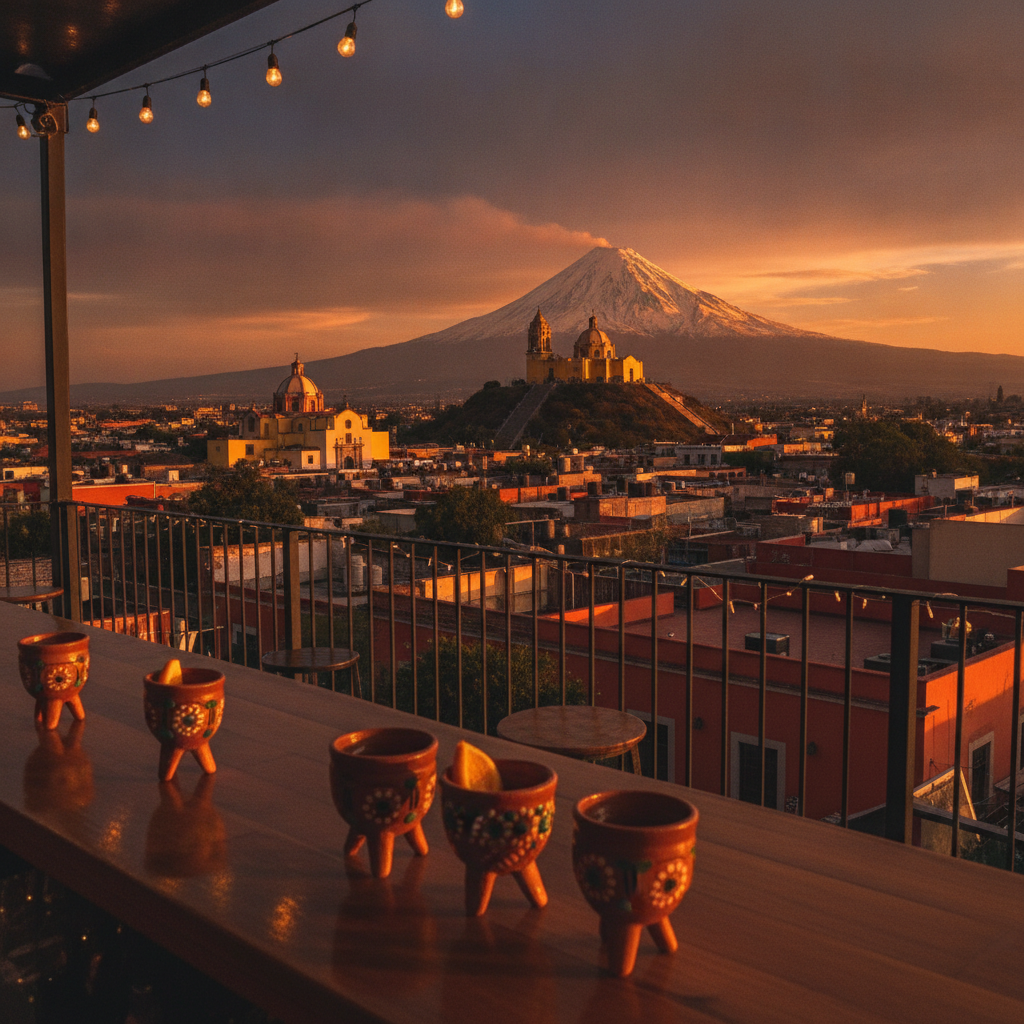
Puebla Contemporary City Art Scene Emerging Neighborhoods Barrio Chino and How a 500 Year Old Heritage City Is Reinventing Itself as a Creative Capital for the 21st Century Mexican Middle Class
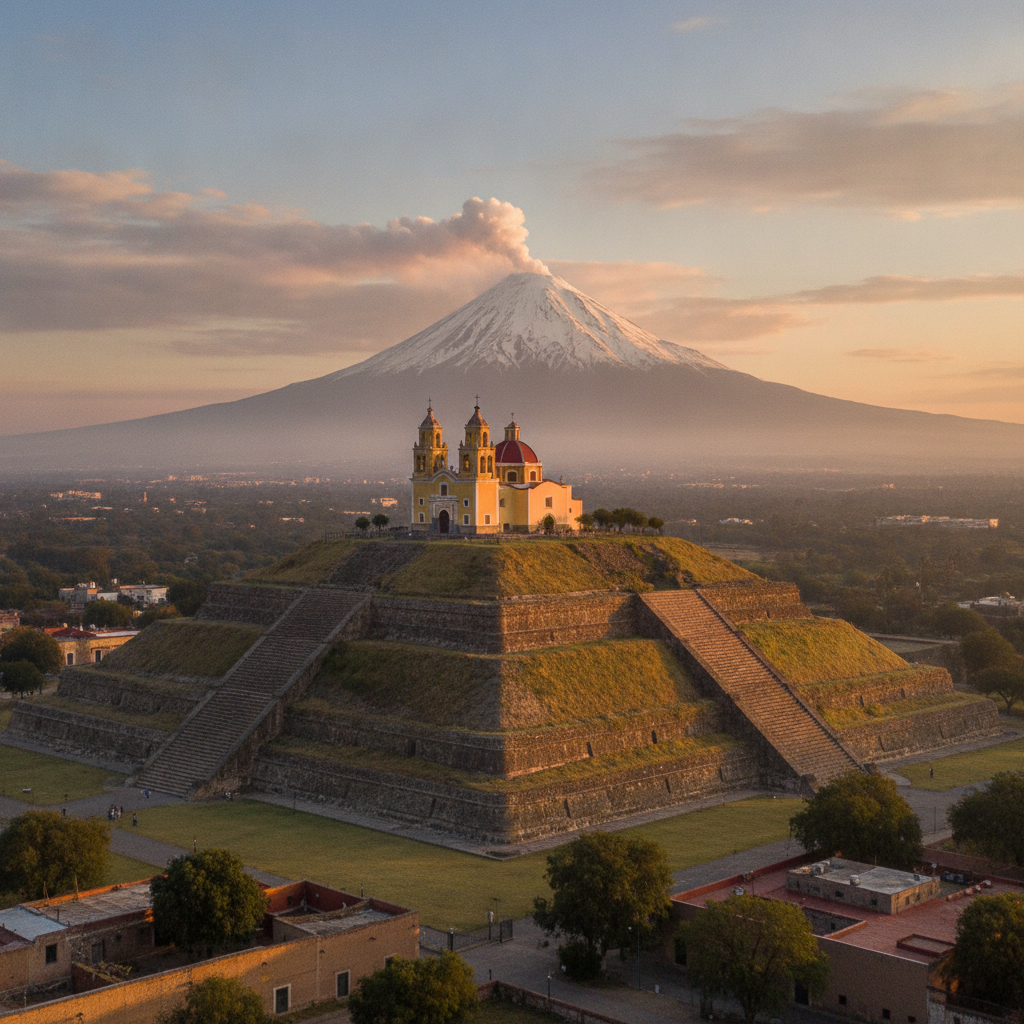
Puebla Pre-Hispanic Heritage Tlaxcala the Huejotzingo Codex Cholula as the Sacred City of Quetzalcoatl and the Indigenous Alliance That Made the Spanish Conquest of the Aztec Empire Possible
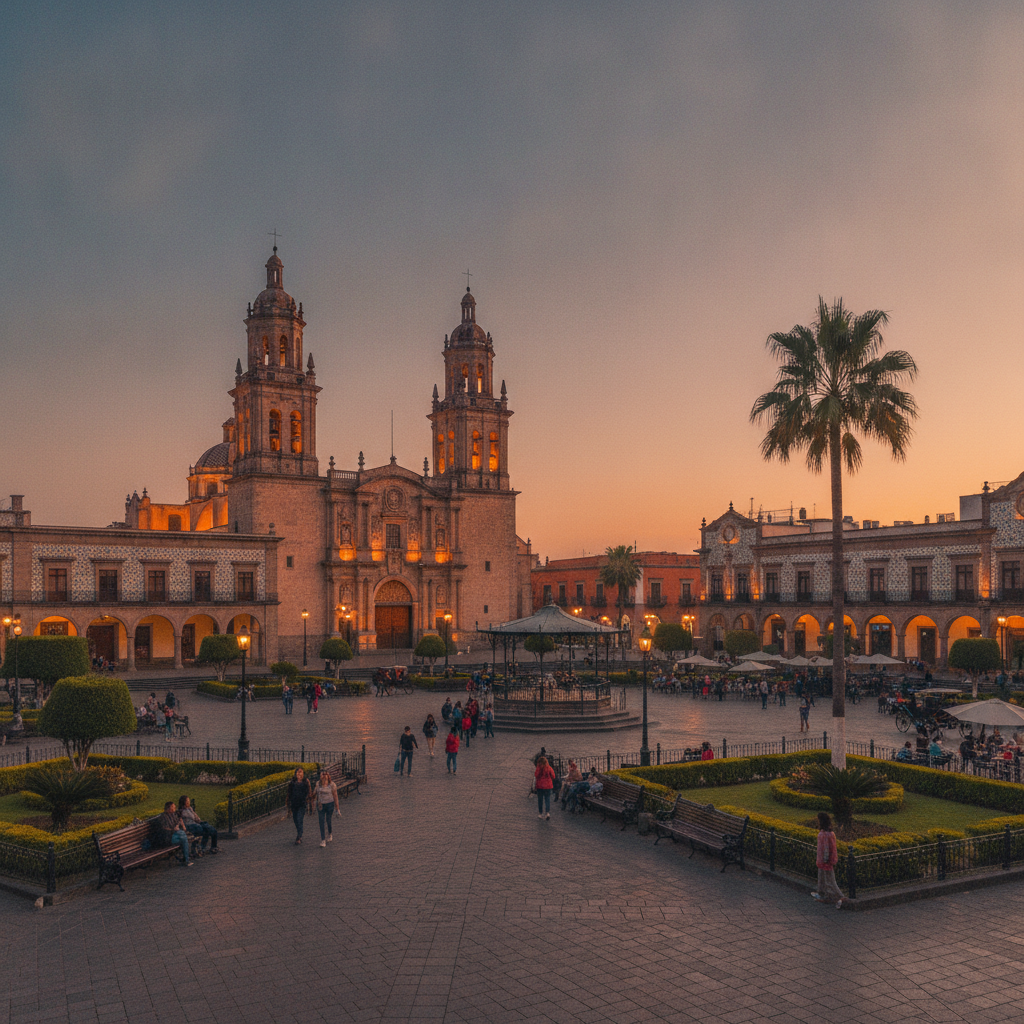
Puebla Practical Guide Transport Safety Climate Neighborhoods Hotels and How to Eat and Move Through a UNESCO Colonial City That Is Also a Metropolitan Area of Three Million People With Heavy Traffic
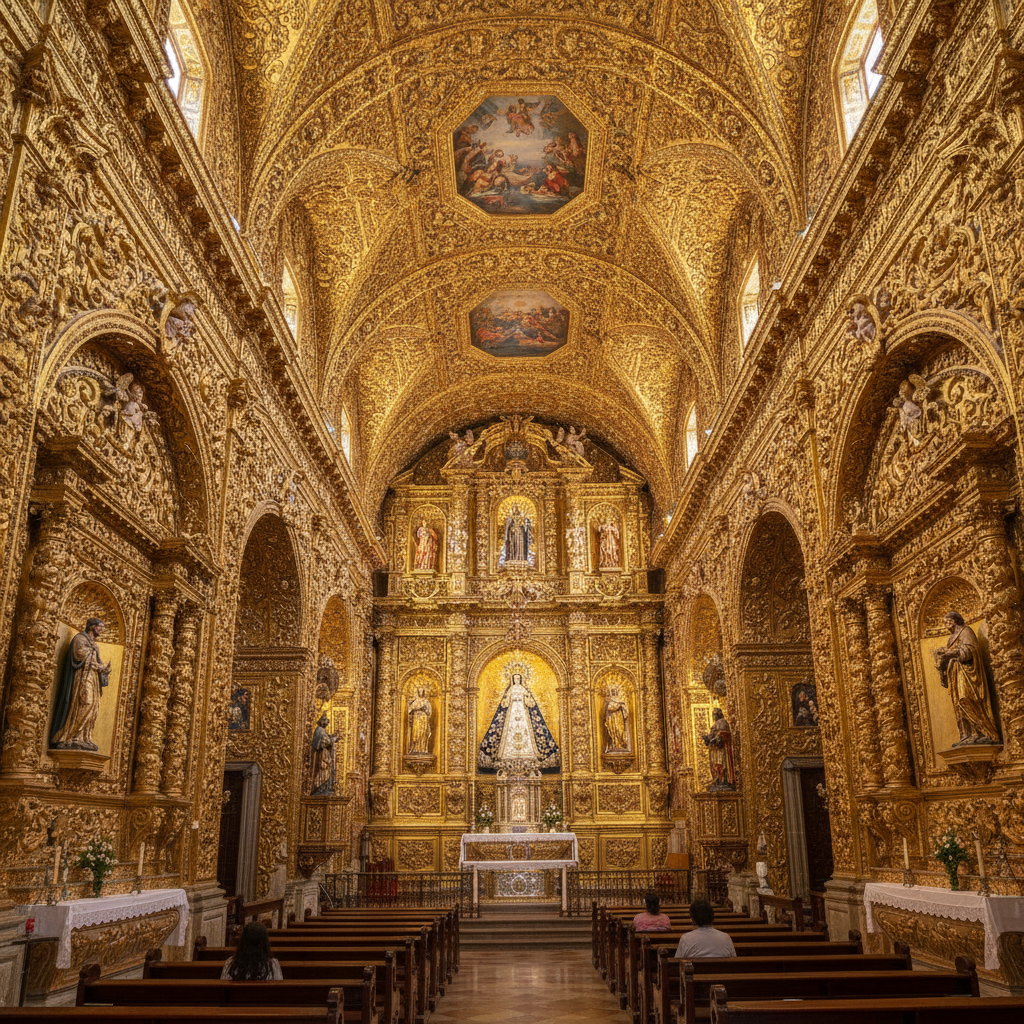
Puebla Convents Churches and the Religious Architecture of a City Built by Angels Where 72 Colonial Churches Represent the Most Complete Ecclesiastical Cityscape in Mexico