Quebec City: A Bateau Pulled from Under a Building, the Narrowest Sovereignty Referendum in Democratic History and a Language Law That Changed a City
See the 18th-century river boat pulled from beneath a plaza during excavations at the museum whose Moshe Safdie building incorporated an 1800s warehouse into its facade, cycle 400 kilometres of urban trail network or drive 40 minutes to a Canadian Shield wilderness park that most major cities could not dream of, sleep in a longhouse-style hotel on a First Nations reserve where the Wendat language spoken before French arrived is being rebuilt word by word, read the rooflines on Norman and Breton stone buildings to find which region of France each settler came from, understand the 1995 referendum that failed by 49,000 votes and still frames every conversation about what Quebec is, then count the convents and monasteries now converted to hotels as evidence of a secularization so fast the buildings ran out of purposes.
- 1
Musee de la Civilisation Quebec
The Musee de la Civilisation, opened in 1988 in a building designed by Moshe Safdie integrated into the Lower Town streetscape with a historic warehouse incorporated into its facade, is the premier museum in Quebec City, with permanent exhibitions on the history, language, culture, and peoples of Quebec including significant First Nations collections. The museum houses the Josephine, a 24-metre bateau-plat, a flat-bottomed river boat used on the St. Lawrence in the 18th and 19th centuries, recovered from beneath the Place Royale building site during excavations in the 1970s. The museum complex includes the Maison Chevalier, a 1752 merchant house in Place Royale and one of the finest surviving examples of French colonial urban architecture in North America. The museums treatment of the French-English linguistic and cultural divide in Quebec, and of the relationship between Quebec and Indigenous peoples, is considered thoughtful and balanced. The architecture of the building itself, with a skylight pyramid over the central atrium, was controversial on completion but is now considered a model of heritage-sensitive contemporary museum design.
- 2
Quebec City Cycling and Active Tourism
Quebec City has developed one of the most extensive urban cycling networks in Canada, with over 400 kilometres of marked cycling paths including the Route Verte, a 5,300-kilometre provincial cycling network that uses Quebec City as a primary hub. The Corridor des Cheminots, a converted rail trail, provides a largely flat cycling route through the suburbs. The Jacques Cartier National Park, 40 kilometres north of the city on the Canadian Shield, offers one of the most accessible wilderness parks to any major Canadian city, with camping, kayaking, and hiking trails in Precambrian granite landscapes of boreal forest and river valleys. The Vallee Bras-du-Nord, a non-profit adventure outdoor area 80 kilometres northwest of Quebec City, is one of the largest privately managed outdoor recreation areas in Quebec with 130 kilometres of multi-use trails. Quebec City winters create extraordinary conditions for cross-country skiing, with groomed trail networks beginning at the edge of the urban area and extending into the Laurentian Mountains. The city hosts the Defi Canot-Camping, a wilderness canoe camping challenge in the Laurentians, as part of its outdoor recreation identity.
- 3
Huron-Wendat Nation and Wendake
Wendake, a First Nations reserve 15 kilometres north of Old Quebec within the urban area of Quebec City, is the territory of the Huron-Wendat Nation, an Iroquoian-speaking people who established an alliance with Samuel de Champlain beginning in 1609 that shaped the geopolitics of the fur trade era in northeastern North America. The Huron-Wendat were originally from the Georgian Bay region of what is now Ontario and were driven to Quebec by Iroquois confederacy raids in 1649 to 1650, settling near Quebec under French protection. The Hotel-Musee Premieres Nations in Wendake is a hotel built in traditional longhouse architectural style where guests sleep in rooms decorated with First Nations art and materials, eat at a restaurant serving traditional foods including Three Sisters dishes, and access museum exhibitions on Wendat culture, history, and language revitalization. Traditional bark canoe construction, snowshoe making, and other craft traditions are demonstrated at the site. The Wendat language, which had no native speakers by the 1990s, is undergoing revitalization through community programs and university partnerships.
- 4
Quebec City Architecture Walking Tour
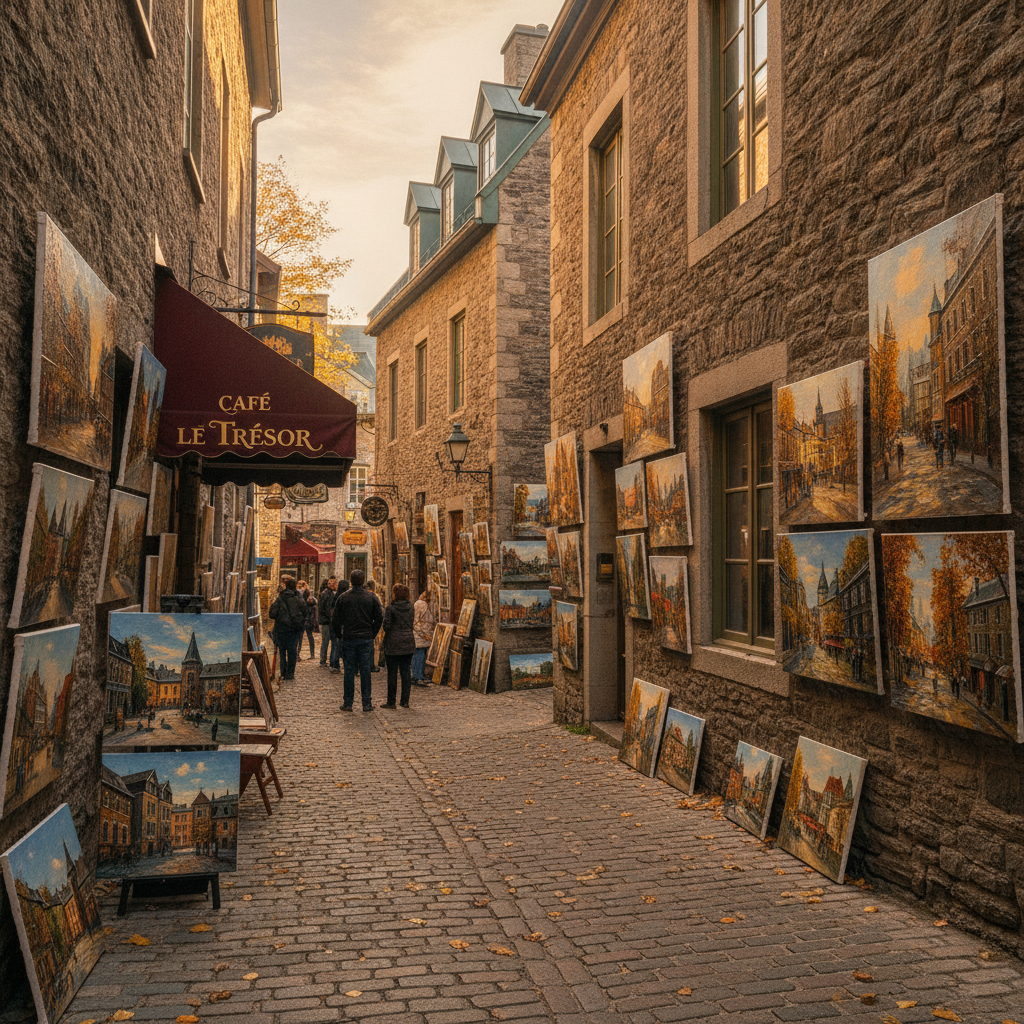
Old Quebec contains the most concentrated collection of 17th and 18th century French colonial architecture in North America, with streets of stone buildings in the Norman and Breton styles brought by French settlers from specific regions of France, visible in roof pitches, dormer windows, and chimney placements that replicate regional vernacular traditions transplanted to a radically different climate. The Rue du Tresor, a narrow lane in Upper Town where artists have sold prints and paintings since the 1960s, is the most tourist-trafficked street in the city. The Grande Allee, the boulevard connecting Old Quebec to the modern city, is lined with Victorian houses from the late 19th century when Quebec City experienced a commercial boom based on timber export. The Seminary of Quebec, founded by Bishop Laval in 1663, is the oldest educational institution in Canada and its chapel contains the tomb of Bishop Laval, who became the first bishop of Quebec in 1674 and was canonized by Pope Francis in 2014. The Ursuline Convent, founded in 1639 by Marie de lIncarnation and a major figure of New France, operates the oldest girls school in North America still in continuous function.
- 5
Quebec City Language and Cultural Politics
Quebec City is the capital of Quebec province and the symbolic center of the French-Canadian cultural and political project, the metropolitan area where unilingual French speakers are a higher proportion of the population than anywhere else in Canada, where the French language has been officially protected under Law 101 since 1977, and where the question of Quebec sovereignty has been most consistently and passionately debated since the Quiet Revolution of the 1960s. The National Assembly of Quebec, the provincial legislature housed in a Second Empire building built in 1886 on the Grande Allee, is where the dramatic sovereignty referendums of 1980 and 1995 were debated and where politicians including Rene Levesque, the founder of the Parti Quebecois and Premier from 1976 to 1985, shaped the modern French-Canadian political identity. The 1995 referendum on Quebec sovereignty was defeated by 50.58 percent to 49.42 percent, the narrowest margin in any major democratic referendum in the world. The question of sovereignty has receded as a political priority since 2000 but remains the central interpretive frame through which Quebecers understand their relationship to Canada.
- 6
Quebec City Religious Heritage
Quebec City contains the highest concentration of historic Catholic religious institutions in North America, a legacy of the central role of the Roman Catholic Church in the governance, education, social services, and cultural life of New France and subsequently of French Canada from the 1600s through the Quiet Revolution of the 1960s, when Quebec society underwent rapid secularization in a single generation. The Anglican Cathedral of the Holy Trinity, built in 1804 in a Wren-influenced Georgian style modeled on St. Martin-in-the-Fields in London, is the first Anglican cathedral built outside the British Isles. The Notre-Dame Cathedral Basilica, the mother church of the Roman Catholic Archdiocese of Quebec founded in 1647, has been rebuilt several times after fires and bombardments and contains the tombs of governors general and bishops. The numerous monasteries, convents, seminaries, and hospital orders that dominated Quebec City institutions before the Quiet Revolution have largely closed their religious functions and converted to hotels, condominiums, cultural centers, or heritage preservation projects, leaving the city studded with large stone institutional buildings repurposed for contemporary use.
Walk this route with audio
Stories play automatically as you reach each stop — no tapping needed.
More in Quebec City
Quebec City: The Bridge That Collapsed Twice and Invented Professional Engineering Ethics, the Navy Battle That Really Ended New France and Beaver Hats That Built a City
Quebec City: The Battle That Lasted 15 Minutes But Changed a Continent, the World Largest Winter Carnival and the Tech Quarter Built Under a Chateau
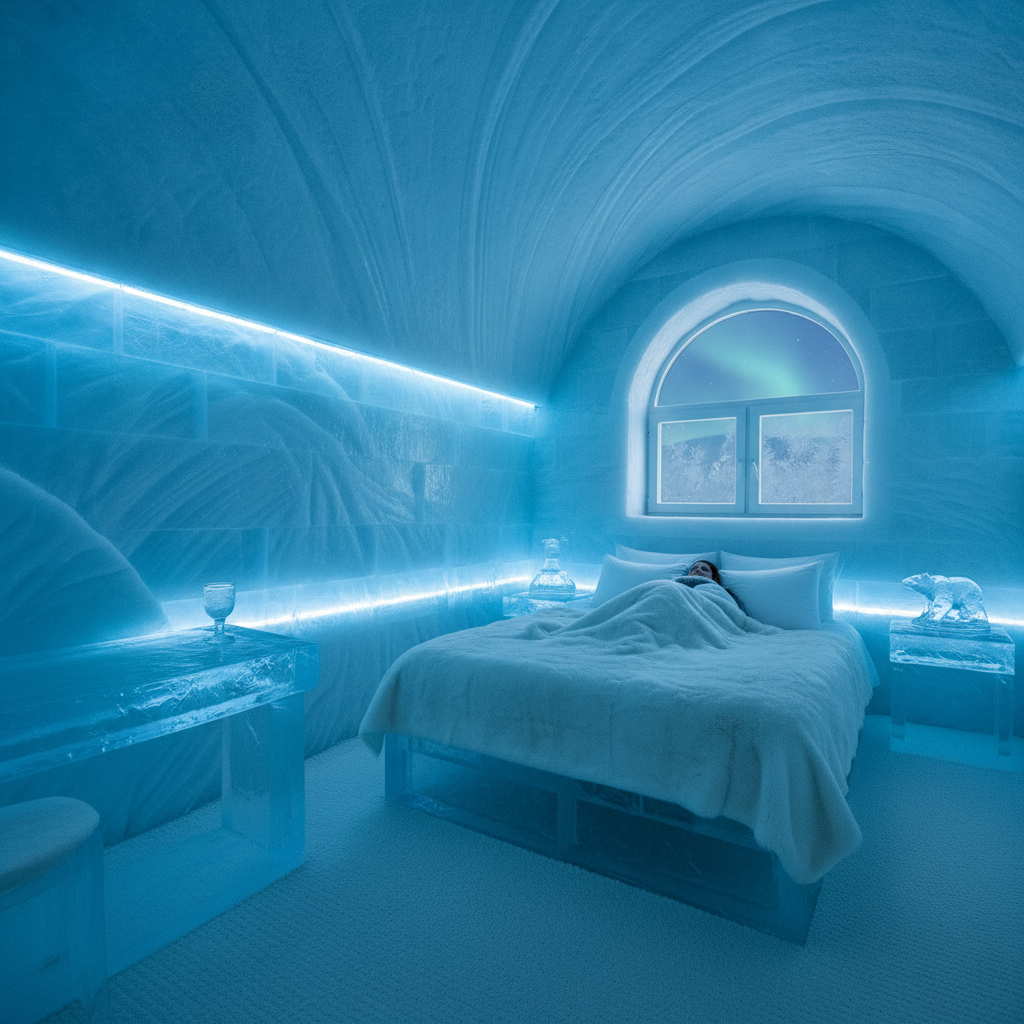
Quebec City: A Meteorite Crater That Made a Wine Region, the Ice Hotel That Melted Every Spring and the Scurvy Cure That Europe Forgot for 200 Years
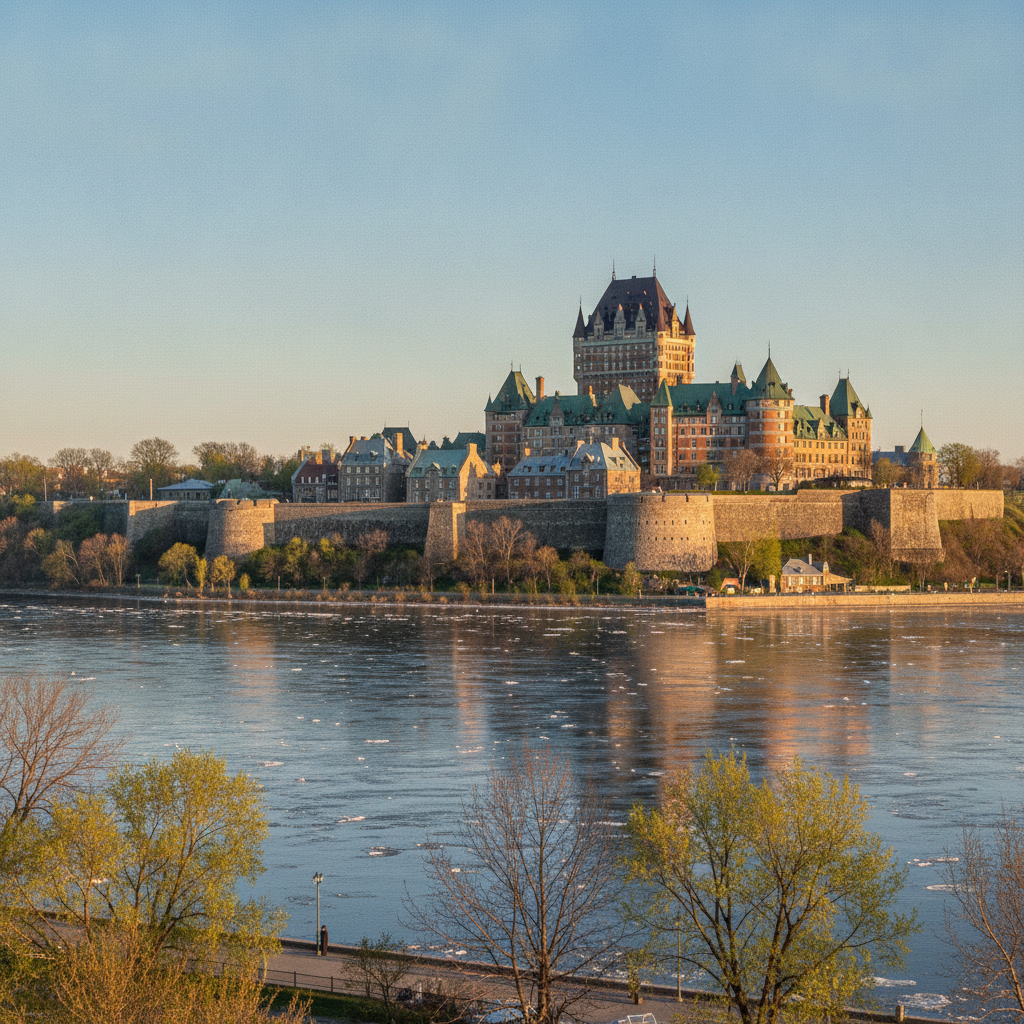
Quebec City: The First University in Canada Founded 1663, Why the Ice Canoe Race Depends on a Freezing River That Freezes Less Every Decade and What 4.5 Million Tourists Do to a City of 800000
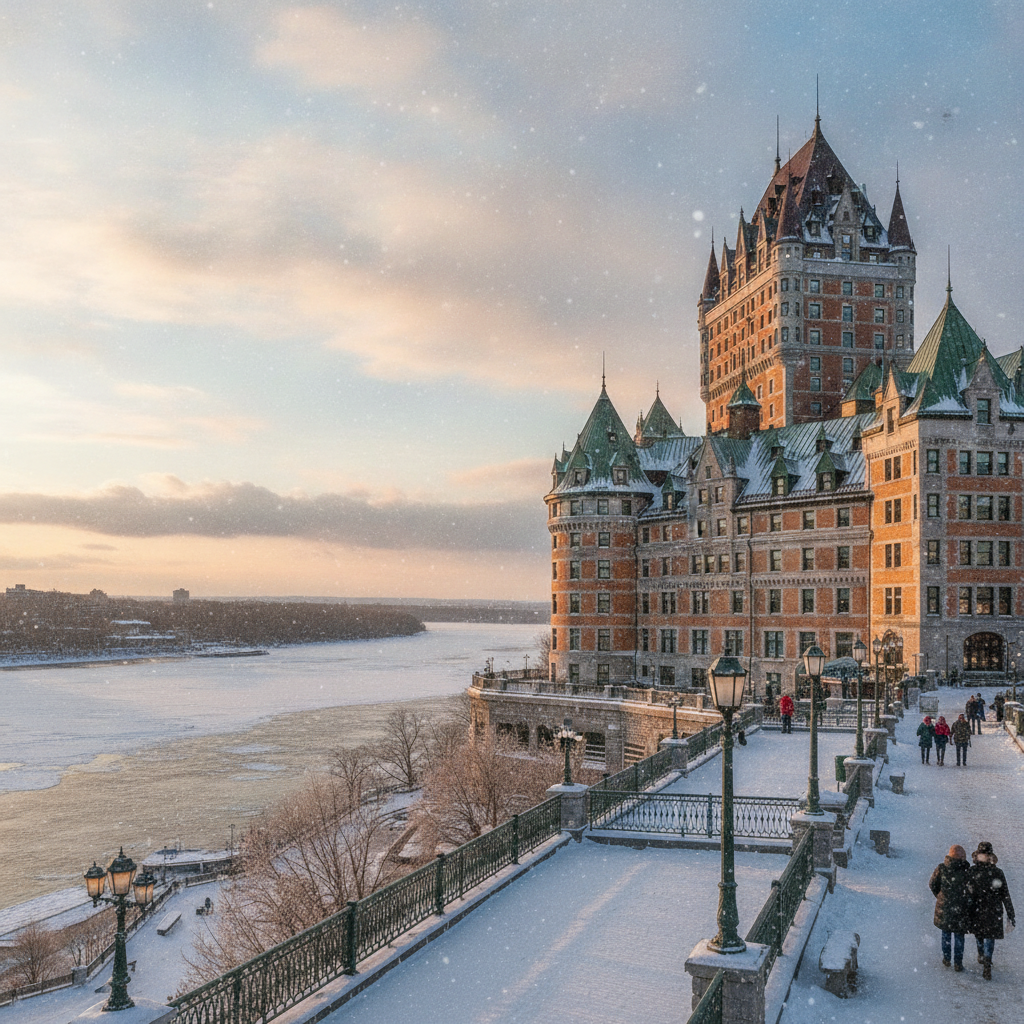
Quebec City: The Most Photographed Hotel on Earth, Only Walled City in North America and Stairs Climbed by Pilgrims for 350 Years