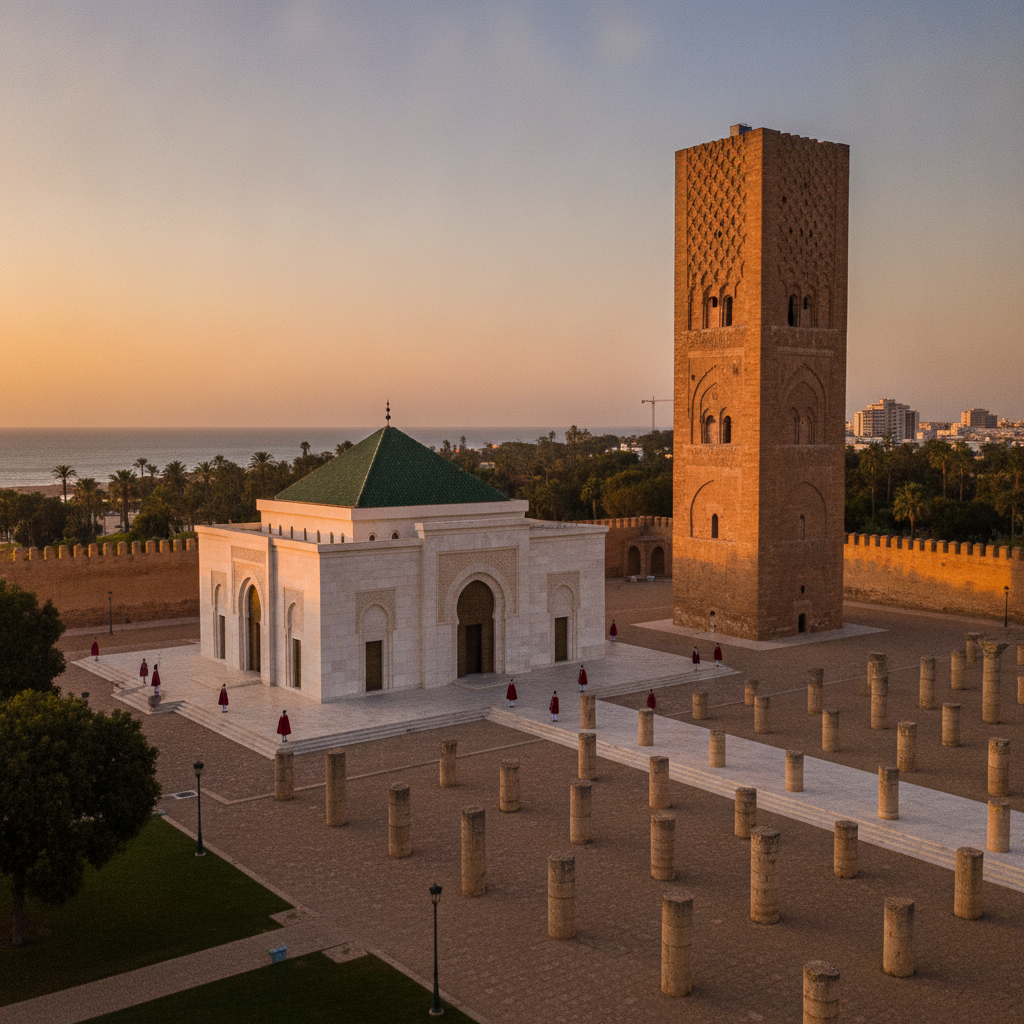
Rabat Medina: The Old City Souk, the Carpet and Craft Market, the Andalusian Quarter Legacy, the Medina Daily Life, and the Traditional Market Character
The Rabat medina route covers the medina souk as the most authentic single non-tourist-adapted market in a Moroccan capital city, the carpet and craft market in the Rue des Consuls, the Andalusian quarter legacy from the 1609 expulsion, the medina daily life, and the traditional market character.
- 1
Rabat Medina: The Capital Old City
The Rabat medina, the most compact single imperial city medina in Morocco (covering 1.5 square kilometers compared to the 9 square kilometers of the Fes medina), is the most manageable single Moroccan medina for the first-time visitor with the most legible single medina street structure and the most clearly defined single medina perimeter (the Almohad wall to the west and north, the Bou Regreg river to the east, the Ville Nouvelle boundary to the south). The Rabat medina is the most authentic single medina in the Moroccan capital cities because the commercial pressure of the Fes and the Marrakech tourist medina is absent and the souk serves primarily the Rabat resident population.
- 2
Rue des Consuls: The Craft and Carpet Street
The Rue des Consuls in the Rabat medina, named for the European consular representatives who resided in the Rabat medina during the Alaouite period, is the most concentrated single carpet and craft shopping street in the Rabat medina with the kilim flat-weave carpets, the Beni Ouarain pile rugs, the Rabat embroidery (the most technically complex single embroidery tradition in Morocco, using the double-sided counted thread technique on the linen cloth), and the traditional pottery from the Rabat-Sale pottery tradition. The Rabat carpet is the most geographically named single Moroccan carpet type and the carpet most associated with the capital city craft tradition.
- 3
Andalusian Quarter: The 1609 Refugee Legacy
The Rabat Andalusian quarter (Kenitra district of the medina), settled by the Moriscos expelled from Spain in 1609 by Philip III of Spain (the most traumatic single forced migration in early modern Iberian history), preserves the most architecturally Andalusian single medina quarter in Morocco with the narrow lanes, the patios with the central fountain, and the specific architectural vocabulary (the arched doorways, the tiled floors, the jasmine-planted interior courts) that the Andalusian refugees transplanted from Granada and Cordoba. The 1609 Morisco expulsion made Rabat and Sale the most ethnically Andalusian single Moroccan cities.
- 4
Rabat Embroidery: The National Craft Signature
The Rabat embroidery tradition, the most technically demanding single Moroccan textile craft with the double-sided counted thread embroidery on the fine linen cloth using the silk thread in the traditional red, the blue, and the green color palette, is the most prestigious single Moroccan needlework tradition and the embroidery most closely associated with the royal court culture. The Rabat embroidery school (Ecole des Arts et Metiers de Rabat) is the most historically significant single Moroccan craft educational institution and the school most responsible for the preservation of the Rabat embroidery technical standards into the 21st century.
- 5
Medina Daily Life: The Government Worker Quarter
The Rabat medina daily life, more closely connected to the government administration of the Moroccan capital than to the artisan craft and the tourist commerce that dominate the Fes and the Marrakech medinas, reflects the most politicized single medina social structure in Morocco with the government ministry proximity creating the most civil-servant-populated single medina in Morocco. The medina cafe culture at the Hassan Tower area is the most intellectually animated single Moroccan medina public conversation space because the proximity to the Parliament, the ministries, and the University Mohammed V creates the most politically aware single medina community in Morocco.
- 6
Bab er-Rouah: The Almohad Gate Gallery
Bab er-Rouah (Gate of the Winds), the 12th century Almohad gate on the southern edge of the Rabat medina walls, now converted to the most historically contextualized single contemporary art gallery in Morocco, presents the contemporary Moroccan art in the most dramatically contrasted single historical-contemporary architectural setting available in the Moroccan art gallery circuit. The Almohad gate carved stone horseshoe arch and the semicircular towers of Bab er-Rouah, the most architecturally refined single Almohad gate in Rabat, provides the most historically resonant single exhibition setting in Morocco.
Walk this route with audio
Stories play automatically as you reach each stop — no tapping needed.
More in Rabat

Rabat Culture: The Museum of Archaeology, the Mohammed VI Museum of Modern Art, the Cultural Circuit, and the Rabat Arts Scene
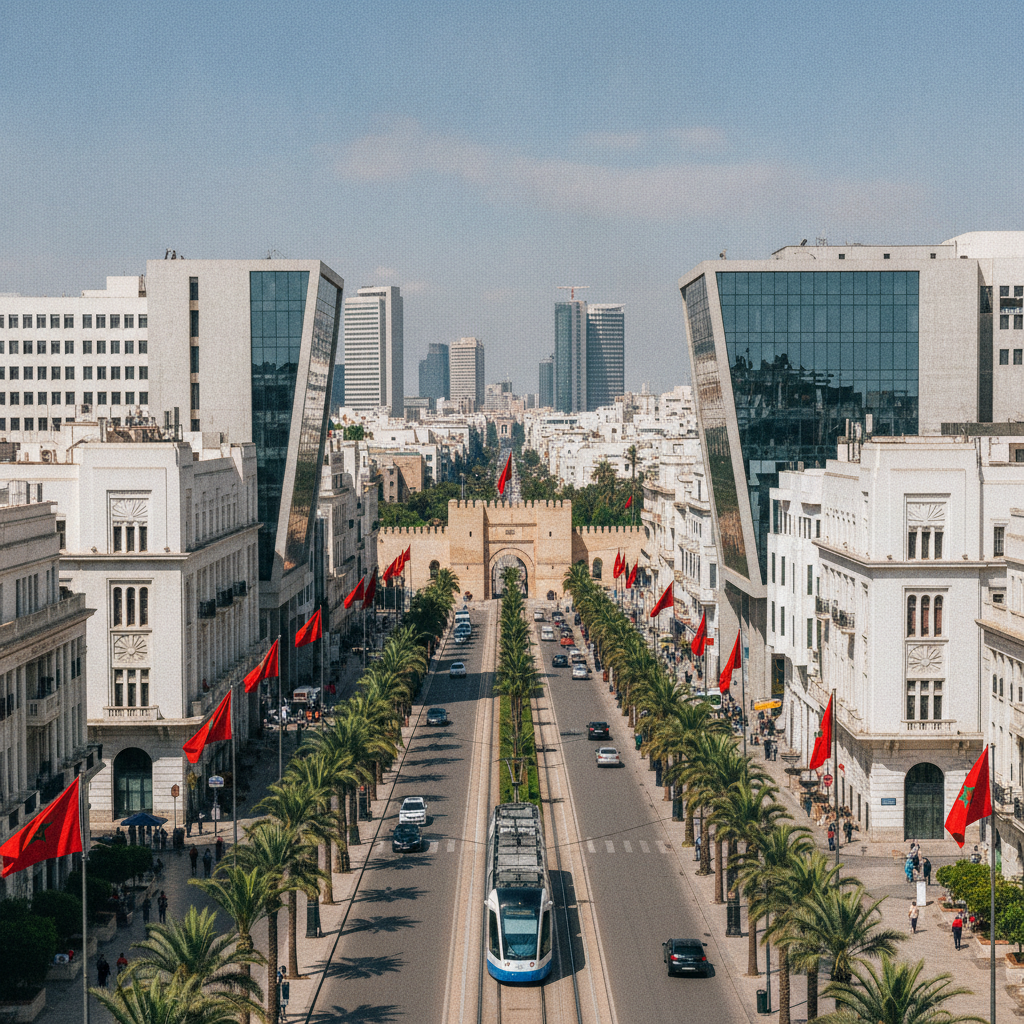
Rabat Modern: The Ville Nouvelle French Architecture, the Avenue Mohammed V Boulevard, the Art Deco Heritage, the Modern Capital Planning, and the Contemporary Rabat Character

Rabat Food: The Malsouka Pastry, the Seafood from the Atlantic, the Diplomatic Restaurant Scene, the Ville Nouvelle Cafe Culture, and the Rabat Culinary Character
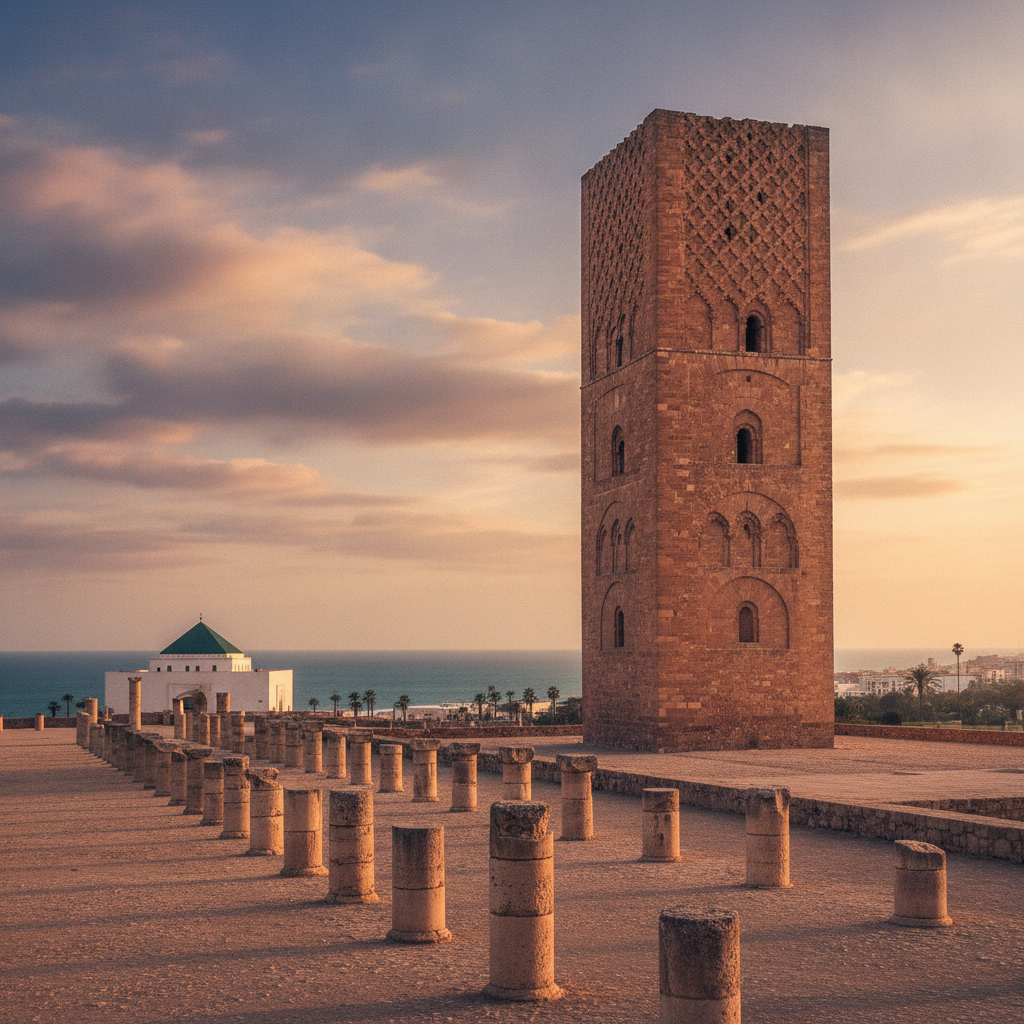
Rabat Essential: The Hassan Tower, the Mohammed V Mausoleum, the Chellah Necropolis, the Kasbah of the Oudaias, the Royal Palace, and the Moroccan Capital Character

Rabat Outdoors: The Atlantic Beach, the Bou Regreg Waterfront, the Sale Corniche, the Kasbah Oudaias Terrace, and the Rabat Outdoor Life