Pernambuco Music and Carnival: Frevo, Maracatu, Mangue Beat, and the Street Festival Tradition
The music and carnival traditions of Recife and Pernambuco are among the most rich and distinctive in Brazil, encompassing the acrobatic frevo umbrella dance, the Afro-Brazilian maracatu drumming, the mangue beat rock fusion, and the participatory street carnival that draws two million people for the Galo da Madrugada opening parade.
- 1
Carnival of Recife: The Street Blocks and Giant Puppets
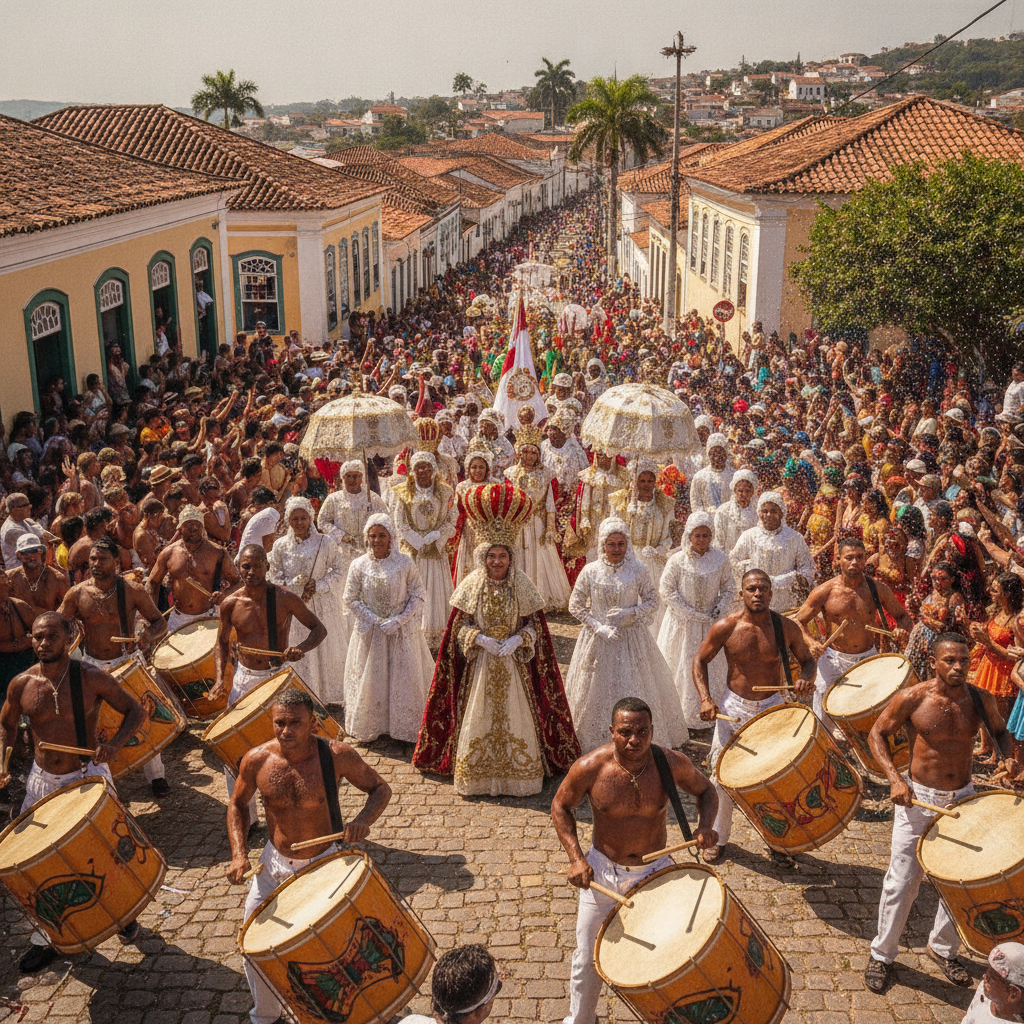
The Recife-Olinda carnival, which begins one week before the national carnival with the Galo da Madrugada block parade of two million people in the historic center, is distinct from Rio de Janeiro carnival in its participatory street culture, the absence of ticketed stadium events, and the presence of maracatu troupes, caboclinhos indigenous dance groups, and the giant puppet figures of Olinda processing through the hill streets alongside hundreds of informal bloco groups.
- 2
Frevo: The Acrobatic Umbrella Dance
Frevo, whose name derives from the Portuguese ferver meaning to boil, is a performance art combining highly acrobatic solo dance with the small folding umbrella as prop, performed to the fast brass-heavy frevo orchestra whose 2-4 tempo at extremely high speed creates a physical and sonic intensity unlike any other carnival music tradition. The Museu do Frevo in Recife Antigo presents the history and technique of the tradition.
- 3
Maracatu: The African Drumming Nation
The maracatu nacao groups, whose roots are in the African coronation ceremonies performed by enslaved people in Pernambuco from the 17th century onward, process through the streets of Recife during carnival in groups of 100 to 200 people with the characteristic heavy alfaia bass drum beating, the costumed corte of the African king and queen, and the calungas ritual dolls carried by the damas de paco. The maracatu is the most African of the Brazilian carnival traditions.
- 4
Pernambuco Music Beyond Carnival: Alceu Valenca and Mundo Livre
The Pernambuco music scene beyond the carnival season includes the mangue beat movement pioneered by Chico Science and Nacao Zumbi in the 1990s, which combined maracatu rhythms with rock and funk in an explicitly urban northeastern aesthetic that influenced Brazilian popular music widely; the continuing careers of Alceu Valenca, one of the finest singer-songwriters of the Brazilian northeast, and the experimental Mundo Livre S/A extend the tradition.
- 5
Traditional Theater: Mamulengos and Popular Performance
The mamulengo puppet theater tradition of Pernambuco, in which wooden hand puppets animated by operators speaking in verse improvise comic scenes involving stock characters of the northeastern social hierarchy, is one of the oldest popular performance traditions in Brazil and is maintained by puppet masters in the Caruaru area and in the traveling fair circuits of the interior. The tradition combines African, indigenous, and European puppetry influences.
- 6
Bumba Meu Boi and the June Festivals
The Festa Junina celebrations of June and July, which in Pernambuco take the form of the bumba meu boi dramatization and the forró parties, are the second major festive season of the northeast calendar after carnival, filling the city squares and town centers with quadrilha square dancing, the symbolic ox drama, and the forró music performances that constitute the popular culture of the interior transplanted to the city.
Walk this route with audio
Stories play automatically as you reach each stop — no tapping needed.
More in Recife
Recife Intellectual and Social History: Gilberto Freyre, Dutch Brazil, Quilombo Palmares, and the Cangaco Bandits
Recife Practical Guide: Airport, Carnival Planning, Olinda Access, and the Coconut Route North

Recife Food: Tapioca, Bolo de Rolo, the Northeast Street Snacks, and Contemporary Pernambuco Cuisine
Recife and Olinda: Dutch Colonial Heritage, Frevo Carnival, and the Reefs of Porto de Galinhas
Recife Museums and Art: Brennand Castle, Ceramic Workshop, Street Art, and the Iron Market