Reykjavik Culture — the Icelandic Sagas, Skyr, the Music Scene & the Coloured Old Town Houses
Reykjavik's cultural identity — the Old Norse saga tradition, the contemporary music exports of Björk and Sigur Rós, the geothermal-powered food culture, and the corrugated iron old town houses — is one of the most distinctive of any small capital city in the world.
- 1
The Corrugated Iron Houses — the Reykjavik Old Town Character
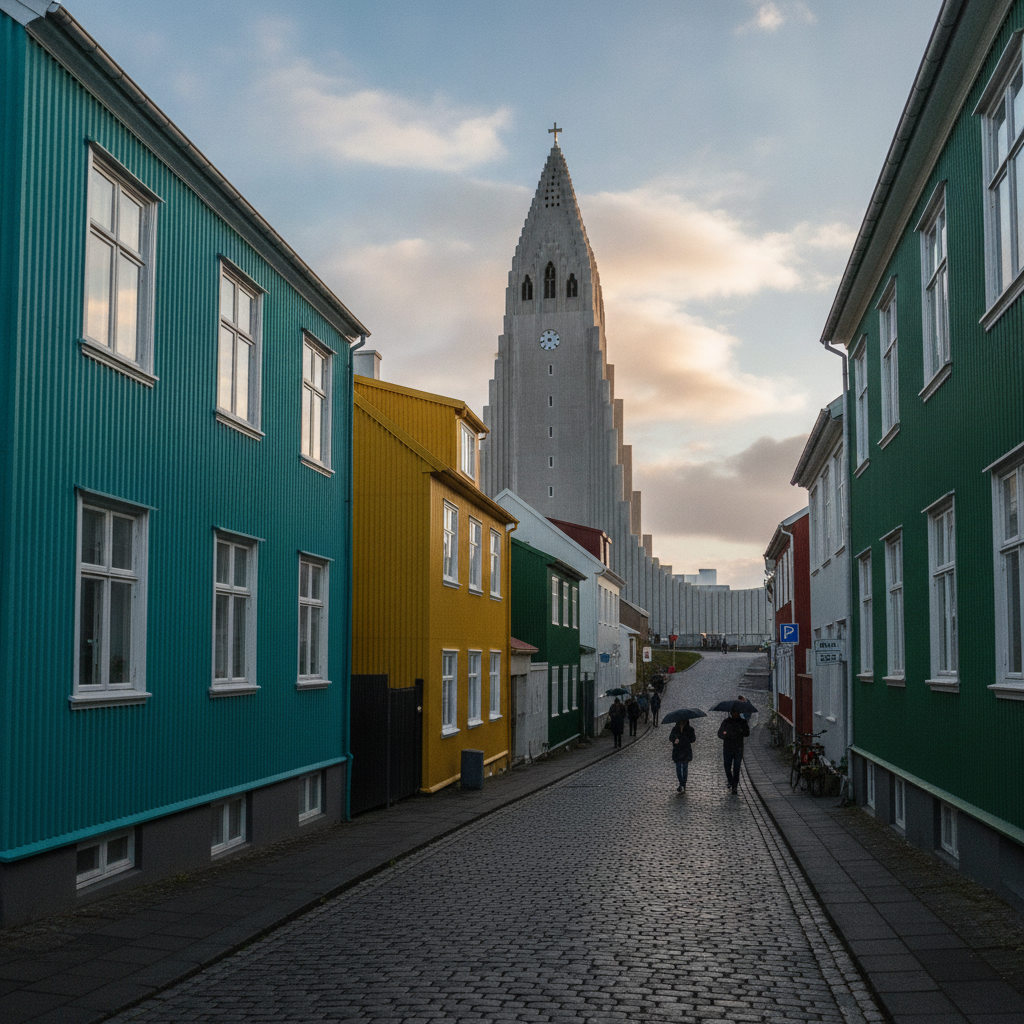
The corrugated iron houses of central Reykjavik (the characteristic building type of the Reykjavik old town, the 1-2 storey timber frame houses clad in the corrugated iron sheets imported from Britain 1880-1930, the iron cladding the Icelandic solution to the challenge of building in a climate of wind, rain, and frost without the local building materials available in continental Europe — the Icelandic volcanic geology producing no usable building stone, the forests having been cleared by the Norse settlers in the 9th century, the corrugated iron the weather protection of choice for the construction budget of the growing fishing town of the late 19th century): the painting tradition (the iron sheets painted in the distinctive Icelandic palette — the turquoise, the terracotta red, the sunshine yellow, the dark green, the mustard — the colours the individual expression within the uniform building typology, the most colourful streetscape in the Nordic countries, the correct photography route the Skólavörðustígur street leading from the Cathedral square to the Hallgrímskirkja church, the old town streets of Vesturgata and Túngata south of the old fishing harbour the most intact surviving corrugated iron streetscape), the preservation challenges (the iron houses the least prestigious of the Reykjavik building types, many demolished in the 1960s-80s development boom, the surviving examples now protected and the subject of the Reykjavik 871±2 Heritage Conservation programme) and the corrugated iron in the contemporary architectural identity (the tradition continued by the contemporary Icelandic architects in the corrugated metal cladding of the new buildings in the Reykjavik harbour district, the material the bridge between the 19th-century building tradition and the 21st-century architecture).
- 2
Icelandic Music — Björk, Sigur Rós and the Contemporary Scene
Icelandic music (the most internationally successful cultural export of Iceland relative to population size — a country of 370,000 producing Björk, Sigur Rós, Of Monsters and Men, Kaleo, Ólafur Arnalds, JFDR, Hatari, and dozens of internationally recognized artists, the Icelandic music scene the most productive per capita in the world, the Iceland Airwaves festival the annual showcase): Björk (Björk Guðmundsdóttir, born 1965 in Reykjavik, the most internationally recognized Icelandic artist in any field, the post-punk, electronic, and orchestral vocalist whose albums Debut, Post, Homogenic, Vespertine, and Medúlla are among the most influential recordings of the 1990s-2000s, the Björk museum exhibition at the Harpa Concert Hall appearing during the major retrospectives, the Iðnó cultural centre at Vonarstræti 3 the venue for the Sugarcubes reunion rumours — Björk's original band — the artist the most personally identified with the Icelandic landscape of any musician, the albums Post and Homogenic the most specifically Reykjavik-influenced music available), Sigur Rós (the Reykjavik post-rock band founded 1994, the album Ágætis byrjun of 1999 the most internationally celebrated Icelandic musical work after Björk, the band's invented language Vonlenska — 'Hopelandic' — used in the vocals of the untitled album 'the brackets album' of 2002, the band dissolving and reforming multiple times but touring internationally since 2002, the music described as 'ethereal', 'glacial', and 'spatial' — the correct sonic analogues to the Icelandic landscape) and the Iceland Airwaves festival (see the nightlife route for the full description, the festival the annual concentration of the Icelandic musical talent in November, tickets at icelandairwaves.com).
- 3
The National Museum of Iceland — Viking Age to the Present
The National Museum of Iceland (Þjóðminjasafn Íslands, Suðurgata 41, the permanent collection of Icelandic history and culture from the settlement period to the present day, €15 adults, Tuesday-Sunday 10am-5pm, September-April closed Monday): the essential collections (the Viking Age artefacts from the settlement period 874-1100 CE — the carved wooden Viking ship prow fragment, the bone combs, the bronze brooches, the iron tools of the Norse settlers, the most complete collection of 9th-10th century Icelandic material culture; the medieval period — the Icelandic church sculpture of the 12th-14th centuries, the carved wooden stave church panels the most distinctive Icelandic medieval art form, the carved altar panels of the Valþjófsstaður church door of c.1200 — the most important single medieval object in Iceland, the carved wooden door with the knight and the dragon in the Norman Romanesque style — and the Icelandic manuscript collection including facsimiles of the Poetic Edda and the Prose Edda — the primary sources of Norse mythology — and the Njáls saga, the most complex of the Icelandic family sagas): the modern history galleries (the Icelandic fishing industry from the rowing boats of the 19th century to the industrial trawler fleet that made Iceland one of the world's wealthiest nations in the 20th century, the independence from Denmark in 1944, and the post-war modernization of Icelandic society) and the Settlement of Iceland exhibit (the overview of the Norse settlement process, the DNA evidence showing the Norse male settlers and the Celtic female settlers — approximately 60 percent Norse and 40 percent Celtic origin for the founding population — the Celtic women almost certainly taken as slaves from Ireland and Scotland).
- 4
Skyr, Brennivín and the Icelandic Food Tradition
Icelandic food tradition (the Norse food culture adapted to the North Atlantic environment — the protein from the sea and the sheep, the dairy from the Icelandic cow, the preservation techniques of drying, salting, fermentation, and geothermal baking): hákarl (the fermented Greenlandic shark — the Greenlandic shark meat fermented for 6-12 weeks in the gravel, then hung to dry for a further 4-5 months, the fermentation process breaking down the urea and the trimethylamine oxide toxic in the fresh meat to the ammonia that makes the product safe to eat, the smell of ammonia the first sensory impression, the taste described as the most challenging in the Nordic food tradition, available at the Kolaportið flea market at Geirsgata 19 — the Old Harbour weekend market, Saturday-Sunday 11am-5pm — and at the Gordon Ramsay-tested hákarl restaurant Fiskmarkaðurinn at Aðalstræti 12 — the most correct formal setting for the hákarl experience at €35 for the chef's tasting of traditional Icelandic preserved foods), brennivín (the Icelandic caraway aquavit, nicknamed 'Black Death' — svarti dauðinn — for the black label of the state monopoly bottle, the spirit at 37.5 percent alcohol distilled from fermented grain mash with the caraway flavour, the traditional accompaniment to the hákarl — the spirit cutting through the ammonia of the shark — the most authentically Icelandic alcoholic drink at €6-8 per shot, available at the Vínbúðin state liquor stores, the only legal off-licence in Iceland) and skyr (see the main route description for the full detail, the most universally appreciated Icelandic food product, the skyr with the Icelandic bilberries and the honey the correct afternoon snack at any Reykjavik café at €5-7).
- 5
The Reykjavik Art Museum and the Icelandic Visual Arts
The Reykjavik Art Museum (Listasafn Reykjavíkur, three venues across the city, the combined ticket €15 adults valid for 2 days): Hafnarhús (Tryggvagata 17, the Old Harbour venue in the renovated 1930s fish warehouse, the collection of contemporary Icelandic and international art, the permanent collection of the pop artist Erró — the Icelandic pop artist who worked in the movement's New York period of the 1960s — the most comprehensive single-artist collection in the museum, open daily 10am-5pm, Thursday 10am-9pm), Kjarvalsstaðir (Flókagata 24 in the Hlíðar district 2km east of the centre, the dedicated museum for the work of Jóhannes Kjarval — the most important Icelandic painter of the 20th century, 1885-1972, the landscape paintings of the Icelandic volcanic countryside the most recognizable Icelandic paintings, the brushwork described as 'pointillist' but more correctly characterized as the dense surface-building technique of the Icelandic magma and lichen landscape, open daily 10am-5pm), and Ásmundarsafn (Sigtún, the studio-home of the sculptor Ásmundur Sveinsson 1893-1982, the building designed by the sculptor himself in the North African dome-and-cylinder form the artist chose as the most appropriate for the Icelandic landscape, the outdoor sculpture garden accessible free, the museum €10 adults, open May-September daily 10am-5pm) and the National Gallery of Iceland (Fríkirkjuvegur 7, the national collection of Icelandic art from the 19th century to the present, free, Tuesday-Sunday 10am-5pm, the most complete collection of historical Icelandic painting).
- 6
Reykjavik in One Day — the Essential Circuit
Reykjavik one-day circuit (the minimum time to see the essential Reykjavik): morning (9am: the Hallgrímskirkja tower lift — arrive before the tour buses at 9am for the queue-free ascent, the 360-degree view orientating the rest of the day; 9:45am: the Settlement Exhibition at Aðalstræti 16, the 874 CE longhouse visible through the glass floor, 45 minutes; 10:45am: walk the Laugavegur shopping street to the Old Harbour — the 15-minute walk south along Skólavörðustígur and west to the harbour), midday (11:30am: whale watching from the Old Harbour — the 3-hour tour returning at 2:30pm with the minke whale likely sighted, the Sægreifinn fish soup at the harbour stall if skipping the whale watching — the salmon soup or the langoustine soup at €6, the quick lunch; alternatively the 1pm departure giving time for a full Old Harbour walking tour before), afternoon (3pm: the Harpa Concert Hall — the free walk through the geometric glass facade, 20 minutes; 3:30pm: the National Museum at Suðurgata 41, 1.5 hours for the Viking Age to the present; 5:30pm: return to the Hallgrímskirkja area for the golden hour photography, the church tower on the hill at the end of Skólavörðustígur the correct sunset photography position), evening (7pm: dinner at the Matur og Drykkur at Grandagarður 2 — the traditional Icelandic ingredients in contemporary preparations, the most value-appropriate fine dining in Reykjavik at €30-45 per main — and the Northern Lights walk at 11pm to the Grótta lighthouse peninsula if the aurora forecast shows Kp ≥ 3 on the Vedur.is website — the 3km walk from the city centre along the waterfront to the lighthouse the correct aurora viewing position with minimum light pollution).
Walk this route with audio
Stories play automatically as you reach each stop — no tapping needed.
More in reykjavik
Reykjavik Summer — the Midnight Sun, Puffins, Whale Watching & the Westman Islands
Reykjavik Geothermal & Volcanoes — the Perlan, Laugardalur Hot Springs & Iceland's Volcanic System
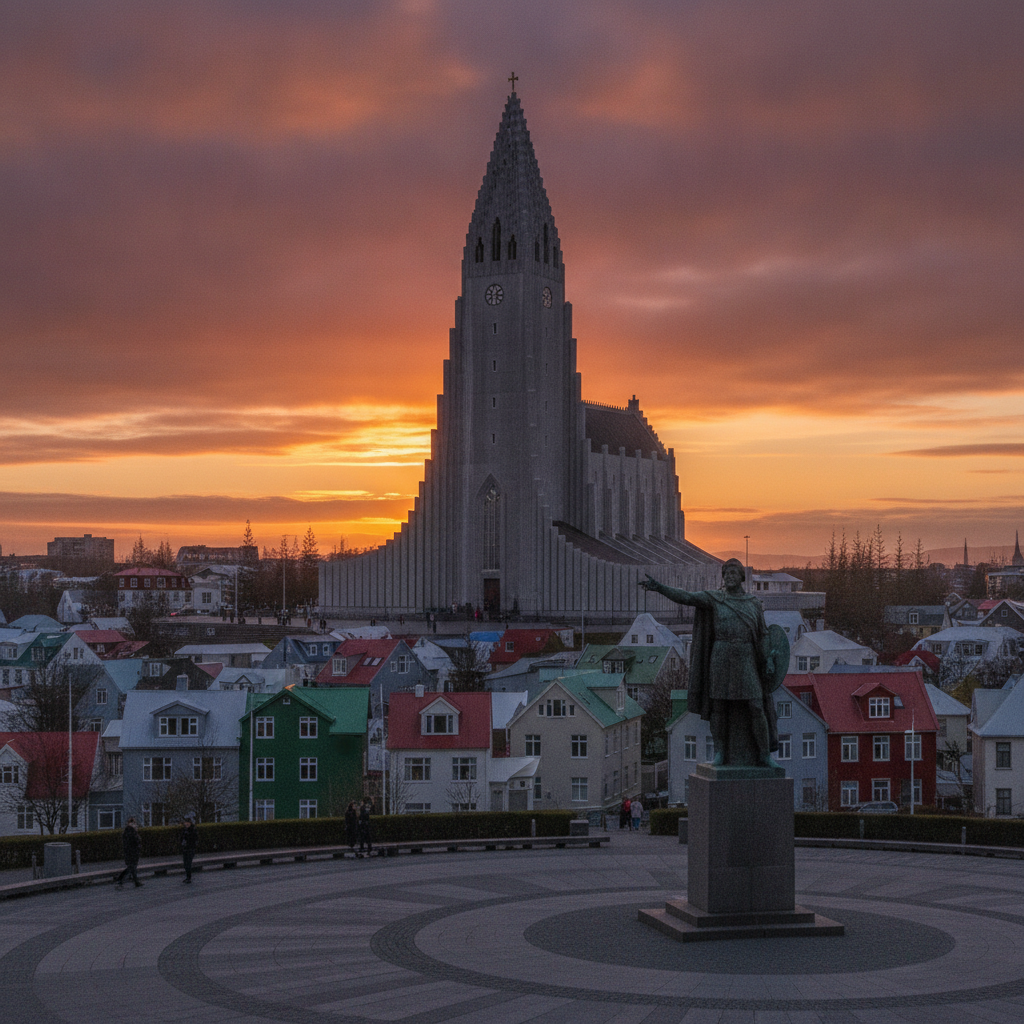
Reykjavik — Hallgrímskirkja, the Old Harbour & the World's Northernmost Capital
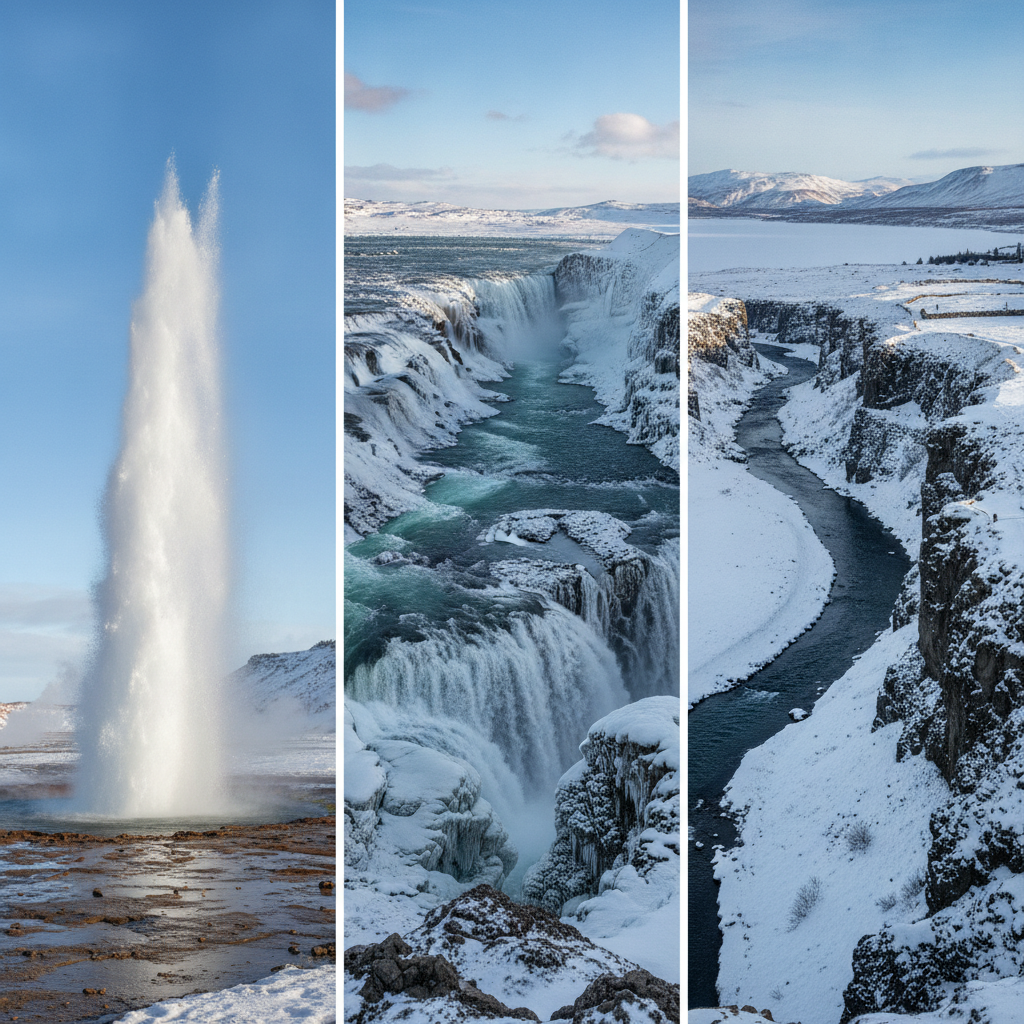
Reykjavik Day Trips — the Golden Circle, Northern Lights & Iceland's Most Iconic Landscapes