Riga — Jewish Riga History & the Rundale Palace Day Trip
Riga's Jewish community was one of the largest and most culturally significant in Eastern Europe before the Holocaust — 40,000 Jews representing 12 percent of the pre-war population, the community producing world-class intellectuals, artists, and scholars. The Rundale Baroque Palace 75km south is the most spectacular day trip from Riga.
- 1
The Jewish Community of Riga — History and the Holocaust
The Jewish community of Riga (established in the 17th century, growing to 40,000 by 1935 — 12 percent of the pre-war population of Riga — the community producing the philosopher Isaiah Berlin, the violinist Gidon Kremer, the conductor Mariss Jansons, and hundreds of scholars, artists, and professionals who shaped 20th-century European culture): the pre-war Riga Jewish Quarter (the area around Maskavas iela and Gogoļa iela in the Maskavas Forštate district — the 'Moscow suburb' — the traditional Jewish neighbourhood since the 18th century, the synagogues, the Jewish schools, the Yiddish-language press, and the Hebrew publishing houses concentrated in this district), the Holocaust in Riga (the German Army occupation of Riga beginning July 1 1941, the Riga Ghetto established August 1941 in the Maskavas Forštate district, the mass murder of November-December 1941: the Rumbula massacre — 25,000 Riga Jews shot in the Rumbula Forest 10km southeast of the city on November 30 and December 8 1941, the largest mass murder in Latvian history — the Rumbula Memorial accessible by bus 16 from the city centre, the site with the symbolic stone monument and the individual grave markers, free, open daily, the most important Holocaust memorial site in Latvia) and the Riga Jewish Community Centre (Skolas iela 6, the functioning centre of the 6,000-strong contemporary Jewish community of Riga, the small museum of Jewish Riga history on the ground floor, open Monday-Friday 9am-5pm, free, the documentation of the pre-war community and the Holocaust in Riga).
- 2
The Great Choral Synagogue Memorial
The Great Choral Synagogue Memorial (Gogoļa iela 25, the site of the largest synagogue in Riga — the Great Choral Synagogue built 1871 in the Moorish Revival style, seating 1,000, the cultural centre of the Riga Jewish community — burned on July 4 1941 by the German SD and their Latvian collaborators with 30 Jews locked inside, the building subsequently demolished, the site vacant until 2007 when a memorial garden was established): the memorial (the commemorative stone garden on the synagogue footprint, the outline of the building marked in granite paving, the memorial plaques in Latvian, Hebrew, Russian, and English recording the destruction of the synagogue and the names of the perpetrators — one of the few European Holocaust memorials to explicitly name the participating national collaborators, the documentation of the Latvian Arājs Kommando — the Latvian auxiliary police unit responsible for approximately 26,000 murders — on the plaques, the memorial garden maintained by the Riga Jewish Community, free and open daily). The Riga History and Navigation Museum exhibit on Jewish Riga (the Dom Cloister museum containing the most comprehensive photographic documentation of pre-war Jewish Riga, the exhibition open with museum entry at €3 adults, the photographs the most immediate visual connection to the pre-war community).
- 3
Rundale Palace — Rastrelli's Baltic Versailles
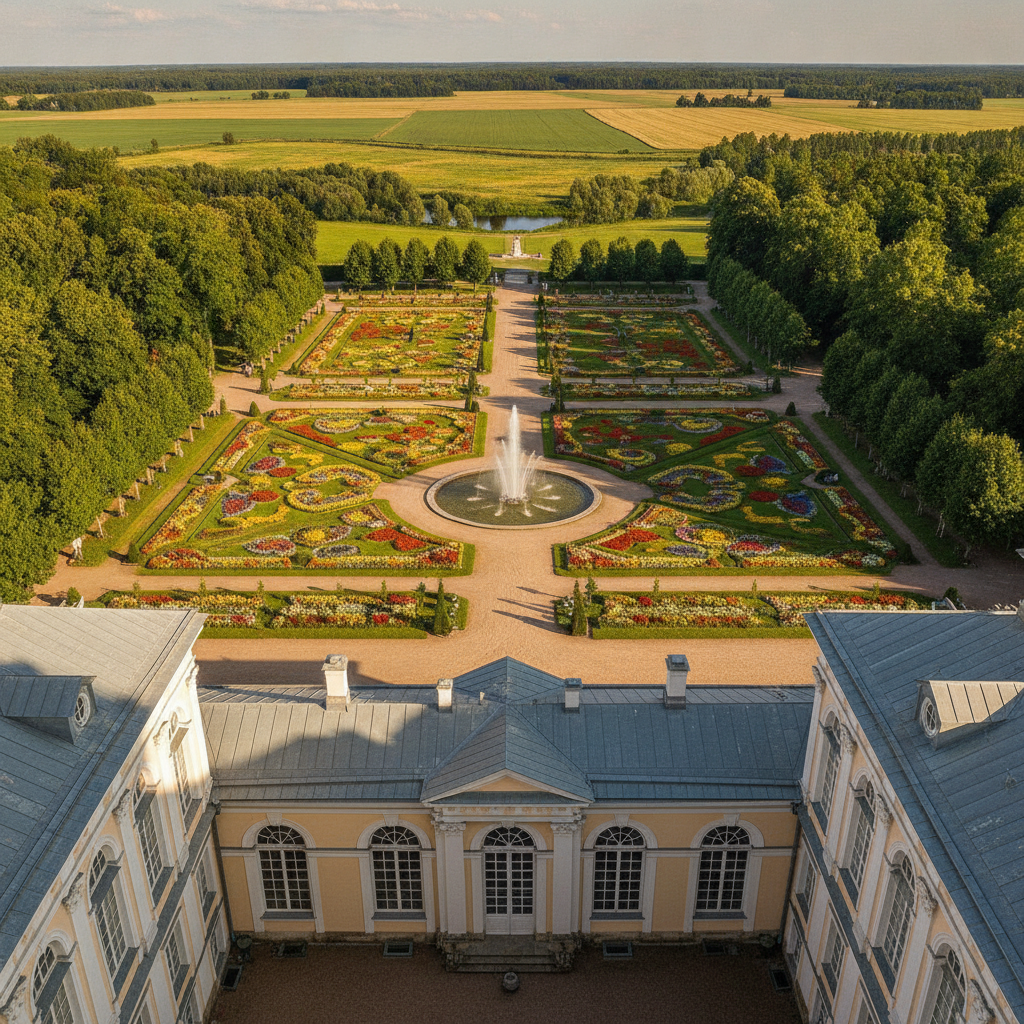
Rundale Palace (Rundāles pils, 75km south of Riga near Bauska, the most spectacular country palace in the Baltic states, designed by the Italian-born court architect Bartolomeo Rastrelli — the same architect who designed the Winter Palace in St. Petersburg and the Catherine Palace at Pushkin — commissioned by Ernst Johann von Biron, the Duke of Courland and the de facto ruler of the Russian Empire during the reign of Empress Anna Ivanovna, built in two campaigns 1736-1740 and 1764-1768, the palace the most complete surviving example of the late Baroque court architecture in the Baltic region, access by bus from the Riga International Bus Terminal to Bauska 1 hour €3.50 then local bus to Rundale 20 minutes €1.50, or organized day tour from Riga €30-50 per person including transport, the palace €10 adults May-October daily 10am-6pm, closed Monday): the State Rooms (the Gold Hall — the throne room with the gilded stucco decoration by the Italian sculptor Carlo Zucchi, the ceiling painting of the apotheosis of the Duke of Courland, the 38 state rooms on the first floor the most complete Rococo interior sequence in the Baltic states) and the formal garden (the 10-hectare French formal garden restored 1972-2014, the geometric parterre with the summer flowering annuals and the box hedges, the most complete Baroque garden in Latvia).
- 4
The Bauska Castle and the Courland Duchy History
Bauska Castle (Bauskas pils, at the confluence of the Mūsa and Mēmele rivers in Bauska, 12km east of Rundale Palace, the most conveniently combined day trip with Rundale from Riga): the castle history (the Livonian Order castle built 1443-1456 on the peninsula between the two rivers, the most strategically situated medieval castle in Latvia — the rivers providing natural defences on three sides, the castle subsequently the seat of the Duchy of Courland and Semigallia, the independent duchy established 1561 when the Livonian Confederation dissolved under the combined pressure of the Russian Tsar Ivan the Terrible and the Polish-Lithuanian Commonwealth — the duchy covering the western half of modern Latvia, the small state maintaining its independence until 1795 when Russia finally absorbed it), the castle ruins (the 15th-century Livonian Order tower and the walls surviving to roof height, the more complete 16th-17th century palace section housing the Bauska Castle Museum with the Courland history exhibits, €6 adults, May-October daily 10am-6pm, the viewing platform on the Order tower offering the panorama of the river confluence and the agricultural plain extending to the German border 50km south) and the Bauska town (the market square with the Baroque town hall of 1690 and the Lutheran church of the Duchy period, the most complete small Latvian town centre surviving from the Courland Duchy era).
- 5
The Latvian Open-Air Museum — Ethnographic Farmsteads
The Latvian Ethnographic Open Air Museum (Latvijas Etnogrāfiskais brīvdabas muzejs, Brīvības gatve 440, 8km northeast of the Riga centre, bus 1 from the Esplanade Park in 30 minutes, the largest open-air museum in the Baltic states, €5 adults, May-October daily 10am-5pm): the 118 historic buildings (the farmsteads, mills, fishing villages, and country churches relocated from all four historical Latvian regions — Vidzeme, Kurzeme, Zemgale, and Latgale — and reconstructed in the 90-hectare pine forest setting, the buildings spanning 200 years of Latvian rural architecture from the 17th to the 19th century, the most complete collection of traditional Latvian wooden architecture in the world): the essential buildings (the Vidzeme farmstead with the original thatched roof and the attached sauna — the pirts, the most important Latvian domestic institution, the sauna heated by the owner on Sunday afternoons in season for visitors to use at €15-20 per session; the fishing village with the traditional net-drying frames and the smoke-house showing the fish-smoking technique; the Latgale Catholic church of the 18th century still used for Sunday mass in the summer season; the windmill from the Kurzeme coast — the post mill type, rotated into the wind direction by pushing the tail beam) and the craft demonstrations (the traditional weaving, blacksmithing, and pottery demonstrations daily in July-August, the craft products purchasable at the museum shop, the most direct encounter with the pre-Soviet Latvian material culture available without leaving the Riga metropolitan area).
- 6
Riga Unexplored — the Maskavas Forštate and the Art Scene
Maskavas Forštate (the 'Moscow Suburb' district 1km southeast of the Old Town, the historically working-class and Jewish neighbourhood, the area with the highest concentration of surviving wooden 19th-century residential buildings in Riga — the 2-storey timber houses with the wooden window surrounds and the street-facing verandas, the neighbourhood largely bypassed by the post-Soviet renovation that transformed the Old Town and the Quiet Centre, the authentic unrenovated Riga streetscape accessible here): the specific streets (Maskavas iela — the long main street with the Central Synagogue site, the Orthodox Church of the Annunciation 1806, and the 19th-century wooden commercial buildings — and the Katoļu iela side streets with the most intact wooden residential architecture in Riga, the wooden houses in the green and yellow paint schemes of the pre-Soviet tradition), the Kim? Contemporary Art Centre (Maskavas iela 12/1, the most important contemporary art space in Latvia, the programme of Baltic and international contemporary art in the former Soviet cinema building, €5 adults, Wednesday-Sunday 12pm-7pm, the exhibitions changed 6-8 times per year, the art bar open Thursday-Sunday from 6pm — the most interesting evening programme in the Riga art world) and the Spīķeri Quarter (the 19th-century brick warehouse complex between the Old Town and the Central Market, the largest surviving warehouse ensemble in Latvia now converted to event spaces, restaurants, and offices — the Spīķeri Concert Hall the main chamber music venue in the quarter).
Walk this route with audio
Stories play automatically as you reach each stop — no tapping needed.
More in riga
Riga Old Town — Dom Cathedral, the House of Blackheads & the Largest Art Nouveau District in Europe
Riga — the Freedom Monument, Latvian Identity & the Museum of the Occupation
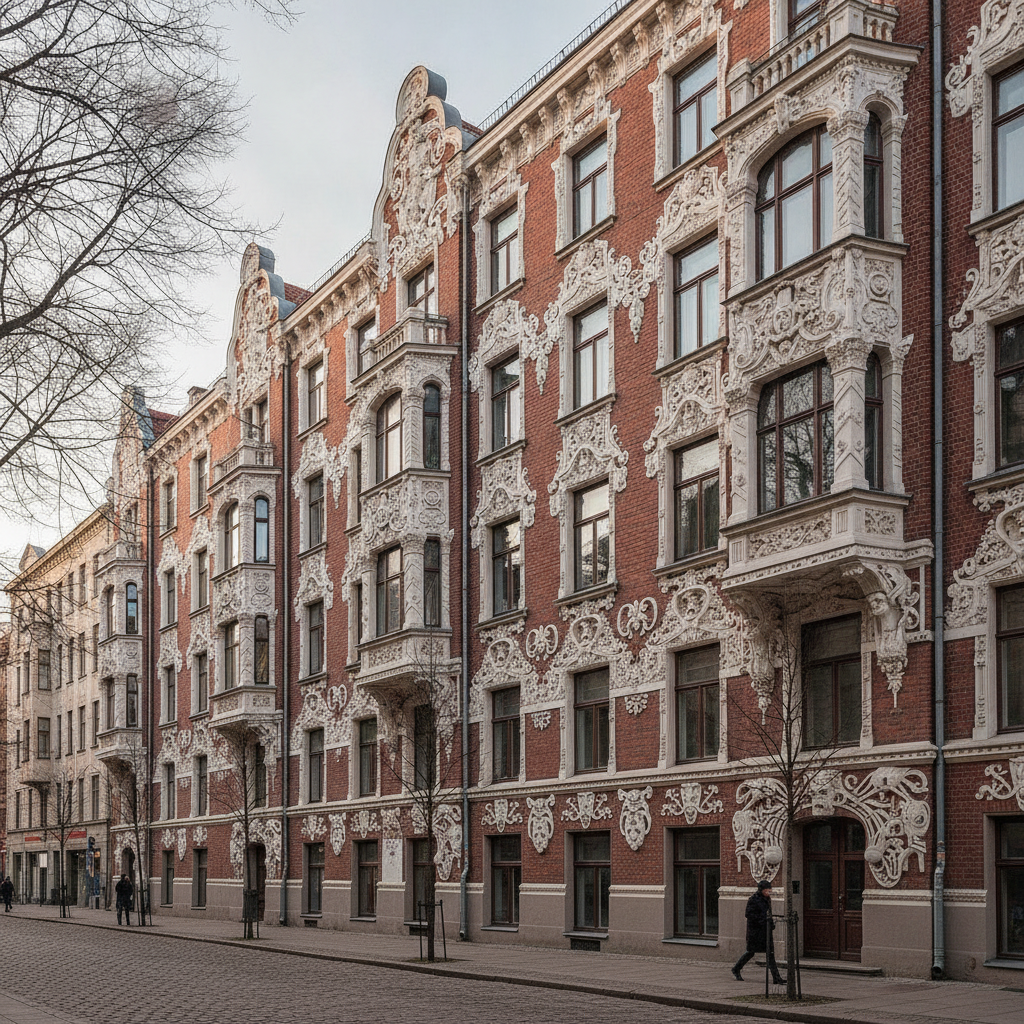
Riga Art Nouveau — Alberta Street, Mikhail Eisenstein & the World's Jugendstil Capital
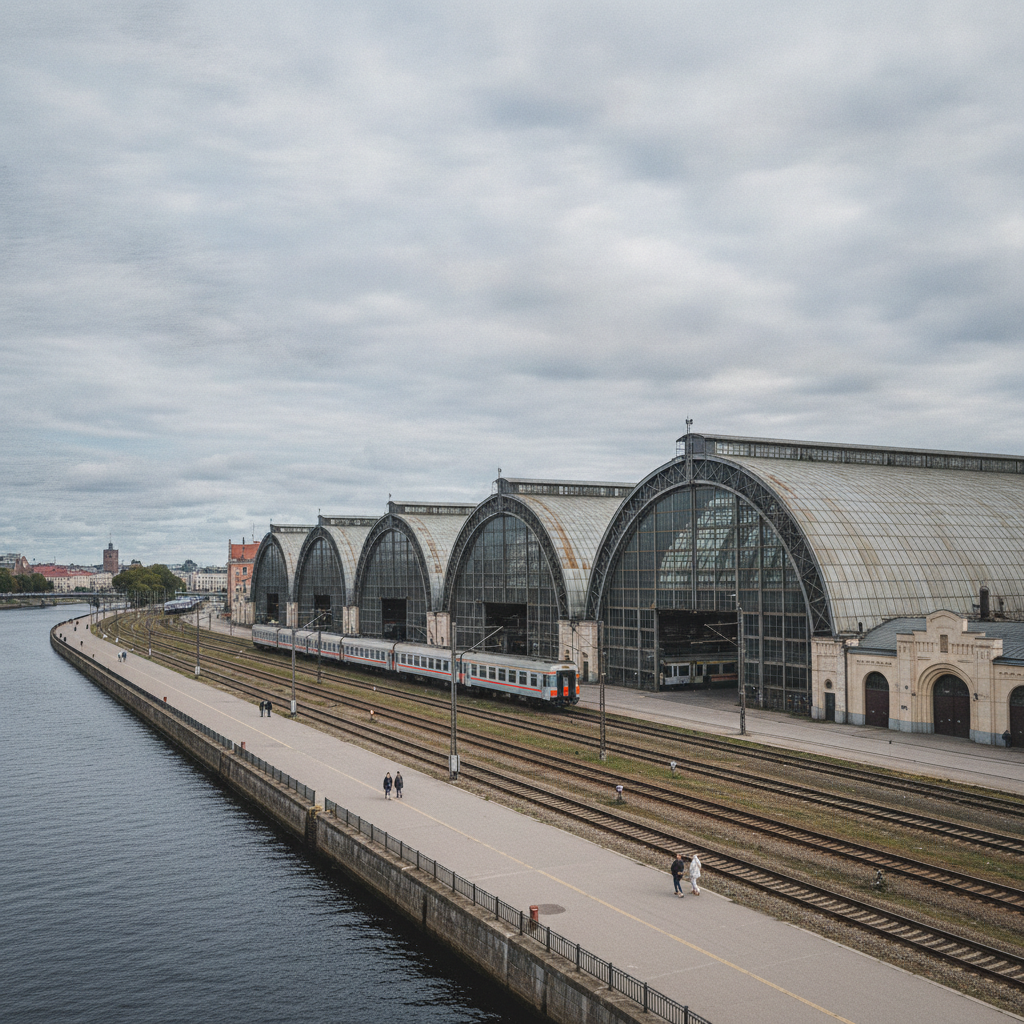
Riga Central Market & Latvian Cuisine — the Zeppelin Hangars, Grey Peas & Baltic Food Tradition