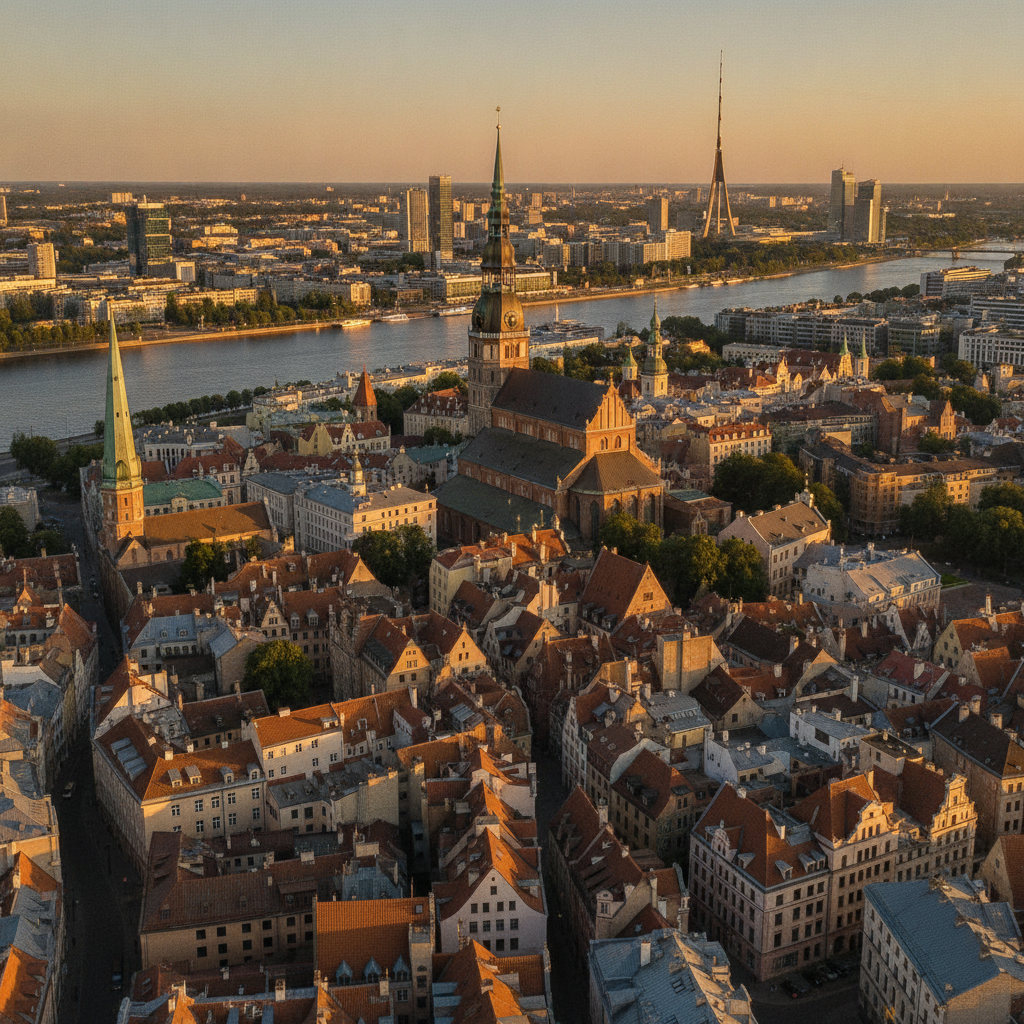
Riga Old Town — Dom Cathedral, the House of Blackheads & the Largest Art Nouveau District in Europe
Riga (the capital of Latvia, population 620,000, the largest city in the Baltic states, founded 1201 by Bishop Albert of Riga as a crusader base for the Christianization of the Baltic peoples, a major Hanseatic League port from the 13th century, the city possessing the most extensive Art Nouveau architecture in the world — approximately one third of all buildings in central Riga built in the Jugendstil and Art Nouveau style 1899-1914, the Old Town inscribed on the UNESCO World Heritage List in 1997, the city capital of independent Latvia since 1918 and since the restoration of independence in 1991) is the cultural capital of the eastern Baltic Sea.
- 1
The Dom Cathedral — the Baltic's Largest Medieval Church
The Dom Cathedral (Rīgas Doms, Doma laukums 1, the Lutheran cathedral founded 1211 by Bishop Albert of Riga, the largest medieval church in the Baltic states — the nave 140m long, the building the most architecturally layered in Latvia, reflecting 800 years of construction: the original Romanesque choir of 1211, the Gothic nave of the 14th century, the octagonal baroque tower of 1776, the interior combining the Gothic stone vaulting with the Renaissance and Baroque furnishings, €3 adults, Monday-Saturday 9am-6pm, Sunday 2pm-6pm): the Dom organ (the Walcker organ built 1884, for 20 years the largest pipe organ in the world — 6,768 pipes, 124 registers — the instrument still in use for the regular organ concerts, the concert programme at the Dom museum website, tickets €10-25, the best acoustic in Latvia), the cloister (the medieval cloister south of the nave, the Gothic arches and the stone tracery the most complete Romanesque-Gothic cloister in the Baltic region, now housing the Museum of Riga's History and Navigation — the collection of medieval artefacts, guild signs, and city seals, €3 adults), and the Dom Square (Doma laukums, the main square of the Old Town, the surrounding medieval buildings housing the most elegant outdoor cafes in Riga, the square the hub of the Riga Christmas market in December).
- 2
The House of Blackheads and the Town Hall Square
Ratslaukums (the Town Hall Square, the main civic square of the Riga Old Town, destroyed in World War II and rebuilt since 1993): the House of Blackheads (Melngalvju nams, Ratslaukums 7, the original Gothic hall built 1334 for the Brotherhood of the Black Heads — the association of unmarried foreign merchants who gave extensively to Riga's civic culture — the building destroyed in the German bombing of 1941 and rebuilt 1999-2001 in the original 17th-century Dutch Mannerist facade design, the most ornate secular facade in Riga, the red brick and sandstone tracery, the gilded royal coats of arms, and the Neptun and the two sphinxes of the portal the most photographed facade detail in Latvia, the interior now a museum and event venue, €8 adults, Tuesday-Sunday 10am-6pm, the Great Hall used for chamber music concerts), the Riga Town Hall (the Renaissance-influenced building adjacent to the Blackheads House, rebuilt 2002 after the World War II destruction, the functioning city administration building — the exterior accessible, the interior on guided tours only), and the statue of Roland (the medieval civic symbol of Riga, the figure of the legendary knight Roland holding the sword of justice, the original 1897 bronze statue now inside the Blackheads House with a 1999 copy standing in the square — the Roland statue the symbol of Riga's status as a free Hanseatic city).
- 3
St. Peter's Church and the Panoramic Tower
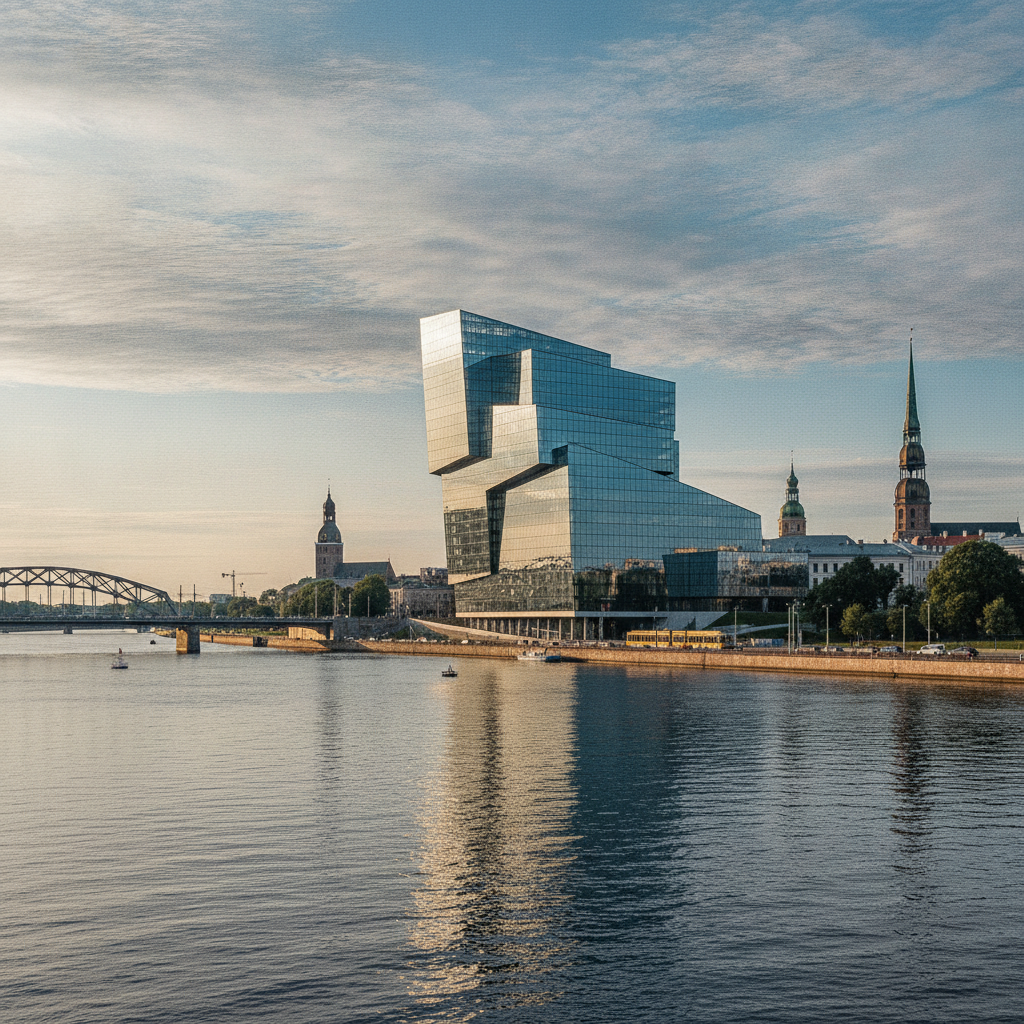
St. Peter's Church (Svētā Pētera baznīca, Skārņu iela 19, the Gothic Lutheran church of 1209 — the oldest church in Riga, the current building a 15th-century rebuilding of the original, the distinctive 123m spire the tallest structure in Latvia and the landmark of the Riga skyline visible from 30km away on a clear day — the spire rebuilt in steel in 1973 after the World War II bombing destroyed the original wooden spire for the third time in the church's history, the viewing platform at 72m accessible by lift, €9 adults, the 360-degree panorama the best view of the Riga Old Town and the Daugava River basin, the church interior a concert and exhibition venue, the regular classical music concerts Tuesday-Saturday at 12 noon free with church entry): the view from the tower (the Riga Cathedral directly below, the Daugava River 400m to the west, the Art Nouveau district visible 500m northeast beyond the Old Town walls, the Latvian National Library — the 'Castle of Light' — visible across the river, the Swedish Gate and the Powder Tower of the medieval city walls visible in the Old Town below) and the church market (the small antique and craft market on the cobblestones around the base of the church on weekends, the most relaxed shopping in the Old Town at 10am-2pm Saturday-Sunday).
- 4
The Swedish Gate and the Medieval City Walls
Riga's medieval city walls (the remnants of the wall system built 13th-16th centuries, the most important surviving sections in the northern Old Town around the Powder Tower and the Swedish Gate): the Swedish Gate (Zviedru vārti, Torņa iela 11, the city gate built 1698 during the Swedish administration of Riga — the only surviving gate in the Riga city walls, the red brick arch set into the wall between two surviving wall sections, the gate the most photographed medieval element in the northern Old Town, the name deriving from the Swedish Imperial administration of Riga 1621-1710 when Sweden was the dominant Baltic power), the Powder Tower (Pulvertornis, Smilšu iela 20, the 14th-century round cannon tower, the last surviving tower of the 18 original city wall towers, the walls 2.5m thick, the tower now housing the Latvian War Museum — the collection of Latvian military history from the medieval period through World War I, the Latvian War of Independence 1918-1920, World War II, the Soviet occupation, and the restoration of independence in 1991, free, Tuesday-Sunday 10am-6pm), and the Jacob's Barracks (Jēkaba kazarmas, Torņa iela 4, the 17th-century Swedish barracks building forming the street wall of the alley between the Old Town and the town moat, the building now converted to a shopping and craft gallery arcade, the courtyard accessible through the Swedish Gate).
- 5
Art Nouveau Riga — the World's Largest Concentration
Art Nouveau Riga (the Alberta iela and the Elizabetes iela in the Quiet Centre district 500m northeast of the Old Town, the most concentrated Art Nouveau streetscape in the world — 800 Art Nouveau buildings in central Riga, approximately one third of all pre-war buildings in the central districts, the Jugendstil construction boom of 1899-1914 funded by Riga's position as the third-largest port in the Russian Empire, the architects the Riga-trained Mikhail Eisenstein — father of the Soviet film director Sergei Eisenstein — responsible for the most extravagant facades, the eclectic and the National Romantic varieties of Art Nouveau both present): Alberta iela (the most spectacular single Art Nouveau street in Europe, 8 buildings by Mikhail Eisenstein on a single block — the building facades covered in the masks of screaming women, mythological figures, eagles, sphinxes, and elaborate floral stucco at €0 entry, always accessible from the street, the best daylight for photography 10am-2pm on the even-numbered side) and the Riga Art Nouveau Museum (Alberta iela 12, the apartment of the Riga architect Konstantīns Pēkšēns restored to the 1903 interior — the original furniture, the Jugendstil tiled stove, the painted ceiling decorations, €9 adults, Tuesday-Sunday 10am-6pm, the most complete surviving Art Nouveau domestic interior in Riga).
- 6
Riga's Central Market and the Latvian Food Tradition
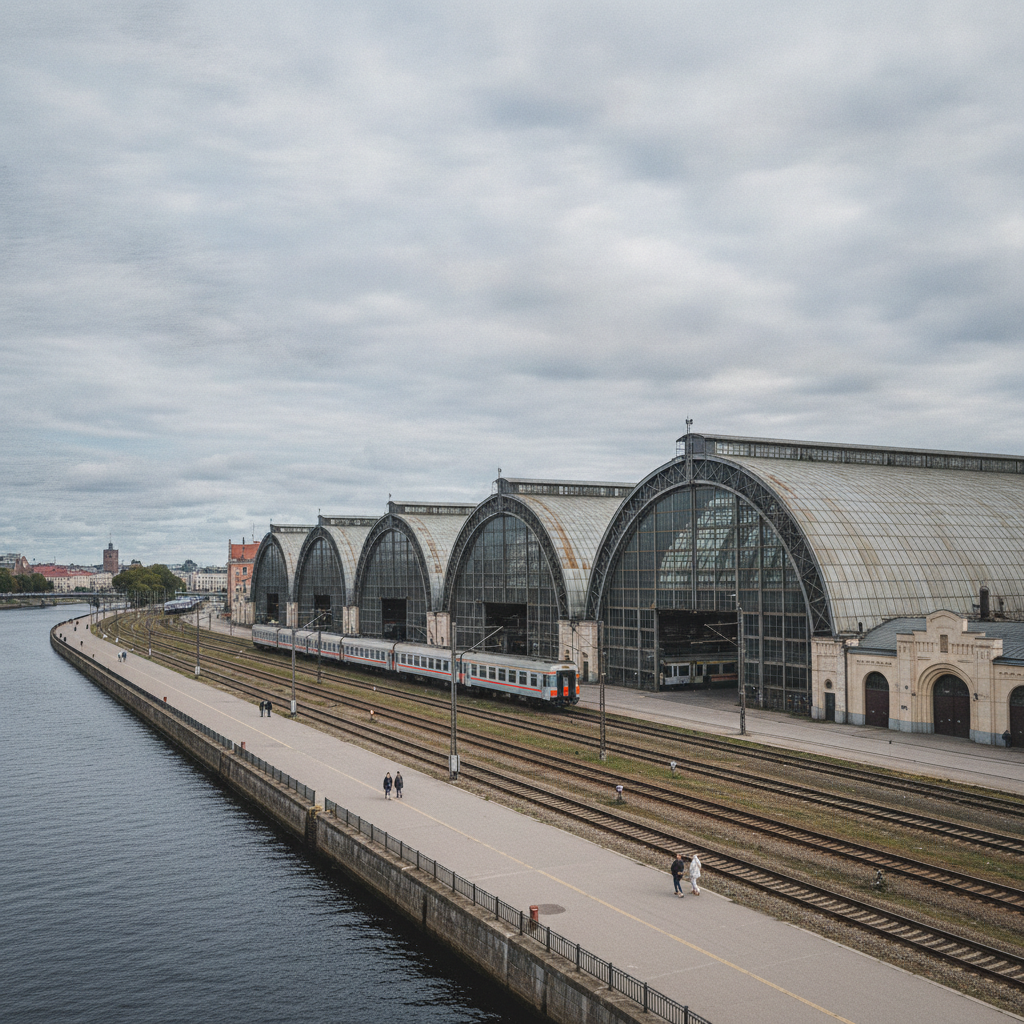
Riga Central Market (Rīgas Centrāltirgus, Nēģu iela 7, immediately south of the Old Town and the bus station, the largest market in the Baltic states and the largest covered market in Europe — the 5 pavilions built 1924-1930 in the repurposed German Zeppelin hangars brought from Vaiņode airfield, the steel-framed Art Deco hangars the most architecturally significant food market buildings in Europe, the market covering 72,000 square metres, 3,000 traders daily, 100,000 visitors daily in summer, open Monday-Saturday 7am-6pm, Sunday 7am-5pm, free entry): the food pavilions (the meat pavilion, the fish pavilion — the smoked Baltic sprats and the eel the specialties — the dairy pavilion with the Latvian farmer cheeses, the central vegetable pavilion with the Latvian forest mushrooms and berries in season, the bread section with the Latvian dark rye bread varieties), the outdoor stalls (the flower market, the clothing and textile stalls, the antique sellers on Sunday mornings) and the Latvian food specialties to buy (the grey peas with bacon and onions — pelēkie zirņi ar speķi, the Latvian national dish — available as a hot lunch at the market canteen, the smoked fish to eat at the standing tables in the fish pavilion, the kvass — the fermented rye bread drink available from the outdoor vendors, the Laima chocolate, the Latvian chocolate brand since 1870, sold at the market and throughout the city).
Walk this route with audio
Stories play automatically as you reach each stop — no tapping needed.
More in riga
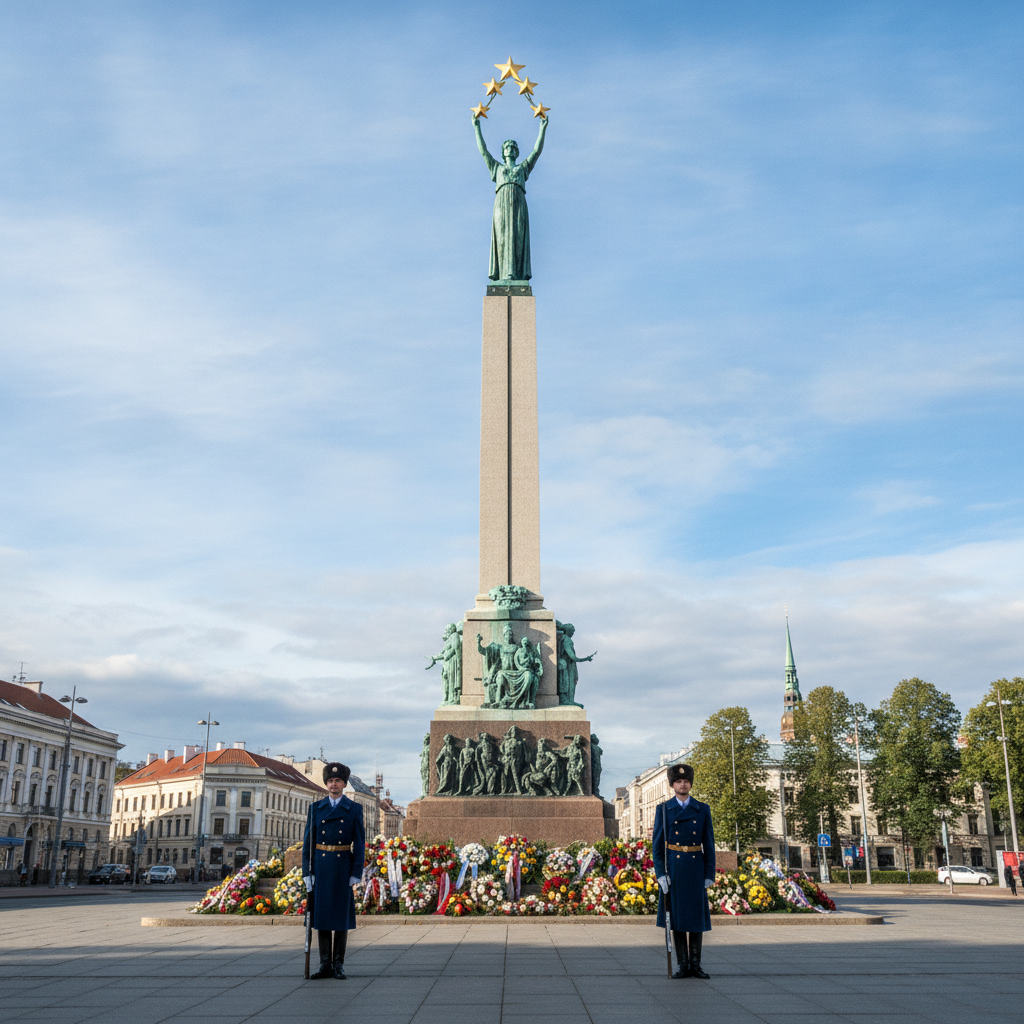
Riga — the Freedom Monument, Latvian Identity & the Museum of the Occupation
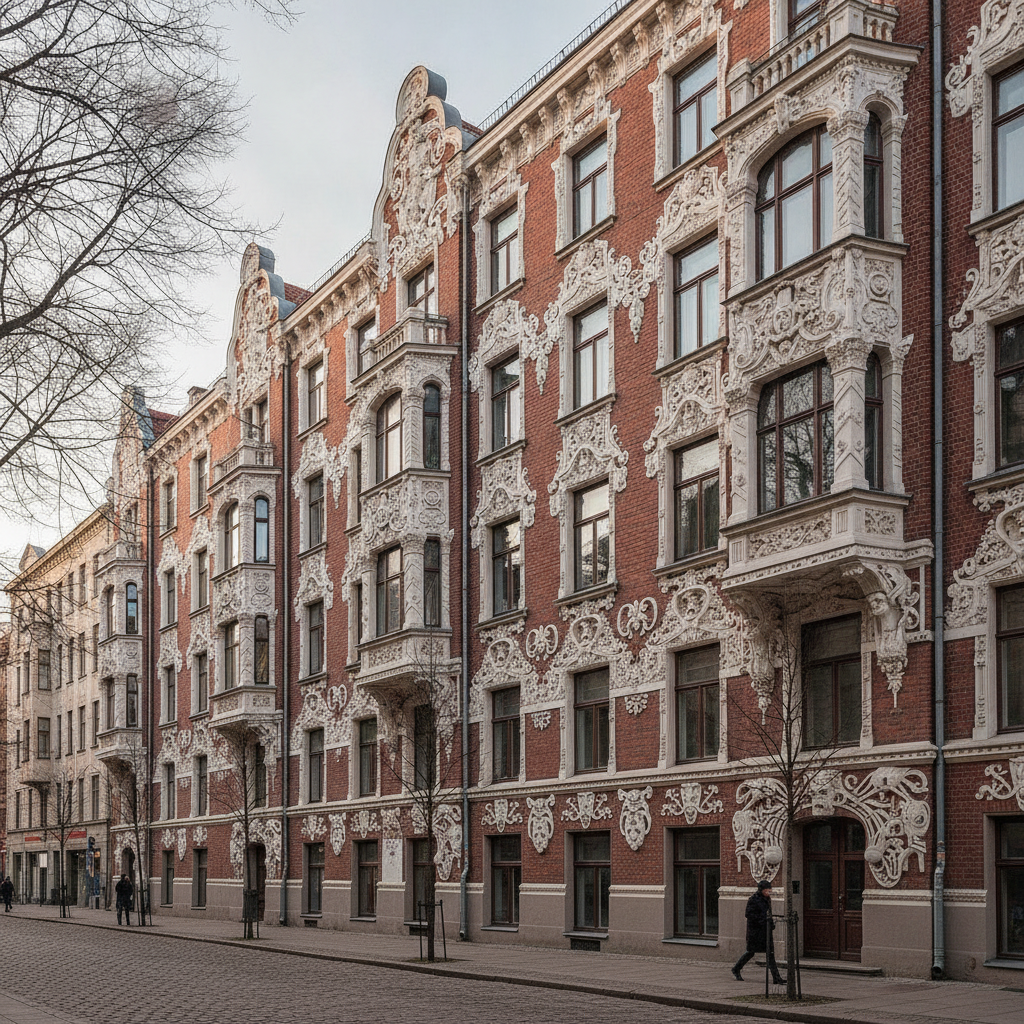
Riga Art Nouveau — Alberta Street, Mikhail Eisenstein & the World's Jugendstil Capital
Riga Central Market & Latvian Cuisine — the Zeppelin Hangars, Grey Peas & Baltic Food Tradition
Riga & the Daugava River — the National Library, Pārdaugava & the Latvian Song and Dance Festival