The Vatican, St. Peter's Basilica & Castel Sant'Angelo: The Heart of Christendom from River to Dome
The Vatican is the world's smallest sovereign state (0.44 km²) and the most visited collection of art and architecture on earth. The walk from Castel Sant'Angelo along Ponte Sant'Angelo to St. Peter's Square is one of the most theatrical urban approaches in the world: the river, the bridge with its ten angel statues, the colonnade opening like two great arms—and then Michelangelo's dome, visible for miles across the Roman skyline. The Vatican Museums hold one of the largest and most important art collections ever assembled, culminating in the Sistine Chapel.
- 1
Castel Sant'Angelo — The Tomb that Became a Fortress
Castel Sant'Angelo began as the mausoleum of Emperor Hadrian (completed 139 AD, the largest circular mausoleum in the ancient world), was converted into a fortress by the Goths in the 5th century, and served as a papal fortress, residence, and prison from the medieval period through the 16th century. The distinctive covered walkway connecting it to the Vatican (the Passetto di Borgo) was used by popes escaping danger—most famously by Clement VII, who fled along the Passetto during the Sack of Rome in 1527. The castle contains a remarkable sequence of rooms: the original Hadrianic spiral ramp, medieval papal apartments, Renaissance loggia designed by Bramante, and at the summit the terrace where the angel statue stands (the castle's name derives from a vision of the Archangel Michael sheathing his sword here in 590 AD, marking the end of a plague). The terrace offers one of the finest views of Rome. The National Museum of Castel Sant'Angelo occupies the interior.
- 2
Ponte Sant'Angelo — The Bridge of Angels
Ponte Sant'Angelo, the pedestrian bridge connecting Castel Sant'Angelo to the right bank of the Tiber, was originally built by Hadrian (134 AD, as the Pons Aelius) to provide a ceremonial approach to his mausoleum. The bridge was widened and renovated multiple times over the centuries; the ten angel statues lining its parapet were designed by Gian Lorenzo Bernini and his workshop in 1669 and installed in 1671—replacing Clement VII's earlier angels. Each angel holds an instrument of the Passion of Christ. The statues are dramatic examples of Baroque sculpture, conceived to be seen in sequence as pilgrims crossed the bridge toward St. Peter's; Bernini's own designs for the two central angels (The Angel with the Crown of Thorns and The Angel with the Superscription) were considered too beautiful to expose to the elements and were replaced with copies; the originals are in the church of Sant'Andrea delle Fratte. The bridge offers beautiful views of Castel Sant'Angelo and is one of the most photographed spots in Rome.
- 3
St. Peter's Square — The Greatest Piazza in Christendom
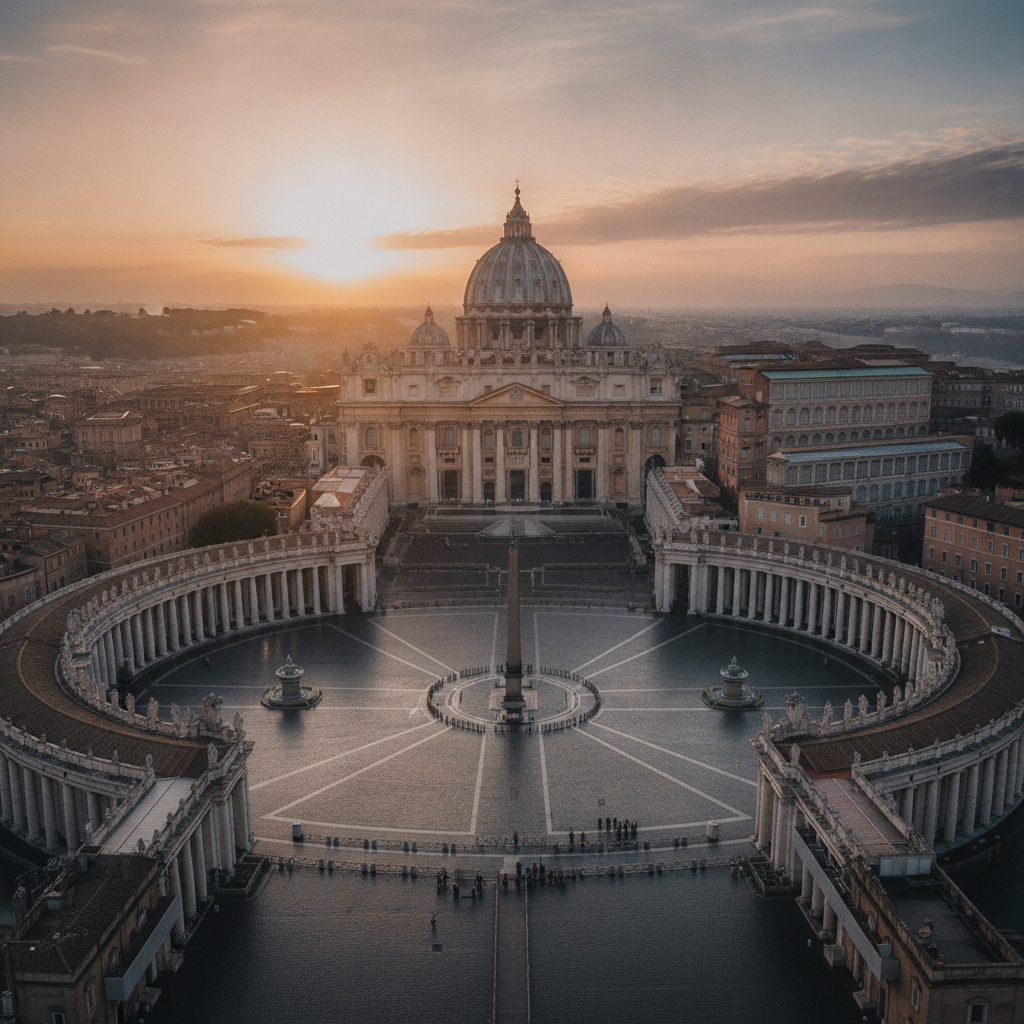
Piazza San Pietro, designed by Gian Lorenzo Bernini between 1656 and 1667, is the defining masterwork of Baroque urban space: an elliptical piazza 240 meters wide, enclosed by a colonnaded semicircle of 284 columns and 88 pilasters (four columns deep), topped by 140 statues of saints. The geometry is calibrated so that when standing at the two focal points of the ellipse (marked by round paving stones between the central obelisk and the colonnade), the four ranks of columns appear to collapse into a single rank—a Baroque optical trick. The Egyptian obelisk at the center (brought from Heliopolis by Caligula in 37 AD, moved here by Sixtus V in 1586) is one of the few obelisks in Rome that was never toppled in antiquity and never broken. The square holds hundreds of thousands of pilgrims for major papal events (the Christmas and Easter masses, beatification ceremonies); on ordinary days it functions as the grand forecourt of one of the world's greatest buildings. Entry is free and unrestricted.
- 4
St. Peter's Basilica — The Largest Church in the World
The Basilica di San Pietro in Vaticano is the largest church in the world by interior volume (15,160 square meters; it can hold 20,000 standing) and is built over the tomb of the Apostle Peter, who was martyred in Nero's Circus in approximately 64 AD. The original basilica (built by Constantine I, 319 AD) stood for 1,200 years before being torn down; construction of the present church began in 1506 under Pope Julius II and continued for 120 years under the direction of Bramante, Raphael, Antonio da Sangallo, Michelangelo, Giacomo della Porta, and Carlo Maderno. Michelangelo redesigned the dome (the largest in the world, 136 meters tall to the top of the cross) and directed construction from 1547 until his death in 1564. The interior contains a concentration of artistic masterworks without parallel: Michelangelo's Pietà (1499, now behind bullet-proof glass since an attack in 1972), Bernini's bronze baldachin over the papal altar (29 meters tall, the largest bronze work in the world), the Chair of St. Peter (Bernini, 1665), and dozens of papal monuments, chapels, and mosaics. The climb to the dome (by stairs or elevator; recommended) offers the finest panoramic view of Rome.
- 5
Vatican Museums — One of the World's Greatest Art Collections
The Vatican Museums (Musei Vaticani) are a collection of approximately 54 galleries occupying a corridor and wing length of about 7 km, containing works accumulated by the papacy over six centuries. The collection includes the Pinacoteca (painting gallery: Giotto, Leonardo, Raphael, Caravaggio, and more), the Gallery of Maps (40 topographic maps of Italy's regions painted 1580–85, covering a corridor 120 meters long—one of the most extraordinary decorative programs of the Renaissance), the Raphael Rooms (four rooms painted by Raphael and his workshop 1508–1524, including the School of Athens—widely regarded as the most perfect expression of Renaissance humanism), and, at the end of the prescribed route, the Sistine Chapel. The Sistine Chapel (built 1473–81; ceiling frescoes by Michelangelo 1508–12; Last Judgment 1534–41) requires no description—but note: photography is technically prohibited, the chapel is invariably extremely crowded, and the viewing conditions bear little resemblance to the photographic reproductions most visitors have seen. Booking in advance is essential; the ticket queue without prior booking can exceed 3–4 hours.
- 6
Piazza del Risorgimento — The Gateway to Vatican City
Piazza del Risorgimento is the large square immediately north of the Vatican walls, connecting the Vatican Museums entrance to St. Peter's Square via the Viale Vaticano. It is primarily a transit and orientation point for Vatican visitors—the main bus and taxi stop for the area—but the stretch of Vatican wall visible from here (the Leonine Wall, built 847–852 AD by Pope Leo IV after an Arab raid on St. Peter's, originally enclosing the entire Borgo district) gives a clear sense of the fortified nature of the medieval Vatican enclosure. The wall still carries bullet marks from the fighting of 1849 (the French assault to restore Pius IX). The square is also the point of departure for tours of the Vatican Gardens (book separately through the Vatican Museums; the gardens cover about half of Vatican City's total area and are normally closed to individual visitors). A useful place to pause and plan the sequence of Vatican visits.
Walk this route with audio
Stories play automatically as you reach each stop — no tapping needed.
More in rome
Campo de' Fiori, the Jewish Ghetto & Trastevere: Rome's Most Lived-In Neighborhoods
The Capitoline Hill, Trajan's Markets & the Monti Neighborhood: Between Rome's Ancient Power and its Liveliest Quarter
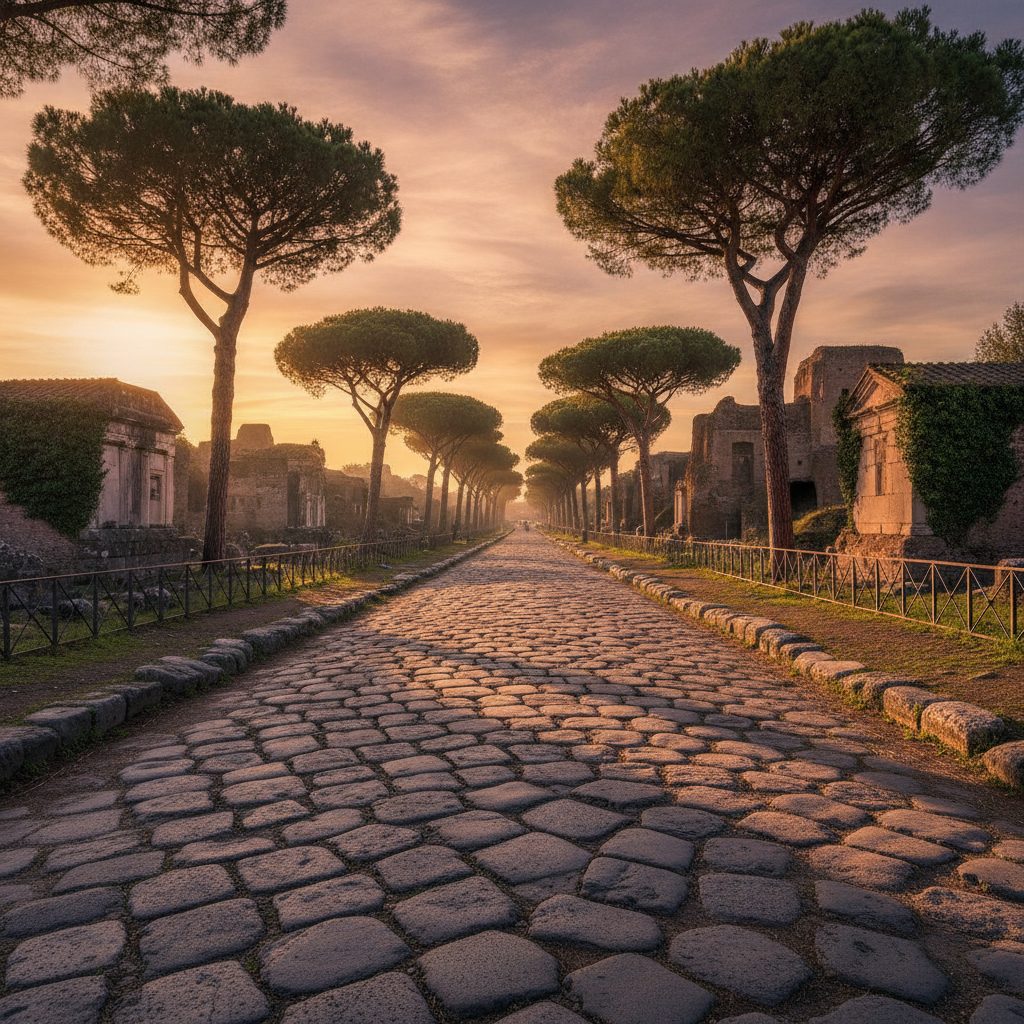
The Appian Way & the Catacombs: Rome's Ancient Road to the Dead
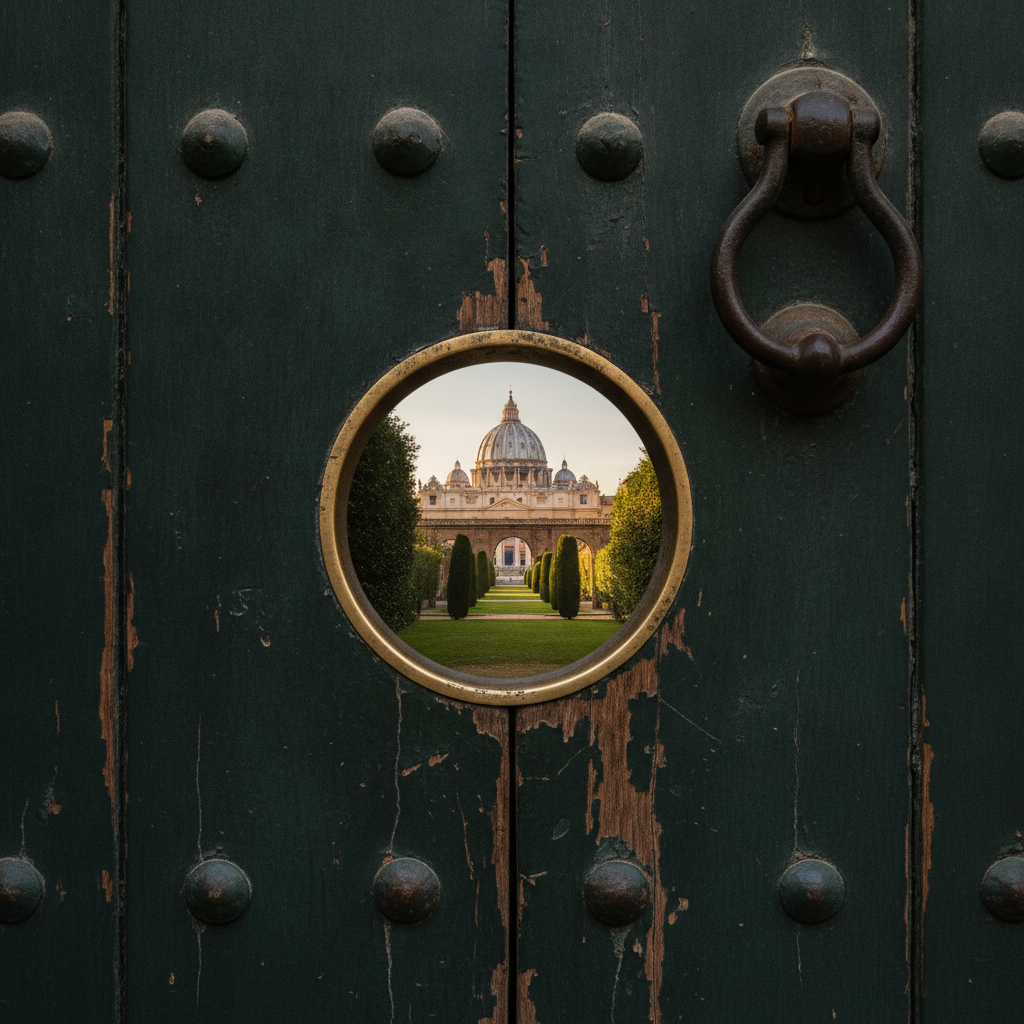
The Aventine Hill, the Knights' Keyhole & Testaccio: Rome's Best-Kept Secrets
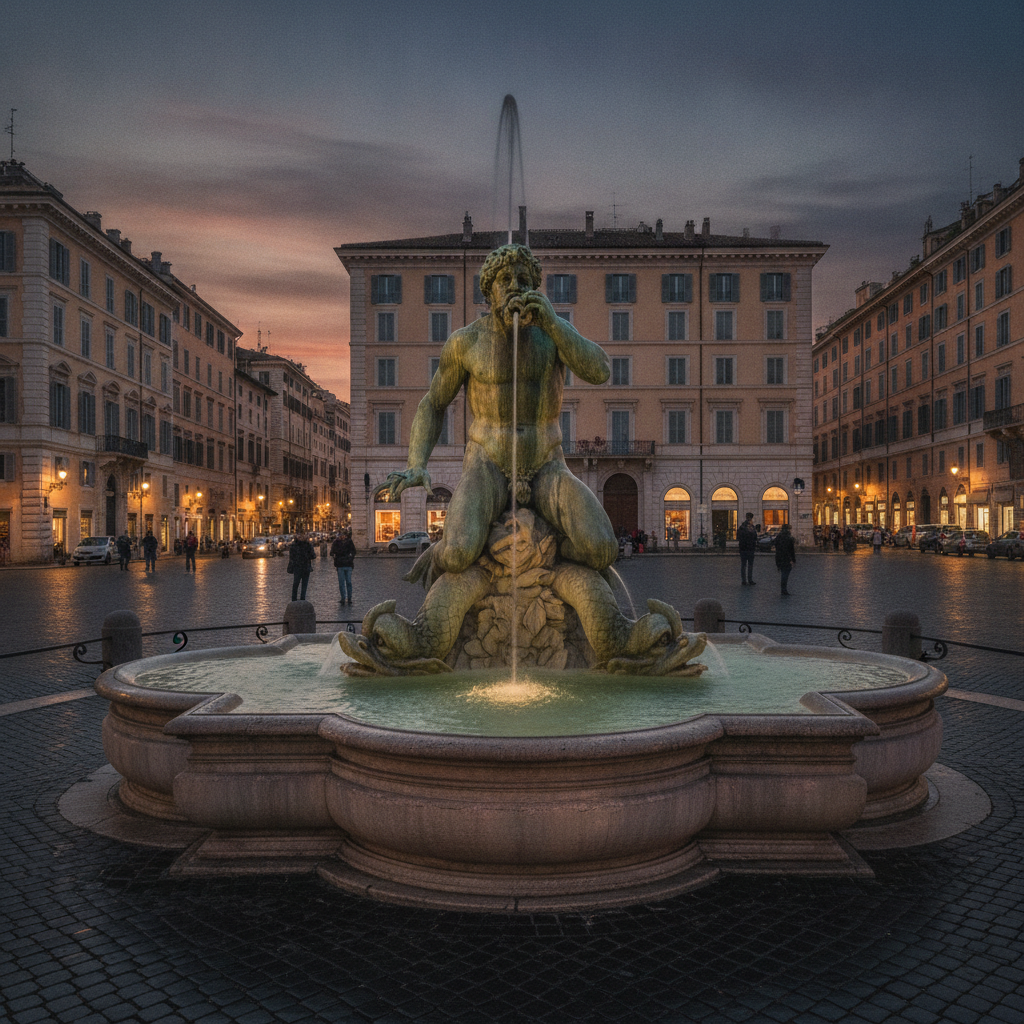
Quirinal Palace, Via Veneto & Capuchin Crypt: From Baroque Power to Dolce Vita Glamour