Salar de Uyuni Practical Guide: Getting There, Tour Types, Packing, and Safety
Reaching the Salar de Uyuni requires either an overnight bus from La Paz taking approximately ten hours on a road that climbs over the altiplano, or a short domestic flight to Uyuni airport on BoA or Amaszonas airlines from La Paz or Sucre. The town of Uyuni is the undisputed hub for all salt flat and Eduardo Avaroa Reserve tours, with dozens of competing agencies offering similar products at similar prices; the main differentiator is vehicle quality and guide experience. Cold temperatures, high UV radiation, and the disorienting featurelessness of the salt flat require specific preparation. The border crossing to Chile at the end of the three-day tour is popular but requires advance planning for transport and visa arrangements.
- 1
Getting to Uyuni: Bus, Flight, and Overland Options
The overnight bus from La Paz to Uyuni operated by several companies including Todo Turismo and Trans Omar departs in the evening and arrives in the early morning, covering approximately 570 kilometers in ten to twelve hours on a route that passes through Oruro and the southern altiplano. The road is paved for most of its length but the final section to Uyuni can be rough; buses vary in quality from standard reclining seats to semi-cama and cama flat beds on the better services. The domestic flight from La Paz El Alto airport to Uyuni on BoA Boliviana de Aviacion or Amaszonas takes approximately 50 minutes and eliminates the overnight journey, arriving in time for a morning tour departure; the altitude of both airports means aircraft operate at reduced capacity and flights can be disrupted by weather. A less-used overland option arrives from Tupiza to the south, a colonial town known for its connections to Butch Cassidy and the Sundance Kid who were killed nearby in 1908, and from Potosi and Sucre to the northeast via rough roads. Travelers completing the three-day tour to the Chilean border arrive at San Pedro de Atacama rather than returning to Uyuni and can continue onward into Chile by domestic flight from Calama.
- 2
Choosing a Tour Agency: What Matters and What Doesnt
The tour agency market in Uyuni contains dozens of operators ranging from established companies with modern vehicles and trained guides to informal operations with older vehicles and drivers doubling as guides without formal training. The most important differentiator between agencies is the quality and age of the 4x4 vehicles used for the tour, as a breakdown in the remote Eduardo Avaroa Reserve at 5,000 meters altitude in freezing temperatures is a serious situation; responsible agencies maintain their fleet and carry spare parts and tools. Guide language ability is the second key differentiator for non-Spanish speakers, as most standard agency guides operate only in Spanish; agencies catering to English-speaking tourists maintain specific guides with English ability at a premium. Price differences between agencies are often small and are less significant than vehicle and guide quality. The standard approach is to visit three or four agencies in person, inspect the vehicle assigned to your tour, meet the guide if possible, confirm what is included in the price, and read recent reviews on booking platforms. Small-group tours of four to six passengers share costs for a private jeep; budget operations sometimes overload vehicles with seven or eight passengers in a vehicle designed for five.
- 3
What to Pack: Cold, UV, and the Featureless Flat
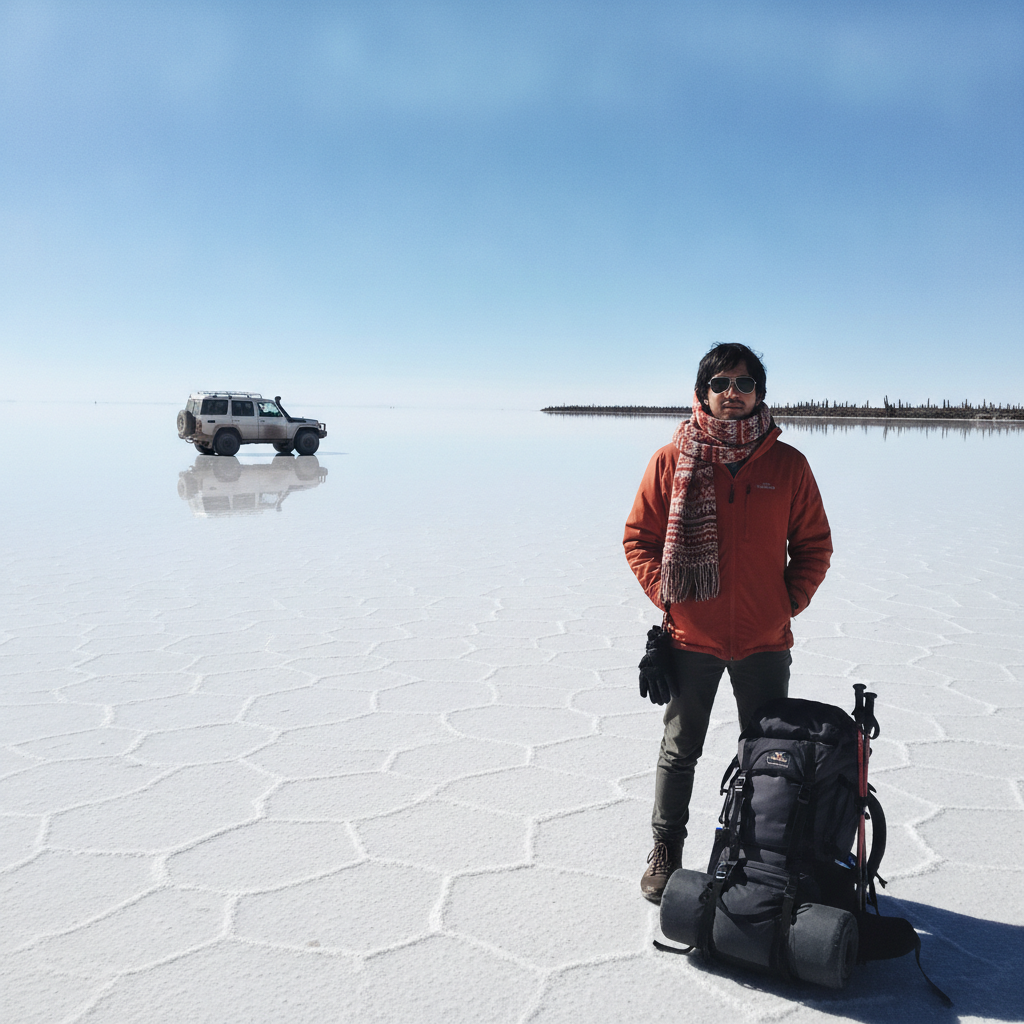
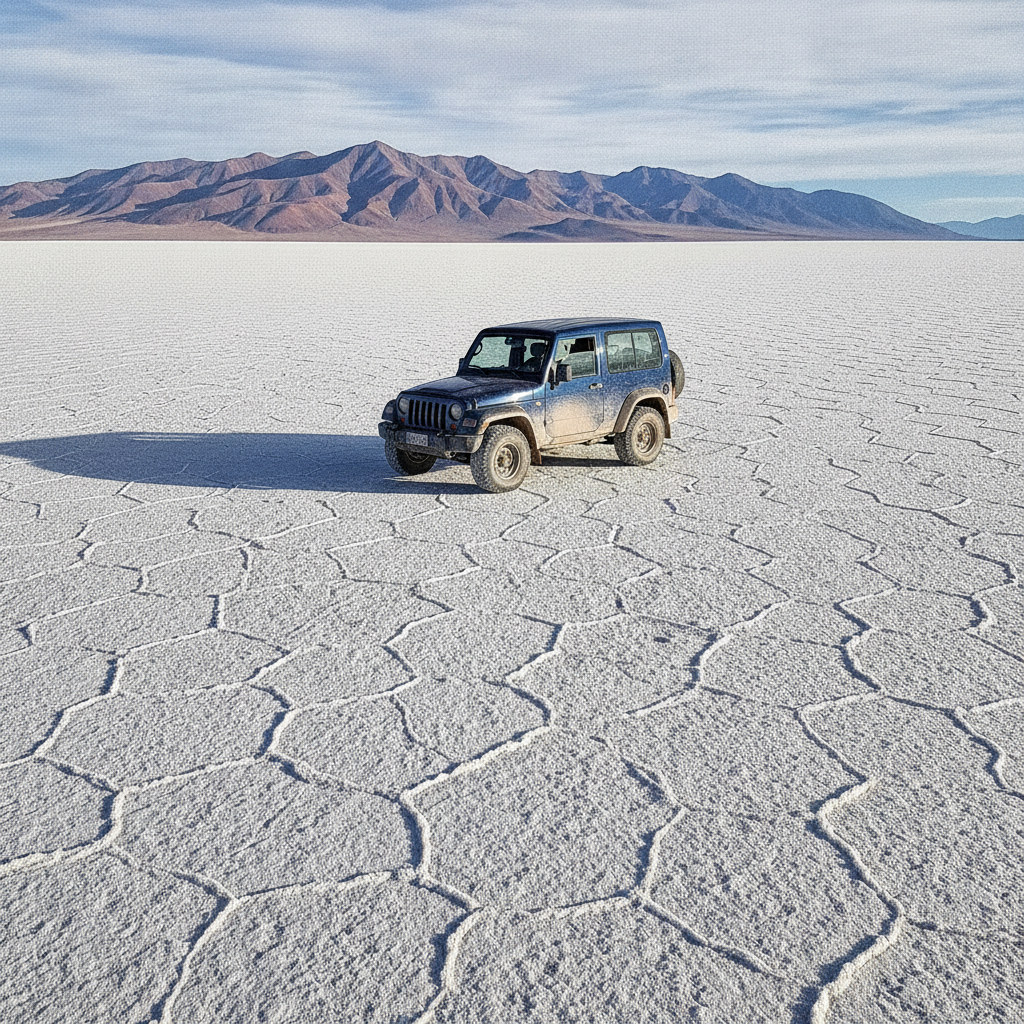
The Salar de Uyuni environment creates specific equipment requirements that differ from most other travel destinations. The altitude of the flat itself at 3,656 meters and the reserve sites above 4,000 to 5,000 meters means nighttime temperatures in the dry season drop to minus 15 to minus 20 Celsius, and even daytime temperatures rarely exceed 15 degrees Celsius; warm layers including a down jacket and thermal base layers are essential year-round. The UV radiation at altitude combined with the reflective white salt surface creates UV exposure from both above and below simultaneously; high-SPF sunscreen applied to the face, neck, and hands is critical and sunglasses with UV protection are essential. The featureless white surface of the flat can cause spatial disorientation and make it difficult to judge distances, which combined with the lack of landmarks can cause people to become genuinely lost if they walk away from the vehicle; staying with the group and vehicle is a firm rule. Waterproof boots or rubber boots are essential in the wet season when the flat is covered with water. Camera batteries drain faster in cold and altitude; bringing spares and keeping batteries warm in a pocket prolongs their life.
- 4
Altitude and Health at the Salt Flat and Reserve
The Salar de Uyuni at 3,656 meters sits at an altitude that causes altitude sickness symptoms in a significant proportion of sea-level visitors, particularly those arriving by flight without prior acclimatization at intermediate altitude. The Eduardo Avaroa Reserve sites above 4,500 meters, including the Sol de Manana geysers at 4,850 meters and the surrounding peaks, represent a step increase from the flat that can cause renewed symptoms even in visitors who have acclimatized to the Salar. The standard advice is to spend at least two nights in La Paz at 3,650 meters before traveling to Uyuni, giving the body initial adjustment before the reserve extension. Coca tea is available throughout the Uyuni tour area and provides genuine mild relief from altitude headache and fatigue. Diamox acetazolamide taken as a preventive medication beginning two days before high-altitude exposure is effective for most people; it requires a prescription in most countries and should be obtained before travel. Rapid descent is the definitive treatment for serious altitude sickness; the three-day tour descends from the highest reserve points to lower altitudes naturally, but someone experiencing pulmonary or cerebral edema symptoms needs immediate vehicle evacuation to lower altitude rather than continuation of the tour.
- 5
Responsible Tourism at the Salar: Environmental Considerations
The Salar de Uyuni is an extremely fragile ecosystem in several respects that responsible visitor behavior can help protect. The salt crust surface is easily damaged by vehicle tracks that take decades to heal; responsible tour operators stay on established routes and avoid driving on pristine sections of the flat. The Eduardo Avaroa Reserve wildlife, including the flamingos at Laguna Colorada, is sensitive to vehicle approach and noise; maintaining the required minimum distances from flamingo colonies during breeding season protects nesting success. Waste disposal in the remote reserve is a persistent problem, as the infrastructure for trash collection is minimal; carrying all waste out of the reserve and refusing to leave anything at camp sites or rest stops is the individual visitor's responsibility. The hot spring pools at Termas de Polques have been damaged by overuse and inappropriate bathing behavior including soap use; using the pools without soap or shampoo is the standard responsible approach. The increasing volume of tourism to the Salar, which grew from a few thousand visitors annually in the 1990s to hundreds of thousands by the 2010s, has generated ongoing debate about whether visitor numbers should be capped and how to enforce the regulations that currently exist on paper.
- 6
The Bolivia-Chile Border Crossing: Ending at San Pedro de Atacama
The border crossing from Bolivia to Chile at Hito Cajon at the southern end of the Eduardo Avaroa Reserve, at approximately 4,500 meters altitude near the Laguna Verde, is the endpoint of the three-day Uyuni tour for travelers choosing to exit to Chile rather than return to Uyuni. The crossing involves the Bolivian immigration stamp at the border facility and then a roughly two-hour drive through Chilean altiplano to the Chilean immigration post at San Pedro de Atacama, where entry documentation is processed. The Chilean side of the crossing passes through dramatic volcanic landscape including the approach to the Atacama volcanic zone. San Pedro de Atacama, the destination town, is a well-developed international tourism hub with flights from Calama airport to Santiago and connections to other South American capitals. Some tour agencies in Uyuni offer the three-day tour with Chile exit as a standard option at similar price to the return-to-Uyuni version; the jeep and guide return to Bolivia after dropping passengers at the border, and a pre-arranged Chilean transfer or taxi meets passengers at the Chilean immigration post. Travelers should verify current entry requirements for both Bolivia and Chile for their nationality before booking this option, as requirements have changed periodically and may differ from standard border crossing procedures.
Walk this route with audio
Stories play automatically as you reach each stop — no tapping needed.
More in Salar de Uyuni
Salar de Uyuni History: Pre-Columbian Peoples, Colonial Routes, and Bolivian Independence
Wildlife of the Bolivian Salt Flat Region: Vicunas, Viscachas, and Desert Adaptations

Stargazing at the Salar de Uyuni: One of the Best Night Skies on Earth
Uyuni Tour Logistics: Jeep Tours, Seasons, and the Three-Day Itinerary
Geology of the Bolivian Altiplano: Volcanoes, Minerals, and the Andean Plateau