Uyuni Tour Logistics: Jeep Tours, Seasons, and the Three-Day Itinerary
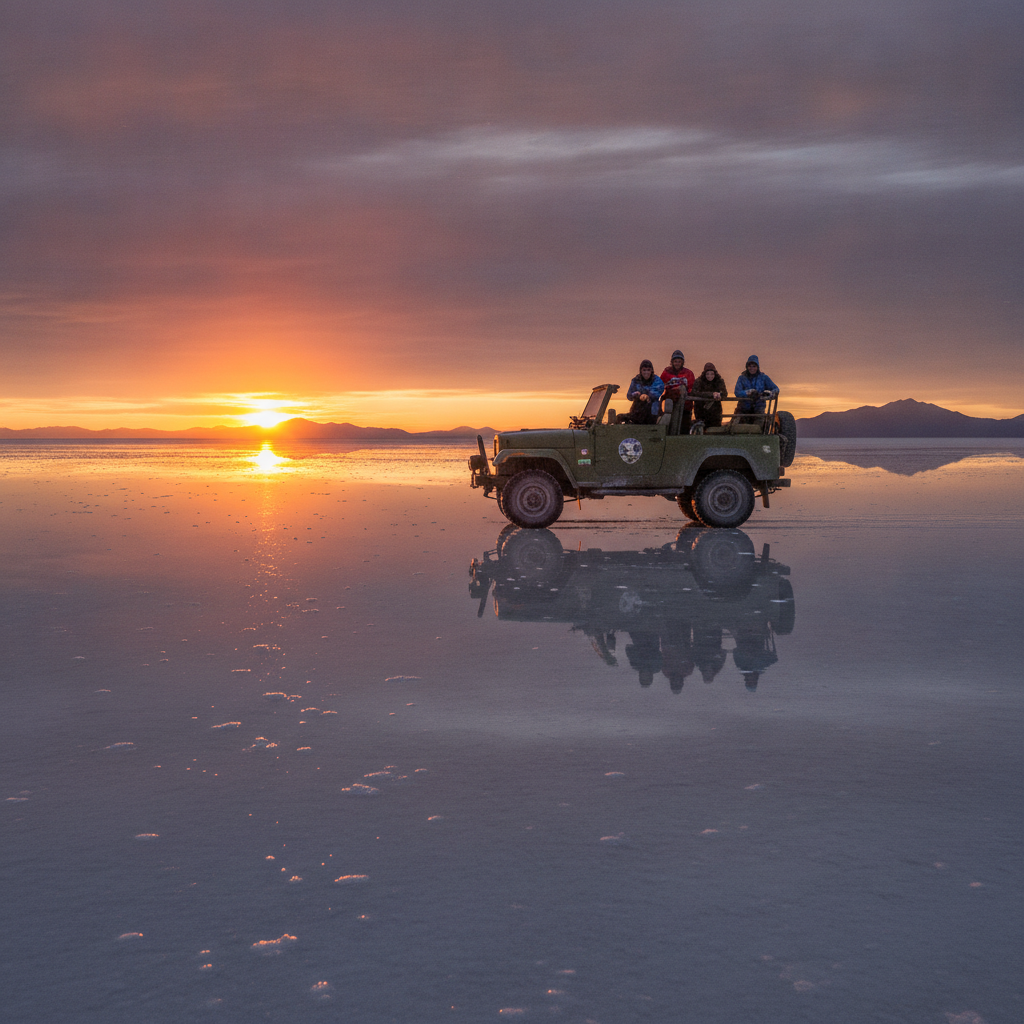
The vast majority of visitors to the Salar de Uyuni travel on organized jeep tours departing from the town of Uyuni, sharing a 4x4 vehicle with up to five other travelers and a local driver-guide who navigates the unmarked salt flat and the gravel tracks of the Eduardo Avaroa Reserve. The one-day tour covers the salt flat itself; the two or three day tour extends south through the reserve to the colored lagoons, geysers, and the Chilean border, with overnight stops in basic hostels or salt hotels. The wet season from November to March offers the mirror reflection but makes roads in the reserve muddy and occasionally impassable; the dry season from April to October gives reliable access and clear skies with the characteristic white salt surface and no reflection. Sunrise and sunset on the salt flat in any season are among the most dramatic natural light events possible to witness.
- 1
The Town of Uyuni: Gateway to the Salt Flat
The town of Uyuni, population approximately 20,000, exists almost entirely because of its role as the gateway to the Salar de Uyuni tours, and the town infrastructure reflects this singular purpose with dozens of tour agencies, hostels, restaurants, and equipment rental shops concentrated along the few central streets around the Plaza Arce. Uyuni was established in the late 19th century as a railroad junction connecting the Bolivian altiplano silver and tin mining region to the Chilean Pacific coast ports, and the railroad heritage is visible in the remaining rail infrastructure and the train cemetery attraction nearby. The town is cold year-round due to its 3,670-meter altitude and windswept altiplano location, and evening temperatures drop well below freezing in the dry season winter months of June and July. The accommodation range extends from basic backpacker hostels to the salt hotels constructed from blocks of salt from the flat, with the most famous salt hotel being the Luna Salada near Colchani at the edge of the flat. Most visitors arrive by overnight bus from La Paz or by short domestic flight and depart on an early morning tour the same or following day.
- 2
Choosing a Tour: One Day, Two Days, or Three Days
The standard tour options from Uyuni are organized around how far south into the Eduardo Avaroa Reserve the tour extends. The one-day tour covers the train cemetery, the Colchani salt processing area, the salt flat including Incahuasi Island, and the sunset on the flat before returning to Uyuni by evening; this option sees the salt flat without reaching the colored lagoons. The two-day tour adds an overnight in a hostel on the edge of the reserve and a morning visit to the Laguna Colorada and surrounding geisers before returning on the second day. The three-day tour is the most common choice for international tourists, extending to the Laguna Verde and the Sol de Manana geyser field on the third morning before ending at either the Bolivian town of Uyuni or the Chilean border crossing at San Pedro de Atacama for those continuing to Chile. The Chile exit option is logistically appealing as it combines the Bolivian salt flat tour with onward travel to the Atacama Desert in a single continuous journey. Tour prices are low by international standards and are set at similar levels by competing agencies; choosing based on vehicle quality and guide reputation is more important than price differences.
- 3
Wet Season vs Dry Season: The Mirror and the White Desert
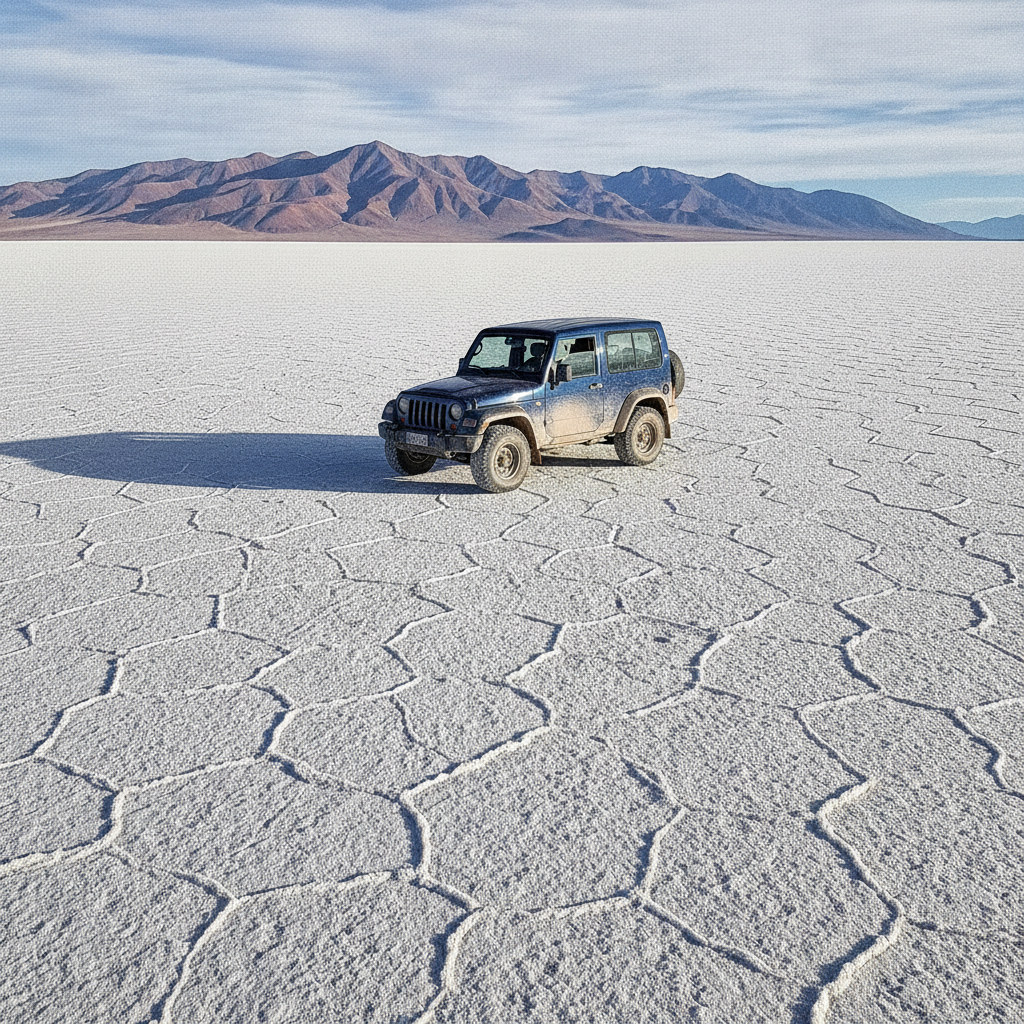
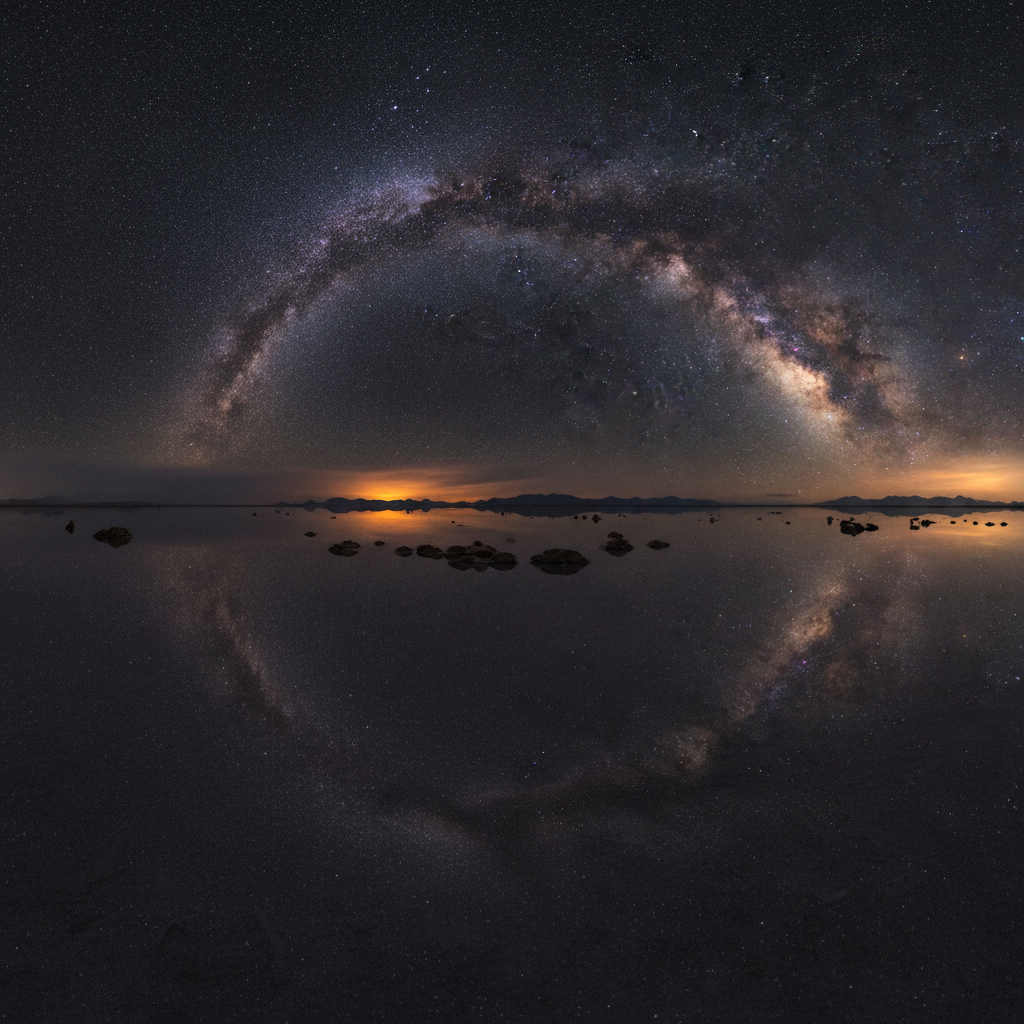
The choice of season for visiting the Salar de Uyuni involves a genuine tradeoff between two completely different visual experiences. The dry season from April to October, and most intensely from May to September, delivers consistent clear skies, warm daytime temperatures that drop sharply after sunset, and the classic white salt surface with hexagonal polygon patterns. Star visibility on dry season nights is extraordinary due to the altitude, low humidity, absence of light pollution, and the reflective white ground that appears to extend the sky downward. The wet season from November to March brings the famous mirror effect when rainfall covers the flat with a few centimeters of water that perfectly reflects the sky and clouds; in these conditions the boundary between sky and earth visually disappears. However, the wet season also brings afternoon thunderstorms, cold temperatures, and roads in the Eduardo Avaroa Reserve that become muddy and sometimes impassable, meaning the three-day tour to the colored lagoons may not be possible or may be cut short. November and late February are the shoulder periods when some mirror water is possible while road conditions are better than the deep wet season peak.
- 4
Perspective Photography: The Prop Shots of the Salt Flat
The perfectly flat and featureless white surface of the Salar de Uyuni in dry season creates ideal conditions for forced-perspective photography, in which objects at different distances from the camera appear to be at the same scale due to the absence of depth cues on the uniform white ground. The tradition of salt flat prop photography, in which tourists and guides create photos appearing to show miniature humans interacting with large toy dinosaurs, drinking from giant bottles, or running from giant falling people, has become one of the most popular photography activities at the Salar and a recognized genre of travel photography. The technique requires the photographer to position the camera very low to the ground, place subjects at carefully calculated distances to achieve the desired scale illusion, and shoot with sufficient depth of field to keep both near and far subjects sharp. Local guides are generally expert at arranging and executing these shots and bring a range of standard props on tour vehicles. The prop photography tradition has made the Salar one of the most photographed destinations in South America despite or because of its reputation as a photographic cliche, as the images are genuinely surprising and impossible to produce in most other landscapes.
- 5
Salt Hotels and Accommodation on the Flat
Several hotels have been constructed directly on the salt flat or at its edges using blocks of salt cut from the flat as the primary building material, creating walls, floors, furniture, and decorative elements from the same material as the landscape outside. The most famous of these, the Luna Salada hotel near Colchani at the northeast edge of the flat, uses salt blocks throughout its construction and has been operating since 2001. The salt architecture requires careful management of humidity and surface moisture, as salt absorbs water and the structures require ongoing maintenance. The environmental status of salt hotels has been debated, with concerns about salt mining for construction affecting the flat surface and about waste water disposal in an extremely sensitive ecosystem with no conventional sewage infrastructure. Basic accommodation is also available in the town of San Juan on the southern edge of the flat, in the Eduardo Avaroa Reserve hostels at various points along the southern route, and in the border village of Quetena Chico near the Chilean crossing. For the three-day tour the overnight accommodation is standardly included in the tour price at the basic reserve hostels.
- 6
Crossing to Chile: The Atacama Connection
The Bolivian-Chilean border crossing at Hito Cajon, located at the southern end of the Eduardo Avaroa Reserve near the Laguna Verde at 4,500 meters altitude, is the standard exit point for travelers completing the three-day Uyuni tour and continuing to the Atacama Desert in Chile. The crossing is informal in the sense that there is no permanent paved road and the crossing point consists of border facilities on both sides of the marker, with the Chilean immigration post at San Pedro de Atacama requiring a further two-hour drive through Chilean altiplano. The San Pedro de Atacama side of the crossing at the Paso Jama checkpoint sits at 4,480 meters and then descends dramatically to San Pedro at 2,400 meters, with stunning views of the volcanic Atacama landscape during the descent. San Pedro de Atacama is a well-developed international tourism town with direct connections to Calama airport and flights to Santiago, making the overland Uyuni to Atacama route a natural segment of a South American itinerary combining Bolivia and Chile without backtracking. Travelers should verify current border crossing hours and visa requirements for their nationality before planning this route, as regulations have changed periodically.
Walk this route with audio
Stories play automatically as you reach each stop — no tapping needed.
More in Salar de Uyuni
Salar de Uyuni History: Pre-Columbian Peoples, Colonial Routes, and Bolivian Independence
Salar de Uyuni Practical Guide: Getting There, Tour Types, Packing, and Safety
Wildlife of the Bolivian Salt Flat Region: Vicunas, Viscachas, and Desert Adaptations
Stargazing at the Salar de Uyuni: One of the Best Night Skies on Earth
Geology of the Bolivian Altiplano: Volcanoes, Minerals, and the Andean Plateau