Salt Lake City R4: Bonneville Salt Flats (46,000ha flattest large surface earth, Speed Week SCTA September, salt flats shrinking 40% since 1950 potash mining Intrepid, Wendover Nevada casinos dry Utah), Antelope Island (39km 700 bison 1893 first conservation attempt, pronghorn 95km/h fastest Western Hemisphere, brine fly billions per hectare Great Basin Shoshone food, 1.5M Wilsons phalaropes 85% world population August-September), Ski resorts (Alta 1939 ski-only no snowboards since 1994 1400cm/year 500 inches most challenging expert terrain, Snowbird aerial tram 10min Hidden Peak 11000ft 125 passengers, Park City Mountain largest US 7300 acres 2015 merger, Deer Valley most upscale valet ski parking top ranked US), Moab (5000 residents 3M visitors/year, Slickrock Bike Trail 1980s 35 degree slopes friction sandstone, Dead Horse Point 16km descent, Canyons MAZE most remote continental US 3-5 days 4WD), Architecture (Utah State Capitol 1916 copper dome 97m Richard Kletting, Cathedral Madeleine 1909 Gothic Revival finest High Victorian Gothic west Mississippi, Vivint Arena USD 28.5M naming rights 10 years, 2002 figure skating venue), Hiking (Cottonwood Canyons 20-40min to trailheads, Timpanogos 3582m 40,000 hikers/year, Timpanogos Cave 244m elevation gain stalactites helictites, Red Butte Garden summer concerts).
Salt Lake City R4: Bonneville (46,000ha flattest earth, Speed Week September, shrinking 40% 1950 potash mining, Wendover Nevada casinos), Antelope Island (700 bison 1893, pronghorn 95km/h, brine fly billions Shoshone food, 1.5M phalaropes 85% world August-September), ski (Alta 1939 no snowboards 1994 1400cm/year expert terrain, Snowbird aerial tram 10min 125 passengers, Park City Mountain largest US 7300 acres, Deer Valley valet top ranked), Moab (5000 people 3M visitors, Slickrock 35 degree friction, Dead Horse descent, Maze most remote 3-5 days), architecture (Capitol 1916 copper dome 97m, Cathedral Madeleine 1909 Gothic finest west Mississippi, Vivint Arena USD 28.5M 2002 figure skating), hiking (Cottonwood canyons 20-40min, Timpanogos 3582m 40,000 hikers, cave 244m gain stalactites helictites, Red Butte Garden summer concerts).
- 1
The Bonneville Salt Flats and Nevada Border
The Bonneville Salt Flats (at 160 km west of Salt Lake City, near Wendover, Utah, on I-80): the 46,000-hectare salt pan left by the drying of ancient Lake Bonneville, with a perfectly flat surface (the flattest natural surface on earth larger than 1 km2, with a maximum elevation variation of 2 inches over the entire 46,000-hectare surface) that has served as the world's premiere venue for land speed record attempts since 1914. The Speed Week: the World of Speed event held each September (organized by the Southern California Timing Association), in which teams from around the world attempt to set land speed records in various vehicle classes — including piston-engine cars, streamliners, motorcycles, and diesel trucks. The land speed records: the all-out land speed records have largely migrated from Bonneville to the Black Rock Desert in Nevada (where the sound barrier was broken by Thrust SSC in 1997 at 1,228 km/h), but Bonneville remains the venue for records in specific vehicle classes. The Bonneville threat: the salt flats have been shrinking due to the same water overallocation that is shrinking the Great Salt Lake (the Bonneville Salt Flats are supplied by spring floods from the Great Salt Lake, and as the lake shrinks, the salt flats receive less water for renewal) and due to the mining of potash from beneath the salt flats by Intrepid Potash Incorporated (the world's largest producer of potash, which has mining operations directly beneath the racing surface). The Bonneville Speedway is currently approximately 40% smaller than in 1950. Wendover (at the Utah-Nevada border, 160 km west of Salt Lake City): the twin cities of West Wendover (Nevada, with casinos, just across the state line) and Wendover (Utah, dry), a peculiar border phenomenon where Utahns drive to the Nevada side for gambling and alcohol unavailable under Utah law.
- 2
Antelope Island and the Great Salt Lake Ecosystem
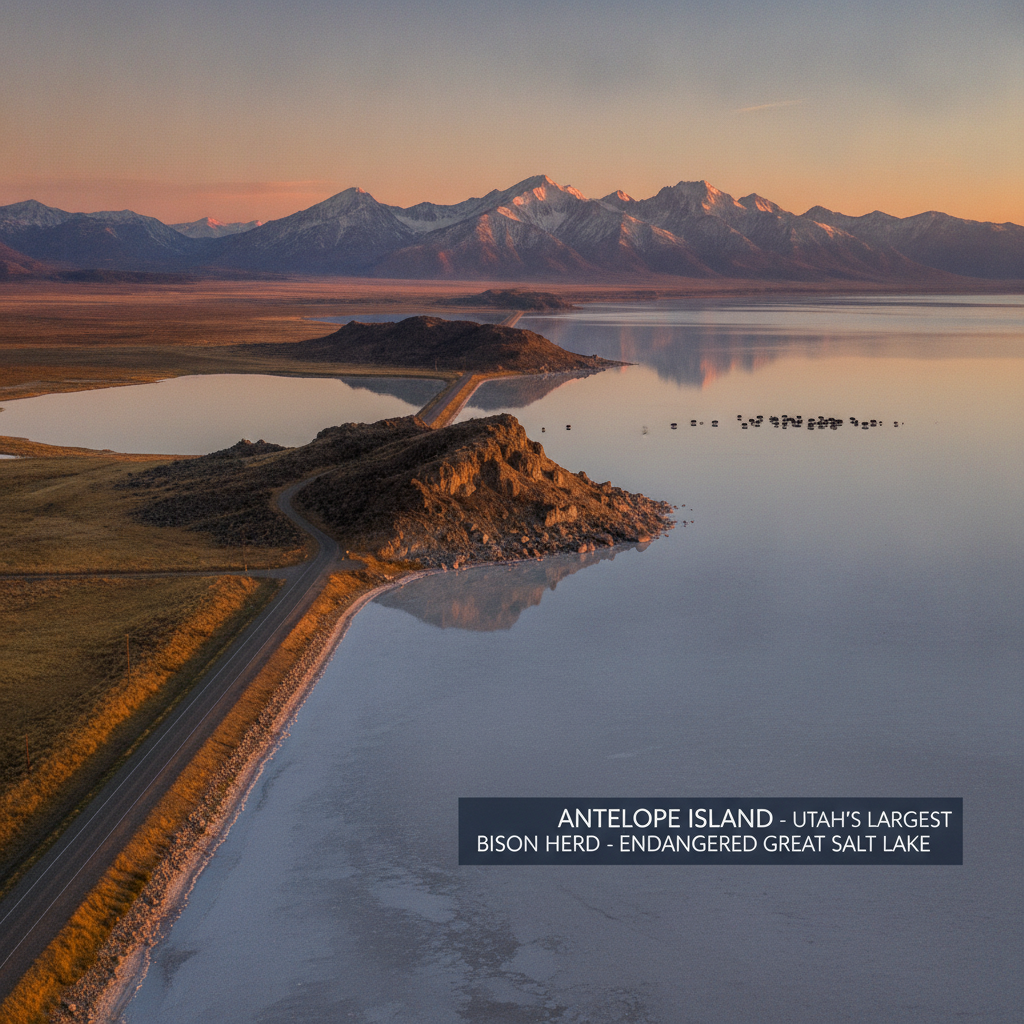
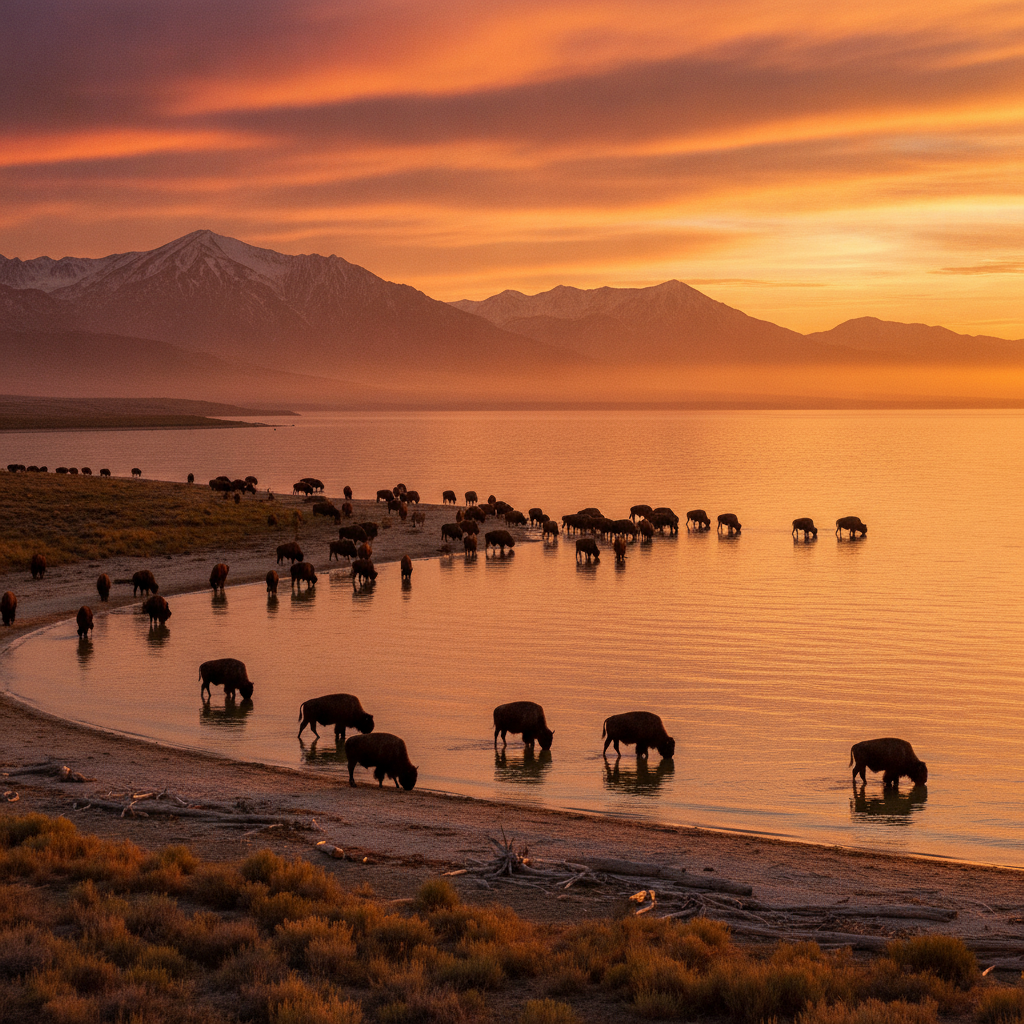
Antelope Island State Park (at 4528 West 1700 South, Syracuse, Utah, 40 km north of Salt Lake City, connected to the mainland by a 12-km causeway): the largest island in the Great Salt Lake (39 km long, 8 km wide, 28,000 hectares), home to the largest free-ranging bison herd in Utah (approximately 700 bison, descendants of a small herd introduced in 1893 by William Glassman and John Dooly in the first attempt at bison conservation in Utah). The island's wildlife: beyond bison, Antelope Island supports pronghorn antelope (the fastest land animal in the Western Hemisphere, capable of speeds of 95 km/h sustained over long distances), mule deer, coyotes, bobcats, bighorn sheep, and approximately 250 bird species. The brine fly phenomenon: the brine flies (Ephydra hians) that emerge in massive clouds from the Great Salt Lake shore in summer (particularly on the lakeshore beaches of Antelope Island) can number in the billions per hectare, creating a phenomenon in which the entire shoreline appears to be moving — an experience that is one of the most dramatic (and most often photographed) natural spectacles in Utah. The brine fly as food source: the brine flies and their pupae were an important food source for the Shoshone and other Great Basin peoples who lived along the lake shore, who harvested the pupae from rocks at the water's edge. The Great Salt Lake shorebird bonanza: the lake hosts the largest concentration of Wilson's phalaropes on earth during their fall migration (approximately 1.5 million birds in August-September, representing approximately 85% of the world population), the largest Western Hemisphere gathering of American avocets (approximately 250,000 in spring), and the largest concentrations of California gulls, Eared grebes, and several other species in the world.
- 3
Utah's Ski Resorts in Detail - Alta, Snowbird, and Park City
Utah ski resorts in detail: the four resorts in the Salt Lake City canyons (Alta and Snowbird in Little Cottonwood Canyon, Brighton and Solitude in Big Cottonwood Canyon) collectively define the Utah powder experience, while Park City (PCMR) and Deer Valley Resort (in Park City, 45-55 km east of downtown) represent the destination resort experience. Alta Ski Area (at the top of Little Cottonwood Canyon, at 8,530 feet, founded 1939 by the US Forest Service): the oldest ski area in Utah, with a reputation for the deepest and driest powder in the United States, a ski-only (no snowboarding) policy that has been in place since 1994 (and has been repeatedly upheld in court challenges by snowboarders), and some of the most challenging expert terrain in the American West (the back bowls and High Rustler are considered among the most difficult ski terrain on the continent). Annual snowfall at Alta: approximately 1,400 cm (500 inches) per year — among the highest annual snowfall of any ski area in the world. Snowbird Ski and Summer Resort (adjacent to Alta, connected by the Interconnect): the most comprehensive resort in Utah, with the Aerial Tram (the only aerial tram in Utah, reaching the 11,000-foot summit of Hidden Peak in 10 minutes, with 125 passengers per cabin) and 3,240 acres of terrain including some of the most challenging expert terrain in North America. Park City Mountain Resort (the largest ski area in the United States by acreage following its 2015 merger with Canyons Resort, with 7,300 acres): the resort where the alpine and freestyle skiing events of the 2002 Winter Olympics were held. Deer Valley Resort (the most upscale ski resort in the United States, ski-only like Alta, with valet ski parking and a nationally ranked ski school): the resort that consistently ranks as the top ski resort in the United States in reader surveys.
- 4
Moab and the Red Rock Canyon Country
Moab, Utah (at 182 S Main Street, Moab, Utah, 5 hours south of Salt Lake City via I-15 and US 191): the recreation capital of the Colorado Plateau, a small city of approximately 5,000 permanent residents that receives approximately 3 million visitors per year, making it one of the most heavily visited small cities in the American West. The mountain biking culture of Moab: Moab is the single most important destination in mountain biking, with the Slickrock Bike Trail (the 19.3-km loop over bare Navajo Sandstone at the edge of the canyon rim — the most famous mountain bike trail in the world, where the friction of rubber tire on sandstone allows riders to ascend and descend slopes that appear impossible, at angles of up to 35 degrees) being the trail that put Moab on the world mountain biking map in the 1980s. The Dead Horse Point climb: the 16-km descent from the Dead Horse Point State Park rim to the Colorado River is used as a stage of the Tour de Moab and represents one of the most dramatic road cycling descents in the country. The Canyonlands MAZE district: the most remote and challenging backcountry experience in the continental United States, requiring 4WD with high clearance, 3-5 days minimum, navigational skills, and complete self-sufficiency — the Maze is the only part of Utah's national parks system that actively discourages visitation. The Fisher Towers (at 2 miles north of Moab on Utah 128, the Colorado River scenic drive): the striking 300-m sandstone towers rising from the red desert floor, used as location for filming numerous westerns and the climactic scenes of the film Indiana Jones and the Last Crusade (1989 — actually the Venice, Florence, and Jordan exteriors were used; the Utah location was for the medieval castle exterior).
- 5
Salt Lake City Architecture and Urban Design
Salt Lake City architecture: the city's architectural character is defined by three forces — the LDS grid plan (the super-wide streets, the Temple-centered layout), the late-Victorian and early 20th-century commercial architecture of Main Street and State Street, and the contemporary development that has transformed the downtown core since the 2002 Olympics. The Utah State Capitol (at 350 N State Street, Capitol Hill, completed 1916, designed by Richard Kletting in Renaissance Revival style with a copper-covered dome): the most visually impressive state capitol in the American West, with the copper dome (now green with patina) rising 97 m above street level and offering views of the entire Salt Lake Valley. The Cathedral of the Madeleine (at 331 E South Temple, completed 1909 in Gothic Revival style): the Roman Catholic cathedral of the Diocese of Salt Lake City, with extraordinary stained glass windows and the facade that the New York Times has called the finest High Victorian Gothic facade west of the Mississippi. The Utah State Fairpark (at 155 N 1000 W, the State Fairgrounds): the site of the Utah State Fair (held annually in September, one of the largest state fairs in the Mountain West). The Gateway (at 400 W 100 S, downtown Salt Lake City): the open-air shopping center developed on the site of the former Union Pacific Railroad Depot, with the Clark Planetarium (the free public planetarium at 110 S 400 W, with IMAX theater). The Vivint Arena (formerly the Delta Center, at 301 S Temple, renamed in 2015 after the home security company Vivint purchased naming rights for USD 28.5M over 10 years): the arena where the Utah Jazz play, also the site of the 2002 Winter Olympics figure skating events.
- 6
Salt Lake City Hiking and the Wasatch Canyons
Wasatch Front hiking: the Wasatch Mountains rising directly from the Salt Lake Valley floor provide some of the most accessible wilderness hiking in any major American metropolitan area — trailheads for hikes from easy valley walks to challenging alpine summits are within 20-40 minutes of downtown Salt Lake City. Big and Little Cottonwood Canyons (the two major canyon systems rising from the south end of the Salt Lake Valley): the primary recreation corridors for Salt Lake City residents, with the canyon roads (Utah Highway 210 to Little Cottonwood, Utah Highway 190 to Big Cottonwood) providing access to the ski resorts in winter and extensive hiking, rock climbing, and wildflower meadow exploration in summer. The Timpanogos Wilderness (in the mountains above Provo, 60 km south of Salt Lake City): the Mount Timpanogos trail system (the 15.5-km Timpooneke Trail to the 3,582-m summit of Timpanogos, one of the highest peaks in the Wasatch Range) is the most heavily used wilderness trail in Utah, with approximately 40,000 hikers per year. Timpanogos Cave National Monument (at 2038 W Alpine Loop Road, American Fork Canyon, 50 km south of Salt Lake City): the cave system containing extraordinary stalactite, stalagmite, and helictite formations in a limestone cave reached by a 2.4-km trail ascending 244 m of elevation gain — the combination of the cave tour and the cliff-side trail is the most complete single-day outdoor experience near Salt Lake City. Red Butte Garden (at 300 Wakara Way, Research Park, east Salt Lake City): the 35-acre botanical garden on the hillside above the University of Utah, with an amphitheater summer concert series (drawing nationally touring artists June through September) that is the most beloved outdoor music venue in Salt Lake City.
Walk this route with audio
Stories play automatically as you reach each stop — no tapping needed.
More in salt-lake-city
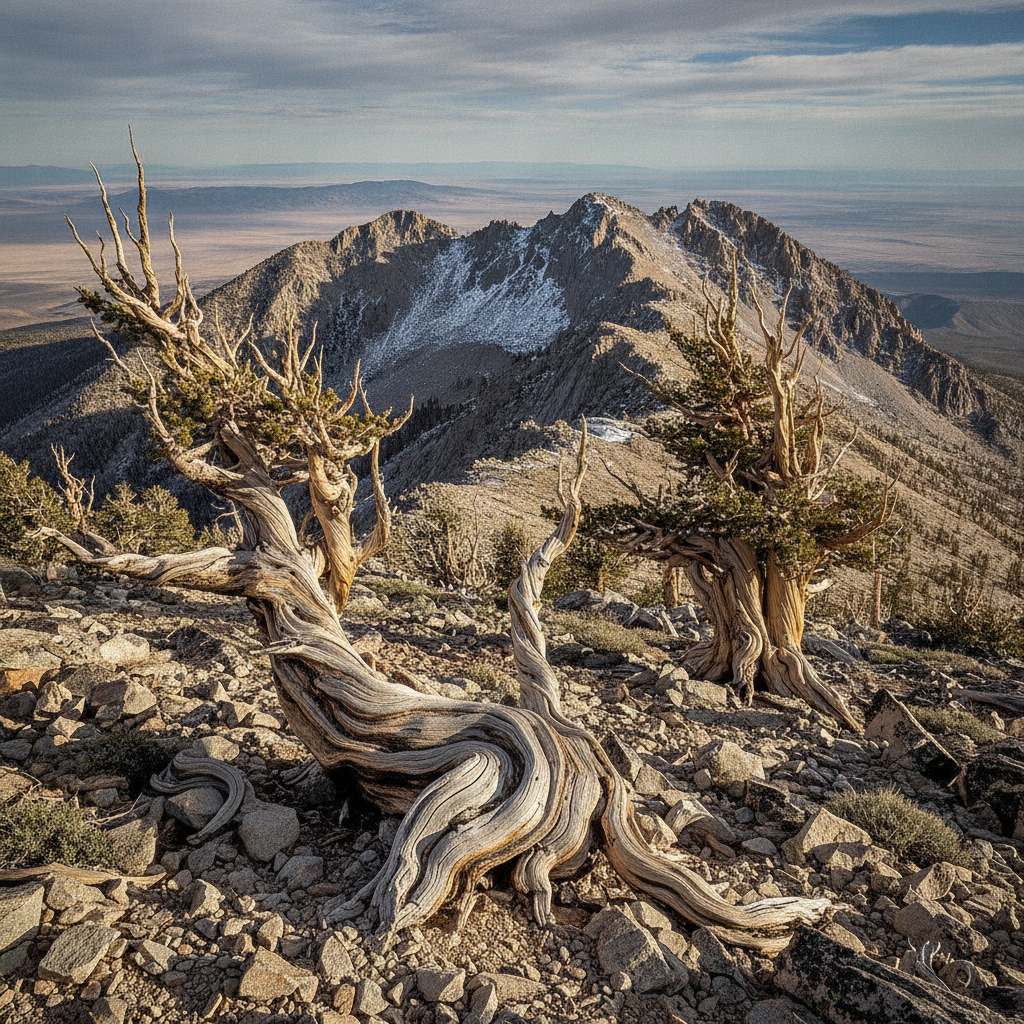
Salt Lake City R5: Polygamy FLDS (Warren Jeffs born 1955 died 2022 FBI Most Wanted convicted sexual assault, Yearning for Zion Ranch April 2008 462 children largest US child welfare operation, Colorado City Hildale FLDS headquarters now depopulated), Utah wildlife (Uinta Mountains only E-W major range continental US Kings Peak 4123m, elk 80-90,000 bulls 500kg antlers 1.7m, Ashley National Forest Flaming Gorge 150km reservoir 1964 dam, Colorado drains 40% Utah), University of Utah (1850 University of Deseret 34,000 students, Philo Farnsworth born 1906 Beaver Utah electronic television 1927 first image straight line, Huntsman Cancer Institute 1995 USD 500M Jon Huntsman USD 300M/year research, Mario Capecchi Nobel 2007 gene targeting knockout mice), LGBTQ (Capitol Hill most diverse, Utah Pride June 50,000 largest between SF and Chicago, LDS Proposition 8 USD 22M 2008, November 2015 Exclusion Policy reversed April 2019, SLC 75-80% Democratic, Encircle LGBTQ support Larsen 2017), Great Basin National Park (285km west, Wheeler Peak 3982m, Lehman Caves shields helictites, bristlecone pine oldest organisms Prometheus cut 1964 4862 years old most significant inadvertent destruction, Ely Nevada Northern Railway Museum best preserved steam), Rock art (Newspaper Rock 4 cultures 4000BCE to 19thC, Nine Mile Canyon 10,000 petroglyphs 60km highest density American West, Edge of Cedars Museum finest Ancestral Puebloan pottery, Hovenweep 1200-1300 CE towers most mysterious prehistoric achievement).
Salt Lake City: Dinosaur Science, Sundance Cinema and a Lake in Crisis
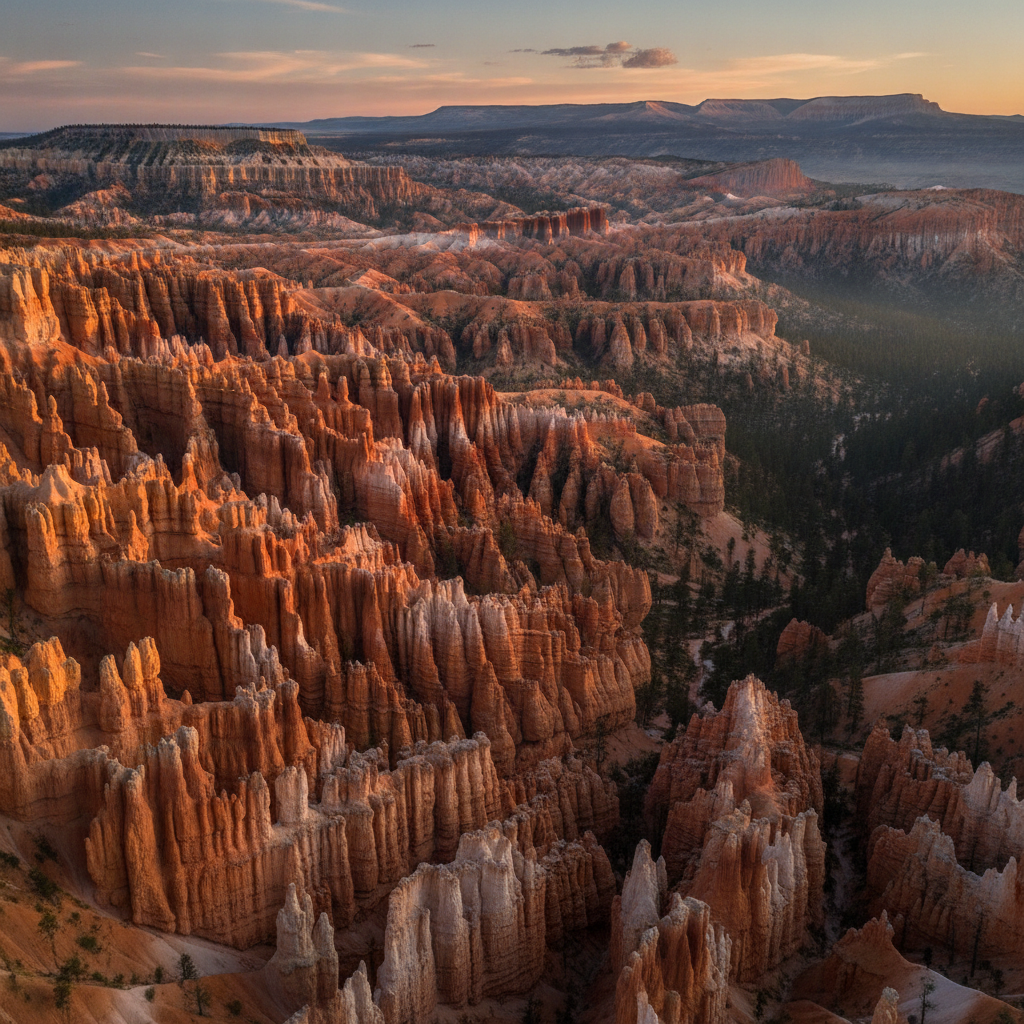
Salt Lake City R2-R6: Utah parks (Zion 4.5M visitors/year Narrows wade upstream 300m walls Angels Landing permits since 2022, Bryce Canyon hoodoos 2400-2800m, Arches 2000 arches Delicate Arch 16m on license plate, Canyonlands 1366 km2 White Rim Road 160km 4WD, Dead Horse Point Thelma Louise 1991, Moab uranium tailings 16M tons Colorado River), Pioneer history (400 settlements 1847-1877 Great Basin, Utah War 1857-1858 Buchanan army 2500 soldiers, Mountain Meadows Massacre September 11 1857 120 killed most damning LDS event, polygamy Manifesto 1890 Edmunds-Tucker 1887, FLDS 30,000-50,000 continue), Great Salt Lake crisis (shrimp harvest 50M kg/year USD 50M most earthly commercial brine shrimp, dust threat arsenic mercury exposed lakebed, overallocation water rights 80% agriculture, canal Pacific proposal USD 50B), neighborhoods (Avenues Victorian Craftsman 1880s-1930s, Beehive House 1854 Lion House Young wives, Tabernacle 1867 pin drop 7000 seats, Sugar House penitentiary site 112 acres, Gilgal Sculpture Garden sphinx Joseph Smith face), food (Word of Wisdom no coffee tea alcohol tobacco, state liquor stores grocery 5% beer, Granary District craft beer Uinta 1993 150,000 barrels Squatters 1989 first brewpub, Utah Pride June 50,000 LGBTQ Capitol Hill).
Salt Lake City: Great Salt Lake, Temple Square, Transcontinental Railroad, skiing, culture, and practical guide
Salt Lake City: Canyon Skiing, Sphinx Gardens and a Lake of Buffalo