Salt Lake City R5: Polygamy FLDS (Warren Jeffs born 1955 died 2022 FBI Most Wanted convicted sexual assault, Yearning for Zion Ranch April 2008 462 children largest US child welfare operation, Colorado City Hildale FLDS headquarters now depopulated), Utah wildlife (Uinta Mountains only E-W major range continental US Kings Peak 4123m, elk 80-90,000 bulls 500kg antlers 1.7m, Ashley National Forest Flaming Gorge 150km reservoir 1964 dam, Colorado drains 40% Utah), University of Utah (1850 University of Deseret 34,000 students, Philo Farnsworth born 1906 Beaver Utah electronic television 1927 first image straight line, Huntsman Cancer Institute 1995 USD 500M Jon Huntsman USD 300M/year research, Mario Capecchi Nobel 2007 gene targeting knockout mice), LGBTQ (Capitol Hill most diverse, Utah Pride June 50,000 largest between SF and Chicago, LDS Proposition 8 USD 22M 2008, November 2015 Exclusion Policy reversed April 2019, SLC 75-80% Democratic, Encircle LGBTQ support Larsen 2017), Great Basin National Park (285km west, Wheeler Peak 3982m, Lehman Caves shields helictites, bristlecone pine oldest organisms Prometheus cut 1964 4862 years old most significant inadvertent destruction, Ely Nevada Northern Railway Museum best preserved steam), Rock art (Newspaper Rock 4 cultures 4000BCE to 19thC, Nine Mile Canyon 10,000 petroglyphs 60km highest density American West, Edge of Cedars Museum finest Ancestral Puebloan pottery, Hovenweep 1200-1300 CE towers most mysterious prehistoric achievement).
Salt Lake City R5: FLDS (Warren Jeffs FBI Most Wanted convicted 2007 2011 sexual assault died 2022, Yearning for Zion 462 children largest US child welfare 2008, Colorado City Hildale depopulated), wildlife (Uinta Mountains E-W only major range Kings Peak 4123m, elk 80-90,000 bulls 500kg, Flaming Gorge 1964 150km, Colorado drains 40% Utah), University of Utah (1850 34,000, Farnsworth born 1906 electronic TV 1927 first image line, Huntsman 1995 USD 500M USD 300M/year research, Capecchi Nobel 2007 gene targeting), LGBTQ (Capitol Hill, Pride June 50,000 largest SF to Chicago, LDS Prop 8 USD 22M, Exclusion Policy 2015 reversed 2019, SLC 75-80% Democratic, Encircle 2017), Great Basin NP (285km, Wheeler 3982m, Lehman Caves, Prometheus cut 1964 4862 years oldest history, Ely steam railway), rock art (Newspaper Rock 4 cultures, Nine Mile Canyon 10,000 petroglyphs highest density, Edge of Cedars finest Puebloan pottery, Hovenweep 1200-1300 towers).
- 1
The Polygamy Tradition and Contemporary Utah Society
Polygamy and Utah's complex relationship with plural marriage: while the mainstream LDS Church banned plural marriage in 1890 and formally excommunicates members who practice it, an estimated 30,000-50,000 people in Utah, Arizona, and internationally continue to practice plural marriage in fundamentalist Mormon communities. The Fundamentalist Church of Jesus Christ of Latter-Day Saints (FLDS): the most well-known fundamentalist Mormon sect, led from 2002 until his 2011 conviction and 2022 death by Warren Steed Jeffs (born December 3, 1955; died March 27, 2022, at the Cofield Unit of the Texas prison system). Jeffs was on the FBI Most Wanted list before his arrest in Nevada in August 2006, and was convicted in Utah (2007) and Texas (2011) of charges including sexual assault of a child, accomplice to rape, and being the leader of a widespread system of sexual abuse of girls as young as 12 within the FLDS community. The Yearning for Zion Ranch raid (Eldorado, Texas, April 3-9, 2008): the Texas Rangers and Child Protective Services removed 462 FLDS children from the Yearning for Zion Ranch in the largest child welfare operation in American history. Colorado City, Arizona and Hildale, Utah (the twin cities straddling the Arizona-Utah border that were the FLDS headquarters under Jeffs): now largely depopulated following Jeffs's imprisonment, with the property gradually transitioning to new ownership. Utah's genuinely distinctive culture: beyond the LDS influence, Utah has developed a distinctive outdoor and recreation culture (skiing, mountain biking, rock climbing, rafting), a growing technology sector (Silicon Slopes), and an unusually strong community orientation that reflects both its pioneer heritage and the LDS emphasis on family and community service.
- 2
Utah's National Forests, Elk, and Wildlife
Utah wildlife and national forests: beyond the national parks, Utah has an extraordinary diversity of wildlife habitats, from the desert floor of the Great Basin to the alpine tundra of the Uinta Mountains. The Uinta Mountains (the only major mountain range in the continental United States that runs east-west rather than north-south, reaching a high point of 4,123 m at Kings Peak — the highest point in Utah): the alpine wilderness 160 km east of Salt Lake City, with the High Uintas Wilderness Area (the largest wilderness area in Utah at 460,000 acres), hundreds of alpine lakes, and populations of moose, black bear, mountain lion, and elk. Utah elk: Utah has one of the largest elk populations in the United States (approximately 80,000-90,000 animals), with the Wasatch Mountains above Salt Lake City providing critical winter range for elk herds that spend summers in the Uinta and Wasatch high country. The Rocky Mountain elk (Cervus canadensis nelsoni) is the largest elk subspecies in the world, with bulls weighing up to 500 kg and carrying antlers up to 1.7 m wide. The Ashley National Forest (at 355 N Vernal Drive, Vernal, Utah, headquartered 290 km east of Salt Lake City): the national forest covering most of the Uinta Mountains, with the Flaming Gorge National Recreation Area (the reservoir and canyon of the Green River, created by Flaming Gorge Dam in 1964 — the 155-m arch dam that provides municipal water and hydroelectric power to parts of Wyoming and Utah, and a reservoir stretching 150 km into Wyoming). The Colorado River and its tributaries: the Colorado River system drains approximately 40% of Utah's land area, with the rivers of the canyon country (the Green River, the San Juan, the Dirty Devil, and the Escalante) being among the most spectacular whitewater and flatwater recreation rivers in the American West.
- 3
The University of Utah and Research Culture
The University of Utah (at 201 Presidents Circle, Salt Lake City, founded 1850 as the University of Deseret): the flagship public university of Utah, with approximately 34,000 students, a AAA Carnegie classification (the highest research activity designation), and a medical school (the University of Utah Health, which operates a network of hospitals and clinics including University of Utah Hospital, Primary Children's Hospital — one of the finest pediatric hospitals in the American West — and Huntsman Cancer Institute). Notable University of Utah alumni and connections: Philo Farnsworth (born August 19, 1906, Beaver, Utah; died March 11, 1971, Salt Lake City): the inventor of electronic television (who had the foundational insight for electronic TV as a 14-year-old farmboy in Idaho in 1920, while plowing rows in a field, and recognized that a cathode ray tube could scan lines of an image in the same way that a plow scans rows of a field — the conceptual breakthrough that led to his 1927 demonstration of the first working electronic television). Farnsworth demonstrated the first working electronic television system in San Francisco on September 7, 1927 (the first image was a straight line; the second test, in response to competitor RCA's patent challenge, deliberately transmitted a dollar sign). The Huntsman Cancer Institute (at 2000 Circle of Hope Drive, University of Utah Research Park, founded 1995 by Jon M. Huntsman Sr., who donated over USD 500M to cancer research over his lifetime): the nationally designated Cancer Center conducting approximately USD 300M annually in cancer research. The Moran Eye Center (at 65 Mario Capecchi Drive, University of Utah): the largest ophthalmology program in the Mountain West. Mario Capecchi (born October 6, 1937, Verona, Italy): the University of Utah genetics professor who won the Nobel Prize in Physiology or Medicine in 2007 (shared with Martin Evans and Oliver Smithies) for developing the technique of gene targeting in mice — the foundational methodology for creating knockout mice and for gene therapy research.
- 4
Capital Hill, the LGBTQ Community, and Salt Lake City Today
Salt Lake City's Capitol Hill neighborhood (the neighborhood north and east of the Utah State Capitol, centered on North Temple and State Street): the most politically and culturally diverse neighborhood in Salt Lake City, with a significant LGBTQ+ community, the city's most established bar and restaurant district, and the concentration of the non-LDS population of the city. The Utah Pride Festival (held annually in June in Washington Square, 451 S State Street): the largest Pride event between San Francisco and Chicago, drawing approximately 50,000 attendees, with the parade route through downtown Salt Lake City. The Mormon LGBTQ+ tension: the LDS Church has had a complex and evolving relationship with LGBTQ+ issues — opposing same-sex marriage and supporting the California Proposition 8 campaign in 2008 (providing approximately USD 22M in political donations and organizational support), while more recently softening its stance on LGBTQ+ civil rights. The November 2015 policies (also called the Exclusion Policy): the 2015 LDS Church policy that barred the children of same-sex couples from baptism and participation in church programs (and classified those in same-sex marriages as apostates) provoked mass resignations from the church before being reversed in April 2019. Salt Lake City's diversity in context: the city of Salt Lake City (as distinct from the metropolitan area) votes approximately 75-80% Democratic in presidential elections, making it one of the most liberal urban cores in the Mountain West — despite being surrounded by a heavily Republican suburban and rural Utah. The non-profit Encircle organization (at 170 S Main Street, Salt Lake City): the LGBTQ+ family and youth resource center founded by Stephenie Larsen in 2017, which has become a model for LGBTQ+ support programs in religiously conservative communities.
- 5
Great Basin National Park and Nevada Border
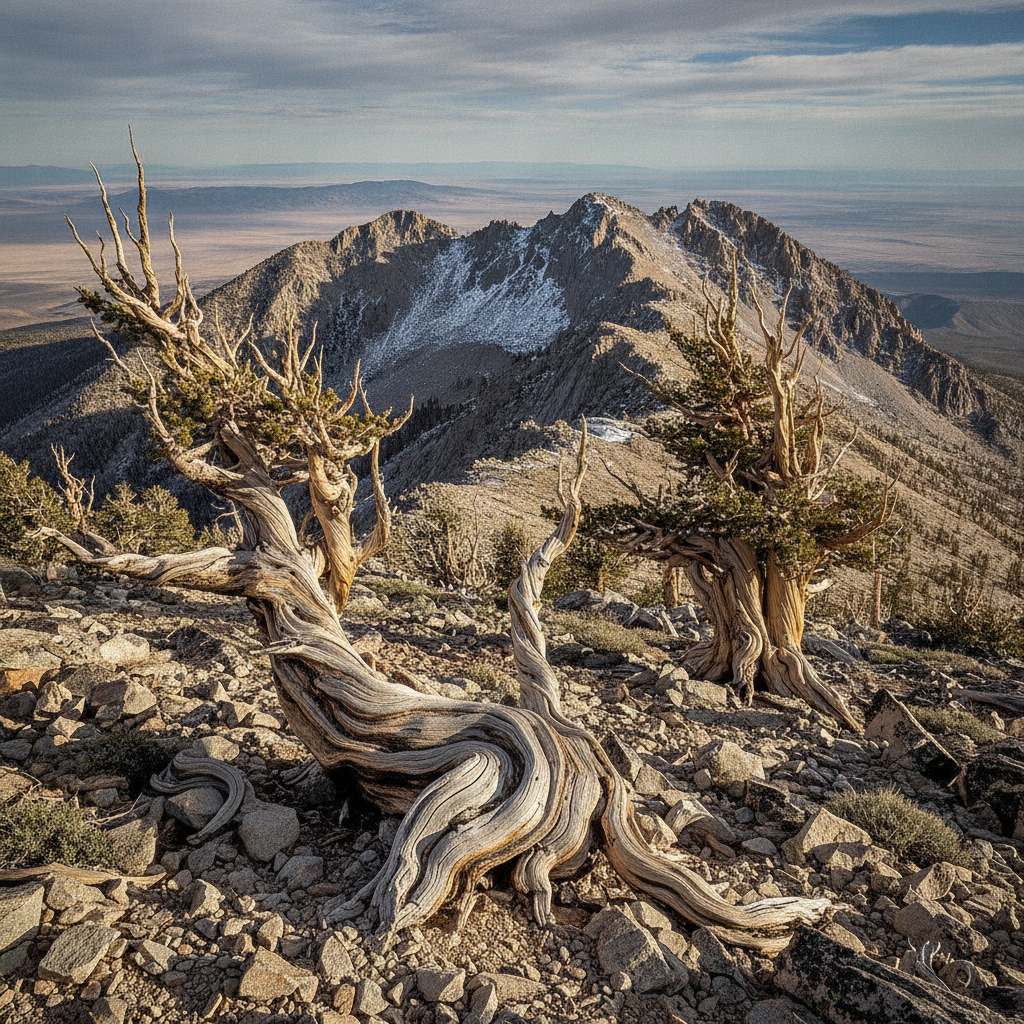
Great Basin National Park (at 100 Great Basin National Park, Baker, Nevada, 285 km west of Salt Lake City via I-80 and US 93 Alternate): the least visited of America's national parks and one of the most rewarding for visitors willing to make the drive — the park preserves a remarkably intact Great Basin ecosystem on the flanks of Wheeler Peak (3,982 m — the second-highest peak in Nevada), with ancient bristlecone pine trees (Pinus longaeva), a glacier (the Lehman Glacier, one of only two glaciers in Nevada), and the Lehman Caves (the decorated limestone cave containing extraordinary shield formations, cave popcorn, and helictites, with guided tours offered daily). Bristlecone pines: the Great Basin bristlecone pine (Pinus longaeva) is the oldest living organism on earth — specimens in the White Mountains of California and in Great Basin National Park have been dated at 5,000 years and older. The oldest known living tree, Methuselah (in the Ancient Bristlecone Pine Forest in the White Mountains), is approximately 4,789 years old. A bristlecone pine specimen called Prometheus (on Wheeler Peak, Nevada) was cut down in 1964 by a University of North Carolina graduate student doing dendrochronology research — it was subsequently found to have been 4,862 years old, making it the oldest tree in recorded history and one of the most significant acts of inadvertent scientific destruction in American history. The Nevada ghost towns: the route from Salt Lake City to Great Basin National Park passes through dozens of Nevada mining ghost towns, including Ely (population approximately 4,000, with the Nevada Northern Railway Museum — the best-preserved steam-era short-line railroad in the American West) and Ruth (the open-pit copper mine with a 1.6-km-wide, 900-m-deep pit visible from the highway).
- 6
Southern Utah's Ancient Cultures and Rock Art
Southern Utah rock art and ancient cultures: the concentration of prehistoric human history in the canyon country of southern Utah is one of the richest in North America, with evidence of human occupation dating back at least 13,000 years and an extraordinary density of rock art sites. The Newspaper Rock story: the petroglyphs at Newspaper Rock (see above) represent the work of at least 4 distinct cultural groups — the Archaic peoples (4,000-2,000 BCE), the Ancestral Puebloans (1 CE to 1300 CE), the Fremont Culture (700-1300 CE), and the historic Ute people (1300 CE to the 19th century) — each adding to the panel over centuries, creating an accidental archaeological chronology. Nine Mile Canyon (at Nine Mile Canyon Road, Wellington, Utah, 170 km south of Salt Lake City): the canyon with the highest density of rock art panels per kilometer of any canyon in the American West — approximately 10,000 individual petroglyphs and pictographs in a 60-km stretch of canyon, created by the Fremont Culture and Ancestral Puebloans between approximately 1 CE and 1300 CE. The canyon is named for a surveying error (a Nine Mile Creek in the area is actually 13 km long, named on the mistaken assumption by an early surveyor). The Edge of the Cedars State Park Museum (at 660 W 400 N, Blanding, Utah, 360 km south of Salt Lake City): the museum built adjacent to an intact Ancestral Puebloan village (approximately 800-1150 CE), with the finest collection of Ancestral Puebloan pottery in existence — the Black-on-white ceramics from the Kayenta and Mesa Verde traditions that represent the highest artistic achievement of the prehistoric Southwest. The Hovenweep National Monument (at McElmo Route, Cortez, Colorado, 410 km south of Salt Lake City): the six prehistoric tower complexes of the Ancestral Puebloans, built between 1200 and 1300 CE — the most mysterious and sophisticated structural achievement of prehistoric North America.
Walk this route with audio
Stories play automatically as you reach each stop — no tapping needed.
More in salt-lake-city
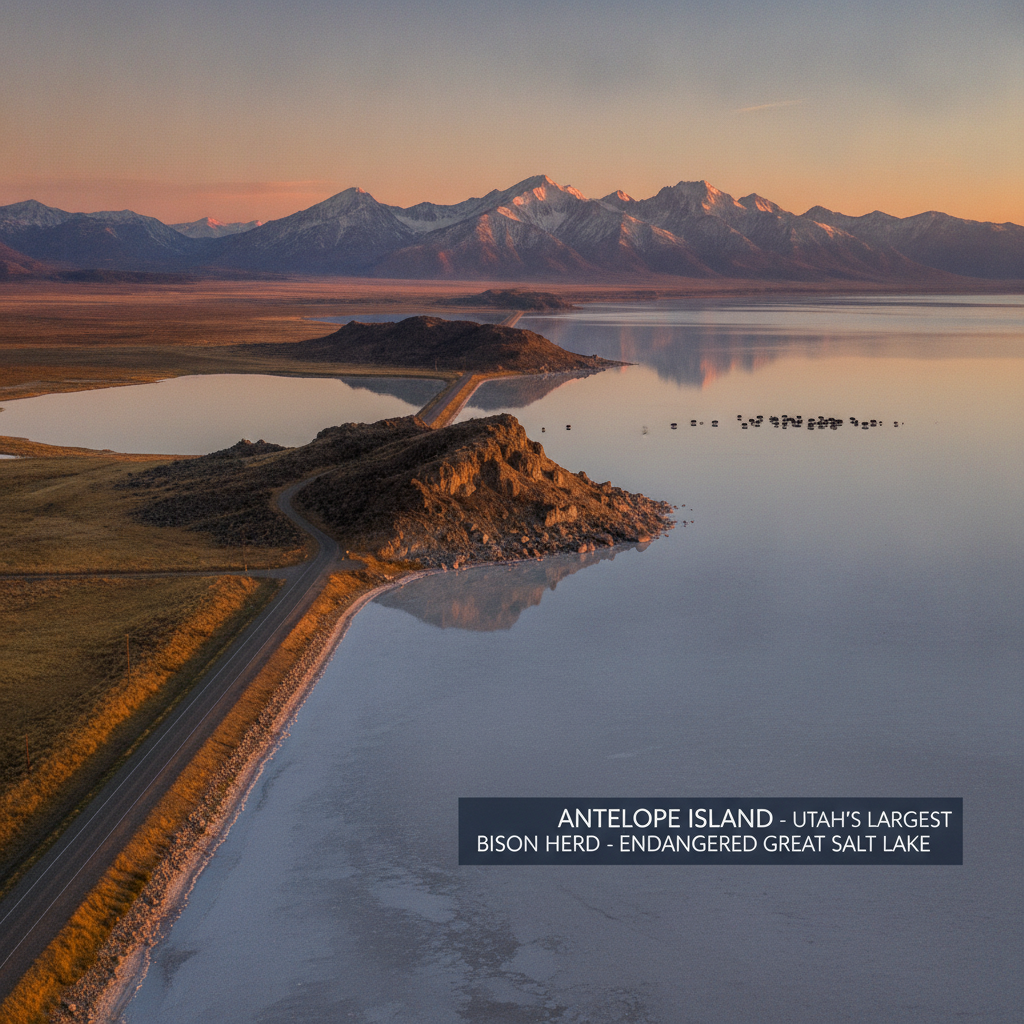
Salt Lake City R4: Bonneville Salt Flats (46,000ha flattest large surface earth, Speed Week SCTA September, salt flats shrinking 40% since 1950 potash mining Intrepid, Wendover Nevada casinos dry Utah), Antelope Island (39km 700 bison 1893 first conservation attempt, pronghorn 95km/h fastest Western Hemisphere, brine fly billions per hectare Great Basin Shoshone food, 1.5M Wilsons phalaropes 85% world population August-September), Ski resorts (Alta 1939 ski-only no snowboards since 1994 1400cm/year 500 inches most challenging expert terrain, Snowbird aerial tram 10min Hidden Peak 11000ft 125 passengers, Park City Mountain largest US 7300 acres 2015 merger, Deer Valley most upscale valet ski parking top ranked US), Moab (5000 residents 3M visitors/year, Slickrock Bike Trail 1980s 35 degree slopes friction sandstone, Dead Horse Point 16km descent, Canyons MAZE most remote continental US 3-5 days 4WD), Architecture (Utah State Capitol 1916 copper dome 97m Richard Kletting, Cathedral Madeleine 1909 Gothic Revival finest High Victorian Gothic west Mississippi, Vivint Arena USD 28.5M naming rights 10 years, 2002 figure skating venue), Hiking (Cottonwood Canyons 20-40min to trailheads, Timpanogos 3582m 40,000 hikers/year, Timpanogos Cave 244m elevation gain stalactites helictites, Red Butte Garden summer concerts).
Salt Lake City: Dinosaur Science, Sundance Cinema and a Lake in Crisis
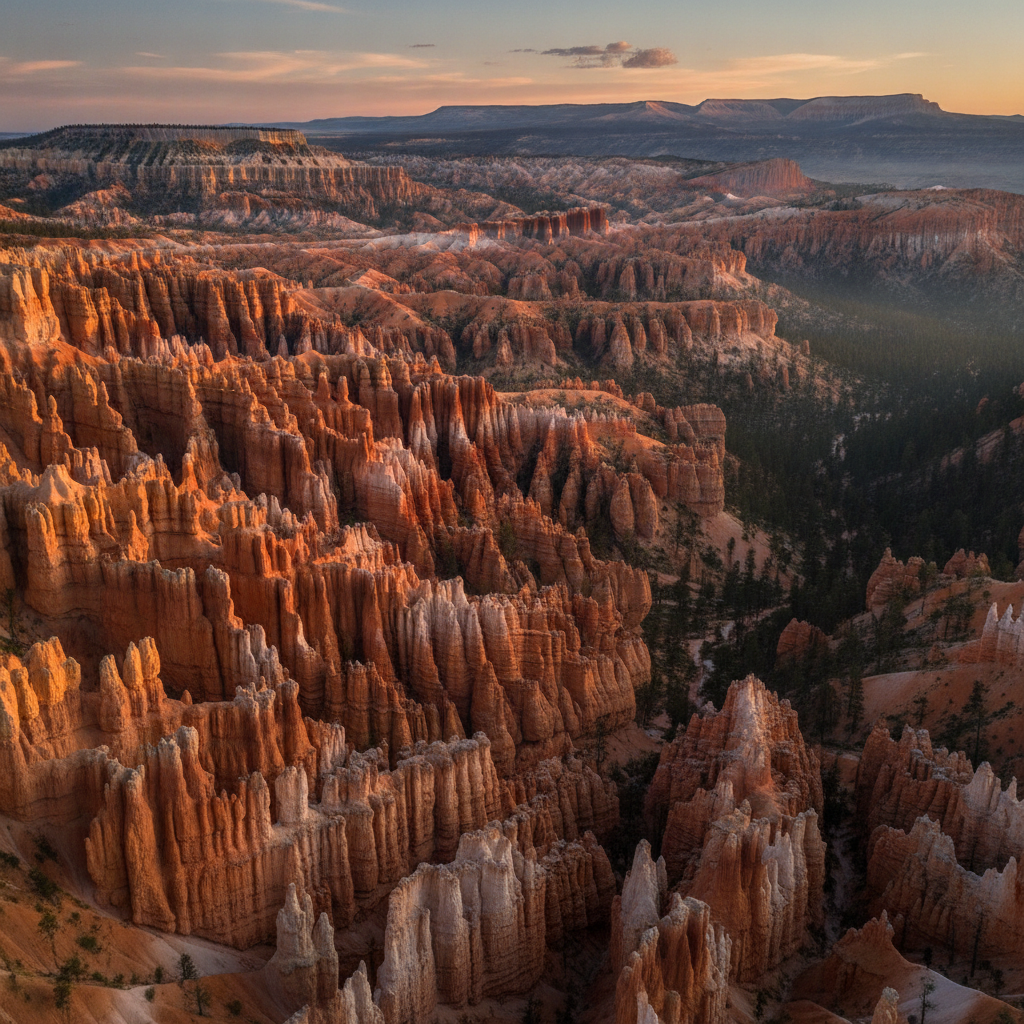
Salt Lake City R2-R6: Utah parks (Zion 4.5M visitors/year Narrows wade upstream 300m walls Angels Landing permits since 2022, Bryce Canyon hoodoos 2400-2800m, Arches 2000 arches Delicate Arch 16m on license plate, Canyonlands 1366 km2 White Rim Road 160km 4WD, Dead Horse Point Thelma Louise 1991, Moab uranium tailings 16M tons Colorado River), Pioneer history (400 settlements 1847-1877 Great Basin, Utah War 1857-1858 Buchanan army 2500 soldiers, Mountain Meadows Massacre September 11 1857 120 killed most damning LDS event, polygamy Manifesto 1890 Edmunds-Tucker 1887, FLDS 30,000-50,000 continue), Great Salt Lake crisis (shrimp harvest 50M kg/year USD 50M most earthly commercial brine shrimp, dust threat arsenic mercury exposed lakebed, overallocation water rights 80% agriculture, canal Pacific proposal USD 50B), neighborhoods (Avenues Victorian Craftsman 1880s-1930s, Beehive House 1854 Lion House Young wives, Tabernacle 1867 pin drop 7000 seats, Sugar House penitentiary site 112 acres, Gilgal Sculpture Garden sphinx Joseph Smith face), food (Word of Wisdom no coffee tea alcohol tobacco, state liquor stores grocery 5% beer, Granary District craft beer Uinta 1993 150,000 barrels Squatters 1989 first brewpub, Utah Pride June 50,000 LGBTQ Capitol Hill).
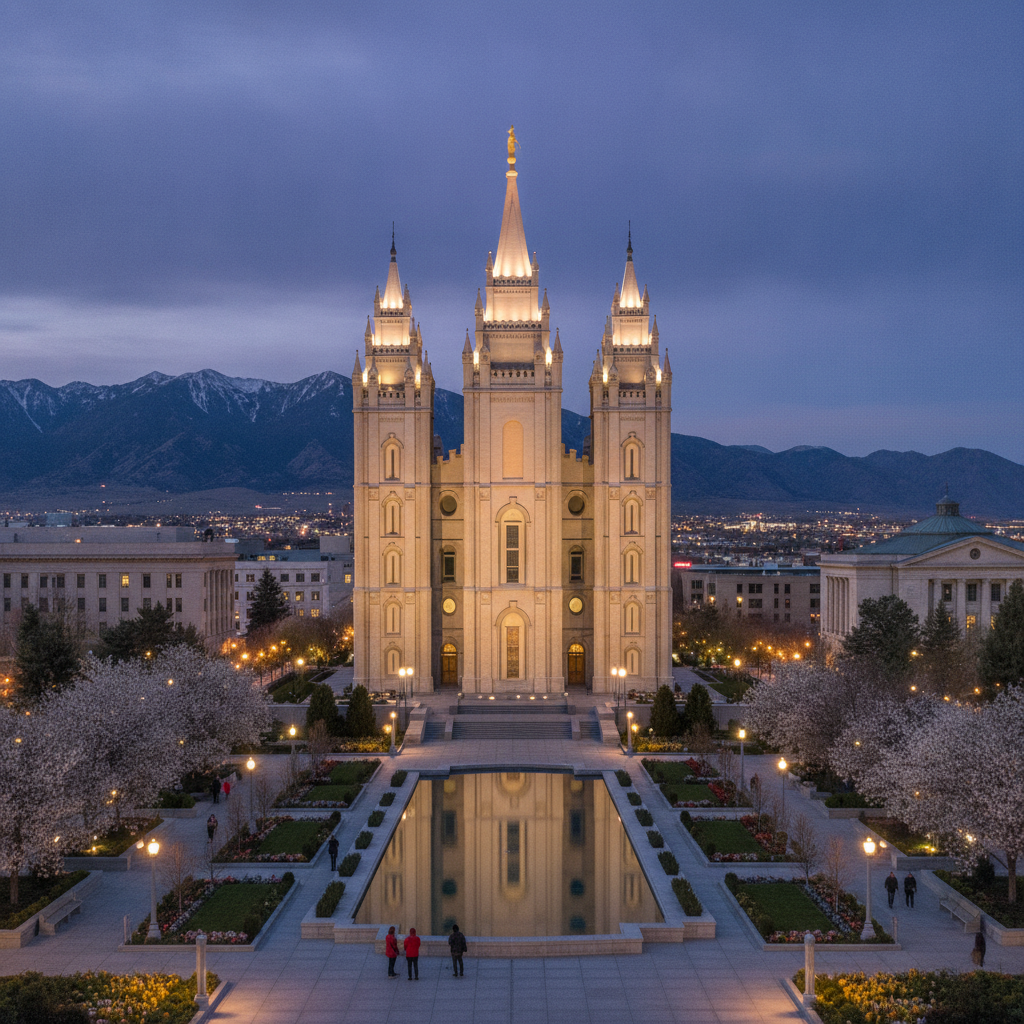
Salt Lake City: Great Salt Lake, Temple Square, Transcontinental Railroad, skiing, culture, and practical guide
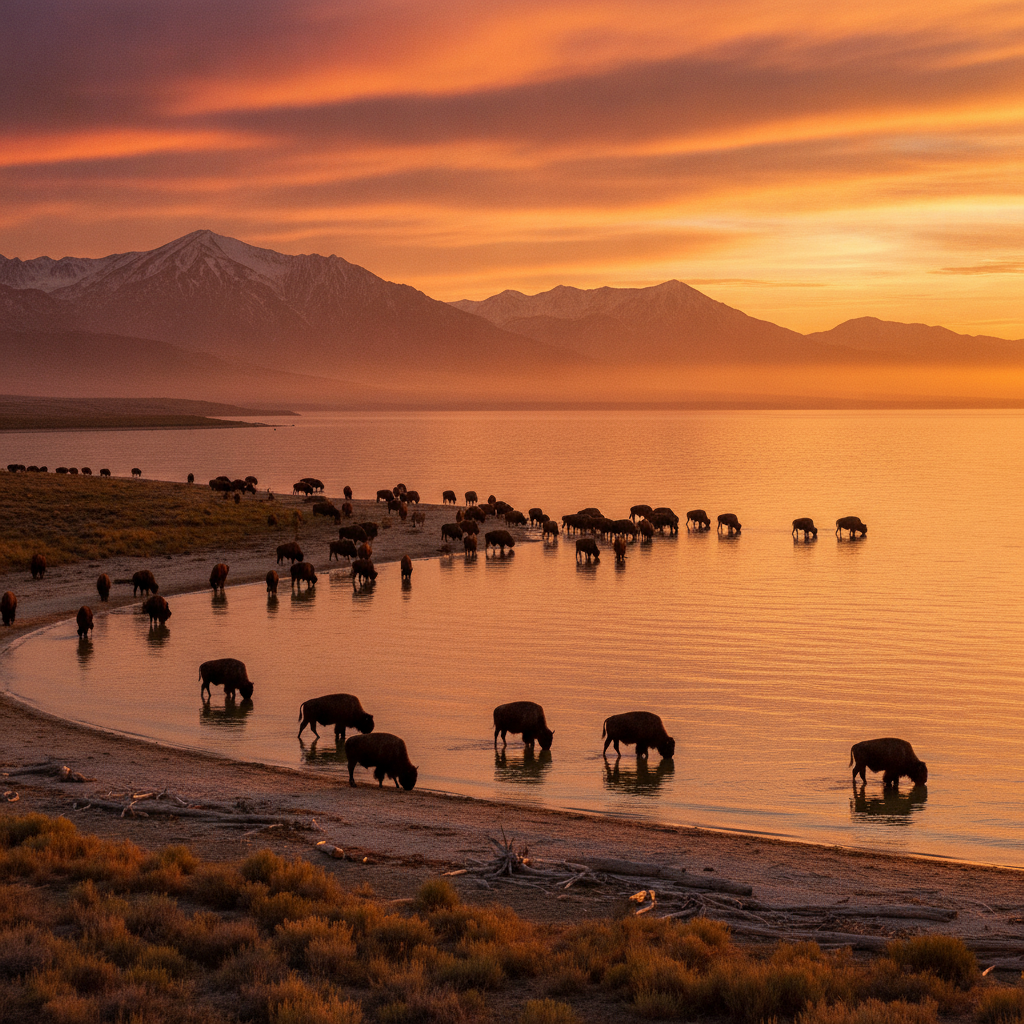
Salt Lake City: Canyon Skiing, Sphinx Gardens and a Lake of Buffalo