Salvador Food: Moqueca, Acarajé, the Afro-Bahian Kitchen, and the Art of the Baiana
The food culture of Salvador is the most complex and historically rich in Brazil, built on the West African cooking traditions of the enslaved peoples who transformed the ingredients of the northeast into the moqueca, acarajé, vatapa, and caruru that define Bahian cuisine and have influenced Brazilian food nationally.
- 1
Bahian Cuisine: The Most Complex Food Culture in Brazil
Bahian cuisine, centered on dende palm oil, coconut milk, dried shrimp, and the complex spice combinations of the West African cooking tradition brought by enslaved people from the Yoruba, Fon, and Bantu peoples, is the most complex and internationally influential regional food tradition in Brazil, providing the culinary base for the African-influenced food culture that extends through the Brazilian coast from Bahia to Rio de Janeiro.
- 2
Moqueca Baiana: The Coconut-Dende Stew
Moqueca Baiana, the Bahia version of the moqueca seafood stew prepared with dende palm oil and coconut milk alongside fresh fish, shrimp, or crab, is the defining dish of Salvador restaurant culture and the most internationally recognized preparation of Brazilian cuisine after the churrasco barbecue. The moqueca served in the traditional ceramic pot at the table is both a cooking vessel and a cultural artifact.
- 3
Caruru: The Okra and Shrimp Devotion
Caruru, the thick okra and dried shrimp preparation flavored with dende oil and peanuts that is associated with the Candomble ceremony of the Cosme and Damiao orixas on September 27, is both a ceremonial food consumed at the terreiro celebrations and a casual restaurant dish that expresses the intimate relationship between the Afro-Brazilian religious calendar and the daily food culture of Salvador.
- 4
Vatapa and Xinxim: The Paste Preparations
Vatapa, the thick paste of bread, coconut milk, dried shrimp, dende oil, and cashews that serves as the primary filling for the acarajé fritter and as a standalone side dish, and xinxim de galinha, the chicken stewed with dried shrimp and cashews in a version of the West African pepper stew, represent the West African cooking technique of enriching sauces with ground nuts and dried protein that is the most distinctive feature of the Bahian kitchen.
- 5
Acarajé Artistry: The Baiana Street Performance
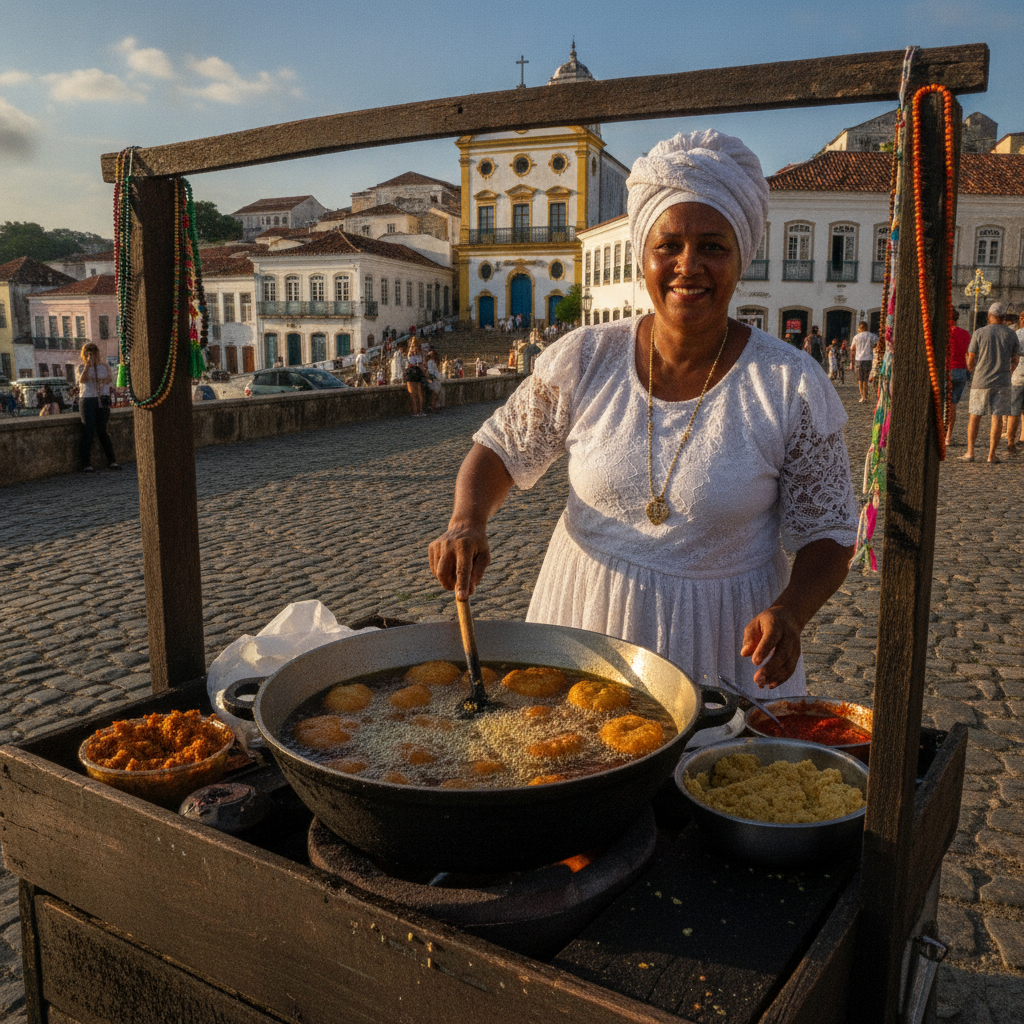
The preparation of acarajé by the baianas is a public performance as much as a cooking technique: the black-eyed pea batter is beaten by hand or with a wooden paddle to incorporate air before being dropped by large spoonfuls into the hot dende oil, producing the puffed fritter that is split and filled before the customer's eyes with vatapa, caruru, dried shrimp, and the hot pepper sauce. The baiana at her tray is the signature image of Salvador food culture.
- 6
Cachaça Culture: The Bahia Distillery Tradition
Cachaça, the Brazilian sugarcane spirit that is the base of the caipirinha cocktail, is produced throughout Brazil but has its finest artisanal expressions in the Bahia interior distilleries that use copper pot stills and natural fermentation processes to produce aged cachaças of complexity comparable to rum and whisky. The cachaça bar culture of Salvador's lower city neighborhoods provides the evening social context for the Bahian lifestyle.
Walk this route with audio
Stories play automatically as you reach each stop — no tapping needed.
More in Salvador
Salvador History: Slavery, the Colonial Capital, the Reconcavo Plantation Zone, and the Afro-Brazilian Legacy
Salvador Practical Guide: Upper and Lower City, Carnival Planning, Neighborhoods, and the Bahia Coast Route
Salvador Day Trips: Chapada Diamantina, Whale Sharks at Praia do Forte, Morro de Sao Paulo, and the Irmandade da Boa Morte
Salvador: Barra Lighthouse, Quilombo Communities, Afro-Brazilian Fashion, and the Bahian Night Culture
Salvador: Pelourinho, Candomble, Capoeira, and the African Cultural Capital of the Americas