Salzburg Old Town Depth — St. Peter's Monastery, the Catacombs & the Medieval City
Below the Salzburg Festival glamour lies one of the most continuously inhabited urban sites in the Alps — the St. Peter's monastery founded 696 CE, the catacombs carved by early Christian hermits, and the medieval city fabric that survived the Baroque rebuilding make Salzburg's Old Town the most historically layered in Austria.
- 1
St. Peter's Abbey — 1,300 Years of Benedictine Life
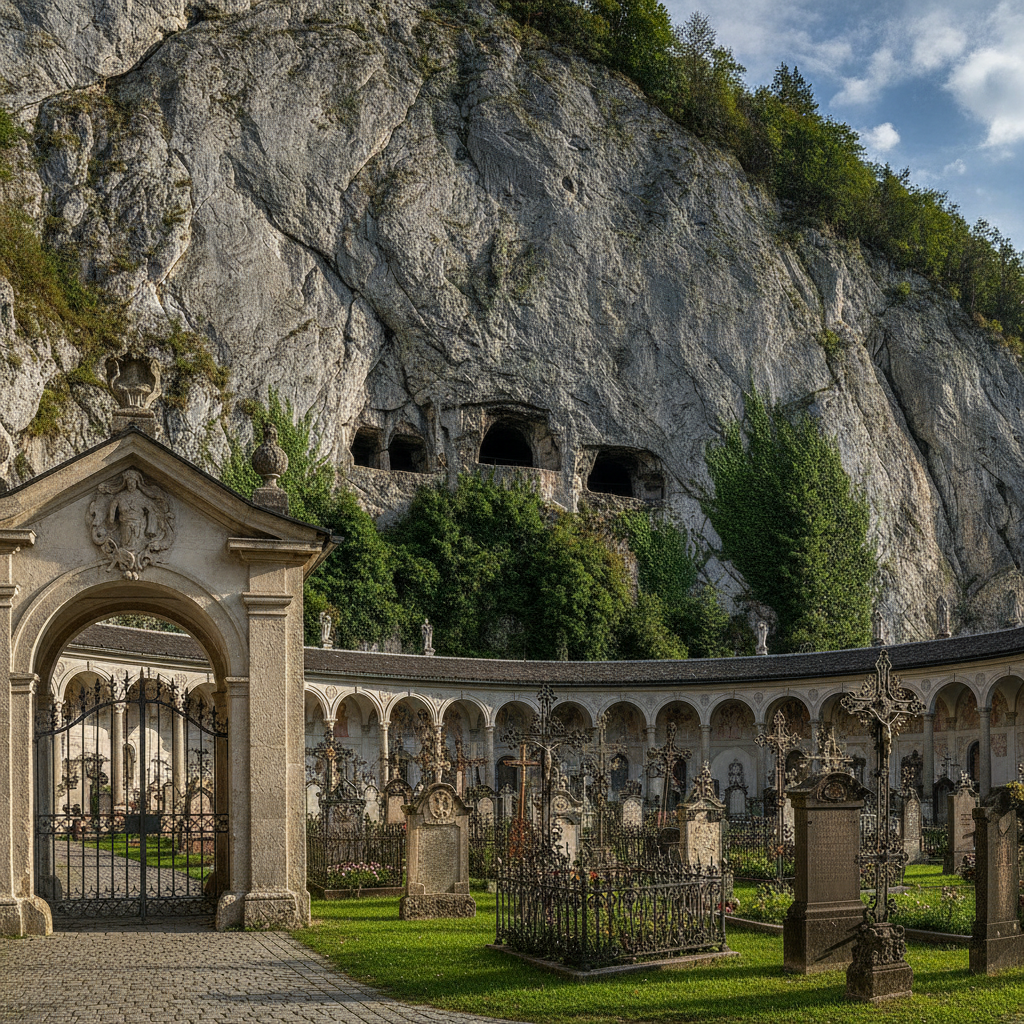
Stift St. Peter (St. Peter's Benedictine Monastery, St.-Peter-Bezirk 1, the monastery founded by St. Rupert of Salzburg 696 CE as the first Christian institution in the Salzburg basin — the monastery the oldest continuously operating monastery in the German-speaking world, the monastic community unbroken since 696, the current church the Romanesque structure of the 12th century rebuilt in the Baroque style 1130-1625, free, daily 8am-12pm and 2:30-6:30pm): the church interior (the Stiftskirche St. Peter, the most historically embedded church in Salzburg — the Romanesque foundations visible in the crypt, the Baroque ceiling frescoes by Franz Anton Maulbertsch the most important single ceiling painting in the Salzburg Old Town, the tomb of Nannerl Mozart — Maria Anna Mozart, the sister of Wolfgang Amadeus — in the church, the marble tombstone from 1829 the only monument to Nannerl in Salzburg, the church free with the donation box at the entrance), the St. Peter's Cemetery (the Petersfriedhof, the cemetery established in the 7th century, the oldest continuously used Christian cemetery in Austria, the 600 individual grave plots contained within the arcaded gallery surrounding the cemetery, the ornate Baroque and Biedermeier wrought-iron crosses the most characteristic cemetery art in Salzburg, the graves of the Mozart family — the father Leopold Mozart's grave in the cemetery, free entry, daily 6:30am-7pm in summer), and the St. Peter's Stiftskeller (the restaurant in the monastery cellars established 803 CE — the oldest restaurant in Europe, the Stiftskeller at St.-Peter-Bezirk 1-4, the monastic dining tradition maintained in the medieval vaulted cellars, the dinner €35-55 per person, the Salzburger Nockerl the speciality, the Mozart dinner concert in the main hall Tuesday, Friday, and Saturday at 8pm at €65-85 including the dinner, the most historically resonant dinner available in the Austrian Alps).
- 2
The Mönchsberg Catacombs
The Mönchsberg Catacombs (Katakomben, accessible through the St. Peter's Cemetery and carved into the cliff of the Mönchsberg rock above, €2 adults, open during cemetery hours): the caves (the natural limestone caves in the Mönchsberg cliff expanded and carved by early Christian hermits living in the cliff from the 3rd century CE, the earliest Christian habitation in the Salzburg region preceding the founding of the St. Peter's monastery by 400 years, the caves organized in 2 levels connected by the internal staircase: the lower level with the Early Christian votive niches and the rock-carved altars, the upper level with the St. Gertrude's Chapel — the 15th-century chapel carved directly into the cliff face with the fresco fragments of the Gothic period, the most dramatic religious space in the Salzburg Old Town), the archaeological significance (the catacombs the primary evidence for the pre-Rupert Christian community in Salzburg — the Roman town of Juvavum had an early Christian community from the 3rd century, the bishop's seat in the Roman period, the conversion of the Bavarian pagans by St. Rupert in 696 CE was the second Christianization of a community that had already been Christian under the Roman Empire, the catacombs the physical evidence for this historical complexity), and the climb (the 38 stone steps from the cemetery floor to the catacomb entrance, the steepest public access staircase in the Salzburg Old Town, the physical effort the most rewarding minor exertion in the Salzburg Old Town giving the finest close-up view of the Mönchsberg rock face and the cave formations, the entrance through the St. Peter's Cemetery available during cemetery opening hours without a guide, the self-guided audio at the catacomb entrance).
- 3
The Salzburg Fortress Interior and the Prince-Archbishop's Court
Festung Hohensalzburg — interior programme (the fortress accessible by funicular from the Festungsgasse, the interior attractions included in the €13 fortress entry ticket, daily 9am-7pm in summer, the interior the most complete surviving medieval-Baroque palatial complex in central Austria): the Prince-Archbishop's State Rooms (the Gothic apartments of the late 15th century — the Golden Hall, the 'Golden Room', and the private chapel — the most elaborate secular Gothic interior in Austria, the ribbed vaulting with the gilded lierne ribs, the tiled ceramic heating stove of the late 15th century the most technically sophisticated medieval heating system surviving in an Austrian building, the view from the state room windows directly south to the Alps the same view the Archbishop would have had from his private apartments), the Salzburg Fortress Museum (the 2-level museum in the old barracks buildings, the history of the fortress from 1077 to the modern period, the 17th-century cannon collection the most complete Austrian medieval artillery collection in a single site, the fortress prison and the torture devices the most visited and most photographed section of the museum, the dungeon the most atmospheric medieval space in Salzburg), the Rainer Museum (the regimental museum of the Imperial-Royal Salzburg Infantry Regiment Rainer, the military history of the Salzburg regiment 1682-1918, the uniforms and the medals of the Austrian Imperial Army, the most obscure but the most specifically Salzburg military collection) and the Music in the Fortress (the fortress marionette performances in the summer and the fortress concerts — the chamber music concerts in the Golden Hall every evening May-October at 8:30pm, tickets €44-50 including the fortress entry and the funicular, the most intimate concert venue in Salzburg at 100 seats in the genuine 15th-century court interior).
- 4
University Square and the Salzburg University Quarter
Universitätsplatz (the University Square, the most architecturally concentrated Baroque square in the Salzburg Old Town, the square defined by the Kollegienkirche — the Collegiate Church by Fischer von Erlach 1707 — and the Alte Universität — the Old University founded 1622 by Archbishop Paris Lodron, the oldest university in Salzburg, the university secularised by the Habsburgs 1810 and refounded as the current Paris-Lodron-Universität Salzburg 1962 with 18,000 students): the Grünmarkt (the Green Market in the Universitätsplatz, the daily fresh market from 6am to 7pm Monday-Saturday, the most attended daily market in Salzburg — the Salzburg farmers selling the Austrian produce: the Alpine cheeses, the smoked Tyrolean Speck, the Austrian pumpkin seed oil, the fresh bread from the local bakeries, the Salzburg apple varieties from the Flachgau orchards — the market the most authentic daily commercial life of the Salzburg Old Town, the market stalls covering the Fischer von Erlach church facade creating the most atmospheric juxtaposition of Baroque architecture and daily commerce in Austria), the Tomaselli Café (Alter Markt 9, the coffeehouse of 1703, the oldest continuously operating café in Austria, the daily routine of the Salzburg permanent residents — the morning Melange coffee with the Salzburg newspaper, the marble tables and the elderly clientele, the silver coffee service on the table, the most correct social behaviour in the Salzburg Old Town, the café as institution in the Austrian sense: the place where one sits for 2 hours over a single coffee without pressure to leave — the Viennese Kaffeehaus tradition in the Salzburg context) and the Pferdeschwemme (the horse trough at Kapitelplatz, the 1695 Baroque horse bathing pool with the St. Herbert's fresco by Franz Anton Erbauer, the most overlooked Baroque monument in the Salzburg Old Town, the pool designed by Fischer von Erlach the Elder as the functional-artistic solution to the problem of cleaning the Archbishop's horses in a Baroque context).
- 5
The Franciscan Church and the Gothic Core of Salzburg
Franziskanerkirche (the Franciscan Church, Franziskanergasse 5, the oldest surviving Gothic church in Salzburg, the nave from the 13th century the most complete Gothic interior in the city, the choir rebuilt by Fischer von Erlach in the Baroque style 1709 with the Madonna altar — the High Baroque and the Gothic existing side by side in the same building the most historically layered interior in Salzburg, free, daily 6:30am-7:30pm): the Madonna altar (the gilded Baroque altar housing the Gothic Madonna statue of Michael Pacher from 1495 — the statue made for the high altar of the old Romanesque church and moved to the Fischer von Erlach Baroque altar, the most important Gothic sacred figure in Salzburg, the statue the single most historically complex object in the Salzburg Old Town — a 1495 Gothic figure installed in a 1709 Baroque setting within a 13th-century Gothic nave, the 3 architectural periods visible simultaneously in the line of sight from the nave entrance to the altar), the Salzburg Old Town walking route (the circuit from the Franciscan Church west through the Collegiate Church — the Kollegienkirche — to the Getreidegasse and north to the Mozart Birthplace, then east through the covered arcades of the Getreidegasse to the Mozartplatz and south to the Cathedral and the Residenzplatz, the complete Old Town cultural circuit walkable in 90 minutes without entering any building, the most efficient overview of the Salzburg Baroque city for the visitor with limited time) and the Old Town arcades (the Lauben — the covered arcades running along the ground floors of the Old Town buildings parallel to the Getreidegasse and connecting the major Old Town streets in a covered network, the arcades the defining commercial and social space of the Salzburg Old Town since the medieval period, the network allowing the visitor to traverse the Old Town in the rain without an umbrella, the most practical feature of the Salzburg medieval urban planning).
- 6
The Salzburg Salzach River Walk — the Complete Old Town Circuit
The Salzach River walk (the river walk from the Staatsbrücke — the main bridge of the Salzburg Old Town — south along the right bank of the Salzach to the Mozartsteg footbridge and back along the left bank, the 3km circuit the complete perimeter of the Old Town accessible on foot without crossing any main road): the Staatsbrücke view (the view from the Staatsbrücke — the main Old Town bridge at Imbergstraße — west along the Salzach the canonical river panorama of Salzburg: the left bank Innrain-equivalent terrace of painted houses, the Kapuzinerberg hill rising behind, and the Mönchsberg cliff with the fortress visible on the right — the view reproduced in the 19th century Salzburg panorama paintings, the photographic position from the bridge the single most complete single-viewpoint panorama of the city available without climbing any hill), the right bank walk (the Rudolfskai — the promenade on the right — east bank of the Salzach, the walk from the Staatsbrücke south to the Mozartsteg the most popular riverside walk in Salzburg, the café terraces along the Rudolfskai open April-October, the view of the Mönchsberg cliff and the fortress from the river level the most complete low-altitude view of the fortress, the evening walk when the fortress is illuminated the most atmospheric Salzburg night view), the Mozartsteg (the pedestrian suspension bridge across the Salzach, the most recent Salzach crossing, the bridge decorated with the 'love locks' attached to the railings — the Salzburg love lock tradition identical to the Paris Pont des Arts, the bridge the most informally social crossing in the city) and the left bank walk (the Imbergstraße and Gstättengasse streets on the west bank returning from the Mozartsteg north to the Staatsbrücke, the streets the back side of the Mönchsberg cliff, the rock face of the cliff rising directly from the street pavement — the most dramatic urban geology in Austria, the city literally built against and onto the limestone cliff).
Walk this route with audio
Stories play automatically as you reach each stop — no tapping needed.
More in salzburg
Salzburg Mozart — the Mozarteum Foundation, Mozart Museums & the Complete Musical Legacy
Salzburg — the Hohensalzburg Fortress, Mozart's Birthplace & the Sound of Music City
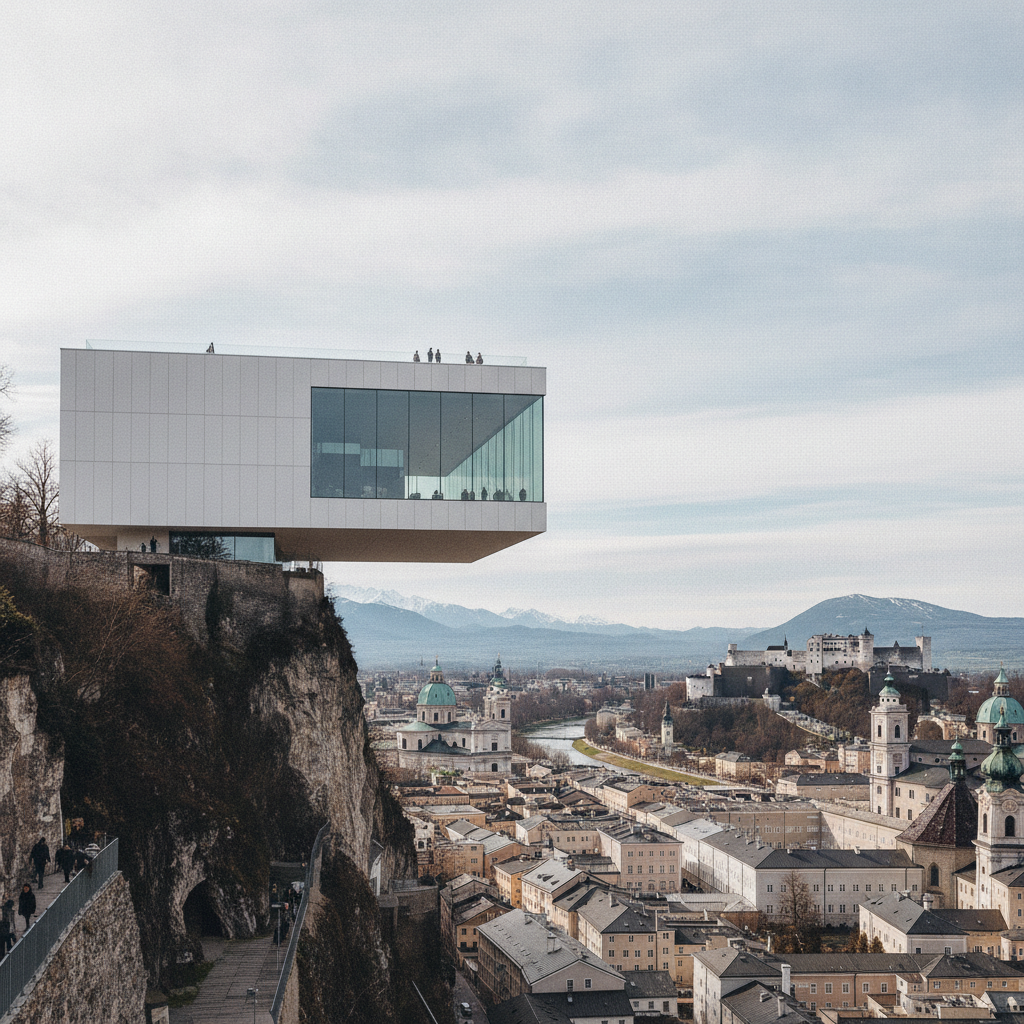
Salzburg Art and Museums — the Museum der Moderne, Salzburg Museum & the Rupertinum
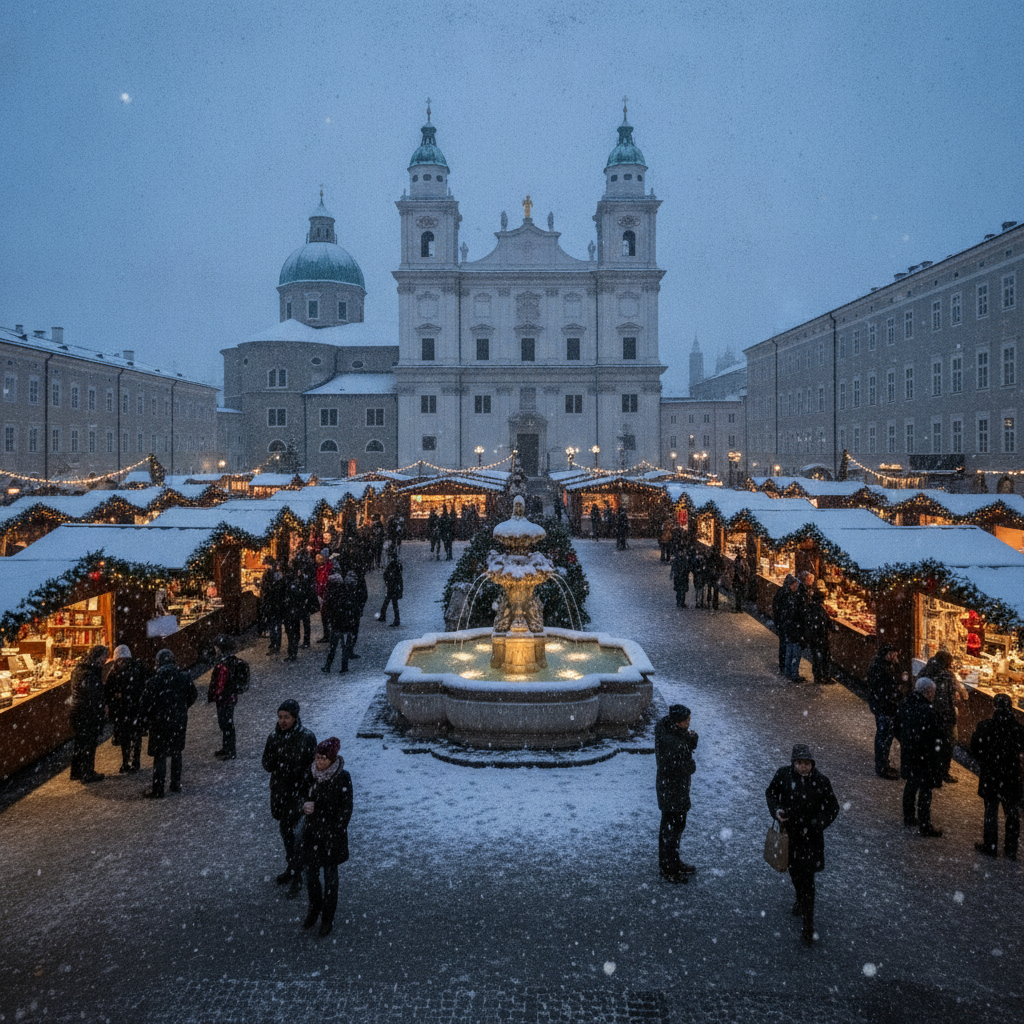
Salzburg Practical — Seasons, the Mozart Week, Christmas Market & Getting Around