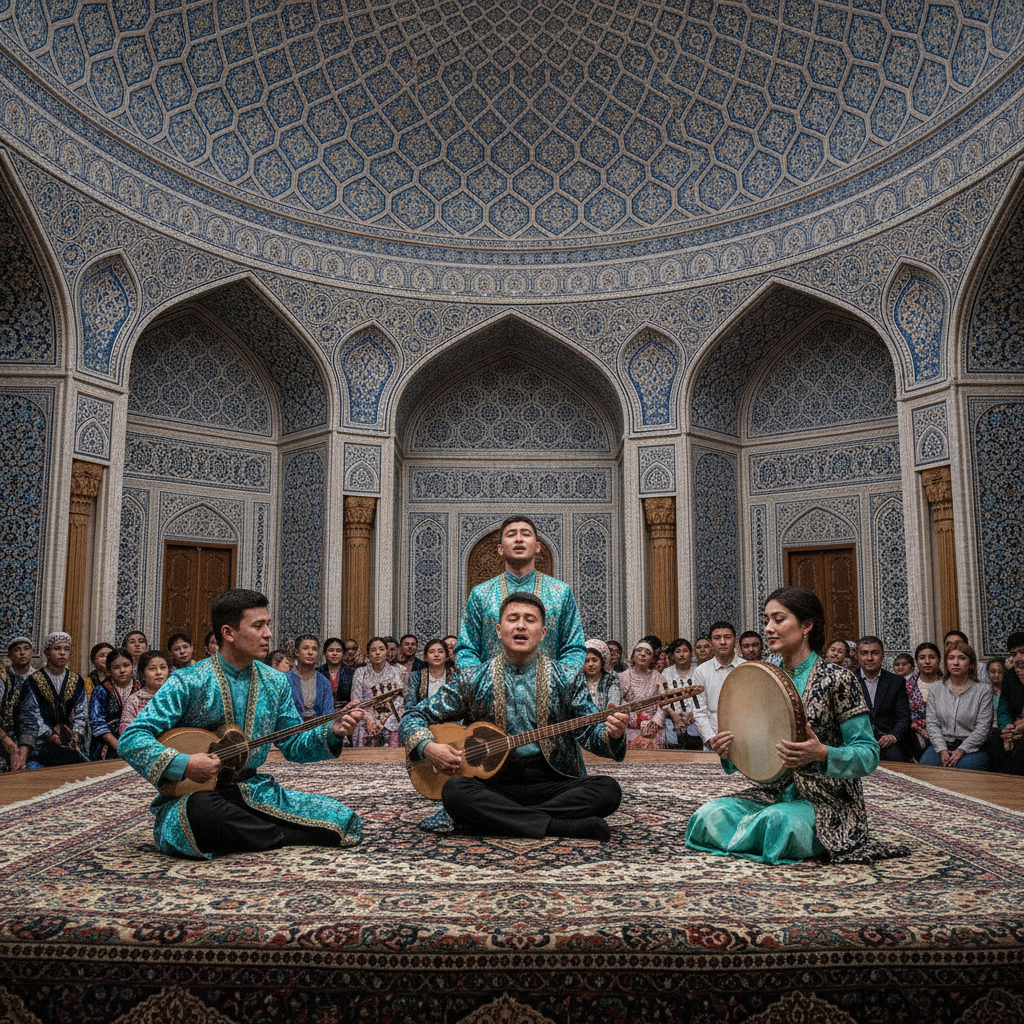
The 1220 Mongol Sack That Killed 475,000 People and Reduced Samarkand from 500,000 to 25,000 Inhabitants, the Paisley Pattern That Traveled from Central Asian Ikat via Kashmir to a Scottish Town & the Tileworkers of Isfahan Deported to Build Timurid Samarkand
The Mongol sack of 1220 reducing Samarkand from 500,000 to 25,000 inhabitants; the boteh teardrop motif traveling from Central Asian abr ikat via Persian trade to Kashmir to Paisley Scotland where it became the paisley pattern; Timurid tileworkers deported from Isfahan using three distinct techniques — mosaic faience, cuerda seca, and underglaze cobalt painting; the Bukharan Jewish Bakhsh plov with herbs and eggs as the Shabbat variant that entered mainstream Uzbek cuisine; the Meros Paper Mill hands-on experience for children at USD 5; and Bukhara beating Samarkand on architectural authenticity while Samarkand wins on transport access.
- 1
Mongol Destruction & Timurid Rebirth – Samarkand 1220–1370
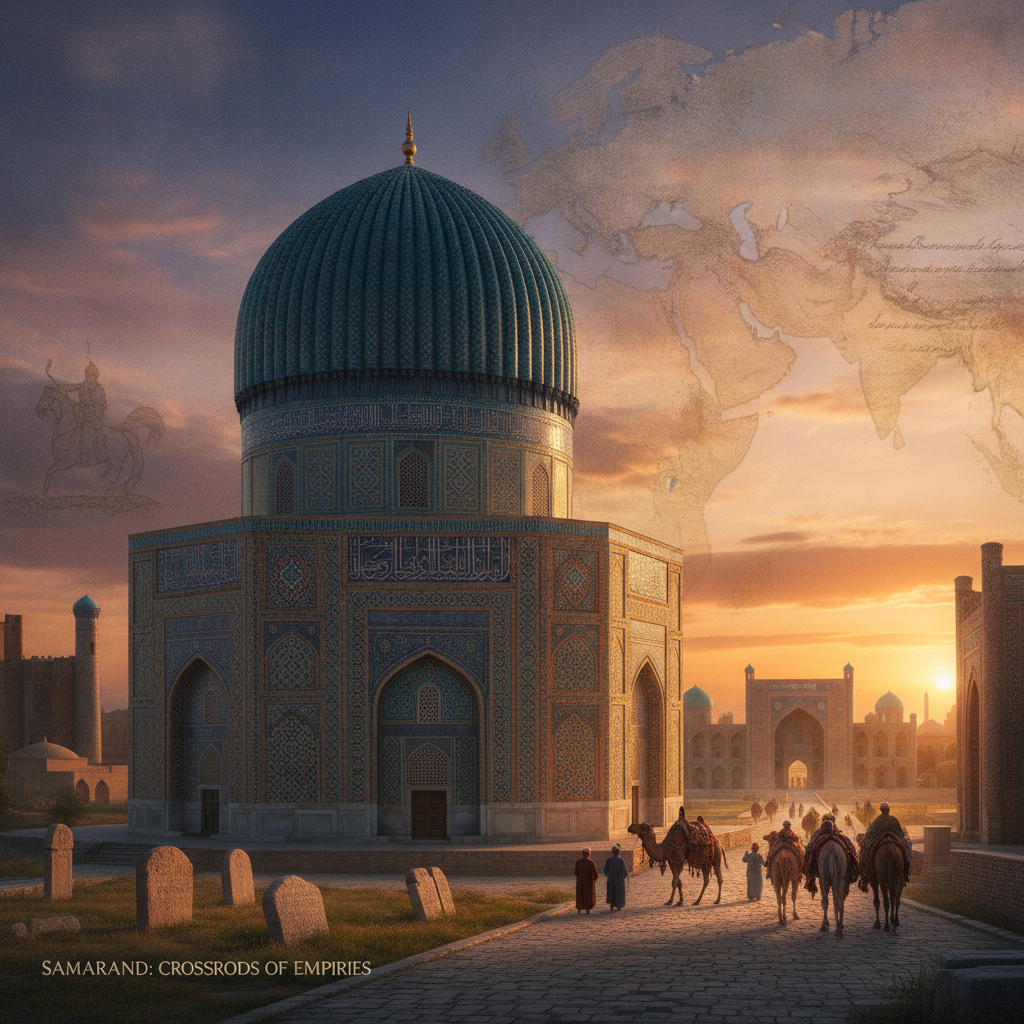
The 150-year gap in Samarkand's history (the period between the Mongol destruction of 1220 CE and the Timurid rebuilding that began in 1370): the recovery story. The Mongol sack (Chinggis Khan arrived at Marakanda in February 1220 with an army estimated at 150,000: the Khwarazmian garrison of 110,000 attempted a defense but was overwhelmed in 3 days—the Mongols executed the garrison, plundered the city, and destroyed the major urban infrastructure including the irrigation canals that supplied the oasis city with water: Ibn al-Athir, the Arab chronicler, wrote 'This is the greatest catastrophe to afflict the world since the creation of man'—the population of Samarkand fell from an estimated 400,000–500,000 (pre-Mongol) to approximately 25,000 by 1260 CE): the Mongol rule (the Chagatai Khanate (the Mongol successor state in Central Asia) ruled Samarkand from 1220–1370 as a secondary city—the Mongol rulers were initially nomadic pastoralists who had limited interest in urban development and used the Samarkand oasis as a seasonal camp): the Timurid transformation (Amir Timur established his capital at Samarkand in 1370 and initiated the greatest urban rebuilding in Central Asian history—within 30 years Samarkand had grown from 25,000 to an estimated 150,000 inhabitants (one of the largest cities in the Islamic world at that time)): the craftsmen of the world (Timur systematically deported the finest craftsmen from every conquered city to Samarkand—the architects, calligraphers, potters, and tileworkers of Damascus, Isfahan, Delhi, and Herat were all resettled in Samarkand between 1380–1405).
- 2
Samarkand's Ikat Silk Tradition – Abr Fabric
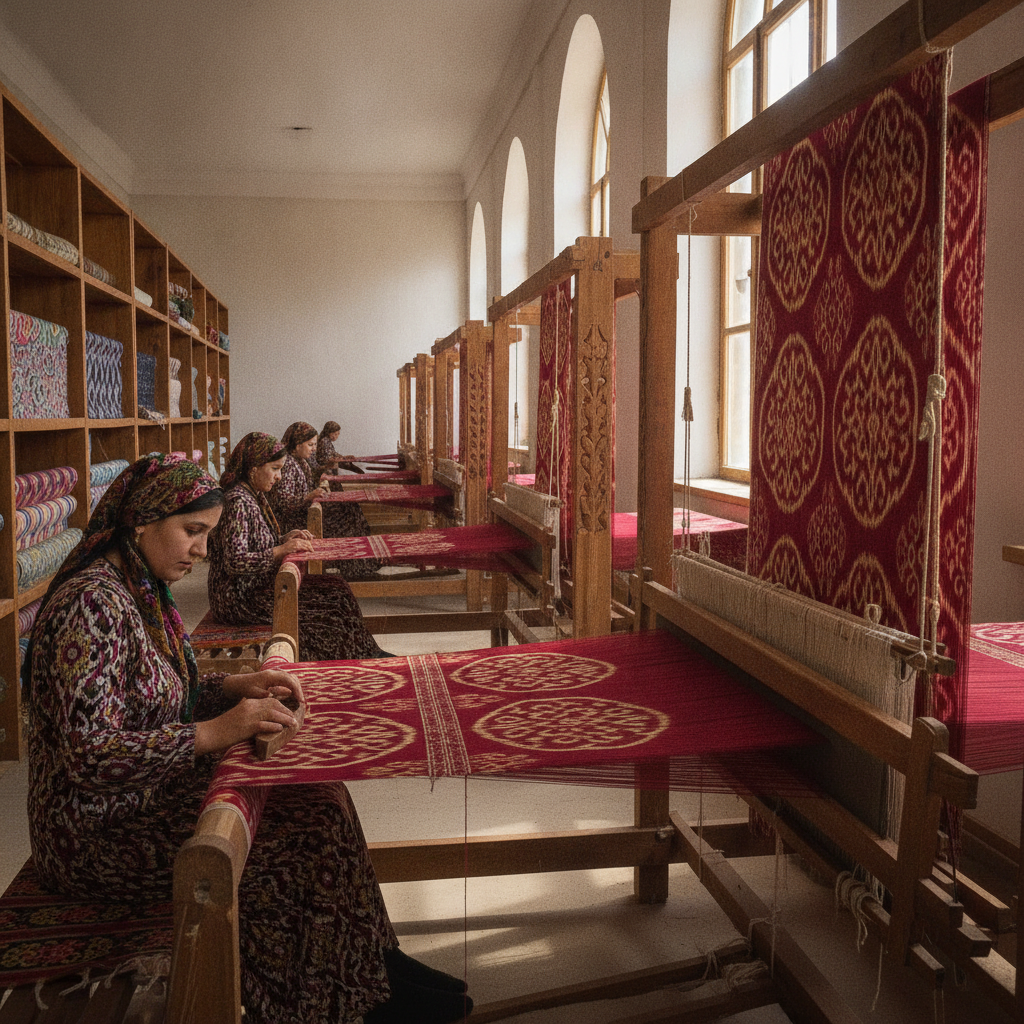
The ikat silk textile tradition of Samarkand and the Fergana Valley (the Central Asian silk-weaving technique that creates the characteristic feathered-edge patterns associated with Uzbek textiles worldwide): the ikat heritage guide. The ikat technique (ikat (from the Malay mengikat—'to tie')—the resist-dyeing technique applied to warp threads before weaving: the warp threads are stretched on a frame, bound in pattern sections with waterproof cord, dip-dyed in sequence (lightest color first, rebinding between dye baths), the cord removed, and the threads woven on a loom—the characteristic feathered or blurred edge of the pattern results from the slight movement of the warp threads during weaving): the Uzbek term (the Uzbek ikat is called abr—'cloud' in Uzbek/Tajik/Persian, a reference to the cloud-like blurred edges of the pattern): the Samarkand ikat tradition (the Samarkand ikat uses pure silk for the warp (creating the characteristic lustre) and either silk or cotton for the weft—the primary design patterns: the pomegranate (anor), the cypress tree (sarv), the peacock tail, and the paisley (the boteh—the teardrop motif that migrated from Central Asian ikat via Persian textile trade to Kashmir and then to the Scottish town of Paisley in the 19th century, where it was industrially reproduced): the Yodgorlik Silk Factory (the primary working ikat silk factory in Samarkand—the factory continues hand-loom production of abr ikat alongside machine production, with the hand-loom section open to visitors).
- 3
Samarkand's Jewish Quarter – The Last Synagogue
The Samarkand Jewish heritage (the Bukharan Jewish presence in Samarkand—the ancient community that maintained a continuous Jewish presence in the city from at least the 8th century CE until the post-Soviet emigration): the Jewish heritage walk. The Samarkand Jewish quarter (the Jewish quarter (mahalla yahudiylar) was historically concentrated in the area northwest of the Siab Bazaar—the quarter retained a distinctive character until the Soviet period when forced residential integration and urbanization dispersed the community): the Gumbaz Synagogue (the primary surviving synagogue in Samarkand: built in the 19th century in the traditional Bukharan Jewish architectural style (a single-story whitewashed courtyard building with an arched veranda)—the synagogue serves the remaining Samarkand Jewish community of approximately 1,500–2,000 individuals (2024 estimate, down from approximately 30,000 in 1970)): the emigration (the Samarkand Jewish community peaked during the Soviet period when Samarkand was a safer city than many USSR cities for Jewish citizens due to its geographic distance from the European theater of WWII antisemitism—Soviet evacuation policies also brought Ashkenazi Jews from Ukraine and Belarus to Samarkand during WWII, creating a mixed Bukharan-Ashkenazi community): the culinary legacy (the Bukharan Jewish cuisine of Samarkand contributed dishes now assimilated into Uzbek mainstream cuisine: the Bakhsh plov (plov cooked with green herbs and eggs—the Jewish Shabbat plov variant), and the Kuk Chuchvara (green-dough dumplings stuffed with herbs and cheese, the Jewish variant of the Uzbek chuchvara dumpling).
- 4
Families in Samarkand – Children's Guide to the Silk Road
The Samarkand families guide (the practical guide for visiting the Timurid monuments with children, and the child-appropriate activities available in Samarkand): the families travel guide. The monument accessibility for children (the Registan: the child entry fee is free under 12—the tile-decorated interior courtyards and the muqarnas honeycomb vaulting are genuinely impressive for older children who understand scale; the interior of the Tilya-Kori prayer hall with its gold-leaf ceiling is the most immediately spectacular single interior in Samarkand): the Afrosiyab Museum (the best site for children with historical interest: the 7th-century palace murals showing elephants, horses, and the royal hunting scene in the western wall fresco; the mummy (the preserved medieval Sogdian woman) in the central exhibit case): the paper-making workshop (the Meros Paper Mill at Konigil: the hands-on paper-making experience for children (USD 5 per child) where children pour prepared mulberry pulp through a screen frame and lift their own sheet of Samarkand paper to dry—the most popular hands-on heritage activity in Samarkand): the horse culture (the Hippodrome at Samarkand: the Uzbek Kupkari (the traditional horseback goat-grabbing game also called buzkashi in neighboring countries) is staged at the Samarkand Hippodrome on major national holidays (Navruz March 21, Independence Day September 1); the horse racing at the Samarkand Hippodrome (the racing track 4km east of the Registan) on Sundays): the accommodation with pool (the Platan Hotel and the Hotel Malika Classic both have swimming pools—the critical amenity for families visiting in July–August heat).
- 5
Samarkand's Timurid Tilework – How It Was Made
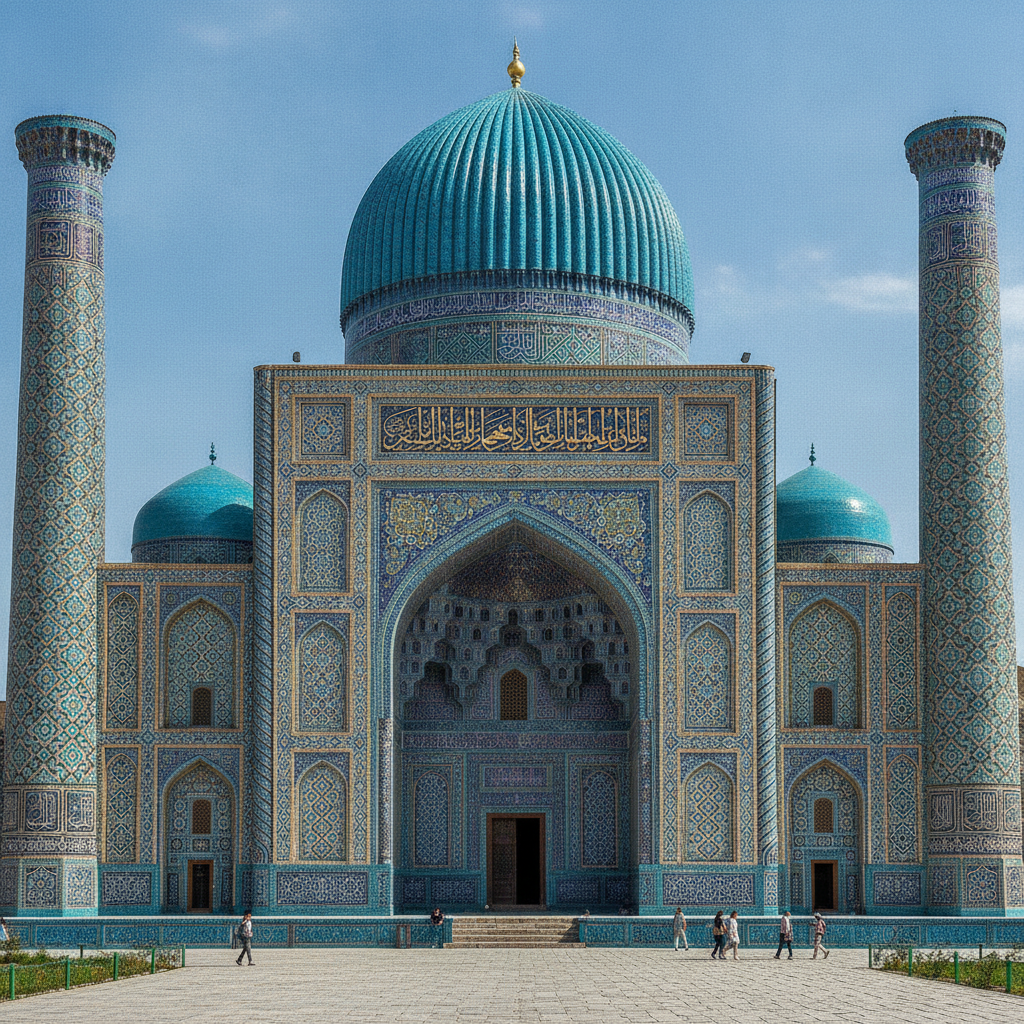
The Timurid tilework technical guide (the manufacturing and design process behind the magnificent mosaic tilework that covers the monuments of Samarkand): the craft technology guide. The tilework techniques (the Timurid monuments of Samarkand used three distinct tilework techniques: the mosaic faience (the cut-tile mosaic technique—tesserae of individually fired monochrome glazed tile cut to precise geometric shapes and assembled into complex geometric patterns on a gypsum plaster backing (the dominant technique on 14th–15th century exteriors): the cuerda seca (the dry-cord technique—a wax or manganese cord is traced along pattern lines on the tile surface before glazing; the cord prevents the different-colored glazes from running together during firing, allowing multicolor patterns on a single tile—the Shah-i-Zinda mausoleums use cuerda seca extensively): the underglaze painting (the blue-and-white technique on the Tilya-Kori interior tiles uses cobalt oxide painted directly on the bisque-fired tile body before applying the transparent glaze in a single firing): the color palette (the dominant Timurid color palette: the turquoise (from copper oxide in the glaze), the ultramarine (the deepest blue—from lapis lazuli-derived cobalt oxide), the white (from tin oxide opacifier in a clear lead glaze), and the gold (from 24-carat gold leaf applied post-firing over fired glaze)): the craftsmen (the tileworkers of Timurid Samarkand were mostly deported Iranians—specifically from Isfahan, Tabriz, and Shiraz—who brought the cuerda seca technique from the Ilkhanid Persian tradition and adapted it to the Timurid monumental scale).
- 6
Samarkand vs Bukhara – The Silk Road Comparison Guide
The Samarkand vs Bukhara comparison (the two most visited Silk Road cities in Uzbekistan—the practical and cultural comparison guide): the comparison handbook. The monument comparison (Samarkand: the Timurid imperial monuments (1370–1505)—large-scale, visually spectacular, heavily restored by Soviet-era intervention; the dominant architectural idiom is the mega-monument (the 33m Ulugbek portal, the 35m Bibi-Khanym dome); Bukhara: the pre-Timurid and Shaybanid monuments (9th–17th century)—smaller scale, more authentic (less restoration), more architecturally diverse (from the 9th-century Ismoil Samoniy mausoleum to the 17th-century Nadir Divan-Beghi): the authenticity comparison (Bukhara wins on architectural authenticity—many Bukharan monuments are original construction with minimal restoration; Samarkand's most famous monuments are 30–60% reconstruction): the atmosphere comparison (Bukhara's historic medina is more intact as a lived urban environment—the Labi-Hauz quarter has functioning teahouses, bazaars, and residential life integrated with heritage monuments; Samarkand's old city is more heavily touristed with less residential character): the practical comparison (Samarkand has better transport (high-speed rail, international airport); Bukhara is more remote (slower train, 5h30m from Tashkent) but rewards the additional effort): the optimal strategy (the ideal Uzbekistan itinerary combines both: 2 nights Samarkand + 2 nights Bukhara, with the Afrosiyob train between them (1h30m, 3× daily)).
Walk this route with audio
Stories play automatically as you reach each stop — no tapping needed.
More in Samarkand

Uzbekistan Circuit: Bukhara, Khiva, Tashkent, and the Most Comprehensively Silk Road Single Central Asian Heritage Country
Samarkand History: Tamerlane, the Timurid Empire, the Silk Road Trade, Alexander the Great, and the Most Historically Layered Single Central Asian City
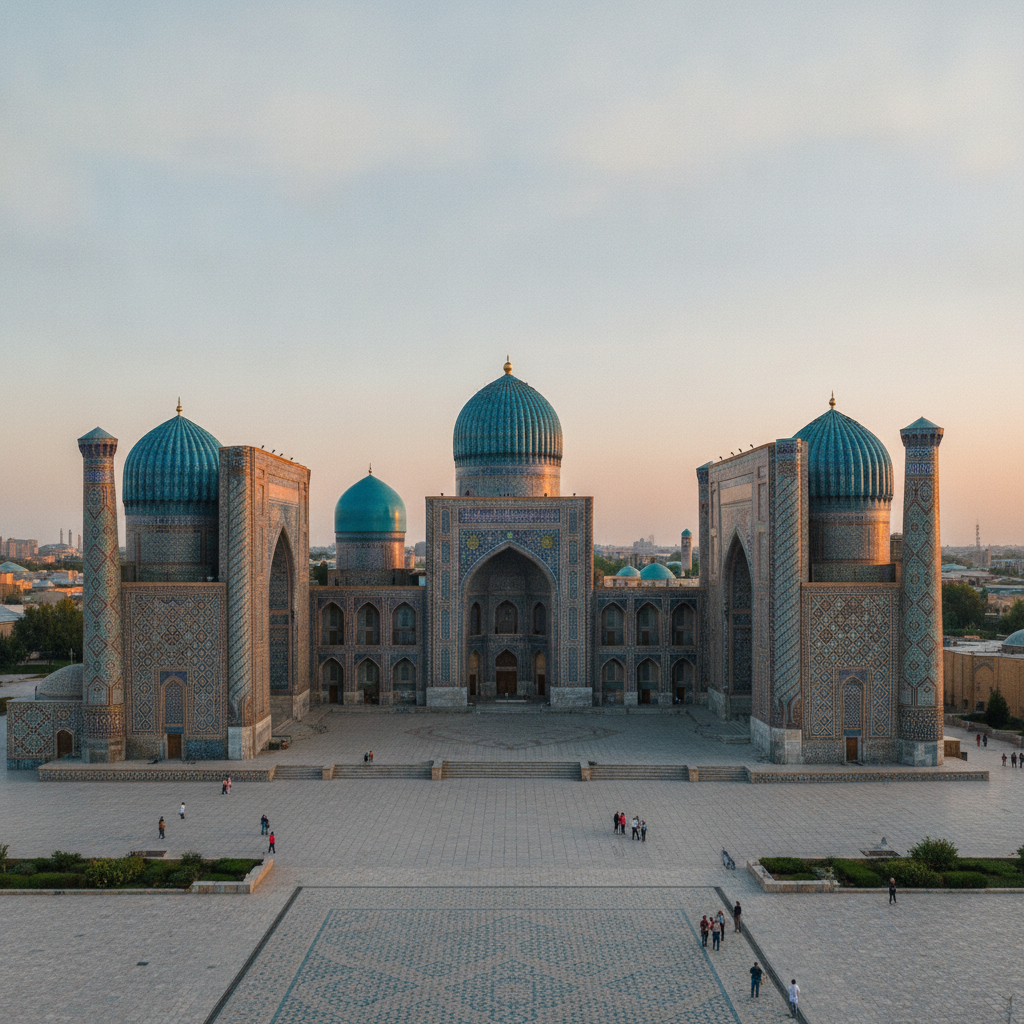
Samarkand Essential: The Registan, Shah-i-Zinda, Gur-e-Amir, Bibi-Khanym, and the Most Magnificently Tiled Single Silk Road City

Samarkand Science: Ulugh Beg, the Medieval Observatory, Islamic Astronomy, and the Most Scientifically Consequential Single Central Asian Ruler
Samarkand Architecture: The Timurid Tilework, the Madrasas, the Dome Engineering, and the Most Comprehensively Blue-Tiled Single Islamic Heritage