The Chinese Papermakers Captured at the 751 CE Battle of Talas Who Taught the Arab World to Make Paper, Ulugbek's Star Catalog Accurate to 58 Seconds in a Year & the Soviet Decision That Gave Tajik-Majority Samarkand to Uzbekistan
The 751 CE Battle of Talas where captured Chinese papermakers transmitted papermaking to the Arab world via Samarkand; Ulugbek's 1437 star catalog measuring the sidereal year to within 58 seconds of the modern value; the 1924 Soviet border decision assigning Tajik-speaking Samarkand to the Uzbek SSR; the Ak-Saray Palace portal arch at 65m — the tallest arch in pre-modern Islamic architecture; the Sogdian merchants who carried the word for grape (bdagw) to China where it became putao (葡萄); and the Samarkand non at 50-60cm as the largest bread variety in Uzbekistan.
- 1
Ulugbek – The Astronomer King of Samarkand
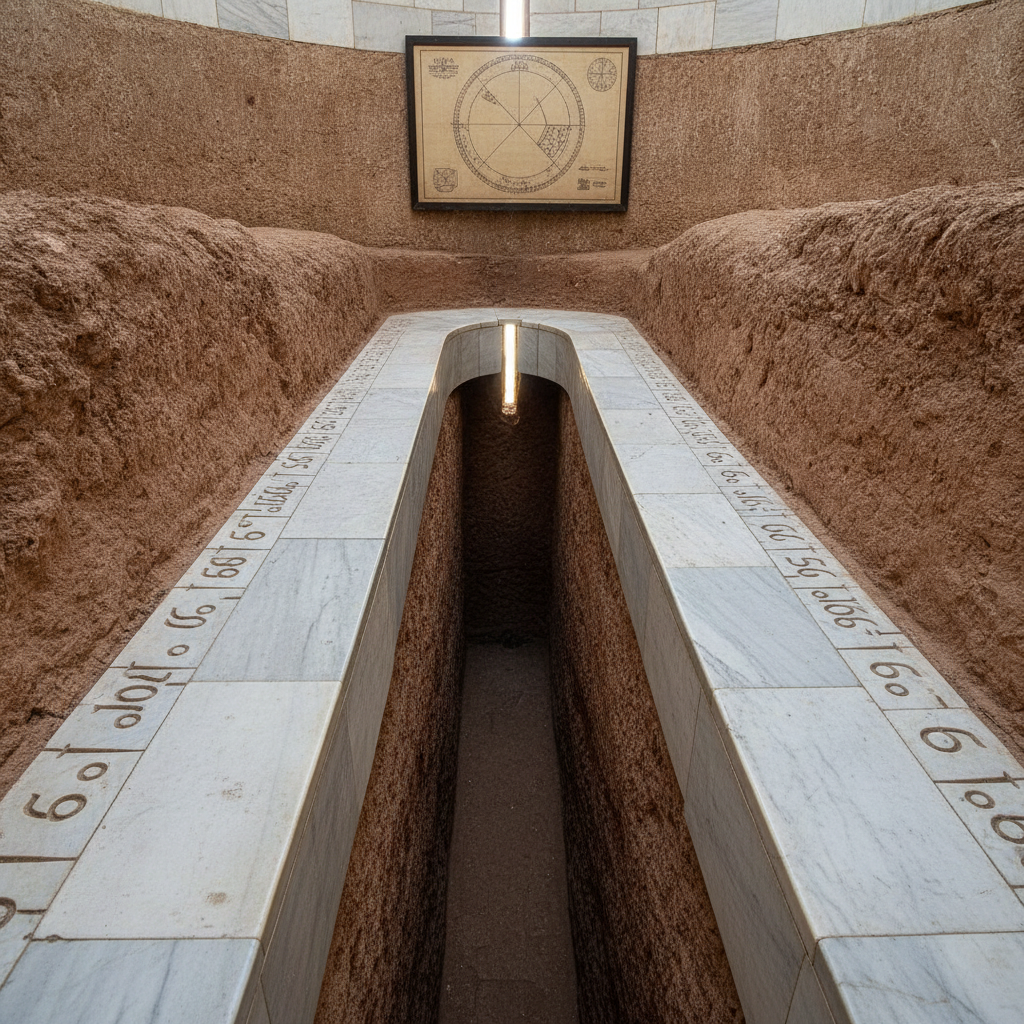
Ulugbek (1394–1449—Muhammad Taragay, known as Ulugbek ('Great Prince' in Turkic)—the Timurid ruler of Samarkand and the greatest astronomer of the Islamic Middle Ages): the scientist-king who built an observatory 6 km north of the Registan. The biography (Ulugbek was the grandson of Amir Timur and ruled the Timurid Sultanate as a de facto ruler from 1411, formally from 1447—he was more interested in science than warfare and spent his reign constructing the madrasa (completed 1420) and the observatory (completed 1428)): the Ulugbek Observatory (the structure was a sextant of unprecedented scale: a marble arc instrument 11m in radius built in a trench 11m deep in the hillside—the instrument was used to measure the arc of the sun through the meridian with an accuracy of seconds of arc—Ulugbek's star catalog (the Zij-i-Sultani, completed 1437) contained 1,018 stars with positions more accurate than any prior catalog, with an error of approximately 1 arc-minute): the star catalog accuracy (Ulugbek measured the length of the sidereal year as 365 days, 6 hours, 10 minutes, 8 seconds—the modern value is 365 days, 6 hours, 9 minutes, 9.76 seconds—Ulugbek's error was 58 seconds in a year): the assassination (Ulugbek was assassinated in 1449 by his own son Abd al-Latif, who was in turn killed 6 months later by his own court).
- 2
The Siab Bazaar – Samarkand's Living Market
The Siab Bazaar (Сиёб бозори—the primary food market of Samarkand, operating continuously since the medieval period on the site of the ancient Sogdian market to the east of the Bibi-Khanym Mosque): the market guide for Samarkand's most atmospheric space. The market layout (the Siab Bazaar covers approximately 3 hectares east of the Bibi-Khanym mosque: the eastern section (dried fruits and nuts): the central section (fresh produce—pyramidal stacks of tomatoes, eggplant, peppers, melons): the western section adjacent to Bibi-Khanym (the bread section—the largest concentration of lepeshka (non) bakeries in Samarkand, featuring the Samarkand non (the largest variety in Uzbekistan, 50–60cm diameter with sesame ring)): the spice section (the central dome structure sells cumin (zira), coriander, dried apricot (uruk), raisins (kishmish), Fergana walnuts, and the Uzbek spice mix for plov (the combination of cumin, barberry (zereshk), and dried chickpeas)): the market schedule (open daily 07:00–18:00, most active 08:00–12:00): the melon culture (the Uzbek melon (qovun—Cucumis melo) is the most culturally significant seasonal product of the Siab Bazaar: the Kolvak (the long thin melon from the Samarkand region), the Torpedo melon (the famous Uzbek melon with thin skin and extremely sweet orange flesh, harvested July–September), and the late-season Gurvak (the green-skinned variety harvested September–October that can be stored until January).
- 3
Samarkand Paper – The Western Terminus of Papermaking
The Samarkand paper tradition (the Konigil village paper mill 5 km north of Samarkand—the only remaining traditional mulberry-bark paper (kagaz) mill in Central Asia and one of three traditional hand-papermaking sites in the entire Silk Road network): the craft heritage guide. The history of paper in Samarkand (the technique of making paper from plant fiber (rather than Chinese bamboo or Egyptian papyrus) was acquired by Arab craftsmen from Chinese papermakers captured at the Battle of Talas (751 CE)—the battle between the Arab Abbasid Caliphate and the Tang Chinese Dynasty on the Talas River (modern Kyrgyzstan) resulted in the Arab capture of approximately 10,000 prisoners including skilled craftsmen, some of whom were papermakers: the papermaking knowledge transmitted from these craftsmen established Samarkand as the Arab world's first paper-producing city (8th century CE) and eventually displaced papyrus across the Islamic world): the Konigil mill (the Meros Paper Mill at Konigil village uses the 9th-century technique unchanged: the inner bark of the white mulberry (Morus alba) is soaked, boiled, beaten with a wooden mallet, diluted, and poured on a screen frame—the finished sheet of Samarkand paper (kagaz) is approximately 40cm × 50cm, slightly textured, with a warm ivory color—it is sold to calligraphers and miniature painters across the Islamic world): the calligraphy connection (the Samarkand kagaz is the preferred substrate for traditional Islamic calligraphy due to its surface texture and durability).
- 4
Samarkand's Tajik Minority – Language, Identity & Culture
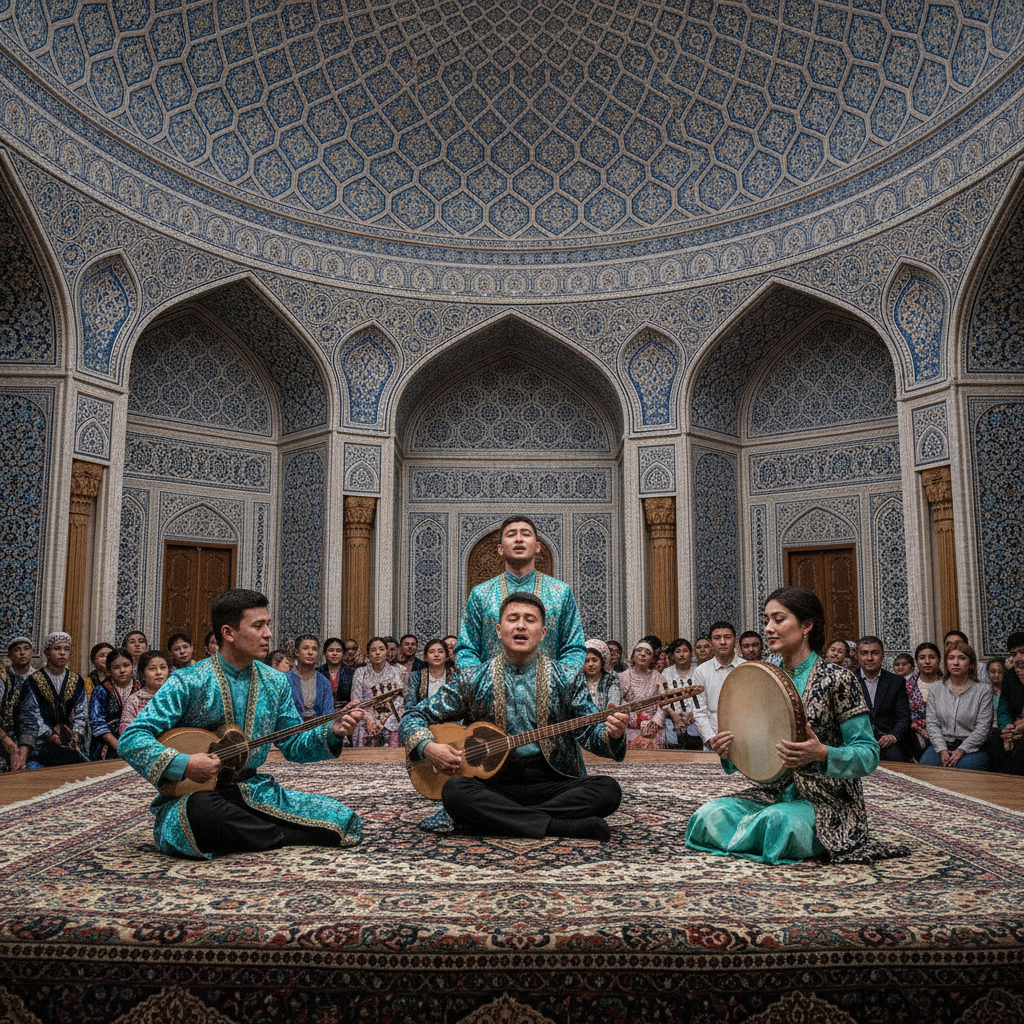
The Tajik cultural identity of Samarkand (the sociolinguistic dimension of the most cosmopolitan city in Central Asia): the cultural context guide. The demographics (Samarkand's 550,000 population (2024 estimate) includes a substantial Tajik-speaking minority—the estimates range from 30% to 50% of the urban population identifying as Tajik or speaking Tajik (Farsi) as a primary language—the ambiguity reflects the historical overlap between Uzbek and Tajik ethnic identities in the Ferghana-Zarafshan corridor): the historical context (Samarkand was a Persian/Tajik-language city from the Sogdian period (4th century BCE) through the Timurid and early Shaybanid periods—Timurid court culture (1370–1500) was Persian in language, producing Persian-language poetry (the court poet Alisher Navoi wrote in Chagatai Turkic but correspondence and administration was in Persian)—the Uzbek-Tajik language boundary in Samarkand has shifted repeatedly with successive ruling dynasties): the 1924 Soviet nationality decisions (the Soviet delimitation of Central Asian borders in 1924 assigned Samarkand to the Uzbek SSR despite its majority Tajik-speaking population at the time—the assignment of Samarkand and Bukhara to Uzbekistan rather than Tajikistan remains a source of periodic tension in Uzbek-Tajik relations): the living culture (the mahalla (neighborhood) life of Samarkand's Tajik-speaking districts—the Labi-Hovuz district adjacent to the Siab Bazaar—maintains Persian New Year (Navruz) celebrations, Persian poetry evenings (mushiara), and Tajik-language domestic culture that coexists with official Uzbek-language public life).
- 5
The Silk Road Wine Route – Samarkand's Grape Heritage
The Samarkand wine and grape heritage (one of the world's oldest continuous viticulture traditions—the Zarafshan Valley has been producing grapes and wine since at least 500 BCE, making it one of the three oldest continuous wine regions alongside Georgia and Armenia): the viticulture heritage guide. The history (the Sogdian merchants who dominated Silk Road trade from Samarkand brought both wine and grape varietals eastward to China: the Chinese term putao (葡萄—'grape') derives from the Sogdian word for grape (bdagw)—Tang Dynasty frescoes at Dunhuang show Sogdian merchants selling grapes and wine to Chinese buyers): the Soviet wine industry (Samarkand had a large-scale Soviet wine industry (1930s–1991) centered on the Khovrenko Institute of Wine-making—the Uzbek SSR produced 100 million liters of wine annually at peak Soviet production, much of it exported to Russia): the post-Soviet collapse (Uzbek wine production collapsed after 1991 as Muslim revival, the removal of Soviet distribution networks, and the shift to export-cotton monoculture eliminated the industry—by 2010 Uzbekistan produced approximately 10 million liters annually): the current revival (the Samarkand Wine brand (operating since 1868) produces a small range of local varietals including the Gyulyabi (the large golden grape of the Zarafshan Valley—eaten fresh and dried as the Uzbek golden raisin (Sultana)) and a dessert wine from the Bayanshira white grape—sold at the Siab Bazaar wine section and at the Samarkand Wine factory shop at 39 Buyuk Ipak Yoli).
- 6
Shahrisabz – Timur's Birthplace & the Ak-Saray Palace
The Shahrisabz day trip (the 'Green City' 80 km south of Samarkand—the birthplace of Amir Timur and the site of his intended mausoleum and summer palace): the Shahrisabz heritage guide. The Ak-Saray Palace (the White Palace of Timur, begun 1380—the most ambitious construction project of Timur's reign and the intended focal point of the city of his birth: the portal arch of the Ak-Saray at its completion rose 65m (the tallest single arch in the pre-modern Islamic world, higher than any Gothic cathedral arch)—only the two flanking towers of the portal survive (to 38m) after the Shaybanid destruction in the early 16th century—the surviving tile mosaic on the portal towers includes the inscription 'Let whoever doubts our power and munificence look upon our buildings' in Arabic script in golden tile on ultramarine ground): the Kok-Gumbaz Mosque (the 'Blue Dome' mosque built 1435–1437 by Ulugbek—the most intact Timurid building in Shahrisabz, with original Timurid blue-and-white tilework on the interior drum below the dome): the Dorus-Saodat complex (the dynastic mausoleum compound begun by Timur—the tomb of Timur's eldest son Jahangir (died 1376) is the oldest surviving Timurid mausoleum in existence): the transport (Shahrisabz from Samarkand: 1h30m by shared taxi from the Registan taxi stand (USD 3 per seat); organized tours available from all Samarkand hotels (USD 25–40/person including transport and guide)).
Walk this route with audio
Stories play automatically as you reach each stop — no tapping needed.
More in Samarkand

Uzbekistan Circuit: Bukhara, Khiva, Tashkent, and the Most Comprehensively Silk Road Single Central Asian Heritage Country
Samarkand History: Tamerlane, the Timurid Empire, the Silk Road Trade, Alexander the Great, and the Most Historically Layered Single Central Asian City
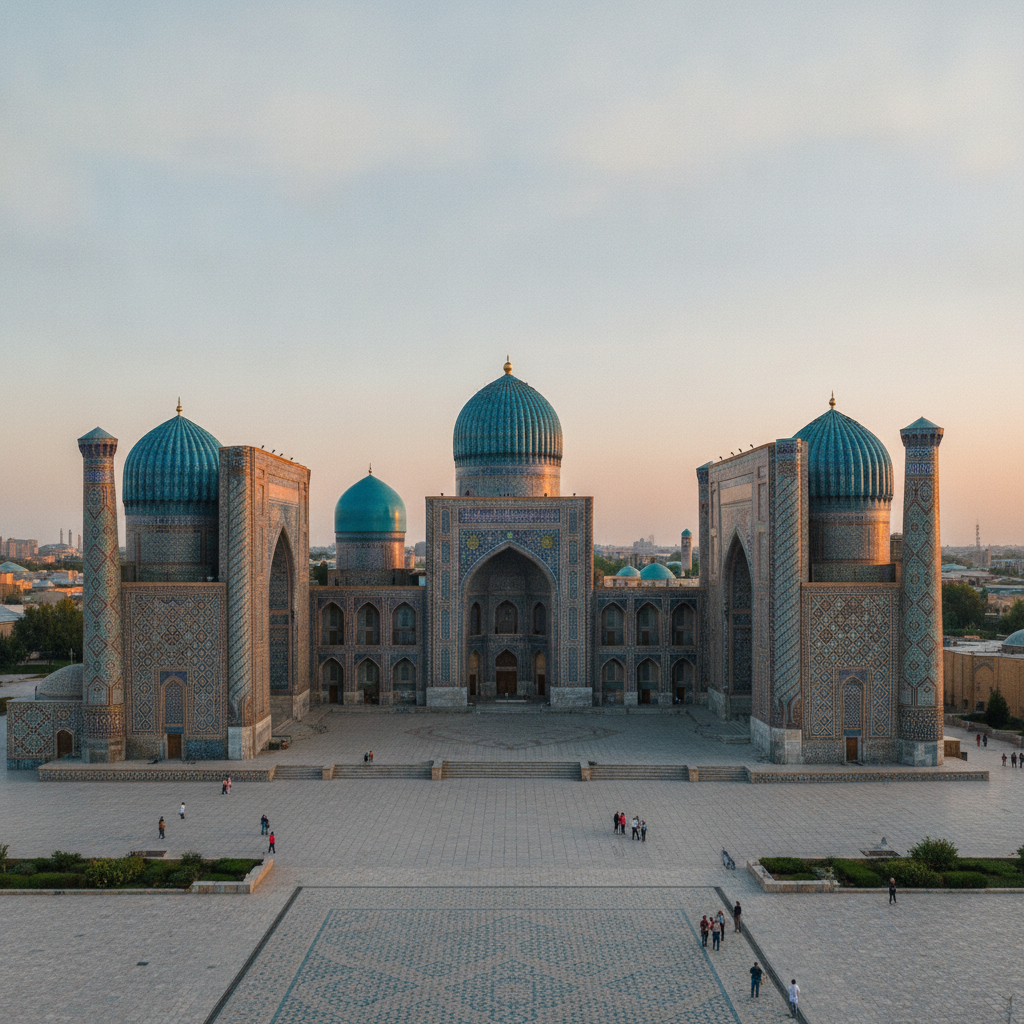
Samarkand Essential: The Registan, Shah-i-Zinda, Gur-e-Amir, Bibi-Khanym, and the Most Magnificently Tiled Single Silk Road City

Samarkand Science: Ulugh Beg, the Medieval Observatory, Islamic Astronomy, and the Most Scientifically Consequential Single Central Asian Ruler
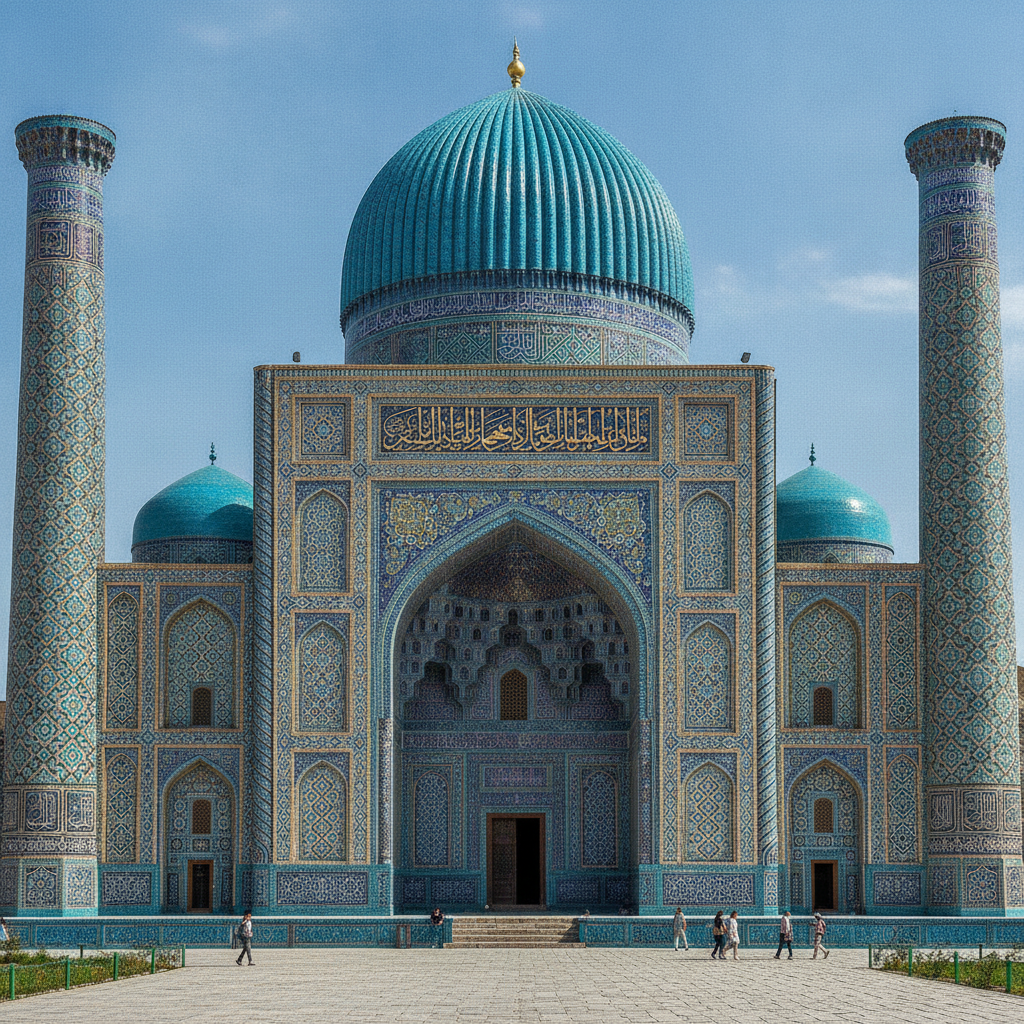
Samarkand Architecture: The Timurid Tilework, the Madrasas, the Dome Engineering, and the Most Comprehensively Blue-Tiled Single Islamic Heritage