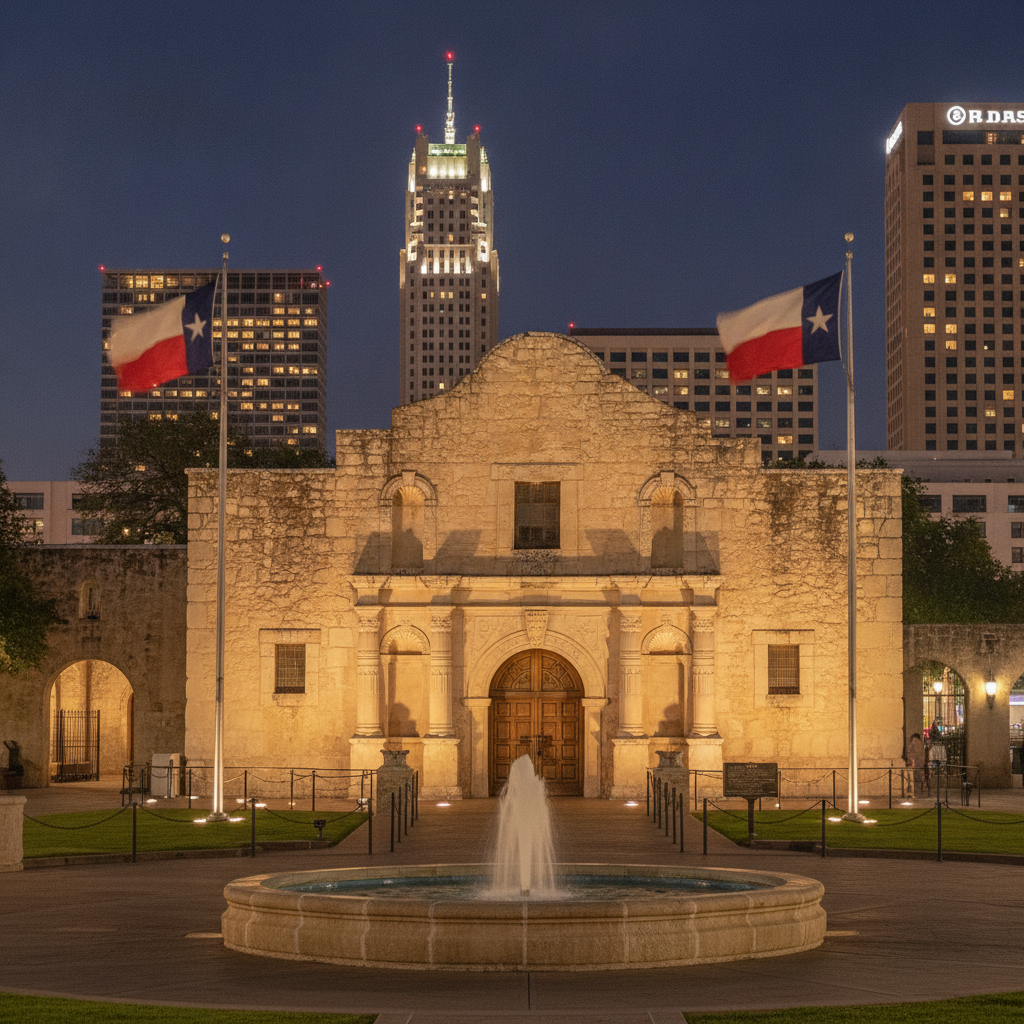
San Antonio: Spurs 5 Championships (Big Three Duncan-Parker-Ginobili, 2014 Finals masterpiece, Wembanyama era), Brackenridge Park (Blue Hole headwaters, Japanese Tea Garden 1918, Sunken Garden Theater), Fredericksburg Wine Road 290 (50 wineries, Hill Country AVA, Becker Vineyards, Texas Tempranillo), Fort Sam Houston Military Heritage (Geronimo prisoner 1886, Rough Riders 1898, Lackland AFB), San Antonio to Austin Texas Triangle Comparison, and Laredo US-Mexico Border Culture (40% US-Mexico trade, 96% Hispanic, Republic of the Rio Grande 1840)
San Antonio context and surroundings: Spurs dynasty (5 championships, Popovich most wins in NBA history, Big Three international core, Wembanyama 2023 era), Brackenridge Park (1899 donation, Blue Hole springs headwaters, Japanese Tea Garden in quarry, Brackenridge Eagle miniature train since 1947), Fredericksburg Wine Road 290 (second most wineries in US, Hill Country AVA, Texas Tempranillo and Viognier, Becker Vineyards most awarded in Texas), Fort Sam Houston (Geronimo prisoner 1886, Rough Riders training 1898, Lackland basic training for all Air Force), San Antonio vs Austin (I-35 corridor, SXSW, tech boom vs Alamo history, affordability comparison), and Laredo border culture (40% US-Mexico trade value, 96% Hispanic, Republic of the Rio Grande 1840, San Ygnacio colonial village).
- 1
Spurs Dynasty and San Antonio Basketball Identity
The San Antonio Spurs 5 NBA Championships (1999, 2003, 2005, 2007, 2014): one of the most sustained championship dynasties in professional sports history, with Gregg Popovich as head coach (more regular season wins than any coach in NBA history). The Big Three: Tim Duncan (considered the greatest power forward in NBA history, 5 championships, 2 MVP awards), Tony Parker (French point guard, 6 All-Star selections, 2007 Finals MVP), and Manu Ginobili (Argentine shooting guard, known for the eurostep, considered the greatest international player in NBA history). The 2014 NBA Finals (Spurs vs Miami Heat): widely considered the most beautiful team basketball in Finals history; the Spurs defeated LeBron James, Dwyane Wade, and Chris Bosh in 5 games with a level of ball movement and off-ball cutting that is studied by coaches worldwide. Victor Wembanyama (the French center selected 1st overall in the 2023 NBA Draft): at 7 feet 4 inches with exceptional shooting, defense, and court vision, considered the most unusual player prospect in NBA history. The Frost Bank Center (the Spurs arena at 1 AT&T Center Parkway, downtown San Antonio): the home of the Spurs since 2002, with the River Walk visible from the arena. The civic identity of the Spurs: in a city without a major Fortune 500 headquarters or the international name recognition of Dallas, Houston, or Austin, the Spurs championships have been the primary source of global civic pride for San Antonio for three decades.
- 2
Brackenridge Park and the San Antonio River Headwaters
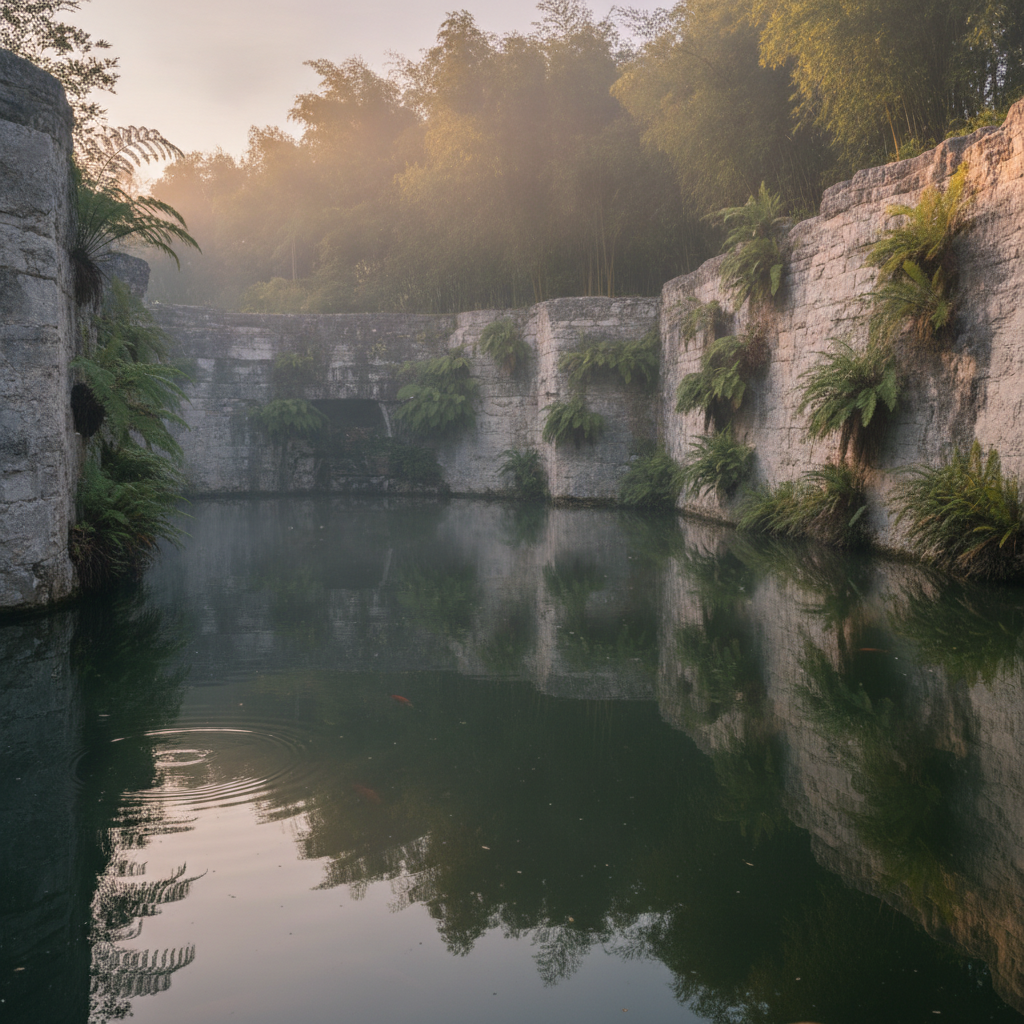
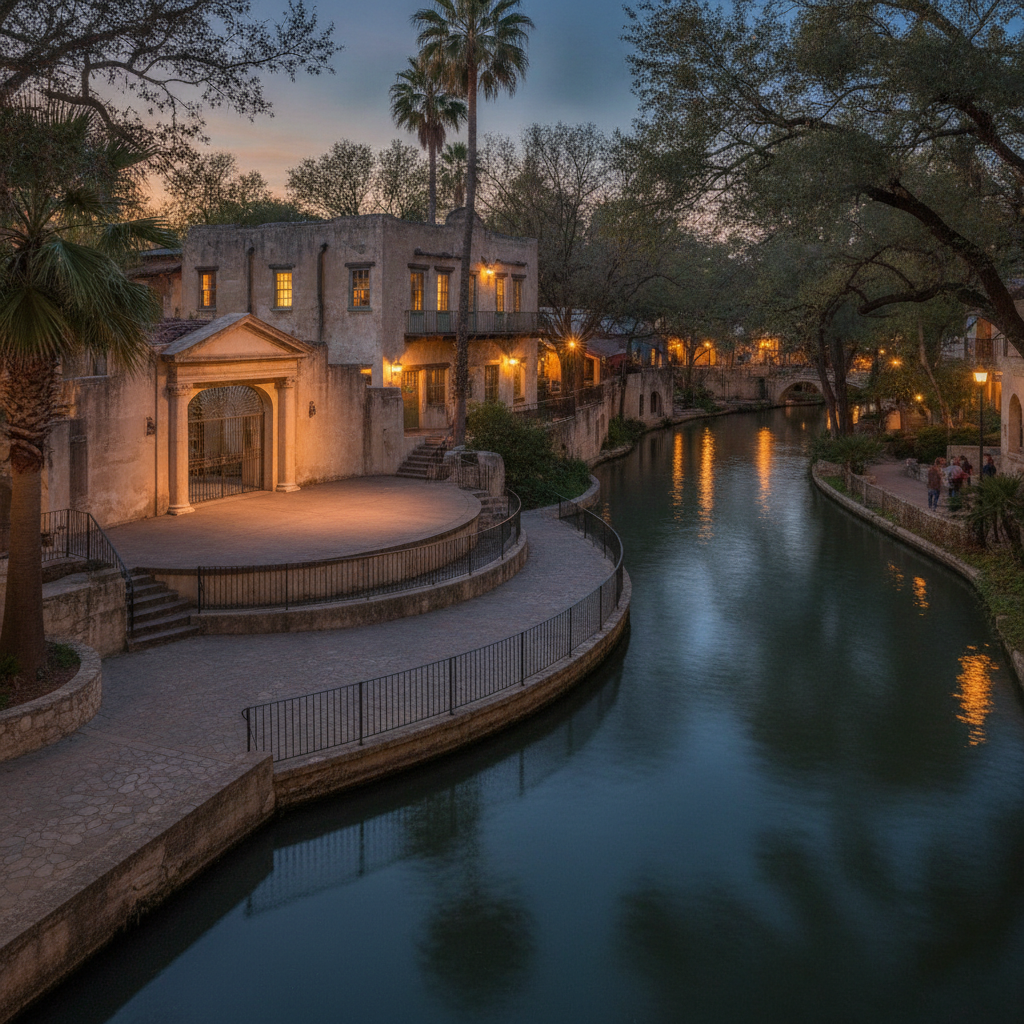
Brackenridge Park (the 343-acre municipal park at 3700 N. St. Mary Street, 3 km north of downtown): established by George Brackenridge donation to the city in 1899, the oldest and most beloved park in San Antonio. The San Antonio River headwaters (the Blue Hole natural springs within the park): the limestone springs feed the San Antonio River at a constant temperature and rate, making the River Walk possible even in drought conditions. The Japanese Tea Garden (built in a former limestone quarry in 1918, the first Japanese-style garden in Texas): the lush 3-acre garden in the quarry, with the koi pond, the stone bridge, and the tropical vegetation; the tea house has been restored and is now an active cafe. The Brackenridge Eagle miniature train (operating since 1947): the narrow-gauge train circling the 3.5 miles of track through the park, the oldest continuously operating miniature train in the United States. The Sunken Garden Theater (the outdoor performance venue in the former limestone quarry adjacent to the Japanese Tea Garden): summer concert series. The San Antonio Botanical Garden (at 555 Funston Place, adjacent to Brackenridge Park): the 38-acre garden with the Lucile Halsell Conservatory (the glass greenhouse complex partially below grade, designed by Emilio Ambasz 1988, housing tropical, desert, and temperate plant collections). The River Walk Museum Reach (the northern extension of the River Walk connecting downtown to the Pearl, passing Brackenridge Park): the scenic kayak route along the river.
- 3
Fredericksburg Wine Road and Hill Country Wineries
The Fredericksburg Wine Road 290 (the 56 km stretch of US-290 between Johnson City and Fredericksburg, Texas): the second largest wine producing area in the United States by number of wineries (approximately 50 wineries), and the most visited wine tourism destination in Texas. Texas wine history: the first commercial winery in Texas was established in 1975 (the Llano Estacado Winery in Lubbock); the Texas wine industry has grown to approximately 500 wineries and 400 vineyards. The Hill Country AVA (the American Viticultural Area encompassing the Texas Hill Country, designated 1991): the primary wine growing region in Texas. The predominant grape varieties in the Hill Country: Tempranillo (the Spanish red grape, which thrives in the dry limestone Hill Country soils), Viognier (the Rhone white grape), Grenache, Mourvedre, and increasingly Montepulciano and Vermentino. Notable Fredericksburg wineries: Becker Vineyards (the most awarded winery in Texas, with the handsome 1880s-era German farmstead winery buildings and the estate vineyards visible from the tasting room), Torre di Pietra (the winery with the most beautiful Hill Country views), and Grape Creek Vineyards (the Italian-themed winery at the scenic bend in the Wine Road). The Wildseed Farms (at Fredericksburg, on the Hill Country Wildflower Road): the largest working wildflower seed farm in the United States, with extensive bluebonnet and Texas wildflower plantings that peak in March-April.
- 4
The Texas Frontier and San Antonio Military Heritage
San Antonio military heritage and the Fort Sam Houston history: Joint Base San Antonio (the merger of Fort Sam Houston, Lackland Air Force Base, and Randolph Air Force Base): the largest military installation complex in the United States, with approximately 80,000 military personnel. Fort Sam Houston (the Army base at 2200 Fort Sam Houston, northeast of downtown): founded 1845, the oldest active Army installation in Texas. The Fort Sam Houston Museum (the free museum of Fort Sam Houston history): the exhibits on the Apache Chieftain Geronimo (who was held prisoner at Fort Sam Houston in 1886 after his surrender, before being sent to Fort Marion in Florida and later to Fort Sill in Oklahoma), and on the historic role of Fort Sam Houston in the Mexican-American War, the Spanish-American War (Teddy Roosevelt and the Rough Riders trained adjacent to Fort Sam Houston in 1898), World War I, and World War II. The Randolph Air Force Base (the Taj Mahal of the Air Force, northeast of San Antonio): the distinctive white Art Deco headquarters building with the water tower at the center of the symmetrical base layout. Lackland Air Force Base (the home of basic military training for the entire US Air Force and Space Force): the military installation through which every Air Force and Space Force enlisted member passes. The Brooks City Base (the former Brooks Air Force Base, now a mixed civilian and military development): the historic site of the School of Aerospace Medicine.
- 5
San Antonio to Austin and the Texas Triangle
San Antonio to Austin and the Texas Triangle: Austin (130 km northeast of San Antonio via I-35, the most heavily traveled intercity highway in Texas): the state capital of Texas (population over 1 million), the Live Music Capital of the World, and the fastest-growing large US city of the past decade. Austin character: the 6th Street and Rainey Street entertainment districts, South Congress Avenue (SoCo) boutiques and food, the University of Texas at Austin (the largest university in Texas, with the Lyndon Baines Johnson Presidential Library on campus), and the technology industry cluster (Dell headquarters in Round Rock, Apple operations center, Tesla Gigafactory in neighboring Austin suburb). The SXSW Festival (South by Southwest, annual in March in Austin): the most important music, film, and interactive technology festival in the United States, with approximately 400,000 attendees across 10 days. San Antonio vs Austin visitor comparison: San Antonio is more historically significant (the Alamo, UNESCO missions, colonial heritage), more authentically Mexican-American, more affordable, and more family-oriented; Austin is more technology-oriented, more nightlife-focused (the highest bar per capita in any US state capital), more expensive (the fastest rising real estate market in the US 2020-2023), and more internationally known for music. The Hill Country between the two cities (the I-35 corridor through San Marcos and New Braunfels): the Texas State University campus at San Marcos and the outlet mall corridor at San Marcos Premium Outlets.
- 6
Laredo and the US-Mexico Border Culture
Laredo and the Rio Grande border: Laredo (the city of 250,000 on the Rio Grande, 240 km southwest of San Antonio via I-35): the most important inland port of entry on the US-Mexico border, handling approximately 40% of all US-Mexico trade by value (the primary route for Mexican manufactured goods, including automobiles, electronics, and appliances, entering the US market). The Laredo-Nuevo Laredo customs complex: the four bridges (the International Bridge, the Colombia Solidarity Bridge, the World Trade Bridge, and the Lincoln-Juarez Bridge) process the trucks carrying the goods that move along the NAFTA corridor. Laredo demographics: approximately 96% Hispanic population (the highest percentage of any US city of its size), with Spanish as the primary language in most homes and businesses. The Laredo Webb County Heritage Museum: the museum of Laredo history, including the brief period when Laredo was the capital of the Republic of the Rio Grande (a short-lived republic that seceded from Mexico in 1840, lasting only 283 days). The San Ygnacio Historic District (the small village 50 km south of Laredo on the Rio Grande): one of the best preserved Spanish colonial and Mexican colonial village centers in the United States, with the 1830 Trevino-Uribe Rancho (a fortified hacienda with the original limestone walls). The eagle pass crossing (at Piedras Negras, Mexico, opposite Eagle Pass, Texas, 230 km west of San Antonio): the crossing point for the most culturally intimate US-Mexico border area in Texas.
Walk this route with audio
Stories play automatically as you reach each stop — no tapping needed.
More in san-antonio
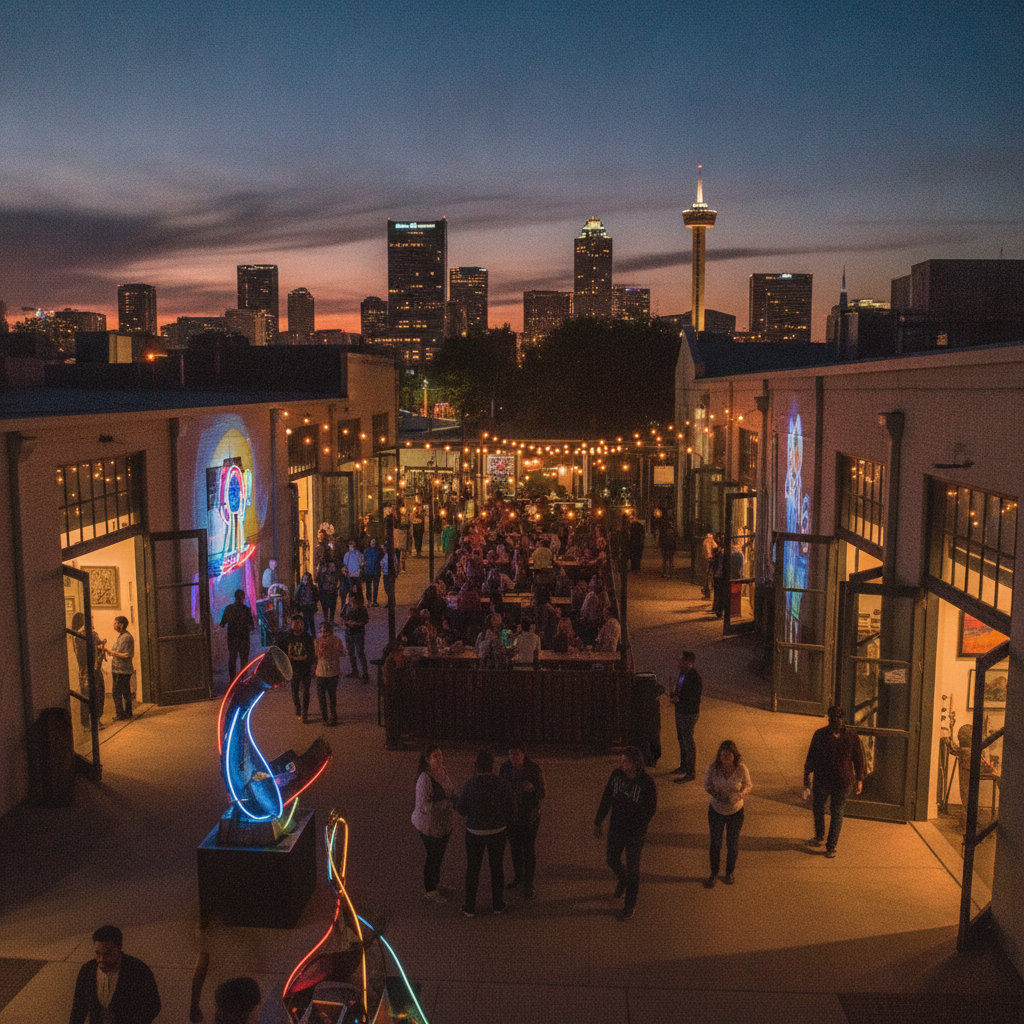
San Antonio: Zoo and Museum District (Nelson Rockefeller Latin American Art, Witte Natural History, McNay first modern art museum Texas), Southtown Arts District (Blue Star Complex, King William Victorian mansions, Tobin Center), Six Flags Fiesta Texas and San Antonio Rodeo (second largest US rodeo, February), Guadalupe Cultural Arts Center and Conjunto Music (Flaco Jimenez, Tejano Festival, Westside), New Braunfels Tubing (Comal River, Schlitterbahn, Gruene Hall), and Full Practical Guide
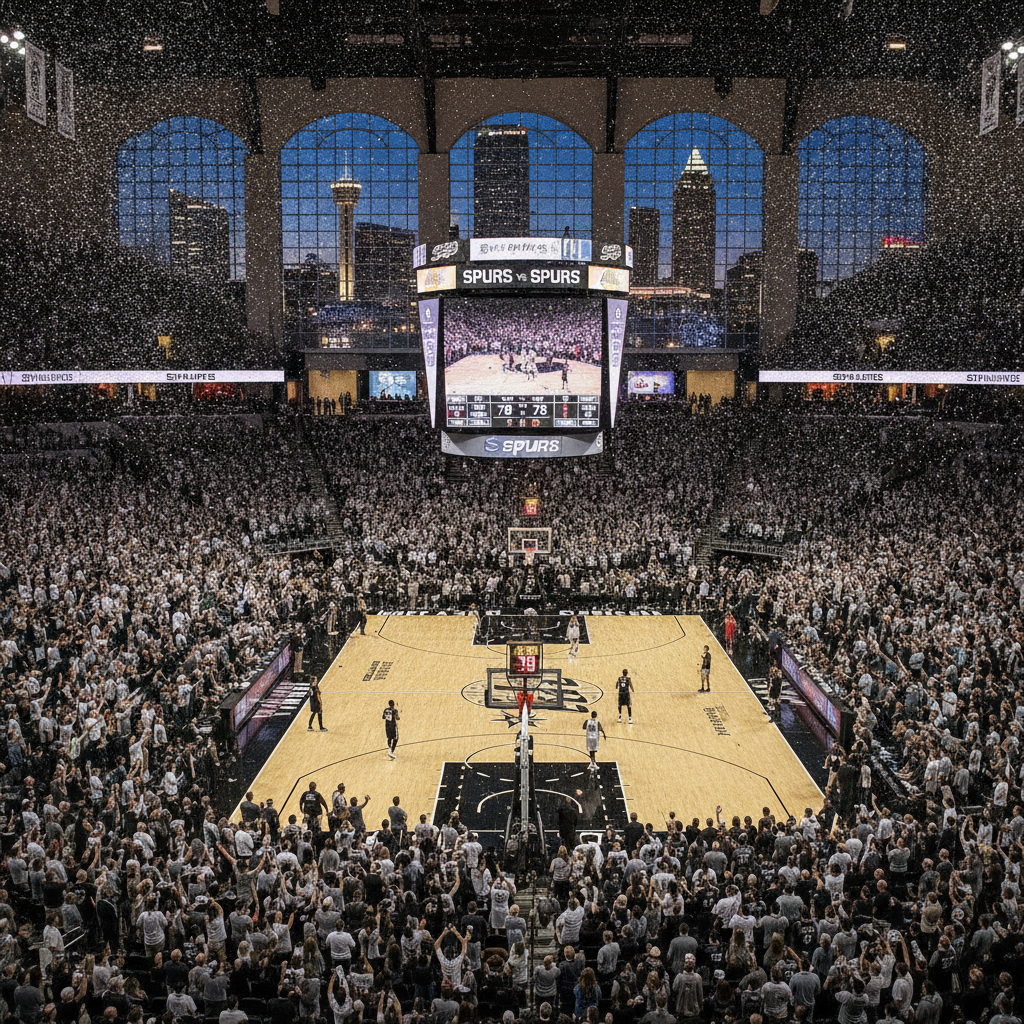
San Antonio: Five NBA Championships, Texas First Modern Art Museum and a 300-Year-Old Spring
San Antonio: America Oldest Church, Confetti Egg Battles at Fiesta and the Maverick Who Named a Word
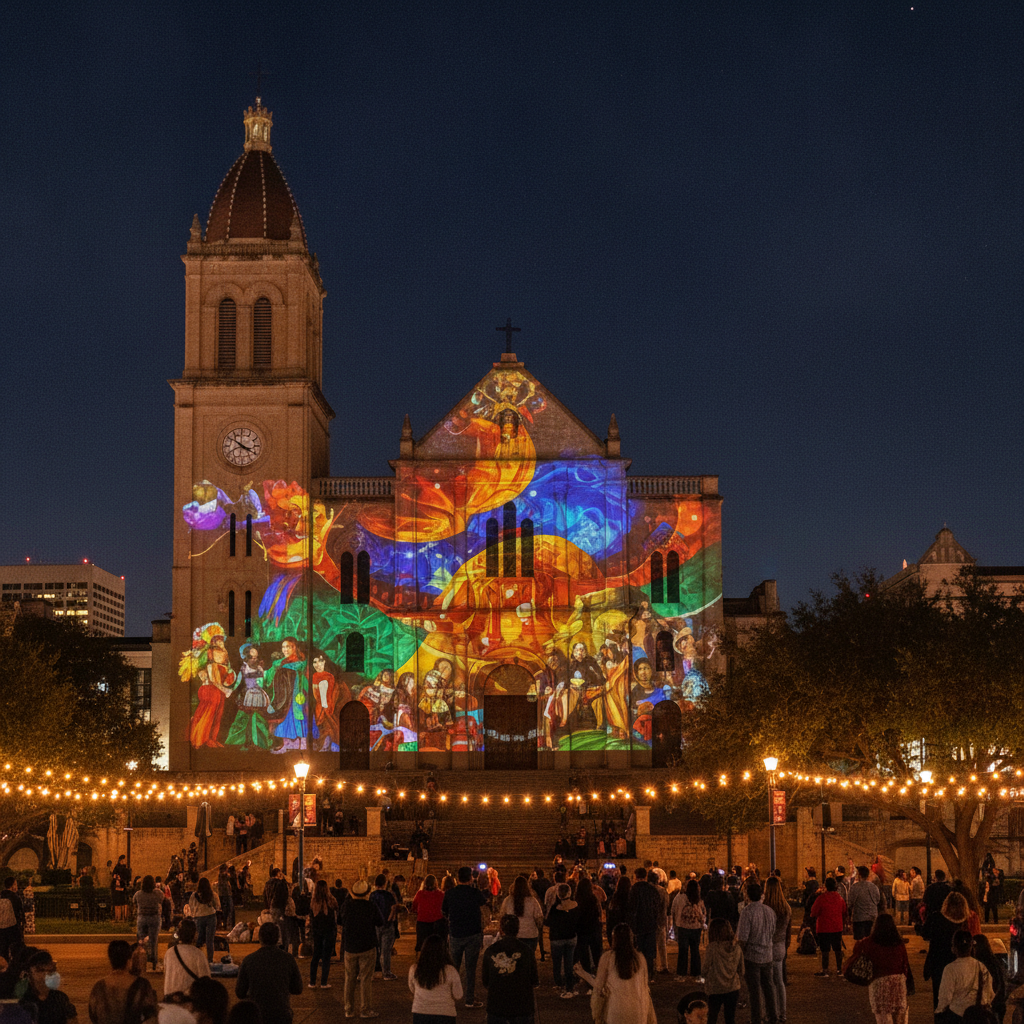
San Antonio: Natural Bridge Caverns and Edwards Aquifer Karst (Texas blind salamander, Comal Springs), Market Square El Mercado (Mi Tierra 24-hour Mexican bakery, puffy taco origin, breakfast taco civic debate), San Fernando Cathedral (oldest operating US cathedral 1749, Alamo defenders buried here, nightly projection show), San Pedro Creek Culture Park (2.2km mosaic tile linear park, 13 cultures of San Antonio), African American Heritage (Juneteenth oldest traditions, Carver Center, Buffalo Soldiers Fort Sam Houston), and 21st Century Growth (Toyota manufacturing, USAA headquarters, Rackspace, San Antonio affordability)
San Antonio: Puffy Taco Capital, the Only Working Spanish Colonial Irrigation Ditch and German Victorian Mansions