San Diego: Tijuana Day Trip (world busiest border crossing, Caesar salad origin 1924, Baja Med cuisine, Tijuana craft beer), USS Midway Museum (longest-serving 20th century carrier, 29 restored aircraft), Torrey Pines State Reserve (rarest North American pine, gliderport paragliding, Del Mar Racetrack), Mission Bay SeaWorld and Ocean Beach, Julian Gold Rush Town (apple pie, Cuyamaca Mountains, Cedar Fire recovery), and San Diego to Los Angeles Pacific Coast Highway Drive
San Diego deeper exploration: Tijuana day trip (300,000 daily border crossings, Caesar salad invented 1924, Baja Med fusion, Latin Americas most vibrant craft beer scene), USS Midway aircraft carrier museum (47 years service, Korean/Vietnam/Desert Storm, 4-acre flight deck, 29 aircraft), Torrey Pines reserve (rarest US pine, cliff paragliding, Del Mar racetrack July-September), Mission Bay aquatic park (4,200 acres, SeaWorld post-Blackfish transformation), Julian mountain town (1870 gold rush, apple orchard tradition, Cuyamaca forests), and San Diego to LA Pacific Coast Highway route guide (Laguna Beach, Huntington Beach Surf City, Long Beach).
- 1
Tijuana Day Trip and the US-Mexico Border Experience
Tijuana (the Mexican border city immediately south of San Diego, population approximately 2 million, the most crossed international border in the world with approximately 300,000 daily crossings at the San Ysidro Port of Entry): the most accessible international border crossing from any major US city, and the most dynamic cultural and culinary frontier in North America. The San Ysidro Port of Entry (the busiest land border crossing in the Western Hemisphere): the pedestrian crossing from the San Ysidro Trolley station (the end of the San Diego Blue Line trolley) takes approximately 10-20 minutes walking into Mexico. The Tijuana food scene: Tijuana is one of the most exciting food cities in Mexico, with a restaurant scene that combines traditional Baja California cuisine (the fresh seafood from the Pacific and the Sea of Cortez), the innovative Mexican craft food movement (the Caesar salad was invented at the Hotel Caesar in Tijuana in 1924 by restaurateur Caesar Cardini), and the largest concentration of craft brewery taprooms in Mexico (the Tijuana craft beer scene is the most vibrant in Latin America). The Avenida Revolucion (the main tourist street of Tijuana): the historic commercial strip with pharmacies, curio shops, taco stands, and the classic margarita bars; now largely overshadowed by the more sophisticated dining and arts scene of the Zona Rio and the Colonia Cacho neighborhoods. The Tijuana gastronomy: the carne asada burritos of Las Ahumaderas (the strip of street carts near the beach in northern Tijuana), the Baja Med cuisine (the fusion of Mexican, Mediterranean, and Asian flavors pioneered by Tijuana chefs), and the fresh seafood tostadas of the Mercado Hidalgo.
- 2
USS Midway Museum and San Diego Navy Heritage
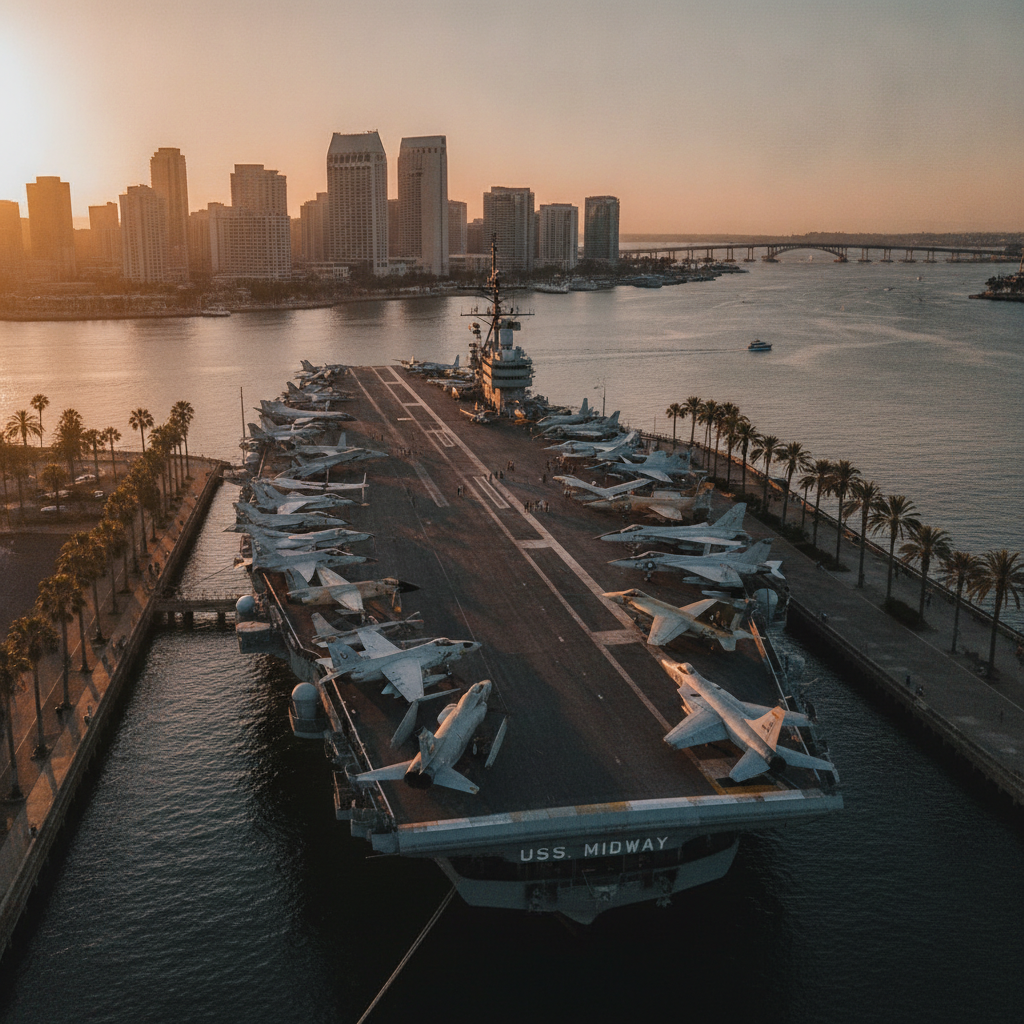
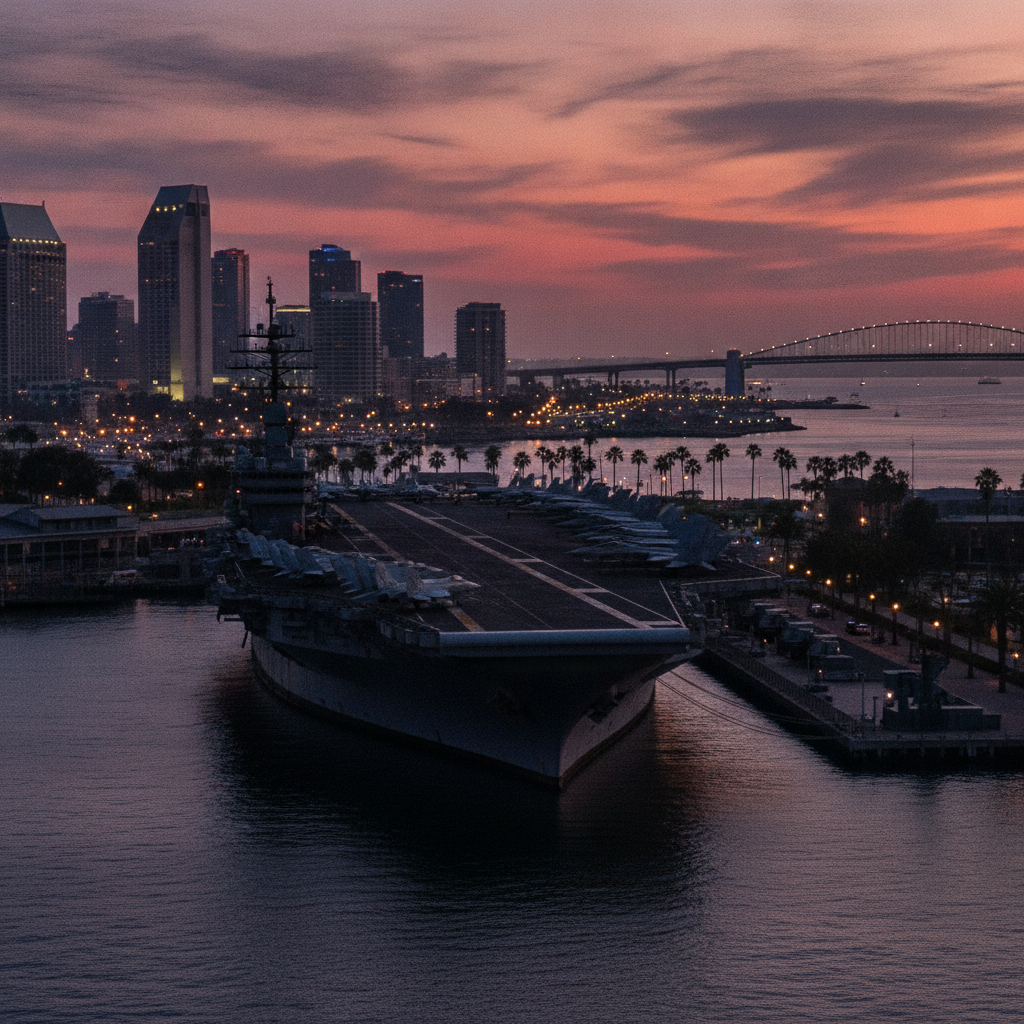
The USS Midway Museum (at 910 N. Harbor Drive, downtown San Diego waterfront): the most visited naval museum in the world, aboard the aircraft carrier USS Midway (CVB-41, later CV-41), which served the US Navy from 1945 to 1992 (47 years, the longest-serving US carrier of the 20th century). The USS Midway history: the first US aircraft carrier too large for the Panama Canal, commissioned 10 September 1945 (just after the end of World War II), operating through the Korean War, the Vietnam War (where the Midway was the platform for numerous critical operations), and Desert Storm (Operation Desert Shield 1990-91). The flight deck (the 4-acre flight deck of the Midway, open to visitors): 29 restored aircraft from multiple eras of naval aviation, including the F/A-18 Hornet, the A-6 Intruder, the SH-60 Seahawk helicopter, and the A-1 Skyraider. The interactive exhibits below decks: the restored crew quarters, the ship navigation bridge, the admiral bridge, and the engine room show the living and working conditions of the 4,500 sailors who served aboard the Midway. The San Diego Naval Museum (at the Cabrillo National Monument Visitor Center, Point Loma): the exhibits on the history of the San Diego naval base, the world largest naval complex. Cabrillo National Monument (at the tip of the Point Loma Peninsula, 12 km from downtown): the monument to Juan Rodriguez Cabrillo (the Portuguese explorer who was the first European to set foot on what is now the West Coast of the United States, on 28 September 1542).
- 3
Torrey Pines State Natural Reserve and North County San Diego
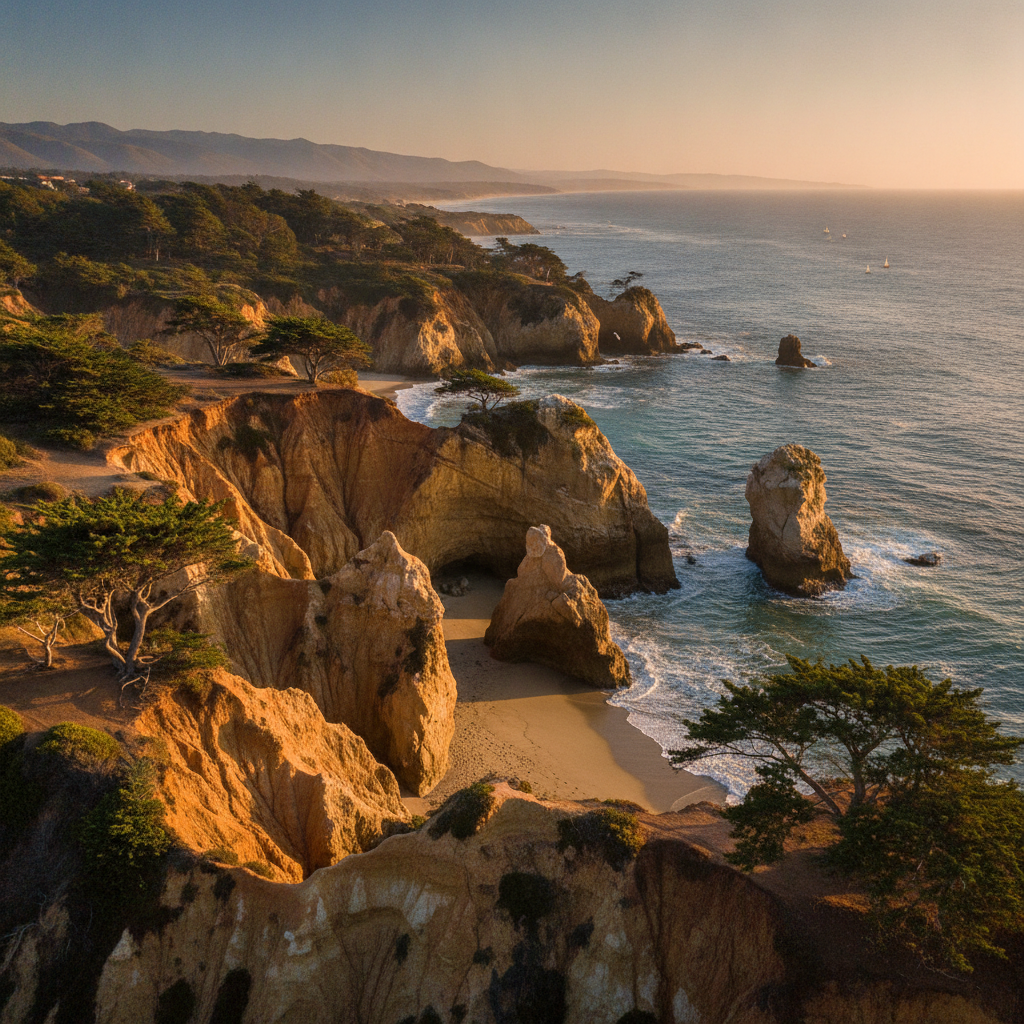
Torrey Pines State Natural Reserve (at the La Jolla-Del Mar coast, 25 km north of downtown San Diego): the most significant coastal wilderness area in the San Diego metro, protecting the rarest pine tree in North America and the dramatic coastal sandstone cliffs. The Torrey pine (Pinus torreyana): the rarest native pine tree in the United States, with only two wild populations (the Torrey Pines State Reserve at the San Diego coast and the Santa Rosa Island population off the Channel Islands), with a combined wild population of approximately 9,000 trees. The Torrey Pines reserve trails: the 8 km trail network through the coastal scrub and torrey pine forest, with the sea-facing cliffs overlooking the Pacific (the viewpoints at the end of the trails provide the best whale watching on the San Diego coast). The Torrey Pines Gliderport (at the cliff edge above the Torrey Pines State Beach): the tandem paragliding and hang gliding launch site on the cliff above the beach, where beginners can fly with instructors from the 130 m cliff down to the beach. Del Mar (the affluent coastal community immediately north of Torrey Pines): the Del Mar Racetrack (the thoroughbred horse racing season, mid-July to mid-September): the Bing Crosby-founded racetrack with the Pacific Ocean visible from the grandstands. The San Diego North County (the communities of Carlsbad, Oceanside, and Vista north of Encinitas): the Legoland California (at Carlsbad, 50 km north of downtown San Diego, the first Legoland park outside Denmark), the Carlsbad Flower Fields (the 50-acre fields of giant tecolote ranunculus in bloom each March-April).
- 4
San Diego Mission Bay and Seaworld
Mission Bay (the 4,200-acre aquatic park in the heart of San Diego, between Pacific Beach and the Mission Beach peninsula): the largest aquatic park in the United States, created by dredging the former tidal mudflats of the San Diego River estuary in the 1940s-1960s. Mission Bay water sports: the calm, protected waters of Mission Bay (sheltered from Pacific swells by the Mission Beach and Ocean Beach peninsulas) provide ideal conditions for waterskiing, jet skiing, wakeboarding, kayaking, windsurfing, and stand-up paddleboarding year-round. The Mission Bay parks: Crown Point, Fiesta Island (the 1.5 km-circumference artificial island used for dog walking, cycling, and the annual Over-the-Line softball tournament), Vacation Isle (the location of the Hilton San Diego Resort), and the 1 km Bonita Cove beach. SeaWorld San Diego (at Sea World Drive on Mission Bay, approximately 10 km from downtown): the marine animal theme park (opened 1964) with the orca shows (the killer whale, Orcinus orca, shows were the primary attraction until the documentary Blackfish (2013) and the resulting public pressure led SeaWorld to phase out theatrical orca shows by 2019). SeaWorld San Diego now focuses on roller coasters, animal encounters, and the Antarctica penguin exhibit. Ocean Beach (OB, the beachfront neighborhood at the south end of Mission Bay, between Mission Beach and Point Loma): the most bohemian and countercultural beach neighborhood in San Diego, with the vintage shops and surf shops of Newport Avenue and the OB Farmers Market (Wednesday evenings, the most eclectic market in San Diego).
- 5
Julian Gold Rush Town and Cuyamaca Mountains
Julian (the small mountain community in the Cuyamaca Mountains, 95 km northeast of downtown San Diego, 1.5 hours via State Route 78 or 79): the most charming day trip destination from San Diego, a historic gold rush town at 1,280 m elevation with the most famous apple pie tradition in Southern California. Julian history: the gold rush began in Julian in 1870 when Mike Julian (a Georgia prospector) discovered placer gold in the creek valleys of the Cuyamaca Mountains. Julian was one of the richest gold mining areas in Southern California, producing approximately USD 15 million in gold over the 20 years of active mining. The Julian Hotel (built 1897): the oldest continuously operating hotel in Southern California. The Julian apple orchards: as the gold ran out in the 1880s, Julian farmers discovered that the Cuyamaca Mountain climate (cool nights, adequate rainfall, and well-drained soils) was ideal for apple orchards. Julian became famous for its apple orchards and the apple pies produced from them; approximately 35 farms and orchards now grow apples in the Julian area. Apple pie season: the autumn harvest (September-November) brings the largest crowds to Julian, with the apple pie shops (Moms Pies, Apple Alley Bakery) selling hundreds of pies per day on peak weekends. The Cuyamaca Rancho State Park (adjacent to Julian): the most significant mountain parkland in San Diego County, with 100 km of hiking trails in the granite and conifer forest of the Cuyamaca Mountains (the most heavily damaged by the Cedar Fire of October 2003, which burned 95% of the park; the forest recovery has been dramatic).
- 6
San Diego to Los Angeles and the Southern California Coast Drive
The San Diego to Los Angeles coastal drive (the Pacific Coast Highway and Interstate 5 corridor, 190 km, 2-3 hours without stops): the most scenic drive in Southern California, passing through a series of distinctive beach communities. The I-5 and Pacific Coast Highway route from San Diego north: Del Mar (the racetrack and Torrey Pines), Encinitas (the surf community with the Swami Point surf break and the self-realization fellowship gardens of Paramahansa Yogananda), Carlsbad (Legoland, the Flower Fields, the historic 1880s Carlsbad Hotel), Oceanside (the beach at the end of Camp Pendleton, with the Mission San Luis Rey 1798, the fourth largest of the California missions), San Clemente (the southernmost Orange County beach town), Dana Point (the harbor town with the Ocean Institute and the Tall Ship Pilgrim), Laguna Beach (the premier California artist colony since the 1920s, with the Pageant of the Masters tableau vivant festival in July-August), Newport Beach (the affluent harbor city with the Balboa Island ferry), Huntington Beach (Surf City USA, hosting the US Open of Surfing), Long Beach (the Queen Mary and the Aquarium of the Pacific), San Pedro (the Los Angeles Harbor and the Fort MacArthur Military Museum). Los Angeles (from downtown San Diego via I-5): 2-3 hours without traffic, 4-5 hours with traffic. This drive is best done at a multi-day pace, stopping in Laguna Beach or Newport Beach for at least one night to enjoy the individual community characters of the Southern California coast.
Walk this route with audio
Stories play automatically as you reach each stop — no tapping needed.
More in san-diego
San Diego: Rarest Pine Tree in America, the World Oldest Sailing Ship and a 7000 Acre City Wilderness
San Diego: Victorian Beach Palace, Free Organ Concerts Since 1915 and Caesar Salad Birthplace
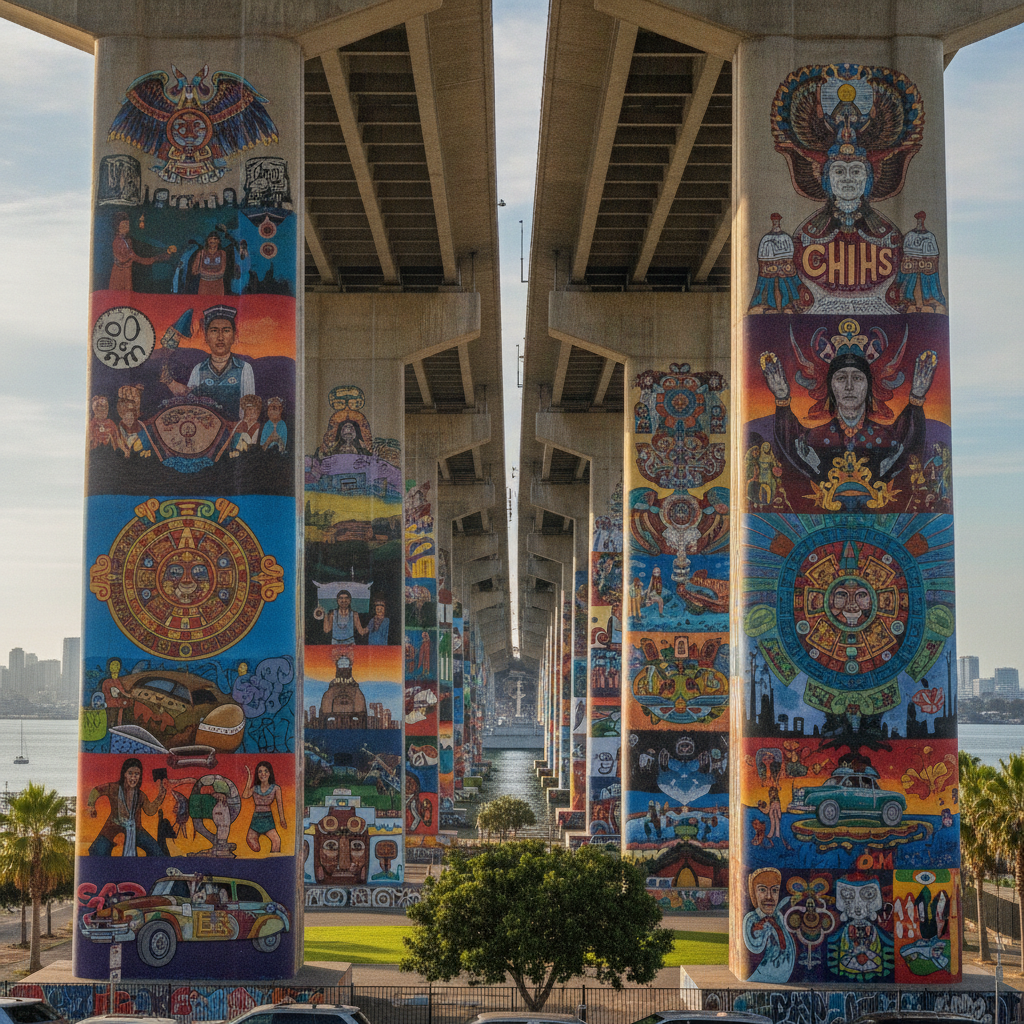
San Diego: Eocene Sea Cliffs, the World Largest Chicano Mural Collection and Bing Crosby Racetrack
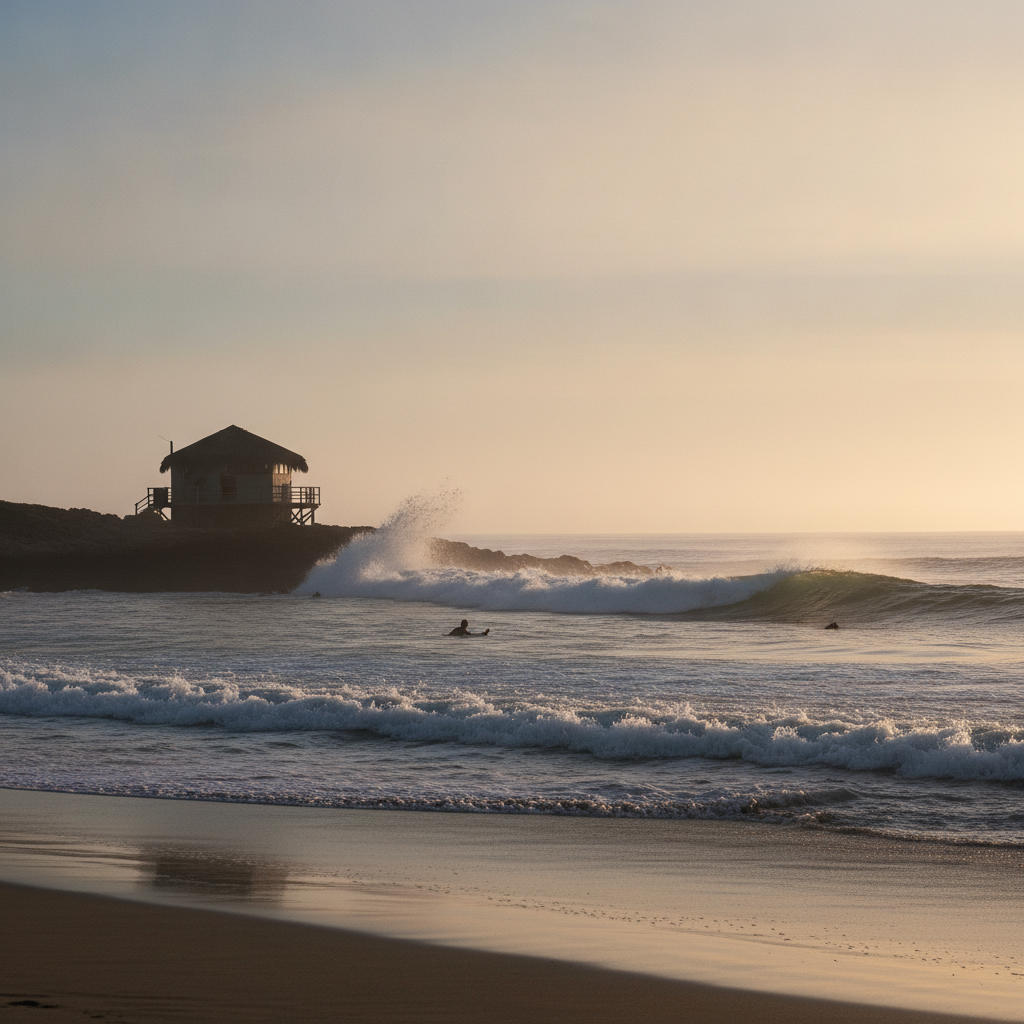
San Diego: Surf Culture (Windansea Beach, Ocean Beach Sunset Cliffs, The Pump House Gang), Old Town San Diego Historic Park (1769 Spanish presidio, Whaley House, Casa de Estudillo), UCSD and Salk Institute Architecture (Louis Kahn masterpiece, Scripps Oceanography, polio vaccine Jonas Salk), Petco Park and Padres Baseball (Tony Gwynn, Trevor Hoffman, Western Metal Supply Building), Hillcrest LGBTQ+ Neighborhood and San Diego Pride, and Practical Guide (Lindbergh Field airport, light rail, beach comparison)
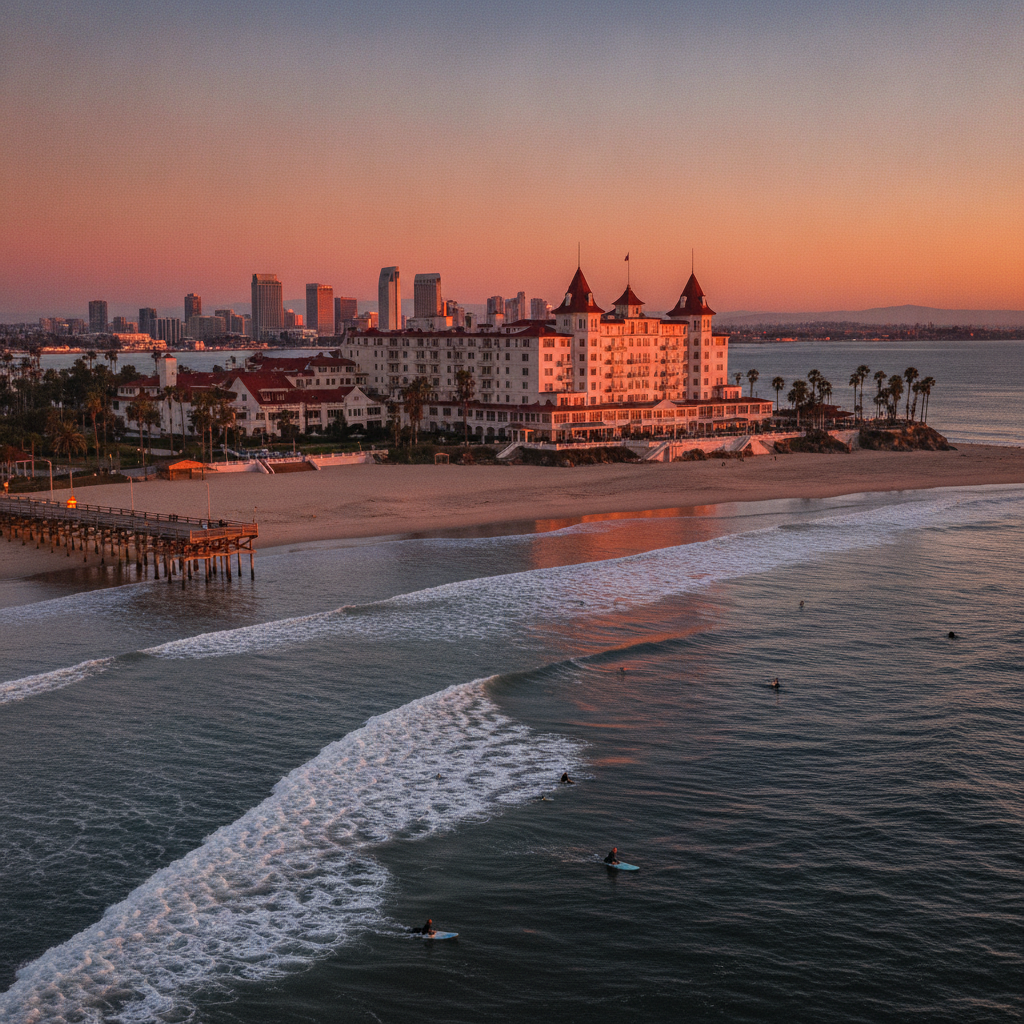
San Diego: Balboa Park Cultural Complex (17 museums, 1915 Spanish Colonial Revival, San Diego Museum of Art), San Diego Zoo (3700 animals, giant pandas returned 2024, Safari Park), Hotel del Coronado (1888 Victorian resort, 14 US presidents, Wizard of Oz inspiration), La Jolla Cove (sea lion colony, Birch Aquarium at Scripps), and Craft Beer Capital USA (180+ breweries, Stone Brewing, Ballast Point USD 1B, fish taco history)