Silver Economy Hacienda Belt Mexican Revolution and the Cristero War in the Guanajuato Bajio: How the Land Conflicts That Killed 90000 Mexicans in the 1920s Shaped the Rural Landscape Around San Miguel de Allende
The landscape around San Miguel de Allende is defined by the hacienda system that the silver mining economy of the colonial period created: large landed estates granted to the mining elite, military commanders, and Creole aristocracy that dominated the agricultural economy of the Bajio from the 17th century through the Mexican Revolution of 1910, concentrating land in the hands of a few hundred families while the indigenous and mestizo agricultural communities that worked the haciendas lived in a debt peonage system that bound them to the land through unpayable debt accumulated at the hacienda tienda de raya, the company store. The Guanajuato state counted approximately 300 haciendas in the late 19th century, including the Hacienda de la Erre, Hacienda de los Pocitos, and dozens of others within the municipal territory of San Miguel that formed the economic backbone of the ranching and grain economy. The Mexican Revolution arrived in Guanajuato in 1910 with the general mobilization that followed Hidalgo's centennial anniversary, and the Bajio was a contested zone between the Villista forces of Pancho Villa operating from the north, the Zapatista influence from the south, and the Constitutionalist army of Carranza that eventually defeated both. The agrarian reform that followed the Revolution broke up the hacienda system through the ejido program, distributing land to peasant communities in communal parcels, but the Bajio haciendas were partially spared by the political calculations of the Callista regime and the subsequent Cristero War of 1926 to 1929, in which the Catholic peasantry of Guanajuato, Jalisco, and Michoacan took up arms against the anti-clerical provisions of the 1917 Constitution, killing approximately 90,000 people in a conflict that Graham Greene described in his novel The Power and the Glory and that remains underrepresented in Mexican national memory.
- 1
Hacienda System and Bajio Colonial Agriculture
The hacienda system of the Guanajuato Bajio, the network of large agricultural estates that supplied the silver mining communities with grain, cattle, and labor, operated from the late 16th century through the Revolution of 1910 as the fundamental economic institution of the rural landscape. The haciendas of the San Miguel area produced wheat, corn, beans, and maguey, grazed cattle and sheep for the leather and wool industries, and operated the distillation of pulque from the giant maguey plants that covered the semi-arid hillsides, generating the pre-tequila alcohol economy that served the mining communities. The labor force of the haciendas was composed of peones acasillados, the resident workers who lived within the hacienda compound in housing provided by the owner, and temporary laborers drawn from the indigenous communities of the surrounding valleys who worked the planting and harvest seasons. The debt peonage system that bound the peones to the hacienda through the tienda de raya created a condition that historians have compared to debt bondage, where the worker's wages were paid in credit at the company store, the prices were set by the owner, and the accumulated debt passed to the worker's children, making escape economically impossible. The hacienda architecture that survives in the San Miguel area, including the chapel towers visible from the highway, the arched entrance portals, and the converted hacienda hotels of Galindo and La Querencia, preserves the physical structure of this economic system in buildings that are now luxury accommodation for the tourist market.
- 2
Mexican Revolution in the Bajio and Guanajuato
The Mexican Revolution reached the Guanajuato Bajio through the simultaneous pressures of the Maderista uprising of 1910 against the Porfiriato, the Villista campaigns that swept through the northern states, and the Zapatista demand for land reform from Morelos that eventually influenced the national agrarian program. Guanajuato state was a Constitutionalist stronghold, with the Carranza government maintaining control of the silver mining operations of Guanajuato city and the agricultural economy of the Bajio through most of the conflict, while Villa's forces raided the northern fringes of the state and the social disruption of the Revolution created the brigandage and local power vacuum that made the rural population's experience of the conflict primarily one of bandit raids rather than ideological battles. The haciendas of the San Miguel area were occupied, abandoned, and in some cases burned during the Revolution, with the owners fleeing to Mexico City or abroad and returning after 1920 to find their properties damaged but not completely destroyed. The post-Revolutionary agrarian reform under Cardenas in the 1930s distributed ejido parcels to the landless communities of Guanajuato, but the political power of the Bajio landowning class and the subsequent Cristero War complicated the implementation, leaving a patchwork of ejido communities, small private holdings, and partially surviving haciendas that characterizes the Guanajuato rural landscape today. The Revolution's centenary in 2010 was celebrated in San Miguel with particular intensity because of Allende's connection, with the renovation of the Casa de Allende museum and the staging of historical commemorations in the Jardin Principal.
- 3
Cristero War and Catholic Resistance
The Cristero War of 1926 to 1929, known in Mexico as La Cristiada, was the armed uprising of Catholic communities in the western Bajio states against the anti-clerical provisions of the 1917 Revolutionary Constitution and the enforcement policies of President Plutarco Elias Calles, who in 1926 ordered the closure of all Catholic schools, the deportation of foreign priests, and the nationalization of church property. Guanajuato, Jalisco, and Michoacan were the heartland of the Cristero resistance, with the rural Catholic peasantry of the Bajio, whose religious devotion was the foundation of their community identity, taking up arms against the government forces under the battle cry of Viva Cristo Rey, Long Live Christ the King. The Cristero War killed an estimated 90,000 people in three years, including both combatants and civilians, with government reprisals against Cristero-supporting villages producing massacres and the public hanging of rebel prisoners along the highways as a deterrent. The war ended through US State Department mediation in 1929 with the Arreglos agreements, in which the church agreed to register its clergy with the government and the government agreed to stop enforcing the anti-clerical provisions actively, a compromise that satisfied neither side but ended the fighting. The legacy of the Cristero War in the San Miguel area is preserved in the oral history of rural communities that remember relatives who fought on both sides, and in the religious intensity of the Catholic practice in the Bajio region that continues to set it apart from the more secular urban culture of Mexico City and the border states.
- 4
Hacienda Hotels and Rural Tourism Around San Miguel
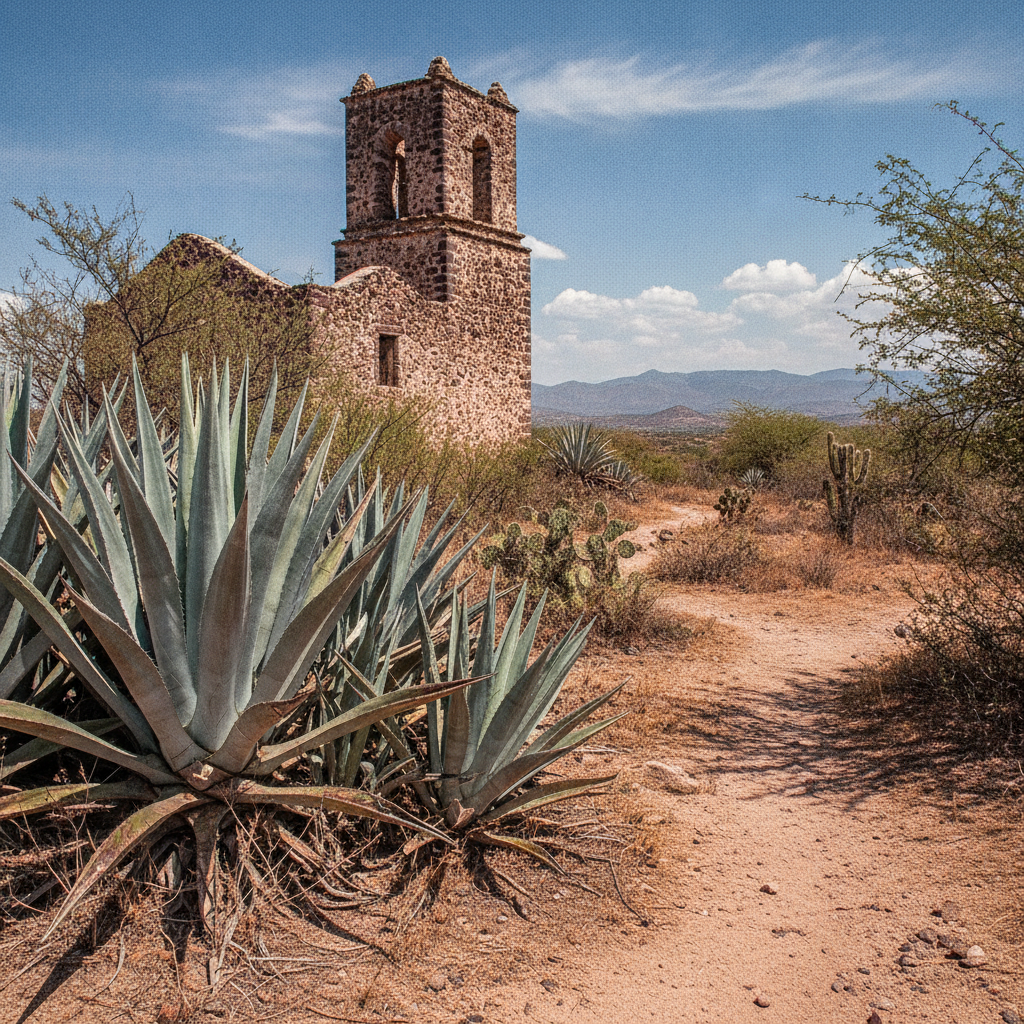
The surviving haciendas of the San Miguel municipal territory and the surrounding Guanajuato and Queretaro states have been converted through private investment to boutique hotels, event venues, and spa resorts that constitute the rural luxury tourism circuit of the Bajio. The Hacienda de Galindo in the Queretaro valley 60 kilometres south of San Miguel, a 16th-century Augustinian hacienda with a colonial church, aqueduct, and original stone architecture, operates as a resort hotel and conference center whose architecture represents the oldest surviving hacienda in the region. The hotel conversions of the Bajio haciendas have preserved the physical structure of the colonial estates while transforming their economic and social function, converting the chapel to a wedding venue, the main house to suites, the stables to a spa, and the agricultural land to decorative gardens and golf courses. The heritage tourism circuit of the haciendas around San Miguel, promoted by the Guanajuato state tourism office, connects San Miguel to the wine and cheese routes of the Queretaro valley, where the Sierra Gorda mountain foothills and the temperate valley climate have supported a boutique wine industry with producers at Cuna de Tierra and Freixenet Mexico. The agave landscape of the hillsides around San Miguel, dominated by the giant maguey salmiana whose centuries-old plants survive the semi-arid climate and whose heart was harvested for pulque production, is now a tourism attraction in itself, with the visual drama of the spiky century plants against the colonial architecture forming the image that photographers use to represent the Bajio plateau landscape.
- 5
Queretaro and the Bajio Regional Network
Queretaro city, 60 kilometres south of San Miguel de Allende on the Mexico City highway, is the economic and political capital of the Bajio region, a UNESCO World Heritage colonial city whose historic center preserves the finest aqueduct in Mexico, the 74-arch Los Arcos aqueduct constructed between 1726 and 1738 to bring water from the Sierra Queretana to the city, and whose combination of colonial heritage and modern industrial economy makes it one of the fastest-growing cities in Mexico. The Queretaro industrial corridor, developed along the highway from Mexico City to the US border, hosts aerospace manufacturing, automotive component production, and technology companies that have made Queretaro a middle-income manufacturing city whose economy complements rather than competes with San Miguel's tourism economy. The historic center of Queretaro, declared a UNESCO World Heritage Site in 1996, is less visited by international tourists than San Miguel but preserves a more authentic colonial urban life, with Mexican families occupying the colonial houses and the tourist infrastructure serving domestic rather than international visitors. The connection between San Miguel and Queretaro by bus service taking one hour makes Queretaro a practical day trip from San Miguel for visitors interested in colonial architecture without the tourist premium, and the Queretaro airport with connections to US cities serves the San Miguel expatriate community as an alternative to the Bajio airport in Leon. The regional food circuit connecting San Miguel to Queretaro includes the wine routes of the Queretaro valley, the cheese producers of the Tequisquiapan and Ezequiel Montes areas, and the regional cuisine of the Queretaro tradition that shares the Bajio ingredient base with San Miguel while developing its own preparations.
- 6
San Miguel de Allende Natural Setting Botanical Garden and Surrounding Landscape
The natural landscape of San Miguel de Allende at 1,900 metres elevation on the Bajio plateau presents the semi-arid ecology of the Mexican highland, a landscape of giant maguey, nopal cactus, mesquite, and the native grasses of the plateau that supports raptors, coyotes, coatis, and the dry-season wildflower blooms that follow the summer rains. El Charco del Ingenio, the 70-hectare ecological reserve of San Miguel whose canyon was created by the former textile mill dam on the Laja River tributary, protects a significant collection of native succulents, a mesquite woodland, and the riparian corridor of the canyon bottom, with the botanical garden section maintaining 1,500 species of cacti and succulents including rare and endangered Mexican endemics. The Presa Allende reservoir 10 kilometres east of San Miguel, constructed in the 1960s for agricultural irrigation, provides fishing, kayaking, and waterbird observation in a highland lake setting where white pelicans winter and the shoreline vegetation hosts herons, egrets, and the migratory shorebirds of the central Mexico flyway. The cycling routes of the San Miguel area, connecting the city to the surrounding ranching communities on dirt roads through the agave and nopal landscape, have been developed by the expatriate community into a recreational infrastructure that serves the mountain bike tourism sector. The morning hot air balloon flights over San Miguel, operating from the Otomi sports complex outside the city, provide the aerial perspective on the colonial city and its surrounding plateau landscape that has made the balloon image the most recognizable photograph of San Miguel de Allende in its international tourism promotion.
Walk this route with audio
Stories play automatically as you reach each stop — no tapping needed.
More in San Miguel de Allende
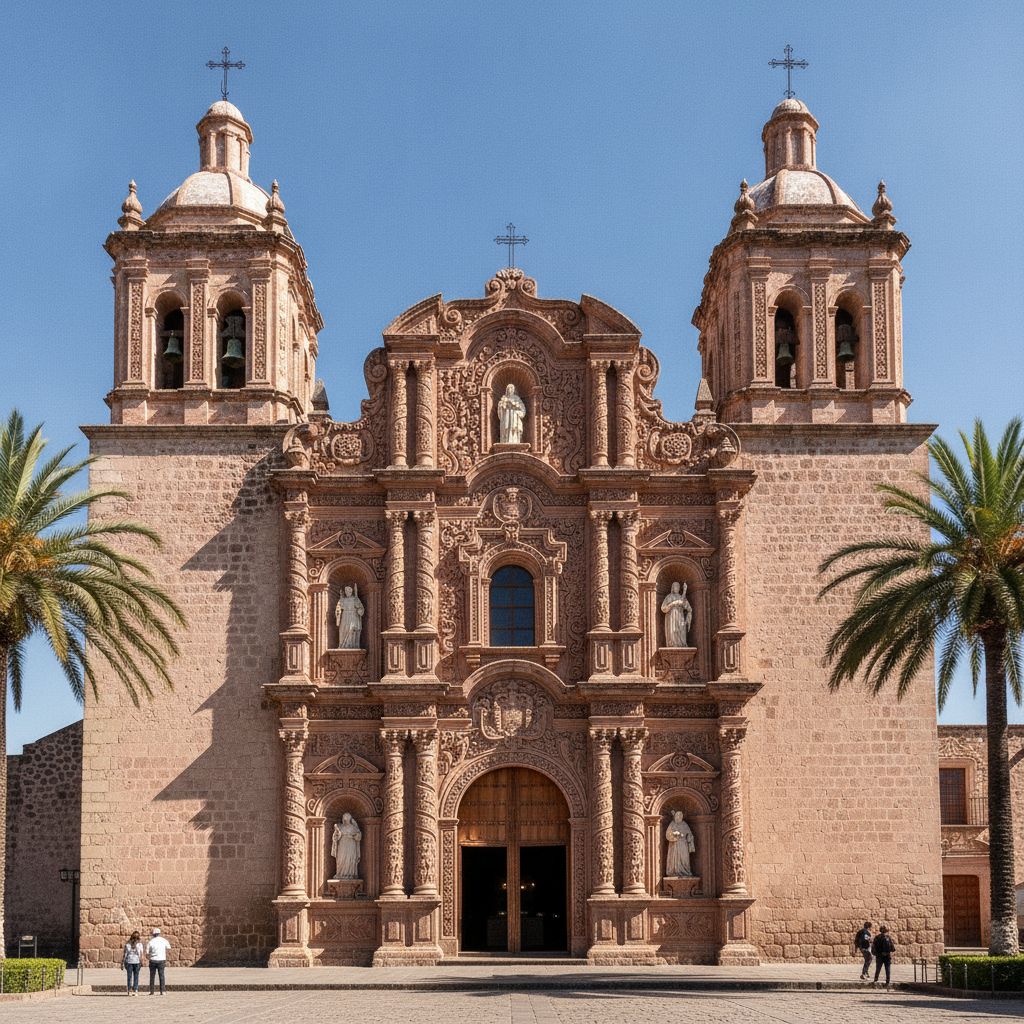
San Miguel de Allende Colonial Architecture Baroque Churches and the Oratorio de San Felipe Neri: Walking the Streets of a UNESCO World Heritage Site Whose Every Cobblestone Was Laid by Otomi and Chichimec Labor
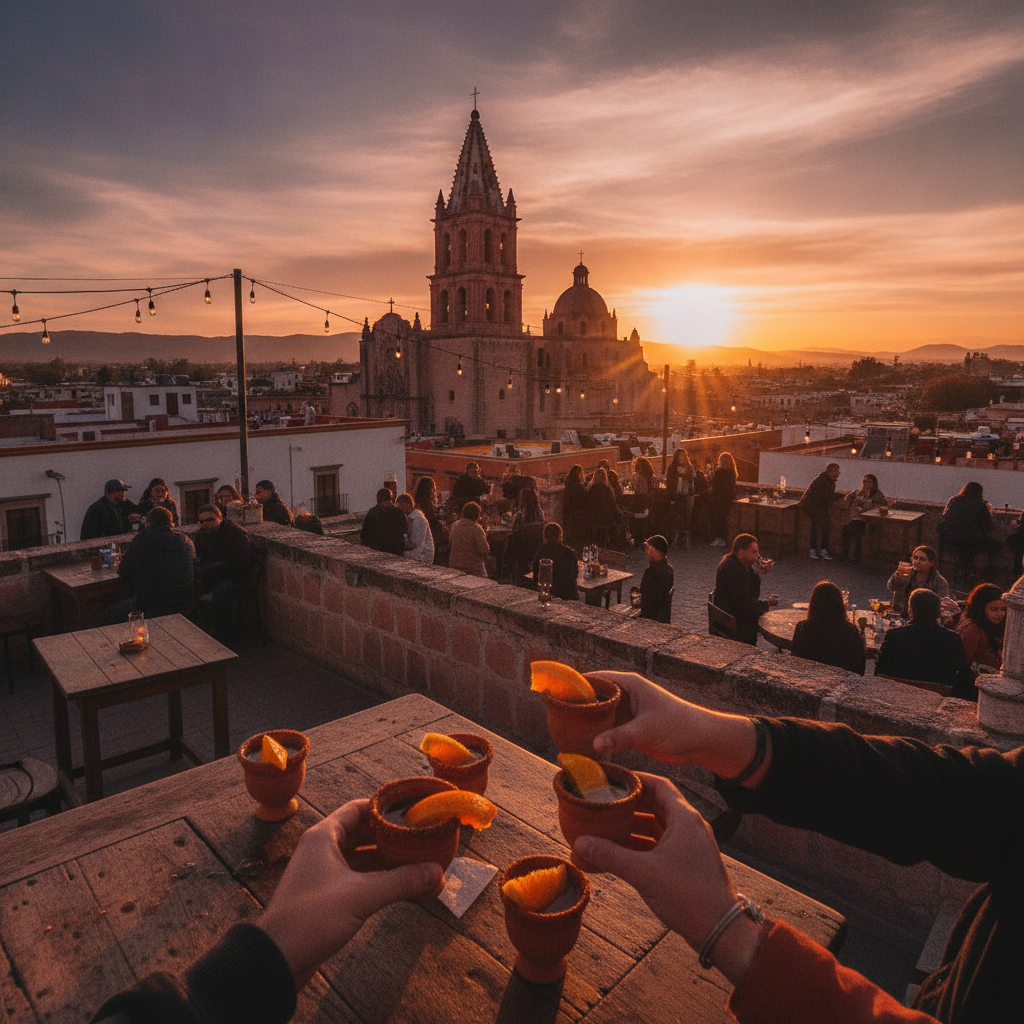
San Miguel de Allende Food Scene and Mezcal Bars: How a City of 170,000 Has More World-Class Restaurants Per Capita Than Any City in Mexico and Why the Vendors in the Tuesday Market Are the Better Story
San Miguel de Allende: The Colonial City That Was Named Best City in the World Seven Times, That Saved Itself from Demolition by Attracting American Art Students in 1938, and Whose Pink Gothic Church Was Designed by an Indigenous Mason Who Had Never Been to Europe
San Miguel de Allende Practical Guide: Getting There Climate When to Visit Neighborhoods Safety Healthcare Language and Living with the Dual Economy of the Most Expensive Colonial City in Mexico
Semana Santa Processions Festivals and the Indigenous Chichimec Raids That Nearly Ended San Miguel de Allende Before It Began: History From the 1542 Founding Through the War of Independence