La Concha Beach, Belle Époque Promenade & San Sebastián Elegance
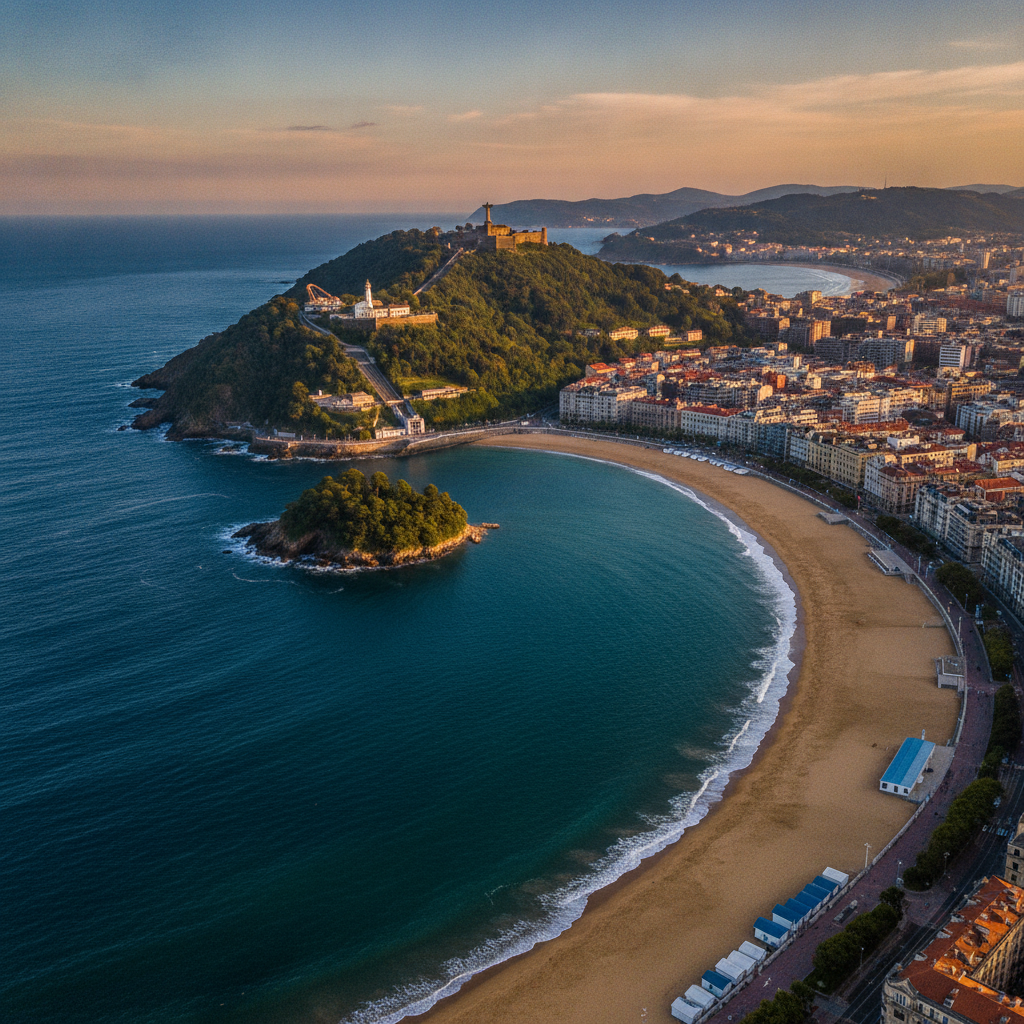
La Concha (the 'Shell' — the main beach of San Sebastián, the semicircular bay beach that is consistently voted the most beautiful urban beach in Europe and one of the most beautiful beaches in the world) and the Paseo de la Concha (the Belle Époque promenade along the beach, the legacy of the period when San Sebastián was the summer resort of the Spanish royal family) together define the elegant, sophisticated character of the city.
- 1
Playa de la Concha — Europe's Most Beautiful Urban Beach
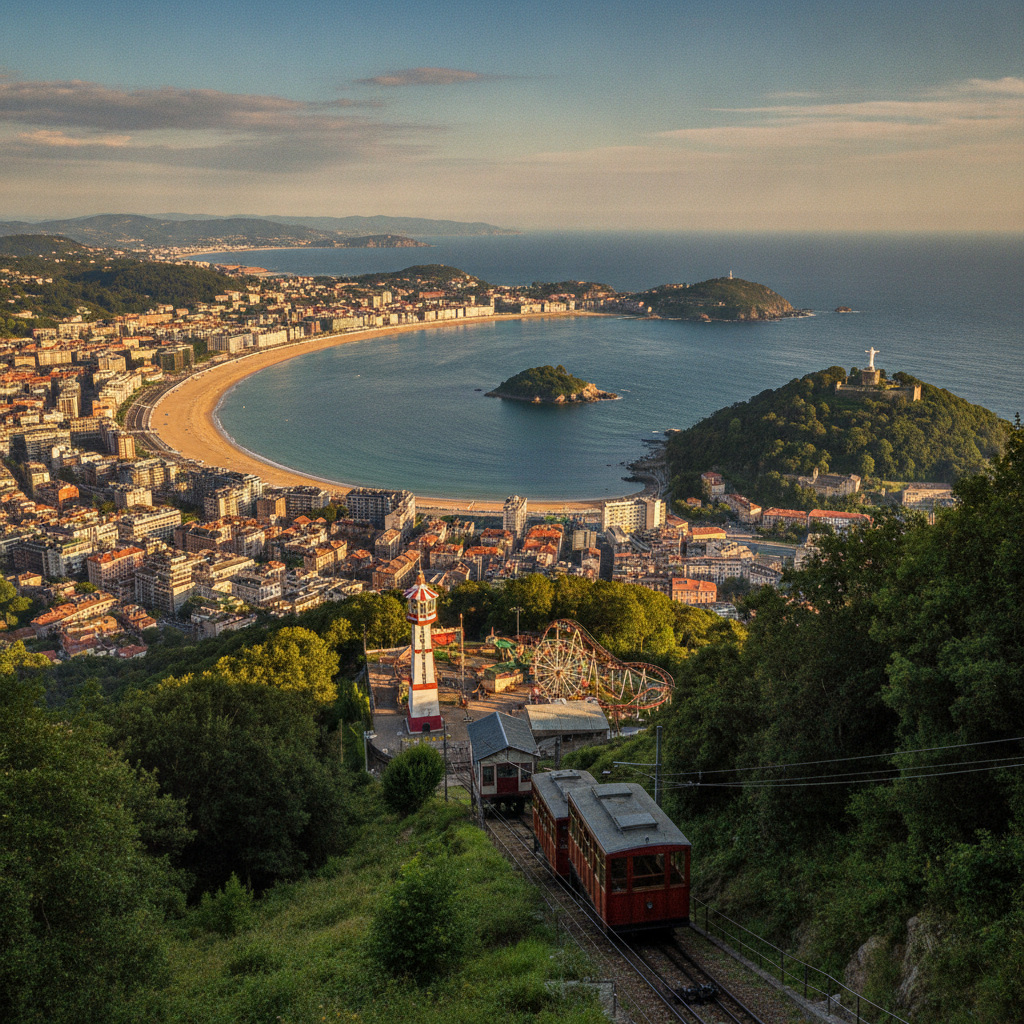
The Playa de la Concha (the 'Shell Beach' — the main beach of San Sebastián, the crescent-shaped sandy beach of 1.35 km length at the base of the Bahía de la Concha): the beach (the Playa de la Concha — the fine golden sand beach, the beach that is consistently rated the most beautiful urban beach in Europe in the travel magazine and tourism surveys: the beach backed by the elegant cast-iron balustrade and the white painted changing cabin structures ('casetas de baño') of the Belle Époque era, the beach that faces south into the Bay of Biscay, the beach that is sheltered from the Atlantic swell by the mountain headlands on either side (Monte Urgull to the east and Monte Igueldo to the west) and by the Isla de Santa Clara in the centre of the bay): the Isla de Santa Clara (the 'Saint Claire Island' — the small wooded island in the centre of the Bahía de la Concha, accessible by boat from the beach in the summer season, the island with the lighthouse (the small lighthouse on the west point of the island) and the summer café, the island that is the most distinctive feature of the La Concha bay panorama): the swimming (the La Concha beach as a swimming beach — the beach where the San Sebastián residents swim from June to September, the water temperature of the La Concha bay ranging from 14°C (57°F) in February to 22°C (72°F) in August (the water of the Bay of Biscay warmer in summer than the beaches of northern France or the UK at the same latitude)): the beach sports (the beach sports of La Concha — the 'paddle surf' (the stand-up paddleboarding), the sea kayaking, and the beach volleyball that are the most popular sports on the La Concha beach in the summer season).
- 2
Paseo de la Concha — San Sebastián's Belle Époque Promenade
The Paseo de la Concha (the promenade along the northern edge of the La Concha beach — the curved promenade that follows the arc of the beach from the base of Monte Urgull (the eastern end) to the base of Monte Igueldo (the western end)): the Belle Époque promenade (the Paseo de la Concha — the promenade designed in the late 19th century to serve as the public promenade of the royal and aristocratic summer society of San Sebastián: the promenade with the cast-iron balustrade (the elegant cast-iron railings that separate the promenade from the beach below), the street lamps, the benches, and the café terraces that line the promenade): the Miramar Palace (the 'Palacio Miramar' — the British Neo-Tudor summer palace on the Paseo de la Concha, built in 1893 for Queen Maria Christina of Austria (the regent of Spain) and designed by the British architect Selden Wornum, the palace that was the royal summer residence of the Spanish royal family from 1893 to 1936 (when the Spanish Civil War ended the royal summer court in San Sebastián)): the Casino (the 'Gran Casino de San Sebastián' — the elegant casino building on the Paseo de la Concha, built in 1887 in the French Baroque style, the casino that served as the social hub of the Belle Époque San Sebastián summer season (the casino where the European aristocracy and the Spanish upper class gambled and socialized in the Belle Époque period), now used as the seat of the San Sebastián City Hall): the Hotel María Cristina (the most luxurious hotel in San Sebastián — the Hotel María Cristina on the Río Urumea, built in 1912 in the French Baroque style, the hotel that hosts the San Sebastián International Film Festival and that has accommodated the most famous guests of the festival since 1953).
- 3
Zurriola Beach & San Sebastián Surf Culture
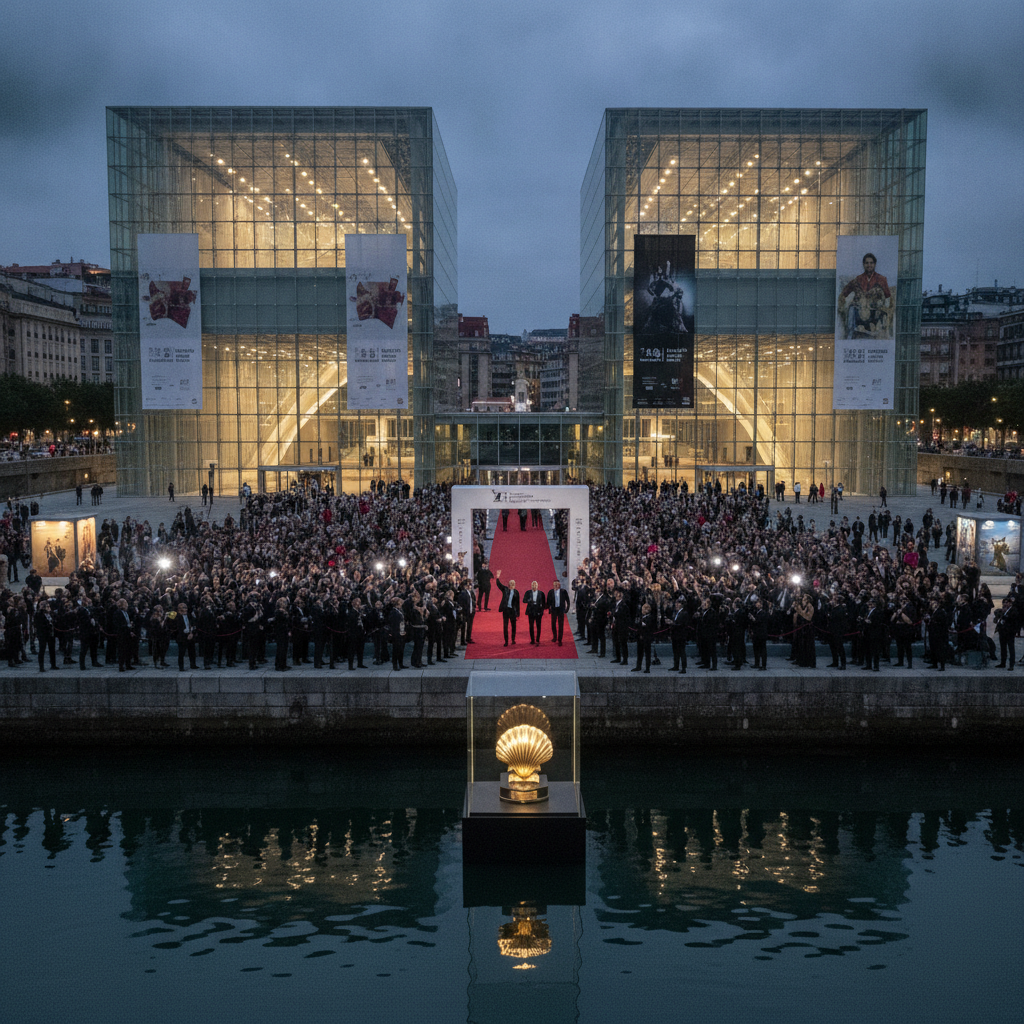
Playa de Zurriola (the 'Zurriola Beach' — the beach on the Gros neighbourhood of San Sebastián, immediately east of the Río Urumea, the surf beach of San Sebastián): the surf culture (the surf culture of the Zurriola beach — the beach that is the surf capital of northern Spain, the beach where the Atlantic swell breaks regularly enough to make it one of the best surf beaches in Europe (the swell arriving from the Bay of Biscay hitting the Zurriola beach with the consistent beach break waves that attract the San Sebastián surf community and the travelling surfers from across Europe)): the Kursaal Congress Centre (the 'Kursaal' — the congress centre and concert hall on the mouth of the Río Urumea adjacent to the Zurriola beach, designed by the Spanish architect Rafael Moneo (b.1937 — the 1996 Pritzker Prize laureate) and opened in 1999: the two crystalline glass cubes ('cubos de cristal') of the Kursaal — the two translucent glass and steel box structures of different sizes that sit on the edge of the Urumea estuary like two beached icebergs, the most striking work of contemporary architecture in San Sebastián): the Gros neighbourhood (the Gros — the neighbourhood east of the Río Urumea and the Zurriola beach, the young, bohemian neighbourhood of San Sebastián with the highest concentration of independent cafés, vintage clothing shops, and alternative culture venues in the city): the Donostia International Physics Center (the research institute on the Zurriola beach — the DIPC, the physics research centre that is part of the San Sebastián cluster of world-class scientific institutions).
- 4
San Sebastián International Film Festival — Zinemaldia
The Zinemaldia (the 'San Sebastián International Film Festival' — the annual international film festival held in San Sebastián in the third week of September, one of the oldest and most prestigious film festivals in the world): the festival (the Zinemaldia — founded in 1953, the festival that has been held annually since 1953 (with only a few interruptions in the early years), the festival that is classified by the International Federation of Film Producers Associations (FIAPF) as an 'A-category' film festival (the same category as Cannes, Venice, and Berlin)): the Golden Shell (the 'Concha de Oro' — the 'Golden Shell', the top prize of the San Sebastián International Film Festival, the prize awarded to the best film in the official selection: the prestigious prize named for the shell motif of the La Concha bay (the scallop shell — the symbol of the Camino de Santiago pilgrimage route that passes through the Basque Country)): the festival history (the most significant films in the history of the San Sebastián International Film Festival — the festival that has premiered and awarded prizes to many of the most important films of the post-war European cinema (the early Akira Kurosawa films, the early Stanley Kubrick films, and many significant Spanish and Latin American films): the Honorary Donostia Award (the 'Premio Donostia' — the lifetime achievement award of the San Sebastián International Film Festival, the award given to the most distinguished international film actors and directors): the Hotel María Cristina (the festival hotel — the venue for the red carpet arrivals and the press conferences of the San Sebastián International Film Festival).
- 5
Txoko — The Basque Private Gastronomic Society
The Txoko (the 'little corner' in Basque — the private all-male gastronomic club of the Basque Country, the most distinctive institution of Basque culture and the social institution that underlies the extraordinary gastronomic culture of San Sebastián): the history (the Txoko — the institution that originated in San Sebastián in the early 19th century, the private social club of men who gathered to cook together and share food and drink: the earliest txoko societies ('sociedades gastronómicas') founded in San Sebastián in the 1840s-1870s, the institutions that provided the men of the working and middle classes with a private space to eat, drink, and socialize outside of the home (the traditional Basque woman's domain) and the public bar): the culture (the Txoko culture — the defining institution of Basque male social culture, the club that is the primary social circle of the Basque man: the txoko societies with membership ranging from 30 to 200 men, the membership passed from father to son, the club with its private kitchen (equipped with the finest professional cooking equipment), the cellar (stocked with the txakoli, the Rioja, and the cider), and the dining room: the txoko as the incubator of Basque culinary culture (the txoko societies being the environment in which the Basque men learned to cook and developed the cooking skills that later became the professional skills of the Basque chef class — the cooking tradition that produced the chefs of the Nueva Cocina Vasca movement)): the women (the exclusion of women from the txoko — the most controversial aspect of the txoko institution: the traditional txoko societies admitting men only, with women admitted only as guests on specific occasions (the 'día de la mujer' — the 'women's day', the one day per year when women are admitted to the txoko as guests): the tradition that is slowly changing in the 21st century, with some txoko societies now admitting women as full members, but the all-male tradition remaining the norm in the majority of txoko societies).
- 6
San Sebastián's Architecture & the Ensanche
The Ensanche (the 'Extension' — the 19th-century planned expansion of San Sebastián, the Belle Époque urban grid that was laid out north and west of the Parte Vieja after the demolition of the medieval city walls in 1863): the Belle Époque architecture of the Ensanche (the building facades of the Ensanche — the elegant French-influenced Belle Époque apartment buildings of the Ensanche streets (the Calle Prim, the Calle Hernani, and the Boulevard/Alameda del Boulevard — the main commercial street of the Ensanche), with the wrought-iron balconies, the carved stone ornament, and the mansard roofs that give the Ensanche its Parisian character): the Anoeta sports complex (the Estadio Municipal de Anoeta — the 39,500-capacity football stadium of Real Sociedad (the San Sebastián football club) in the Anoeta neighbourhood, now known as the 'Reale Arena' (after the naming rights sponsorship)): the Kursaal (the Kursaal Congress Centre and concert hall by Rafael Moneo — the most significant work of contemporary architecture in San Sebastián, the building on the mouth of the Río Urumea that has become the new symbol of the city): the contemporary San Sebastián (the contemporary architecture and the urban renewal of San Sebastián — the 'Donostia 2016' program (the San Sebastián candidacy for the European Capital of Culture 2016 — the city awarded the European Capital of Culture 2016 title, the program that drove major urban renewal and cultural investment in San Sebastián in the 2011-2016 period)).
Walk this route with audio
Stories play automatically as you reach each stop — no tapping needed.
More in san-sebastian
Pasajes Harbour, Hondarribia & the Basque Border Coast
Sagardotegi, Basque Cider Houses & Seasonal Traditions
Monte Igueldo, Monte Urgull & San Sebastián's Panoramic Views
Basque Culture, Euskara & the Ancient Identity of San Sebastián
Pintxos, Old Town & San Sebastián's World-Class Gastronomy