Santa Fe: Immersive Art, Ancient Cliff Dwellings and Opera Under Mountain Skies
Lose yourself in the original Meow Wolf House of Eternal Return, climb the hand-carved footholds at Bandelier cliff dwellings, browse 1,000 Indigenous artists at the world largest Indian Market, bird-watch at the Randall Davey canyon sanctuary, hear opera under New Mexico stars, and ski a 12,000-foot mountain above the oldest US capital.
- 1
Meow Wolf House of Eternal Return
Meow Wolf House of Eternal Return at 1352 Rufina Circle, opened in 2016 in a former bowling alley with significant funding from George R.R. Martin, is the flagship installation of the Santa Fe-based immersive art collective founded in 2008. The 20,000 square foot installation contains over 70 rooms built by over 100 artists into a narrative environment where visitors explore a Victorian house whose interior opens into interdimensional spaces. The House of Eternal Return has drawn over 3 million visitors since opening and fundamentally changed how the art world thinks about immersive narrative environments. Meow Wolf, which began as an artist collective doing underground installations in warehouses, grew into a 100 million dollar company while maintaining artist-centered ownership structures. The Santa Fe installation remains the most critically praised of the three Meow Wolf locations.
- 2
Bandelier National Monument
Bandelier National Monument, 40 miles northwest of Santa Fe in the Jemez Mountains, preserves the ancestral homeland of the Pueblo people who lived in the Pajarito Plateau region from roughly 1150 to 1550 AD. The monument contains over 33,000 acres including Frijoles Canyon, where cliff dwellings and a large pueblo ruin called Tyuonyi are accessible by trail. Visitors can climb original hand-and-toe holds carved into the canyon walls to access cave rooms directly. The canyon floor contains a perennial stream, cottonwood groves, and a remarkable density of archaeological sites representing centuries of occupation. Bandelier was named for Adolph Bandelier, the Swiss-American ethnologist who documented the ruins in 1880. The monument headquarters building was constructed by the Civilian Conservation Corps between 1933 and 1940 using local volcanic tuff.
- 3
Santa Fe Indian Market
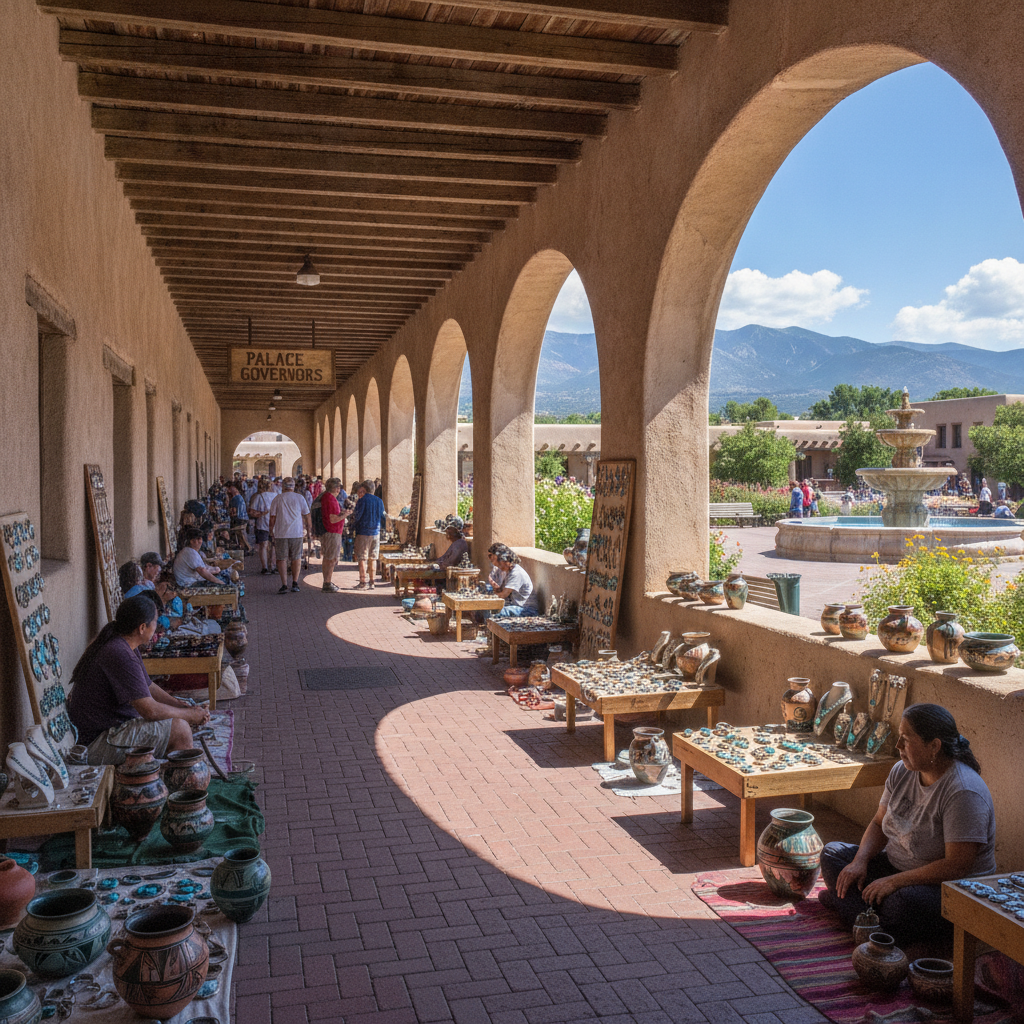
The Santa Fe Indian Market, held each August since 1922 on the Santa Fe Plaza, is the largest and most prestigious Native American art market in the world, presenting the work of over 1,000 Indigenous artists from over 220 tribes across two days. The event is produced by the Southwestern Association for Indian Arts and draws over 150,000 visitors from over 40 countries. Artists compete for cash awards across categories including jewelry, pottery, textiles, paintings, sculpture, and photography. The market has made Santa Fe the global center of the Native American fine art market, with galleries specializing in Indigenous work generating an estimated 200 million dollars annually in the city. Canyon Road alone, the primary gallery corridor, contains over 100 galleries, the highest gallery density per block of any street in the United States.
- 4
Randall Davey Audubon Center
The Randall Davey Audubon Center and Sanctuary, at the mouth of Santa Fe Canyon on Upper Canyon Road, protects 135 acres of riparian and upland habitat within the city limits and is one of the most visited Audubon centers in the American Southwest. The property, once the home of artist Randall Davey who acquired it in 1920, includes a historic sawmill dating to 1847 that is one of the oldest industrial buildings in New Mexico. The sanctuary supports over 190 bird species and provides critical movement corridor between the Sangre de Cristo Mountains and lower elevation habitats. Guided bird walks operate on weekend mornings and trails are open daily. The Rio Santa Fe runs through the property and the cottonwood and willow gallery forest along the stream provides nesting habitat for species including the yellow-breasted chat and broad-tailed hummingbird.
- 5
Santa Fe Opera
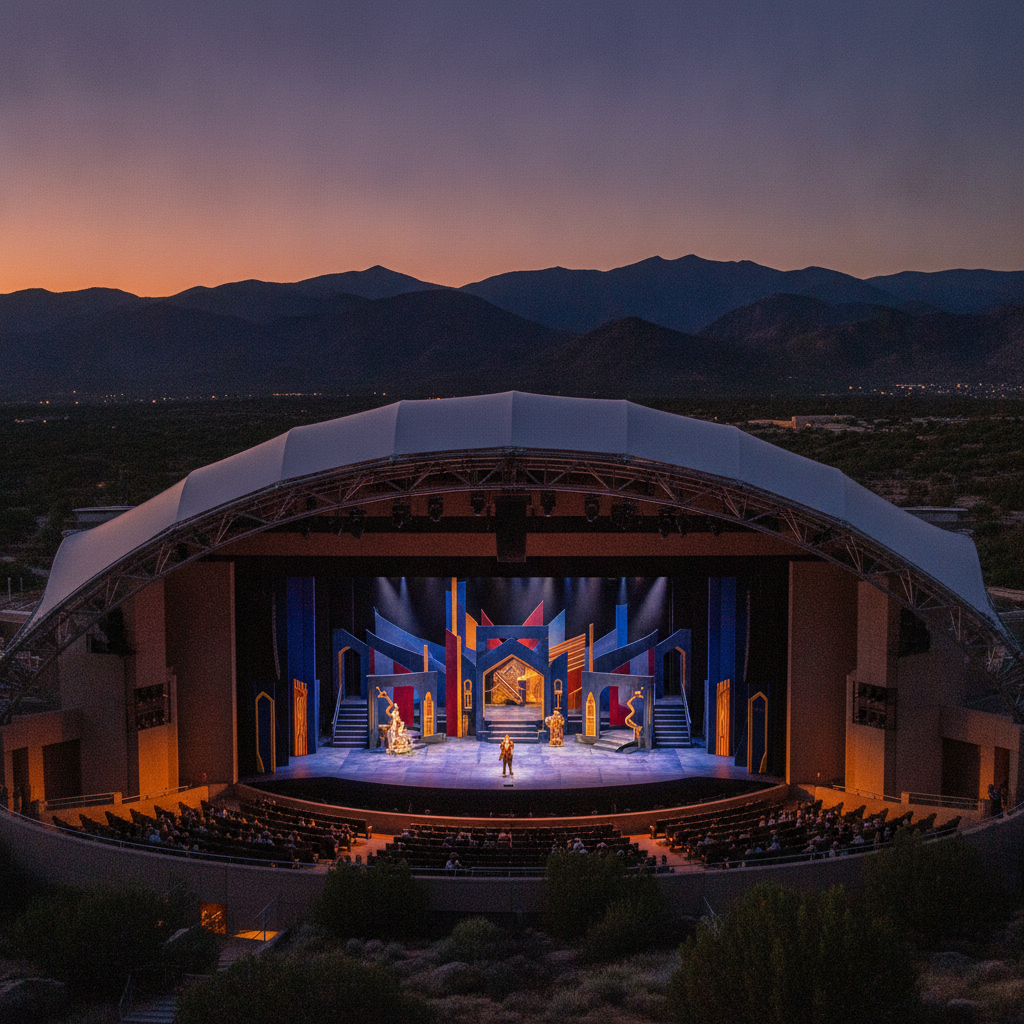
The Santa Fe Opera, founded by John Crosby in 1957, operates a partially open-air theater in the Tesuque foothills 7 miles north of downtown that seats 2,128 and is designed to incorporate the landscape, sky, and weather into the performance experience. The theater, rebuilt after fires in 1967 and 1997, has a distinctive white steel roof structure that shelters the audience while leaving the sides open to mountain breezes and the occasional monsoon storm. The Opera presents five productions each summer, typically a mix of standard repertoire and rarely performed works, drawing audiences from across the country. The preperformance tailgate in the parking lot, where patrons set up elaborate picnic spreads at intermission and before curtain, is a celebrated Santa Fe social ritual. The Opera has premiered over 25 American operas and is considered one of the finest summer opera festivals in the world.
- 6
Ski Santa Fe and Sangre de Cristo Mountains
Ski Santa Fe, at the top of Hyde Park Road 16 miles northeast of the Plaza, reaches 12,075 feet elevation and offers 660 acres of terrain across 77 runs served by seven lifts. The altitude makes it one of the highest ski areas in the United States, with the summit elevation exceeding most Colorado resorts. The Sangre de Cristo Mountains, named Blood of Christ for their red alpenglow at sunset, form the backdrop to Santa Fe and contain the Santa Fe Watershed, a protected area that supplies the city water supply. The Pecos Wilderness, 30 miles east of Santa Fe, covers 223,000 acres of high-mountain wilderness with peaks exceeding 13,000 feet, alpine lakes, and elk herds that are visible from trailheads accessible within an hour of downtown Santa Fe.
Walk this route with audio
Stories play automatically as you reach each stop — no tapping needed.
More in Santa Fe
Santa Fe: Roswell, Chaco Culture, Turquoise Trail, Billy the Kid, Farm-to-Table Dining, and City Demographics
Santa Fe: Pueblo Revolt, Taos Pueblo, High Road, Santa Fe Opera, and Adobe Architecture
Santa Fe: SITE Santa Fe, Nuclear Heritage, Santa Fe Trail, O'Keeffe at Abiquiu, Acequia Culture, and Economy
Santa Fe: Plaza, Canyon Road, O'Keeffe, Loretto Chapel, Bandelier, and New Mexican Cuisine