Santa Fe: SITE Santa Fe, Nuclear Heritage, Santa Fe Trail, O'Keeffe at Abiquiu, Acequia Culture, and Economy
Santa Fe: SITE Santa Fe (1995 contemporary art biennial 5,110sqft former beer warehouse, Agnes Martin 1912-2004 Taos, International Folk Art Market July 60+ countries USD 5-6M single weekend, Museum of International Folk Art 130,000 objects 100 countries Girard Wing 106,000 toys/folk art panoramic dioramas, Wheelwright Museum Navajo 1937 hogan-shaped), nuclear (LANL 1943 Oppenheimer born 1904 7,300-foot mesa isolated road, 3,000 scientists Hans Bethe Enrico Fermi Feynman Bohr as Nicholas Baker Edward Teller 4 Nobel laureates, Bradbury Museum Little Boy Fat Man replicas free, Manhattan Project National Park 2015, Trinity Site open April October first Saturday only public ground zero), Santa Fe Trail (1,285km Independence Missouri to Santa Fe 1821-1880, William Becknell 1787-1856 first commercial 1821 same year Mexico independence, Kearny 1,600 soldiers August 18 1846 Mexican governor Armijo fled no battle, Treaty Guadalupe Hidalgo February 2 1848 USD 15M largest territorial transfer US history), O'Keeffe Abiquiu (village 80km north 1,859m Chama River, home open tours max 12 USD 35-75 April-November, house purchased 1945 USD 10 Catholic Church painting trade archbishop, Pedernal Mesa God told me if I paint it enough I could have it ashes scattered 1986, Coelophysis quarry Ghost Ranch 1947 220M years hundreds skeletons), acequia (Arabic al-saqiya Moorish 700 years Iberian Peninsula, introduced 17th century New Mexico, majordomo commissioners prior appropriation law predates US statehood 250 years, Rio Grande ran dry Albuquerque 2021-2022 first time recorded history), economy (85,000 residents median home USD 600K+ 2024 top 20 most expensive US, median household income USD 55K unaffordable, Canyon Road shifted blue-chip from local, Hispanic Native American workforce commutes Espanola Chimayo, Living Wage Ordinance 2004 first New Mexico USD 14.60/hour, state government 13,000 employees largest sector).
- 1
SITE Santa Fe and the Contemporary Art Scene
SITE Santa Fe (at 1606 Paseo de Peralta, Santa Fe, established 1995): the contemporary art biennial (and now triennial) held in a 5,110-square-foot former beer warehouse, one of the most prestigious contemporary art exhibitions in the American West, presenting major international artists in a curated thematic exhibition updated every 2-3 years. SITE Santa Fe has hosted solo exhibitions by Bruce Nauman, Agnes Martin (born March 22, 1912, Macklin, Saskatchewan; died December 16, 2004, Taos, NM), Robert Rauschenberg, Franz West, and major thematic group shows including international contemporary artists. The International Folk Art Market (held annually in July on Museum Hill, Santa Fe, established 2004): the largest international folk art market in the world, with artisans from 60+ countries selling directly to the public, generating approximately USD 5-6M in direct sales in a single weekend and representing the folk art traditions of Africa, Latin America, Asia, and the Middle East. The Museum of International Folk Art (at 706 Camino Lejo, Museum Hill, Santa Fe, established 1953, donated by Florence Dibell Bartlett): the largest folk art museum in the world, with 130,000+ objects in the permanent collection from approximately 100 countries -- the Girard Wing (donated by the architect and designer Alexander Girard -- born May 24, 1907, New York; died December 31, 1993, Santa Fe) contains the most comprehensive collection of toy and folk art in any American museum, with 106,000 objects displayed in the signature panoramic diorama installation. The Wheelwright Museum of the American Indian (at 704 Camino Lejo, Museum Hill, established 1937 by Mary Cabot Wheelwright and Navajo singer Hastiin Klah): the museum of Navajo ceremonial art and contemporary Native art, housed in a hogan-shaped (octagonal) building designed to replicate the form of the traditional Navajo dwelling.
- 2
New Mexico's Nuclear and Military Heritage - From Trinity to Today
Los Alamos National Laboratory (at Los Alamos, NM, 55 km northwest of Santa Fe): the primary U.S. nuclear weapons design laboratory, established in 1943 as Site Y of the Manhattan Project by J. Robert Oppenheimer (born April 22, 1904, New York; died February 18, 1967, Princeton, NJ) on a remote 7,300-foot mesa chosen by Oppenheimer for its isolation and its single road access (making security easier). LANL employed 3,000 scientists, engineers, and support staff by July 1945 -- the most concentrated gathering of physics talent in human history, including Hans Bethe, Enrico Fermi, Richard Feynman, Niels Bohr (working under the alias Nicholas Baker), Edward Teller, Seth Neddermeyer, and 4 future Nobel Prize winners. The Bradbury Science Museum (at 1350 Central Avenue, Los Alamos, NM, operated by LANL, free admission): the most accessible public overview of the Manhattan Project and contemporary nuclear weapons science, with replicas of the Little Boy uranium bomb and the Fat Man plutonium bomb, original Manhattan Project artifacts, and a hands-on science education center. The Manhattan Project National Historical Park (established November 10, 2015, with units in Los Alamos, NM; Hanford, WA; and Oak Ridge, TN): the national park preserving the most significant sites of the Manhattan Project, including the V-Site (the assembly facility where the Trinity device was assembled), the Gun Site (where Little Boy was tested), and Fuller Lodge (the 1928 log building that served as the Los Alamos Ranch School dining hall and later the Manhattan Project social center -- now open for tours). The Trinity Site (on White Sands Missile Range, 250 km south of Santa Fe, open to the public twice per year -- the first Saturday of April and October): the only opportunity to visit the actual ground zero of the first nuclear explosion, marked by a black lava monument and still mildly radioactive.
- 3
The Santa Fe Trail and the American Conquest of the Southwest
The Santa Fe Trail (the 1,285-km overland trade route from Independence, Missouri, to Santa Fe, New Mexico, operating 1821-1880 when the Atchison, Topeka and Santa Fe Railway made it obsolete): the most commercially significant wagon route in American history during its 60-year operation, carrying trade goods worth approximately USD 5M per year (in 1840s dollars) between the Missouri frontier and the Mexican province of Nuevo Mexico -- the primary mechanism of American commercial and eventually political penetration into the Spanish and later Mexican Southwest. The trail was pioneered by William Becknell (born 1787, Amherst County, Virginia; died April 30, 1856, Milam County, Texas), who made the first successful commercial trip from Missouri to Santa Fe in 1821 (arriving November 16, 1821, the same year Mexico gained independence from Spain and opened its borders to American trade) and returned the following year with wagons instead of pack mules, establishing the wagon road. The American conquest: General Stephen W. Kearny (born August 30, 1794, Newark, NJ; died October 31, 1848, St. Louis) led the Army of the West (approximately 1,600 soldiers) from Fort Leavenworth, Kansas along the Santa Fe Trail in June-August 1846, arriving at the Palace of the Governors on August 18, 1846 and claiming New Mexico for the United States without a battle -- the Mexican governor Manuel Armijo had fled south. The Treaty of Guadalupe Hidalgo (signed February 2, 1848): transferred New Mexico (along with California, Nevada, Utah, Arizona, Colorado, and Wyoming) to the United States for USD 15M, the largest single territorial transfer in U.S. history. The End of the Trail Museum (at the New Mexico History Museum, 113 Lincoln Avenue, Santa Fe) and the Santa Fe Trail Center in Larned, Kansas document the trail history.
- 4
Georgia O'Keeffe's Abiquiu - The Artist and Her Landscape
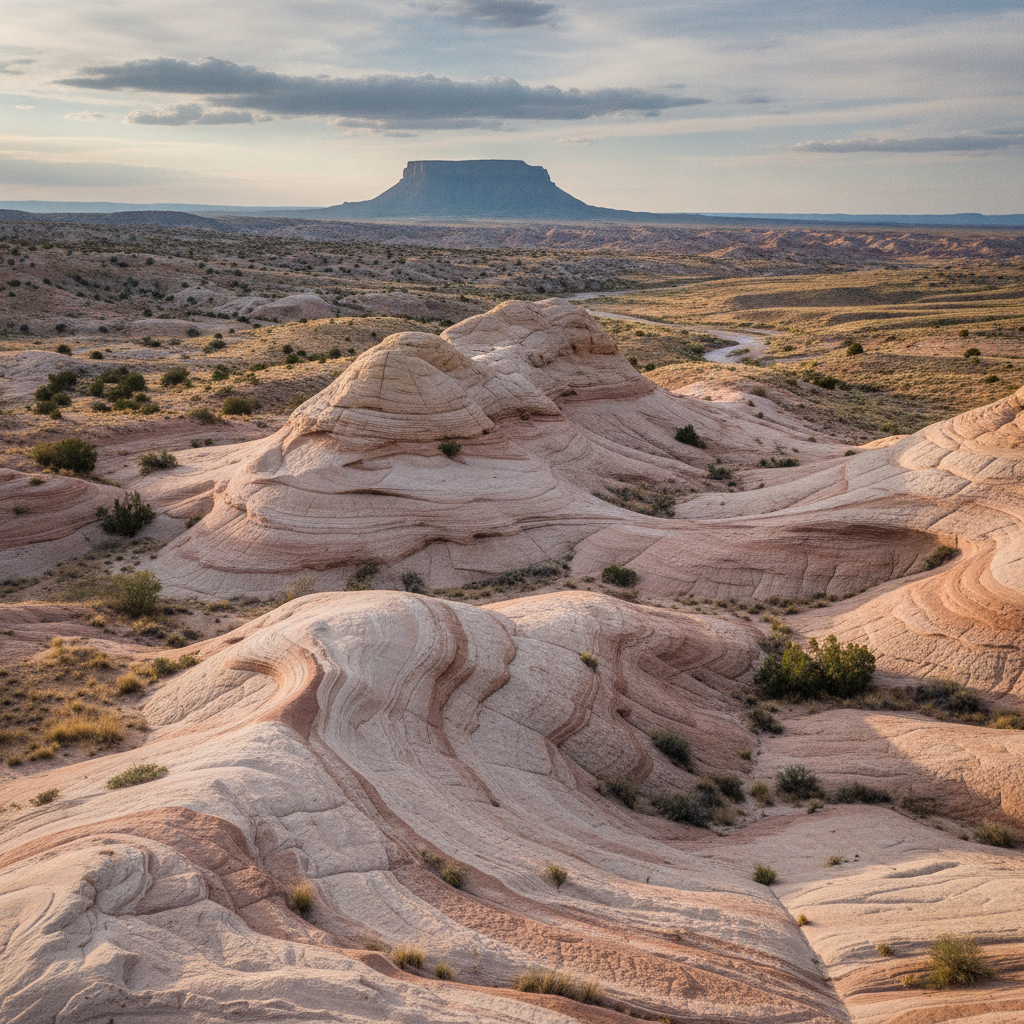
Abiquiu, New Mexico (the village at NM-84, 80 km north of Santa Fe, at 1,859 m on the Chama River): the village where Georgia O'Keeffe lived from 1949 until the last years of her life (when failing eyesight forced her to move to Santa Fe, where she died March 6, 1986), the landscape that produced her most celebrated mature paintings, and the site of the Georgia O'Keeffe Home and Studio (open for guided tours by reservation through the Georgia O'Keeffe Museum, maximum 12 visitors per tour, running April through November, tickets USD 35-75 per person). The landscape O'Keeffe painted: the white and pink Piedra Lumbre (Shining Rock) badlands, the red and orange Chinle Formation cliffs, the flat-topped Pedernal Mesa (which O'Keeffe called God told me if I painted it enough I could have it and which she requested be scattered on after her death in 1986), and the dry Chama River valley. The Abiquiu house: O'Keeffe purchased the ruined 1700s Spanish Colonial adobe compound in Abiquiu from the Catholic Church in 1945 for USD 10 (paying USD 10 for a property with a sacred well, after negotiations with the archbishop that included a painting trade) and spent the next four years restoring it with adobe craftsmen, finally moving in full-time in 1949. Ghost Ranch (20 km north of Abiquiu on US-84): the 21,000-acre guest ranch and conference center where O'Keeffe had her summer studio from 1934 to 1984 (the last year she was physically able to make the trip from Abiquiu), now operated by the Presbyterian Church (USA) with year-round educational and retreat programs. The Coelophysis quarry at Ghost Ranch (discovered 1947 by paleontologist Edwin Colbert of the American Museum of Natural History): the mass grave of hundreds of Coelophysis bauri specimens 220 million years old.
- 5
The Acequia Culture and Water Rights in the American Southwest
The acequia (from Arabic al-saqiya, the water carrier -- a direct linguistic inheritance from the 700 years of Moorish presence in the Iberian Peninsula, 711-1492 CE): the traditional irrigation ditch system introduced to the American Southwest by Spanish Colonial settlers in the 17th century, based on Moorish water-sharing technology, now legally recognized under New Mexico state law as a prior appropriation water system with its own governance structure (the acequia association, with elected majordomo and commissioners) that predates American statehood by over 250 years. The Santa Fe River acequia: the original acequia madre (mother ditch) of Santa Fe, the primary irrigation ditch established approximately 1610 and running from the Santa Fe River through the historic garden neighborhoods, still technically a legal water delivery system though Santa Fe has been served by municipal water since the 19th century. New Mexico water law: the Prior Appropriation doctrine (first in time, first in right) combined with the acequia governance system makes New Mexico water law the most complex and historically layered in the United States, with water rights dating to Spanish Colonial grants that take legal precedence over subsequent American settlers -- a frequent source of litigation. The Rio Grande Compact (signed 1938 between Colorado, New Mexico, and Texas): the interstate compact governing the apportionment of Rio Grande water, requiring New Mexico to deliver a specific volume of water to Texas annually at the Elephant Butte Reservoir. The water crisis: the Rio Grande ran dry in Albuquerque for extended periods in 2021 and 2022 due to a combination of drought, upstream diversions, and climate change -- the first time in recorded history -- highlighting the existential water crisis facing the Southwest.
- 6
Santa Fe Economy, Real Estate, and the Gentrification Question
Santa Fe's economy and cost of living: the city of 85,000 residents has one of the most bifurcated economies of any American city of comparable size, with a large population of extremely wealthy second-home owners and retirees (Santa Fe is consistently among the top 10 U.S. destinations for affluent retirees from California, New York, and Texas) driving a real estate market wildly out of scale with local wages. The Santa Fe real estate market: the median home price in Santa Fe exceeded USD 500,000 in 2022 and USD 600,000 in 2024 -- making it one of the 20 most expensive housing markets in the United States and dramatically unaffordable relative to local incomes (the median household income in Santa Fe County is approximately USD 55,000, compared to a statewide median of USD 52,000 and a national median of USD 74,000). The gentrification of the arts: Canyon Road galleries have increasingly shifted from presenting local New Mexico artists toward international blue-chip art that attracts the wealthy collector market, squeezing out the working local artists who originally defined the Santa Fe art scene. The local workforce: the hospitality, restaurant, and service economy of Santa Fe depends heavily on a largely Hispanic and Native American workforce that commutes from Espanola, Chimayo, and Pojoaque (where housing is affordable) to Santa Fe (where it is not) -- creating significant social stratification in a city with a complex colonial history. The Santa Fe Living Wage Ordinance (enacted 2004, the first of its kind in New Mexico): established the first local minimum wage in New Mexico above the federal minimum, now approximately USD 14.60 per hour. The state capital economy: New Mexico state government (the Governor, Legislature, courts, and agencies based in Santa Fe) employs approximately 13,000 people and is the single largest economic sector in the city, providing stability that the art and tourism economy does not.
Walk this route with audio
Stories play automatically as you reach each stop — no tapping needed.
More in santa-fe
Santa Fe: Roswell, Chaco Culture, Turquoise Trail, Billy the Kid, Farm-to-Table Dining, and City Demographics
Santa Fe: Pueblo Revolt, Taos Pueblo, High Road, Santa Fe Opera, and Adobe Architecture
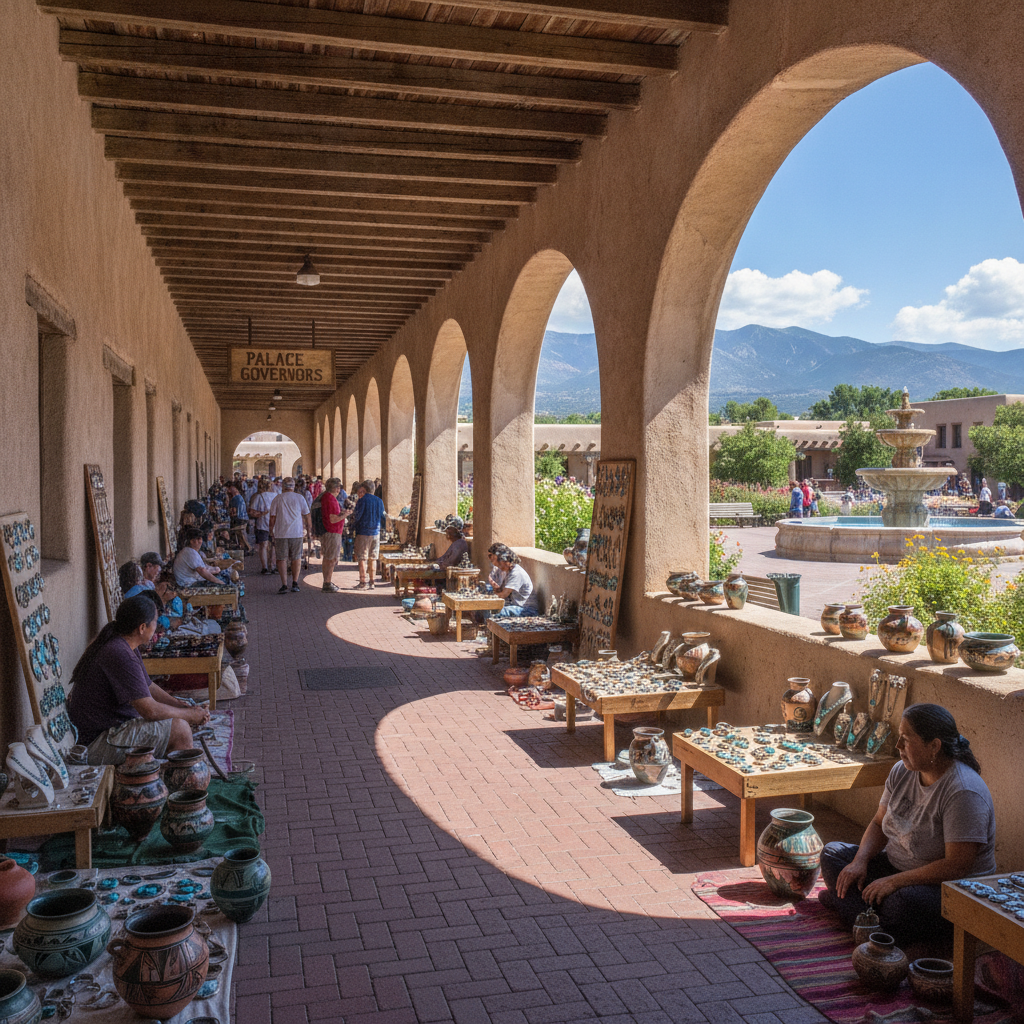
Santa Fe: Plaza, Canyon Road, O'Keeffe, Loretto Chapel, Bandelier, and New Mexican Cuisine
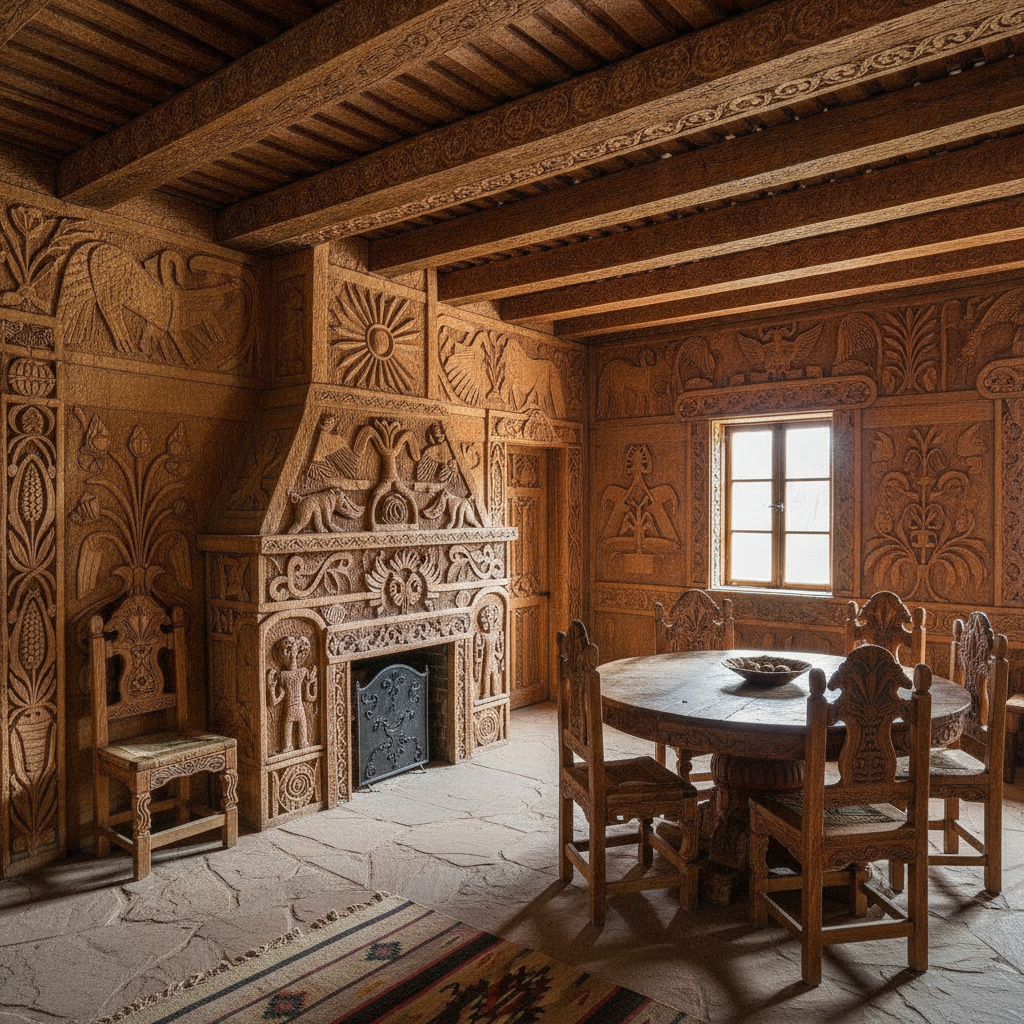
Santa Fe: Literary Colony, Museum of Art, Chimayo Weaving, Railyard District, Mountain Life, and Practical Tips
Santa Fe: O Keeffe Country, Ancient Trade Routes and Complexity Science