Barrio Lastarria, Bellas Artes & Santiago's Cultural Neighbourhood
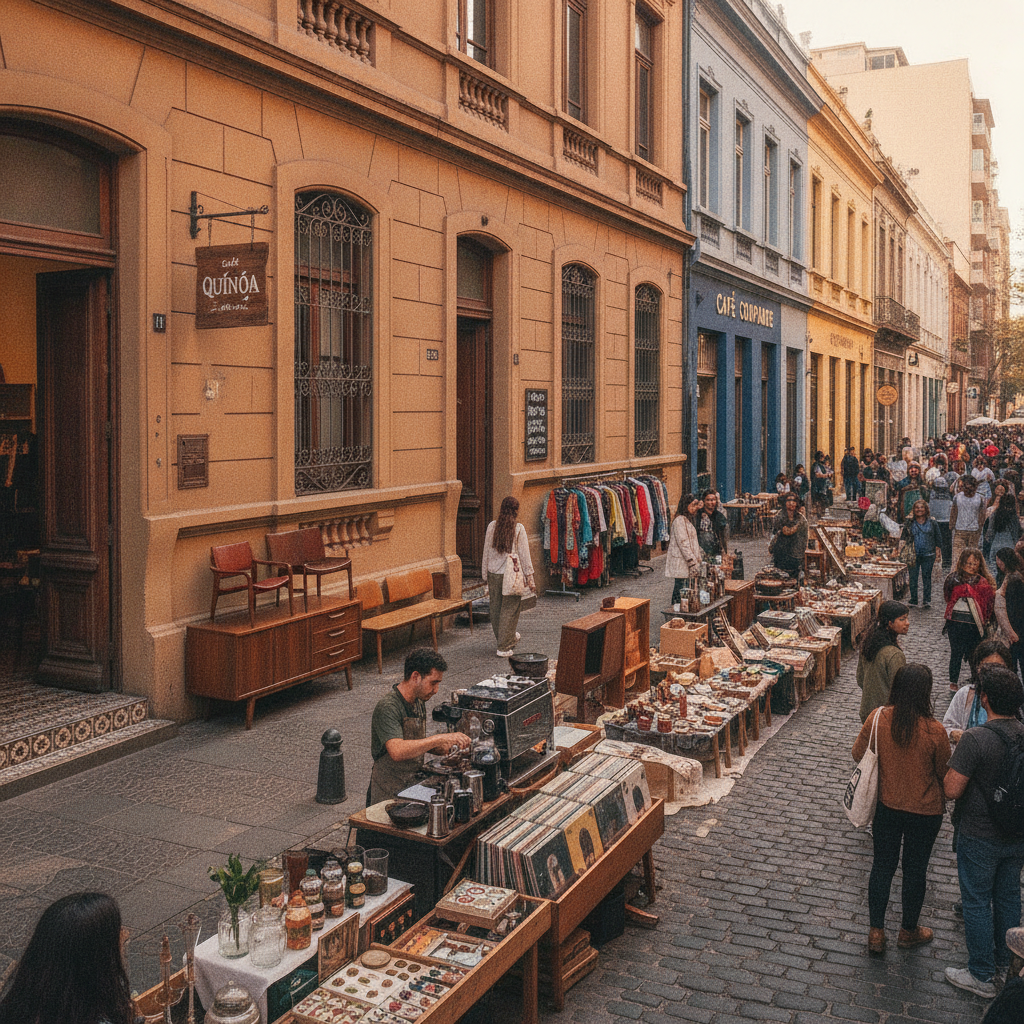
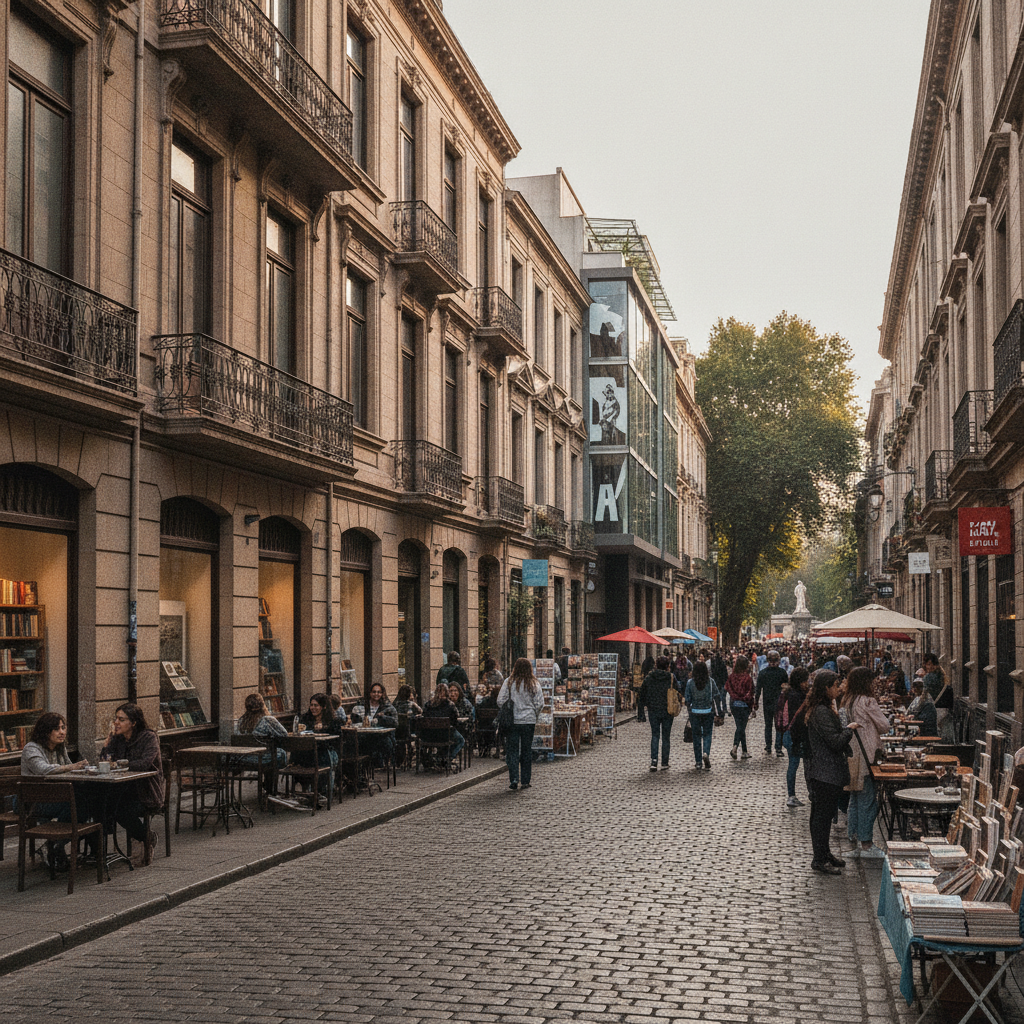
Barrio Lastarria (the neighbourhood between Cerro Santa Lucía and the Parque Forestal in the Providencia commune of Santiago — the most elegant cultural neighbourhood in Chile, with its French-influenced early 20th century architecture, independent bookshops, wine bars, galleries, and the Museo de Artes Visuales) and the adjacent Barrio Bellas Artes (centred on the Museo Nacional de Bellas Artes — the National Museum of Fine Arts) together constitute the cultural heart of Santiago.
1. Barrio Lastarria & Its Architecture
- 1
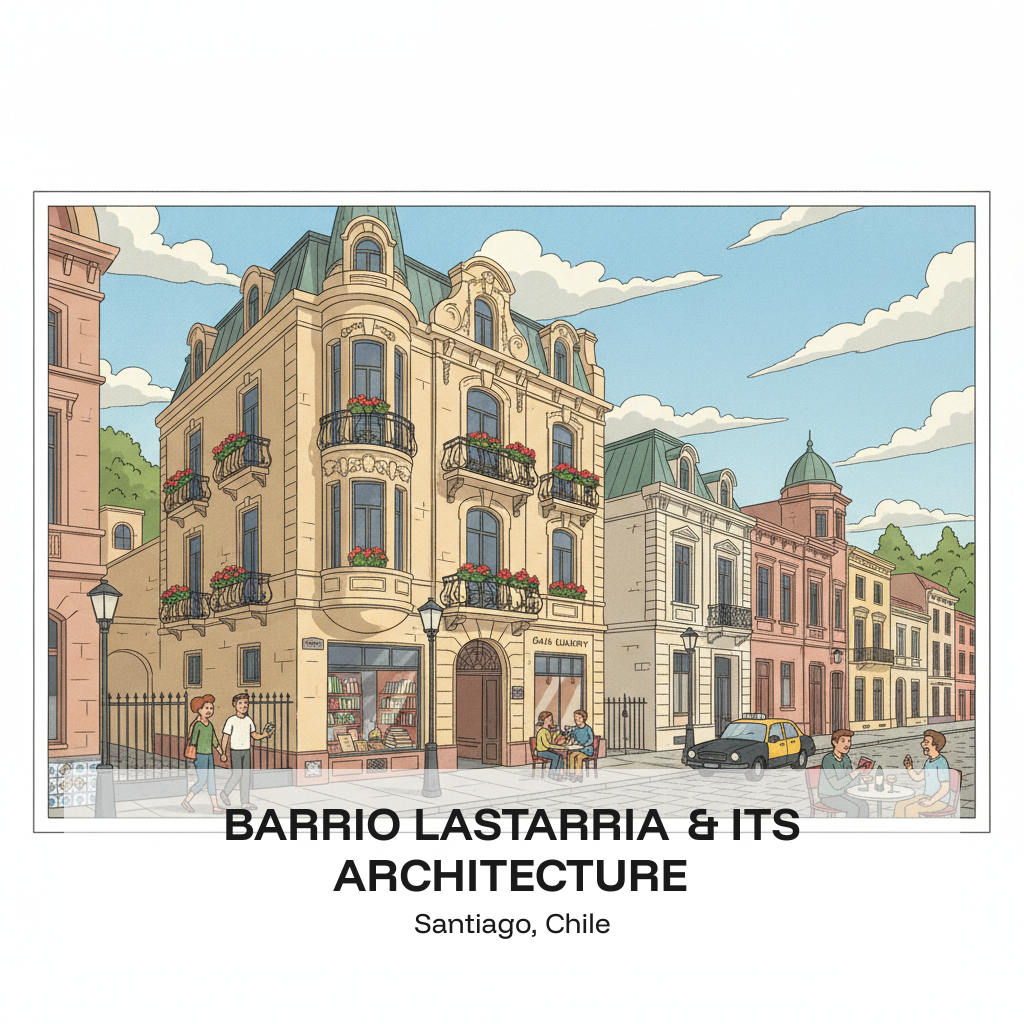
Barrio Lastarria & Its Architecture
Barrio Lastarria (the neighbourhood that occupies the blocks between Cerro Santa Lucía and the Parque Forestal — the neighbourhood developed in the early 20th century as a fashionable residential area for Santiago's upper-middle class professional community): the architecture (the French-influenced eclectic architecture of the 1900s-1930s — the apartment buildings and townhouses with the wrought-iron balconies, the ornate stone facades, the tall bay windows, and the interior courtyards (the 'patios interiores') that are characteristic of the Lastarria residential typology): the cultural transformation (the transformation of Barrio Lastarria from a purely residential neighbourhood into the primary arts and culture district of Santiago — the process driven by the establishment of the independent bookshops (the Librería Metales Pesados (Rosal 0461 — the finest independent bookshop in Chile, famous for its curation of Chilean and Latin American poetry, fiction, and critical theory)), the art galleries (the galleries that occupy the renovated apartment buildings on Calle Lastarria and the adjacent streets), the wine bars (the wine bars that have made Lastarria the primary destination for wine tourism in Santiago — the neighbourhood where the wine bars serve the finest wines of the Chilean wine regions (the Cabernet Sauvignon of the Maipo Valley, the Carménère of the Colchagua Valley, the Pinot Noir of the Casablanca Valley) by the glass and by the bottle to an educated wine-drinking public)).
- 2
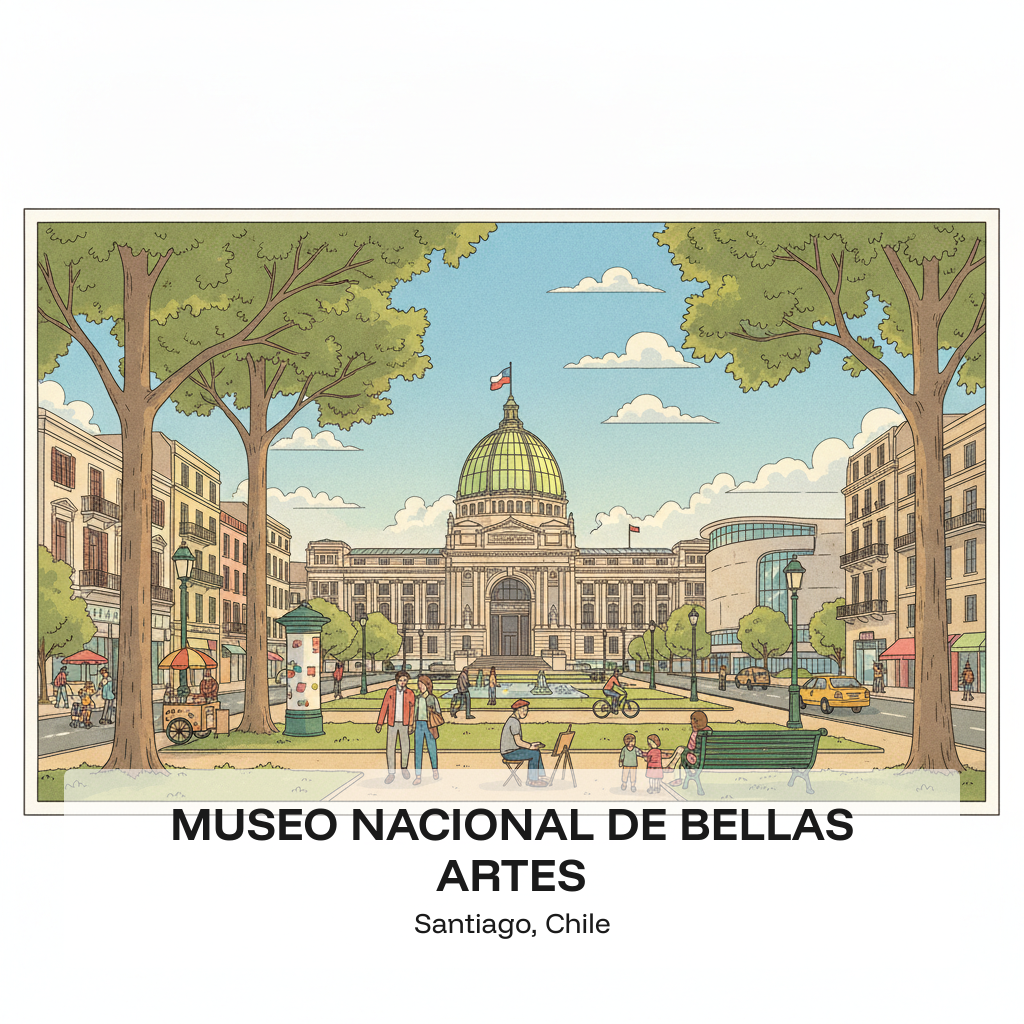
Museo Nacional de Bellas Artes
The Museo Nacional de Bellas Artes (the National Museum of Fine Arts — Parque Forestal s/n, in the Barrio Bellas Artes adjacent to Barrio Lastarria): the museum building (the Palacio de Bellas Artes — the Neo-Classical building designed by architect Emile Jéquier (1866-1949) and inaugurated in 1910 for the Centennial of Chilean Independence — the building that is the most important work of the French-influenced Beaux-Arts architectural style in Chile, the building with the distinctive glass dome (the largest glass dome in Chile) that rises above the central nave of the museum): the MNBA collection (the collection of approximately 5,000 works — the most comprehensive collection of Chilean art from the colonial period through the present, with particular strengths in the 19th century academic painting (the works of Pedro Lira (1845-1912) — the founder of the Chilean academic painting tradition, the first Chilean to study painting in Paris) and the 20th century Chilean art (the works of Roberto Matta (1911-2002) — the Chilean Surrealist painter who is the most internationally celebrated Chilean visual artist of the 20th century, associated with the Surrealist movement in Paris and New York): the Centro Cultural Gabriela Mistral (GAM — the cultural centre at Avenida Libertador Bernardo O'Higgins 227, across the Alameda from Barrio Lastarria — the former UNCTAD III building (the UN trade conference centre built 1972 under the Allende government) converted into the most important multi-disciplinary cultural centre in Chile.
- 3
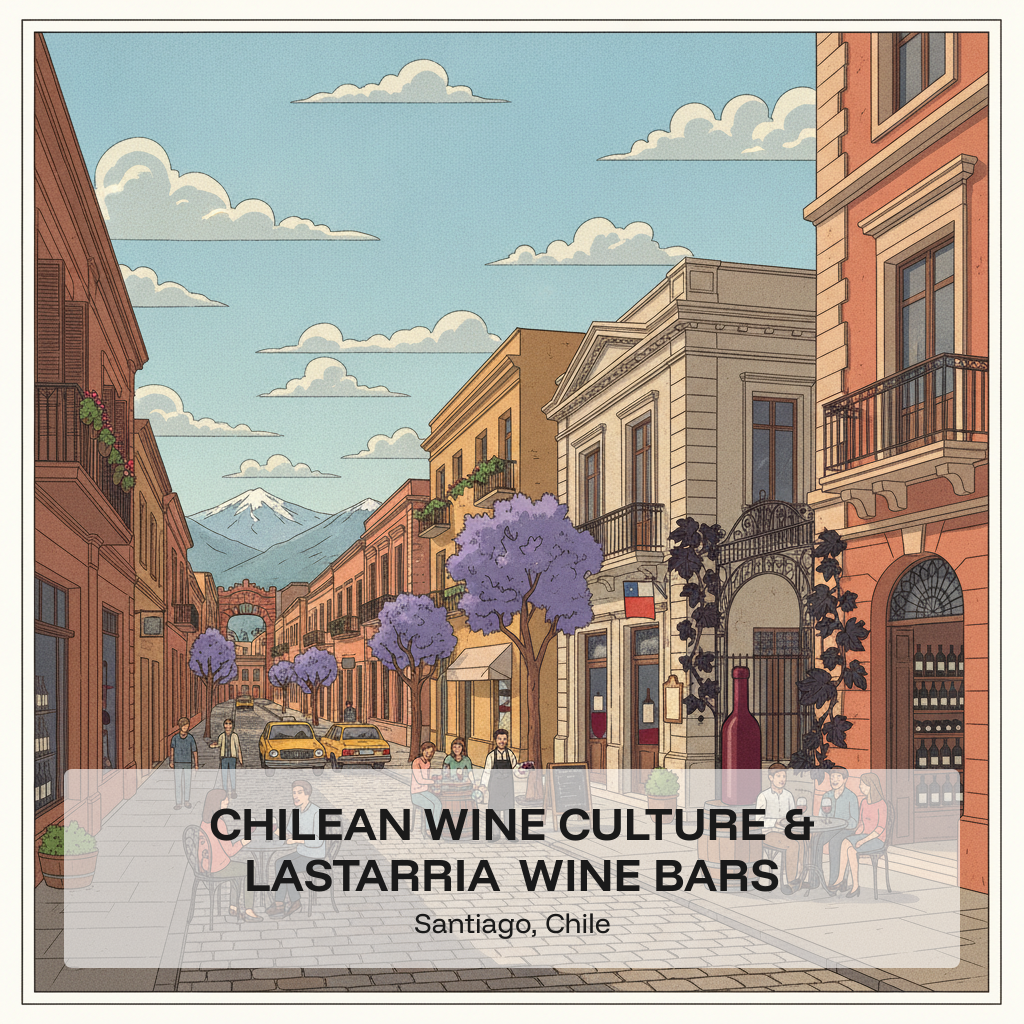
Chilean Wine Culture & Lastarria Wine Bars
Chilean wine (the wine industry that is Chile's most celebrated cultural export — the country that is the 5th largest wine exporter in the world by volume, the country whose wine regions extend from the Atacama Desert in the north to the Bio-Bío Valley in the south): the Chilean wine regions (the Maipo Valley (the valley immediately south of Santiago — the 'Bordeaux of Chile', the primary region for Cabernet Sauvignon and Carménère, the region of the great Chilean wineries (Concha y Toro (the world's most exported wine brand), Santa Rita, Cousiño Macul, and the boutique wineries of the Alto Maipo (the 'Upper Maipo' subregion, at the foot of the Andes)), the Casablanca Valley (the cool coastal valley 60 km (37 miles) west of Santiago near Valparaíso — the primary Chilean region for Chardonnay, Sauvignon Blanc, and Pinot Noir, the region that pioneered the cool-climate wine style in Chile), the Colchagua Valley (the valley 180 km (112 miles) south of Santiago — the primary region for Chilean Merlot, Carménère, and Syrah, the valley that hosts the most important wine tourism circuit in Chile (the Ruta del Vino del Valle de Colchagua)): the Carménère (the 'lost grape of Bordeaux' — the red wine grape (Vitis vinifera 'Carménère') that was a minor grape variety in Bordeaux before the 19th century phylloxera epidemic destroyed the French vineyards, and that survived in Chile (where it was planted in the 1850s-1870s) and was 'rediscovered' by French ampelographers in 1994 — the grape that is now the signature variety of Chilean wine and the symbol of Chilean wine identity on the world market).
- 4
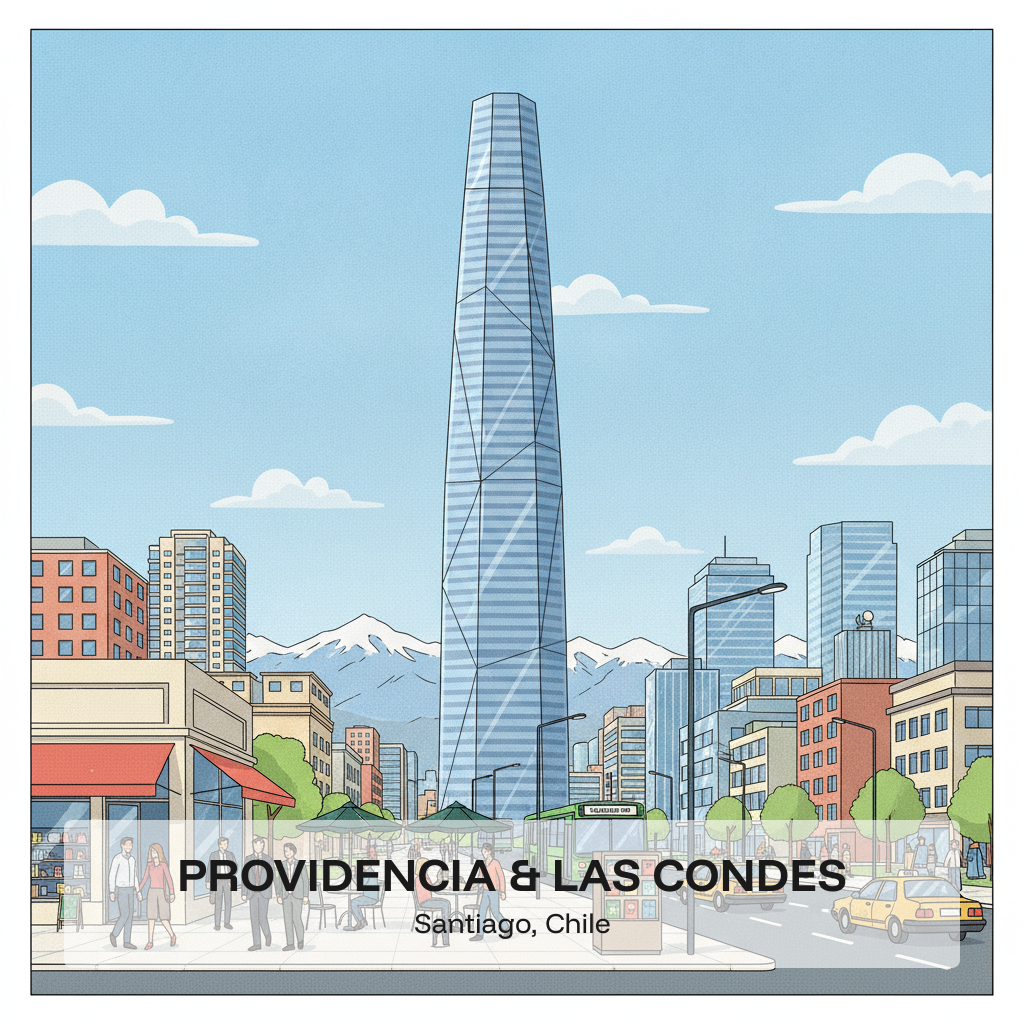
Providencia & Las Condes — Modern Santiago
Providencia (the municipality immediately east of the Santiago commune — the primary upper-middle-class residential and commercial neighbourhood of modern Santiago, with the Avenida Providencia as its commercial spine): the Providencia character (the neighbourhood of the international restaurants, the coffee shops, the bookshops, the clothing stores, and the apartment buildings of the Santiago professional class — the neighbourhood that is the primary address of choice for the Santiago upper-middle class and the foreign residents of the city (the embassies, the international companies, and the expatriate community)): Las Condes (the municipality east of Providencia — the most affluent municipality in Chile, with the El Golf neighbourhood (the 'Sanhattan' — the 'Santiago Manhattan', the district of glass and steel office towers along the Avenida El Bosque Norte and the Avenida Apoquindo that houses the headquarters of the international companies and financial institutions operating in Chile) and the luxury residential neighbourhoods of Lo Barnechea and Las Condes proper): the Costanera Center (the Costanera Center tower at the Avenida Andrés Bello and the Avenida Kennedy intersection — the 300-metre (984-foot) skyscraper that is the tallest building in South America, completed 2013, part of the Costanera Center complex (the integrated mall, office, and hotel development that is the largest construction project in the history of Chile)).
- 5
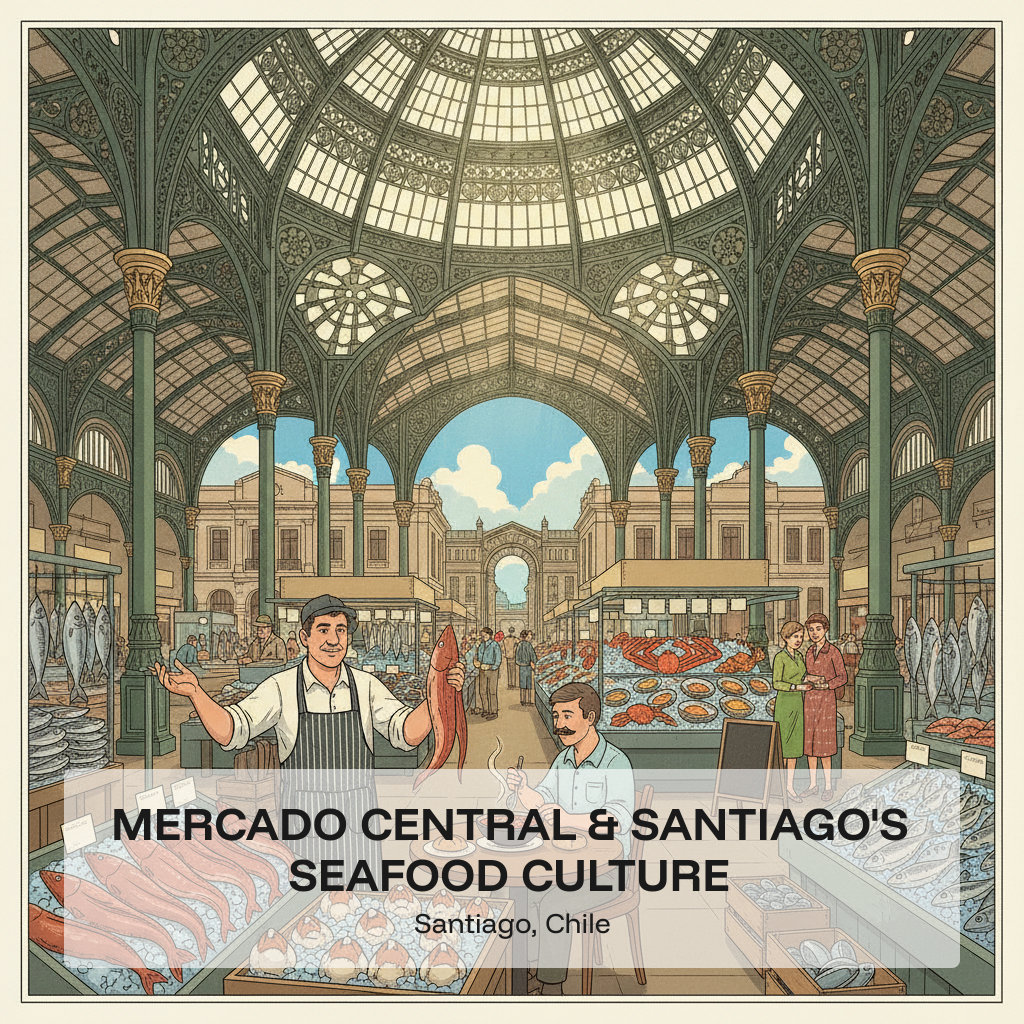
Mercado Central & Santiago's Seafood Culture
The Mercado Central (the covered public market on the south bank of the Mapocho River, at the Puente Cal y Canto metro station in the Centro Histórico of Santiago — the market that is the primary destination for fresh Pacific seafood in the Chilean capital): the Mercado Central building (the iron-frame structure designed by the Chilean engineer Manuel Aldunate and built in Edinburgh, Scotland in 1872 — the cast-iron structure transported from Scotland and assembled in Santiago, the finest example of 19th century iron architecture in South America): the seafood (the Pacific seafood of Chile — the most diverse and richest cold-water seafood on the Pacific Coast of South America): the key species (the congrio (the conger eel — the fish immortalised by Pablo Neruda in his 'Ode to Conger Eel Chowder' (the 'Oda al Caldillo de Congrio') — the most beloved fish in Chilean cuisine, the fish that appears in the caldillo de congrio (the conger eel soup) that is the national soup of Chile), the locos (the Chilean abalone (Concholepas concholepas) — the most prized shellfish in Chilean cuisine, served with lemon and mayonnaise or in a mayo salad), the picorocos (the Chilean giant barnacle (Austromegabalanus psittacus) — the large volcanic barnacle unique to the Pacific coast of South America, served grilled or in soups and stews), and the centolla (the king crab (Lithodes santolla) of the southern Strait of Magellan — the most prized crustacean in Chile, a luxury product served in the finest restaurants of Santiago).
- 6
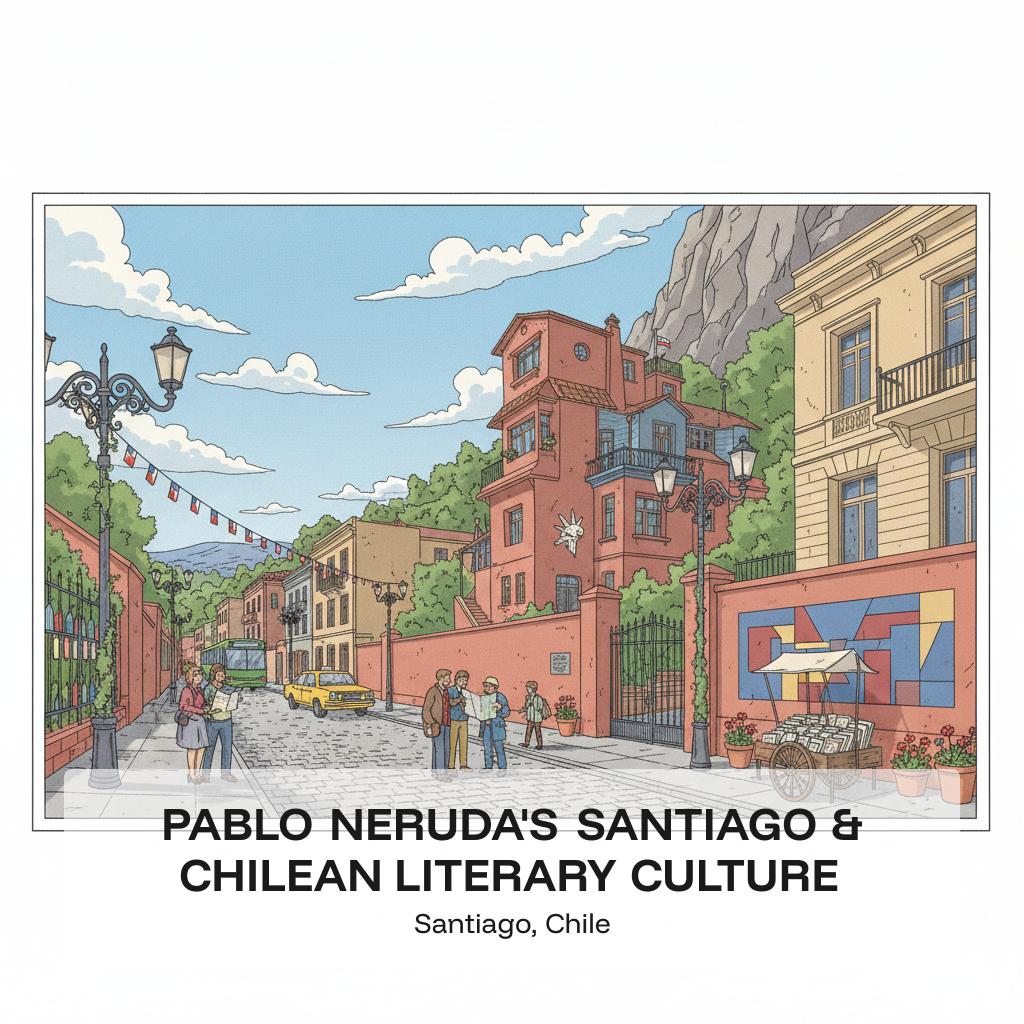
Pablo Neruda's Santiago & Chilean Literary Culture
Pablo Neruda (1904-1973) (the Chilean poet — the winner of the 1971 Nobel Prize in Literature, the most celebrated Spanish-language poet of the 20th century and the most internationally recognized Chilean in history): the Neruda connection to Santiago (the city where Neruda lived for extended periods throughout his life, the city where his house 'La Chascona' (Fernando Márquez de la Plata 0192, Barrio Bellavista) is now preserved as a museum): La Chascona (the house Neruda built in 1953 for his third wife, Matilde Urrutia — the house whose name ('La Chascona' — 'the tangled-haired woman' in Chilean slang) refers to Matilde's untamed red hair, the house built in the labyrinthine style characteristic of Neruda's three houses in Chile (La Chascona in Santiago, La Sebastiana in Valparaíso, and Isla Negra on the Pacific coast) — houses filled with the collections of objects (ship figureheads, coloured glass, maps, butterflies, books, and art) that Neruda accumulated over his lifetime): the Chilean literary tradition (the tradition that produced, in addition to Neruda, the poet Gabriela Mistral (1889-1957) — the first Latin American to win the Nobel Prize in Literature (1945), the woman whose face appears on the 5,000 Chilean peso note — and the novelists Isabel Allende (b.1942) and Roberto Bolaño (1953-2003)).
Walk this route with audio
Stories play automatically as you reach each stop — no tapping needed.
More in santiago
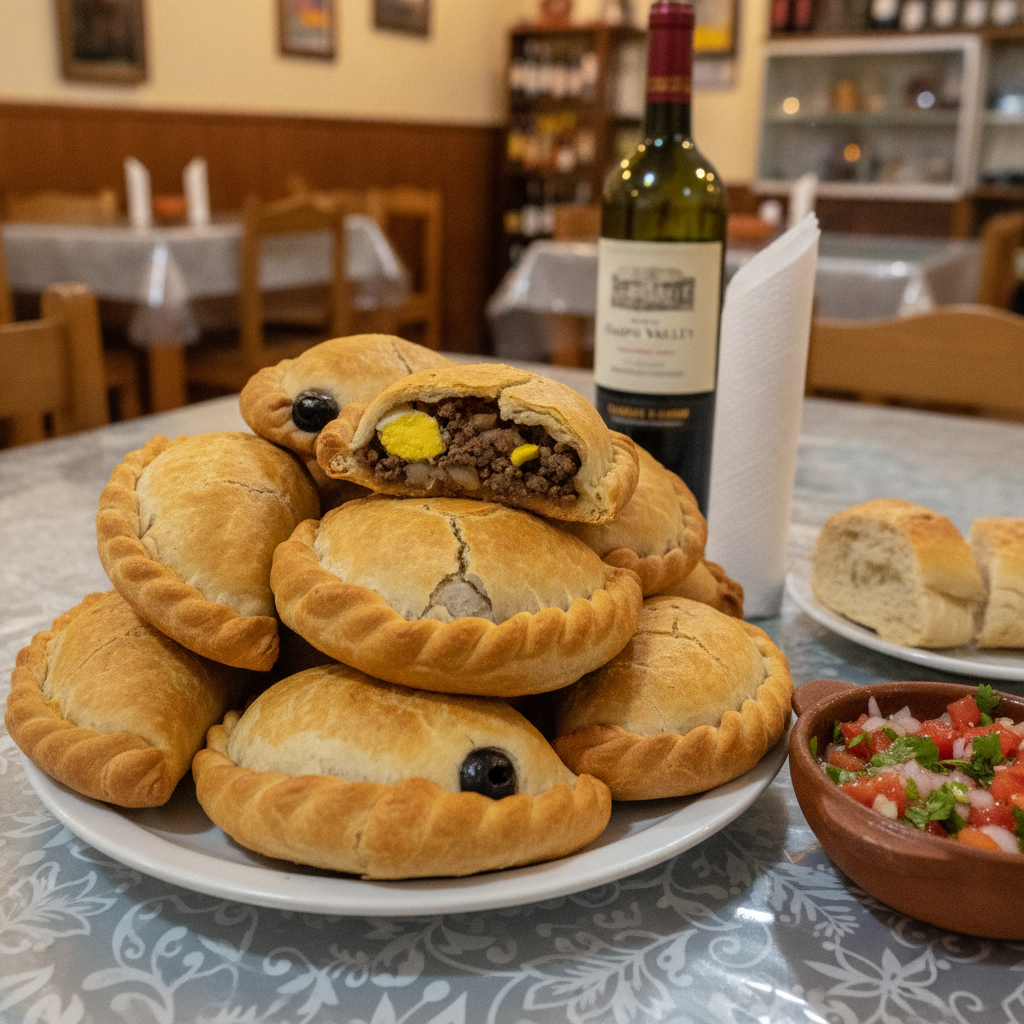
Chilean Cuisine, Empanadas & Santiago's Food Culture
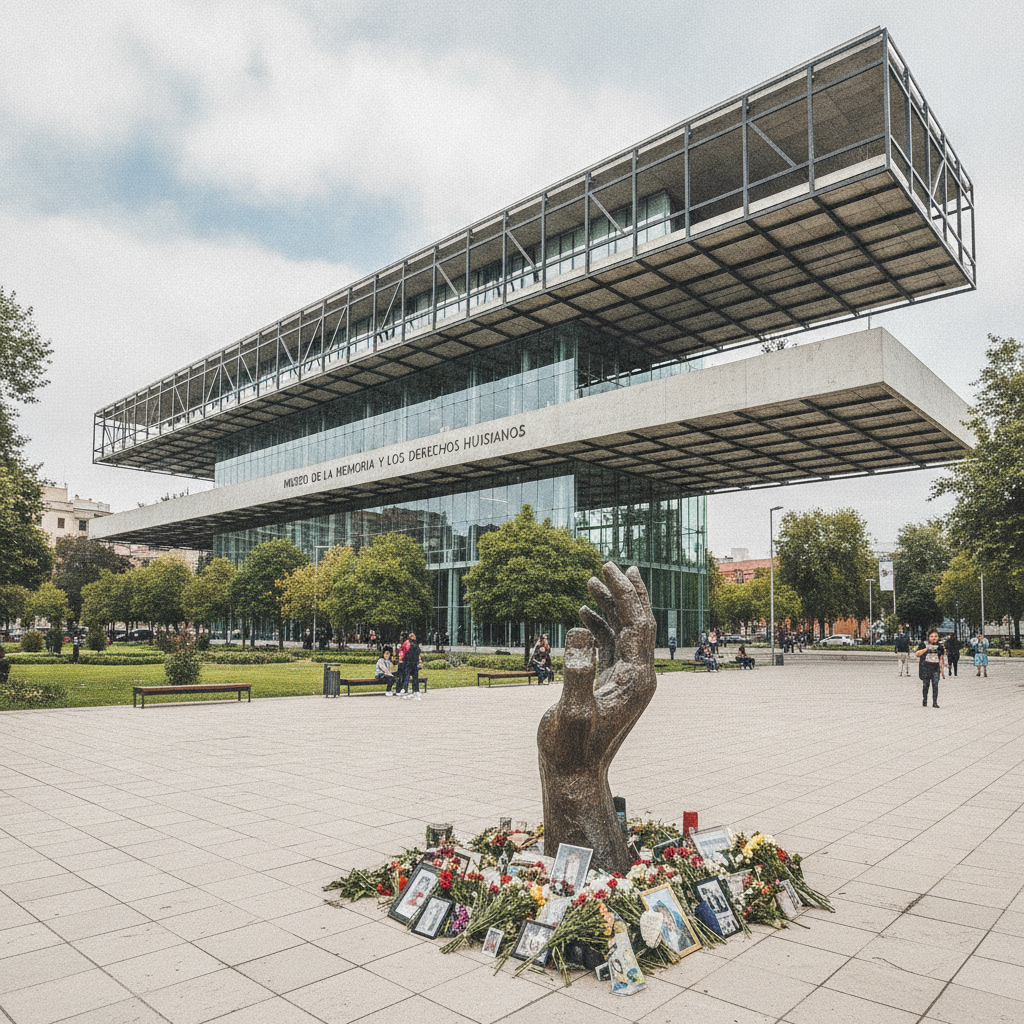
Museum of Memory, Human Rights & Chile's Democratic Recovery
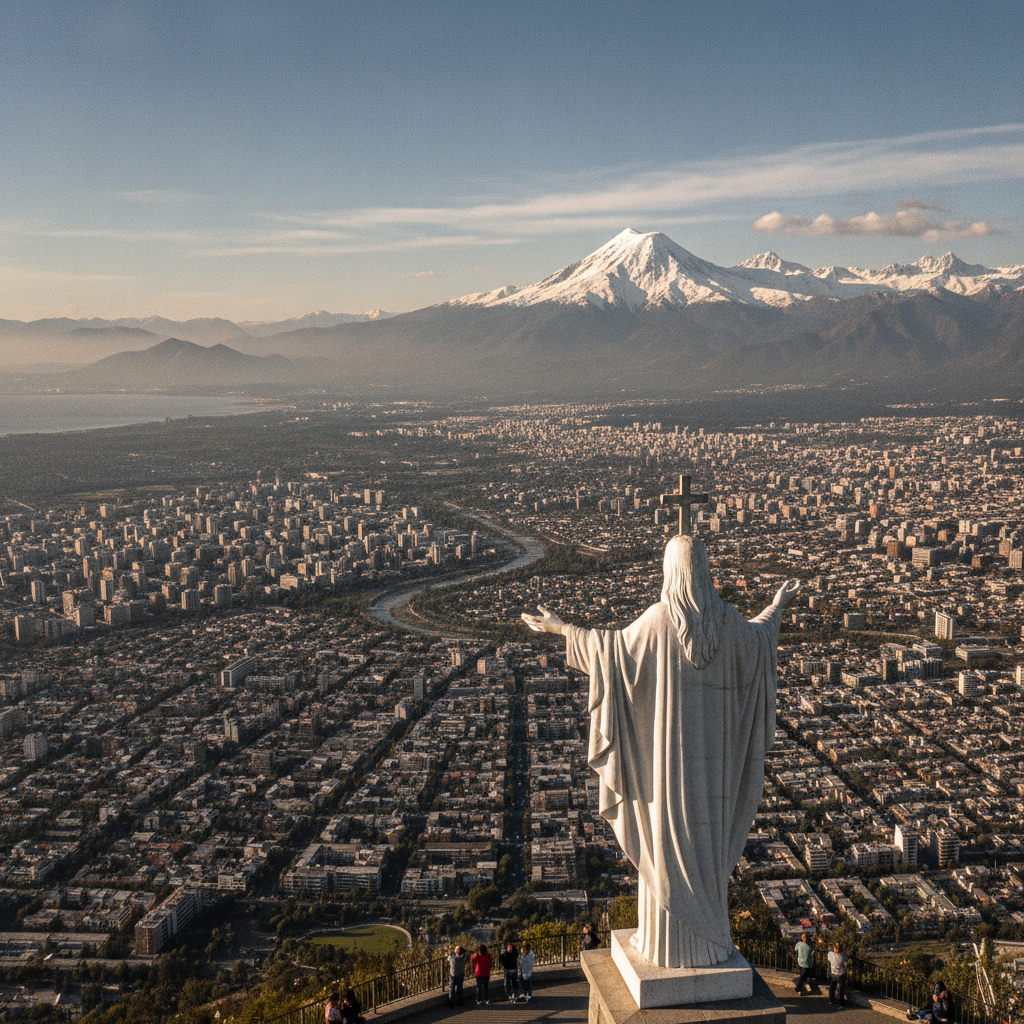
Cerro San Cristóbal, the Andes Panorama & Santiago's Natural Setting
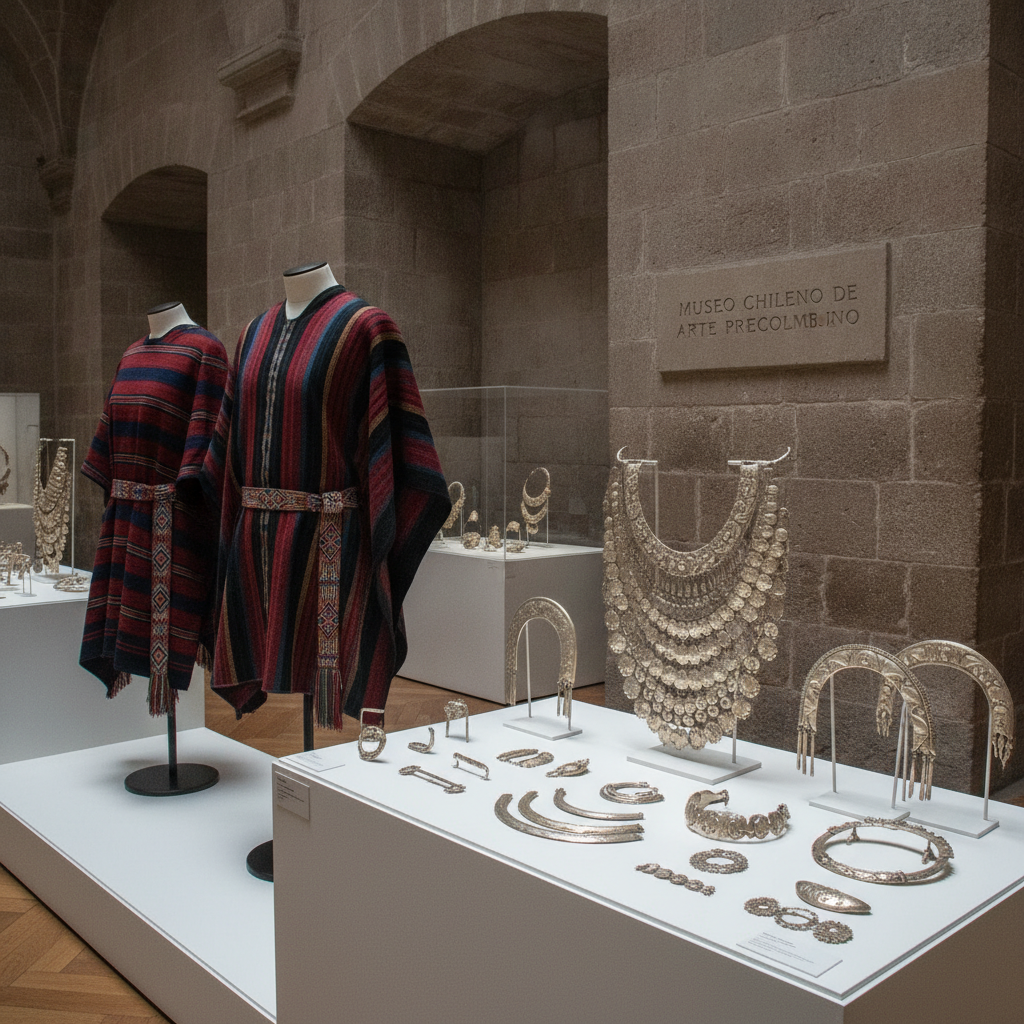
Mapuche Culture, Museo Precolombino & Chile's Indigenous Heritage
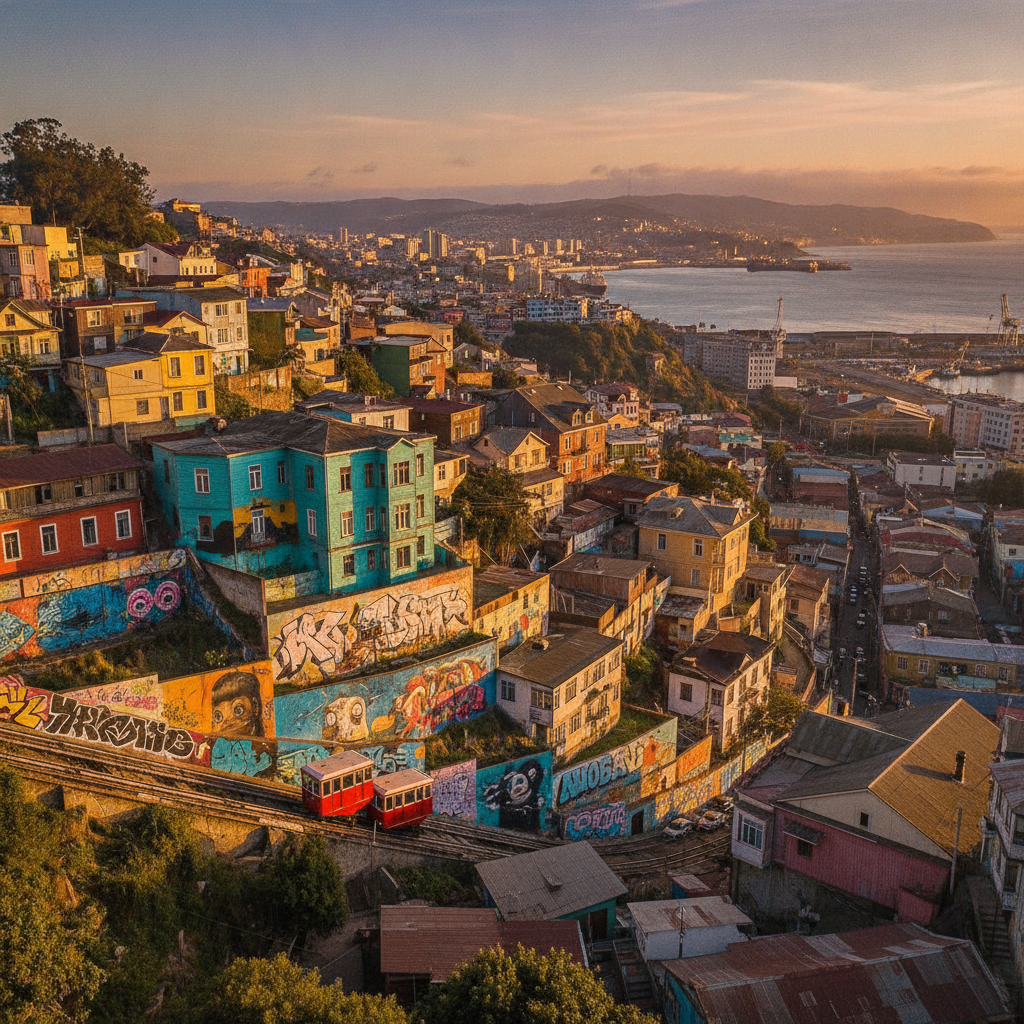
Valparaíso Day Trip — Chile's Bohemian Port City