Chilean Cuisine, Empanadas & Santiago's Food Culture
Chilean cuisine (the food culture of the country that stretches from the driest desert on earth (the Atacama) to the sub-Antarctic islands of the south, with 6,435 km (3,998 miles) of Pacific coastline and the world's most diverse climate range within a single nation): Santiago's food scene encompasses the full range of Chilean regional cuisines — from the Pacific seafood of the Mercado Central to the empanadas of the fonditas, the cazuelas of the huasos, and the fine dining of the international chefs who have put Santiago on the world gastronomy map.
- 1
Empanadas de Pino — Chile's National Food
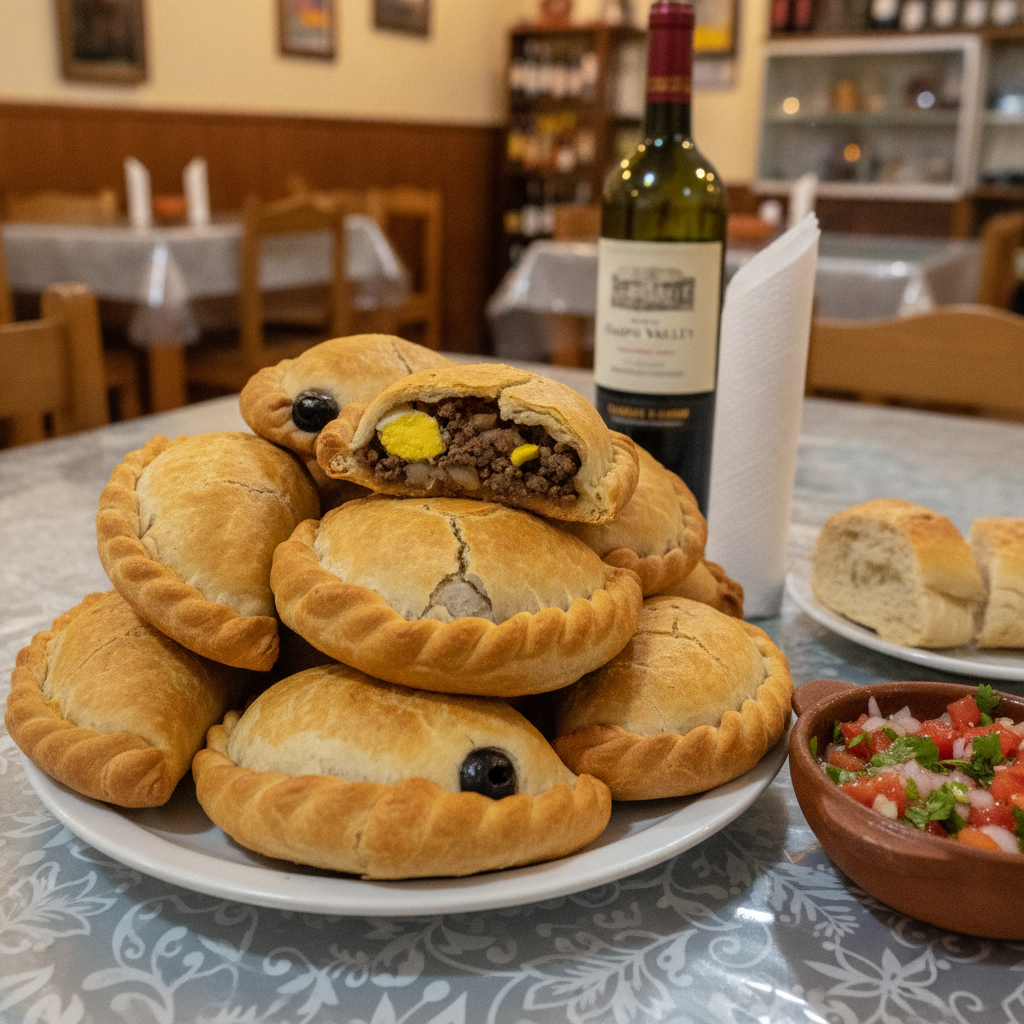
The empanada de pino (the 'empanada of pino' — the most beloved food in Chile, the pastry that is the defining food of Chilean national identity): the pino (the filling — the mixture of ground beef ('carne molida') sautéed with finely diced onion ('cebolla picada'), seasoned with cumin, oregano, and merkén (the smoked chili pepper of the Mapuche people — the Indigenous people of south-central Chile, the spice that is the most distinctive flavour in Chilean cuisine), and combined with the additional elements that make the Chilean empanada de pino unique among South American empanadas: the hard-boiled egg (a quarter of a hard-boiled egg placed in the centre of the filling), the black olive (one unpitted black olive placed in the filling), and the raisin (one or two raisins placed in the filling — the sweet-sour-savoury balance of the raisin with the spiced beef and the richness of the hard-boiled egg yolk that gives the empanada de pino its distinctive and addictive flavour)): the pastry (the enriched wheat flour pastry ('masa') made with lard or butter and coloured yellow by the addition of yellow food colouring in the commercial versions, or naturally golden from the egg wash applied before baking in the artisanal versions): the Fiestas Patrias (the Chilean national holiday of September 18-19 — the 'dieciocho' (the eighteenth) — the annual holiday that is the occasion for the consumption of more empanadas de pino than any other time of year, the holiday at which Chileans gather in the 'fondas' and 'ramadas' (the temporary festival structures erected for the occasion) to eat empanadas, drink chicha (the fresh grape wine) and pipeño (the young wine), and dance the cueca (the national dance of Chile)).
- 2
Cazuela & Traditional Chilean Home Cooking
The cazuela (the 'casserole' — the soup-stew that is the most fundamental dish of Chilean home cooking, the dish that appears on every Chilean family table at least once per week): the cazuela de vacuno (the beef cazuela — the most common version, made with a piece of bone-in beef (the ossobuco or the 'asado de tira' (short ribs)), potatoes, corn (the 'choclo' — the large-kernelled Chilean corn (Zea mays) that is the most important vegetable in Chilean cuisine), green beans, pumpkin ('zapallo') and rice, simmered together in the beef broth until the beef is tender and the vegetables are soft): the cazuela de ave (the chicken cazuela — the 'ave' (bird) cazuela made with a chicken leg or thigh, the same vegetables, and the rice, in the lighter, cleaner chicken broth): the Chilean vegetables (the distinctive Chilean vegetables that appear in the cazuela and throughout Chilean cuisine — the zapallo (the South American pumpkin (Cucurbita maxima) — the large orange-fleshed pumpkin that is used in soups, stews, and as a side dish throughout Chile), the choclo (the large-kernelled Chilean corn, eaten on the cob or ground into the humita batter (the 'humita' — the steamed corn pudding wrapped in corn husks, the Chilean equivalent of the Mexican tamal)), and the porotos (the Chilean beans — the porotos granados (the shelling beans cooked in the summer with corn and squash in the 'porotos granados con mazamorra' — the dish that is the most beloved summer meal in Chile)).
- 3
Pebre, Pan Amasado & Chilean Table Culture
The pebre (the Chilean condiment — the fresh salsa that appears on every Chilean table at the beginning of every meal, the condiment that is as fundamental to Chilean cuisine as salsa is to Mexican cuisine): the pebre recipe (the fresh tomato (diced), the white onion (finely diced), the fresh cilantro (chopped), the fresh ají verde (the green Chilean chili pepper, diced), the garlic (minced), the olive oil, the white wine vinegar, and the salt — the ingredients combined and marinated for at least 30 minutes before serving, so that the tomato releases its juice and the flavours meld): the pan amasado (the 'kneaded bread' — the dense, slightly flaky Chilean bread roll made with lard or shortening (the fat that gives the pan amasado its characteristic dense crumb and slightly crumbly texture), the bread that is served with the pebre at the beginning of every meal in the fonditas and family homes of Chile): the marraqueta (the 'baguette' of Chile — the large crusty bread roll with the characteristic two-part shape (the two smaller rolls joined at the top) that is the most consumed bread in Chile (Chileans are the largest per capita bread consumers in the Americas, consuming approximately 94 kg (207 lb) of bread per person per year)): the Chilean breakfast culture (the 'desayuno chileno' — the Chilean breakfast of marraqueta with butter and manjar blanco (the Chilean dulce de leche, the thick caramelised sweetened condensed milk that is the most beloved spread in Chile) and a cup of café con leche or té con leche — the breakfast that is shared in virtually every Chilean home).
- 4
Bocanáriz, Boragó & Santiago Fine Dining
Santiago's fine dining scene (the culinary scene that has emerged since 2010 as one of the most exciting in Latin America — the scene driven by the generation of Chilean chefs who trained in the great restaurants of Europe and returned to Chile to apply their technical skills to the native Chilean ingredients (the Patagonian seafood, the Andean herbs and tubers, the Atacameño superfoods (the quinoa, the maca, the lucuma), and the wines of the Chilean wine regions)): Boragó (the restaurant of chef Rodolfo Guzmán (the 'René Redzepi of South America' — the Chilean chef who trained at Mugaritz in Spain and returned to open Boragó (Avenida Nueva Costanera 3467, Vitacura) — consistently ranked among the 50 best restaurants in the world (World's 50 Best, Latin America's 50 Best list — ranked #1 in Chile and among the top 3 in Latin America for multiple consecutive years), the restaurant famous for the 'Endemic' tasting menu that uses only indigenous Chilean ingredients and changes with each season to reflect the harvest cycle of the Chilean territory from the Atacama Desert to Patagonia): Bocanáriz (José Victorino Lastarria 276, Barrio Lastarria — the wine bar that is the most important destination for Chilean wine education in Santiago, the bar that serves the finest selection of Chilean wines by the glass (the 'copas' menu — the menu of 70-80 wines available by the glass, including the rare and expensive wines of the boutique Chilean producers that are otherwise almost impossible to taste outside of the wineries)).
- 5
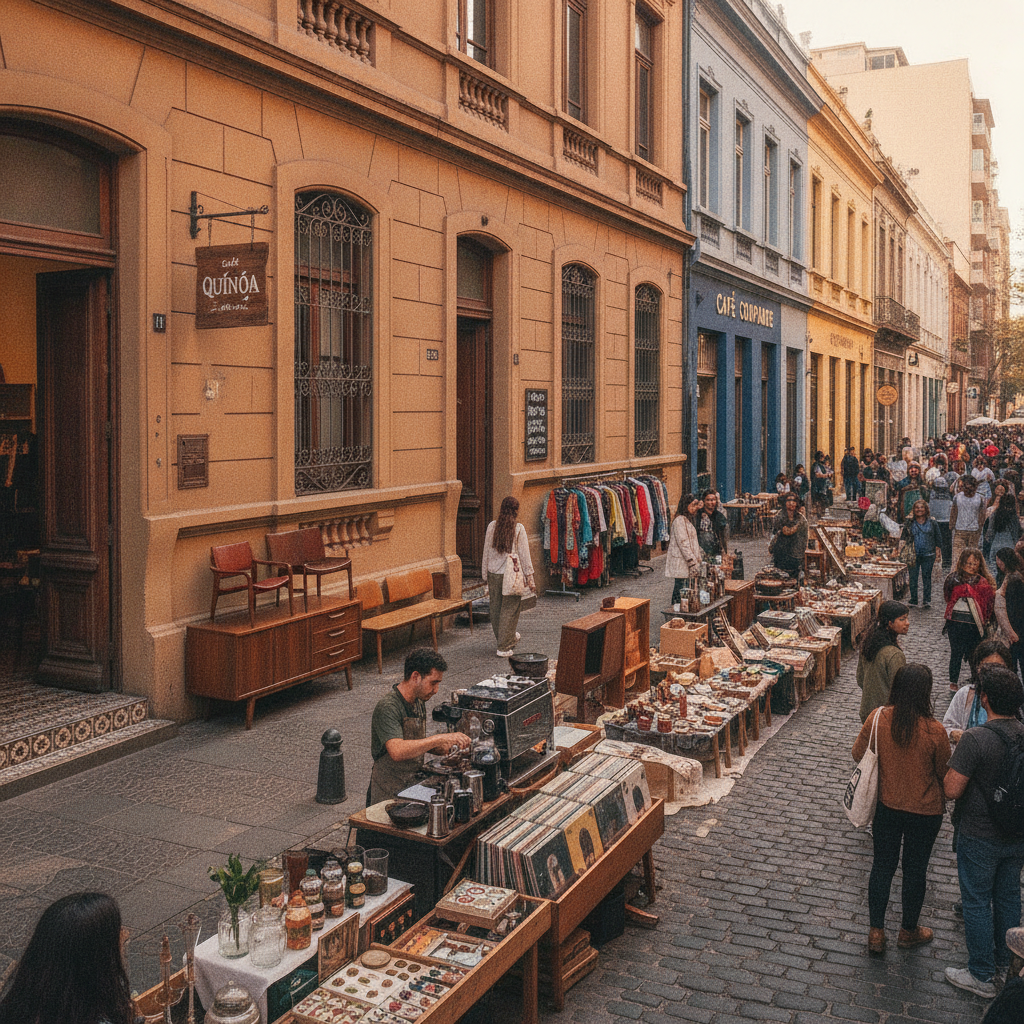
Feria de San Telmo & Mercado del Barrio Italia
Barrio Italia (the neighbourhood in the Providencia municipality south of the Barrio Italia area — the neighbourhood that has emerged in the 2010s as the most creative and most rapidly changing neighbourhood in Santiago): the Barrio Italia character (the neighbourhood of the mid-century furniture shops, the vintage clothing stores, the independent coffee shops (the artisan coffee roasters that have made Barrio Italia the centre of Santiago's specialty coffee culture), the design studios, and the restaurants that have made Barrio Italia the 'Brooklyn of Santiago'): the Feria de San Telmo (the Sunday street market in Barrio Italia — the Santiago equivalent of the Buenos Aires San Telmo market, with antiques, vintage furniture, vinyl records, and handicrafts): the Mercado del Barrio Italia (the covered market in the heart of Barrio Italia — the market that serves as the social centre of the neighbourhood, with food stalls, coffee shops, and craft vendors inside the converted industrial building): the coffee culture (the specialty coffee culture of Santiago — the city that has developed one of the most sophisticated specialty coffee scenes in South America in the 2010s, with independent roasters (the Café Quínoa, the Café Moka, the Café Compadre) serving single-origin coffees from the Specialty Coffee regions of Ethiopia, Colombia, and Guatemala, alongside the Chilean-grown coffees from the coffee-growing experiments in the Atacama Desert highlands).
- 6
Chilenidad — The Culture of Chilean National Identity
Chilenidad (the 'Chilean-ness' — the concept of Chilean national identity and culture that encompasses the cueca (the national dance), the huaso (the Chilean cowboy), the empanada, the Chilean wine, the Andes Mountains, and the mythology of the 'roto chileno' (the 'Chilean commoner' — the mythologised working-class Chilean who is smart, resourceful, and irreverent, the figure of Chilean folk culture)): the cueca (the national dance of Chile — the 'baile de la cueca', the partner dance in which the man pursues the woman (she waves her handkerchief in the air as she circles away from him), the dance that is performed at every Fiestas Patrias celebration and at the huasos festivals of the Chilean countryside): the huaso (the Chilean cowboy — the horseman of the Central Valley of Chile, the cultural equivalent of the Argentine gaucho, the character who embodies the rural and agricultural identity of Chilean culture, dressed in the characteristic huaso costume (the 'chupalla' (the Chilean flat-topped straw hat), the 'manta' (the poncho-like woven wool cloak), the 'chamantos' (the decorated woven poncho), the 'polainas' (the leather gaiters), and the 'espuelas chilenas' (the large-roweled Chilean spurs))): the Rodeo Chileno (the Chilean rodeo — the national sport of Chile (officially declared the national sport in 1962), the sport in which two 'huasos' (riders) on horseback ('medias lunas') work together to control and stop a steer in the 'medialuna' (the semicircular arena used for the Chilean rodeo) — the sport that is the central event of the Fiestas Patrias celebrations in the countryside.
Walk this route with audio
Stories play automatically as you reach each stop — no tapping needed.
More in santiago
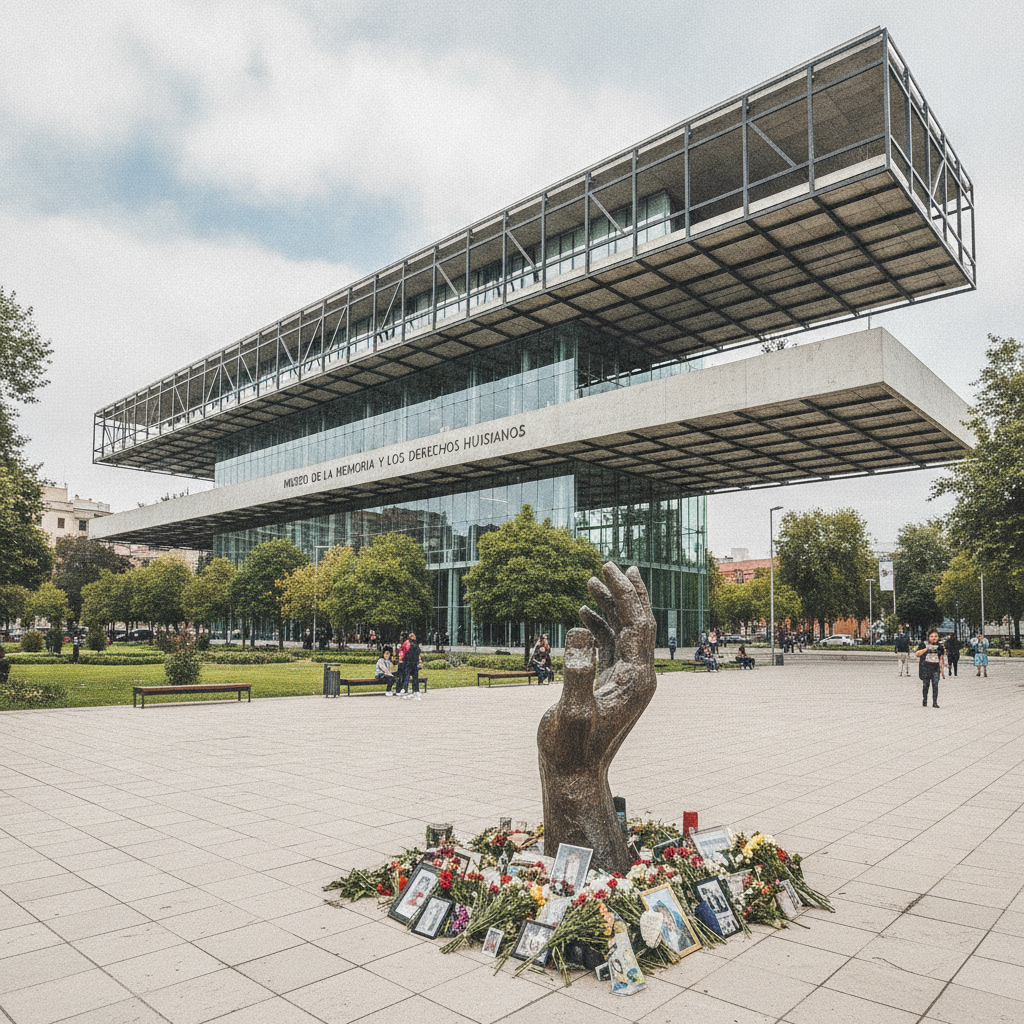
Museum of Memory, Human Rights & Chile's Democratic Recovery
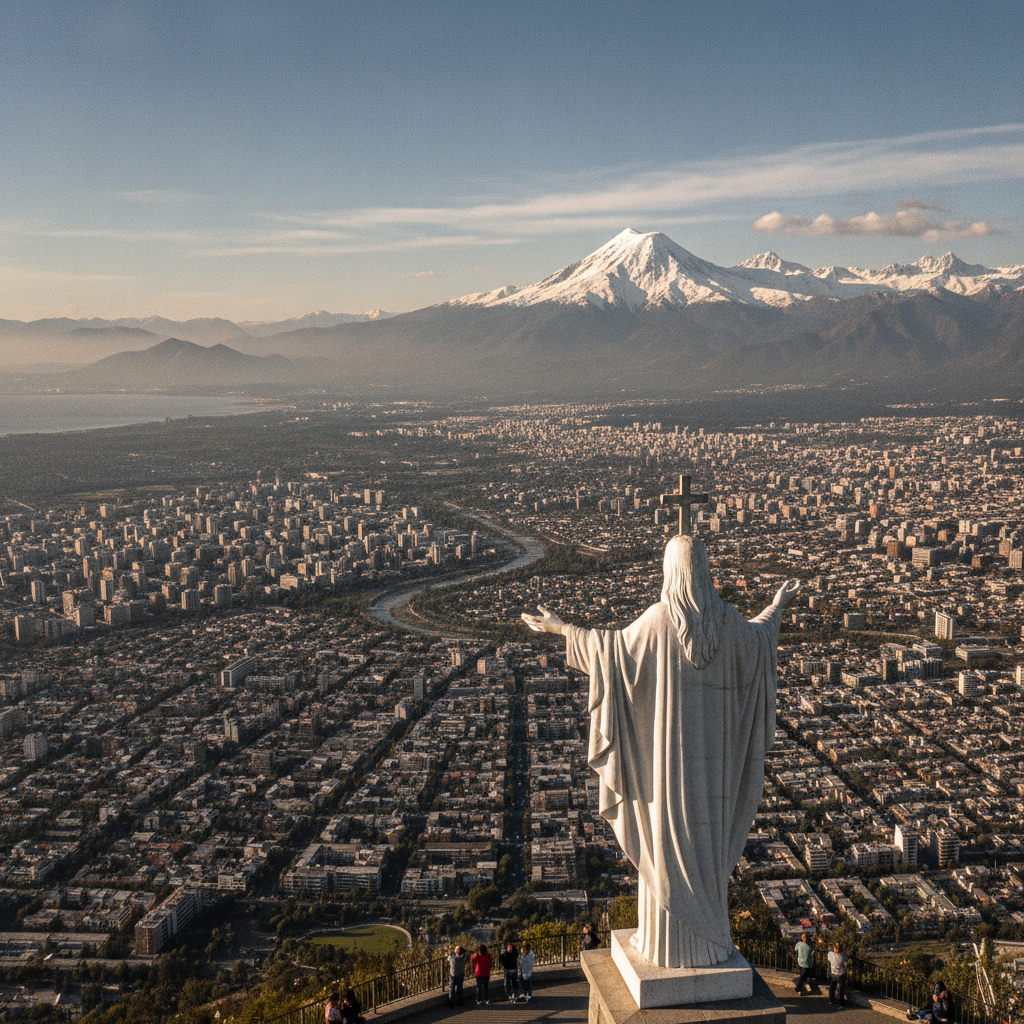
Cerro San Cristóbal, the Andes Panorama & Santiago's Natural Setting
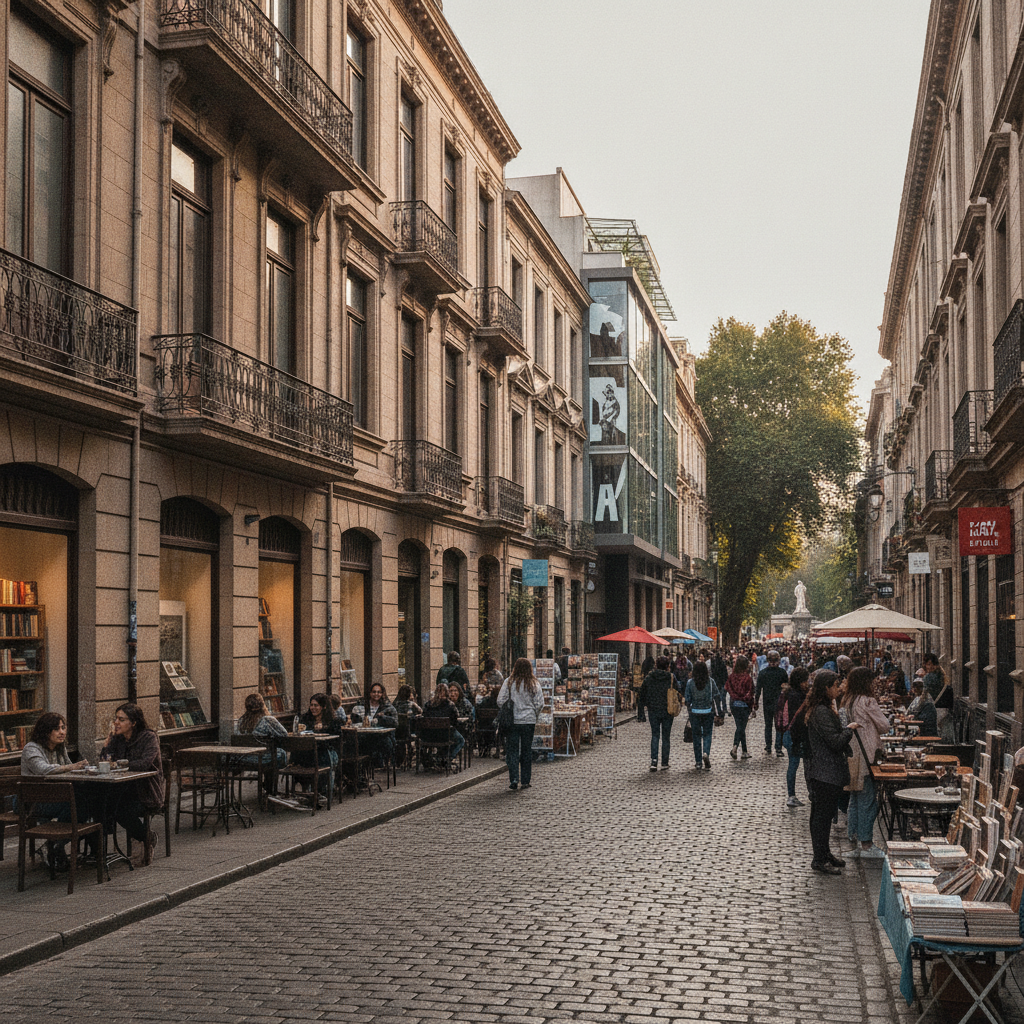
Barrio Lastarria, Bellas Artes & Santiago's Cultural Neighbourhood
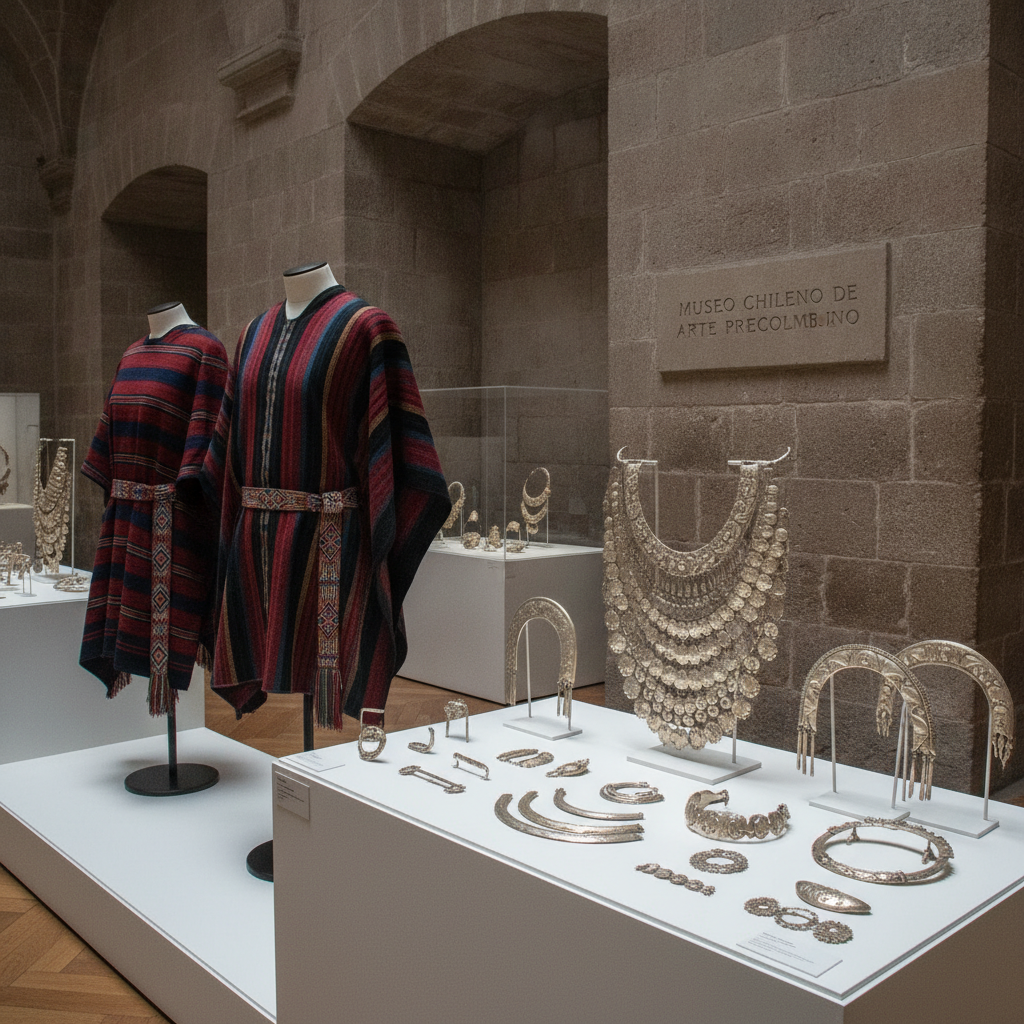
Mapuche Culture, Museo Precolombino & Chile's Indigenous Heritage
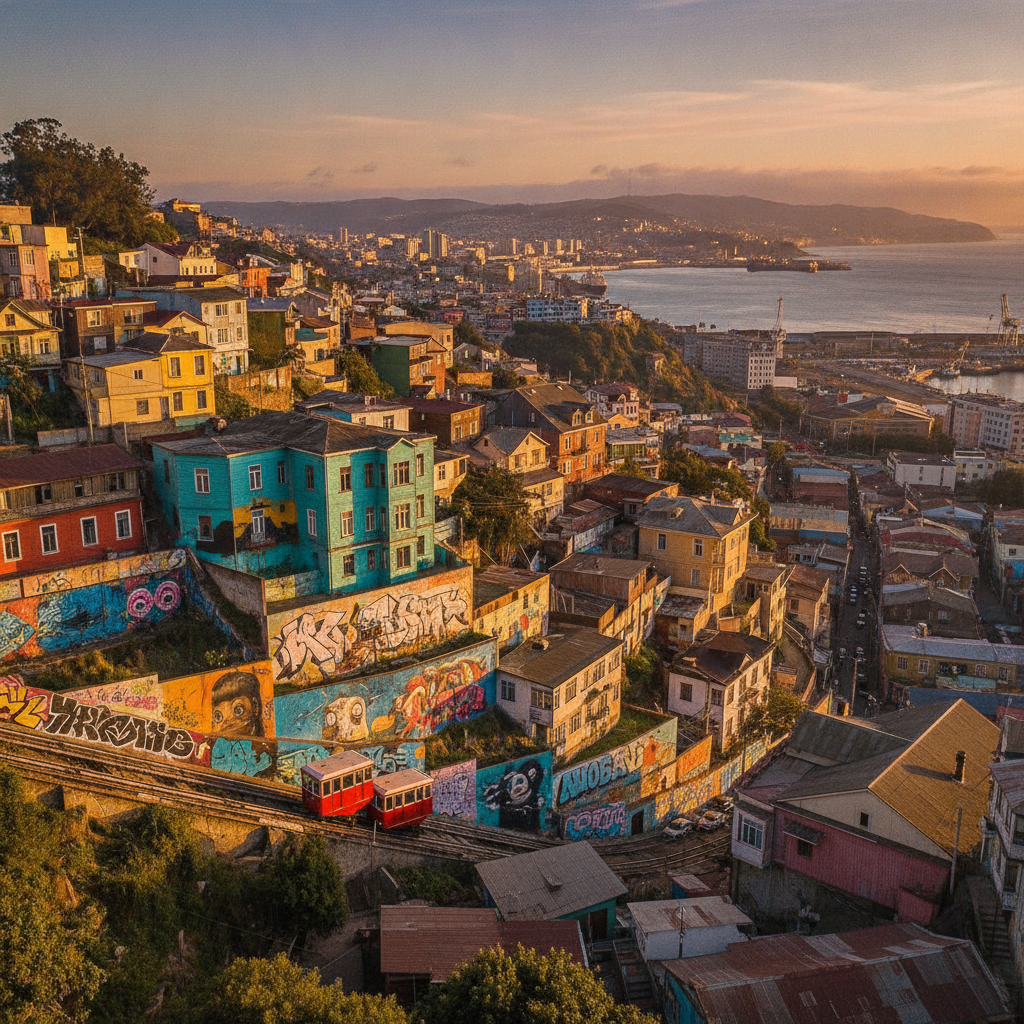
Valparaíso Day Trip — Chile's Bohemian Port City