Mapuche Culture, Museo Precolombino & Chile's Indigenous Heritage
The Mapuche (the 'People of the Land' — the Indigenous people of south-central Chile and southwestern Argentina, the people who successfully resisted Spanish colonial domination for 300 years (the 'Guerra de Arauco' — the Arauco War, the longest colonial war in the history of the Americas, fought from 1536 until the Chilean state's 'Pacification of Araucanía' in 1883)) and the Museo Chileno de Arte Precolombino (the finest pre-Columbian art museum in Chile) are at the heart of understanding Chile's Indigenous heritage.
- 1
Museo Chileno de Arte Precolombino
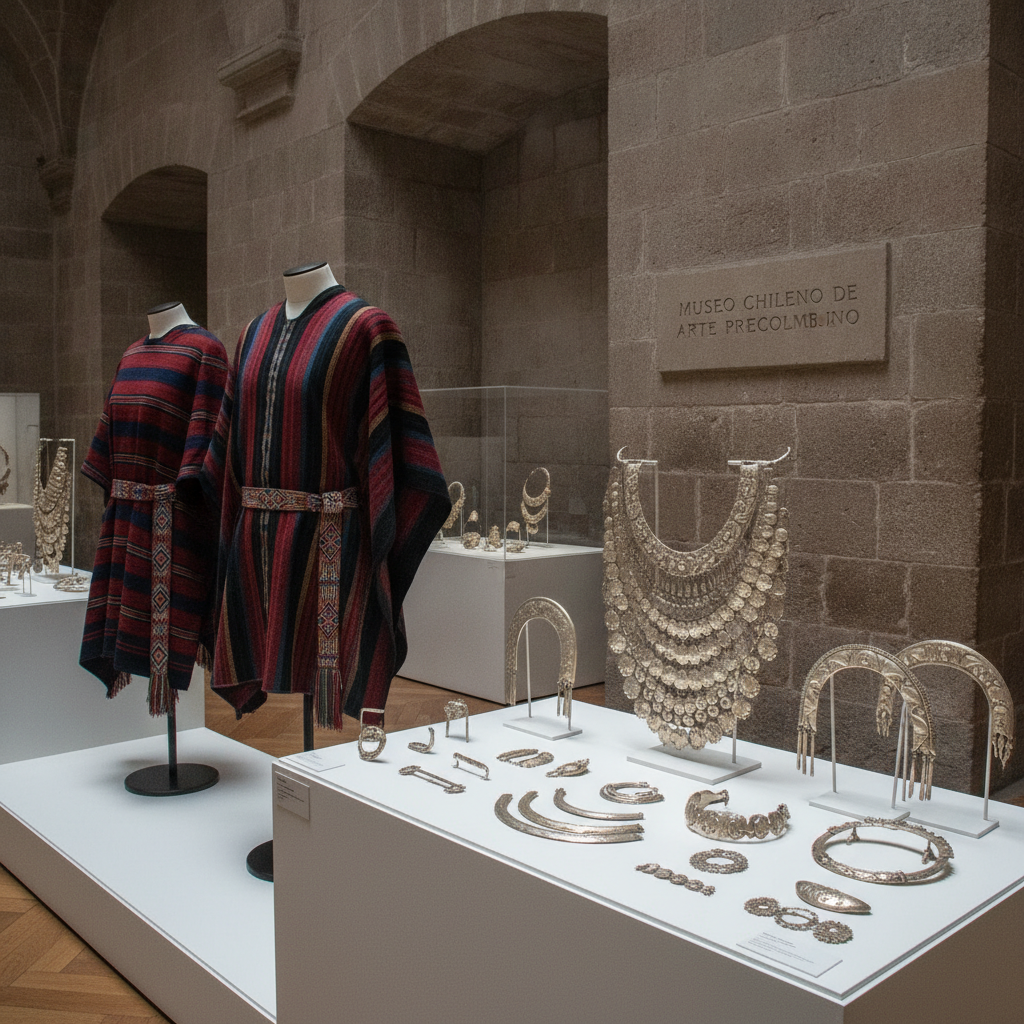
The Museo Chileno de Arte Precolombino (Bandera 361, Centro Histórico — the museum of pre-Columbian art housed in the former Royal Customs House (the 'Real Aduana de Santiago'), the 18th century Colonial building on the corner of Bandera and Compañía Streets in the historic centre of Santiago): the museum collection (the collection of approximately 2,000 objects from the pre-Columbian cultures of the Americas — the most important collection of pre-Columbian art in Chile, with particular strengths in the Mapuche material culture (the textiles, the silverwork, and the wooden objects of the Mapuche people), the Andean cultures of Chile (the Atacameño, Diaguita, and Chinchorro (the 'Chinchorro mummies' — the artificially mummified remains of the Chinchorro people of northern Chile and southern Peru, the oldest artificially mummified human remains in the world, dating from approximately 5000 BCE — 2000 years older than the oldest Egyptian mummies)), and the Mesoamerican and Amazonian cultures): the museum building (the 18th century Neo-Classical colonial building — the former Royal Customs House built 1807, donated to the city of Santiago by the family of Pablo Philippi after its 1981 donation to the Fundación Familia Larraín Echeñique, which opened the museum in 1981).
- 2
Mapuche History & the Guerra de Arauco
The Mapuche (the 'People of the Land' (from the Mapudungun language: 'mapu' = land, 'che' = people) — the Indigenous people of south-central Chile (the 'Araucanía' — the territory between the Biobío River and the Toltén River in south-central Chile) and the adjacent regions of southwestern Argentina (the 'Pampas Mapuche' and the Patagonian regions)): the Guerra de Arauco (the Arauco War — the longest colonial war in the history of the Americas, fought between the Spanish colonial forces and the Mapuche people from 1536 (the first encounter between the Spanish conquistadors and the Mapuche people, when the Mapuche resisted the advance of Diego de Almagro's expedition into Chilean territory) until the 'Pacification of Araucanía' by the Chilean state in 1883 — a conflict of 347 years): the Mapuche resistance (the Mapuche were the only Indigenous people in the Americas to successfully maintain their territorial independence against the Spanish colonial empire throughout the colonial period (1536-1818) — the Mapuche were never conquered by Spain, and the colonial boundary between Spanish territory (north of the Biobío River) and Mapuche territory (south of the Biobío) was formalized in the 'Treaty of Quilín' (1641), the first formal recognition by the Spanish Empire of an Indigenous nation's sovereignty in the Americas.
- 3
Atacama & Northern Chile's Pre-Columbian Cultures
The pre-Columbian cultures of northern Chile (the cultures of the Atacama Desert and the Altiplano that flourished for thousands of years before the Spanish conquest): the Chinchorro culture (the Chinchorro people (c. 5000 BCE - 1500 BCE) — the hunter-gatherer people of the Atacama coast who developed the earliest artificial mummification practice in the world — the 'Chinchorro mummies' (the artificially mummified human remains dating from approximately 5000 BCE — 2,000 years older than the oldest Egyptian mummies) — the mummies created by the Chinchorro by removing the organs, treating the skin, rebuilding the body with clay and sticks, and reapplying the skin over the reconstructed body (the 'black mummies' and the 'red mummies' — named for the colour of the manganese and ochre pigments applied to the mummy wrappings)): the Atacameño (Lickanantai) culture (the people of the San Pedro de Atacama oasis — the agricultural and pastoral people who developed the most complex pre-Columbian society in northern Chile, known for the black pottery (the 'cerámica negra atacameña' — the thin-walled black polished pottery that is the most distinctive pre-Columbian art form of northern Chile), the textiles, and the architecture of the 'pukarás' (the defensive hilltop fortifications)): the Tiwanaku and Inca influences (the cultural influence of the Tiwanaku civilization (c. 300-1000 CE) from the Lake Titicaca basin and the subsequent conquest and administration of northern Chile by the Inca Empire (c. 1400-1536 CE)).
- 4
Mapuche Culture Today & the Araucanía Region
The Mapuche today (the approximately 1.8 million people who identify as Mapuche in Chile and the approximately 200,000 in Argentina — constituting approximately 10% of the Chilean population, the largest Indigenous group in Chile): the Araucanía Region (the IX Región de La Araucanía in south-central Chile — the region with the highest concentration of Mapuche people, the region centred on the cities of Temuco and Villarrica, the region of the Mapuche mapus (territories), the sacred forests (the 'nguillatuhues' — the ceremonial gathering sites), and the lakes of the Lake District (the Lago Villarrica, the Lago Llanquihue, and the other glacial lakes of the Chilean Lake District)): the Mapuche language (Mapudungun — the 'language of the land', the language spoken by the Mapuche people, a language isolate (unrelated to any other known language family) that survives today with approximately 100,000-200,000 active speakers, primarily in the Araucanía Region and in the urban Mapuche communities of Santiago): the contemporary Mapuche political movement (the movement for the restitution of Mapuche territorial rights — the ongoing political and legal struggle of the Mapuche communities for the return of ancestral lands that were taken during the 'Pacification of Araucanía' (1861-1883), a struggle that has intensified in the 21st century and that has become one of the most important human rights issues in Chile).
- 5
Pueblos Originarios & Chilean National Identity
Chile's relationship with its Indigenous heritage (the complex and contested relationship between the Chilean national identity and the Indigenous peoples of Chile — the peoples who constitute approximately 12.8% of the Chilean population (the 2017 Chilean census, the first census in Chile to include a self-identification question for Indigenous peoples)): the nine recognized Indigenous peoples of Chile (the nine peoples recognized under Chilean law (the 'Ley Indígena' No. 19.253 of 1993): the Mapuche (the largest group, approximately 84% of the Indigenous population of Chile), the Aymara (the people of the northern Altiplano, concentrated in the Tarapacá and Arica-Parinacota regions), the Quechua, the Atacameño (Lickanantai), the Diaguita, the Rapa Nui (the people of Easter Island — the 'Isla de Pascua', the most remote inhabited island in the world, at 3,526 km (2,191 miles) from the Chilean mainland), the Colla, the Kawésqar (the 'Canoe People' of the channels of Patagonia and Tierra del Fuego), and the Yagán (the southernmost people in the world, the people of the Beagle Channel in Tierra del Fuego)): Easter Island (Rapa Nui — the UNESCO World Heritage Site in the Pacific Ocean, famous for the 'moai' (the 887 monolithic stone statues erected by the Rapa Nui people between the 13th and 16th centuries) — accessible by a 5-hour flight from Santiago on LATAM Airlines.
- 6
Barrio Yungay & Santiago's Traditional Neighbourhoods
Barrio Yungay (the neighbourhood in the Barrio Yungay / Barrio Brasil area west of the Centro Histórico of Santiago — the oldest surviving traditional residential neighbourhood in Santiago, the neighbourhood that retains the most intact urban fabric of early Santiago): the Barrio Yungay character (the neighbourhood of the early 19th century houses (the 'casas coloniales' — the one and two-storey houses with the interior patios that are the characteristic residential architecture of the Santiago colonial and early republican period), the early 20th century apartment buildings, and the neighbourhood squares (the Plaza Yungay and the Plaza Brasil — the neighbourhood squares that are the social centres of the Barrio)): the Museo de la Memoria (the Museum of Memory and Human Rights at Matucana 501, on the western edge of Barrio Yungay — the museum dedicated to documenting the human rights violations of the Pinochet dictatorship): the Matucana 100 (the cultural centre at Avenida Matucana 100 — the former military depot converted into the most important independent performing arts centre in Santiago, the venue for the most challenging and innovative theatre, dance, and music in the city): the Quinta Normal Park (the park and museum complex immediately north of Barrio Yungay — the park that houses the Museo Nacional de Historia Natural (the Natural History Museum of Chile), the Museo de Ciencia y Tecnología (the Science and Technology Museum), and the Museo Ferroviario (the Railway Museum — the museum with the finest collection of historic railway locomotives in South America, displayed in the former locomotive sheds of the Quinta Normal).
Walk this route with audio
Stories play automatically as you reach each stop — no tapping needed.
More in santiago
Chilean Cuisine, Empanadas & Santiago's Food Culture
Museum of Memory, Human Rights & Chile's Democratic Recovery
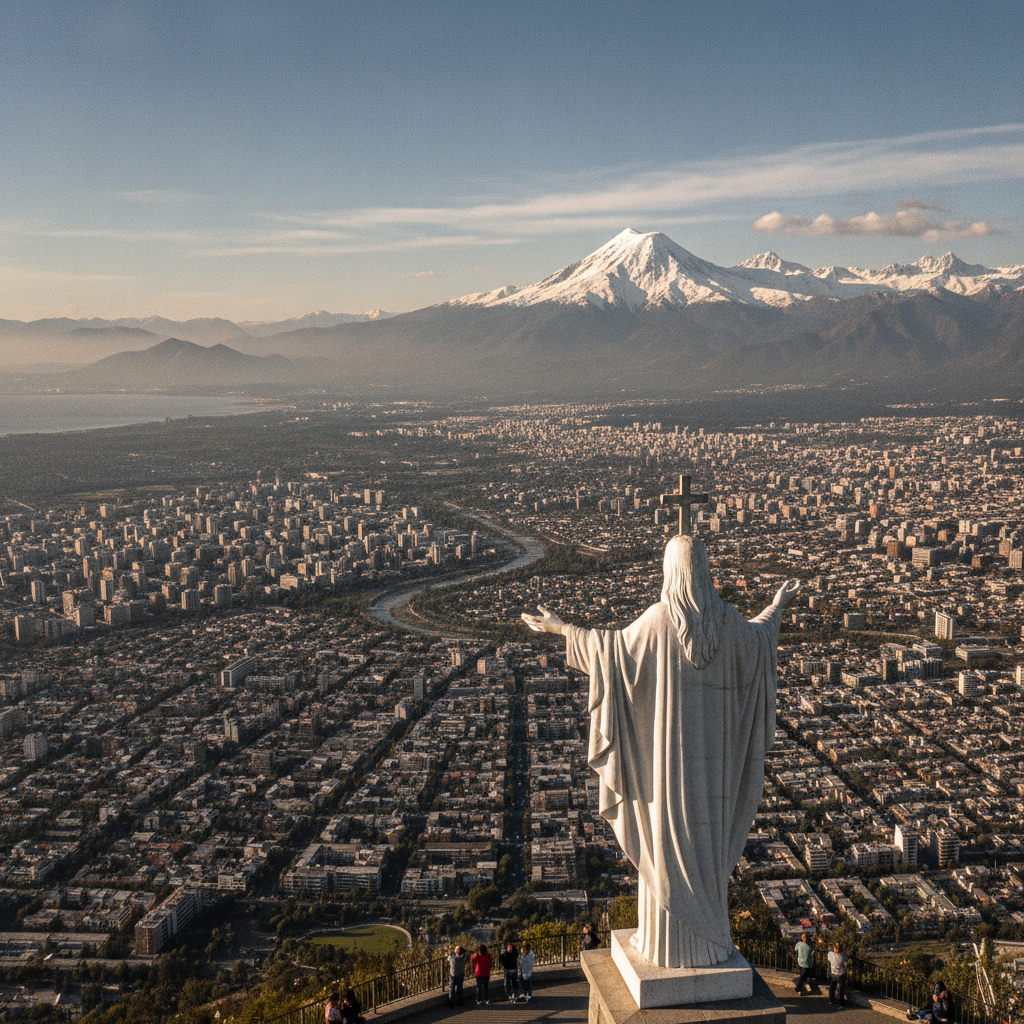
Cerro San Cristóbal, the Andes Panorama & Santiago's Natural Setting
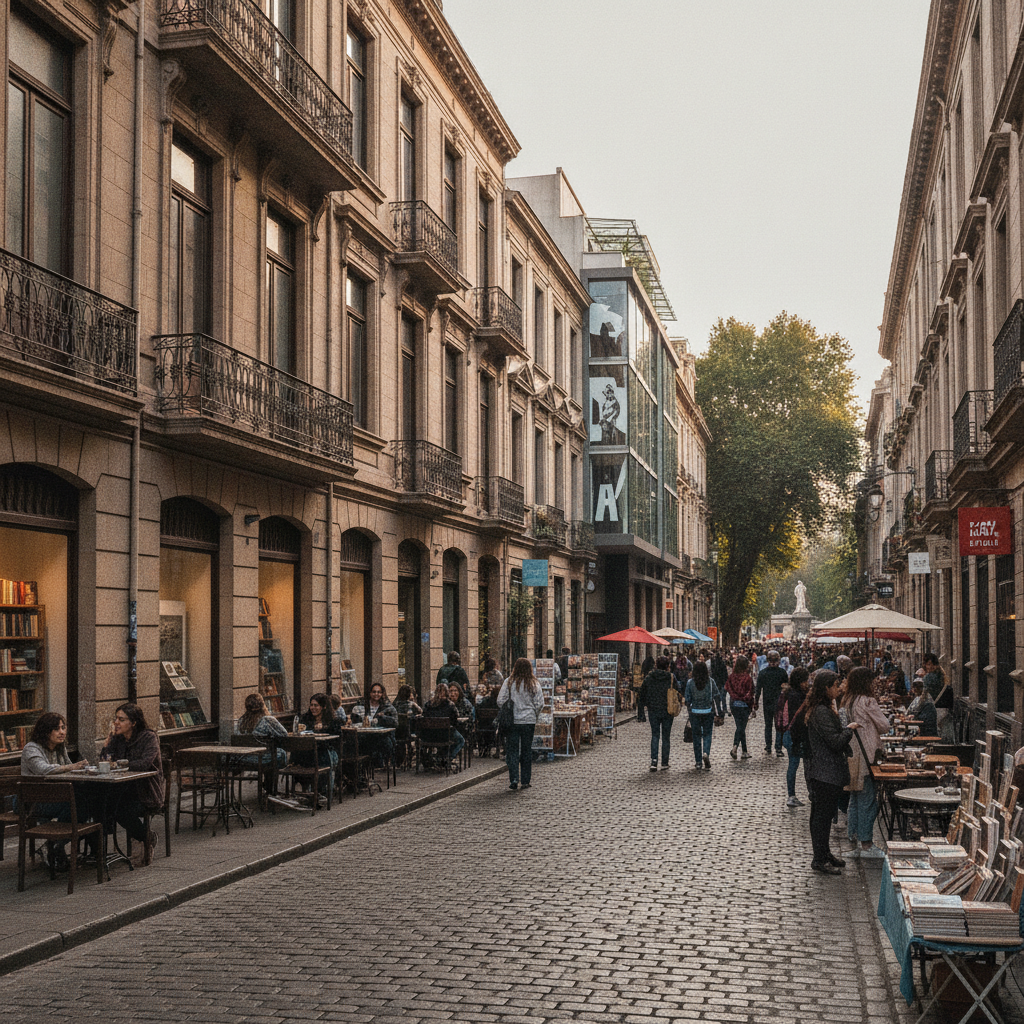
Barrio Lastarria, Bellas Artes & Santiago's Cultural Neighbourhood
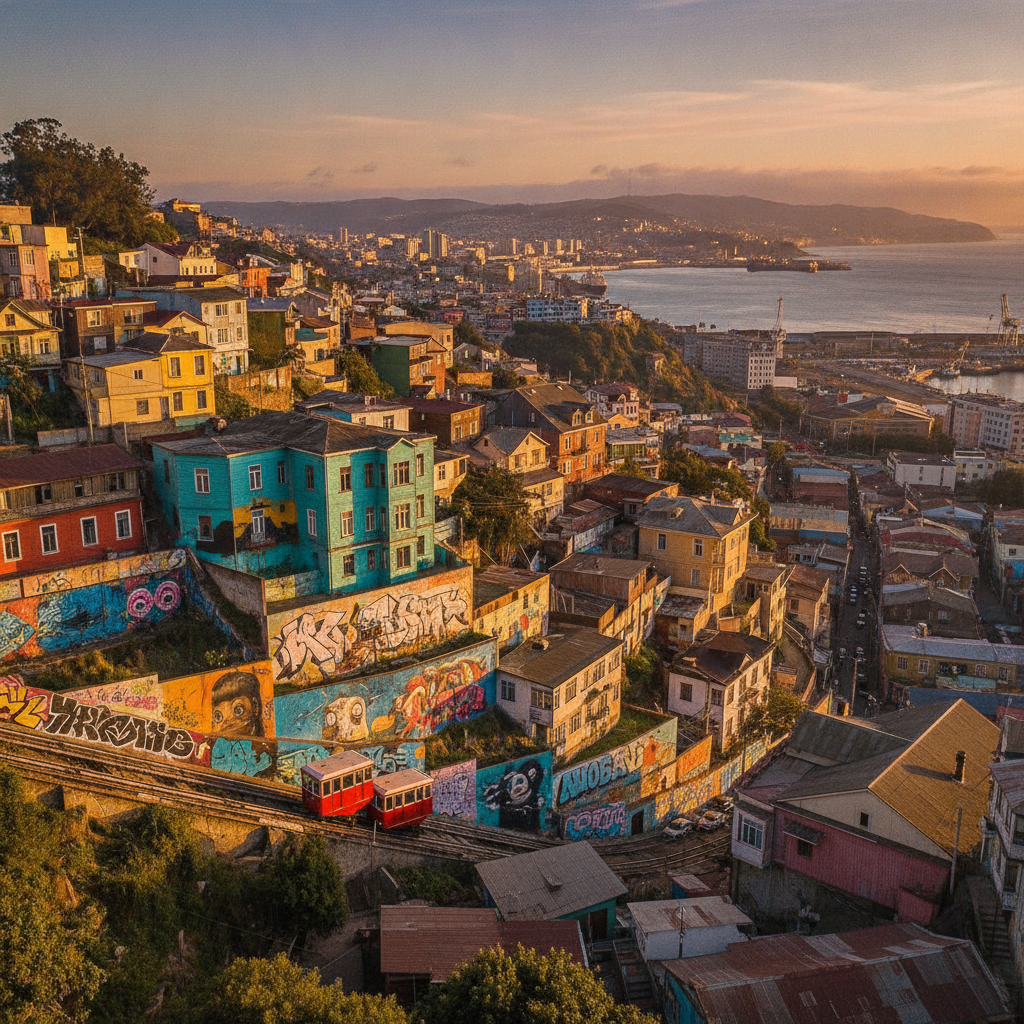
Valparaíso Day Trip — Chile's Bohemian Port City