Vitacura, Alonso de Córdova & Santiago's Upscale North
Vitacura (the most affluent municipality in Chile — the neighbourhood of the luxury shopping street of Avenida Alonso de Córdova, the Parque Bicentenario, the galleries of the Barrio El Golf, and the restaurants of the Barrio Patronato) and the adjacent Las Condes ('Sanhattan') district are where Santiago's wealthiest residents live, shop, and dine.
- 1
Alonso de Córdova — South America's Luxury Shopping Street
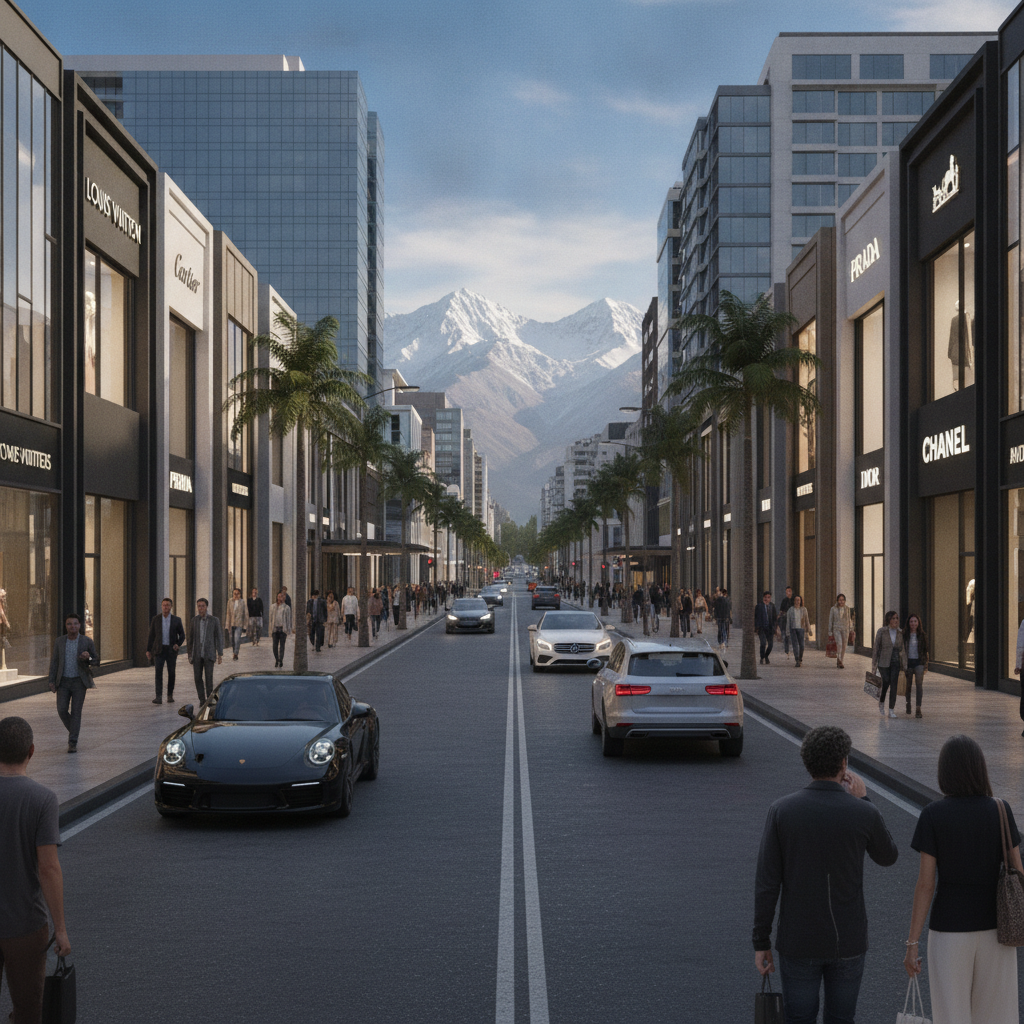
Avenida Alonso de Córdova (the primary luxury retail street in South America — the 6-block stretch in Vitacura lined with the flagship boutiques of the international luxury fashion houses (Louis Vuitton, Cartier, Hermès, Prada, Gucci, Dior, and Chanel all have their Chilean flagship stores on this street), the Chilean luxury brands, and the finest restaurants in Santiago): the street character (the wide, palm-lined boulevard, the contemporary architecture of the luxury boutiques, and the clientele of Santiago's wealthiest families and the international business travellers who visit the city): the Parque Arauco (the upscale shopping mall in Vitacura — one of the largest shopping malls in Chile, with 300+ stores across 3 levels).
- 2
Parque Bicentenario — Vitacura's Green Heart
Parque Bicentenario (the urban park in the heart of Vitacura, opened in 2007 for the bicentennial of Chilean independence — the park designed by the landscape architecture firm Teresa Moller & Asociados on the site of a former military airport): the park (the 30-hectare (74-acre) park with the artificial lake (the Laguna del Bicentenario — the lake with the fountains, the swan pedal boats, and the surrounding grassy meadows that make the park the most popular outdoor recreation space in northeastern Santiago), the children's play areas, the cycling paths, and the wetland areas that attract migrating birds): the restaurants and cafés around the park (the restaurants along the Avenida Bicentenario that face the park — the outdoor tables that fill on sunny days with the residents of Vitacura and Las Condes).
- 3
Santiago's Gallery District & Contemporary Art
The gallery district of Santiago (the concentration of contemporary art galleries in the Barrio El Golf (the financial district of Las Condes), the Barrio Vitacura, and the Barrio Lastarria that together constitute the primary commercial art market in Chile): the AMS Marlborough gallery (Avenida El Bosque Norte, Las Condes — the Chilean branch of the international Marlborough Gallery, the most important commercial gallery in Chile, representing the most significant Chilean and international contemporary artists): the Galería Isabel Aninat (Espoz 3100, Vitacura — the gallery that has been the most important venue for Chilean contemporary art since 1994): the Galería AFA (Espoz 3125, Vitacura — the gallery specializing in emerging Chilean artists): the Espacio Arte (the cluster of galleries on the Espoz and Alonso de Córdova streets in Vitacura that together constitute the finest gallery neighbourhood in Santiago).
- 4
Barrio Patronato & Santiago's Immigrant Communities
Barrio Patronato (the neighbourhood in the Recoleta municipality north of the Mapocho River — the most important textile and wholesale market district in Santiago, and the neighbourhood with the most diverse concentration of immigrant communities in the city): the Patronato textile market (the hundreds of wholesale and retail clothing and textile shops that line the streets of Patronato (the Avenida Patronato, the Calle Loreto, and the adjacent streets) — the market that is the primary destination for fashion retailers from across Chile who come to buy clothing at wholesale prices): the immigrant communities of Patronato (the neighbourhood that has successively been the home of the Lebanese-Palestinian community (the Arab immigrants who came to Chile in the late 19th and early 20th centuries and who established the textile and clothing trade in Patronato), and more recently the Peruvian, Haitian, and Colombian immigrant communities that have transformed the neighbourhood into the most ethnically diverse district in Santiago): the Korean community (the Korean textile merchants who operate many of the clothing wholesale businesses in Patronato — part of the Chilean-Korean community of approximately 40,000 people concentrated in the Patronato area).
- 5
Santiago Nightlife — From Clubs to Peñas
Santiago's nightlife (the nightlife of the city that is the entertainment capital of Chile — the city where nightlife begins late (the bars fill up after midnight, the clubs after 1 AM) and continues until dawn): the Bellavista club scene (the nightclubs of Barrio Bellavista — the neighbourhood that is the primary nightlife district of Santiago, with clubs operating on the Calle Pío Nono (the main street of Bellavista) and the surrounding streets): the Peña (the 'peña' — the traditional Chilean folk music venue, the performance space where the musicians of the Nueva Canción Chilena ('New Chilean Song' — the Chilean folk music movement of the 1960s-1970s) performed: the Peña de los Parra (the most famous peña in the history of Chile, established by Ángel and Isabel Parra (the children of Violeta Parra (1917-1967) — the Chilean singer-songwriter, folklorist, and visual artist who is the most important figure in the history of Chilean folk music) in 1965, the peña that was the primary cultural gathering space of the Chilean left in the years before the 1973 coup)): the cueca clubs (the 'picanterías' and 'cités' of the Santiago popular culture that host cueca dancing — the traditional Chilean folk dance that is the national dance of Chile).
- 6
Atacama & Chilean Geography Day Trips
Chile's extraordinary geographic diversity (the country that extends 4,300 km (2,670 miles) along the western coast of South America — the narrowest country in the world (average width 177 km / 110 miles) with the most extreme climate diversity of any country on earth): the Atacama Desert (the driest non-polar desert on earth — the Atacama plateau (the 'altiplano') in northern Chile at 2,400-4,500 metres (7,900-14,800 feet) elevation, the desert that receives an average of 1 mm (0.04 inches) of rainfall per year in its driest parts (the Yungay site in the Atacama has been called 'the driest place on earth')): the San Pedro de Atacama (the oasis town at 2,438 metres (7,999 feet) elevation in the heart of the Atacama Desert — the primary base for tourism in the Atacama, with daily flights from Santiago (the 2-hour flight from Santiago Aeropuerto Internacional Arturo Merino Benítez to Aeropuerto Internacional El Loa at Calama)): the Atacama landscapes (the Valle de la Luna ('Valley of the Moon' — the lunar landscape of salt formations, clay canyons, and sand dunes in the Cordillera de la Sal near San Pedro), the El Tatio geysers (the geothermal field at 4,320 metres (14,173 feet) elevation — the highest geothermal field in the world, with 80 active geysers erupting at dawn in the sub-freezing Atacama morning), and the flamingo lagoons of Atacama).
Walk this route with audio
Stories play automatically as you reach each stop — no tapping needed.
More in santiago
Chilean Cuisine, Empanadas & Santiago's Food Culture
Museum of Memory, Human Rights & Chile's Democratic Recovery
Cerro San Cristóbal, the Andes Panorama & Santiago's Natural Setting
Barrio Lastarria, Bellas Artes & Santiago's Cultural Neighbourhood
Mapuche Culture, Museo Precolombino & Chile's Indigenous Heritage