Dominican Republic Identity: Taino Legacy, the New York Diaspora, Semana Santa, Dominican Cigars, and Political Culture
The Dominican national identity encompasses the Taino indigenous linguistic legacy, the extraordinary New York diaspora concentration in Washington Heights, the Semana Santa national beach vacation, the premium cigar industry of the Cibao Valley, and the functioning multiparty democracy that has produced peaceful transfers of power since 1978.
- 1
Dominican Identity: Neither Cuban Nor Puerto Rican
The Dominican national identity, shaped by the Spanish colonial heritage, the Taino indigenous legacy, the African enslaved peoples, and the Haitian neighbor, is distinct from both the Cuban and Puerto Rican identities that constitute the other major poles of Spanish Caribbean culture. The Dominican insistence on the Hispanic rather than African elements of its identity, rooted in the Trujillo-era ideology of hispanidad, has created a complex relationship with the Afro-Dominican heritage that contemporary Dominican scholars and artists are actively reexamining.
- 2
Taino Legacy: The Indigenous Contribution
The Taino people, the indigenous inhabitants of the island of Hispaniola who were almost entirely eliminated by the Spanish colonial violence, disease, and enslavement within 50 years of European contact, left a permanent linguistic and cultural legacy in the Dominican Republic through the food vocabulary of words including hamaca hammock, canoa canoe, barbacoa barbecue, and hurricane, and through the Taino ceramic and artistic traditions preserved in the Museo del Hombre Dominicano.
- 3
Diaspora: New York Quisqueya
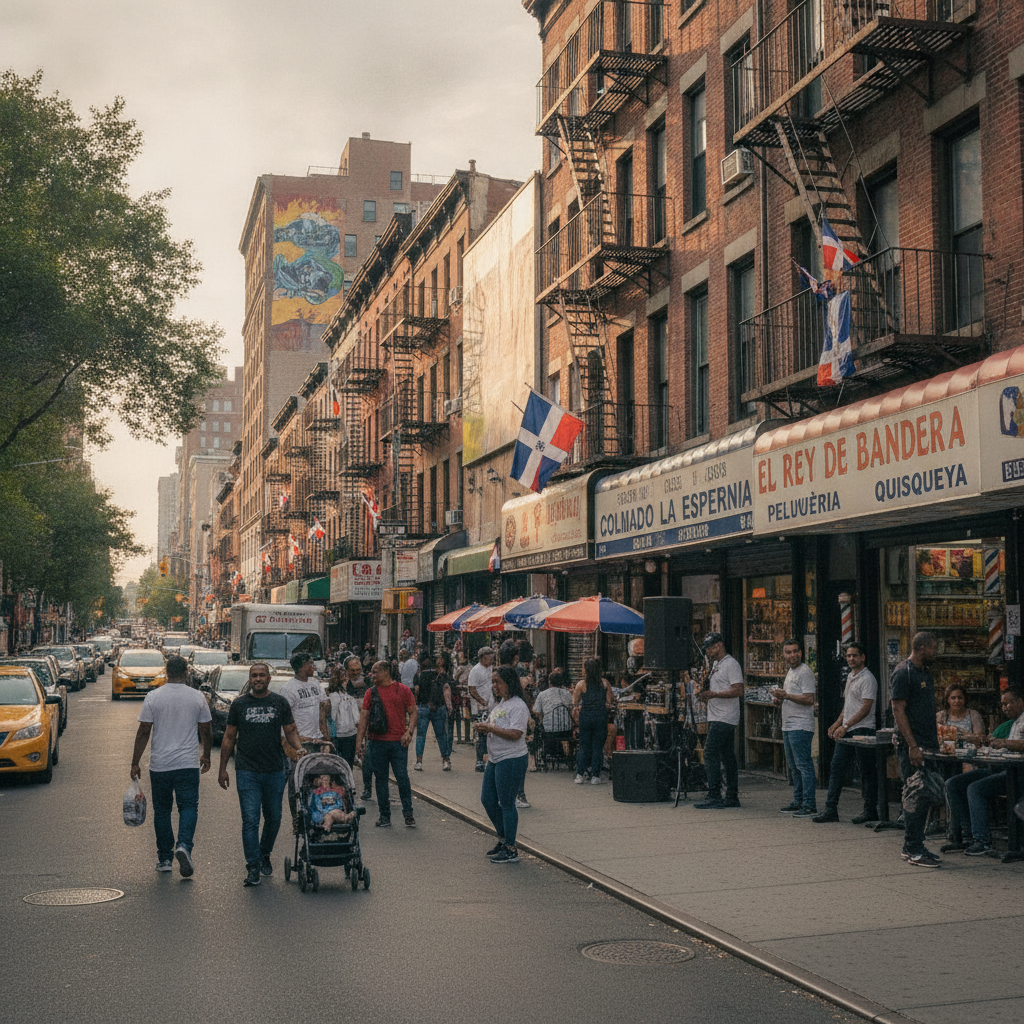
The Dominican diaspora in New York City, the largest concentration of Dominicans outside the Republic with approximately 800,000 in the New York metropolitan area, has created the Washington Heights neighborhood of upper Manhattan as the most complete expression of Dominican urban culture outside Santo Domingo, with the bachata music, the Dominican restaurants, and the political and cultural organizations that maintain the connection to the island. The Dominican New York presence has produced significant contributions to American hip hop, baseball, and the restaurant industry.
- 4
Semana Santa: The Holy Week Exodus
The Semana Santa Holy Week in April, when the entire Dominican Republic effectively shuts down for the national beach vacation that takes millions of Dominicans from the cities to the beaches and the mountains, is the most important cultural event of the Dominican annual calendar: the roads fill, the beaches overflow, the music volumes maximize, and the habichuelas con dulce sweet bean pudding appears in every household as the food of the season.
- 5
Cigars: The Dominican Premium Tobacco
The Dominican Republic is one of the largest premium cigar producing countries in the world, with the Cibao Valley around Santiago producing the highest volume and quality of premium hand-rolled cigars using tobacco grown in the rich valley soil. The cigar factory tours in Santiago and the specialty cigar shops of the Santo Domingo hotels provide the most direct encounter with the Dominican tobacco tradition that has made the country the primary supplier of premium cigars to the American market.
- 6
Election Culture and Democracy
The Dominican Republic has maintained a functioning multiparty democracy since 1978 with regular peaceful transfers of power, making it one of the more stable democracies in the Caribbean. The Dominican electoral culture, with its high voter participation, the neighborhood-level political organization of the major parties, and the importance of family and patronage networks in political behavior, reflects the social structure of a society that takes political participation seriously as a channel for resource distribution.
Walk this route with audio
Stories play automatically as you reach each stop — no tapping needed.
More in Santo Domingo
Santo Domingo Practical Guide: Metro Transport, Dominican Carnival, Samana Whale Watching, and Jarabacoa Mountain Adventures
Santo Domingo Dark History: Trujillo Dictatorship, the 1937 Massacre, the Haiti Border Relationship, and the First Americas University
Dominican Republic Food: La Bandera, Sancocho, Presidente Beer, Brugal Rum, and the Street Food Chimichurri
Santo Domingo Practical Guide: Las Americas Airport, Punta Cana All-Inclusive, Peso Economy, and Caribbean Hub Connections
Santo Domingo Culture: Baseball Nation, the Gazcue Neighborhood, Dominican Gastronomy, and Merengue Nightlife