Oia — the Blue-Domed Village, Caldera Views & the Most Famous Sunset in Greece
Santorini (the volcanic island of 15,000 permanent residents in the southern Cyclades, the collapsed caldera of the 3,600 BCE Minoan eruption — one of the largest volcanic events in recorded human history — which may be the origin of the Atlantis legend, a UNESCO-protected cultural landscape, accessible by ferry from Athens in 8 hours or by flight from Athens in 50 minutes) is the most photographed island in the Mediterranean.
1. Oia Village — the Sunset Capital of the Aegean
- 1
Oia Village — the Sunset Capital of the Aegean
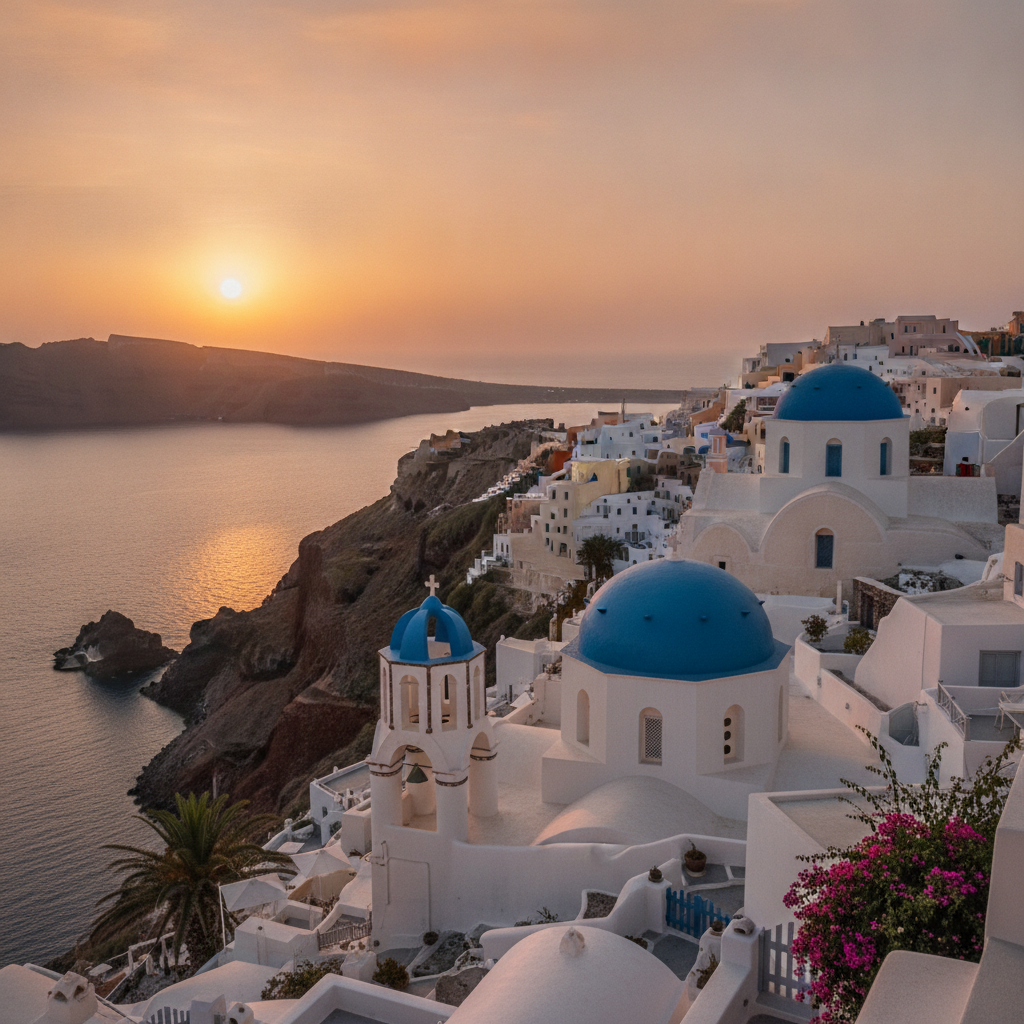
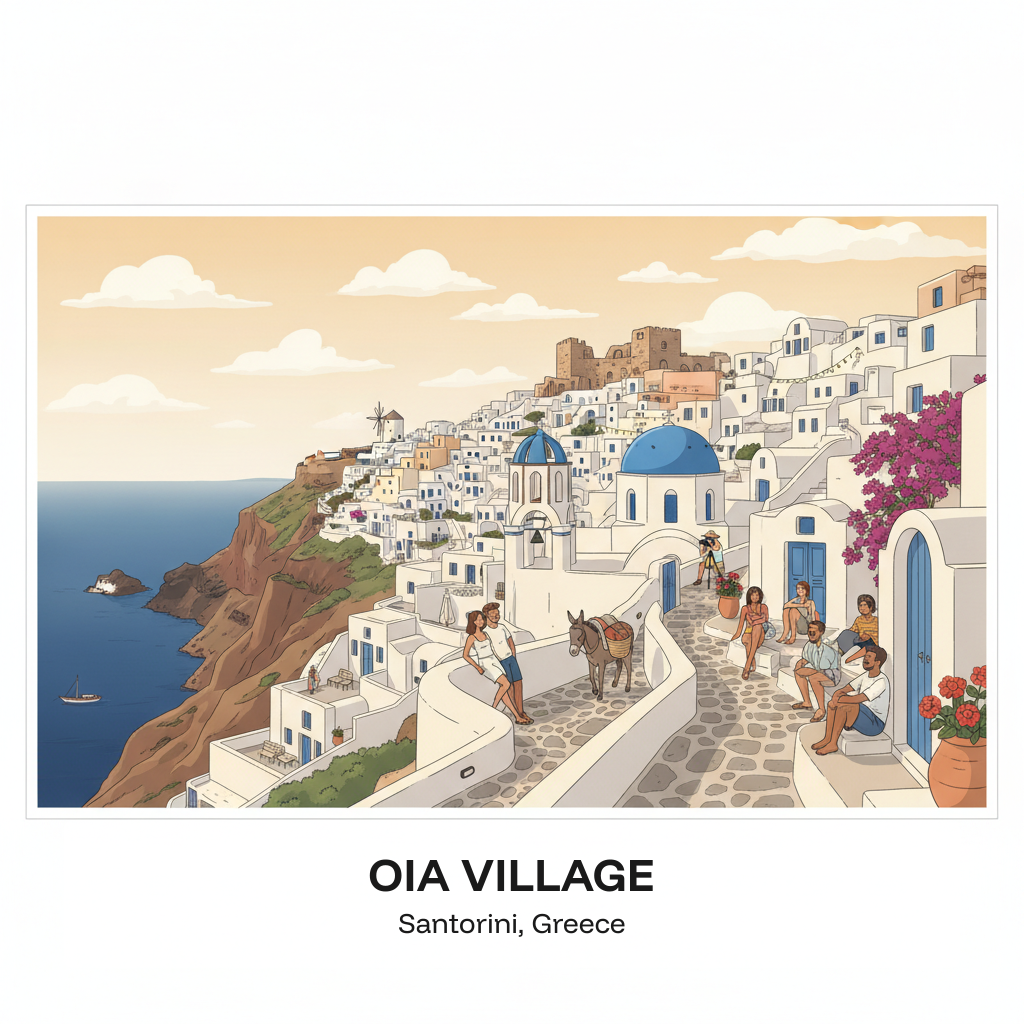
Oia (the village at the northern tip of Santorini's crescent-shaped main island, population 1,500, the most photographed Cycladic village in the world, built into the inner face of the caldera cliff at 120-350m above the sea) is where the Santorini sunset pilgrimage takes place daily. The Castle of Oia (the ruined Venetian kastro at the highest point of the village, the sunset viewing platform — capacity 3,000 people in summer, the gathering beginning 2 hours before sunset, the actual sunset visible from the castle terrace at 8:20-8:40pm in July, free access) and the three blue-domed churches (the Panagia Platsani and the Anastasis churches immediately below the castle, the most photographed church cluster in Greece, the blue dome visible against the white-washed walls and the caldera blue below) are the defining visual elements. Arriving at the castle 90 minutes before sunset is the minimum required time to secure a position; arriving 3 hours before allows you to sit.
- 2
Fira — the Capital on the Caldera Rim
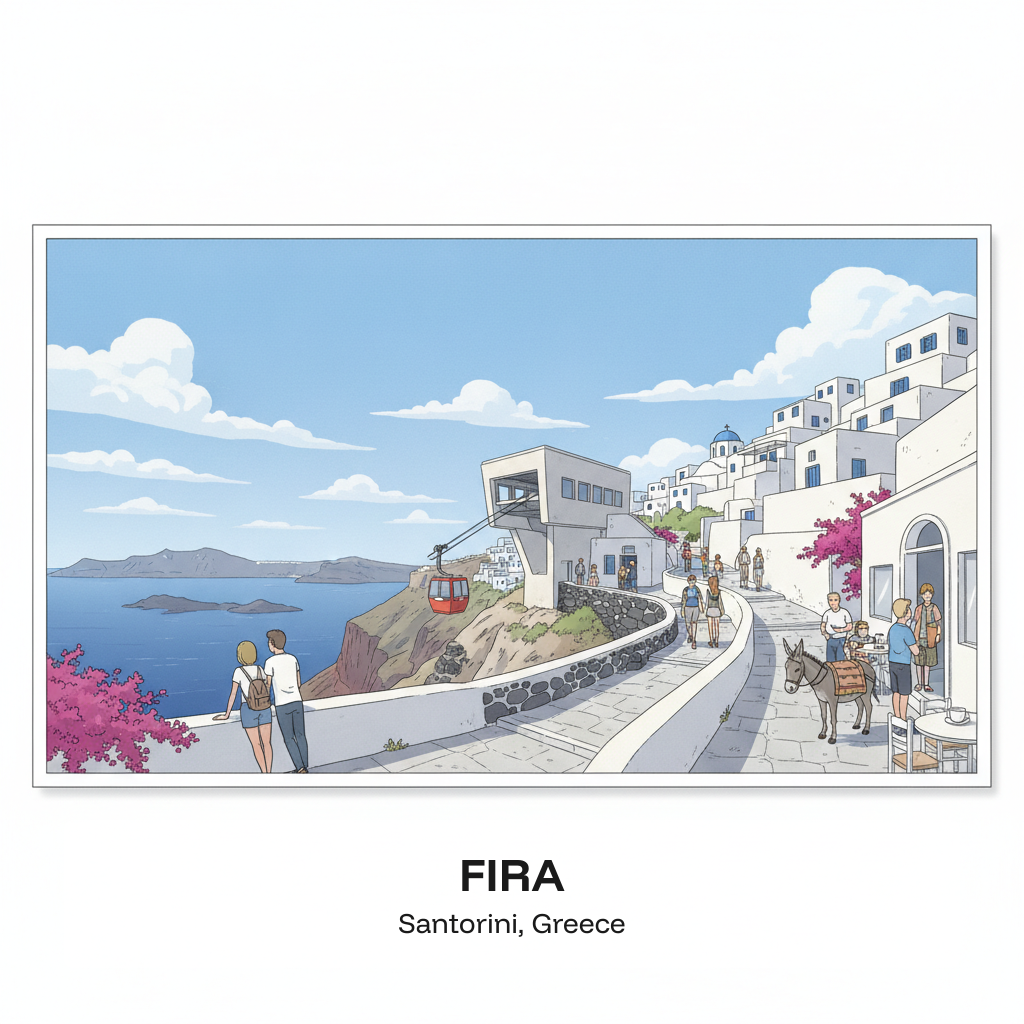
Fira (the capital of Santorini, population 2,000, on the caldera rim at 260m altitude, the most densely commercial town on the island, the cable car terminus connecting the port of Skala Fira to the cliff-top town — 6 cable car cars descending 220m, €6 one-way, €10 return, operating 7am-10pm — or 588 steps down the donkey path, the donkeys available for the ascent at €5 per person but the practice increasingly controversial for animal welfare) is the practical hub of the island. The Archaeological Museum of Thera (the caldera-edge museum, €3 adults, Tuesday-Sunday 8am-8pm, the collection of pre-Minoan and Minoan pottery, bronze tools, and wall paintings from the excavations at Akrotiri) and the Museum of Prehistoric Thera (the purpose-built museum on the main pedestrian street of Fira, €6 adults, the most important collection of Minoan-period Theran artefacts — the gold ibex figurine, the Minoan fresco fragments, and the Boxing Boys fresco from Akrotiri) are the town's two museums flanking the caldera-view shopping and restaurant strip.
- 3
Akrotiri — the Minoan Pompeii Under the Ash
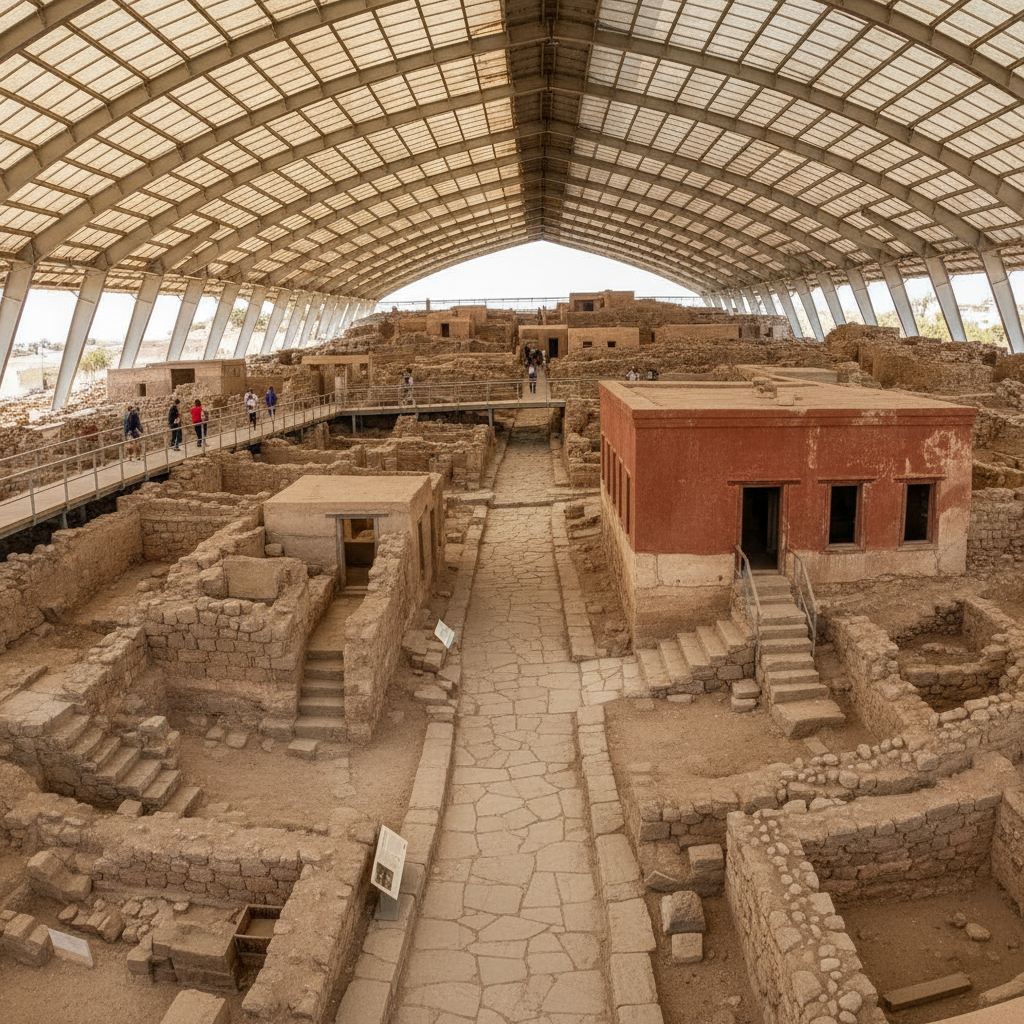
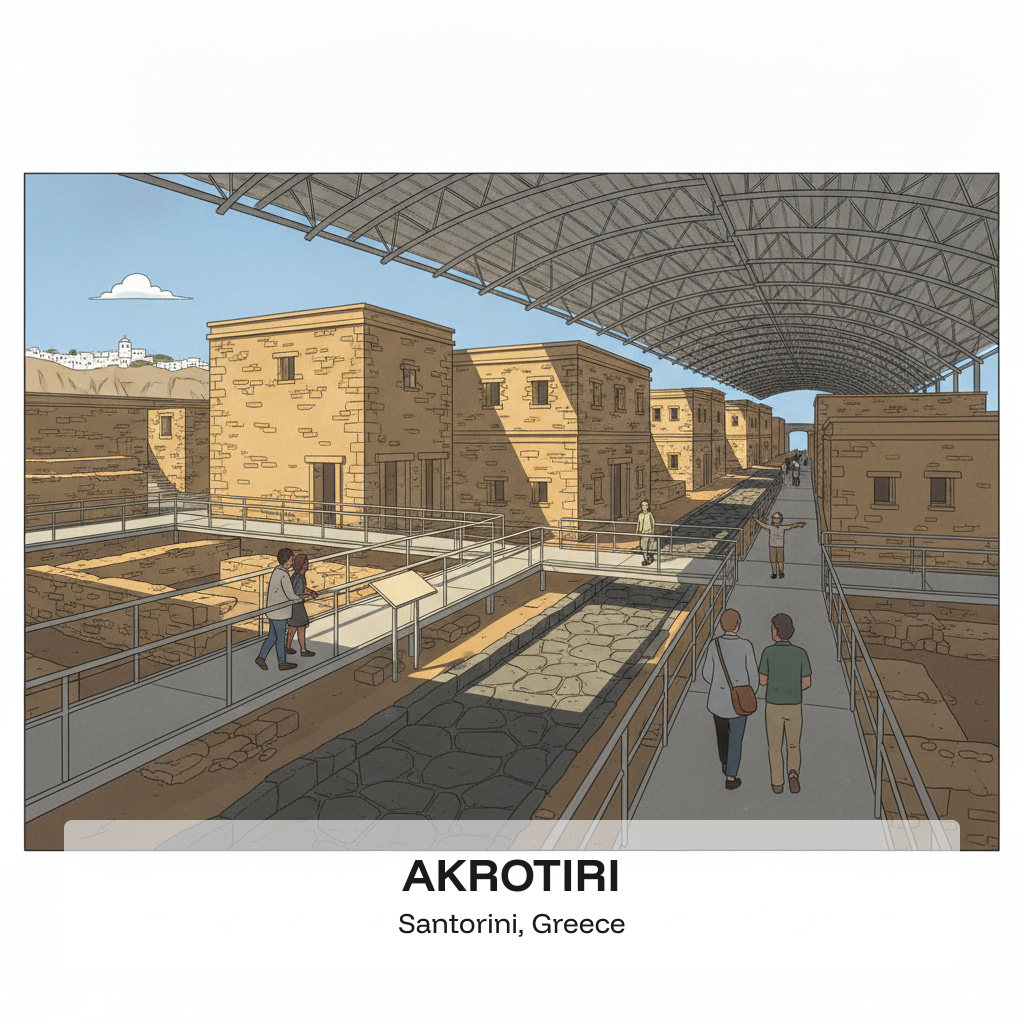
Akrotiri (the Bronze Age Minoan settlement on the southwest coast of Santorini, covered and preserved by the ash of the 3,600 BCE eruption, excavated since 1967, €12 adults, Tuesday-Sunday 8am-8pm, the roofed archaeological site where the excavated streets and multi-storey buildings of the ancient city are visible in situ) is the most important prehistoric site in the Aegean after Knossos on Crete. The two-storey houses (the Xeste 3, the West House, the House of the Ladies — multi-storey Minoan civic buildings with frescoed walls, the frescoes now in the Museum of Prehistoric Thera in Fira), the street network (the ancient paved streets of the Bronze Age city, the wheel ruts of 3,600-year-old carts visible in the stone), and the lack of human remains (the absence of bodies in the excavation indicating a successful evacuation before the eruption, the great earthquake that preceded the main eruption giving the population sufficient warning) make Akrotiri uniquely legible as an ancient city. The lighthouse at the southern tip (the red-and-white Faros lighthouse, the walk from Akrotiri along the cliff edge, the southernmost point of Santorini and the best view of the Aegean from sea level) is 3km south of the archaeological site.
- 4
Amoudi Bay — the Fishing Port Below Oia
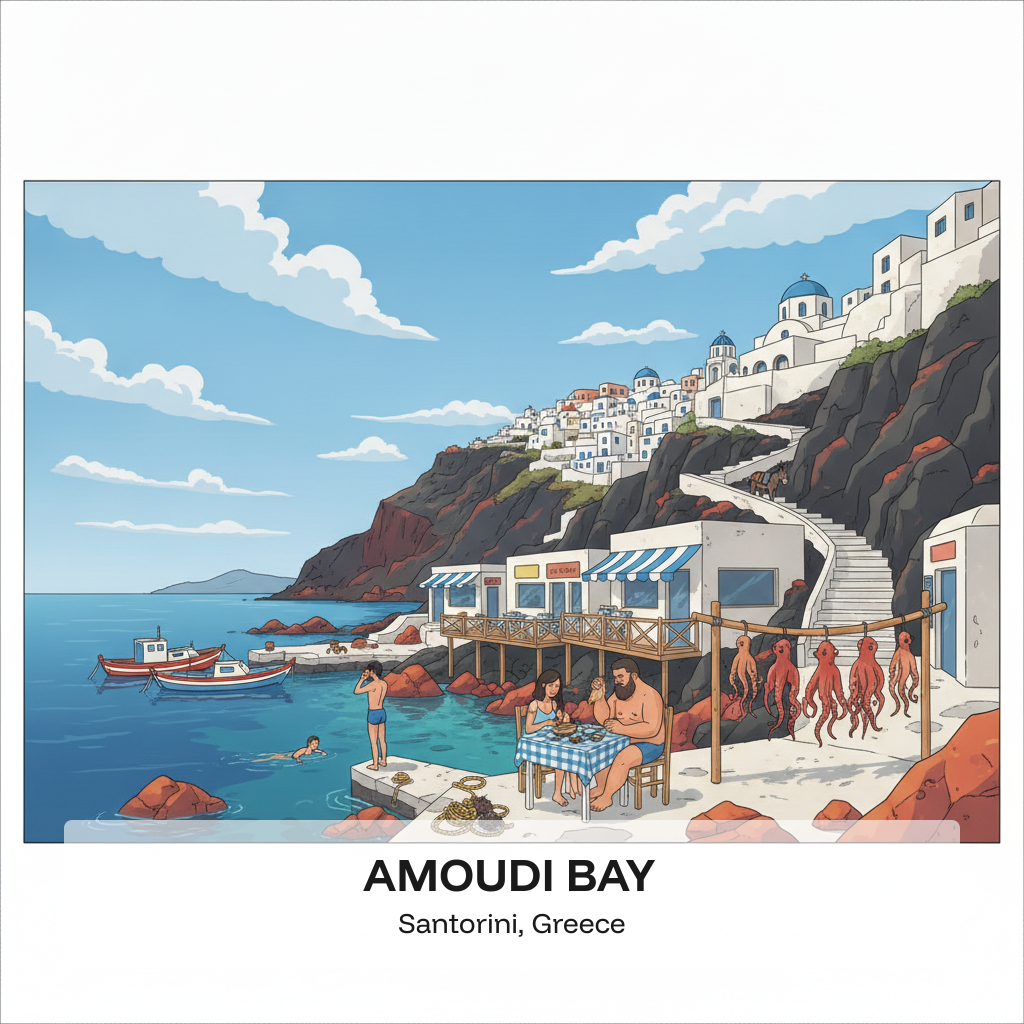
Amoudi Bay (the tiny fishing port 80m below Oia village, accessible by descending 214 steps from the village or by road from the northern tip of the island, the bay sheltered within a volcanic rock formation, the 3 fish tavernas built directly on the volcanic rock at the water's edge) is the correct Santorini seafood destination — the octopus (hung to dry on the taverna rails in the traditional Aegean manner, the Katina taverna the most established of the three, the grilled octopus €18-25, the fresh caught-that-morning grilled fish at €10-12 per 100g) and the sea urchin (collected from the caldera walls by the taverna owners and served fresh in the shell with lemon, the most directly obtained seafood in Greece, €3-4 per urchin) are the specific products of this bay. The sunset swim (the rocky entry into the bay from the taverna platforms, the water clarity exceptional at 30m depth, the swim towards the caldera entrance opening with the Oia village visible on the cliff 80m above) is the alternative to the castle sunset crowd.
- 5
Santorini Wine — Assyrtiko from Ancient Volcanic Soil
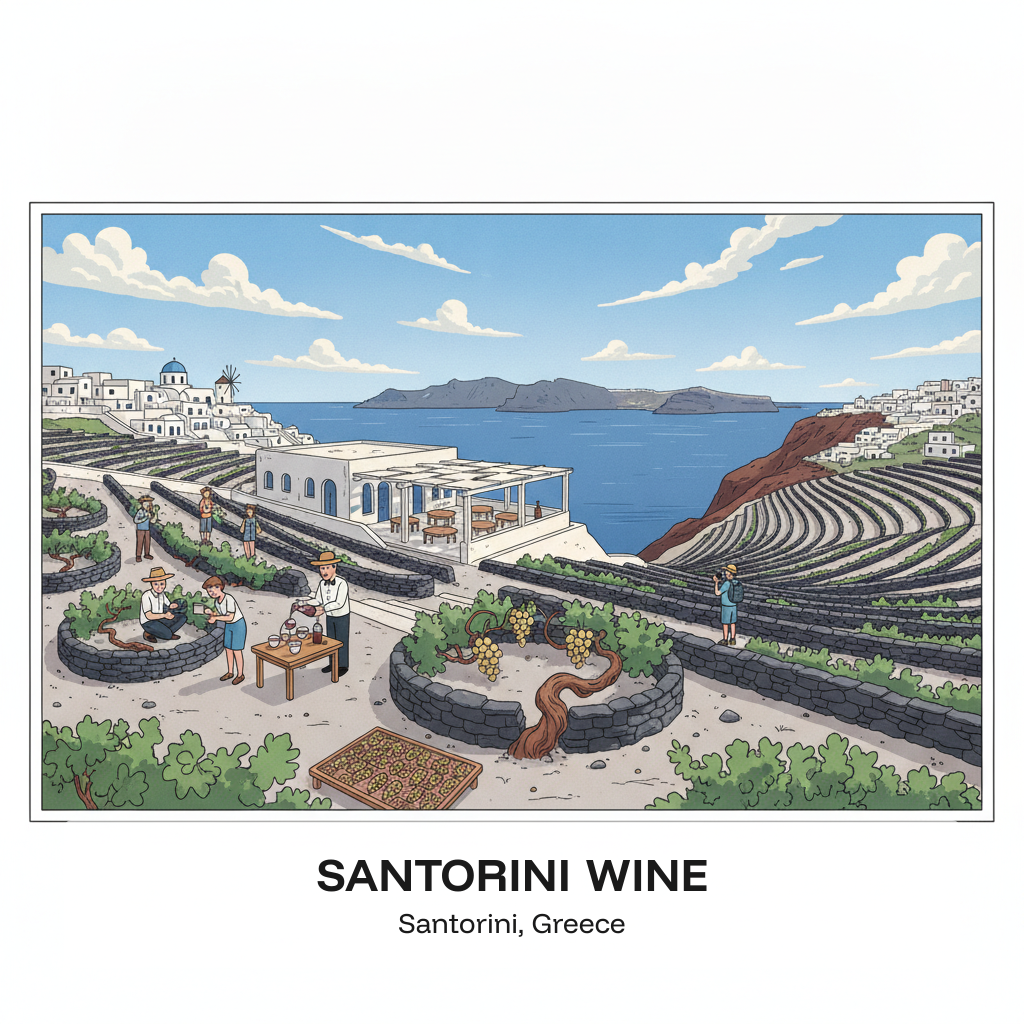
Santorini wine (the Assyrtiko grape variety grown on the volcanic ash soil of the island, the ancient basket-trained vine system — the kouloura, the circular low-trained vine basket protecting the grapes from the Aegean wind, some vine stocks over 200 years old, the oldest in Europe for still-productive wine grapes — producing a white wine of extraordinary minerality, high acidity, and citrus-flint character, the Santorini PDO appellation covering the dry white Assyrtiko and the dessert wine Vinsanto) is produced by: Santo Wines (the island cooperative winery, Pyrgos Kallistis, the caldera-view tasting terrace, daily tastings 10am-8pm, €15 for 5 wines, the most accessible winery on the island), Domaine Sigalas (Oia, the most acclaimed small Santorini producer, the Assyrtiko barrel-fermented version at €25-35/bottle, visits by appointment), and Estate Argyros (Episkopi, the largest estate producer, the Cuvee Monsignori Assyrtiko aged in oak at €40-60/bottle, the Vinsanto aged 15-20 years in oak at €30/375ml — the must-taste dessert wine). The kouloura system (visible in the terraced vineyards between Oia and Fira) is among the world's most photographed viticultural landscapes.
- 6
Perissa and Perivolos — the Black Sand Beach Coast
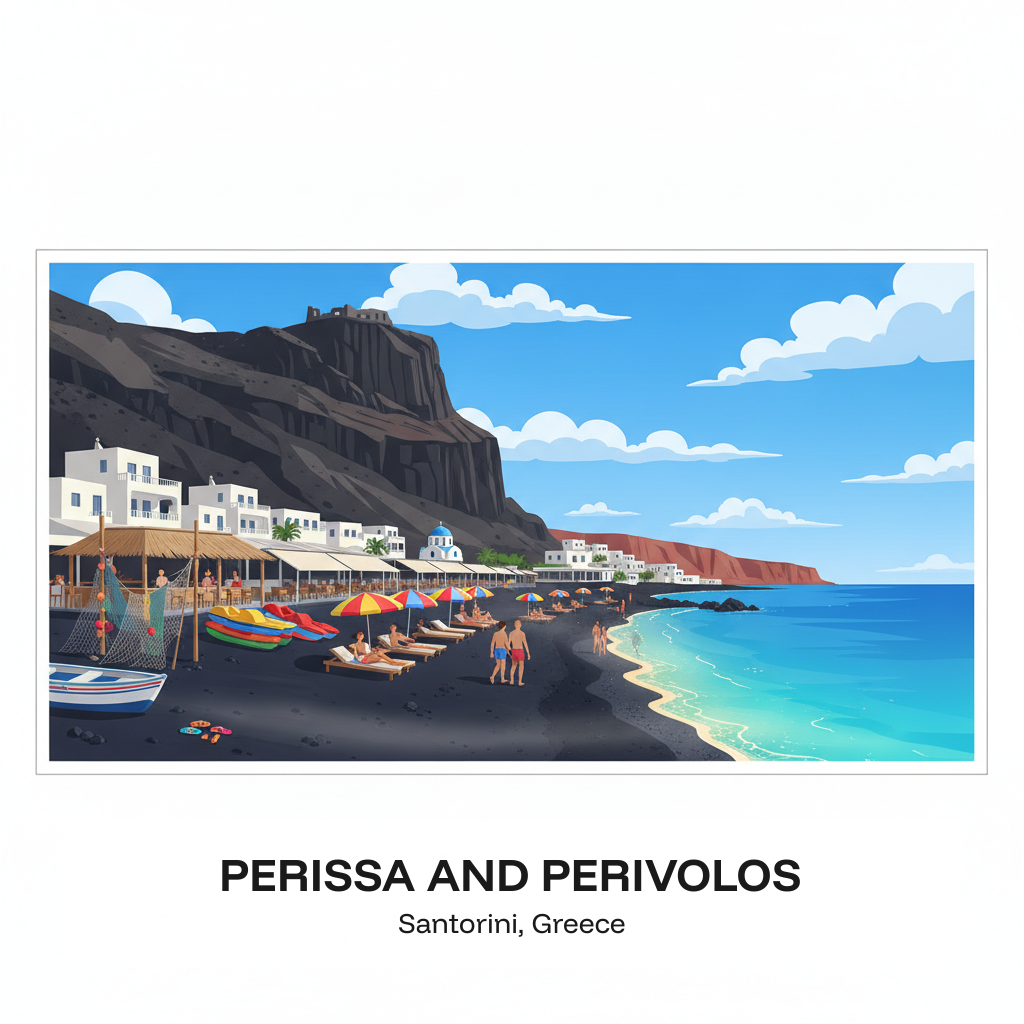
Perissa and Perivolos (the black volcanic sand beach on the southeastern coast of Santorini, the longest continuous beach on the island at 3km, the black sand (the volcanic basalt and obsidian particles, the sand reaching 50-55 degrees Celsius in July-August midday sun — barefoot walking requires care — the sand heating the water to exceptional temperatures at the shoreline) lined with 60+ beach bars and tavernas, the most resort-like section of Santorini distinct from the cliffside villages of the caldera rim) are the correct destination for beach-oriented visits. The Archaeological Museum of Ancient Thera (above Perissa on the Mesa Vouno cliff, accessible by the 350-step path from Perissa or by the road from Kamari, free, the ancient Dorian city of Thera founded 9th century BCE, the most complete ancient city ruins on Santorini) provides the cultural counterpoint to the beach; the Red Beach (the volcanic red-cliff cove 2km west of Perissa, accessible by boat from Akrotiri Beach or by a 15-minute walk on a marked path, the dramatic red volcanic cliff face above a small pebble beach, the most visually striking beach in the Cyclades) is the natural spectacle.
Walk this route with audio
Stories play automatically as you reach each stop — no tapping needed.
More in santorini
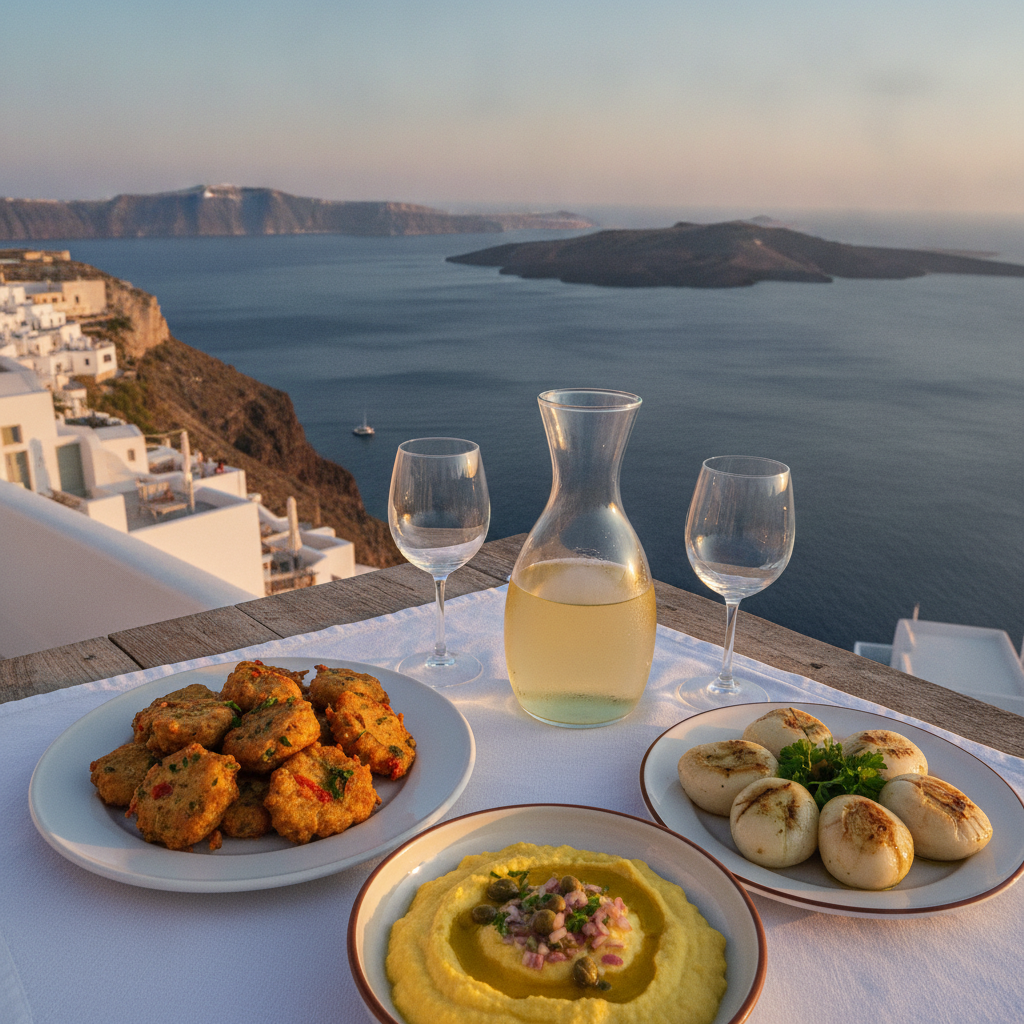
Santorini Food & Wine — Assyrtiko, Fava, Tomatokeftedes & Local Products
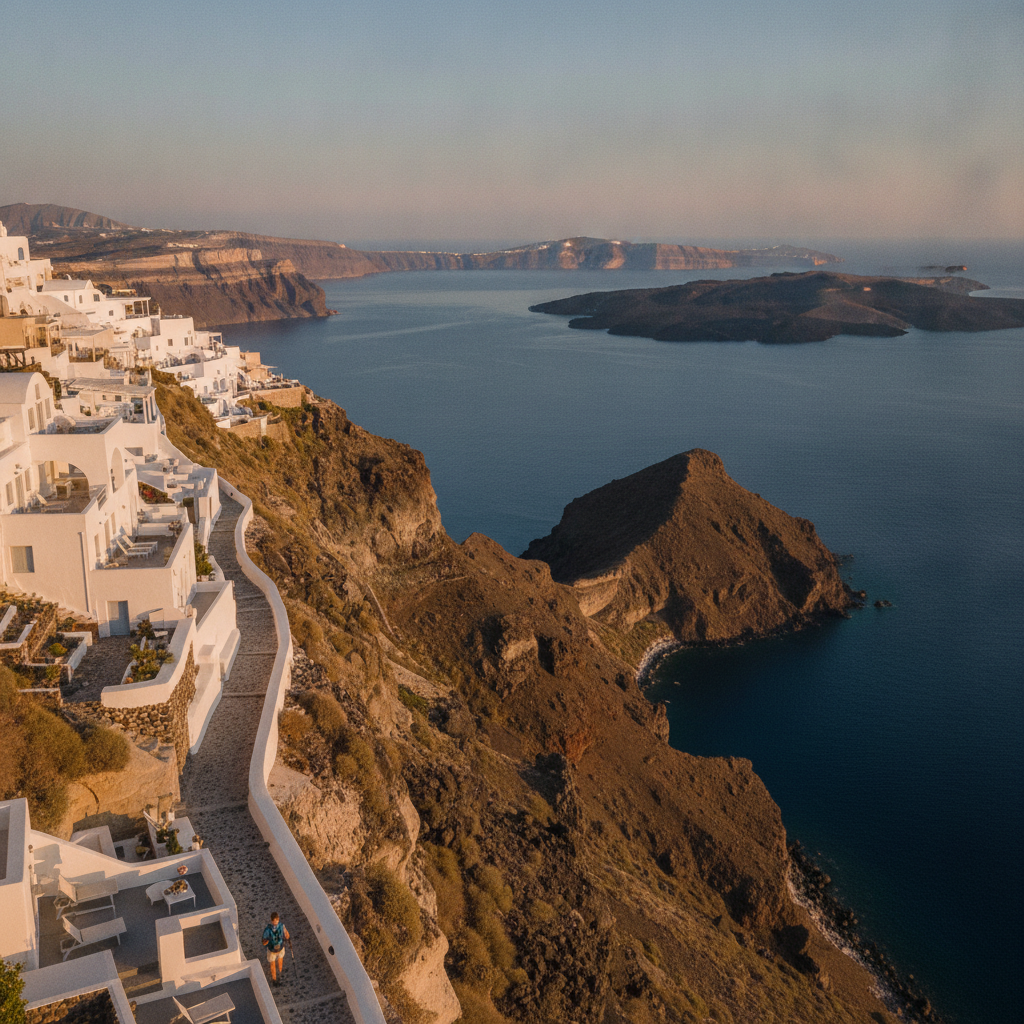
Santorini Villages & Hiking — Emporeio, Megalochori, Pyrgos & the Inland Island
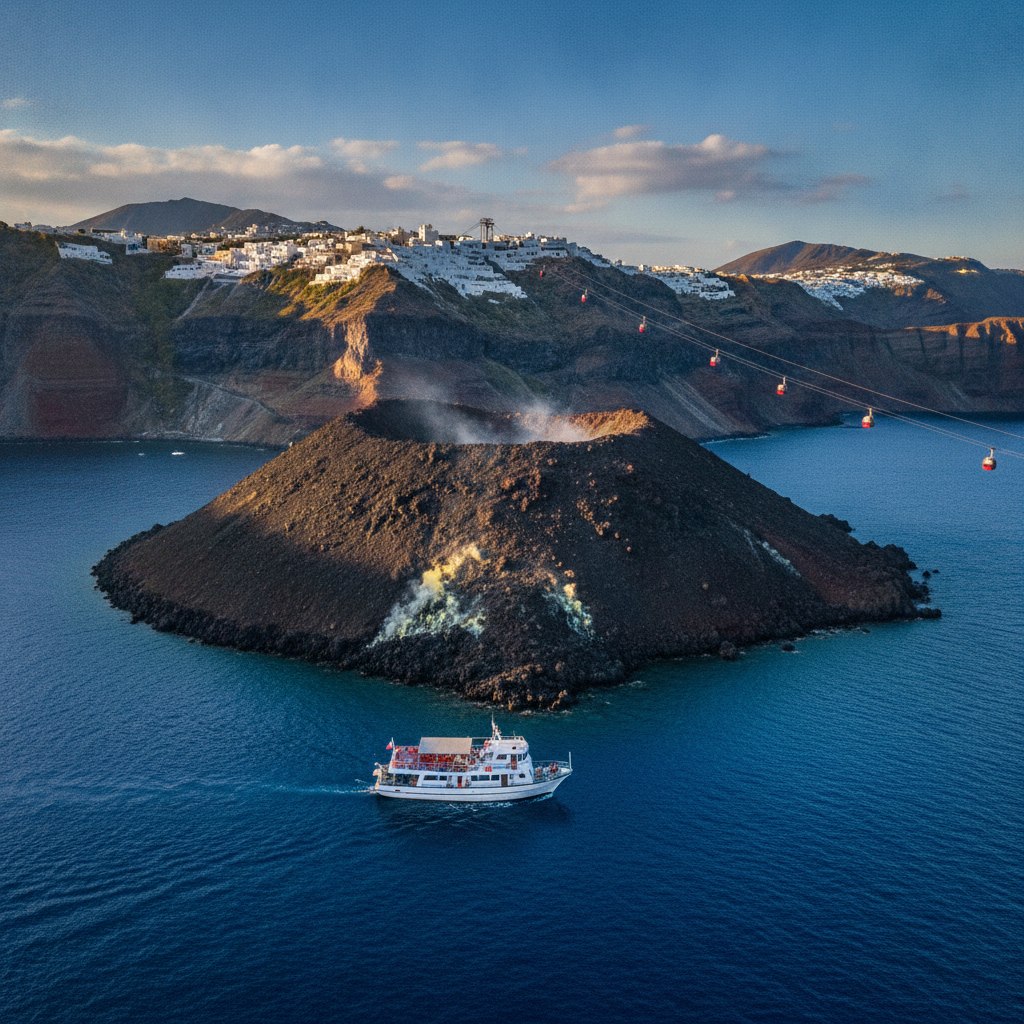
Santorini Caldera Boat Tour — the Volcano, Hot Springs & Thirasia Island
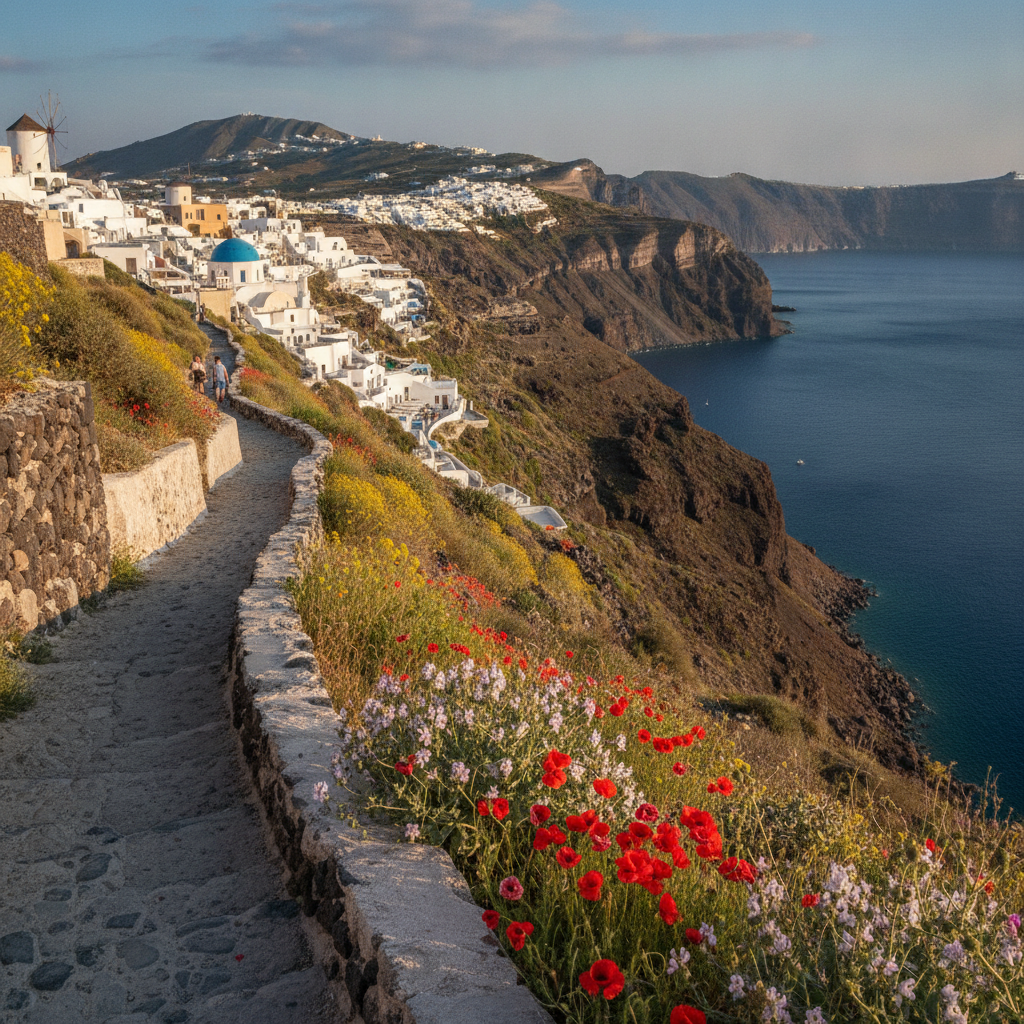
Santorini Practical Guide — When to Visit, Logistics, Beaches & the Caldera Rim Walk