Santorini Practical Guide — When to Visit, Logistics, Beaches & the Caldera Rim Walk
Santorini receives approximately 2 million visitors per year on an island of 76km squared with 15,000 permanent residents. The peak season (July-August) transforms the island into the most intensively visited per-square-kilometre destination in Greece, requiring specific timing and logistical preparation for a genuinely rewarding visit.
- 1
When to Visit — April to June or September to October
July and August on Santorini: Oia's sunset castle reaches 4,000-5,000 visitors simultaneously, the cruise ship schedule brings 3-6 ships daily discharging 10,000-20,000 day visitors to Fira (the Fira cable car queue reaches 2-3 hours, the donkey path the practical alternative in reverse), and accommodation prices peak at 3-4x the shoulder-season rates. The correct visiting months: April-May (the wildflower season on the caldera rim path, the Assyrtiko vines beginning to leaf, the accommodation at 40-60 percent below July prices, the sea still too cold for comfortable swimming at 16-18 degrees but the island at its most photogenic with the empty white streets); September-October (the harvest season for the Assyrtiko grapes in early September, the sea still warm at 23-25 degrees through October, the cruise ships reducing from mid-September, the restaurant quality improving as the tourist volume reduces and chefs compete again for a smaller customer base). November-March: most tourist infrastructure closed but the island's permanent population visible and the volcanic landscape at its most elemental.
- 2
Access — Ferry vs. Flight and the Port Transfer
Santorini is accessible by: Blue Star Ferries from Athens Piraeus (the overnight ferry, departing 7pm, arriving 5am-6am, 8 hours, cabin bunk €35-70, deck class €28-40, one of the most atmospheric ferry arrivals in the Aegean — the approach to the caldera entrance as the ferry passes between the Akrotiri headland and the island of Aspronisi at dawn, the caldera walls visible in silhouette against the lightening sky); SeaJets fast catamaran from Athens Piraeus (4.5 hours, €75-90, no deck sleeping); flight from Athens (50 minutes, €30-80 one-way on Olympic or Aegean). The port arrival: the Old Port of Fira (Skala Fira) is below the caldera rim — the cable car (€6 one-way, €10 return, 7am-11pm), the donkeys (€5 one-way ascending only, the animal welfare controversy), or the 588 steps on foot (35 minutes ascending, 15 minutes descending). Most large ferries dock at the New Port of Athinios (8km south of Fira) where the bus to Fira is €2 and takes 20 minutes.
- 3
Island Transport — Bus, ATV, and the Rental Car Question
Santorini transport options: the KTEL bus (the island's public bus network, operating from the main Fira bus station on the east edge of town, the routes covering all major villages and beaches — Oia, Perissa, Perivolos, Akrotiri, Kamari, Vlychada — at €1.80-2.50 per journey, the main Fira-Oia bus running every 30 minutes in season, the buses crowded at peak hours but functional for budget travel), the ATV rental (the quadbikes and scooters available at every rental shop on the island for €25-45 per day, the correct short-term vehicle for 2 people covering 3-4 destinations in a day, the correct vehicle for the caldera-rim descent to Ammoudi Bay in Oia, though the steep gradients require confident riding), the rental car (€50-80 per day in season, the road system simple and the island crossable end-to-end in 30 minutes, the parking in Oia and Fira impossible in July-August, the correct vehicle for reaching the more remote corners of the island including the lighthouse and the south coast beaches).
- 4
The Fira-to-Oia Caldera Rim Walk
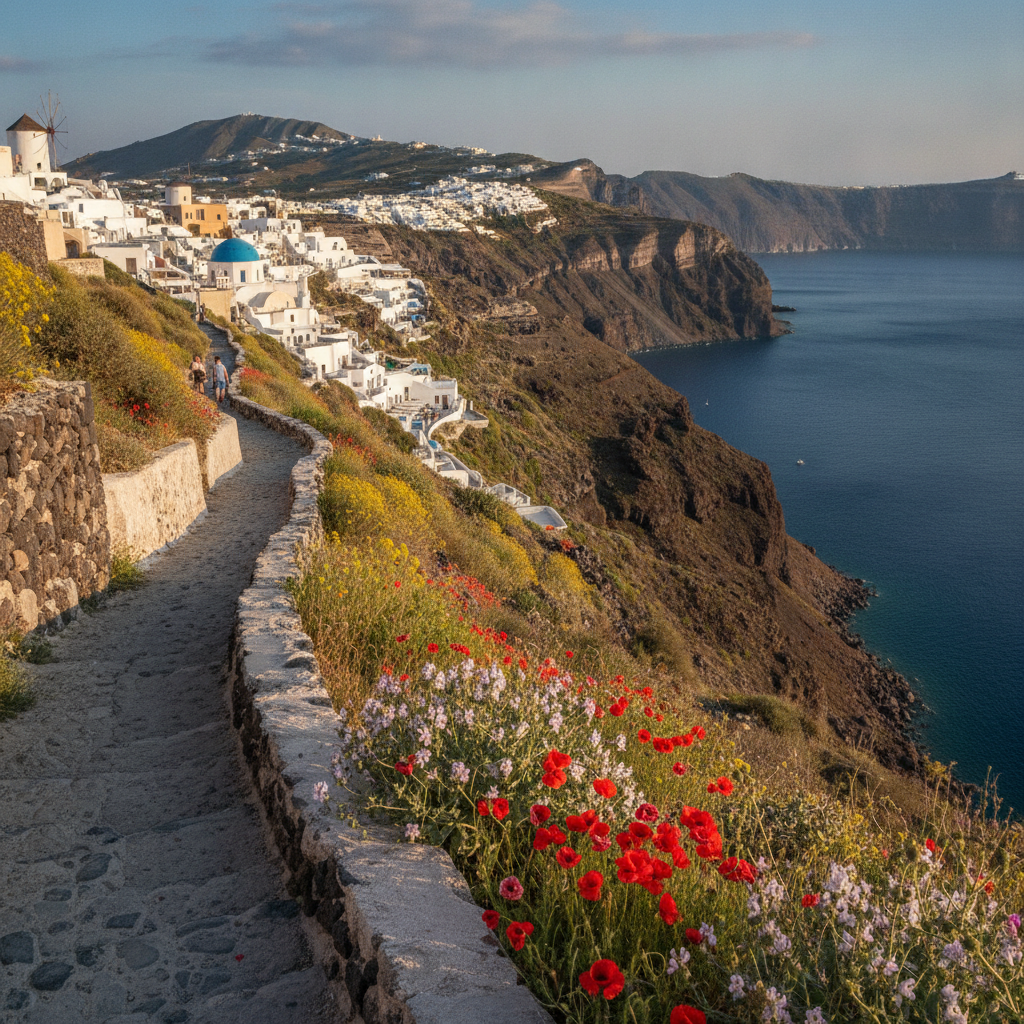
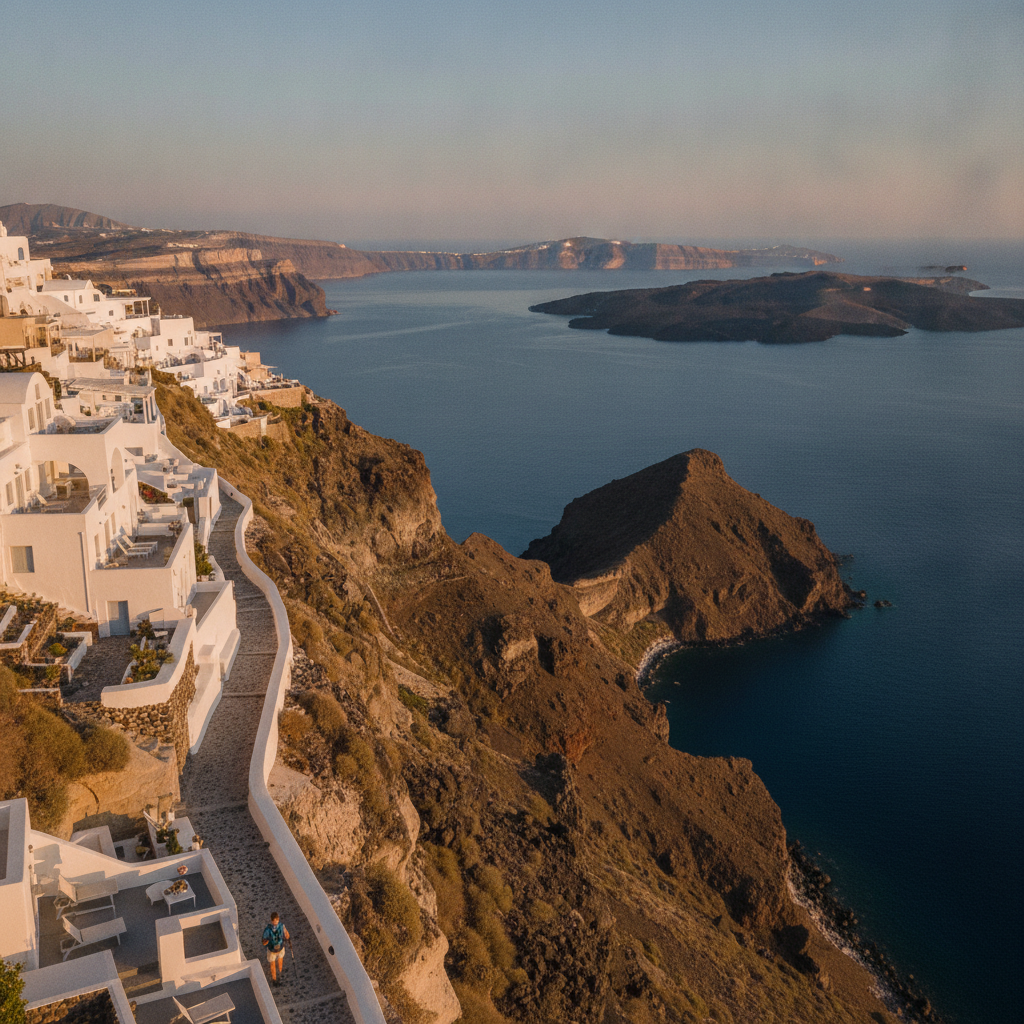
The caldera rim walk (the 9.5km hiking trail from Fira through Firostefani and Imerovigli to the Skaros Rock and continuing to Oia, 3-4 hours one-way at a comfortable pace, the trail at the edge of the caldera rim throughout, the path clearly marked and partly paved, the elevation change modest — the path undulates between 200m and 350m altitude — the views of the caldera continuously to the left throughout the entire walk) is the single best physical experience on Santorini, combining the caldera geology, the Cycladic village architecture, the wind-dried caper plants in the stone walls, and the physical exhaustion of arrival at the Oia sunset position. The correct direction is south-to-north (Fira to Oia): the 3-4 hours are timed for arriving at Oia 1-2 hours before sunset. Start at the Fira Orthodox Cathedral (the caldera rim path begins directly behind the cathedral, marked with a blue-and-white sign). Bring 2 litres of water and sun protection — the path has zero shade in summer.
- 5
Photography on Santorini — the 6 Positions and Correct Times
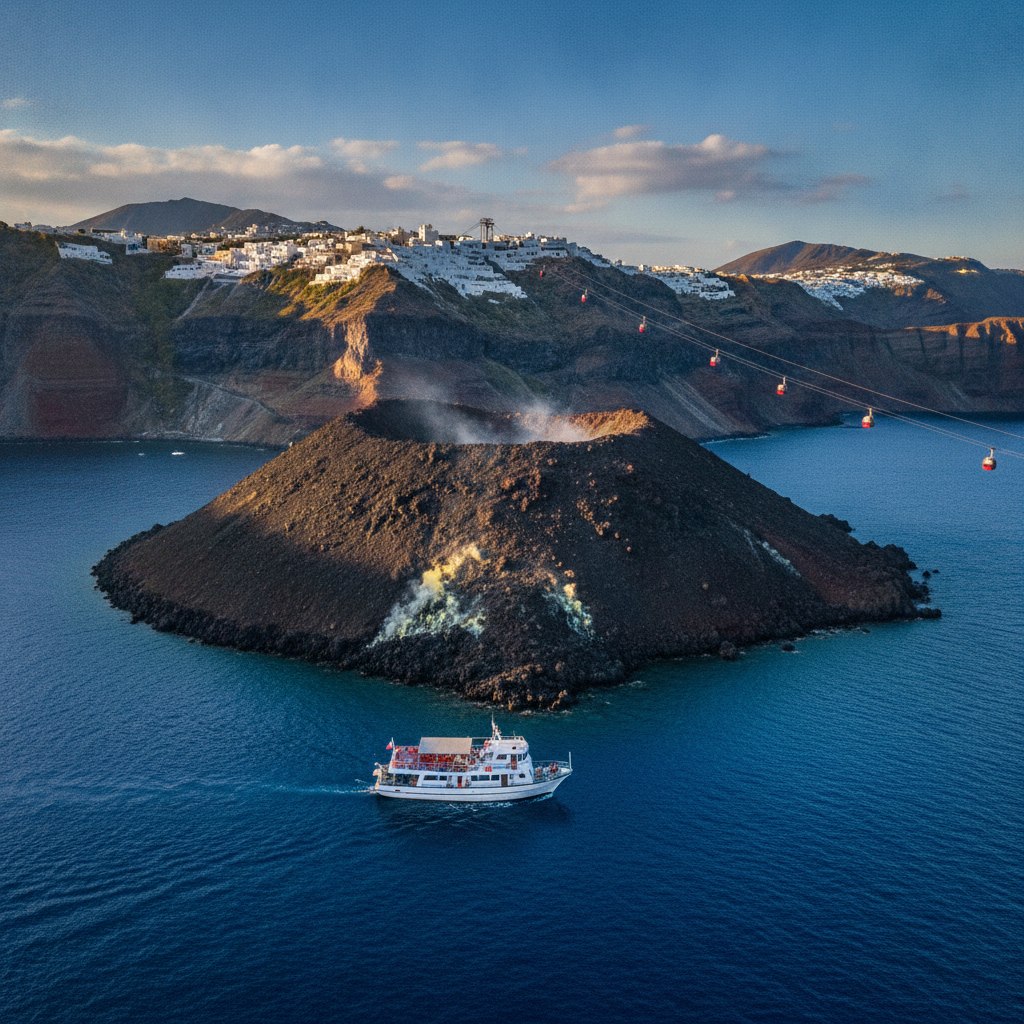
The 6 essential Santorini photography positions with optimal timing: (1) Oia blue domes from the castle — arrive 3 hours before sunset, the correct angle is 30 degrees south of the castle looking east-northeast towards the domes; (2) Fira caldera from the cable car upper station — 8am arrival when the day-trippers have not yet arrived, the light north-facing so not sunset-dependent; (3) Akrotiri lighthouse at sunset — the lighthouse is southwest-facing, catching the full sunset, the path to the lighthouse (3km from Akrotiri village, signposted, the lighthouse built 1892, the red-and-white tower 9m high above the 40m cliff) is accessible on foot or by ATV; (4) The Oia windmills from the east — the three Oia windmills (standing at the caldera edge east of the village, the traditional Cycladic windmills with wooden sails, accessible from the main Oia parking area) photographed from the east in the morning light catching the white tower; (5) Ammoudi Bay from the Oia steps — the view looking down the 214 steps to Ammoudi at sunset, the coloured fishing boats at the bottom; (6) The caldera from the Nea Kameni boat — the only position giving the full vertical scale of the caldera walls (330m of volcanic cliff face above the boat).
- 6
Cruise Ship Days — the Intelligence for Independent Visitors
Santorini receives 800+ cruise ship calls per year, with the cruise ships arriving in the caldera in the morning and departing in the late afternoon — the cruise passenger volume (3,000-5,000 per ship, the largest ships carrying 6,000 passengers, the caldera on a busy day receiving 15,000-20,000 cruise visitors between 9am and 5pm) defines the visitor experience in Oia and Fira entirely. The practical mitigation: check the cruise ship schedule (the Santorini Port Authority publishes arrivals at portofthira.gr; alternatively the website cruisemapper.com provides 48-hour advance notice of cruise ship arrivals) and plan accordingly — on days with 3+ ships, avoid Oia and the Fira cable car entirely between 10am and 4pm. The correct strategy on a 3-ship day: morning at Akrotiri (south coast, no cruise passengers), lunch at Pyrgos (inland, no cruise passengers), afternoon at the Santo Wines terrace in Pyrgos (inland, wine tasting), and arrival at Oia castle after 5pm when the cruise ship passengers have returned to their ships.
Walk this route with audio
Stories play automatically as you reach each stop — no tapping needed.
More in santorini
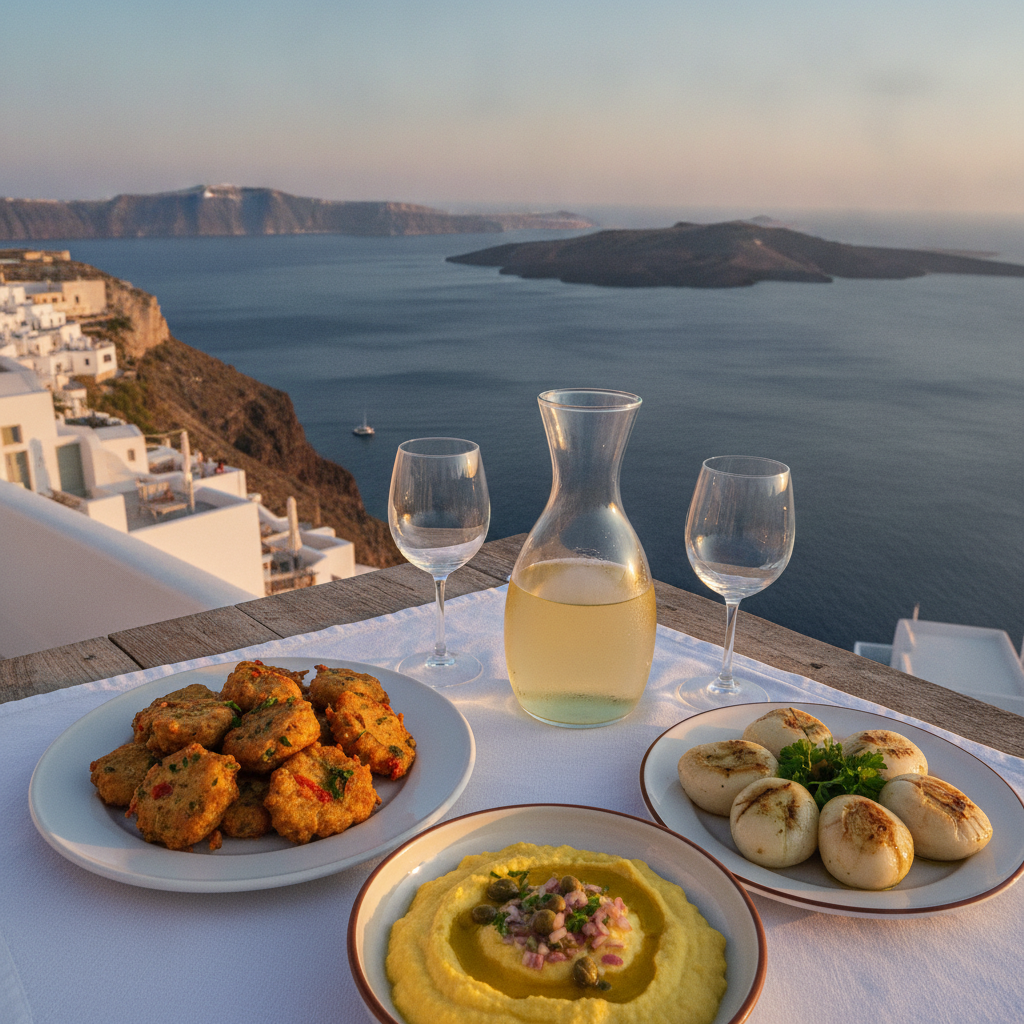
Santorini Food & Wine — Assyrtiko, Fava, Tomatokeftedes & Local Products
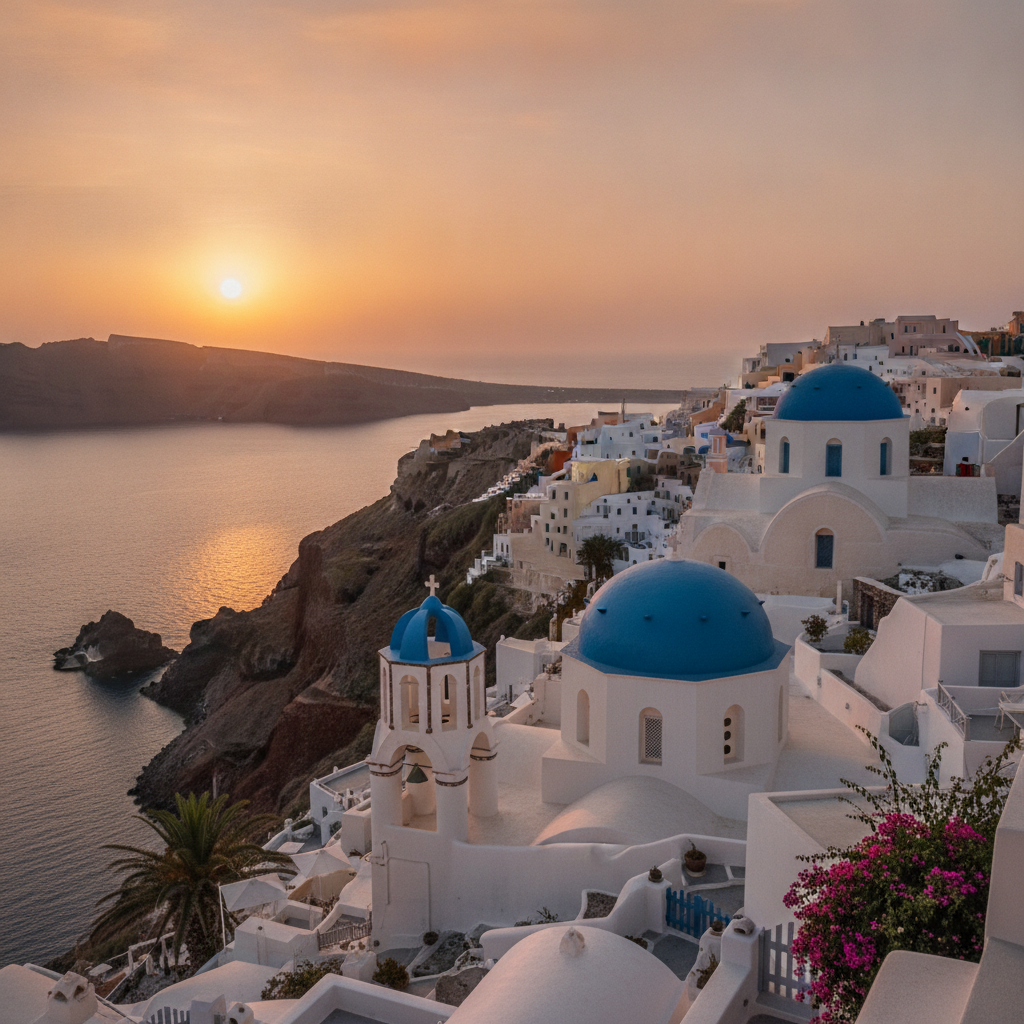
Oia — the Blue-Domed Village, Caldera Views & the Most Famous Sunset in Greece
Santorini Villages & Hiking — Emporeio, Megalochori, Pyrgos & the Inland Island
Santorini Caldera Boat Tour — the Volcano, Hot Springs & Thirasia Island