Mercadão, Street Food & São Paulo's Gastronomic Universe
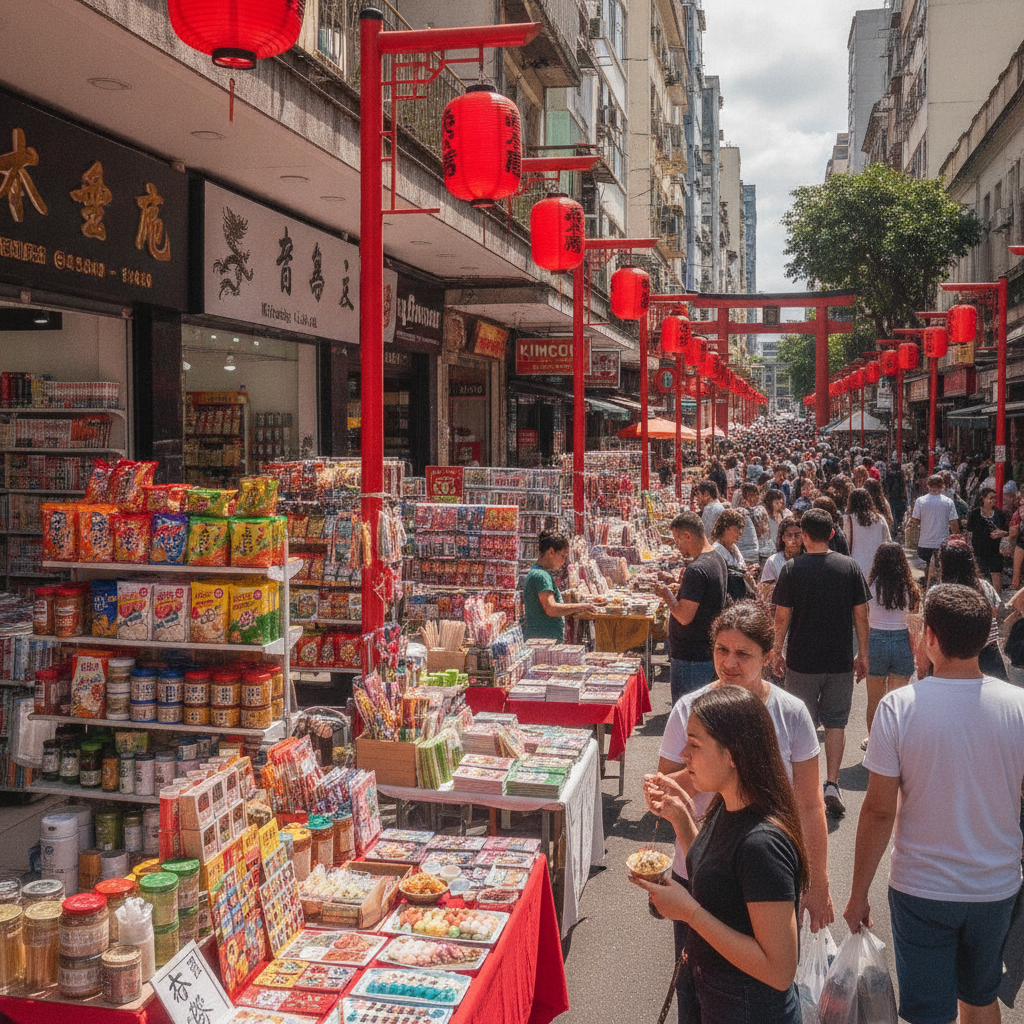
São Paulo's food culture (the gastronomic culture of the city that is the undisputed culinary capital of Latin America — the city with over 50,000 restaurants, the most diverse food scene in the Americas (the food scene that encompasses Japanese, Italian, Portuguese, Lebanese, Korean, Peruvian, and every regional Brazilian cuisine in unparalleled concentration), and the greatest food market in South America (the Mercado Municipal, or 'Mercadão')): São Paulo is the only city in the world where you can eat at a Japanese izakaya, a Bahian acarajé street stall, an Italian cantina, and a Lebanese esfirra bakery all within a 10-minute walk.
- 1
Mercadão — The Greatest Food Market in South America
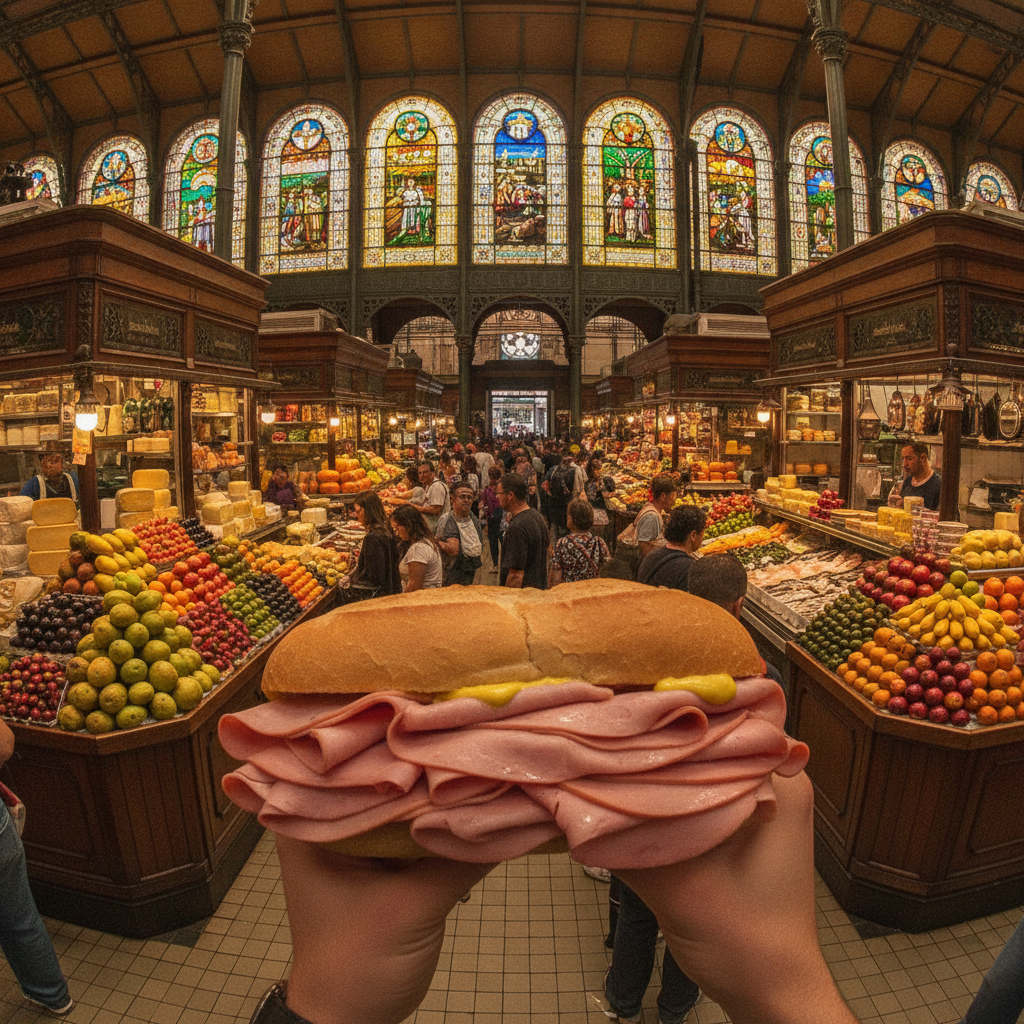
The Mercado Municipal de São Paulo (Rua da Cantareira 306, Centro — the covered municipal market opened 1933, the building constructed in the Neo-Gothic style (the 72 stained glass windows by Conrado Sorgenicht Filho depicting scenes of Brazilian agriculture and the immigration story of São Paulo — the windows that make the Mercadão the only food market in the world with a stained glass programme of the quality of a cathedral)): the Mercadão experience (the 300 permanent stalls selling everything from the finest Brazilian cheeses (the Minas Gerais artisanal cheeses — the canastra, the colonial, and the meia-cura — the cheeses that are the pride of the mineiro cheesemaking tradition, now recognized by UNESCO as an Intangible Cultural Heritage of Brazil) to the finest imported European products (the prosciutto, the salami, the Italian olives and olive oils) to the extraordinary tropical fruits of Brazil (the jaboticaba (the grape-like fruit that grows directly on the trunk of the jaboticaba tree), the cupuaçu (the Amazonian fruit with the white pulp used in chocolates, sweets, and juices), the graviola (soursop), the pitanga (Surinam cherry), and dozens of other endemic Brazilian fruits)): the Mortadela sandwich (the 'sanduíche de mortadela' served at the Bar do Mané (the stall inside the Mercadão established in 1933 — the large bread roll filled with 5-7 thick slices of mortadella and yellow mustard, sold for approximately R$25 (approximately USD $5) — the most famous sandwich in Brazil, eaten by approximately 1,000 people per day at the Mercadão).
- 2
Churrasco — Brazilian Barbecue Culture
Brazilian churrasco (the barbecue culture that is the most distinctive culinary tradition of the Brazilian South (the states of Rio Grande do Sul, Santa Catarina, and Paraná — the states settled primarily by German and Italian immigrants in the 19th century) and that has become the national food culture of Brazil): the churrasco tradition (the tradition of grilling meat over wood or charcoal embers — the tradition rooted in the gaucho (the cowboy of the South American pampas) culture of roasting meat on a spit over an open fire, the tradition that was brought to Brazilian cities in the 20th century in the form of the churrascaria (the Brazilian steakhouse)): the churrascaria rodízio (the 'rodízio' (literally 'rotation' in Portuguese) — the all-you-can-eat format of the Brazilian steakhouse in which waiters (the 'garçons' or 'passadores') circulate through the restaurant continuously carrying spits (the 'espadas' — the long metal skewers) of grilled meats: the cuts served (the picanha (the top sirloin cap — the most prized cut in Brazilian barbecue (the triangular cut from the top of the rump, with the characteristic thick fat cap that self-bastes the meat during grilling), the fraldinha (the flank steak), the costela (short ribs), the linguiça (the Brazilian pork sausage — the most important sausage in Brazilian barbecue, seasoned with garlic and herbs), and the frango (chicken breast wrapped in bacon): the São Paulo churrascaria scene (the D.O.M. restaurant (Rua Barão de Capanema 549, Jardins — the restaurant of chef Alex Atala, consistently ranked among the 50 best restaurants in the world, the restaurant that redefined what Brazilian cuisine could be by incorporating the native Amazonian ingredients (the tucupi, the jambu, the baru nut, the pupunha palm) into fine dining).
- 3
Botecos & Caipirinha — São Paulo Nightlife
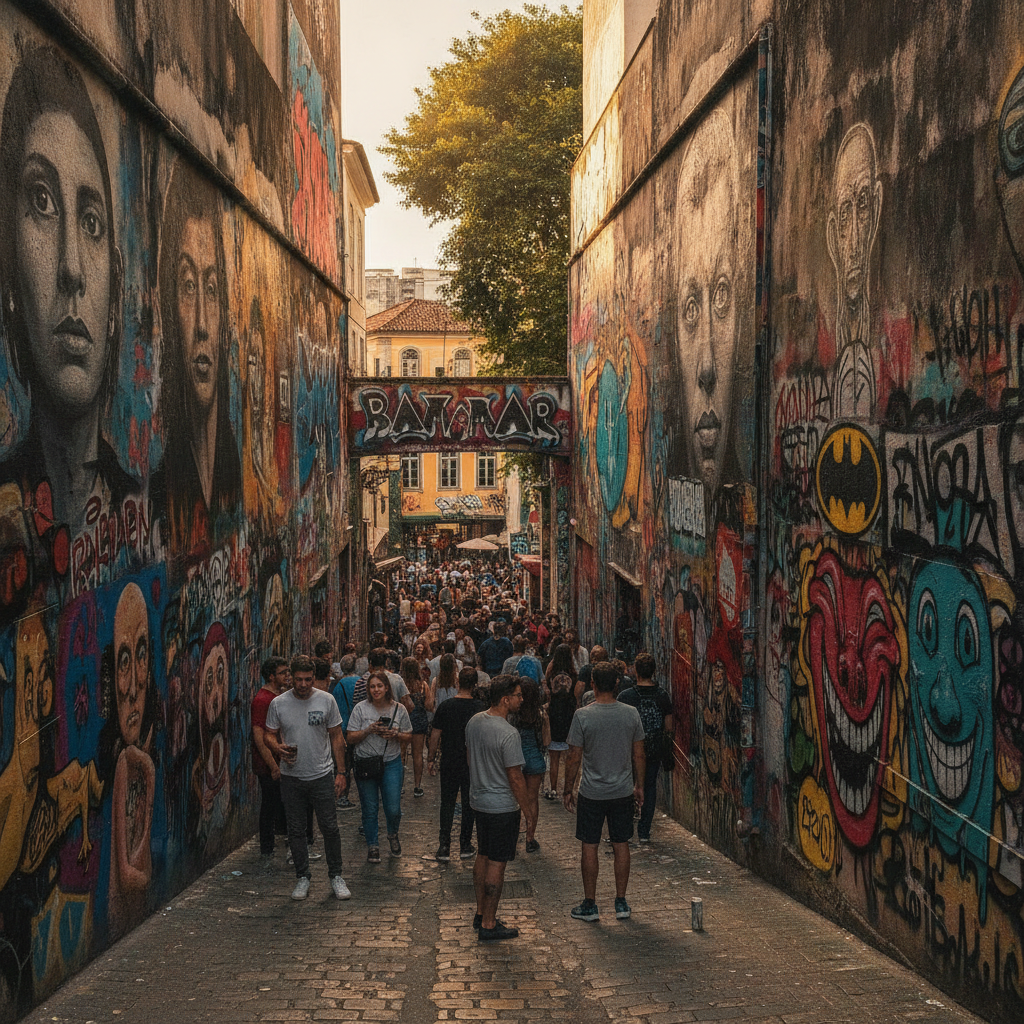
The boteco (the 'boteco' or 'bar' — the neighbourhood bar that is the centre of social life in São Paulo, the Brazilian equivalent of the Parisian café or the English pub): the boteco culture (the culture of gathering at the neighbourhood bar (the boteco) from the late afternoon (the 'happy hour' (the Portuguese-language borrowing of the English term 'happy hour', used in Brazil to refer to the post-work gathering at the boteco, from approximately 6 PM to 9 PM on weekdays) to share the petiscos (the bar snacks that are the defining food of the boteco — the torresmo (fried pork skin — the Brazilian version of chicharrón, the most beloved bar snack in São Paulo), the coxinha (the chicken croquette shaped like a teardrop, filled with shredded chicken and catupiry requeijão — the most beloved deep-fried bar snack in Brazil), the pastel (the thin pastry filled with meat, cheese, or heart of palm and deep-fried — the street food that originated in the Japanese-Brazilian community of São Paulo), and the bolinhos de bacalhau (the cod fritters — the most beloved bar snack of the São Paulo Portuguese-Brazilian community)): the caipirinha (the national cocktail of Brazil — the 'caipirinha' (from 'caipira' — 'country bumpkin' in Portuguese — a self-deprecating name for the cocktail) made from cachaça (the Brazilian rum distilled from fresh sugarcane juice — the primary spirit of Brazil, produced in over 40,000 distilleries throughout the country), fresh lime (the 'limão' — the Brazilian key lime (Citrus aurantiifolia) cut into wedges and muddled with sugar, the lime that gives the caipirinha its characteristic sharp citrus flavour), and ice).
- 4
São Paulo's Italian Heritage — Pizza Capital Outside Italy
São Paulo's Italian-Brazilian community (the Italian immigrants who are the largest immigrant group in Brazilian history — approximately 1.5 million Italians emigrated to Brazil between 1880 and 1930, the majority settling in the state of São Paulo to work in the coffee plantations of the interior and later establishing the industries and businesses that made São Paulo the industrial and commercial capital of Brazil): the Italian-Brazilian neighbourhoods of São Paulo (the Mooca (the neighbourhood east of the Centro Histórico that was the heart of the Italian-Brazilian community in the early 20th century — the neighbourhood of the Italian social clubs, the cantinas (the Italian restaurants), and the pastry shops that still serve the sfogliatella, the cannoli, and the pão de mel that are the culinary legacy of the Italian-Brazilian community), the Bixiga (the neighbourhood immediately south of Avenida Paulista — the 'Bixiga' (the informal name for the Bela Vista neighbourhood), the most vibrant and best-preserved Italian-Brazilian neighbourhood in São Paulo, known for the cantinas on Rua 13 de Maio (the street lined with the Italian restaurants that have been serving the cacio e pepe, the cozido italiano, and the tiramisu of the paulistano Italian tradition since the 1950s and 1960s)): the São Paulo pizza culture (São Paulo has more than 14,000 pizzerias — the largest pizza culture outside of Italy — and the paulistano pizza tradition (the wood-fired pizza, the 'pizza paulistana' (the São Paulo-style pizza, thinner than the Neapolitan original but thicker than the Roman style, with the characteristic charred crust produced by the 400°C wood-fired oven)) is the most beloved food in the city).
- 5
Pinacoteca do Estado & Centro Histórico
The Pinacoteca do Estado de São Paulo (the Pinacoteca (State Art Gallery) — Praça da Luz 2, in the Luz neighbourhood of the Centro Histórico of São Paulo — the oldest art museum in São Paulo, founded 1905, housed in the Neo-Renaissance building (1900) designed by Ramos de Azevedo (1851-1928) — the architect who designed most of the important public buildings of late 19th and early 20th century São Paulo, including the Mercado Municipal): the Pinacoteca collection (the collection of approximately 10,000 works — the most comprehensive collection of Brazilian art in the world, covering the full history of Brazilian visual art from the 18th century Colonial period through the present, with particular strengths in the 19th century academic painting (the works of Pedro Américo and Victor Meirelles — the most celebrated academic painters in the history of Brazilian art) and the Brazilian Modernism of the 1920s-1940s (the works of Tarsila do Amaral (1886-1973) — the painter whose 1928 painting 'Abaporu' is the most valuable work of art in Latin America (the painting sold for USD $1.43 million in 1995 and is now in the collection of the MALBA in Buenos Aires), Anita Malfatti, and Lasar Segall)): the Estação da Luz (the São Paulo Central Station — the 'Estação da Luz' ('Station of Light'), the Neo-Gothic railway terminal opened 1901, designed by British engineers and built with materials (the ironwork and the glazed red brick) imported from Britain — the most important Victorian-era building in Brazil, now functioning as the northern terminus of the São Paulo Metro Yellow Line).
- 6
São Paulo's Lebanese & Middle Eastern Community
São Paulo's Lebanese-Brazilian community (the community of approximately 9 million Lebanese-Brazilians in Brazil — the largest Lebanese diaspora community in the world (larger than the population of Lebanon itself), the majority of whom are concentrated in the state of São Paulo): the history of Lebanese immigration to Brazil (the Lebanese Christians (primarily Maronites) who began emigrating to Brazil in the 1880s, initially as merchants (the 'mascates' — the itinerant peddlers who traveled the interior of Brazil selling imported goods from baskets and suitcases, establishing themselves as the most successful commercial ethnic community in the history of Brazilian commerce)): the Lebanese-Brazilian community today (the community that is the most economically and politically successful immigrant community in Brazil — the community that includes among its members three former Presidents of Brazil (Michel Temer, president 2016-2018, whose family is of Lebanese origin), major industrialists (the Safra banking family, the Jorge family of Grupo Jorge), and the founders of some of Brazil's most important companies): the Higienópolis neighbourhood (the upscale neighbourhood north of Avenida Paulista — the neighbourhood with the largest concentration of Lebanese-Brazilian families in the city, the neighbourhood of the Lebanese social clubs, the esfirra bakeries (the 'esfirra' — the Brazilian-Lebanese stuffed pastry: the small triangular pastry filled with spiced ground beef, tomato, and onion, the most beloved street food snack in São Paulo), the Arabic restaurants, and the Lebanese grocery stores that serve the community).
Walk this route with audio
Stories play automatically as you reach each stop — no tapping needed.
More in sao-paulo
Pinheiros, Vila Madalena & São Paulo's Legendary Nightlife
Avenida Paulista, MASP & São Paulo's Cultural Heart
Samba, Carnaval & São Paulo's African-Brazilian Cultural Heritage
SP-Arte, Museums & São Paulo's World-Class Cultural Scene
São Paulo's Architecture — Modernism, Niemeyer & the Concrete Jungle