Sarajevo's War: Siege, Tunnel of Hope & Srebrenica Memorial
Confront Sarajevo's recent history with honesty and respect—the 1,425-day siege marked by Sarajevo roses in the pavements, the Tunnel of Hope that kept the city alive, the War Childhood Museum's intimate collection of 105 childhood objects, and the deeply important journey to the Srebrenica genocide memorial 130 km away.
- 1
Siege of Sarajevo – 1992 to 1996
The Siege of Sarajevo lasted 1,425 days—the longest siege of a capital city in the history of modern warfare. Bosnian Serb forces surrounded the city from April 1992 to February 1996; over 13,000 people were killed (including 5,434 civilians), many by sniper fire on streets still marked with 'Sarajevo roses'—red resin fills the shrapnel craters in the pavement as permanent memorials. The Tunnel of Hope Museum documents the humanitarian lifeline under the airport runway.
- 2
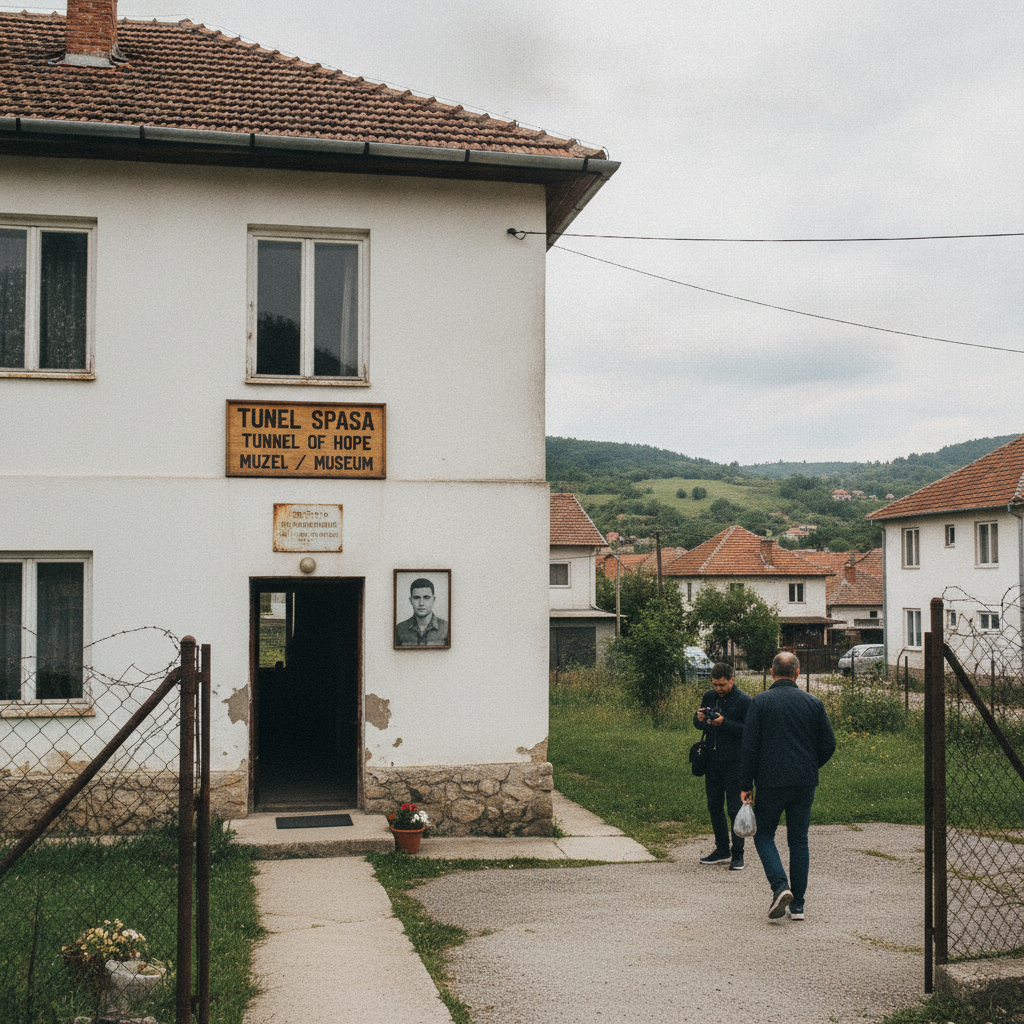
Tunnel of Hope Museum (Tunel Spasa)
The Tunnel of Hope—dug under the Sarajevo airport runway in 1993—was the city's only connection to the outside world during the siege. At 800 metres long, 1.5 metres high, and 1 metre wide, it was used to transport food, weapons, and people for three years, carrying up to 4,000 people and 20 tonnes of goods per day. The museum at the tunnel entrance in Butmir preserves 25 metres of the original tunnel and displays wartime artefacts and testimony.
- 3
Srebrenica Memorial – Day Trip to Genocide Site
Srebrenica, 130 km northeast of Sarajevo, is where in July 1995 Bosnian Serb forces under General Ratko Mladić massacred over 8,000 Bosniak Muslim men and boys—the worst genocide in Europe since WWII, ruled as such by the International Court of Justice. The Srebrenica-Potočari Memorial and Cemetery is a site of profound moral weight; guided tours from Sarajevo operate respectfully and with careful historical context.
- 4
War Childhood Museum
Opened in 2017 and winner of the Council of Europe Museum Prize 2018, the War Childhood Museum was created from a social media project asking Sarajevo residents to describe their war childhood in one object. The resulting 105-object collection—a pair of roller skates, a Yugoslav encyclopedia, a drawing book—is among the most intimate and affecting war museums in the world, presenting the siege through the eyes of children who survived it.
- 5
1984 Winter Olympics Sites – Bobsled Track & Bjelašnica
Sarajevo hosted the 1984 Winter Olympics—and the ghost of those games haunts the city's surrounding mountains. The bobsled track on Mount Trebević (accessible by cable car reopened in 2022) is covered in striking street art and peacefully overgrown. The ski areas of Bjelašnica and Jahorina—Olympic venues—still operate as active ski resorts with excellent piste quality and very affordable lift passes.
- 6
Srebrenica & Post-War Reconciliation
Bosnia and Herzegovina's post-war politics remain complicated—the Dayton Agreement (1995) created two entities (the Federation of Bosnia and Herzegovina and Republika Srpska) with overlapping institutions and continuing ethnic division. Sarajevo itself is predominantly Bosniak but the surrounding Republika Srpska entity has its own government in East Sarajevo. The city's determination to document rather than forget is expressed in its extraordinary density of war museums and memorials.
Walk this route with audio
Stories play automatically as you reach each stop — no tapping needed.
More in Sarajevo
Sarajevo Identity: WWI, Bosniak Culture & Film Festival Resilience
Sarajevo Day Trips: Mostar Bridge, TITO Bunker & Olympic Skiing
Sarajevo Practical Guide: Airport, Budget & Bosnian Tips
Sarajevo Essentials: Ottoman Bazaar, Latin Bridge & Four Faiths