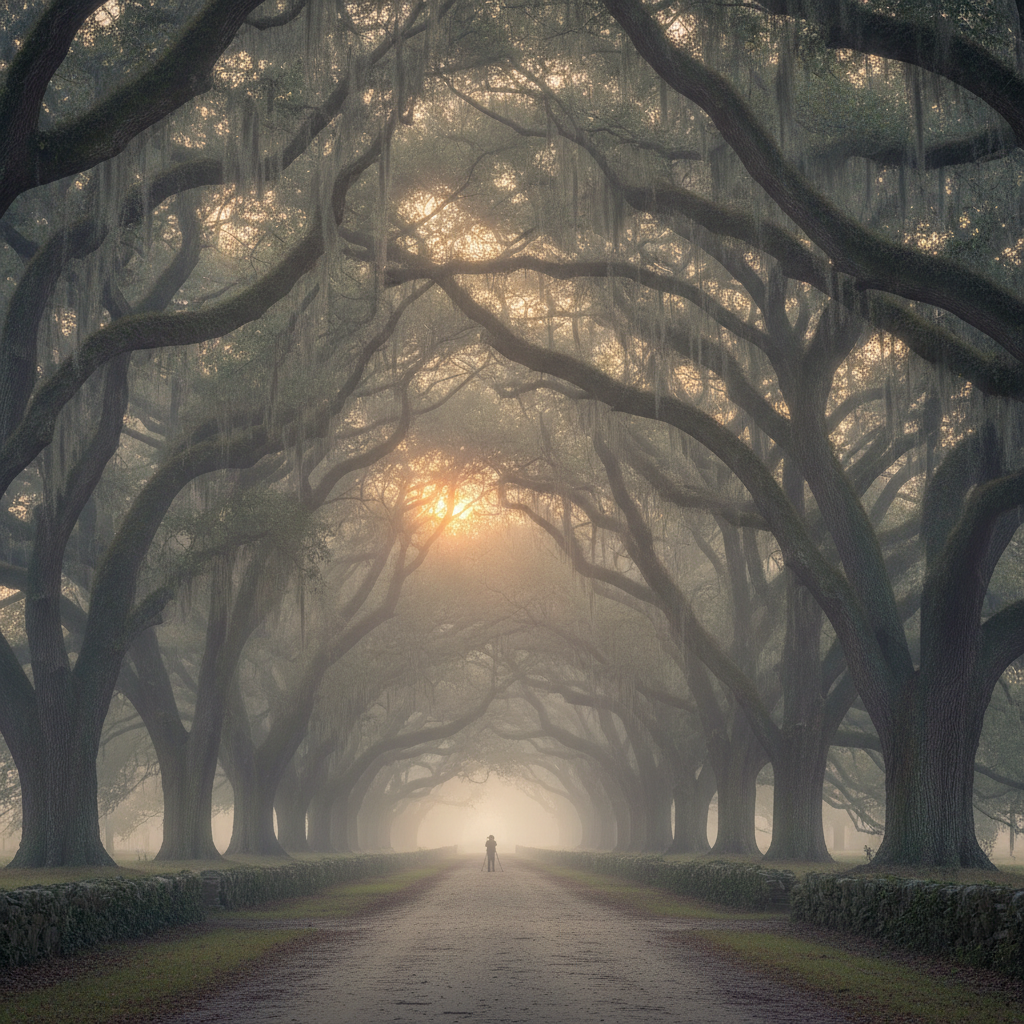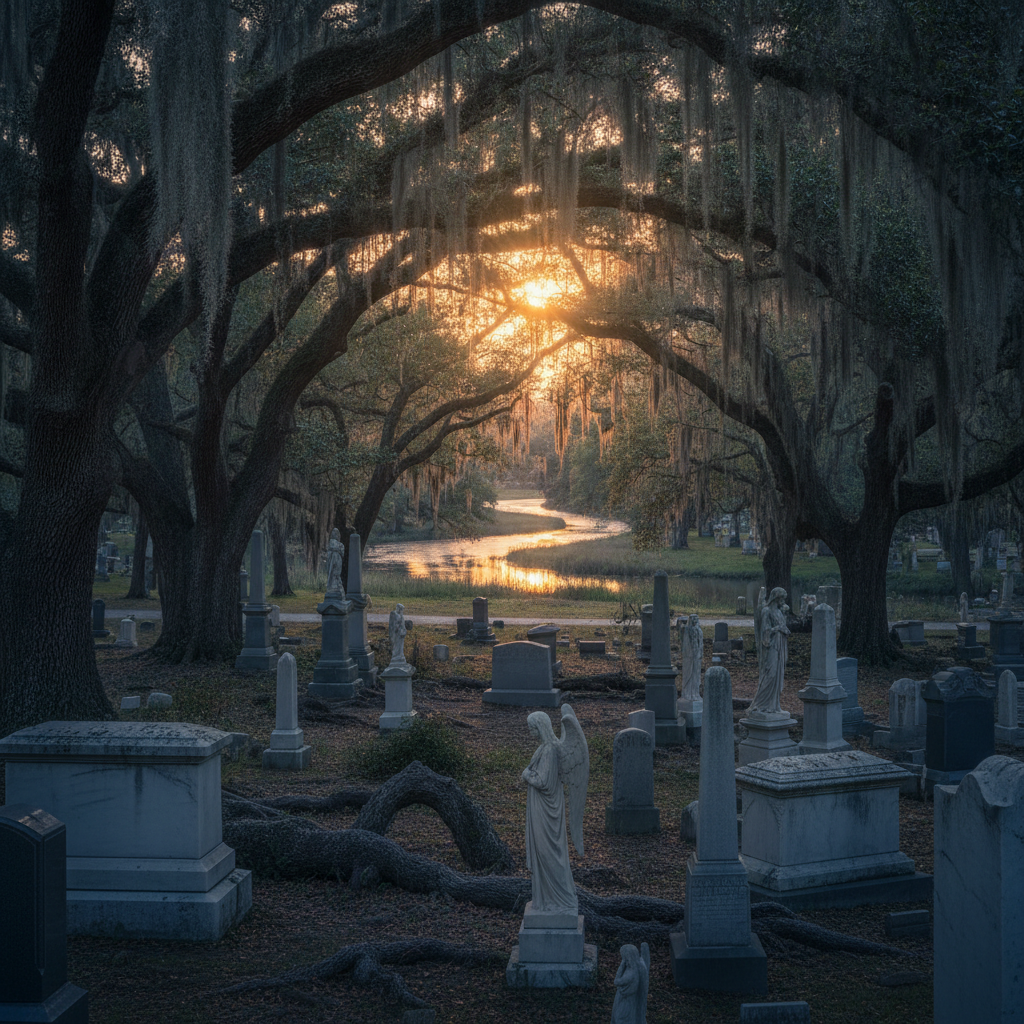
Savannah R2-R4: African American heritage (Sherman Savannah December 21 1864 Christmas gift, Special Field Order 15 January 1865 40 acres and a mule revoked Johnson October 1865, First African Baptist 1773 oldest North American Black Baptist congregation, Underground Railroad West African breathing holes), Tybee Island (lighthouse 1736 second oldest US station, 1958 nuclear B-47 Mark 15 bomb never recovered, Jekyll Island Club 1886-1942 Rockefellers Morgans, 1910 Jekyll Island secret meeting drafted Federal Reserve Act), SCAD (15,000 students largest US art university, 70+ historic buildings restored, Museum of Art 1853 Gothic Revival railway depot, First Fridays Gallery Crawl), Antebellum architecture (Green-Meldrim House Sherman HQ 1864, Isaiah Davenport House 1820 saved 1955 by Historic Savannah Foundation, Owens-Thomas House 1816 finest US Regency, Cathedral of St. John the Baptist 1873 French Gothic), Nightlife ghost tours (open container law Historic District, River Street cotton warehouses, Kehoe House most haunted Savannah, top 3 most haunted US, Savannah Stopover music festival SXSW stop), Practical (St. Patrick's Day 400,000 participants second US, spring azaleas best season, Starland District Back in the Day Bakery, SAV airport direct Atlanta Charlotte)
Savannah R2-R4: African American (Sherman December 21 1864 Savannah Christmas gift, Special Field Order 15 January 16 1865 40 acres and a mule revoked October 1865 fatal Reconstruction failure, First African Baptist 1773 oldest North American Black Baptist, Underground Railroad West African breathing hole patterns), Tybee Island (lighthouse 1736 second oldest US station 47m tower 1867, 1958 Mark 15 nuclear bomb jettisoned never recovered 100x Hiroshima, Jekyll Island Club 1886-1942 Rockefellers Morgans Pulitzers Vanderbilts, November 1910 secret meeting drafted Federal Reserve Act 1913), SCAD (15,000 students largest US art university, 70+ historic Savannah buildings restored, SCAD Museum of Art 1853 Gothic Revival depot, First Fridays Gallery Crawl Broughton Street), antebellum squares (Green-Meldrim House Sherman HQ 1864 Gothic Revival, Isaiah Davenport House 1820 Historic Savannah Foundation first US preservation effort 1955, Owens-Thomas 1816 finest US Regency, Cathedral St. John Baptist 1873 French Gothic finest Georgia stained glass), nightlife and ghosts (open container legal Historic District, River Street cotton warehouses, Kehoe House haunted twins, top 3 most haunted US city, Savannah Stopover March SXSW music), practical (St. Patrick's Day 400,000 second US largest, spring azaleas best, Starland District Back in Day Bakery, SAV airport).
- 1
Savannah's African American Heritage - from Slavery to Freedom
Savannah African American heritage: Savannah has one of the most historically rich African American communities in the American South, from the enslaved people who built the city's economy to the free Black community that persisted through the antebellum period to the civil rights struggles of the 20th century. The arrival of Sherman in Savannah (December 21, 1864): General William T. Sherman's March to the Sea ended at Savannah, when the city surrendered without resistance and Sherman sent President Lincoln the famous telegram offering Savannah as a Christmas present. Sherman's Special Field Order No. 15 (January 16, 1865): the military order issued in Savannah by Sherman (following a meeting with 20 African American ministers led by Garrison Frazier) that set aside the Sea Islands and the abandoned rice plantations of South Carolina and Georgia for exclusive settlement by formerly enslaved people — the origin of the phrase 40 acres and a mule. The order was revoked by President Andrew Johnson in October 1865, returning the land to former Confederate owners — one of the most consequential failures of Reconstruction, condemning formerly enslaved people to sharecropping rather than land ownership. The First African Baptist Church (at 23 Montgomery Street, Franklin Square, Savannah, founded 1773): the oldest African American Baptist congregation in North America (predating the Civil War by 88 years), whose congregation included enslaved members who used the church basement (with holes drilled in the floor planks in West African breathing hole patterns) as a stop on the Underground Railroad.
- 2
The Beach at Tybee Island and Georgia's Golden Isles
Tybee Island (the barrier island and incorporated beach town 30 km east of Savannah on the Atlantic Ocean): the beach destination of Savannah, with 5.5 km of public beach, the Tybee Island Lighthouse (the lighthouse first established in 1736, the year after Savannah was founded, making it the second oldest lighthouse station in the United States — the current brick tower was built in 1867 and stands 47 meters tall), and a laid-back beach town atmosphere of independent restaurants, beach bars, and water sports rentals. The Tybee Island B-47 nuclear weapon incident (February 5, 1958): a US Air Force B-47 bomber collided with an F-86 fighter jet over Savannah and, to avoid crashing with the nuclear bomb aboard, the crew jettisoned a Mark 15 thermonuclear bomb (approximately 100 times more powerful than the Hiroshima bomb) into the shallow waters off Tybee Island — the bomb has never been recovered and remains on the ocean floor, presumed safe because the conventional explosives required to trigger the nuclear detonation were never armed. Jekyll Island (90 km south of Savannah): the Georgia barrier island that served as the private retreat of the wealthiest American families from 1886 to 1942 (the Jekyll Island Club). Jekyll Island Historic District (the 7 cottages and clubhouse of the Jekyll Island Club): the Queen Anne and Shingle-style cottages of the Rockefellers, Morgans, Pulitzers, Cranes, and Vanderbilts, preserved as the Jekyll Island Club Resort and open for tours. The 1910 Jekyll Island secret meeting: the meeting on Jekyll Island in November 1910 that drafted the legislation that became the Federal Reserve Act (1913), attended by Senator Nelson Aldrich and representatives of J.P. Morgan, Kuhn Loeb, and Rockefeller banking interests — one of the most consequential secret meetings in American financial history.
- 3
SCAD and Savannah's Art Culture
The Savannah College of Art and Design (SCAD, founded 1978, headquartered at 342 Bull Street, Savannah): the largest art and design university in the United States, with approximately 15,000 students across campuses in Savannah (the main campus), Atlanta, Hong Kong, and Lacoste France. SCAD's mission and impact: SCAD was founded by founder Richard Rowan and president Paula Wallace with the explicit mission of restoring and revitalizing the historic buildings of Savannah, and has honored this commitment by restoring over 70 historic Savannah buildings for use as studios, galleries, classrooms, and dormitories. The SCAD restoration projects: the Jepson Center for the Arts (the contemporary art wing of the Telfair Museums, designed by Moshe Safdie and opened 2006 adjacent to the original Telfair Academy), the SCAD Museum of Art (at 601 Turner Blvd, housed in the restored Gothic Revival brick depot of the Central of Georgia Railway, built 1853), and the Ivy Hall (the 1913 Italianate mansion now serving as SCAD's president's residence and event space). SCAD alumni: the list of SCAD alumni working in film, television, fashion, and design is extensive, with the university placing a particularly high percentage of graduates in the entertainment and fashion industries. The Savannah Arts Academy (the public magnet high school in Savannah): the nationally recognized arts magnet school. The First Fridays Gallery Crawl: the monthly art gallery open evening in downtown Savannah, connecting the galleries of the SCAD and the independent art galleries of the Broughton Street corridor.
- 4
Savannah's Antebellum Squares and Architecture
The antebellum townhouse architecture of Savannah: the squares of the Savannah Historic District are surrounded by remarkable concentrations of 18th and 19th century townhouses, representing virtually every major American architectural style from Colonial Georgian to Greek Revival to Italianate to Queen Anne. The Green-Meldrim House (at 14 West Macon Street, Madison Square, Savannah): the Gothic Revival mansion designed by John Norris (built 1850-1853 for wealthy cotton merchant Charles Green), where General Sherman established his headquarters upon entering Savannah in December 1864 — the house is now a house museum operated by St. John's Church. The Isaiah Davenport House (at 324 E State Street, Columbia Square, Savannah): the Federal-period townhouse built in 1820 by master builder Isaiah Davenport, saved from demolition in 1955 by the founding of the Historic Savannah Foundation (one of the first urban historic preservation efforts in the United States). The Hamilton-Turner Inn (at 330 Abercorn Street, Lafayette Square, Savannah): the Second Empire-style mansion featured prominently in Midnight in the Garden of Good and Evil as the home of the exotic and flamboyant Joe Odom. The Cathedral of St. John the Baptist (at 222 E Harris Street, Lafayette Square, Savannah): the seat of the Roman Catholic Diocese of Savannah, built 1873 in French Gothic style (rebuilt after a fire in 1898), with the most elaborate stained glass windows in any Catholic church in Georgia. The Owens-Thomas House (at 124 Abercorn Street, Oglethorpe Square, Savannah): the 1816 Regency mansion designed by William Jay (a young English architect), considered the finest example of English Regency architecture in the United States.
- 5
Savannah's Night Scene and Ghost Tours
Savannah nightlife and ghost tours: Savannah is one of the few American cities where open containers of alcohol are legal in public spaces — residents and visitors can carry drinks from bars and restaurants through the streets and squares of the Historic District (in plastic cups provided by establishments), creating a uniquely convivial outdoor nightlife culture. The Savannah drinking culture: the open container law applies only to the Historic District and has created a distinctive night-time street culture of people wandering through the Spanish moss-draped squares with cocktails and craft beers, particularly along River Street and Broughton Street. River Street (the historic riverfront street along the Savannah River, accessed from the Historic District via a series of stone ramps and iron bridges): the most concentrated entertainment district in Savannah, with dozens of bars, restaurants, candy shops, and souvenir stores in the 1850s-1880s cotton warehouse buildings lining the waterfront. The Kehoe House (at 123 Habersham Street, Columbia Square): the Romanesque Revival Victorian mansion built in 1892 for ironworks owner William Kehoe, now a luxury inn and the most frequently cited haunted building in Savannah (with multiple witnesses claiming encounters with twin children who apparently fell to their deaths in the fireplace). Ghost tours of Savannah: Savannah is consistently ranked among the top 3 most haunted cities in the United States, with multiple companies offering walking ghost tours through the squares, Bonaventure Cemetery, and Colonial Park Cemetery nightly. The Savannah Stopover Music Festival (the music festival for independent touring musicians held each March, as bands travel between SXSW in Austin and the northern cities): the most beloved music event in Savannah's independent music scene.
- 6
Savannah Practical - Neighborhoods and Seasonal Guide
Savannah practical extended visitor guide: Savannah has the most intact historic core of any city in the American South and offers a rare combination of architectural beauty, culinary excellence, literary heritage, and beach access within a remarkably compact geographic area. Savannah neighborhoods: the Historic District (the 2.5 square km core, the primary visitor destination with the 22 squares, the major museums, and the best restaurants), the Victorian District (the neighborhood immediately south of the Historic District, with the finest collection of Victorian architecture in Savannah, including the Savannah Visitor Center in the Gothic Revival train station), the Thomas Square Streetcar Historic District (the streetcar suburb south of the Victorian District, with the beautiful bungalows and craftsman houses of the early 20th century), and the Midtown/Ardsley Park neighborhood (the affluent early 20th-century neighborhood with the largest residential lots in Savannah). The Starland District (the arts and restaurant district in the Victorian District, centered on Bull Street south of Park Avenue): the most dynamic independent restaurant and gallery neighborhood in Savannah, with the Back in the Day Bakery (the most beloved bakery in Savannah, known for its Southern-influenced pastries and cakes) and the Foxy Loxy print shop and cafe. When to visit Savannah: spring (March-May) is the most beautiful season, with the azaleas blooming in the squares and mild temperatures; fall (October-November) is nearly as pleasant. Summer (June-September) is extremely hot and humid (average July high 32 degrees Celsius with high humidity), with frequent afternoon thunderstorms. The St. Patrick's Day celebration in Savannah (the second largest St. Patrick's Day parade in the United States after New York, with approximately 400,000 participants): the defining annual event of Savannah, turning the entire Historic District into a festival.
Walk this route with audio
Stories play automatically as you reach each stop — no tapping needed.
More in savannah
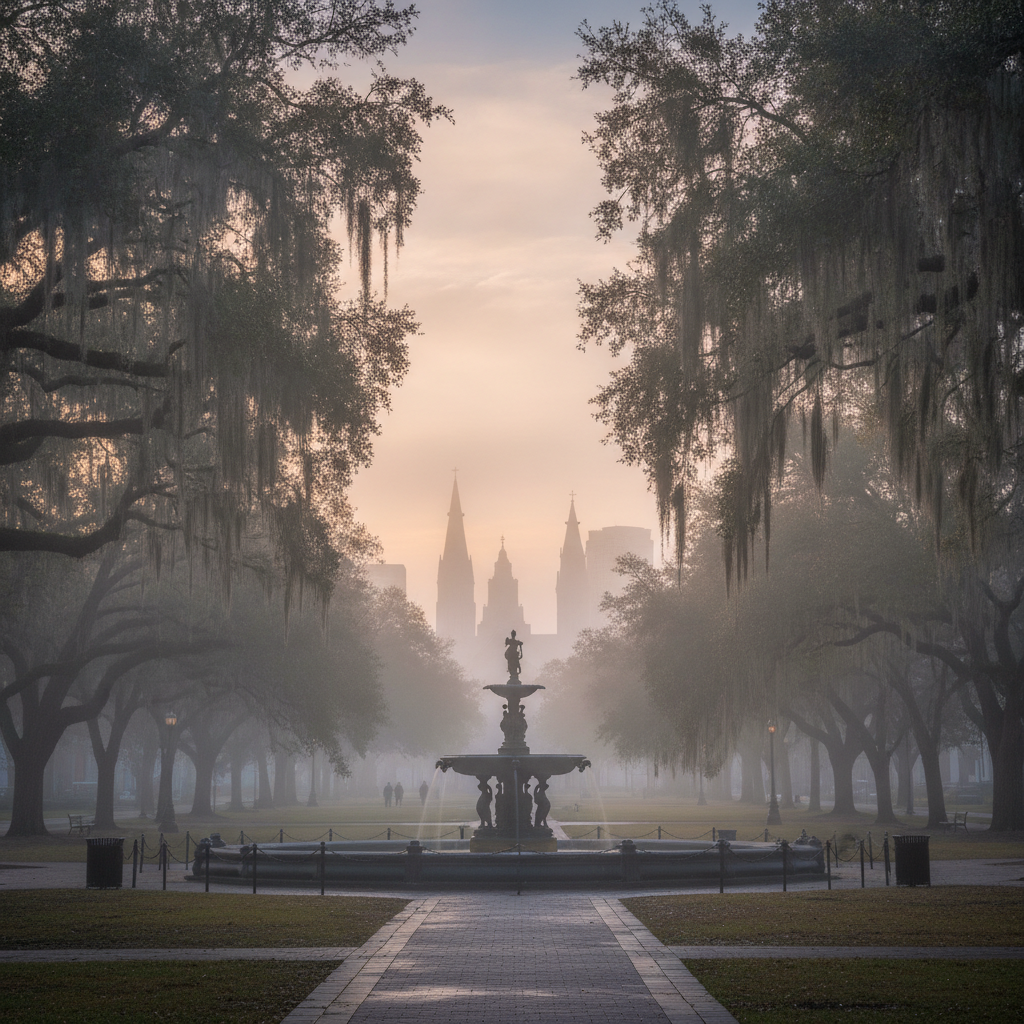
Savannah: Oglethorpe Plan (1733 founded 12th and last original colony, 22 of 24 original squares surviving, most intact 18th-century urban planning US, Forsyth Park 1858 fountain, SCAD 15,000 students revitalized historic buildings), Midnight in the Garden of Good and Evil (Berendt book 1994 216 weeks NYT bestseller longest nonfiction, Mercer House Jim Williams shooting, Chablis Lady drag performer, Johnny Mercer 1,500 songs Moon River Oscar 1961 Breakfast at Tiffany's), Bonaventure Cemetery (live oak allees Spanish moss, Little Gracie Watson 1889 most visited grave, Bird Girl statue moved to Telfair Museums, Telfair Museums oldest Southern public art museum, Owens-Thomas House 1816 finest US Regency architecture), Savannah food (Olde Pink House 1771 James Habersham Georgian mansion, Pirate's House 1734 oldest building Georgia shanghaied sailors tunnel Treasure Island, Mrs. Wilkes Dining Room 1943 communal soul food), Film history (Forrest Gump 1994 Chippewa Square bench now Savannah History Museum, Midnight movie Clint Eastwood 1997, Savannah Film Festival SCAD October), Practical (Historic District 2.5 sqkm National Historic Landmark walkable, Tybee Island 30km lighthouse 1736 second oldest US site, Jekyll Island Rockefellers Morgans, Cumberland Island wild horses Carnegie ruins)
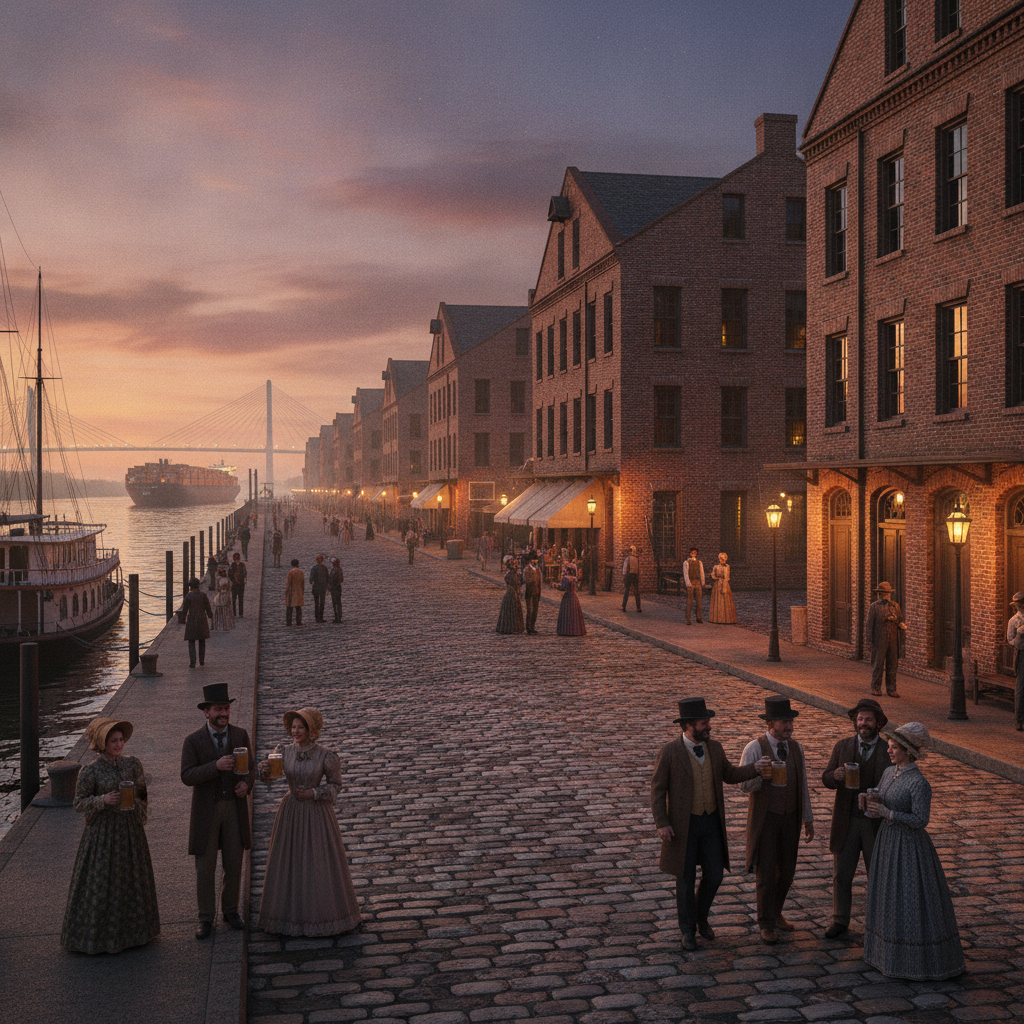
Savannah R4: Spanish moss (bromeliad not parasite absorbs moisture from air, nesting habitat for 3 bird species, Ford Model T 12,000 tons annually for seat cushions, City of Savannah manages growth in squares), Savannah squares in detail (Chippewa Square Forrest Gump bench now History Museum, Oglethorpe statue Daniel Chester French sculptor Lincoln Memorial, Monterey Square Pulaski monument Mercer House, Johnson Square 1733 first square Nathanael Greene monument), Factors Walk waterfront (cotton factor system 2.5% commission, cobblestones New England granite ballast, River Street cotton warehouses now bars restaurants, Talmadge Bridge 56m clearance container ships), Craft beer bar culture (open container law Historic District plastic cups, Moon River Brewing 1821 City Hotel most haunted bar US ghost James Stark, American Prohibition Museum only US museum Prohibition, Service Brewing veteran-founded), Georgia nature (Okefenokee 440,000ha 11,000 alligators blackwater amber tea tannic acids, Little St. Simons 30 guests bald eagles loggerhead, Georgia Bight 2,200 loggerhead nests per year), SCAD galleries (SCAD Museum of Art 1853 Gothic Revival depot, Telfair Museums oldest Southern public art 1886 Bird Girl bronze, Savannah Fashion Week student collections)
Savannah: Literary City, Victorian Elegance and Oglethorpe Grid
Savannah: Preservation Legacy, Harbor Power and Living Neighborhoods
Savannah: Art, Faith, Trade and the Georgia Coast