Savannah: River Heritage, Gullah Culture and Gilded Age Islands
Stroll Factor Walk above the wharves, visit the Telfair Museums, experience the Savannah Music Festival, learn Gullah Geechee Sea Island heritage, admire Savannah Grey brick architecture, and discover how America wealthiest families shaped Jekyll Island.
- 1
Savannah River and the Cotton Row
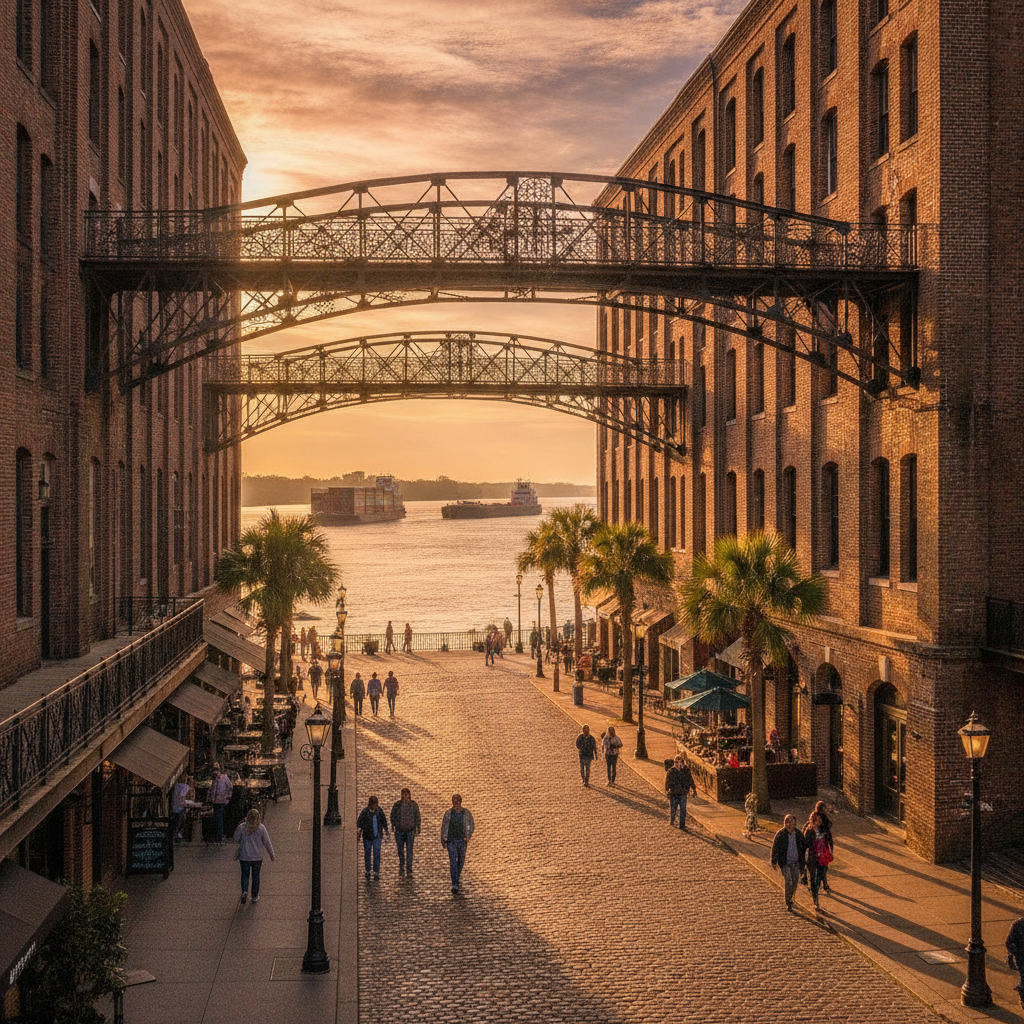
The Savannah River forms the Georgia-South Carolina border and defined the city commercial geography from its founding. Factor Row, later called Factor Walk, was the elevated streetscape along Bay Street where cotton merchants conducted business overlooking the bluff and wharves below. The iron bridges connecting the upper street to the wharves remain and now carry pedestrians between the Riverwalk and Bay Street shops. The river is dredged to 47 feet to accommodate Post-Panamax container vessels serving the Georgia Ports Authority terminals. The Riverwalk itself stretches for nine blocks of restaurants, galleries, and candy shops, including River Street Sweets which has operated since 1973 and is known for pralines made on marble slabs in the shop windows.
- 2
Telfair Museums and Savannah Art Collections
The Telfair Museums comprise three sites: Telfair Academy, the Owens-Thomas House, and the Jepson Center for the Arts. The Telfair Academy, built in 1818 as the home of the Telfair family and converted to a museum in 1886, is the oldest public art museum in the American South. The Owens-Thomas House, designed by English architect William Jay and completed in 1819, is considered one of the finest examples of Regency architecture in the United States and retains a rare intact urban slave quarters. The Jepson Center, designed by Moshe Safdie and opened in 2006, provides 64,000 square feet of contemporary gallery space. Together the three sites hold over 17,000 objects spanning ancient to contemporary art.
- 3
Savannah Music Festival
The Savannah Music Festival, held across 16 days each March and April, presents roughly 80 performances spanning jazz, classical, roots music, and world music in venues across the city including the Savannah Civic Center, Trinity United Methodist Church, and Trustees Theater. The festival was founded in 1989 as the Savannah Onstage International Arts Festival. Music director Rob Gibson reshaped it into a nationally recognized event drawing artists including Wynton Marsalis, Emmylou Harris, and the Vienna Philharmonic. Attendance has grown to over 90,000 across the festival run. The organization operates year-round educational programs in Savannah public schools reaching thousands of students who would otherwise have limited access to live classical and jazz performance.
- 4
Gullah Geechee Heritage on the Sea Islands
The Gullah Geechee people descend from enslaved West and Central Africans brought to the Sea Islands of Georgia and South Carolina beginning in the 17th century. Their relative isolation on the islands allowed the preservation of African languages, spiritual practices, crafts, and food traditions that were largely lost in mainland plantation communities. The Gullah language, a creole with English structure and heavy West African vocabulary and phonology, is still spoken by some elders on Sapelo Island south of Savannah. Sapelo Island Hog Hammock community, with about 50 residents, is one of the last Gullah Geechee communities with continuous occupation. The Harriet Tubman Museum in Macon and the Penn Center on Saint Helena Island are key cultural preservation institutions for the heritage.
- 5
Savannah Grey Brick and Antebellum Architecture
Savannah Grey brick, made from the distinctive clay found in the bluffs along the Savannah River, has a pale grey color unique to Savannah construction. The brick was produced from roughly 1810 to 1880 and used in dozens of Savannah buildings now protected by the Historic Savannah Foundation. The foundation, established in 1955 after the demolition of the City Market, pioneered urban preservation practices that became models for historic districts across the United States. More than 1,100 restored historic buildings in a two-and-a-half square mile area form the Savannah Historic District, one of the largest urban historic districts in the United States listed on the National Register of Historic Places in 1966.
- 6
Jekyll Island Club and Georgia Sea Island History
Jekyll Island, 70 miles south of Savannah, was purchased in 1886 by a private club of American industrialists including William Rockefeller, JP Morgan, William Vanderbilt, and Joseph Pulitzer. At its peak the Jekyll Island Club members represented one-sixth of the world total wealth. The Federal Reserve Act was secretly drafted on Jekyll Island in November 1910 during a private meeting convened by Senator Nelson Aldrich. The Georgia state government purchased the island from the club in 1947 for 675,000 dollars. The remaining club cottages, including the Queen Anne-style Crane Cottage, are preserved as a historic district. Jekyll Island is now a public state park with 10 miles of beaches and bike paths alongside the historic district.
Walk this route with audio
Stories play automatically as you reach each stop — no tapping needed.
More in Savannah
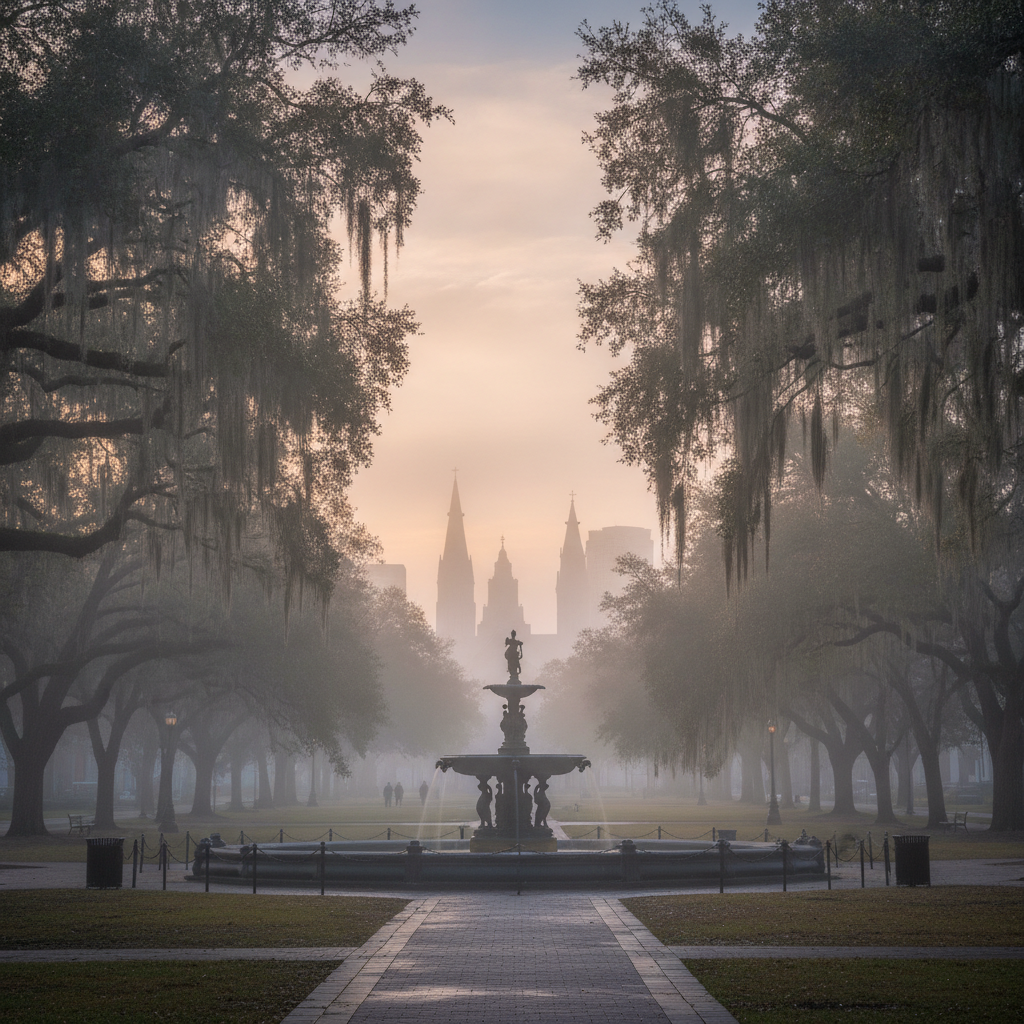
Savannah: Oglethorpe Plan (1733 founded 12th and last original colony, 22 of 24 original squares surviving, most intact 18th-century urban planning US, Forsyth Park 1858 fountain, SCAD 15,000 students revitalized historic buildings), Midnight in the Garden of Good and Evil (Berendt book 1994 216 weeks NYT bestseller longest nonfiction, Mercer House Jim Williams shooting, Chablis Lady drag performer, Johnny Mercer 1,500 songs Moon River Oscar 1961 Breakfast at Tiffany's), Bonaventure Cemetery (live oak allees Spanish moss, Little Gracie Watson 1889 most visited grave, Bird Girl statue moved to Telfair Museums, Telfair Museums oldest Southern public art museum, Owens-Thomas House 1816 finest US Regency architecture), Savannah food (Olde Pink House 1771 James Habersham Georgian mansion, Pirate's House 1734 oldest building Georgia shanghaied sailors tunnel Treasure Island, Mrs. Wilkes Dining Room 1943 communal soul food), Film history (Forrest Gump 1994 Chippewa Square bench now Savannah History Museum, Midnight movie Clint Eastwood 1997, Savannah Film Festival SCAD October), Practical (Historic District 2.5 sqkm National Historic Landmark walkable, Tybee Island 30km lighthouse 1736 second oldest US site, Jekyll Island Rockefellers Morgans, Cumberland Island wild horses Carnegie ruins)
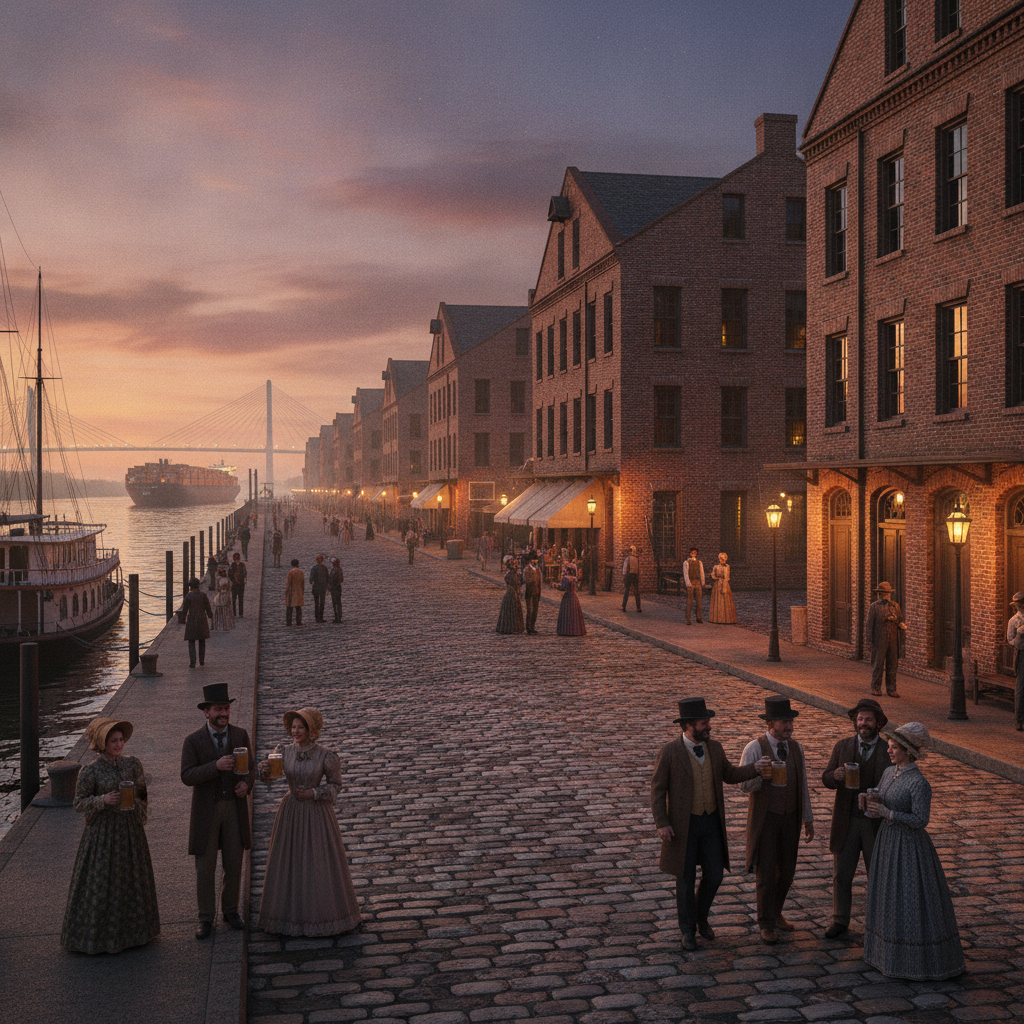
Savannah R4: Spanish moss (bromeliad not parasite absorbs moisture from air, nesting habitat for 3 bird species, Ford Model T 12,000 tons annually for seat cushions, City of Savannah manages growth in squares), Savannah squares in detail (Chippewa Square Forrest Gump bench now History Museum, Oglethorpe statue Daniel Chester French sculptor Lincoln Memorial, Monterey Square Pulaski monument Mercer House, Johnson Square 1733 first square Nathanael Greene monument), Factors Walk waterfront (cotton factor system 2.5% commission, cobblestones New England granite ballast, River Street cotton warehouses now bars restaurants, Talmadge Bridge 56m clearance container ships), Craft beer bar culture (open container law Historic District plastic cups, Moon River Brewing 1821 City Hotel most haunted bar US ghost James Stark, American Prohibition Museum only US museum Prohibition, Service Brewing veteran-founded), Georgia nature (Okefenokee 440,000ha 11,000 alligators blackwater amber tea tannic acids, Little St. Simons 30 guests bald eagles loggerhead, Georgia Bight 2,200 loggerhead nests per year), SCAD galleries (SCAD Museum of Art 1853 Gothic Revival depot, Telfair Museums oldest Southern public art 1886 Bird Girl bronze, Savannah Fashion Week student collections)
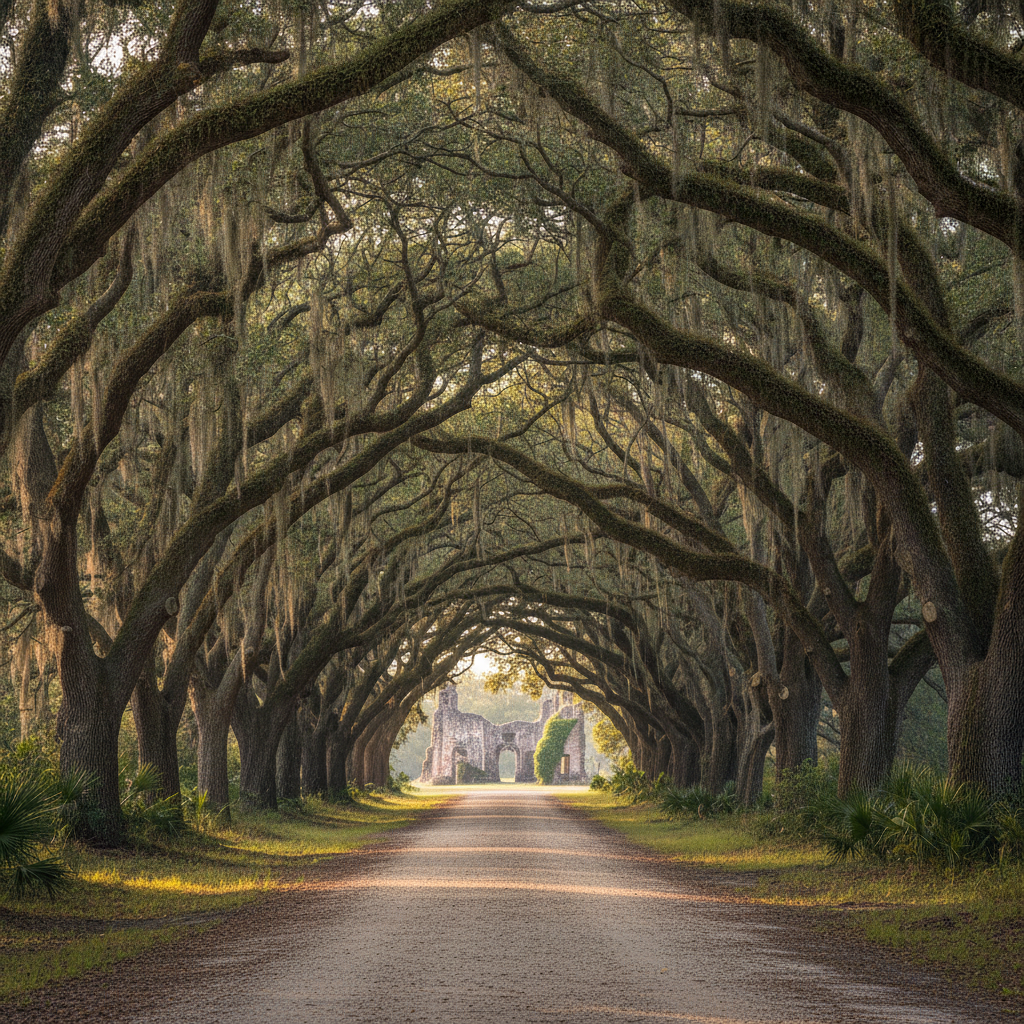
Savannah: Literary City, Victorian Elegance and Oglethorpe Grid
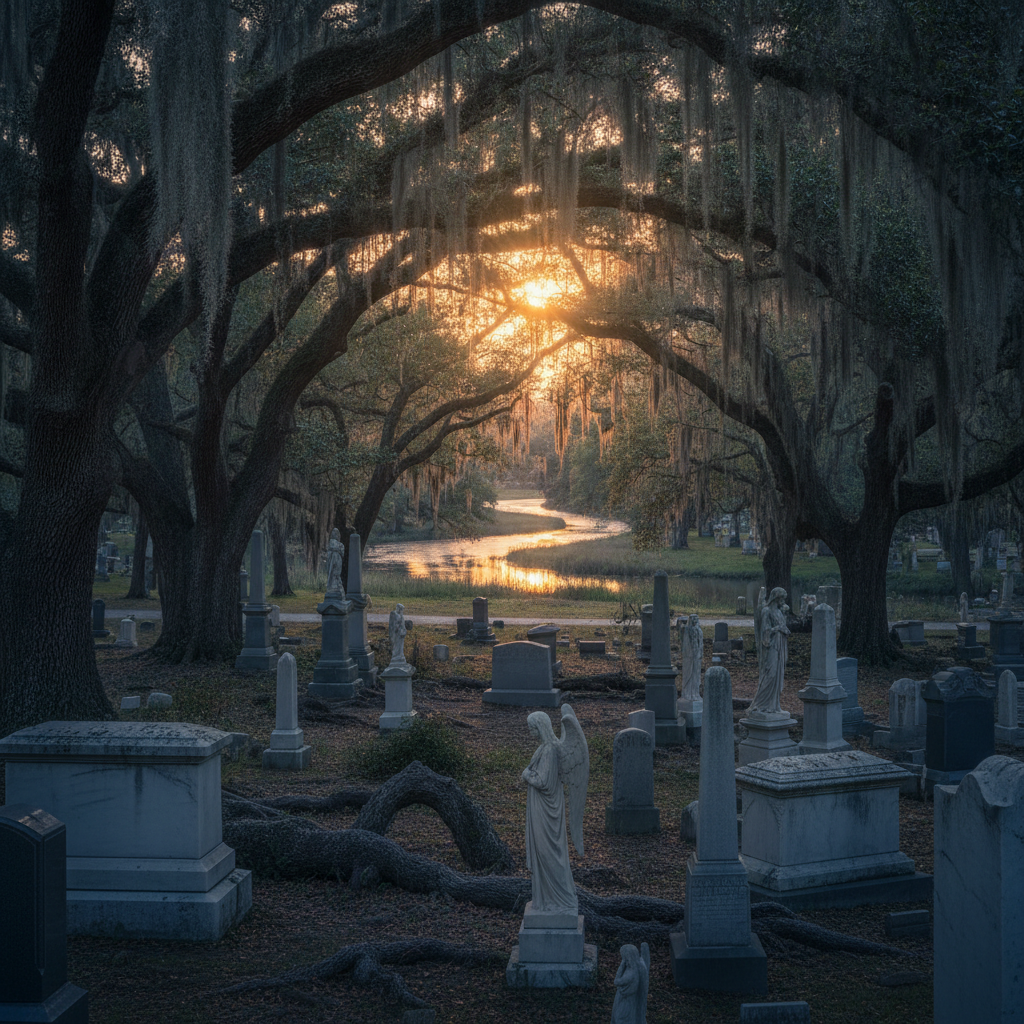
Savannah R2-R4: African American heritage (Sherman Savannah December 21 1864 Christmas gift, Special Field Order 15 January 1865 40 acres and a mule revoked Johnson October 1865, First African Baptist 1773 oldest North American Black Baptist congregation, Underground Railroad West African breathing holes), Tybee Island (lighthouse 1736 second oldest US station, 1958 nuclear B-47 Mark 15 bomb never recovered, Jekyll Island Club 1886-1942 Rockefellers Morgans, 1910 Jekyll Island secret meeting drafted Federal Reserve Act), SCAD (15,000 students largest US art university, 70+ historic buildings restored, Museum of Art 1853 Gothic Revival railway depot, First Fridays Gallery Crawl), Antebellum architecture (Green-Meldrim House Sherman HQ 1864, Isaiah Davenport House 1820 saved 1955 by Historic Savannah Foundation, Owens-Thomas House 1816 finest US Regency, Cathedral of St. John the Baptist 1873 French Gothic), Nightlife ghost tours (open container law Historic District, River Street cotton warehouses, Kehoe House most haunted Savannah, top 3 most haunted US, Savannah Stopover music festival SXSW stop), Practical (St. Patrick's Day 400,000 participants second US, spring azaleas best season, Starland District Back in the Day Bakery, SAV airport direct Atlanta Charlotte)
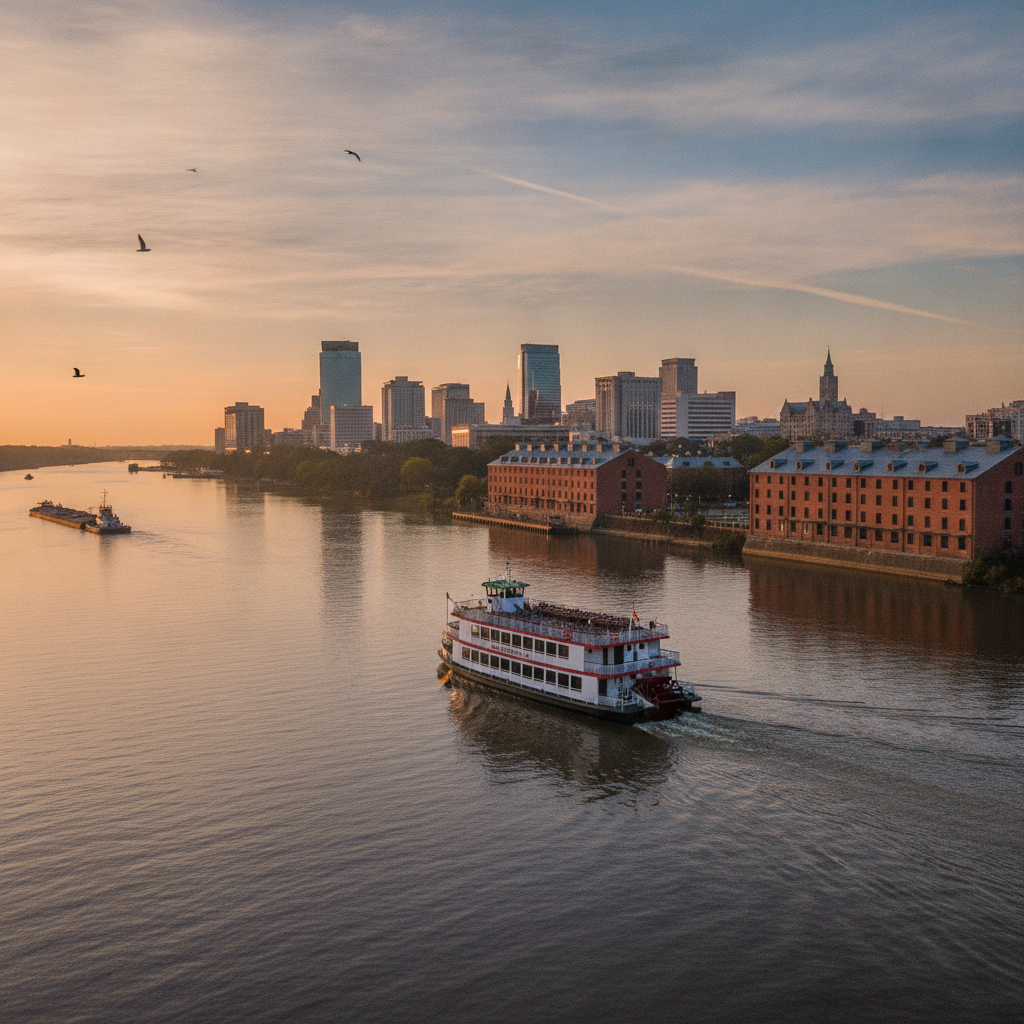
Savannah: Preservation Legacy, Harbor Power and Living Neighborhoods