Gangnam, K-Pop, Hallyu & the New Seoul South of the Han
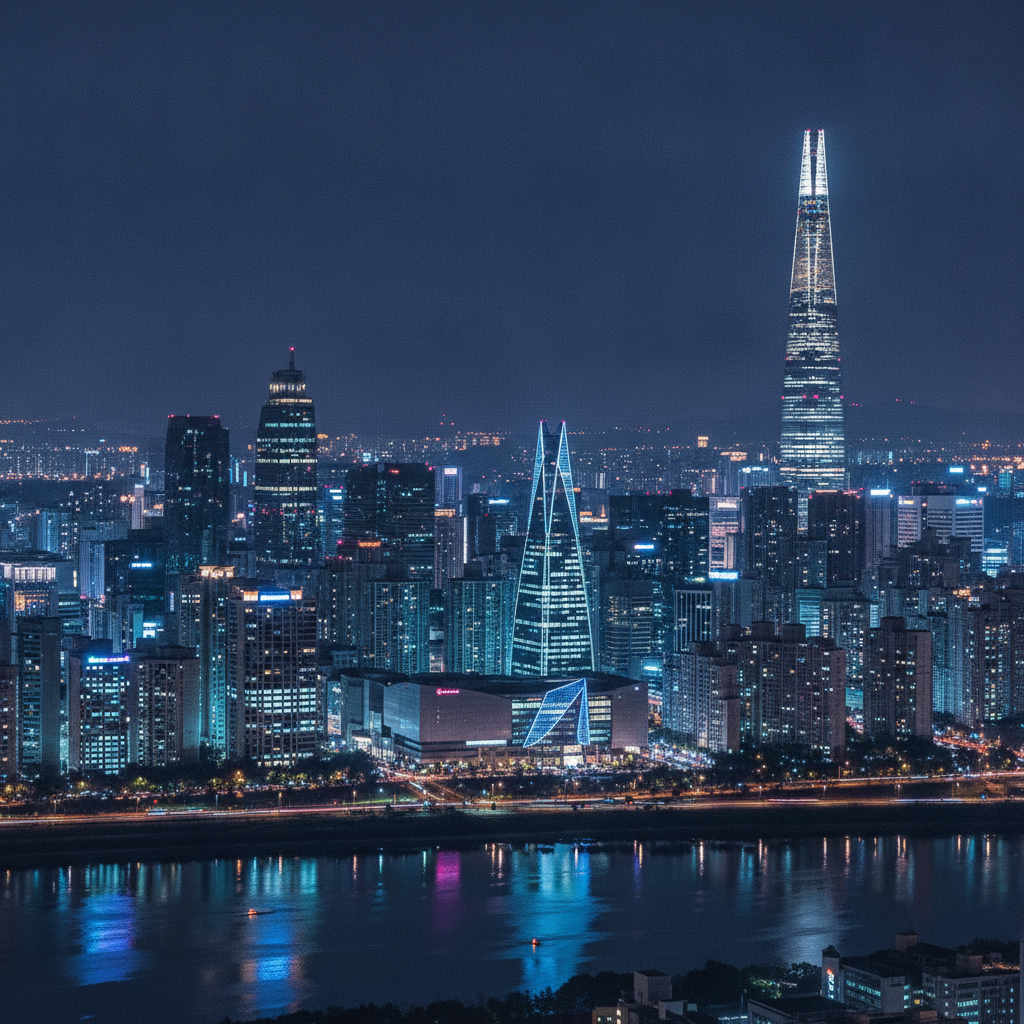
Gangnam ('south of the river') — the modern commercial and entertainment district developed south of the Han River from the 1970s onwards, now home to Seoul's luxury boutiques, K-pop entertainment agencies, the COEX convention centre, and the Lotte World Tower (the 5th-tallest building in the world) — represents the face of contemporary Korean economic success and the global K-culture phenomenon.
1. Gangnam Style — The District That PSY Made Famous
- 1
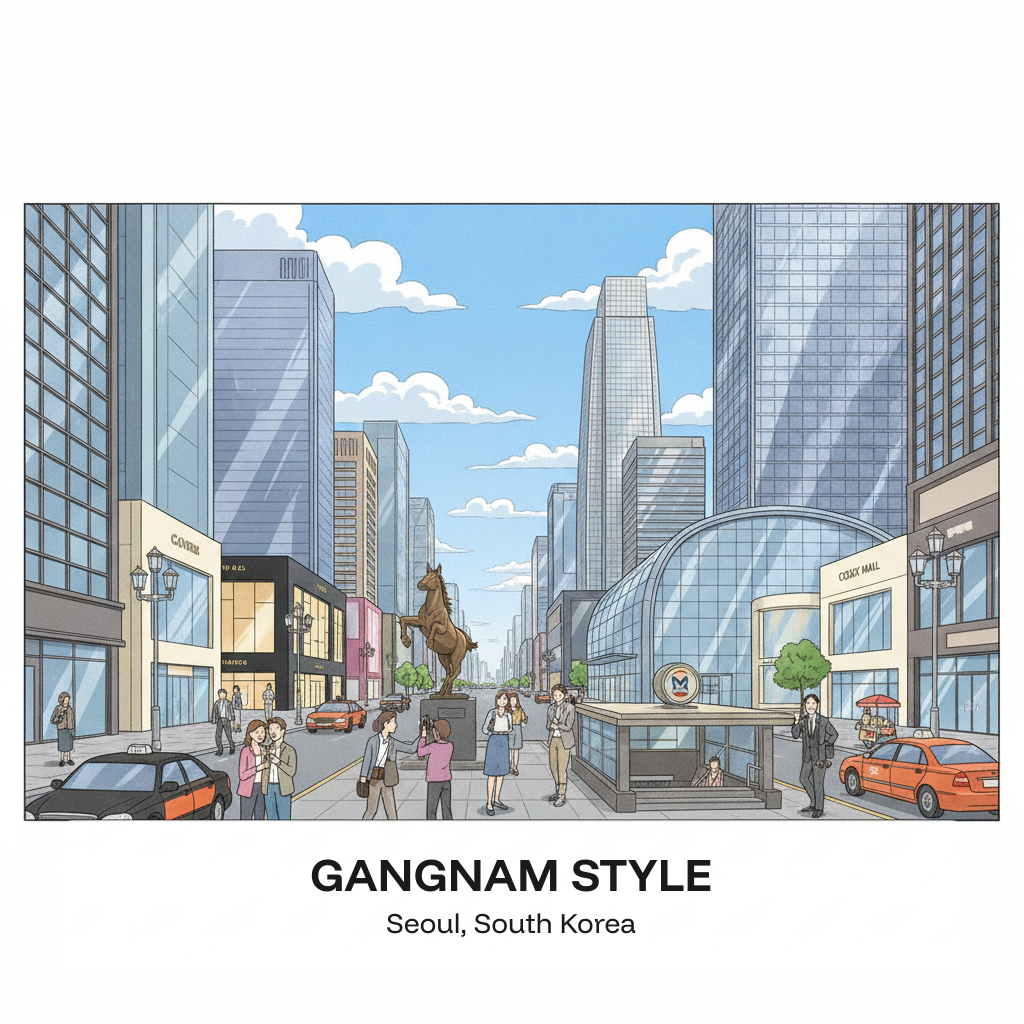
Gangnam Style — The District That PSY Made Famous
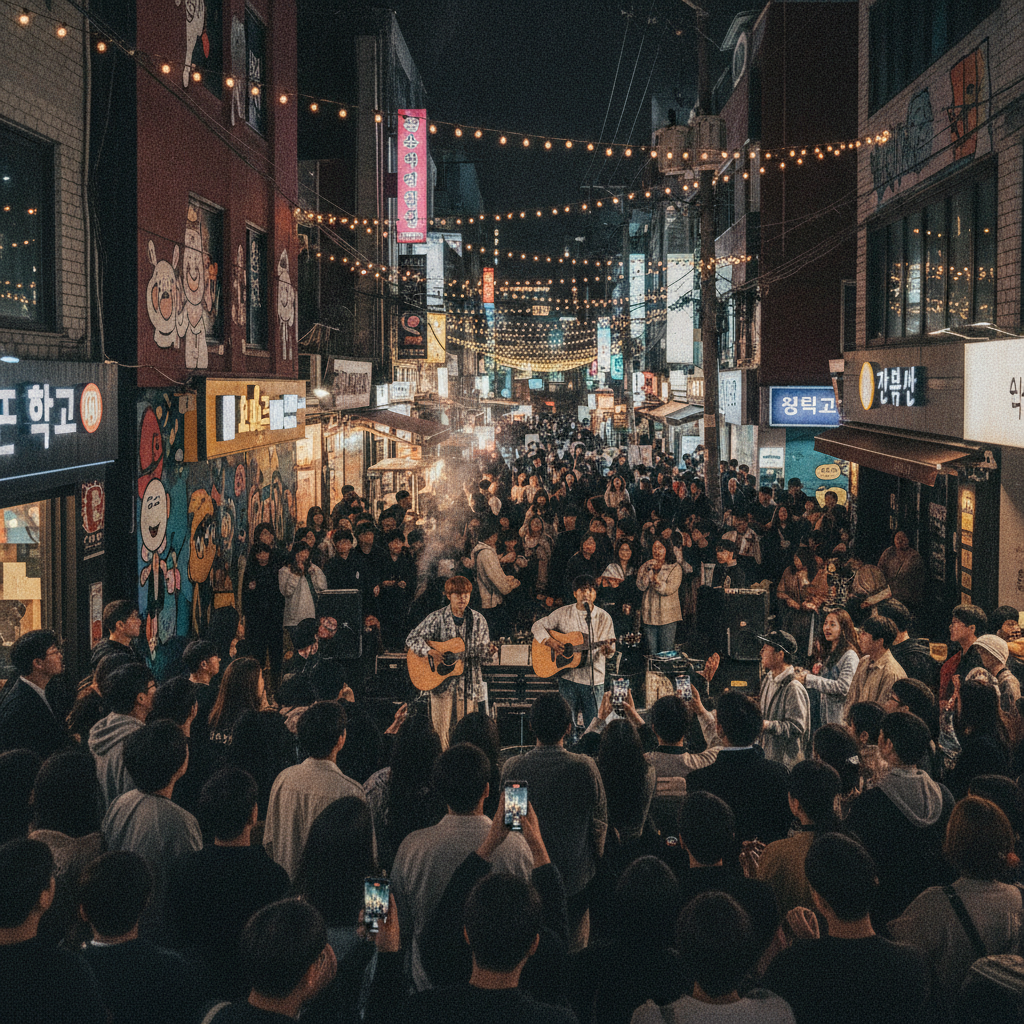
Gangnam-gu (강남구, 'district south of the river' — the 39.5-square-kilometre district south of the Han River in the Seoul metropolitan area, accessible by Lines 2, 3, 7, 9 and several other lines): Gangnam was undeveloped farmland and rice paddies until the Korean government forcibly relocated Seoulites there from the 1970s as part of a deliberate policy of urban decentralisation and investment in the south bank of the Han River; the result, over 40 years, was the development of the wealthiest and most commercially vibrant district in South Korea — the Apgujeong-dong and Cheongdam-dong neighbourhoods house the Korean luxury goods industry (the Korean headquarters of Louis Vuitton, Chanel, Gucci, Hermès and virtually every other major European luxury brand are concentrated here), while Sinchon, Hongdae, and the entertainment districts around Express Bus Terminal and Gangnam Station serve as the commercial and entertainment centres of the south bank; PSY's 2012 viral video 'Gangnam Style' (the first YouTube video to reach 1 billion views, subsequently 2 billion and eventually 5 billion views) parodied the aspirational lifestyle of Gangnam's wealthy residents.
- 2
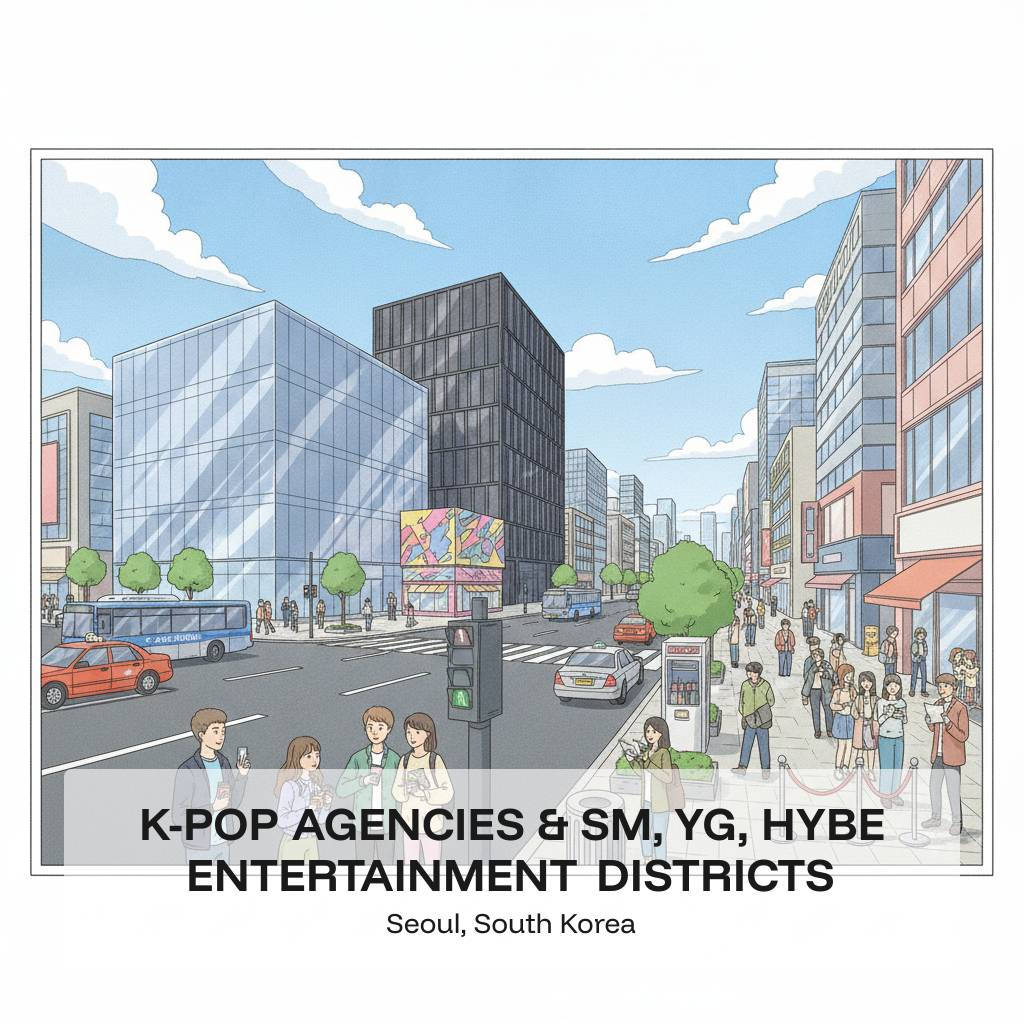
K-Pop Agencies & SM, YG, HYBE Entertainment Districts
The K-Pop entertainment industry district (the cluster of music entertainment company headquarters, recording studios, and fan experiences concentrated in Gangnam-gu and the surrounding areas): the Korean popular music industry (K-pop, 케이팝) is the most globally successful popular music export industry since British Invasion rock of the 1960s — K-pop artists including BTS, BLACKPINK, EXO, TWICE, Stray Kids, aespa, and hundreds of other acts have achieved simultaneous chart dominance across multiple international markets, with an estimated 156 million fans worldwide (the 'K-pop fandom') generating approximately $10 billion in annual revenue from music sales, concerts, merchandise, fan meetings, and associated cultural products; the major entertainment companies (SM Entertainment in Apgujeong-dong; YG Entertainment in Mapo-gu; HYBE (formerly Big Hit Entertainment, home of BTS) near Yongsan; JYP Entertainment near Cheongdam-dong) offer fan experiences including café visits, merchandise stores, museum spaces and periodic fan signing events.
- 3
COEX Mall — Asia's Largest Underground Shopping Mall
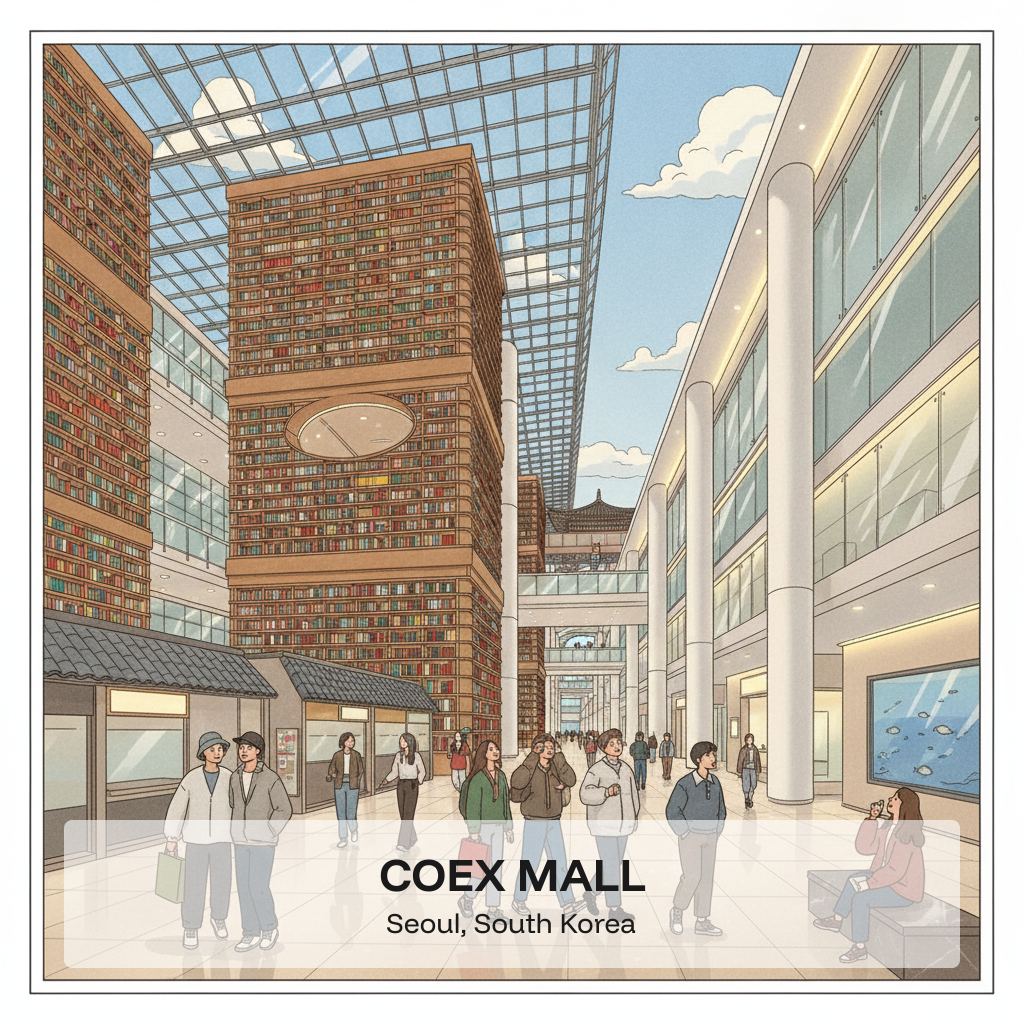
COEX Mall (코엑스몰, Yeongdong-daero 513, Gangnam-gu — the underground shopping complex beneath the COEX Convention & Exhibition Center in Samseong-dong, with approximately 260 shops, cinemas, an aquarium, a hotel, a casino, and the COEX Starfield Library (별마당 도서관, the extraordinary open-plan library in the centre of the mall with towering bookshelves reaching the ceiling that has become one of the most photographed interior spaces in Korea)): COEX Mall is the largest underground shopping centre in Asia; the COEX Convention & Exhibition Center connected to the mall (one of the largest convention centres in Asia with 36,000 square metres of exhibition space) hosts some of the most important technology and entertainment trade shows in Asia, including Gamescom Asia, Seoul Comic World, and the Korea International Boat Show; the Bongeunsa Temple (봉은사, a large Buddhist temple compound founded in 794 CE) immediately across the street from COEX provides a striking contrast of ancient and ultra-modern Seoul.
- 4
Lotte World Tower — The Supertall Skyscraper of East Seoul
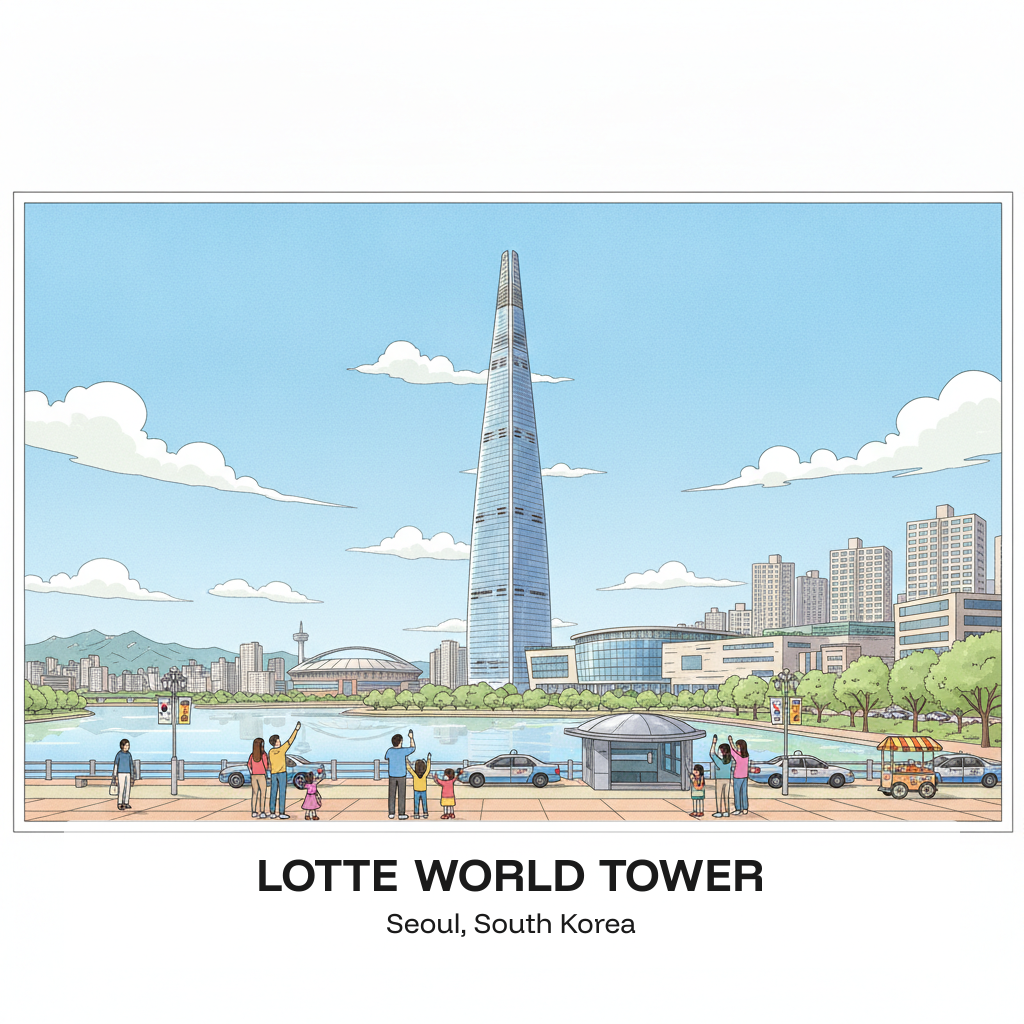
Lotte World Tower (롯데월드타워, 300 Olympic-ro, Songpa-gu, Seoul — completed January 2017, 555 metres tall (to roof), 123 floors, the tallest building in Korea and the fifth-tallest building in the world at the time of completion, designed by Kohn Pedersen Fox Associates): the Lotte World Tower is the defining element of the 'Lotte World Mall' complex in Jamsil, Songpa-gu — a massive mixed-use development including the supertall tower (containing offices, a luxury hotel, residences, and the Seoul Sky observation deck on the 117th-123rd floors (500 metres above the ground, offering 360-degree views that include the Han River, Bukhansan, the entire Seoul metropolitan area, and (on clear days) views as far as Incheon and the Yellow Sea), and the Lotte World Mall (the 8-story shopping mall at the base of the tower); the adjacent Lotte World (롯데월드, the large indoor and outdoor theme park, one of the largest indoor theme parks in the world by covered area) and the Olympic Stadium (1988 Seoul Olympics venue) are also within walking distance.
- 5
Han River Parks — Seoul's Outdoor Living Room
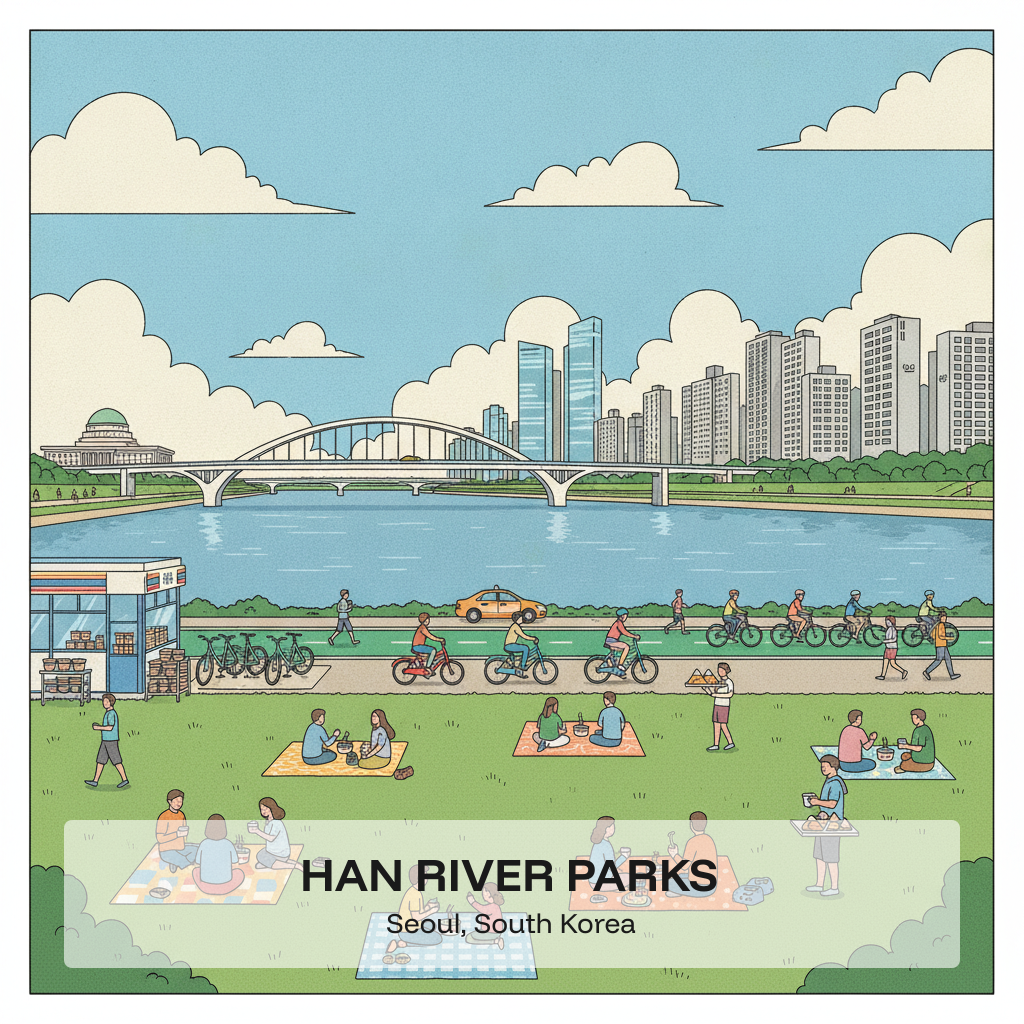
The Han River (한강, the 514-kilometre river flowing westward through the centre of the Seoul metropolitan area before entering the Yellow Sea at the border between South and North Korea): the Han River is the central organizing feature of Seoul's geography, dividing the metropolitan area into the older 'Gangbuk' (north of the river) districts and the modern 'Gangnam' (south of the river) districts; the Han River Parks (한강시민공원, the 12 riverside parks developed along both banks of the Han River between the 1980s and the 2010s, covering approximately 30 kilometres of riverbank) are the principal outdoor recreational space of the Seoul metropolitan area; the parks (Yeouido Hangang Park being the largest and most popular) are crowded with families picnicking on the grass, cyclists using the riverside cycle paths, people renting bicycles and quadricycles, and vendors selling Korean convenience store snacks — particularly the 'Han River ramyeon' tradition of eating instant noodles prepared with hot water from riverside convenience stores while seated on a mat on the grass.
- 6
Itaewon & the International Quarter — Multicultural Seoul
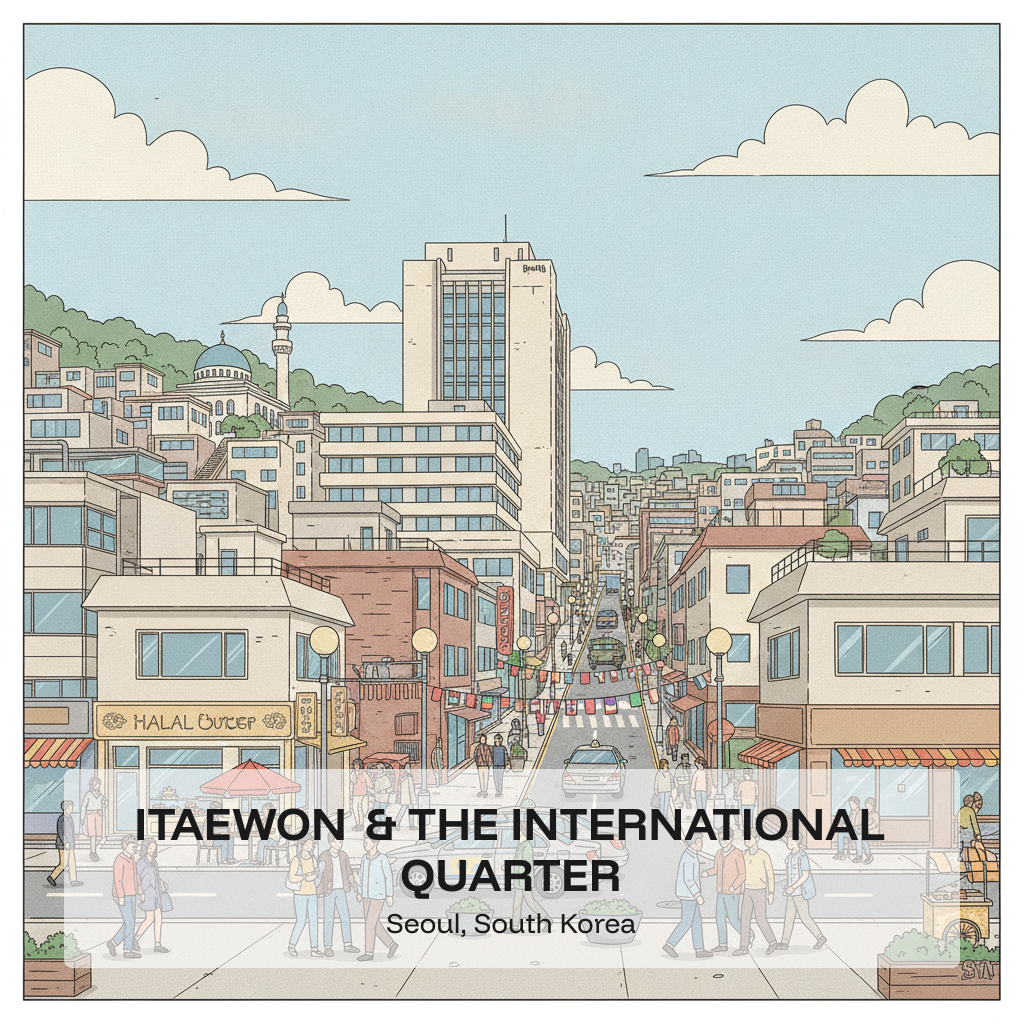
Itaewon (이태원, the international district of Seoul, approximately 2 kilometres west of Gangnam, adjacent to the main US military base in Seoul (USFK/Yongsan Garrison — the US military presence in Korea since 1945)): Itaewon developed from the 1970s onwards as the primarily international shopping, dining, and entertainment district of Seoul, serving the needs of the US military personnel and their families, foreign residents, and tourists; following the relocation of the main Yongsan Garrison base to Pyeongtaek in 2017, Itaewon has been undergoing transformation and redevelopment while retaining its character as the most culturally diverse neighbourhood in Korea, with the highest concentration of non-Korean residents, international restaurants (representing virtually every national cuisine), gay bars (the district has traditionally been the centre of Seoul's LGBTQ+ nightlife), and international fashion boutiques; the adjacent Hannam-dong has developed as Seoul's most prestigious residential area for wealthy expatriates and young Korean professionals.
Walk this route with audio
Stories play automatically as you reach each stop — no tapping needed.
More in seoul
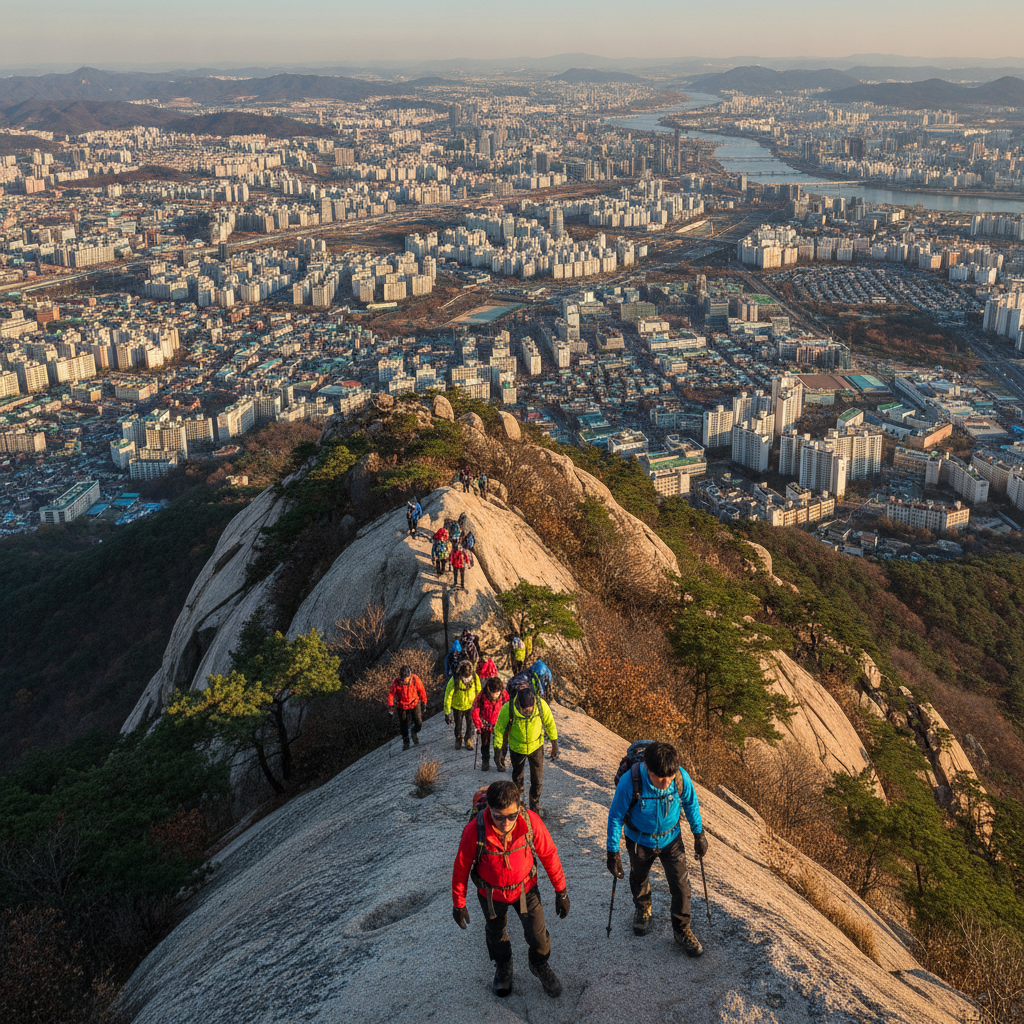
Bukhansan National Park — Granite Peaks & the Seoul City Fortress Walls
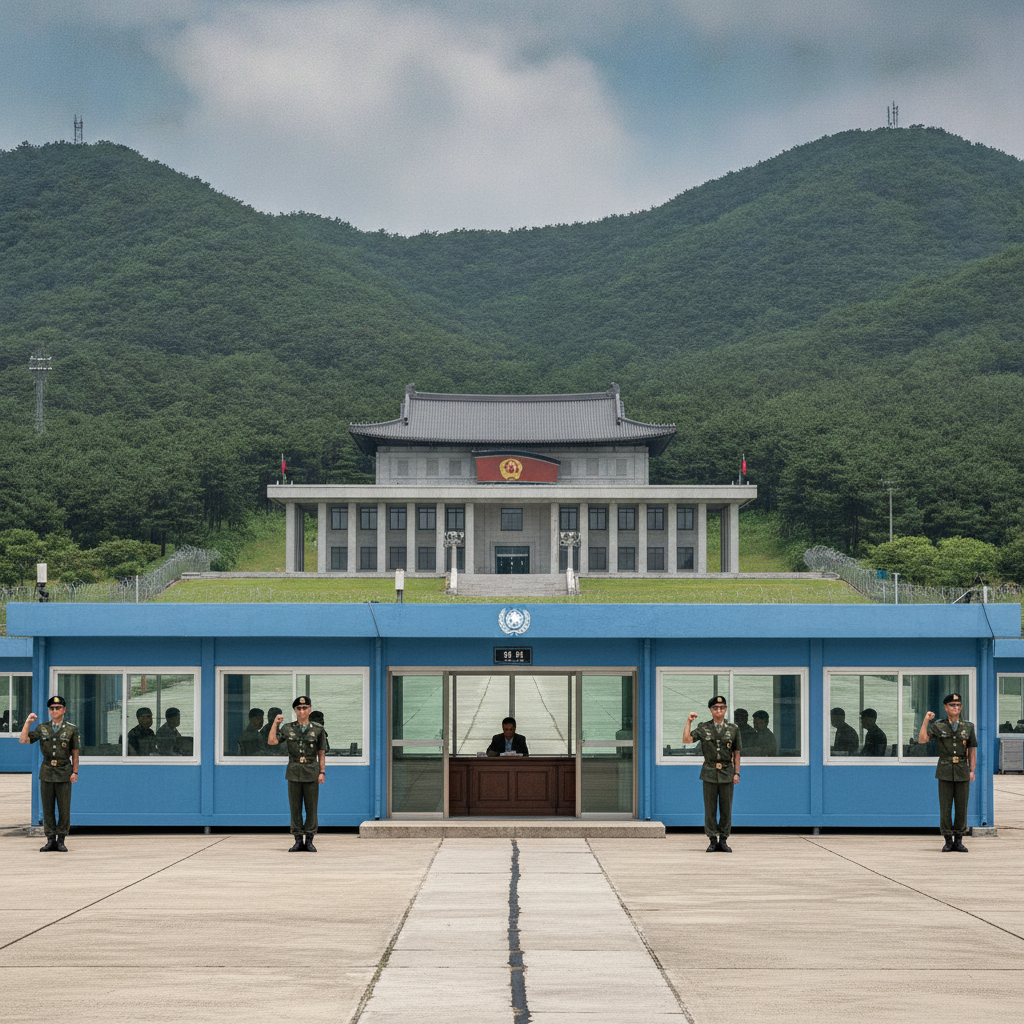
The DMZ, Panmunjom & the Joint Security Area — Korea's Divided Border
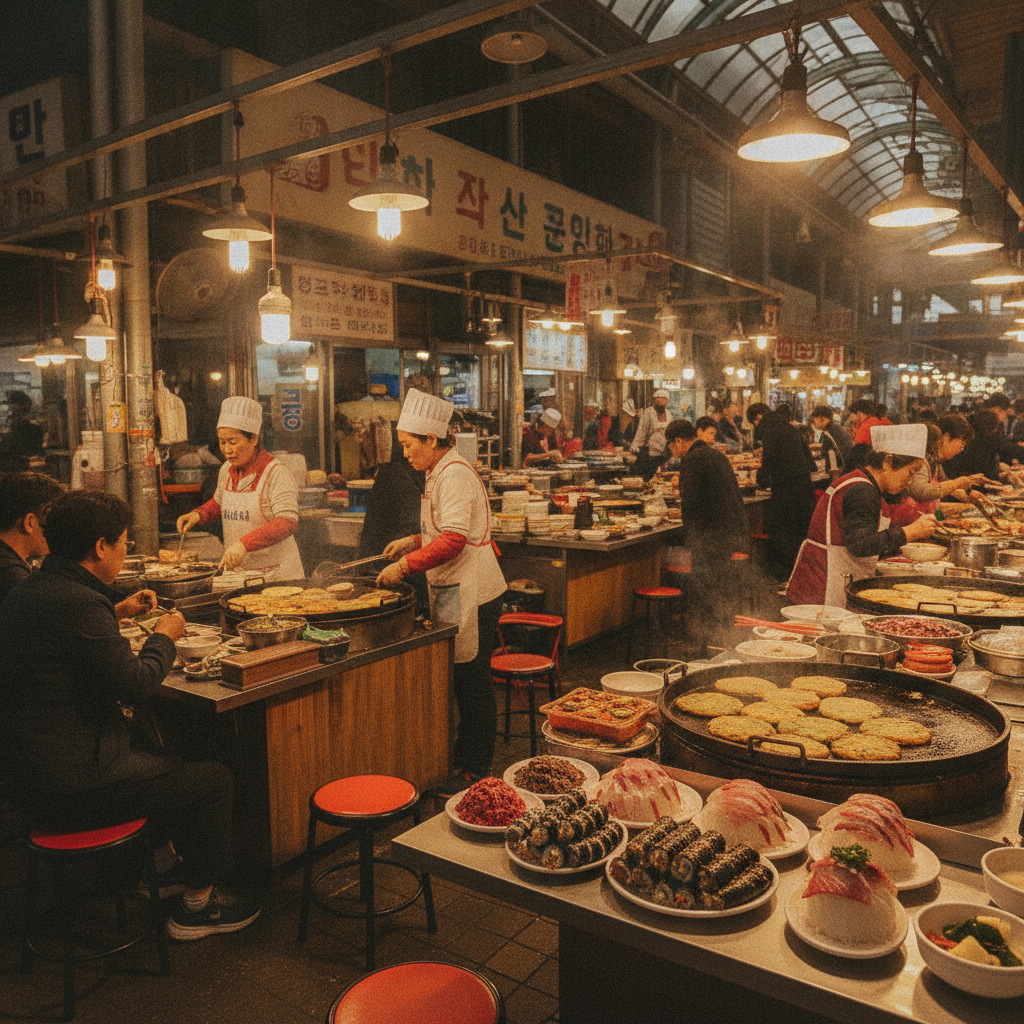
Korean Food Culture — Gwanjang Market, Bibimbap, Samgyeopsal & Banchan
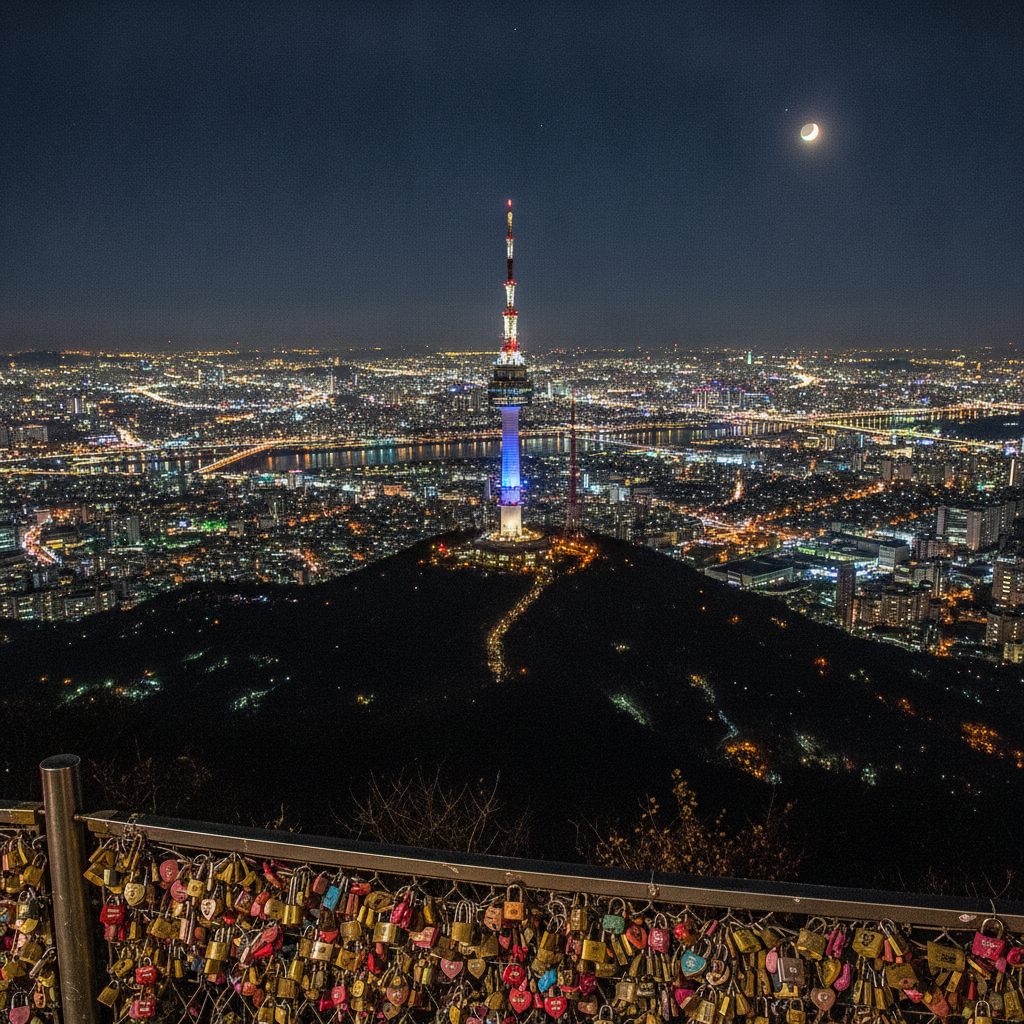
Myeongdong, Namdaemun Market, N Seoul Tower & Namsan
Hongdae, Sinchon & the University Districts — Street Art, Clubs & Youth Culture