The Achaemenid Royal Road 2,699km from Susa to Sardis with Post Stations Every 25km Delivering Messages in 7 Days vs 90 Days on Foot, Shiraz Faloodeh the World's Oldest Frozen Dessert Dating to 400 BCE & Shapur I the Only Conqueror Ever to Capture a Roman Emperor
The Achaemenid Royal Road (2,699km) with chapar-khaneh post stations every 25km — royal messengers covering the distance in 7 days vs 90 days on foot; the Shirazi faloodeh (rose water frozen vermicelli dessert) the world's oldest frozen dessert dating to at least 400 BCE and described by Plutarch; Shapur I capturing Roman Emperor Valerian at the Battle of Edessa (260 CE) — the only Roman Emperor ever captured by an enemy; the gold Achaemenid daric the primary international currency of the ancient Middle East 515–330 BCE; the Sassanid Ctesiphon arch (37m span) still the largest single-span brick arch in the world; and the Shirazi cucumber variety (thin-skinned, aromatic) as the traditional Shirazi salad ingredient.
- 1
The Achaemenid Empire – A Political History
The Achaemenid Empire political history (the political organization and legacy of the first Persian Empire — the most important empire in the ancient Middle East): the political history guide. The founding (the Achaemenid Empire (550–330 BCE) — founded by Cyrus the Great (r. 550–530 BCE): the origin (the Persians (Parsa — the tribe of the Iranian plateau from which the empire takes its name) were a semi-nomadic Iranian-speaking people of the Zagros Mountains: the first conquest (Cyrus conquered the Median Empire (550 BCE), the Lydian Empire (547 BCE), and the Babylonian Empire (539 BCE) — three major empires in 11 years: the administration (the Achaemenid administrative system — the most sophisticated empire management system of the ancient world: the satrapy (the satrapy (from Old Persian xshathrapavan — protector of the kingdom) — the administrative province: the empire at its peak had 20–30 satrapies: the satraps were generally members of the Achaemenid royal family or the Persian aristocracy: the Royal Road (the Royal Road (Rahe Shahi) — the primary imperial communication road stretching 2,699 km from Susa (winter capital) to Sardis (western Anatolia) — the road was maintained by royal post stations (chapar-khaneh) every 25 km (approximately one day's horse ride): a royal messenger could travel the entire 2,699 km in 7 days (the same journey took a traveler 90 days on foot): the coinage (the Achaemenid gold daric (named for Darius I) and silver siglos — the primary international currency of the ancient Middle East from 515 to 330 BCE).
- 2
Fars Province – Heartland of Persian Identity
The Fars Province heritage (the province of Fars (فارس) — the historic heartland of Persian civilization and the source of the name Persia and Persian in all European languages): the heartland guide. The name (the word Persia (Latin Persia, Greek Persis) derives from the region name Parsa (Old Persian) or Pars (Middle Persian) — the name of the region that is now Fars Province in southern Iran: the derivation (the word Iran itself derives from the Old Persian word aryanam (of the Aryans) — the same root as the ethnonym Aryan which was first used in an inscriptional context by the Achaemenid ruler Darius I at Persepolis: the historical centrality (Fars Province contains the highest density of UNESCO-listed and nationally protected archaeological sites in Iran: the primary sites: Persepolis (UNESCO 1979): Pasargadae (UNESCO 2004): Bishapur (the Sassanid city and rock reliefs 150 km northwest of Shiraz): Naqsh-e Rostam: Naqsh-e Rajab (the secondary Sassanid relief panel near Naqsh-e Rostam): the Sassanid heritage (the Sassanid Empire (224–651 CE) also originated in Fars Province — the first Sassanid ruler Ardashir I was a local lord from the Darab district of Fars who overthrew the Parthian Empire in 224 CE: the Fars landscapes (the physical geography of Fars: the province occupies the southern Zagros mountains between 600m and 4,000m altitude: the Persians originated as highland pastoralists who controlled the mountain passes between the plateau and the Persian Gulf lowlands).
- 3
Shiraz Cuisine – the Finest Table in Southern Iran
The Shiraz culinary tradition (the Shirazi cuisine — the most distinctive regional Iranian cuisine after Isfahan and Tabriz): the cuisine guide. The Shirazi salad (the Salad-e Shirazi (سالاد شیرازی) — the most widely known Shirazi dish in the world: the salad consists of finely diced cucumber, tomato, and red onion dressed with dried mint, fresh lime juice, and olive oil: the salad is simple but requires the finest-quality ingredients — the Shirazi cucumbers (cucumber Shirazi — a thin-skinned aromatic cucumber grown in the Shiraz region) and the Shirazi tomatoes (a small, intensely-flavored variety) are the traditional ingredients: the Kalam Polo Shirazi (the signature rice dish of Shiraz — kalam polo (کالم پلو) — rice cooked with cabbage (kalam), lamb meatballs, saffron, and herbs: the sweet-savory combination (the cabbage-and-meat combination with saffron is unusual in Iranian cooking and distinguishes the Shirazi rice tradition from the Isfahan and Tehran rice traditions): the Faloodeh (the Shirazi faloodeh (فالوده) — the most ancient frozen dessert in the world: thin rice vermicelli noodles frozen in a semi-crystallized rose water syrup served with fresh lime juice and optional sour cherry syrup: the history (faloodeh production in Shiraz dates to at least the 4th century BCE — Alexander the Great is described by Plutarch as being served a similar frozen dessert at the Persian court after the Battle of Issus: the Ab-Doogh Khiar (the cold cucumber yogurt soup — the primary summer dish of Shiraz — cucumber, dried mint, dried rose petals, and dried raisins blended with thick Persian yogurt (mast) and cold water).
- 4
The Sassanid Empire – The Second Persian Empire
The Sassanid Empire heritage (the Sassanid dynasty (224–651 CE) — the second great Persian empire that ruled from Fars for 400 years and the primary adversary of the Roman and Byzantine Empires): the historical heritage guide. The Sassanid dynasty (the Sassanid Empire (Sasanian Empire — امپراتوری ساسانی) — founded by Ardashir I (r. 224–242 CE) who defeated the last Parthian ruler Artabanus IV at the Battle of Hormozdgan (224 CE): the capital (the primary Sassanid capital was Ctesiphon (Taq-i Kisra) on the Tigris River near modern Baghdad — the arch of the Taq-i Kisra (the Iwan of Khosrow) is the largest single-span brick arch in the world at 37m span): the primary rulers (the primary Sassanid rulers: Ardashir I (the founder): Shapur I (r. 241–272 CE — the ruler who defeated and captured the Roman Emperor Valerian at the Battle of Edessa (260 CE) — the only Roman Emperor ever captured by an enemy: Khosrow I Anushirvan (r. 531–579 CE — the most celebrated Sassanid ruler — Anushirvan (the Immortal Soul) reformed the Sassanid administrative system and military: the conflict with Rome and Byzantium (the Sassanid-Roman-Byzantine wars were the longest interstate military conflict in ancient history (230–628 CE — nearly 400 years): the fall (the Sassanid Empire was destroyed by the Arab-Islamic conquest in 636–651 CE — the last Sassanid ruler Yazdegerd III was killed fleeing from the advancing Arab armies in 651 CE): the legacy (the Sassanid administrative system and court culture was absorbed wholesale by the Abbasid Caliphate — the Persian cultural tradition survived the Islamic conquest by becoming the dominant culture of Islamic civilization).
- 5
Shiraz Photography – Hafez Gardens to Persepolis
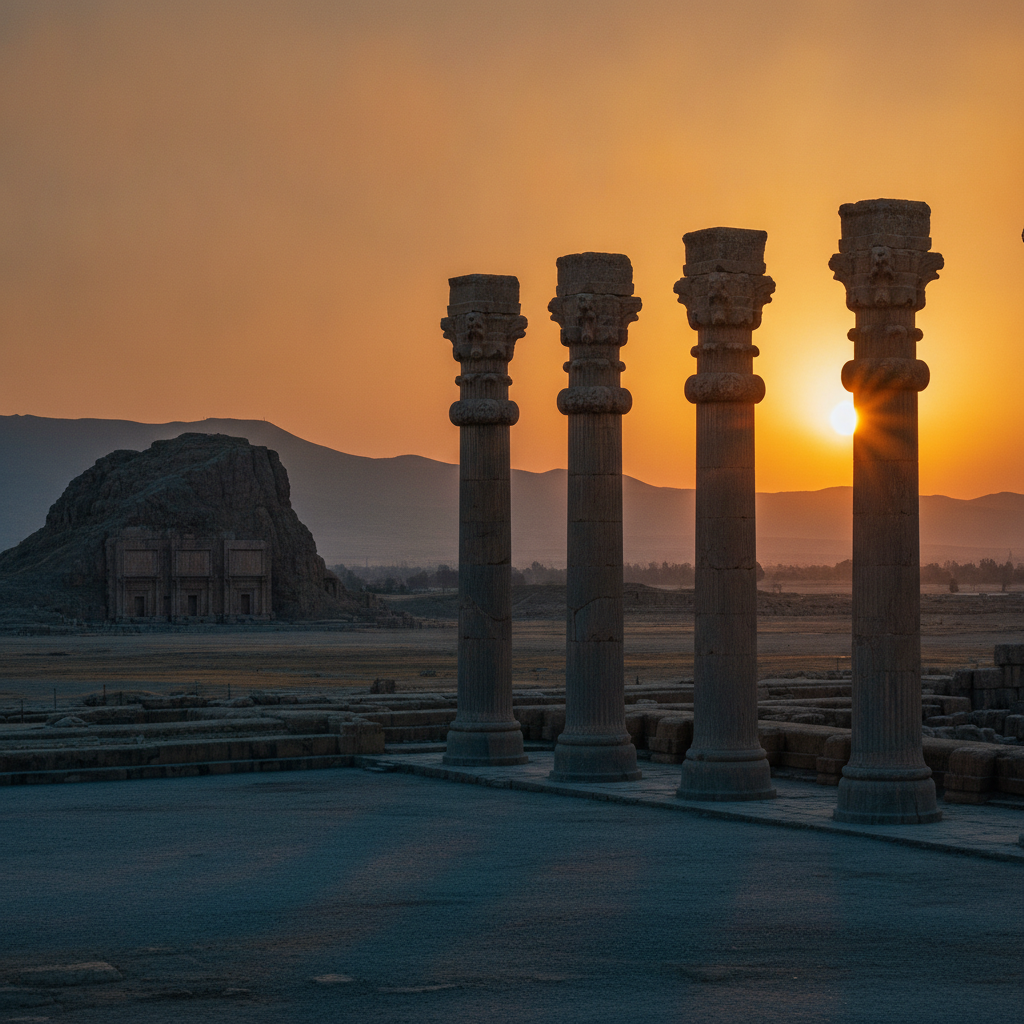
The Shiraz photography guide (the optimal locations, timing, and techniques for photographing Shiraz's monuments, gardens, and the Persepolis plain): the photography guide. The Nasir al-Molk Mosque (the primary photography subject in Shiraz: the time (08:00–10:30 for the colored light effect in the winter prayer hall — this is the most photographed interior in Iran: the technique (a wide-angle lens (16–24mm full frame equivalent) captures the entire prayer hall with all five windows in a single frame: the high ISO (the colored light in the hall is low-intensity despite the brilliant window light — ISO 800–3200 is required for sharp handheld shots at f/4 or wider): the Hafez Tomb (the best time: sunset (19:00–20:00) when the tomb pavilion is lit from within and the cypress garden is in warm light: the garden and pavilion photograph best from the elevated northeast corner of the garden): the Persepolis (the Persepolis reliefs photograph best in the late afternoon (16:00–17:00) when the oblique light creates strong shadows in the carved limestone details — the Apadana staircase reliefs are the primary subject: the wide composition (the full north staircase procession relief from the left end of the stairs shows the complete sequence of delegations — 30m of carved limestone): the sunrise (the Persepolis ruins at sunrise (06:00–07:00) — the plain of Marvdasht in the early morning light before tourists arrive — the Apadana columns against the golden sunrise sky is the classic Persepolis composition).
- 6
Shiraz vs Isfahan – The Two Great Southern Cities
The Shiraz vs Isfahan comparison (the two most historically significant cities in southern Iran — Isfahan (the Safavid imperial capital) and Shiraz (the Achaemenid heartland and the city of the poets) — the complementary must-see destinations of any serious Iran itinerary): the comparative guide. The architecture (Isfahan has the most important and complete Islamic architectural heritage in Iran — the UNESCO-listed Naqsh-e Jahan Square, the Shah Mosque, the Sheikh Lotfollah Mosque, the Chehel Sotun Palace, and the Jameh Mosque: Shiraz has the most important pre-Islamic archaeological heritage — Persepolis and Pasargadae are both within 2 hours of the city: the poetry (Shiraz is the city of Hafez and Saadi — the two poets who defined Persian lyric and didactic poetry: Isfahan's literary connection is primarily architectural and philosophical rather than poetic (no major Iranian poet is buried in Isfahan)): the atmosphere (Isfahan has a more monumental and formal atmosphere — the Naqsh-e Jahan Square is designed for imperial display: Shiraz has a more intimate and literary atmosphere — the city feels closer to the Persian cultural tradition of poetry, gardens, and private beauty: the transport connection (Isfahan to Shiraz: the VIP bus (7 hours): the Iran Air flight (55 minutes): the train (12–16 hours through the Zagros — the most scenic rail journey in Iran): the recommended sequence (the recommended Iran itinerary: Tehran (3 days) — Isfahan (3 days) — Shiraz and Persepolis (3 days) — Yazd (2 days) — return to Tehran or exit via Shiraz Airport).
Walk this route with audio
Stories play automatically as you reach each stop — no tapping needed.
More in Shiraz
Shiraz Food: Kalam Polo, Faloodeh, the Local Persian Cuisine, the Traditional Teahouses, and the Most Culinarily Regional Single Iranian City
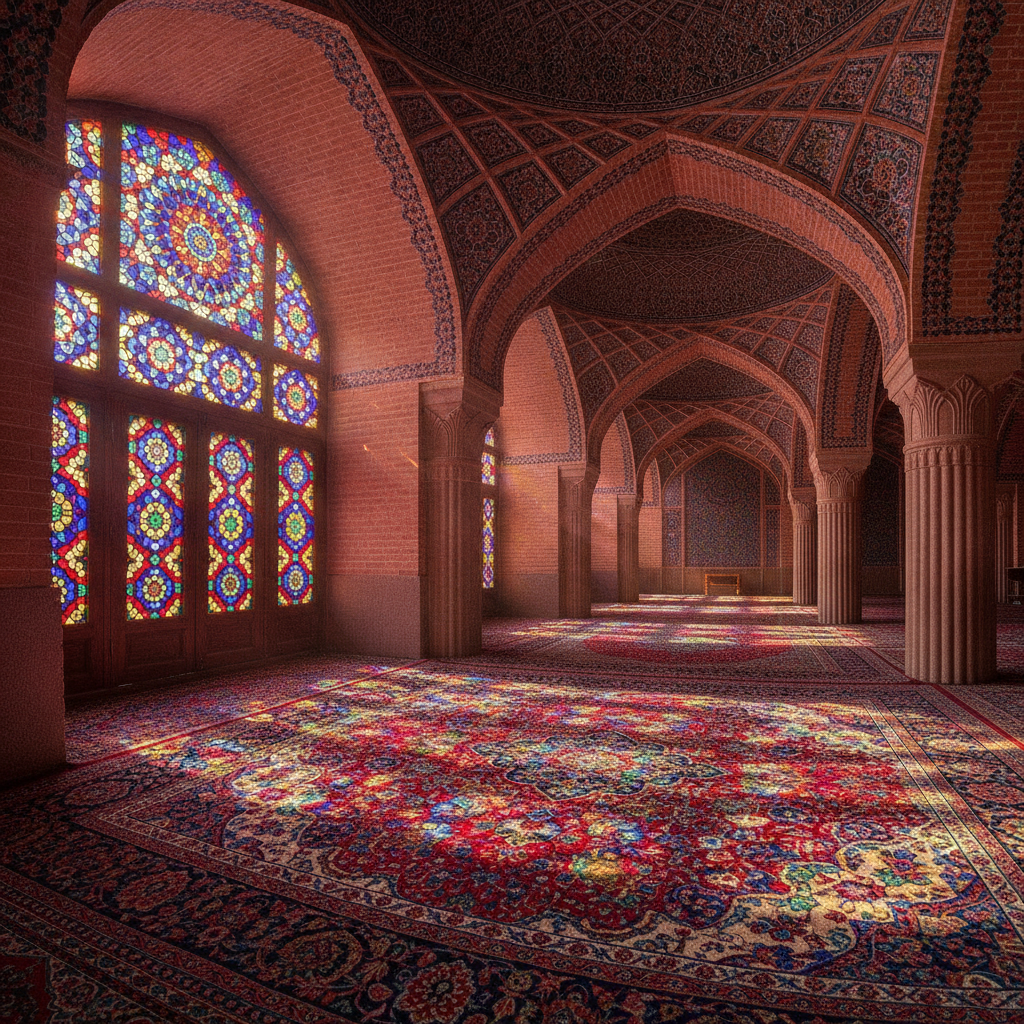
Shiraz Essential: Persepolis, the Pink Mosque, the Tomb of Hafez, Eram Garden, and the Most Poetically Beautiful Single Iranian City

Shiraz Zoroastrian Heritage: The Fire Temples, Pars as the Persian Heartland, the Ancient Religion, and the Most Historically Consequential Single Pre-Islamic Iranian Faith
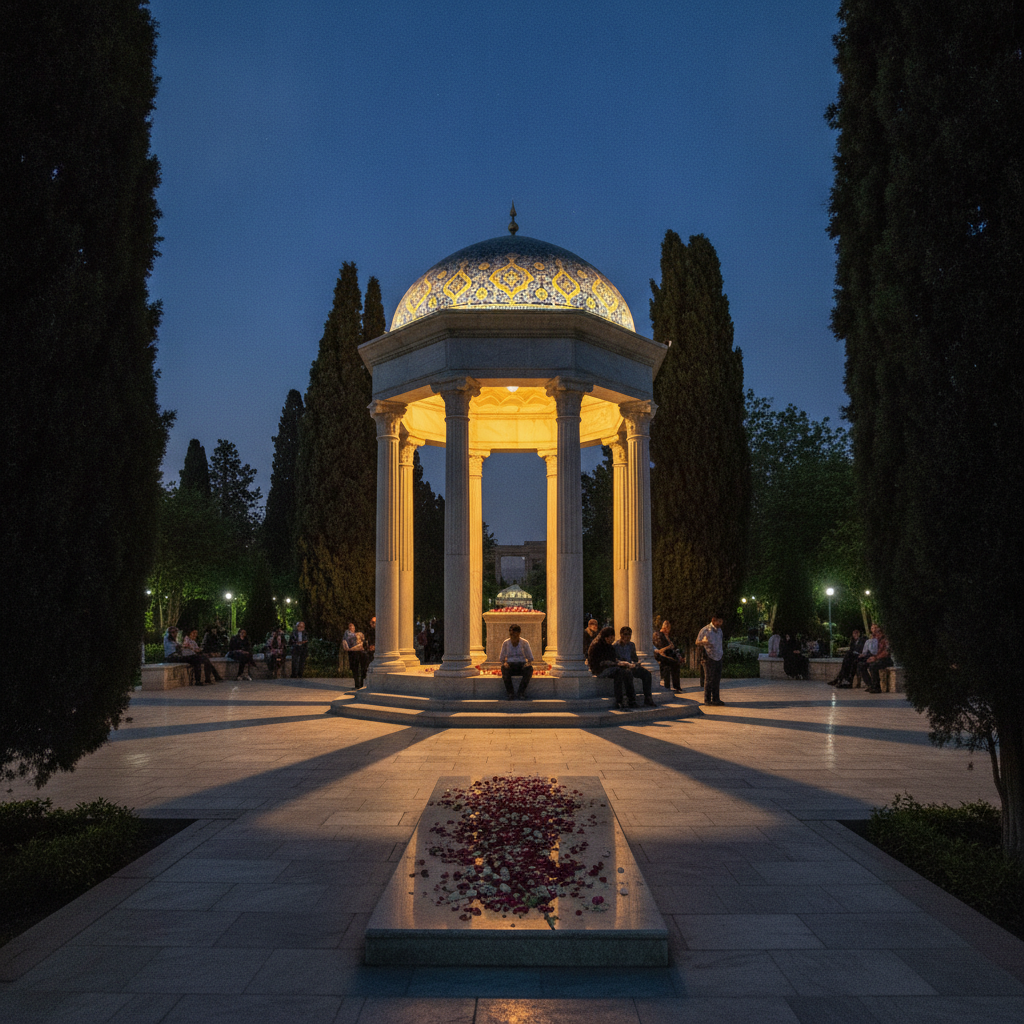
The Persepolis Treasury Tablets the Primary Documentary Evidence for Achaemenid Administration, Saadi's Bani Adam Verse on the UN Headquarters Wall & the DNA Proof That the Shiraz Wine Grape Actually Originates in France Not Persia
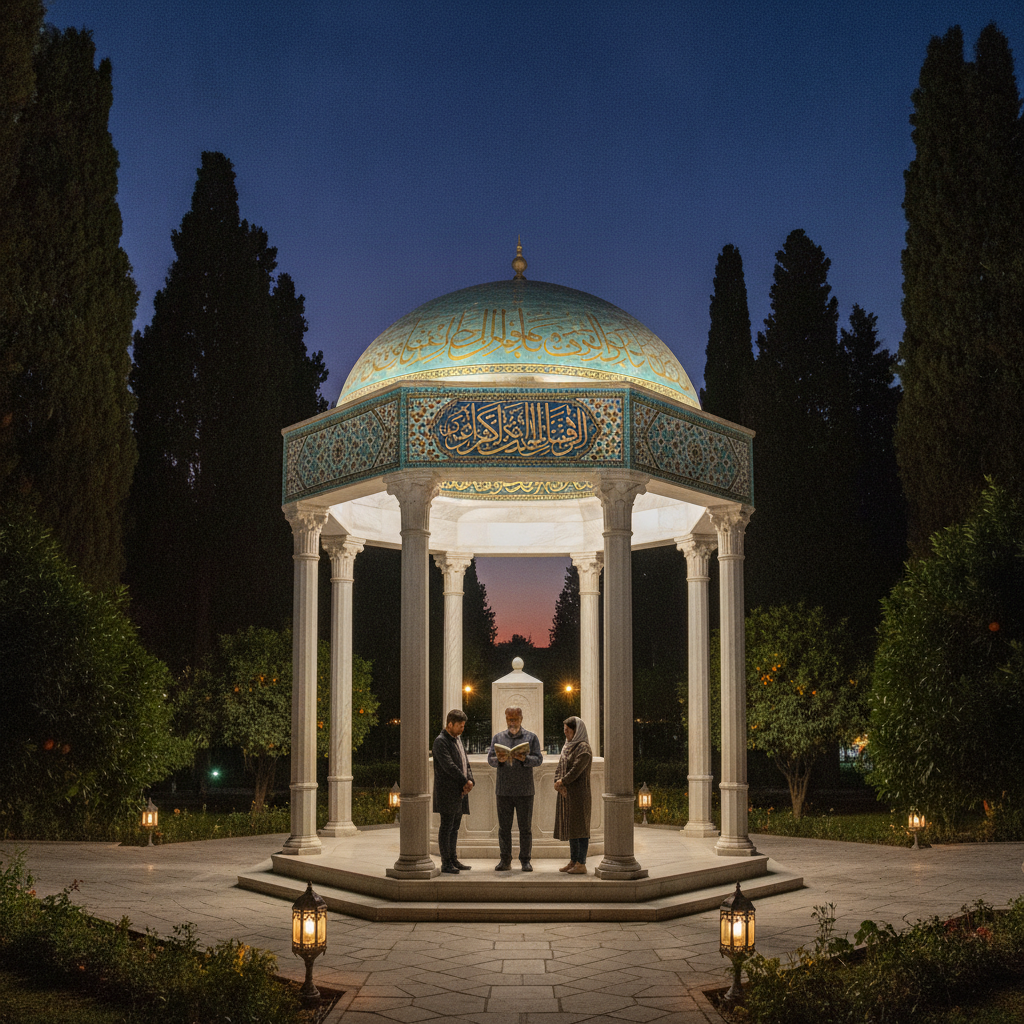
Hafez Memorized the Quran in 14 Recitations by Age 20 and His Divan Serves as the Oracle (Fal-e Hafez) for 85 Million Iranians Today, Saadi's Bani Adam Verse is Engraved at the United Nations, Karim Khan Built Shiraz as Capital but Refused the Title of Shah
