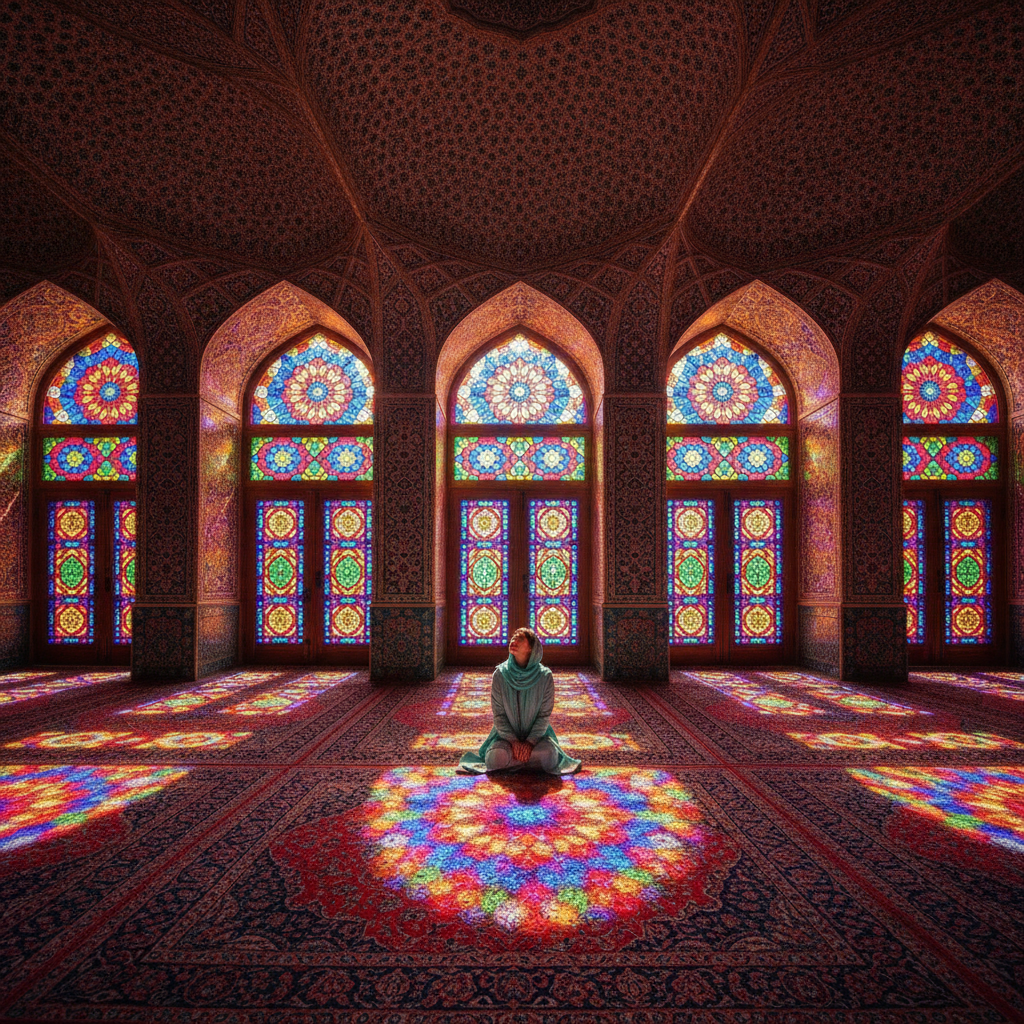
The Nasir al-Molk Pink Mosque Stained Glass Best at 08:00-10:30 Before the Sun Angle Moves, Karim Khan the Only Iranian Emperor Who Refused the Title Shah & the Atash Bahram Sacred Fire in Yazd Burning Since 470 CE
The Nasir al-Molk Mosque stained glass light effect disappearing by 11:00 as the sun angle moves — the 08:00–10:30 window the only time to see the colored light on the carpets; Karim Khan Zand (r. 1750–1779) the only Iranian empire ruler to refuse the title Shah (using only Regent of the People); the Tomb of Cyrus praised in the Hebrew Bible (Isaiah 45:1) and visited by Alexander the Great in 330 BCE; the Atash Bahram sacred fire in Yazd burning continuously since 470 CE (1,550+ years); Saadi's Bani Adam verse on the Persian carpet at the UN building; and the Ka'ba-ye Zartosht tower at Naqsh-e Rostam with its function still debated after 200 years of archaeology.
- 1
Nasir al-Molk Mosque – The Pink Mosque of Stained Glass
The Nasir al-Molk Mosque heritage (the most photographed mosque in Iran — the late Qajar mosque whose stained glass windows create one of the most spectacular interior light effects in Islamic architecture): the mosque heritage guide. The mosque (the Masjed-e Nasir al-Molk (مسجد نصیرالملک) — popularly known as the Pink Mosque (Masjed-e Surati — the Rose Mosque): the construction (built 1876–1888 by the Qajar governor of Fars Province Mirza Hassan Ali Nasir al-Molk (the title Nasir al-Molk means Helper of the Kingdom): the stained glass (the primary feature of the Nasir al-Molk Mosque is the extraordinary stained glass windows in the winter prayer hall (the south ivan): the windows (the 5 arched windows on the south wall of the winter prayer hall are filled with stained glass in the geometric petal patterns characteristic of late Qajar decorative arts: the colors: deep rose pink, amber gold, cobalt blue, emerald green: the light effect (the optimal time to visit the Nasir al-Molk Mosque is 08:00–10:30 (the morning hours when the winter prayer hall faces east and the rising sun illuminates the stained glass directly — the colored light falls across the Persian carpet floor in geometric petal patterns: by 11:00 the light angle has moved and the spectacular effect diminishes): the design (the mosque design follows the Safavid four-iwan plan but with distinctive Qajar modifications — the use of floral tilework (gol va morgh — flowers and birds) on the exterior instead of the abstract geometric and calligraphic programs of Safavid mosques): the floor carpets (the Nasir al-Molk winter prayer hall is covered with handwoven Shirazi kilim carpets in red and navy blue — the carpets in the colored morning light create an extraordinary visual effect).
- 2
Karim Khan Zand – The Merciful Regent of Shiraz
The Karim Khan Zand heritage (Karim Khan Zand — the most beloved ruler in Iranian history and the builder of Shiraz's magnificent 18th-century monuments): the historical heritage guide. The Karim Khan (Karim Khan Zand (کریم خان زند — r. 1750–1779) — the founder of the Zand dynasty and the ruler who made Shiraz the most prosperous city in 18th-century Iran: the title (Karim Khan refused to call himself Shah — he used only the title Vakil al-Ra'aya (Regent of the People) — the most humble title ever used by a ruler of a major Iranian empire: the rule (Karim Khan's 29-year reign (1750–1779) was the most peaceful and prosperous period in Iranian history between the Safavid golden age and the 20th century: the reason (Karim Khan came to power after the devastating Nader Shah period (1736–1747) during which Iran was ravaged by constant warfare and famine: Karim Khan's primary policy was peace — he avoided offensive wars and reduced taxation: the Arg-e Karim Khan (the Arg-e Karim Khan (ارگ کریم خان — the Citadel of Karim Khan) — the primary palace and fortification of Karim Khan in central Shiraz: the building (built 1766–1767 as the royal palace: the citadel is a square walled compound 100m x 100m with four cylindrical corner towers: the interior (the interior courtyard contains a formal garden with a central pool — the palace has been converted to a museum displaying Zand-era artifacts and a remarkable series of Qajar period tiled murals): the legacy (Karim Khan's death in 1779 ended the Zand dynasty and was followed immediately by the Qajar seizure of power — the 30-year golden age of Shiraz under Karim Khan was never repeated).
- 3
Pasargadae – The Tomb of Cyrus the Great
The Pasargadae heritage (the tomb of Cyrus the Great and the first Achaemenid capital — the primary pilgrimage site of Iranian national identity): the heritage guide. The Pasargadae (Pasargadae (پاسارگاد) — 130 km north of Shiraz on the Marvdasht plain — the first capital of the Achaemenid Empire: the UNESCO inscription (Pasargadae was inscribed on the UNESCO World Heritage List in 2004): the Tomb of Cyrus (the Tomb of Cyrus the Great (Aramgah-e Kurosh-e Bozorg (آرامگاه کوروش بزرگ) — a 6-tiered stone platform approximately 13m high supporting a simple gabled stone chamber: the construction (the tomb dates to approximately 530 BCE (the death of Cyrus the Great): the inscription (the Arabic inscription on the tomb (Ayuha al-insano — O man): the original inscription described as I am Cyrus who gave the Persians an empire and was king of Asia. Grudge me not therefore this monument — the original inscription has not survived: the Alexander connection (Alexander the Great visited the Tomb of Cyrus after burning Persepolis in 330 BCE — Alexander was reportedly furious to find the tomb had been looted by the Macedonian forces and ordered its restoration: the Cyrus legacy (Cyrus the Great (r. 550–530 BCE) is the only non-Israelite ruler praised in the Hebrew Bible (Isaiah 45:1 — the Lord's anointed): the Cyrus Cylinder (the decree permitting the Jews of Babylon to return to Jerusalem (539 BCE) is the primary evidence of the Cyrus legacy that has made him a figure of universal moral authority).
- 4
The Zand-Afar Gardens of Shiraz – City of Roses
The Shiraz garden heritage (the city of Shiraz and its Persian garden tradition — the reason Shiraz was called the city of roses and nightingales in classical Persian poetry): the garden heritage guide. The Shiraz rose tradition (Shiraz has been associated with roses in Persian poetry since at least the 12th century: the rose (gol — گل in Persian) and the nightingale (bolbol — بلبل) are the two most universal symbols in Persian lyric poetry — the rose is the beloved, the nightingale the lover who sings for the rose: the Bagh-e Eram (the Eram Garden (باغ ارم — Garden of Paradise) — the primary surviving traditional Persian garden in Shiraz: the UNESCO inscription (the Eram Garden is one of the 9 Persian gardens inscribed on the UNESCO World Heritage List in 2011): the garden (the Eram Garden in the northwest of Shiraz contains a formal 4-part garden (Chahar Bagh) with a central water channel, cypress trees, orange trees, and rose bushes: the mansion (the Qajar-era Eram Palace in the center of the garden — a colonnaded building with a tiled facade): the Bagh-e Delgosha (the Delgosha Garden — Heart-Warming Garden — one of the oldest surviving Persian gardens in Iran: the garden contains a Safavid-era pavilion and the oldest orange trees in Shiraz: the orange trees of the Delgosha Garden are estimated to be 400+ years old): the flowers (the primary flower associated with Shiraz in the classical poetry tradition is the Damask rose (Rosa damascena var. trigintipetala — the Persian rose) — the primary rose variety for rose water (golabi) and rose oil (attar of roses) production in the Kazeroon district of Fars Province).
- 5
Naqsh-e Rostam – Royal Tombs of the Achaemenids
The Naqsh-e Rostam heritage (the cliff-face royal tomb complex of the Achaemenid rulers — the most dramatic royal burial site in the ancient world): the heritage guide. The site (Naqsh-e Rostam (نقش رستم — the Image of Rostam) — 6 km north of Persepolis in the Marvdasht plain: the name (the name Naqsh-e Rostam (Image of Rostam) was given by the medieval Iranians who incorrectly attributed the Sassanid reliefs at the site to the legendary hero Rostam — the actual meaning and history of the site were not understood until European archaeological study in the 19th century): the Achaemenid tombs (the primary monuments at Naqsh-e Rostam: four rock-cut tomb chambers carved high in the cliff face of the Hossein mountain: the tombs of Darius I (the great Darius — r. 522–486 BCE), Xerxes I (r. 486–465 BCE), Artaxerxes I (r. 465–424 BCE), and Darius II (r. 423–405 BCE): the tomb facades (the tomb facades are in the form of a Greek-cross shape: the upper panel shows the king standing before a fire altar with Ahura Mazda (the supreme Zoroastrian deity) in a winged disc above: the lower panel shows a multi-tiered throne supported by figures representing the subject peoples of the empire: the Sassanid reliefs (the lower portions of the cliff face contain six Sassanid rock reliefs added 700 years after the Achaemenid tombs: the most important: the Investiture of Ardashir I (the first Sassanid ruler receiving the diadem of kingship from Ahura Mazda — the founding image of the Sassanid Empire (224 CE)): the Ka'ba-ye Zartosht (the mysterious Achaemenid square stone tower at the base of the Naqsh-e Rostam cliff — the Tower of Zoroaster — function debated: royal treasury, fire temple, or royal archive).
- 6
Shiraz to Yazd – The Desert Road & the City of Windcatchers
The Shiraz to Yazd heritage (the desert road from Shiraz to Yazd — the most historically rich overland journey in Iran connecting two of the country's most important UNESCO heritage cities): the journey guide. The road (the Shiraz to Yazd road (477 km northeast through the Iranian central plateau): the landscape (the road climbs from the Zagros mountain basin of Shiraz (1,486m) through the Qanat-irrigated agricultural zone of the Marvdasht plain (passing Persepolis and Naqsh-e Rostam) and then north across the edge of the Dasht-e Kavir (the Great Salt Desert) to Yazd: the Yazd (the city of Yazd (یزد) — 477 km northeast of Shiraz: Yazd is the primary surviving example of a traditional Iranian desert city — the most complete pre-modern urban fabric in Iran: the UNESCO inscription (Yazd was inscribed on the UNESCO World Heritage List in 2017): the windcatchers (the badgir (بادگیر — windcatcher) — the traditional passive air conditioning system of the Iranian desert city: the badgir is a tower that catches the prevailing wind at high altitude (where the wind is cooler) and directs it down into the building below: the Yazd skyline is defined by hundreds of badgir towers: the Zoroastrian heritage (Yazd is the primary center of Zoroastrian culture in Iran — the Yazd Zoroastrian community (approximately 7,000 people) maintains the Atash Bahram (the Victorious Fire) that has burned continuously since 470 CE — 1,500+ years: the transport (the Shiraz to Yazd VIP bus (7 hours) departs from Shiraz Karandish Bus Terminal daily from 08:00).
Walk this route with audio
Stories play automatically as you reach each stop — no tapping needed.
More in Shiraz
Shiraz Food: Kalam Polo, Faloodeh, the Local Persian Cuisine, the Traditional Teahouses, and the Most Culinarily Regional Single Iranian City
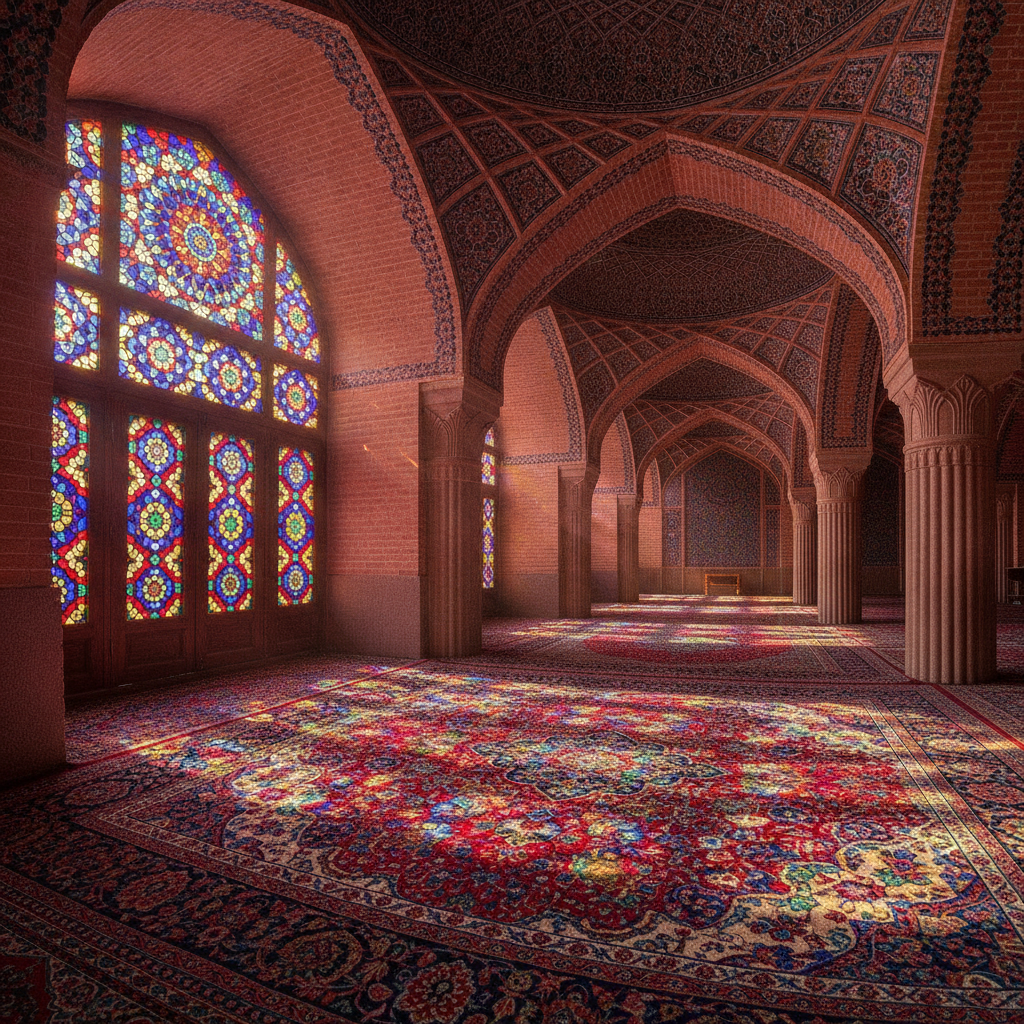
Shiraz Essential: Persepolis, the Pink Mosque, the Tomb of Hafez, Eram Garden, and the Most Poetically Beautiful Single Iranian City

Shiraz Zoroastrian Heritage: The Fire Temples, Pars as the Persian Heartland, the Ancient Religion, and the Most Historically Consequential Single Pre-Islamic Iranian Faith
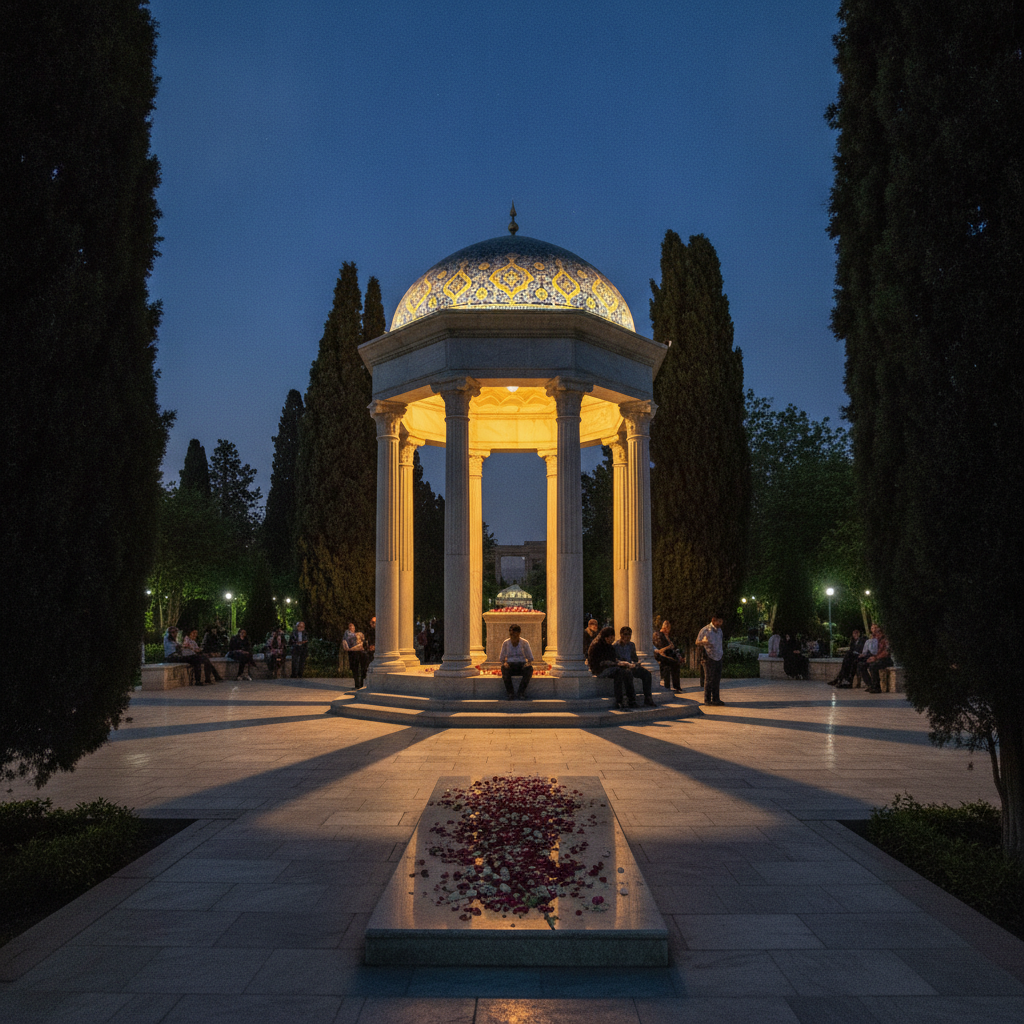
The Persepolis Treasury Tablets the Primary Documentary Evidence for Achaemenid Administration, Saadi's Bani Adam Verse on the UN Headquarters Wall & the DNA Proof That the Shiraz Wine Grape Actually Originates in France Not Persia
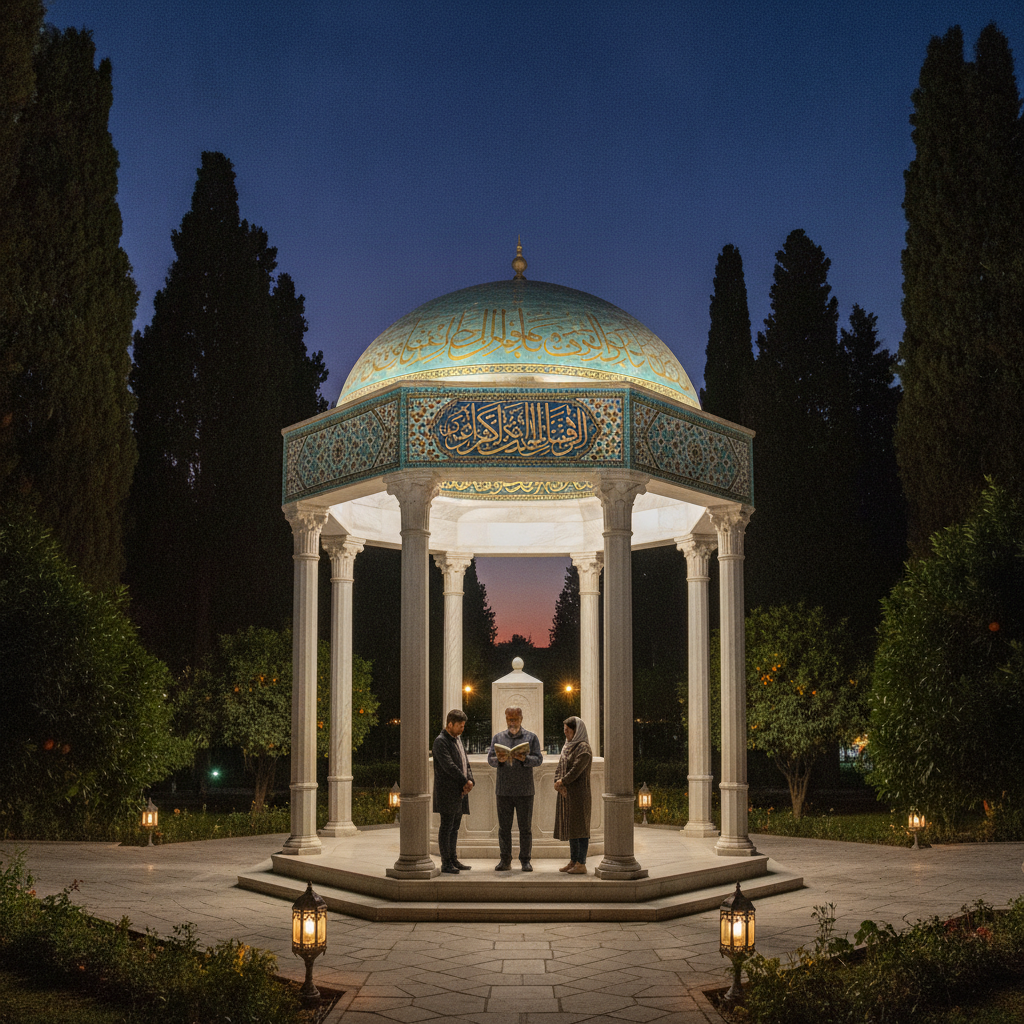
Hafez Memorized the Quran in 14 Recitations by Age 20 and His Divan Serves as the Oracle (Fal-e Hafez) for 85 Million Iranians Today, Saadi's Bani Adam Verse is Engraved at the United Nations, Karim Khan Built Shiraz as Capital but Refused the Title of Shah
