The Persepolis Fortification Tablets are the World's First Evidence of Recorded Wages (Workers Paid in Grain and Wine Rations), Karim Khan's Vakil Complex is the Only Iranian Imperial Building Program Where the Ruler Refused the Title of Shah, and the Shah-e Cheragh Mirror Mosaic Interior is the Most Extensive Mirror Work in Iran
The Persepolis Fortification Tablets (30,000 clay tablets documenting worker wages in grain, wine, and livestock — the world's first evidence of recorded wage labor); Karim Khan's Vakil complex as the only imperial Iranian building program where the ruler used the title Regent of the People instead of Shah; Shah-e Cheragh's mirror mosaic (ayine-kari) interior; the Zagros Mountains as habitat for the critically endangered Persian leopard (fewer than 1,000 remaining); Bakhtiari nomads' 500km biannual migration over 3,000m passes; and the complete Shiraz visitor guide including metro, sarafi exchange offices, and airport.
- 1
The Achaemenid Persepolis – Architecture, Symbolism, and the Burning
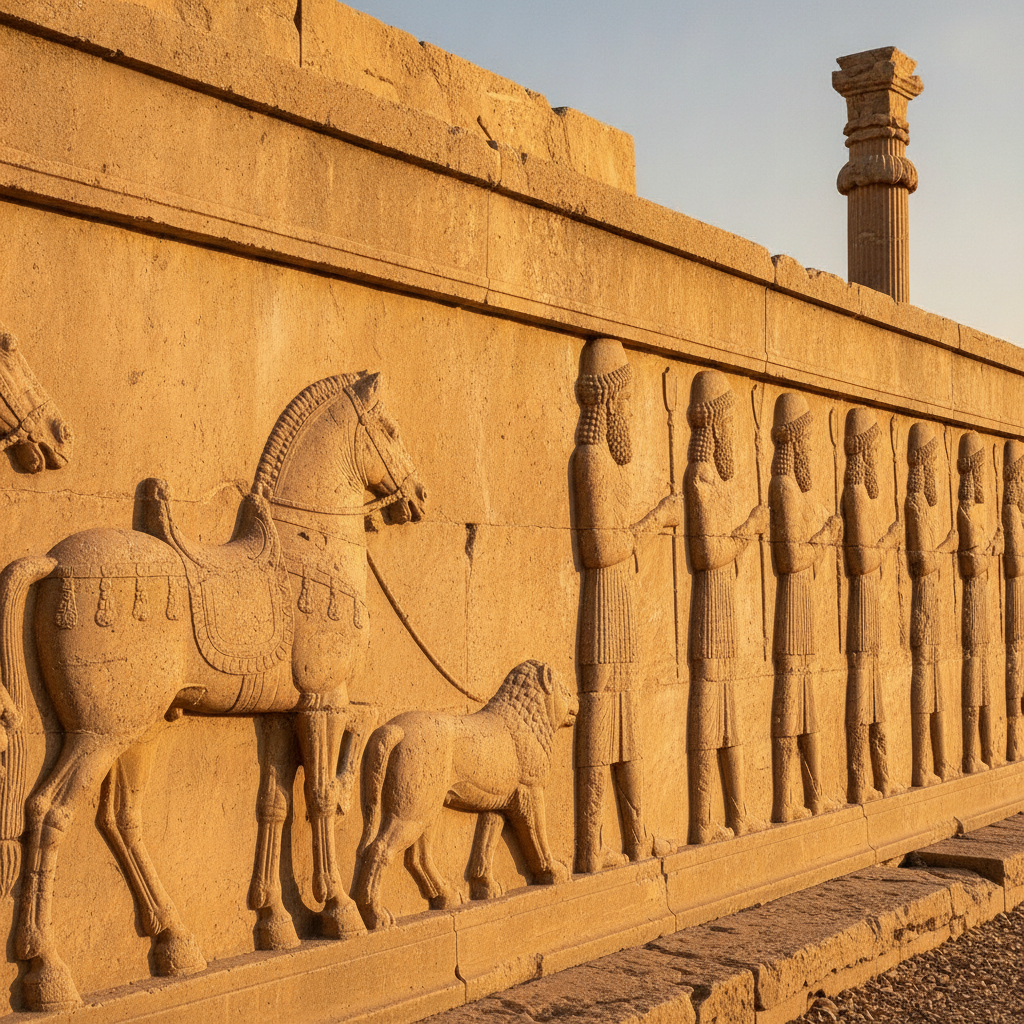
The Persepolis deep dive (the ceremonial capital of the Achaemenid Empire — a monument of political symbolism, architectural ambition, and administrative complexity): the architecture guide. The foundation (Persepolis (Old Persian: Parsa — the city of Persia) was founded by Darius I approximately 515 BCE on an artificially leveled terrace (455m × 300m × 13m height) cut into the base of the Mount of Mercy (Kuh-e Rahmat): the construction (the construction of Persepolis involved a workforce drawn from across the empire: the Persepolis Fortification Tablets (a cache of approximately 30,000 clay tablets found in the Persepolis fortification wall — the most important administrative archive from the ancient Near East) document the workers and their pay: the tablets show workers were paid in rations of grain, wine, and livestock — the first evidence of wage labor in the ancient world: the Apadana (the Apadana (audience hall of Darius I and Xerxes I): the hall measured 83m × 83m and was supported by 72 columns 20m tall (13 columns still standing): the Apadana staircase relief (the most important monument at Persepolis): the north and east staircases of the Apadana are carved with a continuous relief showing delegations from 23 subject nations bringing tribute to the Achaemenid court: the relief is approximately 90m long and includes: Medes (carrying swords and leading horses): Elamites (leading a lion): Babylonians (carrying textiles and vessels): Egyptians (carrying a bull): Indians (carrying baskets and leading a donkey): Greeks and Macedonians (carrying vessels): the burning of Persepolis (the burning of Persepolis by Alexander the Great (330 BCE) — the most debated event in Iranian history: the ancient sources (Diodorus Siculus, Curtius Rufus, Plutarch) give three accounts of the motivation: a deliberate policy of revenge for the Persian burning of Athens in 480 BCE: an accident during a drunken party instigated by the Athenian courtesan Thaïs: a deliberate political act to signal the end of the Achaemenid dynasty: the extent of the burning (the palaces were burned but the terraces and stonework survived: the Persepolis Treasury archives were not burned — the administrative tablets survived because clay tablets are hardened rather than destroyed by fire).
- 2
Shah-e Cheragh – The Shia Shrine of Shiraz
The Shah-e Cheragh shrine (the Shrine of Ahmad ibn Musa — the most important Shia pilgrimage site in Fars Province and the fourth most important Shia shrine in Iran after the shrines in Mashhad, Najaf, and Karbala): the shrine guide. The historical background (Ahmad ibn Musa (Shah-e Cheragh — King of Light) was a son of the seventh Shia Imam Musa al-Kadhim: during the Abbasid persecution of the Alids in the 9th century CE a group of descendants of the Shia Imams fled eastward from Medina and Iraq into Persia: Ahmad ibn Musa was killed during this flight and buried in Shiraz: the discovery (the tomb of Ahmad ibn Musa was identified by a 14th-century Shiraz ruler (Amir Muqarrab al-Din Mudhaffar) who saw a light emanating from the grave at night — the light gave the shrine its name (Shah-e Cheragh — King of Light): the architecture (the current shrine complex: the two main mausoleums (the mausoleum of Ahmad ibn Musa (Shah-e Cheragh) and the adjacent mausoleum of his brother Muhammad ibn Musa): the mirror work (the interior of both mausoleums is covered floor-to-ceiling with mirror mosaic (ayine-kari) — millions of small mirror fragments set in plaster creating a brilliant reflective surface: the mirror mosaic of Shah-e Cheragh is the most impressive mirror-work interior in Iran: the pilgrimage (Shah-e Cheragh receives approximately 8–12 million pilgrims per year: the shrine is open to non-Muslim visitors in designated areas: photography is restricted inside the mausoleum but permitted in the outer courtyards: the significance (the Shah-e Cheragh shrine attack (October 2022) — a terrorist attack during the post-Mahsa Amini protest period killed 15 people at the shrine).
- 3
The Zagros Mountains – Ecology, Nomads, and the Road to Isfahan
The Zagros Mountains ecology and Bakhtiari nomads (the mountain range that forms the western and northern boundary of Fars Province and the dramatic landscape between Shiraz and Isfahan): the landscape guide. The Zagros (the Zagros Mountains (زاگرس) — the primary mountain range of western Iran extending 1,600 km from the Iran-Turkey border to the Strait of Hormuz: the range consists of parallel northwest-southeast folds of limestone created by the collision of the Arabian Plate with the Eurasian Plate (the same collision that created the Alborz Mountains and the Caucasus): the highest peak in the southern Zagros near Shiraz is Dena (4,409m): the ecology (the Zagros Oak Forest — one of the oldest continuous forest ecosystems in the world: the Quercus brantii (the Persian oak) forests of the Zagros date to at least the Pliocene (5 million years ago): the forests support Persian leopard (Panthera pardus tulliana — critically endangered: fewer than 1,000 individuals surviving in Iran): the Bakhtiari nomads (the Bakhtiari (بختیاری) — the largest nomadic tribal confederation in Iran: approximately 800,000 people who practice biannual migration (kuch) between summer pastures (yaylaq) in the high Zagros (2,500–3,500m) and winter pastures (qishlaq) in the Khuzestan lowlands: the kuch (the biannual migration of the Bakhtiari covers approximately 500 km twice per year: the migration crosses the main Zagros range at passes exceeding 3,000m: the Shiraz to Isfahan road (the primary route between the two cities climbs through the Zagros via the Shahreza pass: the road passes through Marvdasht (the Persepolis plain) and the Dorudzan Dam reservoir (a key water source for Shiraz with capacity of 993 million cubic meters).
- 4
Iranian Architecture – From Achaemenid Persepolis to Safavid Isfahan
The Iranian architectural history covering the primary periods and styles visible in Shiraz and the surrounding region: the architectural heritage guide. The Achaemenid period (the Achaemenid architecture (550–330 BCE): the primary material (dressed limestone from local quarries): the primary form (the raised terrace platform — the Persepolis terrace, the Pasargadae platforms): the column (the Achaemenid column — among the tallest columns in the ancient world at 18–20m: the typical Achaemenid column has a fluted shaft, a bell-shaped base, a double-bull or double-griffin capital): the synthesis (Achaemenid architecture synthesizes Elamite, Babylonian, Egyptian, Lydian, and Greek architectural elements — the diversity reflects the imperial political project of incorporating subject peoples: the Sassanid period (the Sassanid architecture (224–651 CE): the primary innovation: the iwan (a vaulted hall open at one end) — the Sassanid iwan became the defining element of subsequent Islamic Iranian architecture: the squinch (the squinch — the structural device for transitioning from a square room to a circular dome — was developed by Sassanid builders and later became the foundational element of Islamic dome construction: the Islamic period (the Islamic architectural period in Iran (651 CE — present): the four-iwan mosque (the chahâr iwan mosque — a courtyard mosque with four large iwans on each side of the central courtyard — the primary Iranian mosque form: the Jameh Mosque of Isfahan contains all 14 centuries of Islamic building in Iran — from the earliest Abbasid mosque to 20th-century additions: the Zand period (the Zand architecture (1750–1794 CE): Karim Khan's Vakil complex in Shiraz — the primary surviving example of Zand court architecture).
- 5
Shiraz in Modern Iran – University, Technology, and 1979 Legacy
The Shiraz modern identity (Shiraz's role in contemporary Iran as a university city, a center of Fars Province, and a city shaped by the 1979 Islamic Revolution and subsequent geopolitical changes): the modern city guide. The university (Shiraz University (Daneshgah-e Shiraz — founded 1946 as Pahlavi University by Mohammad Reza Shah): the university was renamed after the 1979 Revolution (Pahlavi — the family name of the Shah — was systematically removed from all Iranian place names and institutions after 1979): the university has approximately 15,000 students and is one of the top research universities in Iran: the Shiraz University of Technology (a separate technical university founded in 1966 — approximately 9,000 students): the 1979 Revolution impact (the Shiraz region was a stronghold of both revolutionary and counter-revolutionary sentiment: the Shiraz Jewish community (one of the oldest Jewish communities in Iran with archaeological evidence of continuous residence dating to the 4th century CE — approximately 3,000–5,000 Jews remain in Shiraz in 2025 out of a pre-1979 community of 20,000: the Zoroastrian community (a small but historically significant Zoroastrian community in Shiraz: the Zoroastrian Darb-e Mehr (fire temple) in Shiraz: the Fars Province economy (the primary economic activities of Fars Province: the petrochemical industry (the Shiraz Petrochemical Complex — one of the largest in Iran): the agriculture (the Marvdasht Plain between Shiraz and Persepolis is one of the most productive agricultural zones in Iran — wheat, grapes (historically), vegetables, and citrus: the population (Shiraz city population approximately 1.9 million in 2025 — the fifth largest city in Iran after Tehran, Mashhad, Isfahan, and Karaj).
- 6
Shiraz Complete Guide – Everything You Need to Know
The comprehensive Shiraz reference guide (all essential visitor information for Shiraz consolidated in a single reference entry): the complete guide. The location (Shiraz (29.5918°N, 52.5837°E) — altitude 1,486m above sea level: the capital of Fars Province: population approximately 1.9 million: the climate (the Shiraz climate — semi-arid highland (BSk): the best visit time: spring (March–May — the Nowruz (Persian New Year) period March 20–April 2 is the peak Iranian domestic travel season — hotels fill completely: April and early May (post-Nowruz) is the best time: fall (September–November) the second-best season: summer (June–August — extreme heat (40°C) not recommended: the arrival (Shiraz International Airport (SYZ — IATA code): 15 km south of city center: domestic flights from Tehran, Mashhad, Isfahan: the airport has a new international terminal but international flights remain limited due to sanctions: the getting around (the Shiraz metro (Line 1 — operational since 2011 — covers the north-south axis of the city: the orange-and-white taxis — shared (savari) or private (dar-bast — close door): the VIP bus terminal (Karandish Terminal on the west edge of the city for long-distance VIP buses to Tehran (12 hours), Isfahan (7 hours), Yazd (5 hours): the money (the sarafi (exchange offices) near Zand Boulevard and in the Vakil Bazaar offer open market rates: carry IRR 10–20 million for daily expenses: the essential sites (Persepolis (UNESCO 1979): Pasargadae (UNESCO 2004): Nasir al-Molk Mosque: Shah-e Cheragh Shrine: Hafez Tomb: Saadi Tomb: Vakil Bazaar: Bagh-e Eram (UNESCO 2011): the day trips (Naqsh-e Rostam (5 km from Persepolis): Bishapur (125 km northwest): Firuzabad (115 km south).
Walk this route with audio
Stories play automatically as you reach each stop — no tapping needed.
More in Shiraz
Shiraz Food: Kalam Polo, Faloodeh, the Local Persian Cuisine, the Traditional Teahouses, and the Most Culinarily Regional Single Iranian City
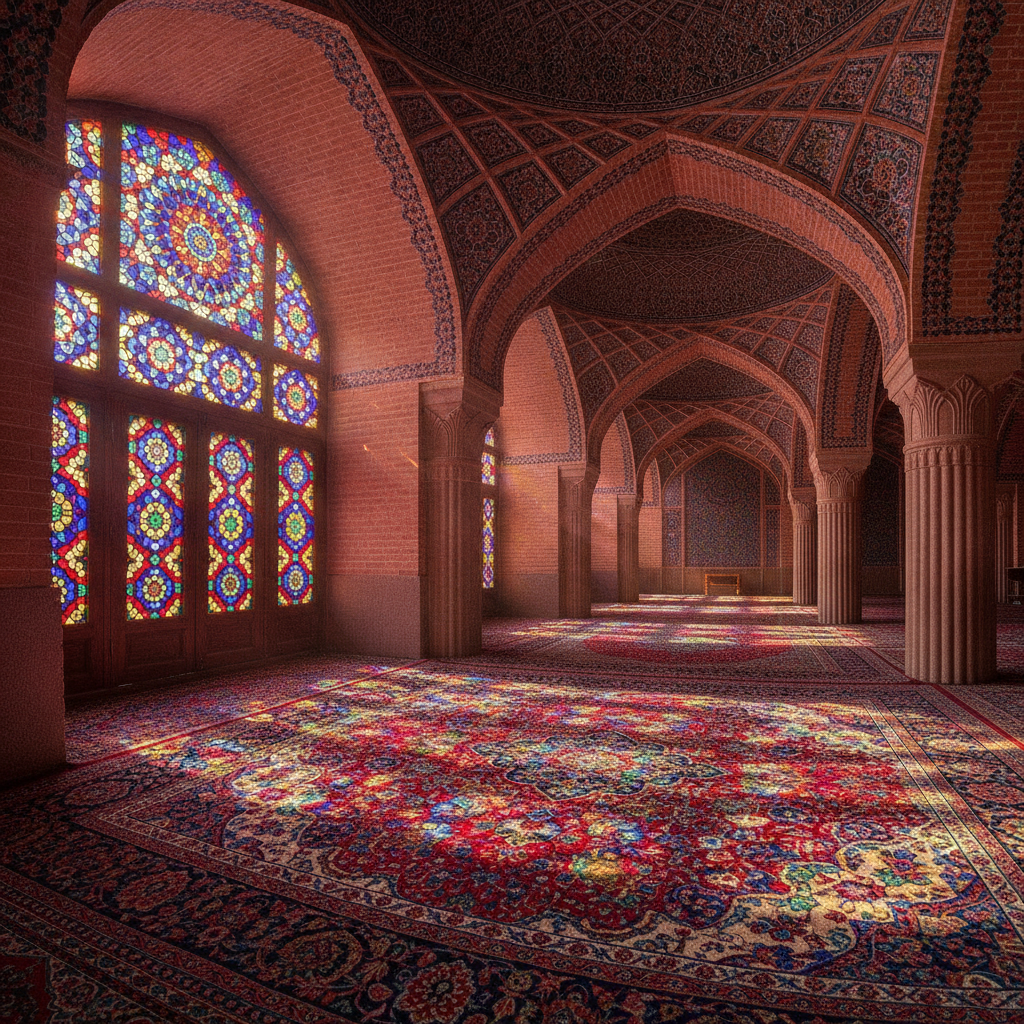
Shiraz Essential: Persepolis, the Pink Mosque, the Tomb of Hafez, Eram Garden, and the Most Poetically Beautiful Single Iranian City

Shiraz Zoroastrian Heritage: The Fire Temples, Pars as the Persian Heartland, the Ancient Religion, and the Most Historically Consequential Single Pre-Islamic Iranian Faith
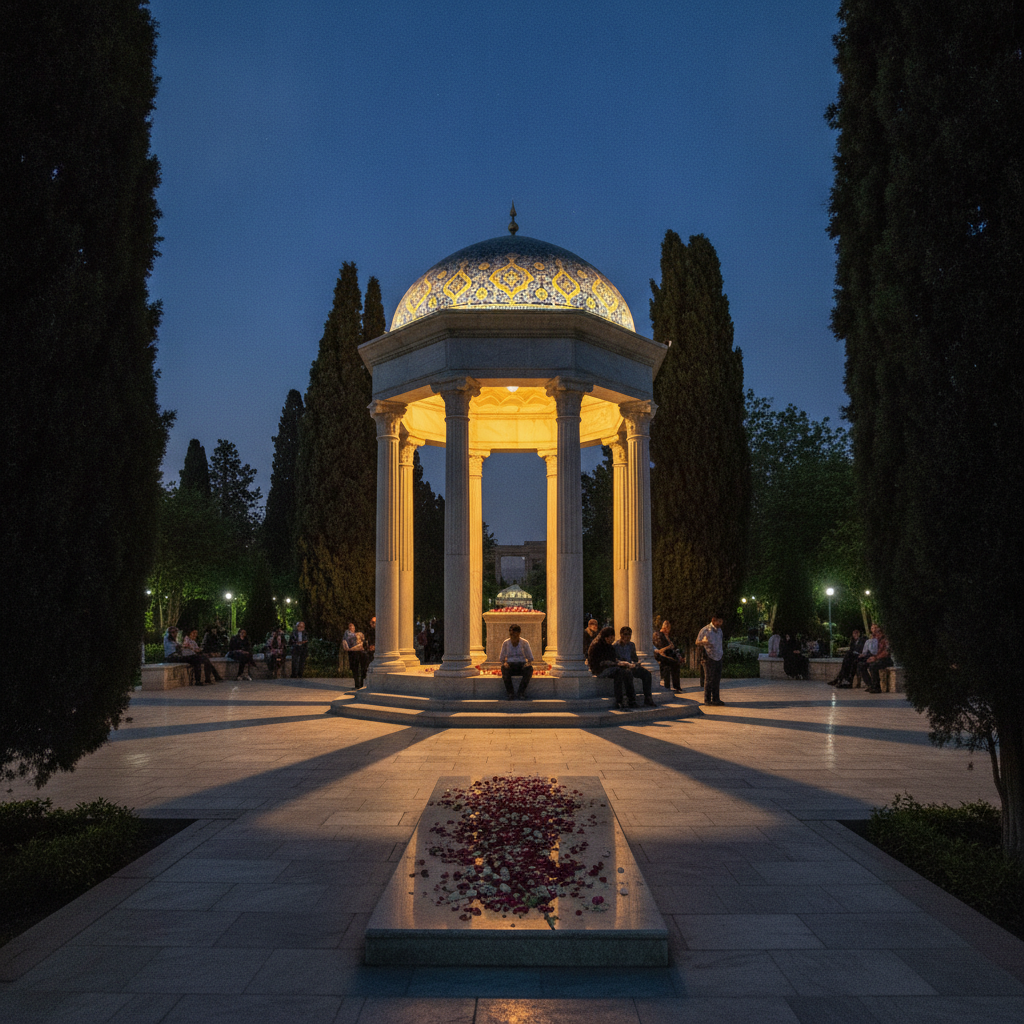
The Persepolis Treasury Tablets the Primary Documentary Evidence for Achaemenid Administration, Saadi's Bani Adam Verse on the UN Headquarters Wall & the DNA Proof That the Shiraz Wine Grape Actually Originates in France Not Persia
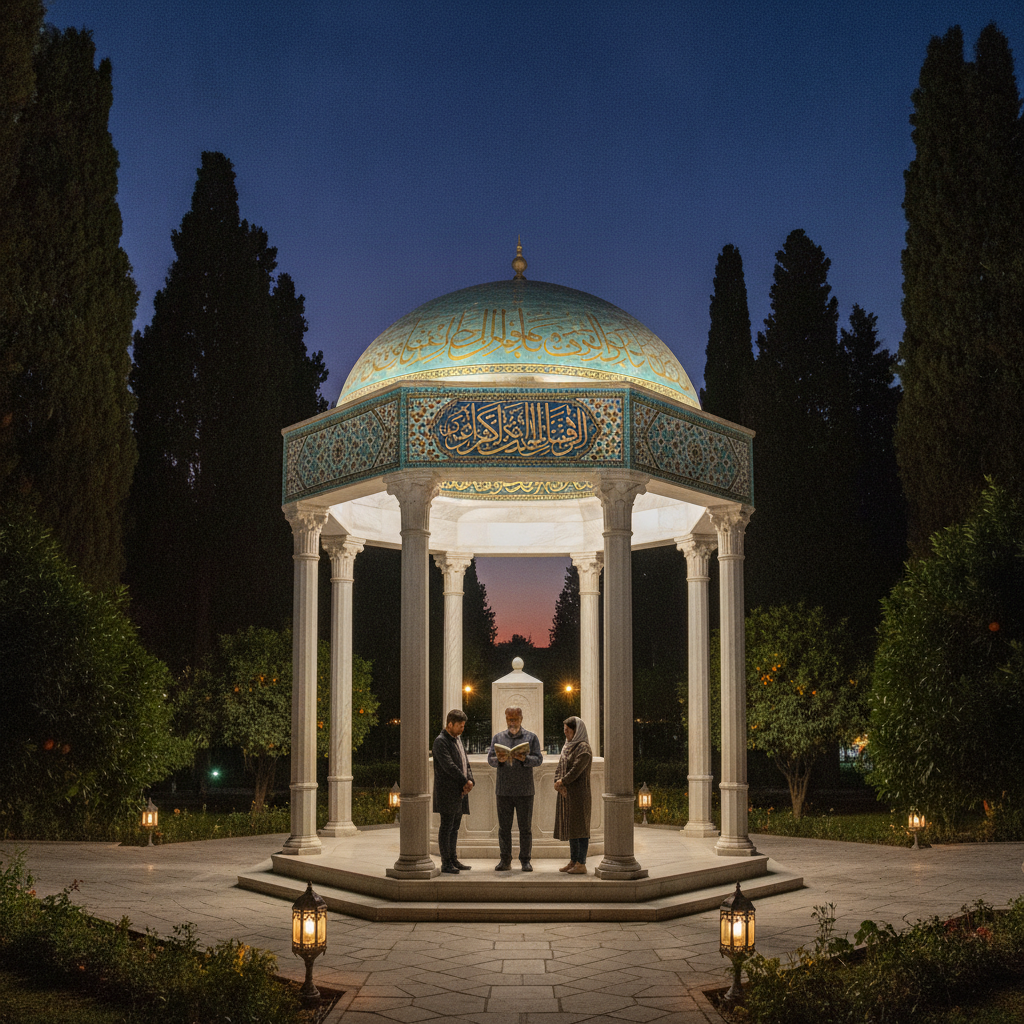
Hafez Memorized the Quran in 14 Recitations by Age 20 and His Divan Serves as the Oracle (Fal-e Hafez) for 85 Million Iranians Today, Saadi's Bani Adam Verse is Engraved at the United Nations, Karim Khan Built Shiraz as Capital but Refused the Title of Shah
