Leaving Siem Reap: Artisans Angkor's Ikat Silk Revival, Buddhist Monks at Dawn & Angkor's Civilisational Weight
The final layer of Siem Reap—Phnom Sampeu's cliff-top caves where Khmer Rouge threw 10,000 prisoners to bones visible below the temple, Angkor Wat's resident monk community that has maintained continuous Buddhist occupation since the 15th-century Hindu-to-Theravada conversion (different from any purely archaeological site), the Artisans Angkor silk farm's natural indigo and turmeric dyeing reviving the ikat hol textile that the genocide almost erased, Theravada Buddhism as the institution Cambodians trust more than any government having rebuilt 4,200 pagodas since 1979, the Old Market's prahok smell and the Night Market's bamboo stage, and the particular quality of leaving a place where civilisational peak and civilisational collapse exist 60 years and 800 years apart.
- 1
The Killing Fields Near Siem Reap – Remembering the Genocide
While Cambodia's most internationally known Killing Fields memorial is Choeung Ek (15 km south of Phnom Penh—where approximately 17,000 people were executed and buried between 1975 and 1979), the Khmer Rouge's execution programme operated across the entire country; sites near Siem Reap include Phnom Sampeu hill temple near Battambang (where prisoners were brought to the limestone cliff-top caves and thrown in—the bones of an estimated 10,000 people remain in the cave below). In Siem Reap province itself: the S-21 Prison (Tuol Sleng Genocide Museum, Phnom Penh—a former high school converted to a systematic torture and execution facility)—which processed approximately 17,000 prisoners, of whom only 7 are known to have survived—receives visitors from Siem Reap on day trips to Phnom Penh, though the journey (6 hours by bus) makes it a full-day commitment. The Genocide Museum at the Documentation Centre of Cambodia (DC-Cam) in Phnom Penh is the most comprehensive academic resource on the Khmer Rouge period and maintains the database of victims.
- 2
Angkor Wat's Spiritual Significance – Still an Active Place of Worship
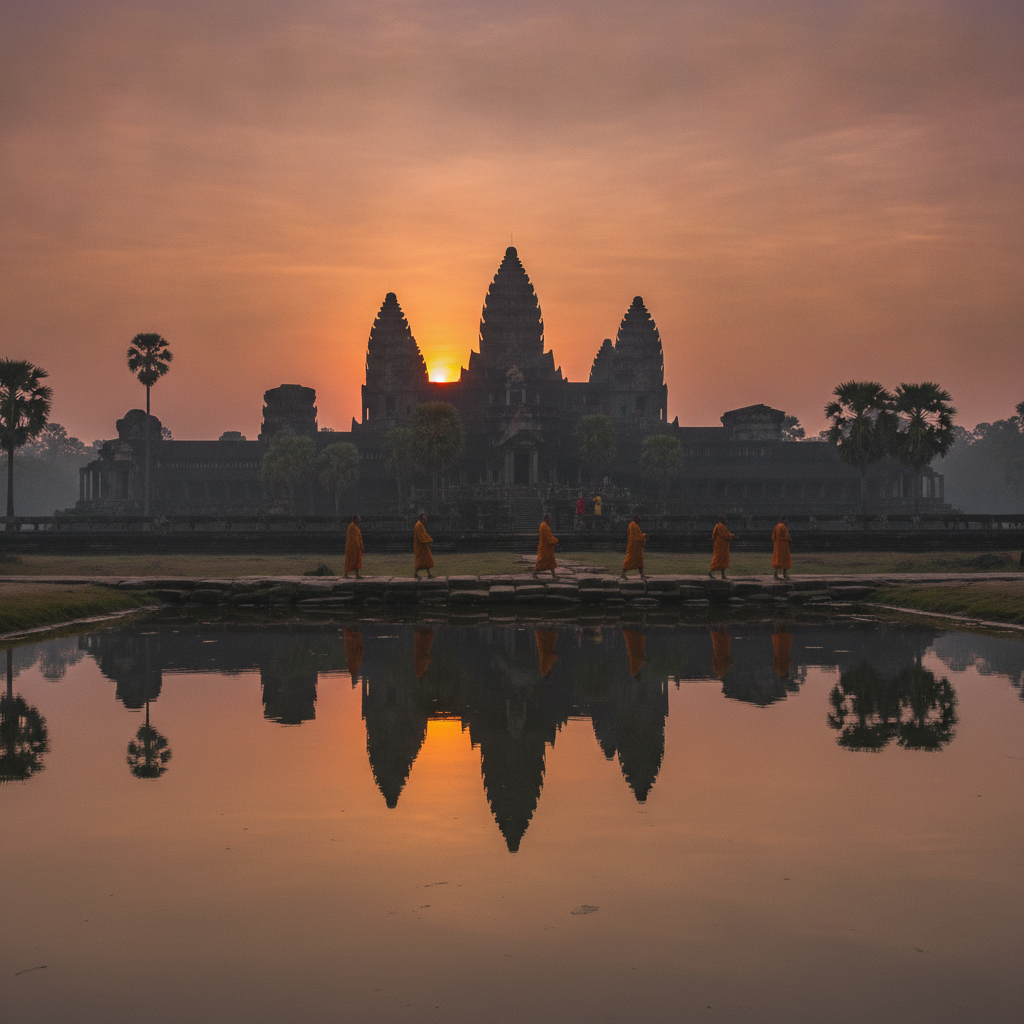
Angkor Wat—which most visitors experience primarily as an archaeological and architectural site—is simultaneously a functioning Buddhist monastery and a living place of worship for Cambodian Buddhists. The temple has been continuously occupied by Buddhist monks since the 15th century (when the original Shaivite Hindu dedications were converted to Theravada Buddhism under the post-Angkor kingdom), and a small community of monks resides in the temple complex today. The orange-robed monks who walk the causeways and perform rituals at dawn are not employees or performers—they are the continuous religious presence that makes Angkor Wat different from, say, the Colosseum or Machu Picchu (which are purely archaeological sites). Cambodian pilgrims visit Angkor Wat for religious purposes (not tourism)—primarily on Buddhist holy days and the Khmer New Year (April 13–16)—and the visitor behaviour norm of treating Angkor primarily as a photography location creates friction with the spiritual intentions of the resident monks and pilgrims.
- 3
The Angkor Silk Farm & Cambodian Textile Revival
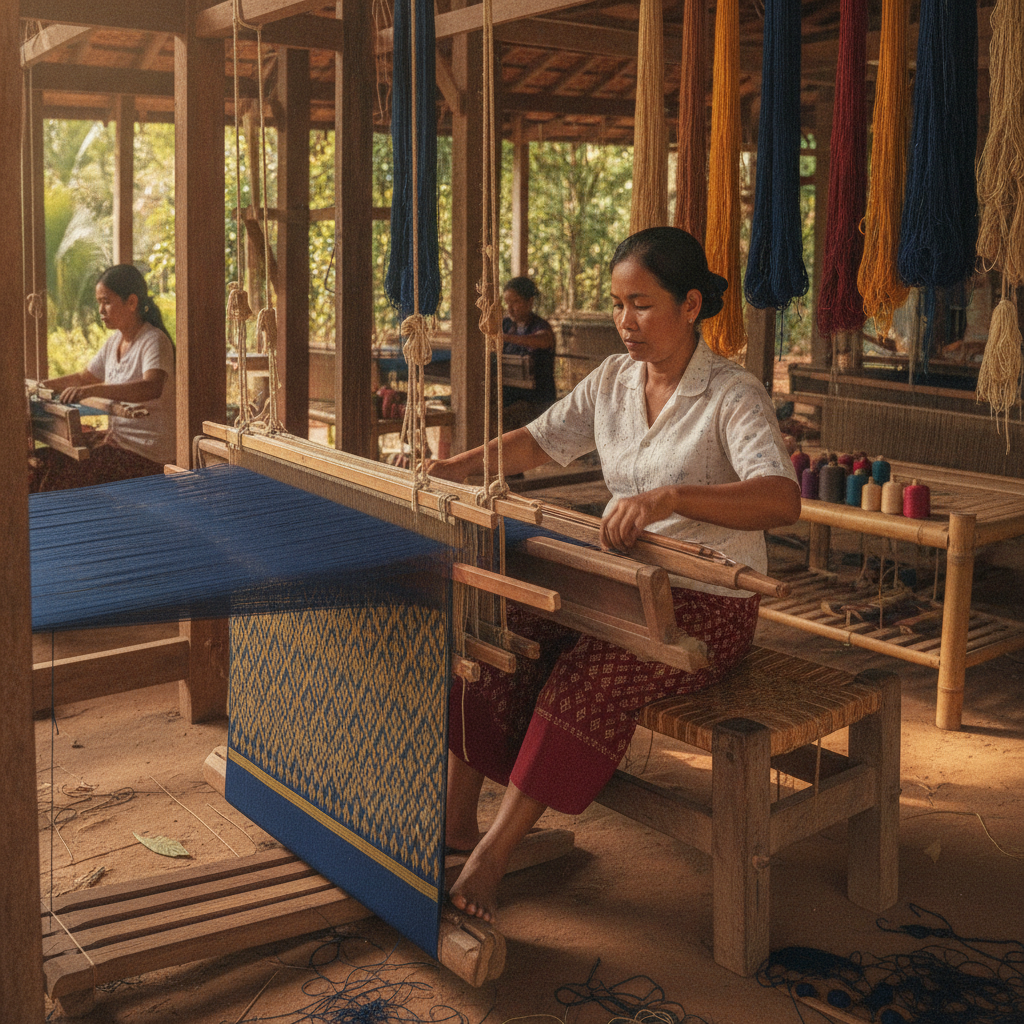
The revival of Cambodian silk weaving—an art form that was nearly exterminated by the Khmer Rouge (silk weavers, like all artisans, were classified as 'new people' and sent to agricultural labour camps)—has been one of the most successful post-conflict cultural recovery stories in Southeast Asia. Cambodian silk (particularly the ikat woven silks—the technique of resist-dyeing threads before weaving to create geometric patterns—known as hol in Khmer) represents a tradition of several centuries; the finest Khmer silk textiles were described by Chinese diplomats visiting the Angkor court in the 13th century. The Artisans Angkor Silk Farm (7 km from Siem Reap, near the airport)—the largest operation in the revival—employs hundreds of Cambodian weavers in a setting that visitors can tour freely: the mulberry cultivation, silkworm rearing, cocoon reeling, dyeing (natural dyes: indigo, ebony, turmeric, ambarella), and the hand-operated wooden loom weaving are all visible. The Artisans Angkor shop in Siem Reap sells the silk at fair-trade prices.
- 4
Cambodian Buddhism – The Theravada Foundation of Khmer Culture
Theravada Buddhism—the 'Doctrine of the Elders,' practised in Cambodia, Myanmar, Thailand, Laos, and Sri Lanka—arrived in Cambodia in the 13th century, gradually converting the formerly Hindu (Shaivite and Vaishnavite) Khmer kingdom that had produced the Angkor temples. The conversion was peaceful and gradual: the Angkor temples were rededicated from Hindu to Buddhist purposes (the Hindu lingas replaced by Buddha images; the Shaivite iconography supplemented by Theravada imagery), and the monks replaced the Brahmin priests as the primary religious specialists of the court. Cambodian Buddhism survived the Khmer Rouge genocide in diminished form: the regime abolished religion, converted pagodas (wats) to storage and military use, executed many monks, and forced the remainder to disrobe and enter agricultural labour. The post-1979 reconstruction: the Cambodian Buddhist community was rebuilt from the surviving monks (who had fled to Vietnam, Thailand, or gone underground) with international support. Today approximately 4,200 pagodas operate in Cambodia, and the Buddhist sangha (monastic community) is the most widely trusted institution in Cambodian society.
- 5
Siem Reap's Markets – Old Market, Night Market & Artisans
Siem Reap's market economy provides the most direct contact between international visitors and the Cambodian artisanal and agricultural economy. The Old Market (Psah Chas—'Old Market'—on the east bank of the Siem Reap River, a covered market in a French colonial-era building): a mixed produce and tourist souvenir market—the ground floor for fresh food (fish, vegetables, spices, prahok), the upper floor for tourist goods (silk scarves, silverwork, stone carvings, T-shirts). The Night Market (Angkor Night Market—established 2007, on Sivatha Boulevard): a purpose-built tourist craft market with a Bamboo Stage for live music and performers, shopping stalls for silk, jewellery, and handicrafts, and a deliberately relaxed atmosphere designed for evening browsing. The Artisans Angkor boutiques (Siem Reap town centre and several outlets): the most reliable source of quality, authentically Cambodian handmade goods—silk textiles, lacquerware, stone carvings, and silverwork produced by the cooperative's trained craftspeople at transparent fair-trade prices. The contrast with the souvenir stalls near Angkor Wat (primarily mass-produced goods, often made in China) is stark.
- 6
Leaving Siem Reap – Angkor's Weight
Angkor creates a particular type of departure: visitors leave carrying not only photographs but a weight of historical consciousness that is unusual for a beach or city destination. The scale of the Khmer achievement—12th-century architects computing the stress loads and water table dynamics of a 400-hectare stone complex without modern engineering tools—and its 20th-century parallel (the Khmer Rouge's 1975–1979 erasure of a functioning society in pursuit of a pure agrarian state) create a pairing of civilisational peak and civilisational collapse that is intellectually difficult to resolve. The tuk-tuk driver's English (learned from tourists over a decade), the Apsara dancer's wrist flexibility (trained since age 7, a survivor art form), and the monks walking the Angkor Wat causeway at 5:30am (continuing a religious practice that predates the French 'discovery' by centuries) are the human realities around the stone. Siem Reap is more than Angkor—but Angkor is unrepeatable. The visitor who leaves after two nights and the visitor who stays two weeks have both seen the same stones and understood them differently.
Walk this route with audio
Stories play automatically as you reach each stop — no tapping needed.
More in Siem Reap
Siem Reap's Other Story: Khmer Rouge's 2 Million Deaths, Tonlé Sap's Reversing River & Apsara Dance's Revival
Angkor Deeper: 1,000 Lingas in Phnom Kulen's Sacred River, Preah Khan's Dancer Colonnade & the Sunrise Photo Circuit
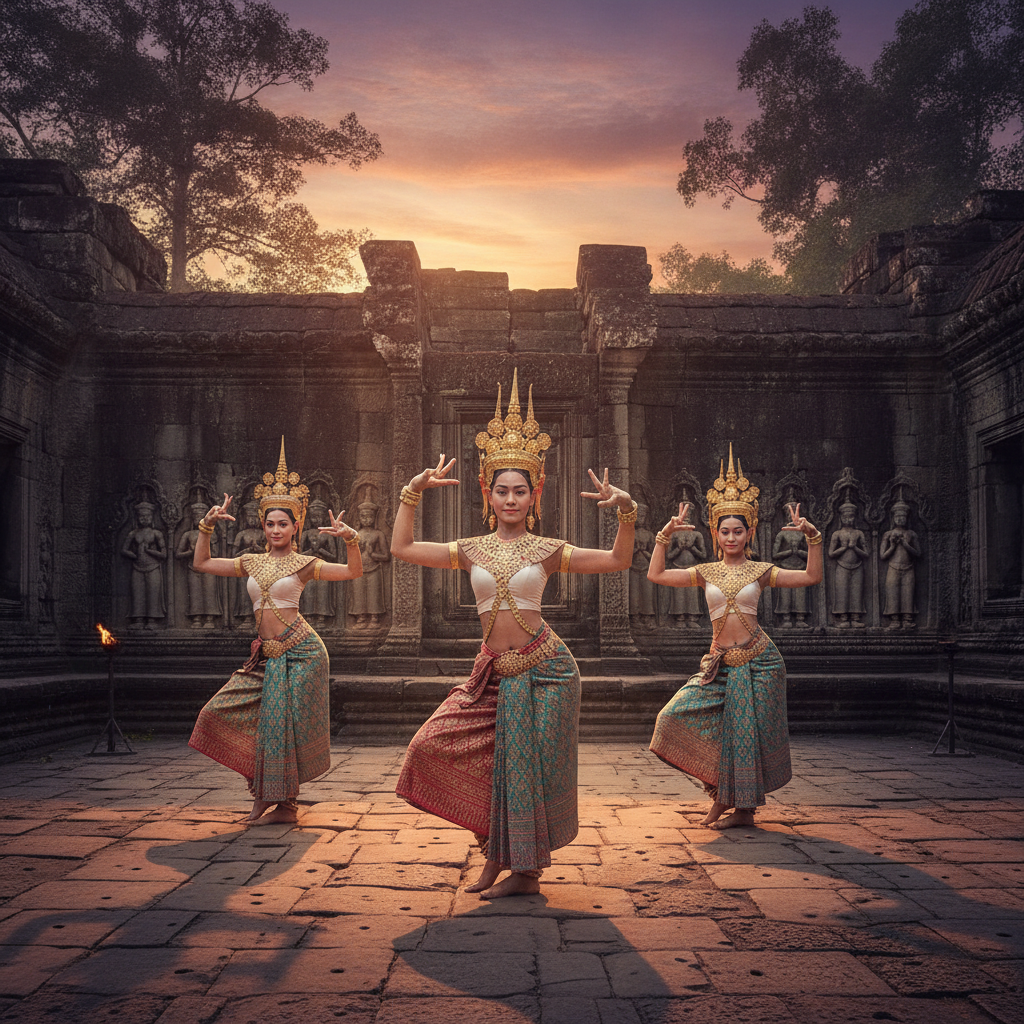
Siem Reap's Foundations: The 1,000 km² Hydraulic Empire, Apsara Dance Surviving Genocide & Henri Mouhot's Useful Myth
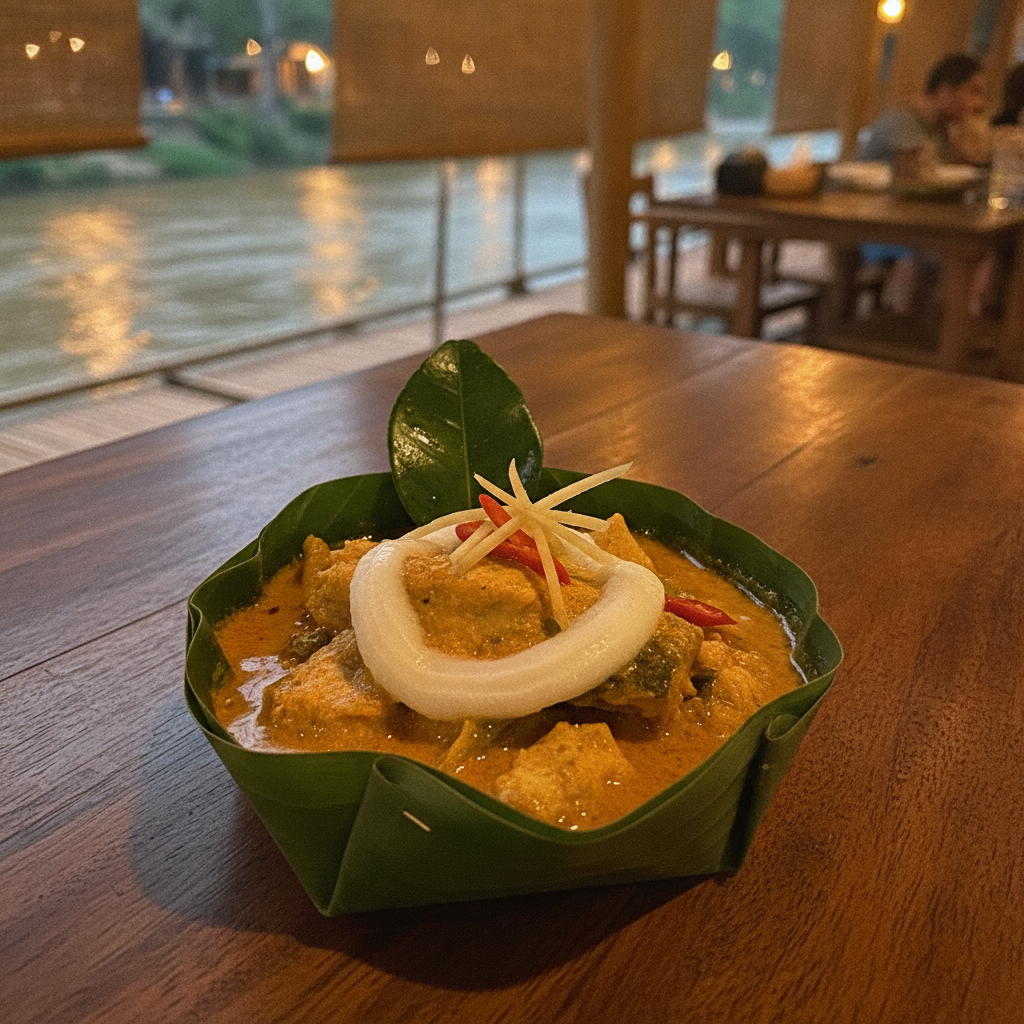
Siem Reap Grounded: Fish Amok and Prahok Fermented Fish, Tuk-Tuk Drivers' COVID Crisis & Bamboo Train to Battambang