Day Trips from Split — Krka Waterfalls, Omis Canyon & the Cetina River
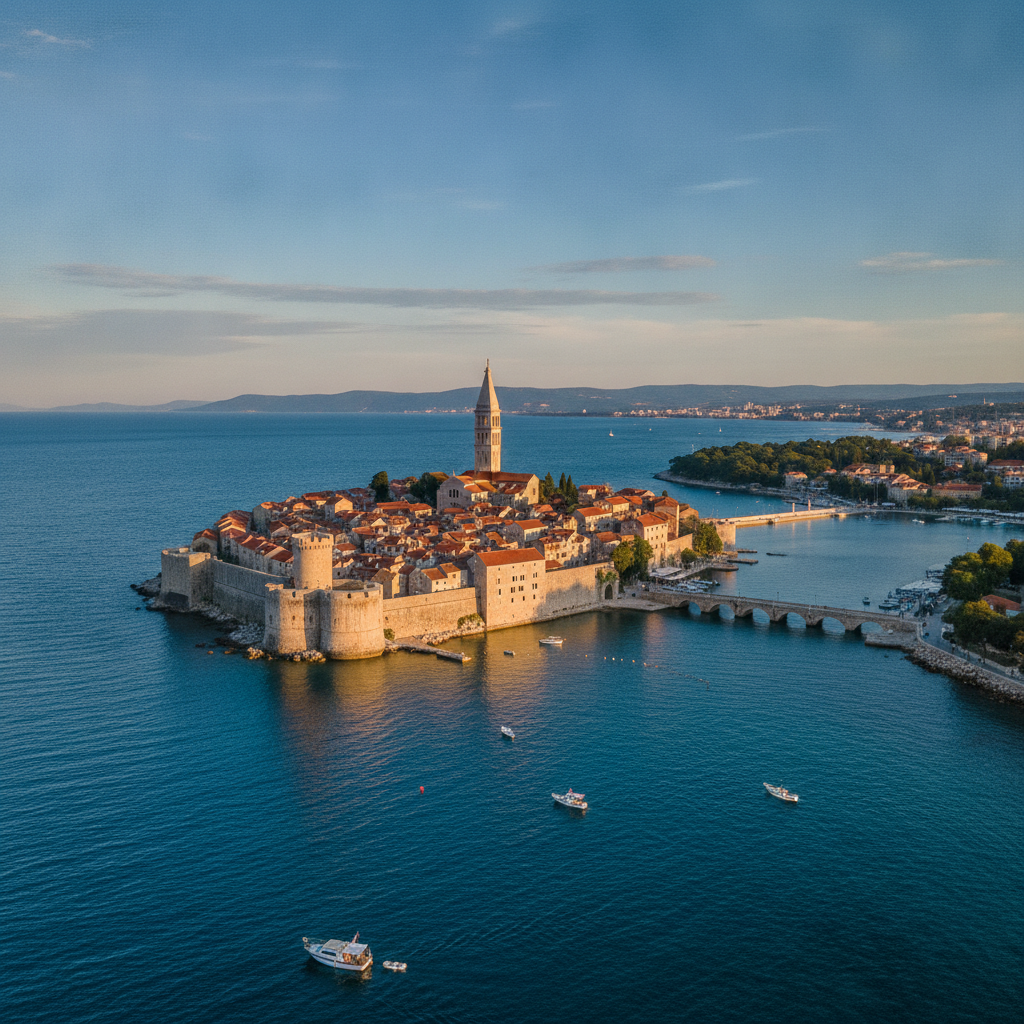
Split's geographic position (on the Dalmatian coast equidistant between Dubrovnik 227km south and Zadar 158km north, with the Dinaric Alps rising immediately inland) gives it the best day-trip access of any Dalmatian city: the Krka National Park waterfalls (1 hour north), the Plitvice Lakes (2.5 hours north), the Omis canyon and Cetina river (40 minutes southeast), and the Makarska Riviera with the Biokovo Nature Park (60 minutes southeast) are all accessible for day trips with a rental car or organized tour.
- 1
Krka National Park — the Travertine Waterfalls 1 Hour from Split
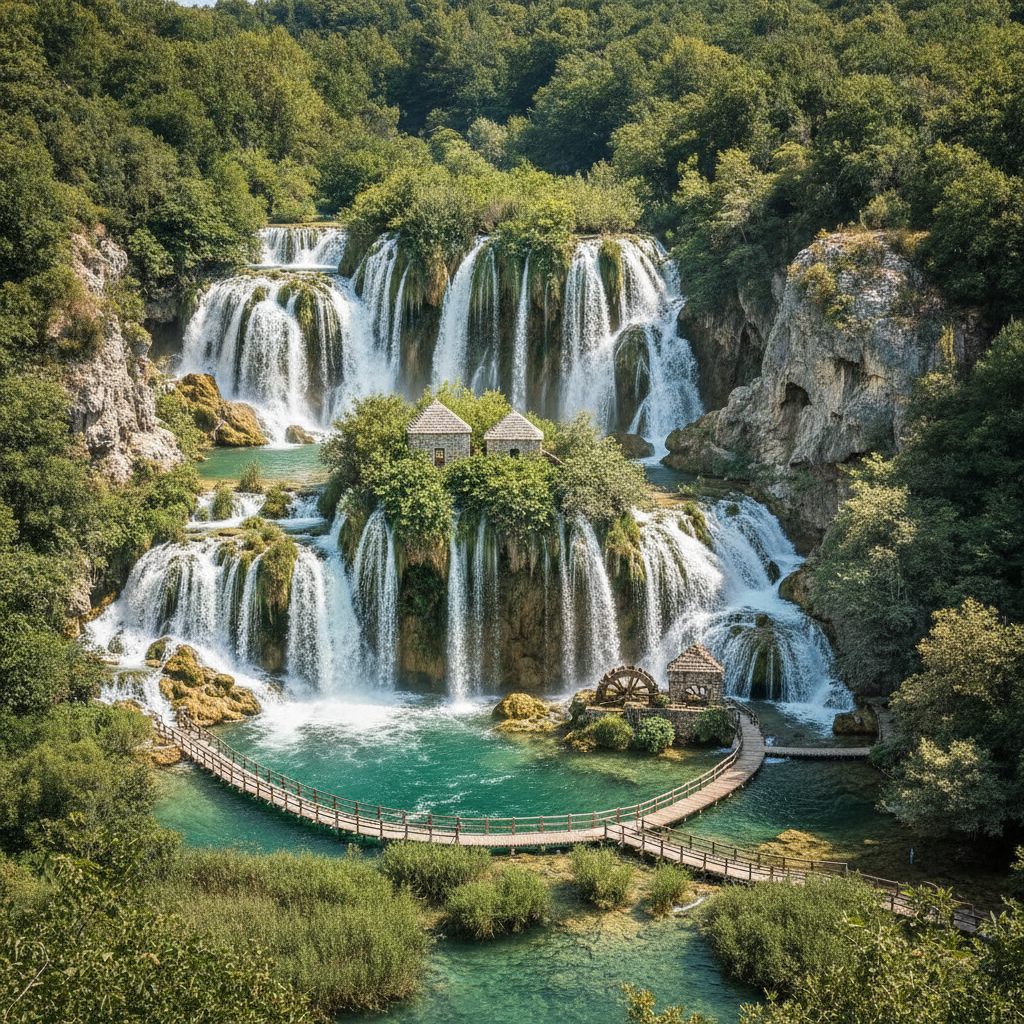
Krka National Park (the protected canyon of the Krka River, 75km northwest of Split, accessible by: direct bus from Split bus station to Sibenik in 1h20m at €8 then local bus or taxi to the Skradinski Buk entrance in 20 minutes, or by the park shuttle boat from the port of Skradin which takes visitors directly to the falls by boat, park entry €26.50 adults April-October, open daily 8am-8pm July-August) contains the Skradinski Buk (the 17-step travertine cascade waterfall system, the largest waterfall complex in Croatia, swimming banned since 2021, the wooden boardwalks through the travertine landscape the visitor route), the Visovac Island (the Franciscan monastery on the island in the widened Krka canyon above the falls, accessible by boat tour included in some park entry packages at €25 additional, the monastery founded 1445, the library containing a unique 1532 edition of Aesop's Fables) and the Roski Slap (the upper waterfall complex, accessible by boat from Skradinski Buk, €15 additional, less visited and more atmospheric than the main falls).
- 2
Omis and the Cetina River Canyon — 40 Minutes from Split
Omis (the town 25km southeast of Split at the mouth of the Cetina river canyon, accessible by bus from Split bus station in 40 minutes at €3.50 or by car in 30 minutes, population 15,000, the medieval fortress above the canyon — the Mirabella Tower, the highest point visible from the sea, used by the Omis pirates to control the Cetina river mouth for 300 years until the Venetians destroyed their fleet in 1444) is the starting point for the Cetina canyon activities: rafting (the 10km stretch of Class 2-3 rapids between the Zadvarje waterfall and Omis, 3-hour rafting tours at €40-50 per person including equipment, minimum age 7, 5 operators based at Radman's Mill 5km up the canyon, booking recommended 24 hours in advance in July-August), the canyon walk (the marked path along the river bank from the Radman's Mill to the Zadvarje falls, 4km each way, 2 hours, free), and the river swimming (the natural pools above the rapids, the freshwater clarity exceptional in the limestone canyon, free access by walking 20 minutes from the canyon road trailhead).
- 3
Makarska Riviera and Mount Biokovo
The Makarska Riviera (the 60km stretch of Adriatic coast from Omis to Gradac, the beach resort area with the Biokovo Nature Park rising immediately behind it from sea level to 1,762m at the summit of Sveti Jure, accessible by car from Split in 60-80 minutes, the beach area with the most consistent tourist infrastructure on the Dalmatian mainland) and Mount Biokovo (the karst limestone massif of the Biokovo Nature Park, the Biokovo Active Holidays centre operating guided hikes from the Makarska area, the Skywalk — the glass-floored platform at 1,228m altitude above Makarska, accessible by car on the switchback road from the coast, the view from the Skywalk encompassing all the central Dalmatian islands from Brac to Hvar to Korcula to Vis simultaneously) are accessible from Split as a day trip with a rental car (no public transport connects Makarska to Split efficiently for a day trip).
- 4
Plitvice Lakes — the UNESCO Waterfall Park 2.5 Hours North
Plitvice Lakes National Park (the UNESCO World Heritage Site 245km north of Split, the 16-lake travertine staircase system in the Lika plateau interior, accessible by direct bus from Split to Plitvice in 2.5-3 hours at €15-20 one-way, park entry €23.50-39.50 depending on season and programme, open daily year-round) is the most-visited national park in Croatia at 1.8 million visitors per year and Croatia's most important natural attraction. The Lower Lakes circuit (the 2-hour boat ride across Kozjak Lake plus the boardwalk through the waterfalls of the lower canyon, the Veliki Slap — the highest waterfall in Croatia at 78m, visible from the programme H viewpoint) and the Upper Lakes circuit (the series of interconnected lakes at the upper plateau level, the Programme A, 3-4 hours, the most complete park experience) are the two main visitor programmes. Booking the park entry ticket online 1 week in advance in July-August is essential; tickets sell out daily at the gate.
- 5
Salona and the Roman Road to Split
The drive from Split to the Krka National Park follows the ancient Roman road (the Via Gabiniana, the Roman road connecting Salona — modern Solin — with the interior town of Aequum — modern Citluk — and the provincial capital of the Dalmatian hinterland) through the Zagora landscape (the karst plateau behind the coastal mountains, the agricultural hinterland of Split since Roman times, the traditional landscape of stone villages, fig trees growing from limestone walls, vineyards on terraced hillsides, and the sheepdog-guarded flocks of the Dalmatian Pramenka sheep whose wool and milk produce the Pag island cheese). The Dalmatian zagora food (the inland version of Dalmatian cooking: the lamb roasted under the peka — the iron dome buried in embers, the cooking time 3 hours — the grilled lamb chops over open charcoal, the local rakija from the village distillery, the spit-roasted suckling pig at roadside restaurants on the Split-Sinj road) is the inland counterpoint to the coastal Adriatic fish tradition.
- 6
Vis Island — the Most Remote Dalmatian Island
Vis (the island 45km south of Split, the furthest major Dalmatian island from the mainland, accessible by fast catamaran from Split in 2h15m at €20 or by car ferry in 2h45m at €8, the island of 3,400 permanent residents, a Yugoslav military base closed to civilian visitors until 1989 — the last year of total military closure of a Dalmatian island) is the most authentic and least commercially developed of the major Dalmatian islands. The Mamma Mia filming location (the island of Mamma Mia Here We Go Again, 2018, the abandoned windmills and the Hum hill settlement used as the film's fictional Greek village of Kalokairi, accessible by scooter rental from Vis town at €40/day), the Blue Cave on Bisevo (the sea cave on the adjacent island of Bisevo, the luminescent blue interior caused by refracted sunlight entering through an underwater opening, accessible by speedboat from Komiza on Vis's west coast at €25 per person, tours departing 9-11am daily May-October, selling out by 8am in summer — book in advance), and the Vis wines (the Vugava white grape and the Plavac Mali red, both produced on Vis's southern slopes, the local producers Podrumi Dragicevic and Lipanovic selling direct from their cellars in Vis town) are the island's essential elements.
Walk this route with audio
Stories play automatically as you reach each stop — no tapping needed.
More in split
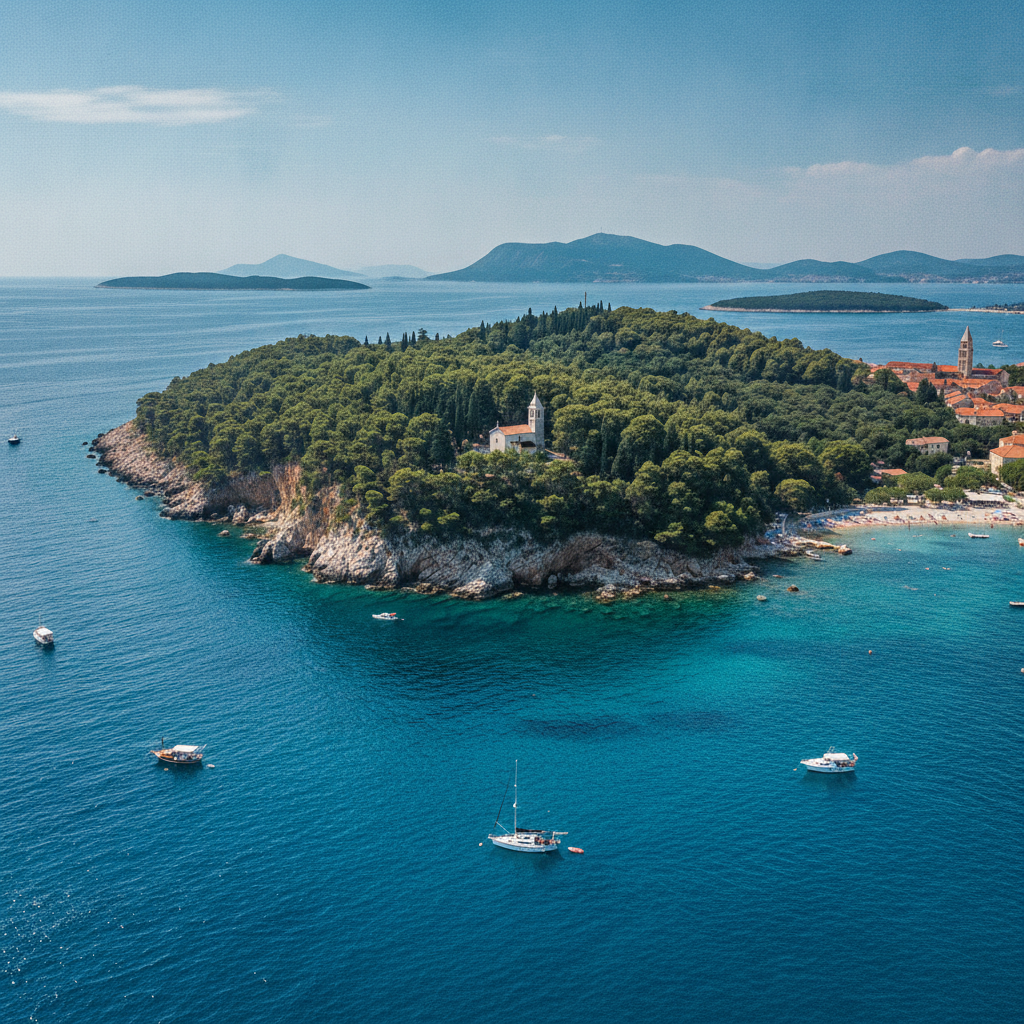
Marjan Hill — the Urban Forest, Rocky Beaches & Split's Traditional Sport of Picigin
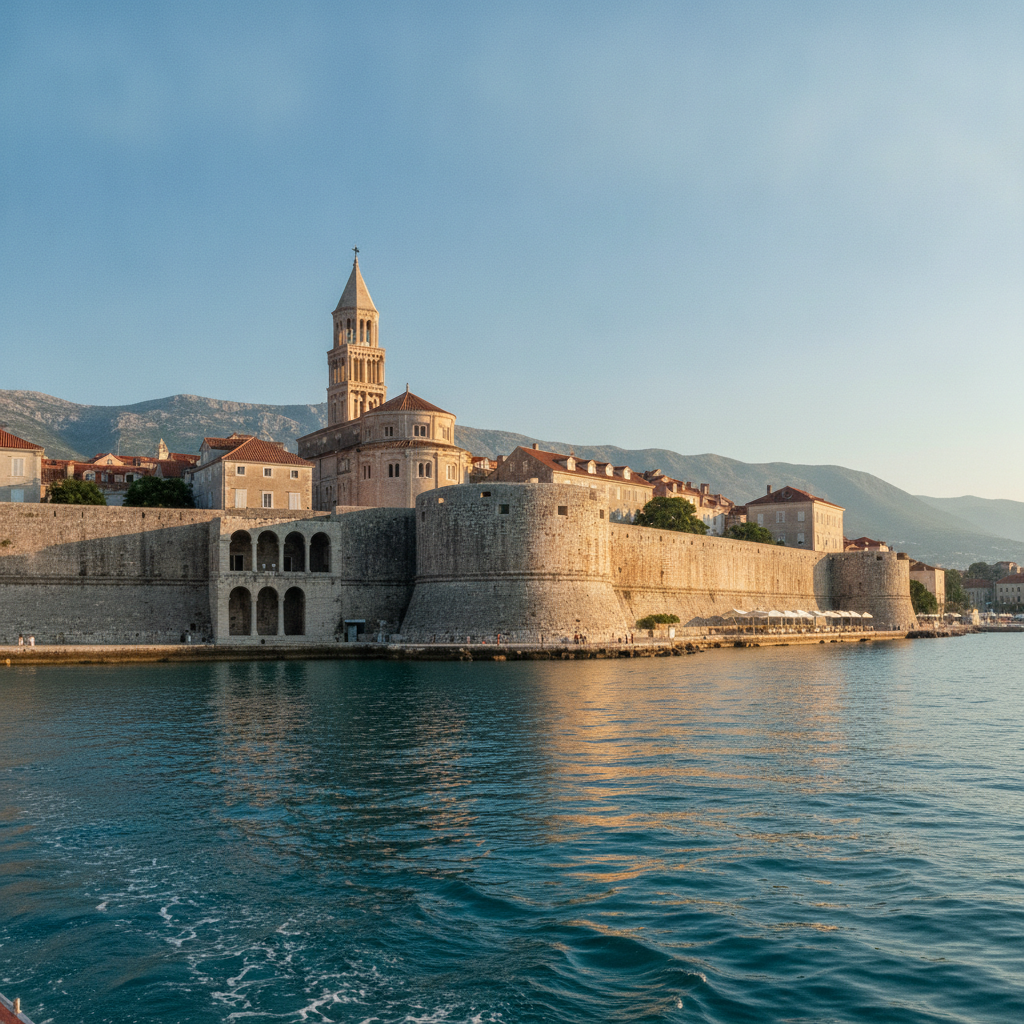
Split — Diocletian's Palace, the Peristyle & a Living Roman City
Split Food & Dalmatian Cooking — Prsut, Black Risotto & Konoba Culture
Hvar Island — the Lavender Island, the Pakleni Islands & Dalmatian White Wine