Split Food & Dalmatian Cooking — Prsut, Black Risotto & Konoba Culture
The Dalmatian food tradition of Split (the inland grilled meat tradition of the Zagora hinterland meeting the Adriatic fish and shellfish of the coast, the wine traditions of the Kastela vineyards and the Peljesac peninsula, the dried meat tradition of the Dalmatian prosciutto — prsut — and the specific konoba culture of the family-run restaurant in the Old Town) is the culinary context for a Split visit.
- 1
Dalmatian Prsut — the Air-Dried Ham of the Dinaric Mountains
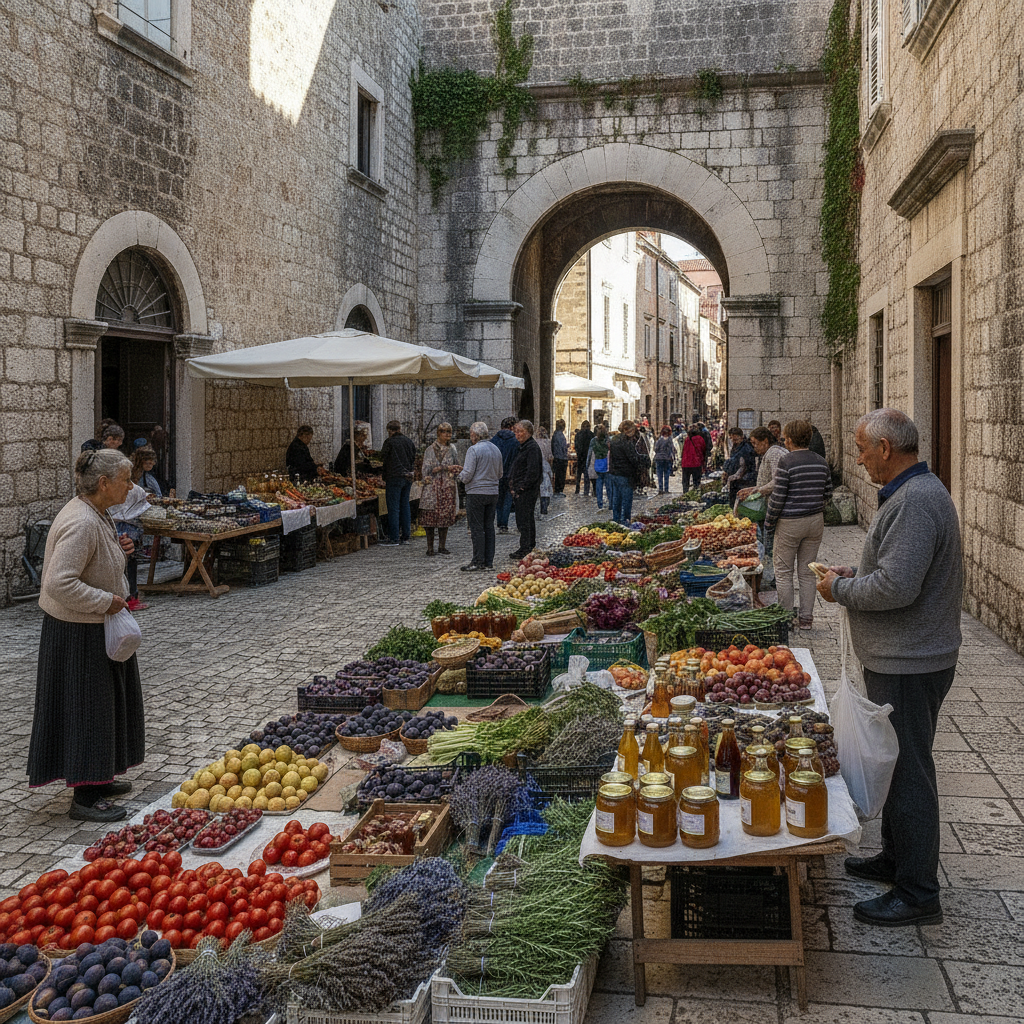
Dalmatian prsut (the air-dried ham produced from the hind leg of the Dalmatian black pig or from the lighter Landrace or Duroc breeds, cured with sea salt from the Ston salt pans and Pag island, then hung in the open bora wind (the cold dry northeast wind from the Dinaric Alps, the same wind that makes Dalmatian dried meats so distinct from Italian prosciutto in texture and flavour) for 12-14 months minimum, the result darker, drier, and more intensely flavoured than Italian prosciutto, the fat thinly marbled and the meat a dark garnet colour) is served at every Split konoba as the first course — the prsut plate (3-4 thin slices of the ham with Pag island sheep's cheese, olives in brine, and green figs or dried figs depending on season) at €8-12 is the correct opening to any Dalmatian meal. The best Split prsut: from the Babic family farm stall at the Pazar market (the hand-cut prsut from whole leg, €10-15 per 100g depending on age, the highest quality available at the market).
- 2
Black Risotto and the Dalmatian Adriatic Fish Tradition
The Dalmatian coastal kitchen centres on: the crni rizot (the black squid ink risotto, the defining Adriatic rice dish, made with the small local cuttlefish and squid caught in the inshore waters, the ink sac added to the soffritto before the rice, the rice cooked in fish stock to al dente, the risotto darker and more mineral than any Italian risotto version, €12-18 at Split restaurants), the brancin na zaru (the whole European sea bass grilled over oak charcoal, served with blitva — a Swiss chard and potato mash with garlic and olive oil — the most ordered dish in any Dalmatian restaurant, the price per kilogram €45-55), and the brodet (the Dalmatian fish stew, a mixture of 3-5 different fish simmered in tomato and olive oil with onions, red wine, and the local capers from the Brac island caper plants, served with polenta, the dish ordered for a minimum of 2 people and requiring 24-hour advance notice at most Split restaurants).
- 3
Konoba Culture — the Family Restaurant Tradition
The konoba (the traditional Dalmatian family-run restaurant, typically in a stone basement or courtyard setting, family-owned with no more than 8-10 tables, the menu handwritten daily on a chalkboard or presented verbally by the owner, the wine served from unlabelled bottles or a carafe, the fish and meat bought the same morning from the Pazar market and the Split fish market, the opening hours 12pm-3pm and 7pm-11pm with no reservations accepted) is the correct format for understanding Dalmatian food. The most highly regarded konobi in Split's Old Town: Konoba Matejuska (Tomica Stine 3, the stone basement beneath the Old Town, daily except Sunday, the lamb prsut and the grilled orada the benchmark dishes, no reservations), Kod Joze (Sredmanuska 4, outside the Old Town walls, the fixed-price daily menu at €15-20 for 3 courses plus wine, the longest-established konoba in Split serving the Old Town workers since 1974), and Stari Plac (Strosmajerovao 13, the market-adjacent konoba, the fresh anchovies from Kastela fried in olive oil the specialty, €12 for the full anchovy plate including olive bread and Kastela wine).
- 4
Kastela Wine and the Croatian Zinfandel Origin
Kastela wine (the wine produced from the 7-village Kastela DOC area on the Kastela Riviera between Trogir and Split, the most historically significant wine area in Croatia because of the Crljenak Kastelanski grape variety — the DNA analysis by UC Davis in 2001 confirmed the Crljenak Kastelanski, a grape variety still surviving in old-vine plots in Kastel Novi village, as the genetically identical original of the Zinfandel grape brought to California, making the Kastela vineyards the direct ancestral source of California Zinfandel) is commercially available as a tourist curiosity (the branded Crljenak bottles at Split wine shops, €15-25/bottle) but the more authentic Kastela wine experience is at the local konoba table wine (the unlabelled Kastela table wine served by the carafe at Split's Old Town konobi at €3-4 per 0.25 litre) — the workhorse of the Dalmatian table wine tradition, consumed daily by Split residents in the same way that Chianti is consumed in Florence.
- 5
Fritule and Rozata — the Dalmatian Pastry Tradition
Fritule (the deep-fried dough fritters, the Dalmatian version of the Venetian frittella, flavoured with rakija (grape brandy), lemon zest, and raisins, rolled in sugar and served warm in a cone from street stalls, €2-3 per cone, the most consumed street food at Dalmatian town festivals and winter markets — the Split Christmas Market stalls serve fritule from December 1 to January 6) and rozata (the Split baked custard pudding, the Dalmatian version of panna cotta or creme caramel, flavoured with the rosida liqueur — a rose petal distillate — the texture denser than French creme caramel and the rose flavour distinct from any other Mediterranean custard tradition, served at traditional Split konobe as the house dessert at €3-5) are the two defining Dalmatian desserts. The best fritule in Split: the stall outside the Vestibule of Diocletian's Palace (the circular Roman entrance hall between the Peristyle and the south wall, the fritule vendor operating from a basket beside the Roman columns, cash only).
- 6
The Riva Evening — Aperitivo and the Sunset Hour
The Riva waterfront (the evening ritual in Split, the korzo beginning at 7pm when the Split family groups — multiple generations walking together — take their evening promenade along the 200m waterfront below the Roman palace walls) is the defining social spectacle of the city. The aperitivo hour (6-8pm, the Dalmatian local drink order: gemist — white wine mixed with mineral water, the 50-50 mixing ratio, the daily drink of the Dalmatian coast, served at €3-4 per glass at the Riva terrace bars, also pivo — the local Ozujsko beer at €3, or the maraschino liqueur — the cherry liqueur from Zadar, the original cocktail ingredient of the Dalmatian coast, invented in Zadar in the 16th century from the Marasca cherry that grows wild on the Dalmatian karst) and the sunset (the sun setting behind the Marjan Hill to the southwest, the palace walls turning gold for 20 minutes before disappearing, the moment when the photograph of the evening walk becomes possible without artificial light at 8-8:30pm in summer) make the Riva between 7 and 9pm the mandatory final stop of any Split day.
Walk this route with audio
Stories play automatically as you reach each stop — no tapping needed.
More in split
Day Trips from Split — Krka Waterfalls, Omis Canyon & the Cetina River
Marjan Hill — the Urban Forest, Rocky Beaches & Split's Traditional Sport of Picigin
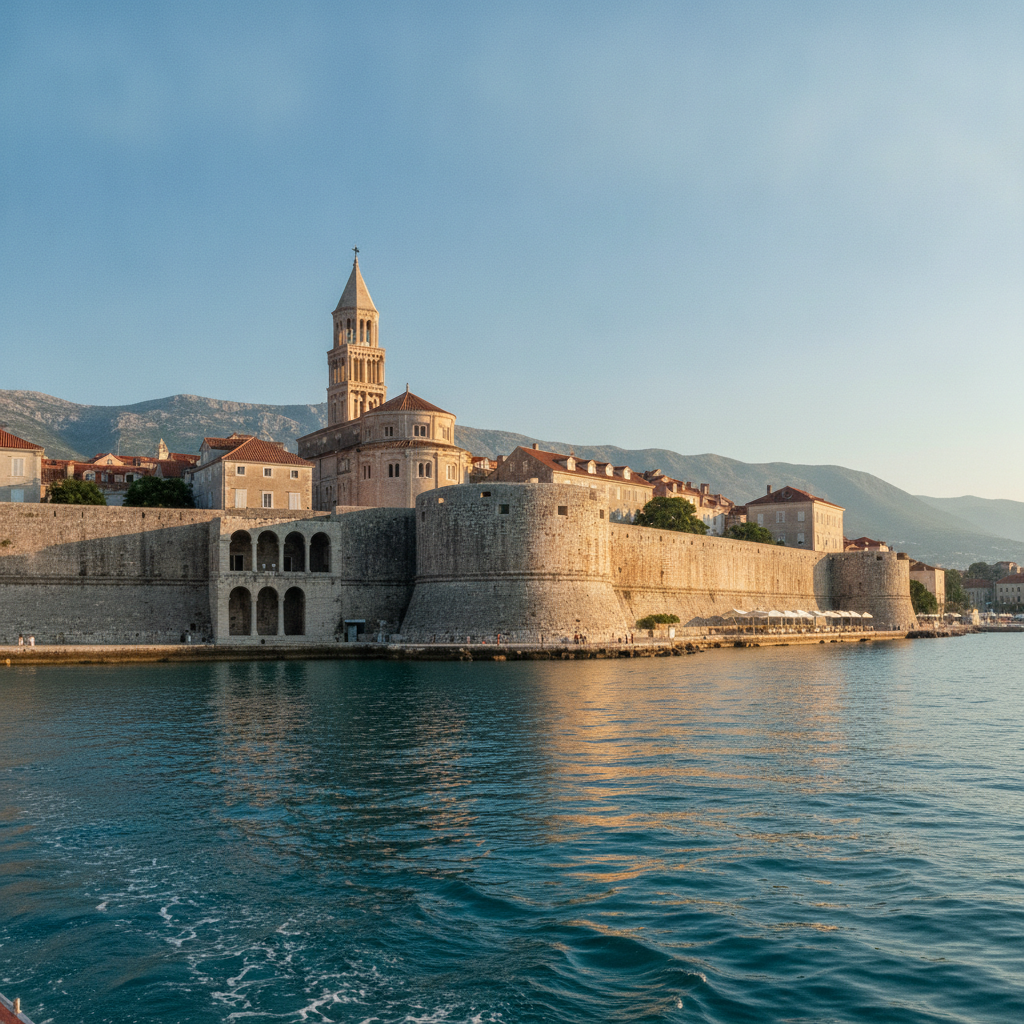
Split — Diocletian's Palace, the Peristyle & a Living Roman City
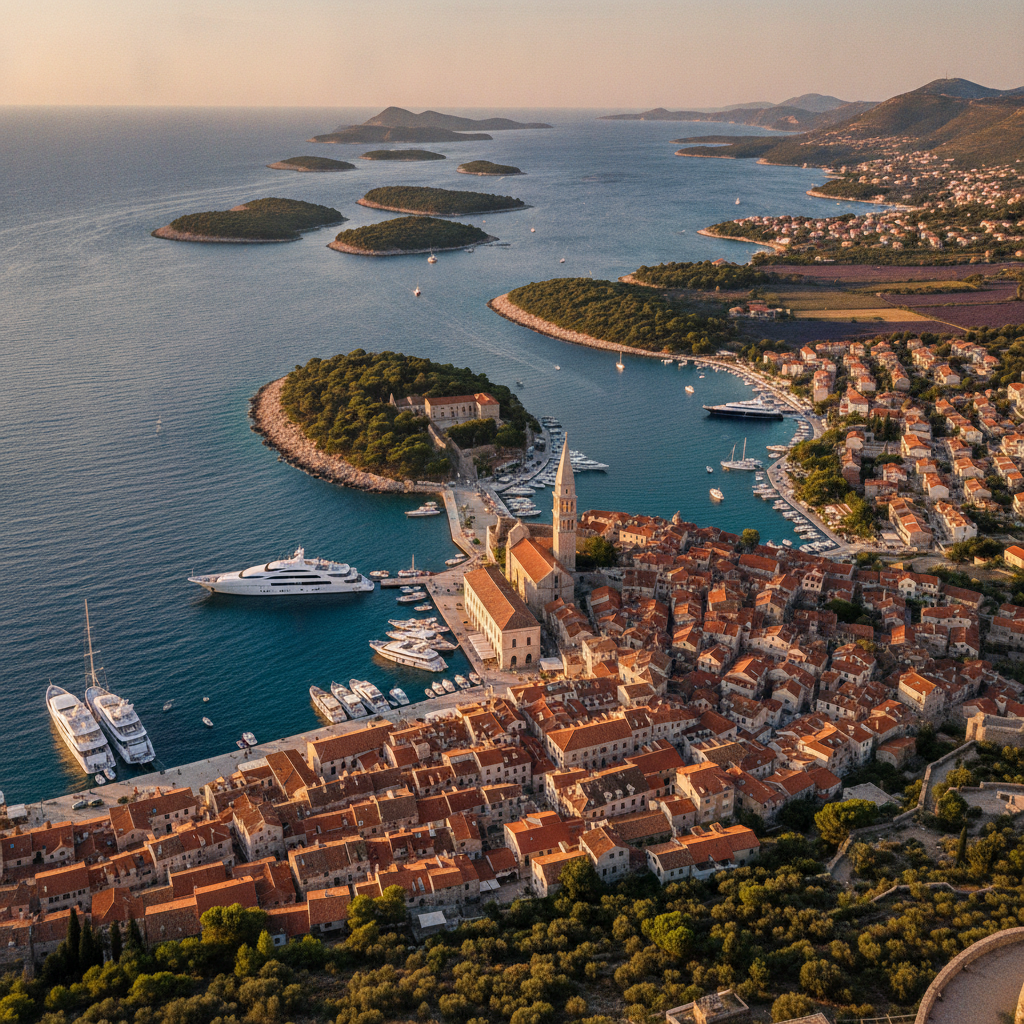
Hvar Island — the Lavender Island, the Pakleni Islands & Dalmatian White Wine