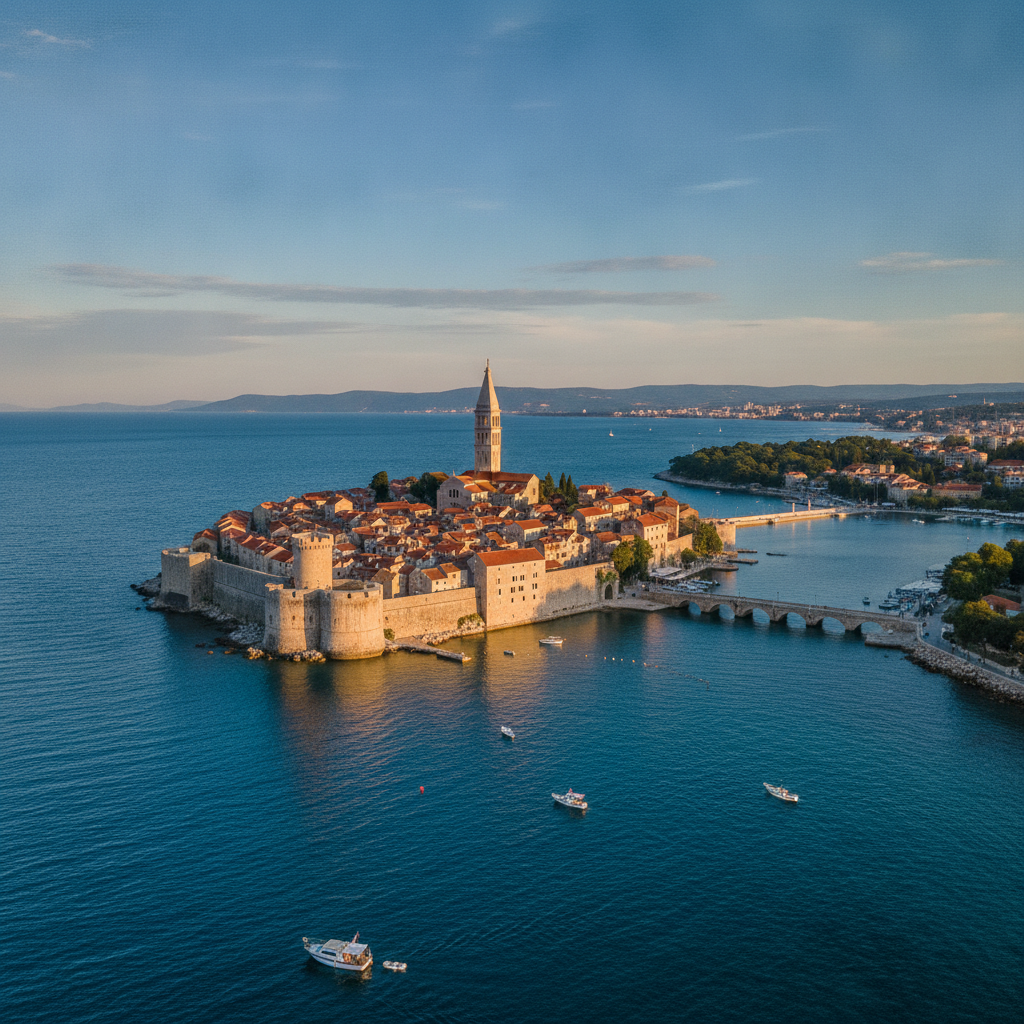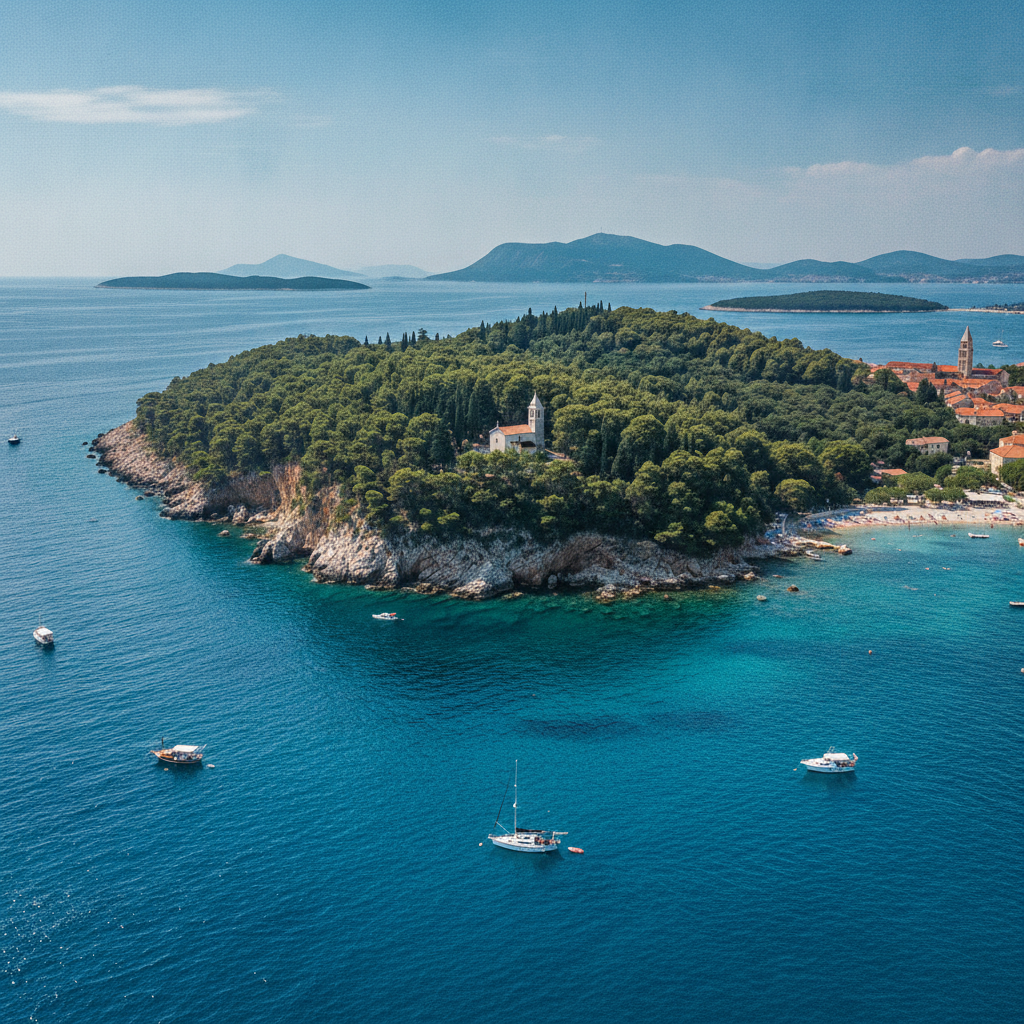
Marjan Hill — the Urban Forest, Rocky Beaches & Split's Traditional Sport of Picigin
Marjan Hill (the 178-metre limestone peninsula immediately west of Split's Old Town, designated a forest park in 1964, the 7km perimeter trail around the park providing the best elevated views of Split, the Riva waterfront, and the Dalmatian island chain) is the essential contrast to the Roman density of the Old Town — a 15-minute walk west from the Palace gates reaches the park entrance.
- 1
Marjan Hill Trail — the 7km Perimeter Walk with Adriatic Views
The Marjan Hill perimeter walk (the waymarked trail following the ridge and southern cliff of the Marjan peninsula for 7km from the park entrance at the Mestrovic Gallery to the westernmost point at the Kasjuni lighthouse, then returning along the northern shore, the complete circuit taking 2-3 hours at a moderate pace, the path shaded by Aleppo pine and Mediterranean cypress, the southern cliff edge providing continuous views south over the Adriatic to the islands of Brac and Solta visible 13km offshore, and in clear weather the island of Vis 45km south) is the most complete walking experience available in Split. The St Nicholas's Church and the Jewish cemetery (the medieval chapel and the 16th-century Sephardic Jewish cemetery on the southern cliff face, the oldest surviving Jewish burial site in Croatia, the graves with Hebrew inscriptions dating from 1573 when the first Sephardic Jews expelled from Spain arrived in Dalmatia) are the cultural stops on the southern cliff walk.
- 2
Bacvice Beach — Picigin and the Shallow Sandy Bay
Bacvice (the sandy beach cove 800m southeast of the Riva waterfront, the most popular beach in Split, accessible on foot from the Old Town in 15 minutes, the beach itself a small sandy bay enclosed by the breakwater of the Split ferry harbour, the water exceptionally shallow — the maximum depth 1.5m at the centre of the bay — the shallowness making it the natural venue for picigin) is the definitive Split beach experience. Picigin (the traditional water sport of Split, invented on Bacvice in 1908, played by 5 players standing in knee-deep water hitting a small rubber ball in a circle with the palm of the hand, the objective being to prevent the ball from falling into the water by any means including spectacular diving saves, the game entirely voluntary and free to observe or join, the championship held at Bacvice in February each year regardless of the water temperature) is the defining sporting expression of Split identity — the Picigin International Tournament in August draws teams from 20 countries to Bacvice.
- 3
Kasjuni Beach — the Rocky Cove Below the Marjan Cliffs
Kasjuni (the rocky beach cove at the base of the Marjan southern cliff, accessible by bus 12 from the Riva or by walking 40 minutes around the Marjan peninsula, the most scenically dramatic beach in the immediate Split area — the vertical limestone cliffs rising 50m immediately above the cove, the Aleppo pines overhanging the cliff edges, the clear water the colour of the Caribbean in a Mediterranean setting, the rocky beach providing natural jumping platforms at 2-4m height above the water) is the preferred beach of Split residents who have moved past the Bacvice shallow-water social experience and want deeper water for swimming. The beach has no facilities (no sunbed rental, no beach bar — the 2023 renovation removed the bar that had operated for 40 years) and requires bringing your own towel and water, which is why it is 80 percent less crowded than Bacvice in peak season.
- 4
Ivan Mestrovic Gallery — Croatia's Most Important 20th-Century Sculptor
The Mestrovic Gallery (Setaliste Ivana Mestrovica 46, the Marjan Hill western entrance, €10 adults, Tuesday-Sunday 9am-4pm October-May and 9am-7pm June-September, the gallery in the neo-Renaissance villa and studio built by Ivan Mestrovic in 1931-1939 as his private home and workshop, donated to the Croatian state in 1952) is the largest permanent collection of Ivan Mestrovic's sculpture (the 195 sculptures and 600 drawings, the works ranging from the early Secession-influenced bronzes of the 1900s to the late devotional religious works in marble, the career of the sculptor who was commissioned by Woodrow Wilson for a monument in Washington DC and exhibited at the Victoria and Albert Museum in London in 1915 — the first living sculptor to have a solo exhibition at the V and A). The Kairos (the large bronze figure of the ideal moment, the Mestrovic masterwork in the gallery's central room) and the chapel of the Holy Cross (the small chapel adjacent to the villa with Mestrovic's relief carvings of the life of Christ in wood, 1913-1916) are the collection's peaks.
- 5
The Dalmatian Island Ferries — Brac, Hvar and Beyond
The Split ferry terminal (the Trajektna Luka Split, the largest ferry port in Croatia, immediately south of the Old Town beyond the Bacvice headland, the departure point for all Jadrolinija car ferries to the Dalmatian islands and the Jadrolinija and SNAV fast catamarans to the major island towns) is the gateway to: Brac Island (the car ferry from Split to Supetar, 50 minutes, €6 adults, departing every 1-2 hours, the island with Zlatni Rat beach — the most photographed beach in Croatia — at Bol, 60km from Supetar by bus or boat), Hvar Town (the fast catamaran from Split to Hvar town in 1 hour at €15, or the car ferry to Stari Grad on Hvar in 2 hours at €6, Hvar town the most fashionable island town in the Adriatic), and Vis (the fast catamaran from Split to Vis town in 2h15m at €20, the most remote and least-touristified major Dalmatian island, the Blue Cave on Bisevo island accessible by boat from Vis). Book island ferry tickets at jadrolinija.hr in advance for July-August car ferry departures.
- 6
Split Markets — the Pazar and the Fish Market
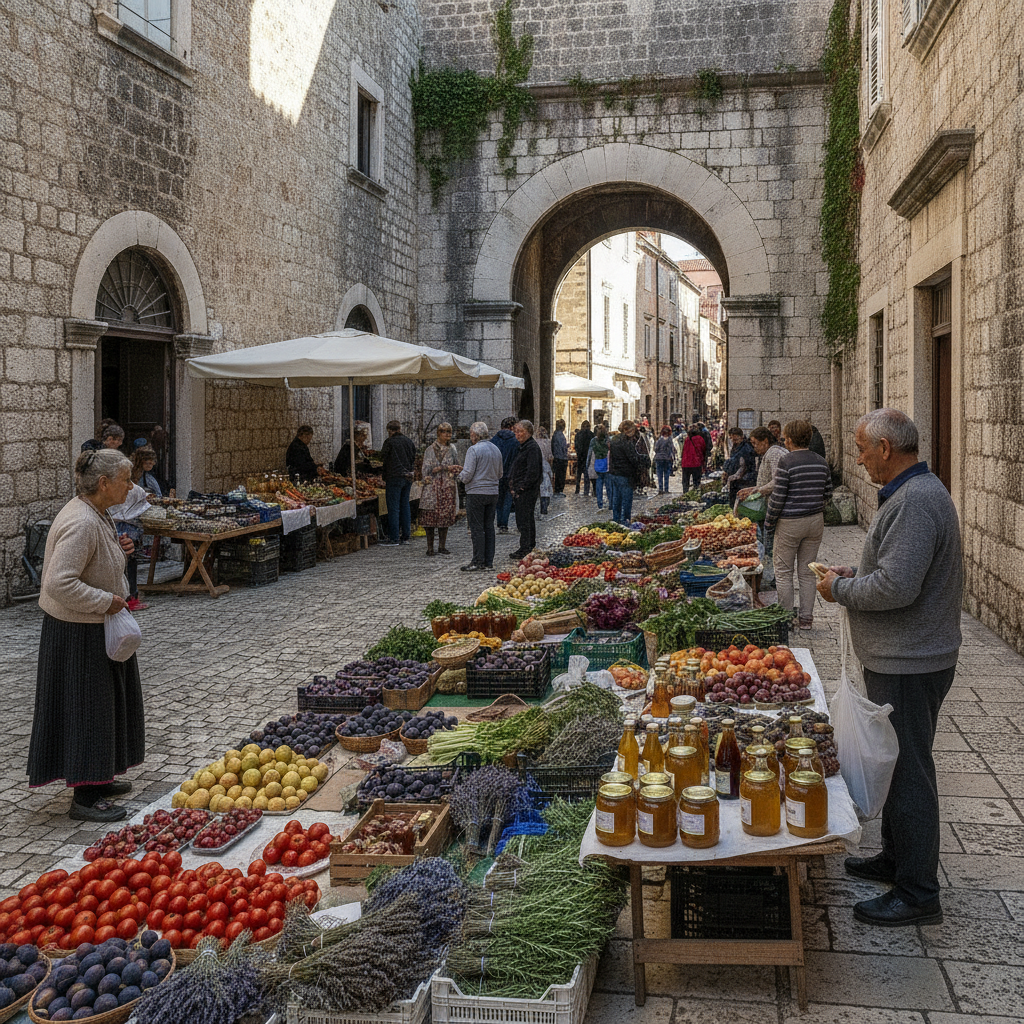
The Pazar (the vegetable market immediately outside the Silver Gate on the east side of the Old Town, open daily 6am-2pm, the daily gathering point for the Zagora farmers selling their produce directly — the tomatoes from Kastela, the figs from Imotski, the lavender from the Dalmatian hinterland, the olive oil in unlabelled bottles from the Brac island producers, the sheep's cheese from the Dinara mountain shepherds — at prices 50-70 percent below the supermarket) and the Fish Market (the Ribarnica, the covered fish market inside the Silver Gate at the eastern end of the Old Town, daily 6am-2pm, the catch landed by the Split fishing fleet at 4-5am and in the market by 6am, the orada, brancin, and zubatac — the three flagship Adriatic fish species — sold whole by the fishermen who caught them, the current day's catch varying with season and weather, the market price for fresh orada €14-18 per kg in season) are the living food markets of Split's working-city identity, entirely distinct from the tourist restaurants of the Old Town.
Walk this route with audio
Stories play automatically as you reach each stop — no tapping needed.
More in split
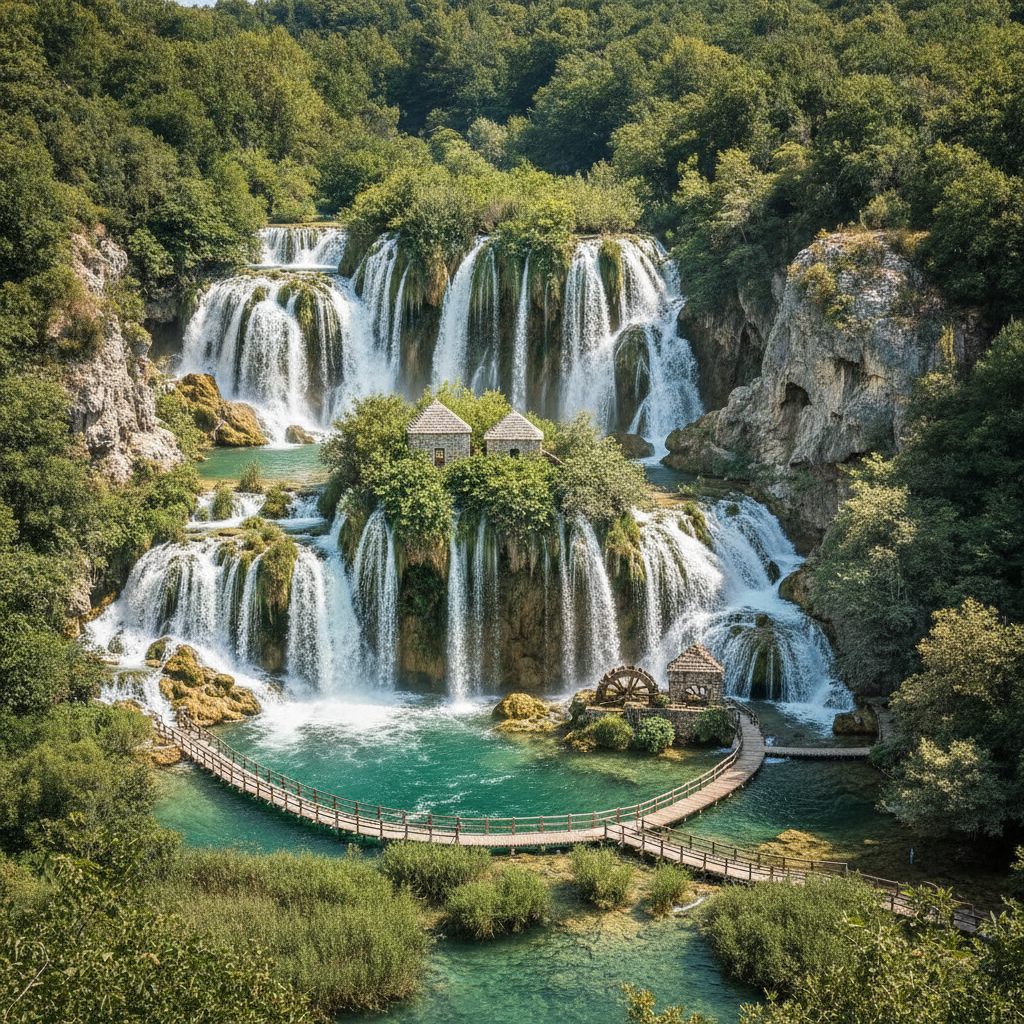
Day Trips from Split — Krka Waterfalls, Omis Canyon & the Cetina River
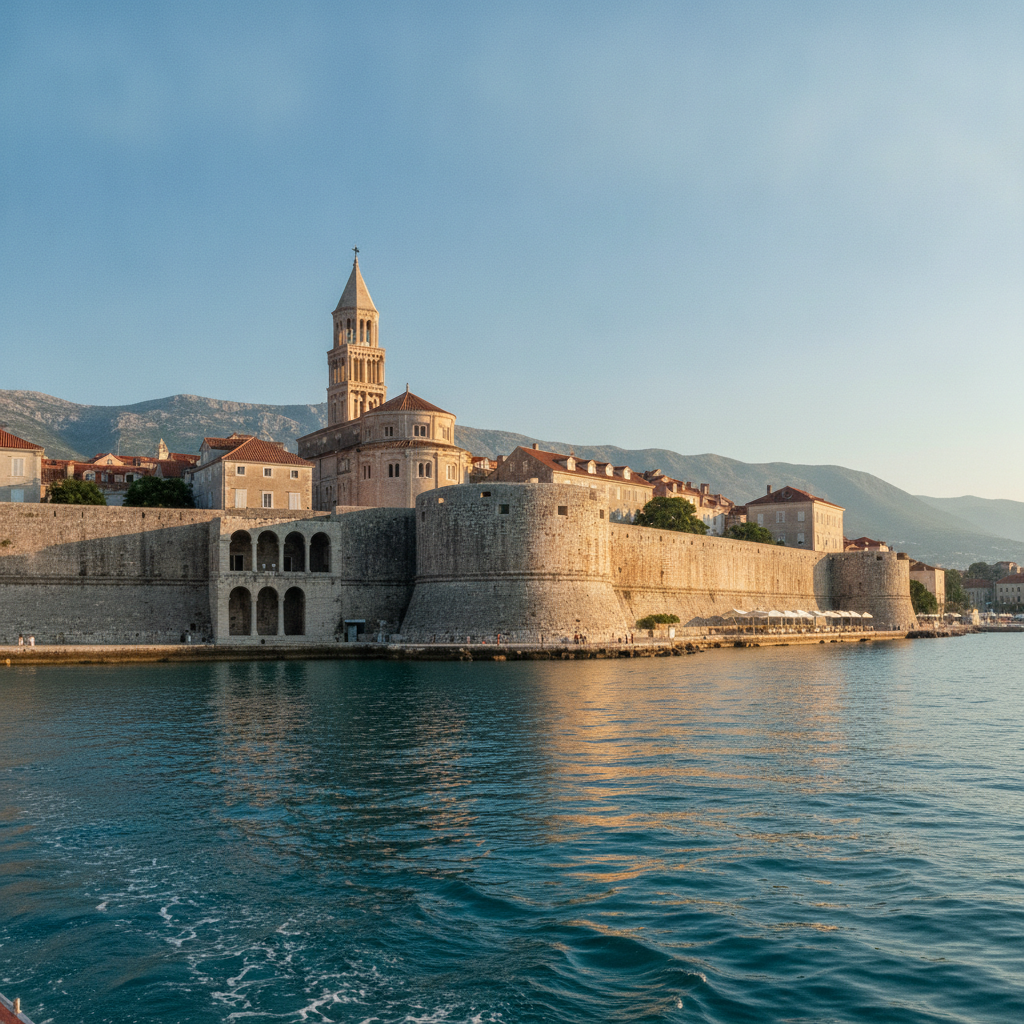
Split — Diocletian's Palace, the Peristyle & a Living Roman City
Split Food & Dalmatian Cooking — Prsut, Black Risotto & Konoba Culture
Hvar Island — the Lavender Island, the Pakleni Islands & Dalmatian White Wine