St. Louis R2-R4: Dred Scott (March 6 1857 worst Supreme Court decision, Taney ruling no Black citizenship no Congressional slavery limits precipitated Civil War, Scott freed May 1857, Old Courthouse trial 1846, Ferguson August 9 2014 Michael Brown BLM catalysis), Architecture (Wainwright Building 1891 Sullivan first coherent skyscraper, Old Courthouse cast-iron dome 1862, Union Station 1894 Theodore Link 100,000 daily peak 1940 now hotel aquarium Ferris wheel, Pruitt-Igoe 1956 Yamasaki demolished 1972-1976 symbol failed public housing), Universities (WashU top 20 US #14 25 Nobel laureates T.S. Eliot born St. Louis 1888 Nobel 1948, Saint Louis University 1818 oldest west Mississippi, Cortex USD 2B 450 companies Square Asana biotech), Anheuser-Busch (Budweiser 1876 pasteurization refrigerated rail cars, InBev 2008 USD 52B largest cash acquisition history, craft Perennial Urban Chestnut 4 Hands), 1993 Flood (75,000 sq km 50 dead USD 15B 79 days above flood stage, Cahokia Mounds UNESCO 1982 largest pre-Columbian city north Mexico 10,000-20,000 people, Monks Mound larger base than Giza pyramid abandoned 1300 CE), Neighborhoods (Delmar Divide racial segregation, Loop Walk of Fame Berry Baker Williams Eliot Grant Joplin, Soulard 1779 farmers market oldest west Mississippi Mardi Gras 200,000 second US largest).
St. Louis R2-R4: Dred Scott (1857 worst Supreme Court decision, no citizenship Congress cannot ban slavery in territories, Scott freed May 1857, Ferguson 2014 Michael Brown BLM), architecture (Wainwright 1891 Sullivan first coherent skyscraper form follows function, Old Courthouse cast-iron dome 1862, Union Station 1894 100,000 daily peak now hotel aquarium, Pruitt-Igoe 1956 demolished 1972-1976 failed public housing), universities (WashU top 20 25 Nobel T.S. Eliot born 1888, SLU 1818 oldest west Mississippi Kress Collection, Cortex USD 2B 450 companies), Anheuser-Busch (Budweiser 1876 pasteurization refrigerated rail, InBev 2008 USD 52B largest cash acquisition, craft Perennial Urban Chestnut 4 Hands), 1993 flood (75,000 sq km 79 days USD 15B, Cahokia UNESCO 1982 10-20,000 people largest pre-Columbian north Mexico, Monks Mound larger than Giza abandoned 1300), neighborhoods (Delmar Divide segregation, Loop Walk of Fame Berry Baker Williams Grant Eliot Joplin, Soulard 1779 market oldest west Mississippi Mardi Gras 200,000).
- 1
St. Louis - Dred Scott, Civil Rights, and Racial History
Dred Scott v. Sandford (US Supreme Court, March 6, 1857): the most consequential and most infamous Supreme Court decision in American history before Roe v. Wade, decided by Chief Justice Roger Taney (ruled that Scott, an enslaved man who had lived in free territories for 11 years with his owner, had no standing to sue for his freedom because African Americans were not citizens of the United States under the Constitution, and that Congress had no authority to prohibit slavery in the territories). The ruling directly precipitated the Civil War (by making the political compromise on slavery impossible) and is regarded by historians as the worst Supreme Court decision in American history. Dred Scott and Harriet Robinson Scott (his wife) lived in St. Louis, had sued for their freedom in the St. Louis Circuit Court in 1846 (winning there in 1850), before the Missouri Supreme Court reversed that decision in 1852 and the US Supreme Court affirmed in 1857. The Scott family was freed in May 1857 by their owner (within weeks of the Supreme Court decision). Dred Scott is buried at Calvary Cemetery in St. Louis. The Old Courthouse (at 11 N 4th Street, now part of the Gateway Arch National Park): the building where the Dred Scott trial was first heard in 1846 and 1847, now preserved as a museum with exhibits on the case and on the larger history of slavery in Missouri. The Ferguson uprising (August 9, 2014): the shooting of Michael Brown (an 18-year-old Black man) by white Ferguson police officer Darren Wilson, and the subsequent uprising in Ferguson, Missouri (a suburb 20 km north of downtown St. Louis) was one of the defining events of the contemporary Black Lives Matter movement and catalyzed the national conversation about police violence against Black Americans.
- 2
St. Louis Architecture - Saarinen, Laclede, and the Built Environment
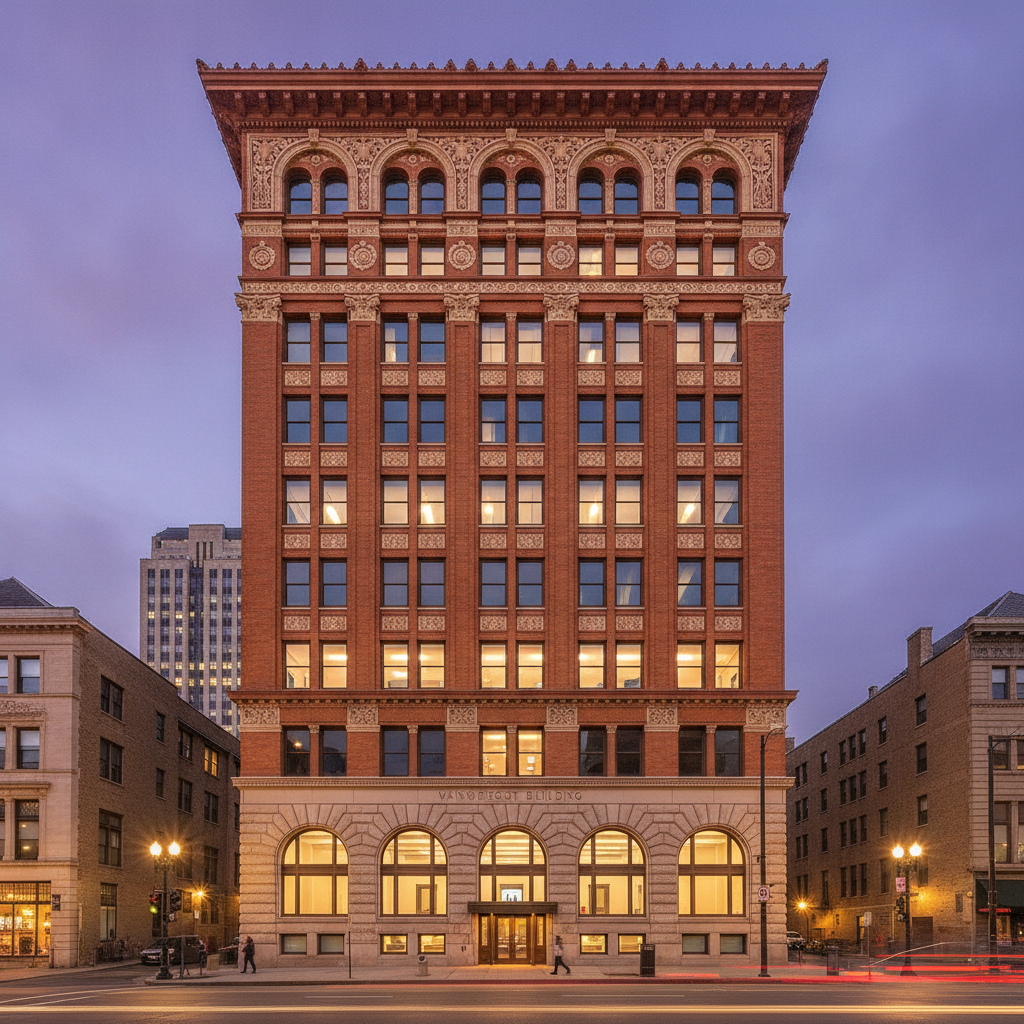
St. Louis architecture: the city has an extraordinary architectural heritage, reflecting its 19th-century prosperity (when it was the fourth-largest city in the United States) and the work of several world-class architects who worked there. The Old Courthouse (at 11 N 4th Street): the Greek Revival courthouse (completed 1862, with its distinctive cast-iron dome — one of the earliest cast-iron domes in the United States, predating and influencing the design of the US Capitol dome) is the oldest surviving public building in St. Louis and one of the finest examples of antebellum civic architecture in the Midwest. The Wainwright Building (at 709 Chestnut Street, completed 1891, designed by Louis Sullivan and Dankmar Adler): the first skyscraper in American history that was honestly and coherently designed from top to bottom as a tall building (Sullivan's dictum: form ever follows function), and the foundational statement of the Chicago School of architecture that produced the modern skyscraper. The Union Station (at 1820 Market Street, opened 1894, designed by Theodore Link): the most beautiful railroad station in the United States at the time of its construction, a Romanesque Revival masterpiece that served 100,000 passengers daily at its peak (1940), and was converted in 1985 to a festival marketplace and hotel, and redesigned in 2019 as a hotel and entertainment complex (including an indoor Ferris wheel, aquarium, and mini-golf). The Pruitt-Igoe housing project (demolished 1972-1976): the 33-tower public housing complex (2,870 units, opened 1956, designed by Minoru Yamasaki who also designed the World Trade Center towers) that became the iconic image of failed modernist urban planning and the symbol of the American public housing crisis.
- 3
Washington University, St. Louis University, and the Higher Education Cluster
St. Louis universities: the St. Louis metropolitan area has a concentration of higher education institutions that punches far above its weight in national rankings. Washington University in St. Louis (at One Brookings Drive, founded 1853): consistently ranked among the top 20 universities in the United States (currently approximately #14 in the US News rankings), with exceptional programs in medicine (the Washington University School of Medicine at 660 S Euclid Avenue, one of the top 5 medical schools in the United States), law, business, and the sciences. WashU Nobel laureates: Washington University has produced or been affiliated with 25 Nobel laureates, including T.S. Eliot (Nobel Prize in Literature 1948, born September 26, 1888, St. Louis — the author of The Waste Land and Four Quartets, who studied at Washington University before going to Harvard). Saint Louis University (at 1 N Grand Boulevard, founded 1818): the oldest university west of the Mississippi River, a Jesuit institution with a law school, medical school, and the SLU Museum of Art (with a significant collection of early Flemish, German, and Spanish art, including the famous Kress Collection). St. Louis Community College: the regional community college system. The Cortex innovation district (at Forest Park Parkway and Boyle Avenue, adjacent to Washington University Medical Center): the 200-acre bioscience and technology innovation district that has attracted more than USD 2B in real estate investment and over 450 companies (including Square, Asana, and numerous biotech startups) since its founding in 2002, and which represents St. Louis's most credible bid to become a major American tech hub.
- 4
The St. Louis Brewery Scene and Anheuser-Busch
Anheuser-Busch and St. Louis beer culture: St. Louis was, from approximately 1870 to 2008, the most important beer city in the United States, defined by the Anheuser-Busch brewery (at 12th and Lynch Streets, Soulard neighborhood, South St. Louis) — the largest brewery in the world by production volume for most of the 20th century. Anheuser-Busch history: Eberhard Anheuser (a German immigrant) purchased the struggling Bavarian Brewery in 1860; his son-in-law Adolphus Busch (born July 10, 1839, Mainz, Germany; died October 10, 1913) transformed it into the dominant American brewery by pioneering pasteurization (preserving beer during long-distance transport), refrigerated railroad cars (allowing national distribution), and mass marketing (Budweiser, launched 1876, became the best-selling American beer). Budweiser facts: Budweiser (named after the Bohemian city of Ceske Budejovice — Budweis in German) is currently the second-best-selling beer in the United States by volume (after Bud Light, also made by Anheuser-Busch), with annual worldwide sales of approximately 40 billion liters. The InBev acquisition: Anheuser-Busch was purchased by the Belgian-Brazilian conglomerate InBev in 2008 for USD 52 billion — at the time the largest cash acquisition in business history and a moment of profound cultural loss for St. Louis (the company was no longer locally owned for the first time in 148 years). Craft beer revival: the St. Louis craft brewery scene has grown substantially since 2010, with notable breweries including Perennial Artisan Ales (at 8125 Michigan Avenue), Urban Chestnut Brewing Company (at 3229 Washington Avenue, Midtown), and 4 Hands Brewing (at 1220 S Main Street, Soulard).
- 5
The Great St. Louis Flood of 1993 and the Mississippi River
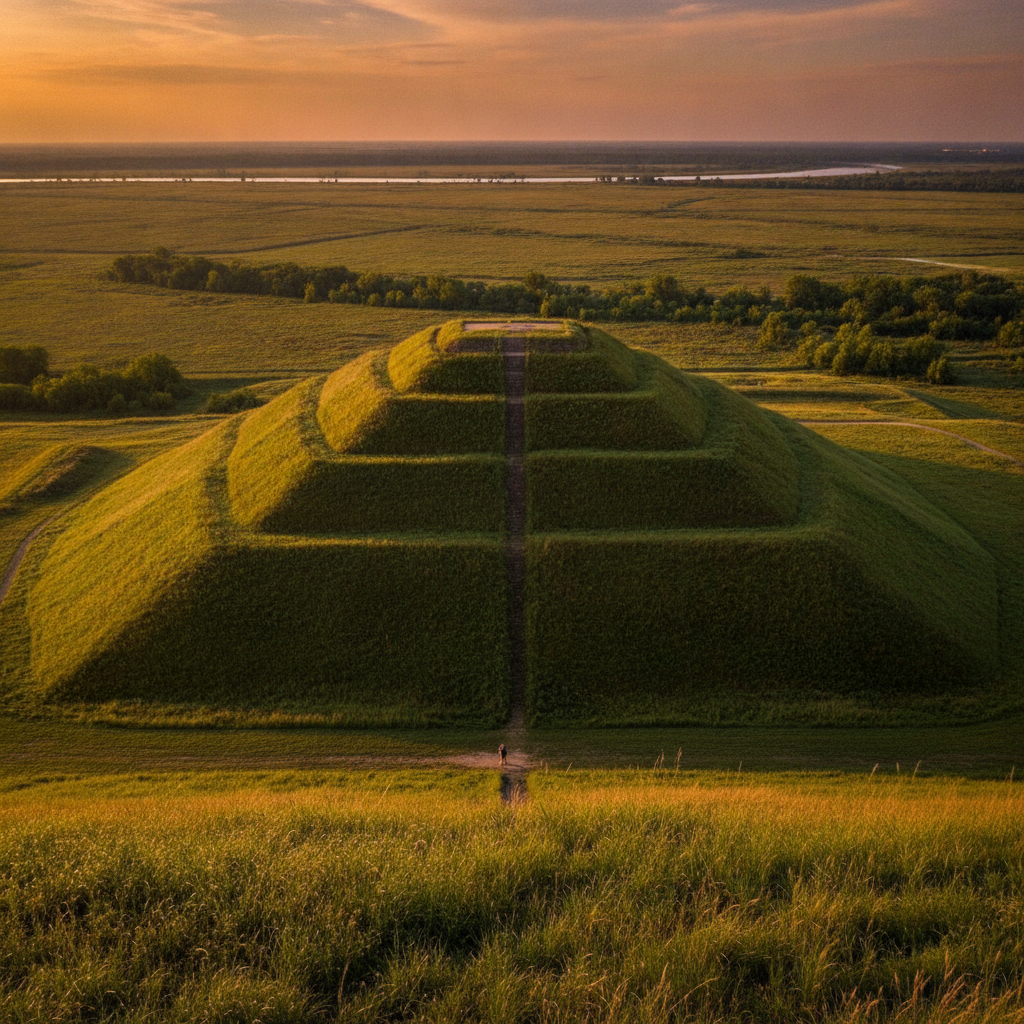
The Great Flood of 1993: the most damaging river flood in US history, in which the Mississippi River and its tributaries exceeded flood stage for 79 days and inundated approximately 75,000 km2 of the Midwest (an area the size of Ireland), causing 50 deaths and approximately USD 15 billion in damage (USD 30 billion in 2024 dollars). The river crested at St. Louis on August 1, 1993, at 49.58 feet (15.11 m) above flood stage — 6 feet above the previous record. The confluence of the Missouri and Mississippi Rivers (at Portage des Sioux, Missouri, approximately 30 km north of downtown St. Louis): the confluence of the two great rivers is one of the most dramatic geographic features in the North American interior, visible from the air as the turbid, sediment-laden Missouri River (carrying the sediment of the Rocky Mountains and the Great Plains) merges into the clearer (relatively) Mississippi. The Cahokia Mounds (at 30 Ramey Street, Collinsville, Illinois, 13 km east of downtown St. Louis): the UNESCO World Heritage Site (inscribed 1982) preserving the earthwork monuments of Cahokia — the largest pre-Columbian city north of Mexico, which at its peak (approximately 1050-1100 CE) had a population of 10,000-20,000 people, larger than contemporary London. Monk's Mound (the largest earthwork in North America, at 30 m high and 290 m x 236 m at the base, larger in base area than the Great Pyramid of Giza): the central platform mound of Cahokia, where the paramount chief of the Mississippian civilization resided. The city was abandoned for unknown reasons by approximately 1300 CE.
- 6
St. Louis Neighborhoods, the Loop, and Soulard
St. Louis neighborhoods: the city of St. Louis (which separated from St. Louis County in 1876, a decision that has had devastating consequences for the city's tax base and political power in the 20th century, as the suburbs that developed in the county — Ladue, Clayton, Chesterfield, Ballwin, Florissant — are politically separate from the city) has lost approximately 62% of its peak population of 856,000 (in 1950) to its current population of approximately 300,000. Delmar Boulevard (the Delmar Divide, the east-west street that divides the predominantly white, affluent neighborhoods of University City to the north from the predominantly Black, lower-income neighborhoods to the south): the most vivid expression of the racial and economic segregation of the St. Louis metropolitan area. The Loop (on Delmar Boulevard, University City): the commercial strip of independent restaurants, music venues, and shops that is the most vibrant street in metropolitan St. Louis, with the St. Louis Walk of Fame (the bronze star plaques embedded in the sidewalk honoring famous St. Louisans, including Chuck Berry, Josephine Baker, Tennessee Williams, Vincent Price, T.S. Eliot, Ulysses S. Grant, Scott Joplin, and Miles Davis). Soulard (the oldest surviving neighborhood in St. Louis, immediately south of downtown): the dense brick rowhouse neighborhood founded by French Creoles in the late 18th century, with the Soulard Market (at 730 Carroll Street, the oldest farmers market in continuous operation west of the Mississippi River, established 1779 as a private market by Julia Soulard), and the Soulard Mardi Gras (the second-largest Mardi Gras celebration in the United States after New Orleans, drawing approximately 200,000 visitors to the Soulard neighborhood on the Saturday before Fat Tuesday).
Walk this route with audio
Stories play automatically as you reach each stop — no tapping needed.
More in st-louis
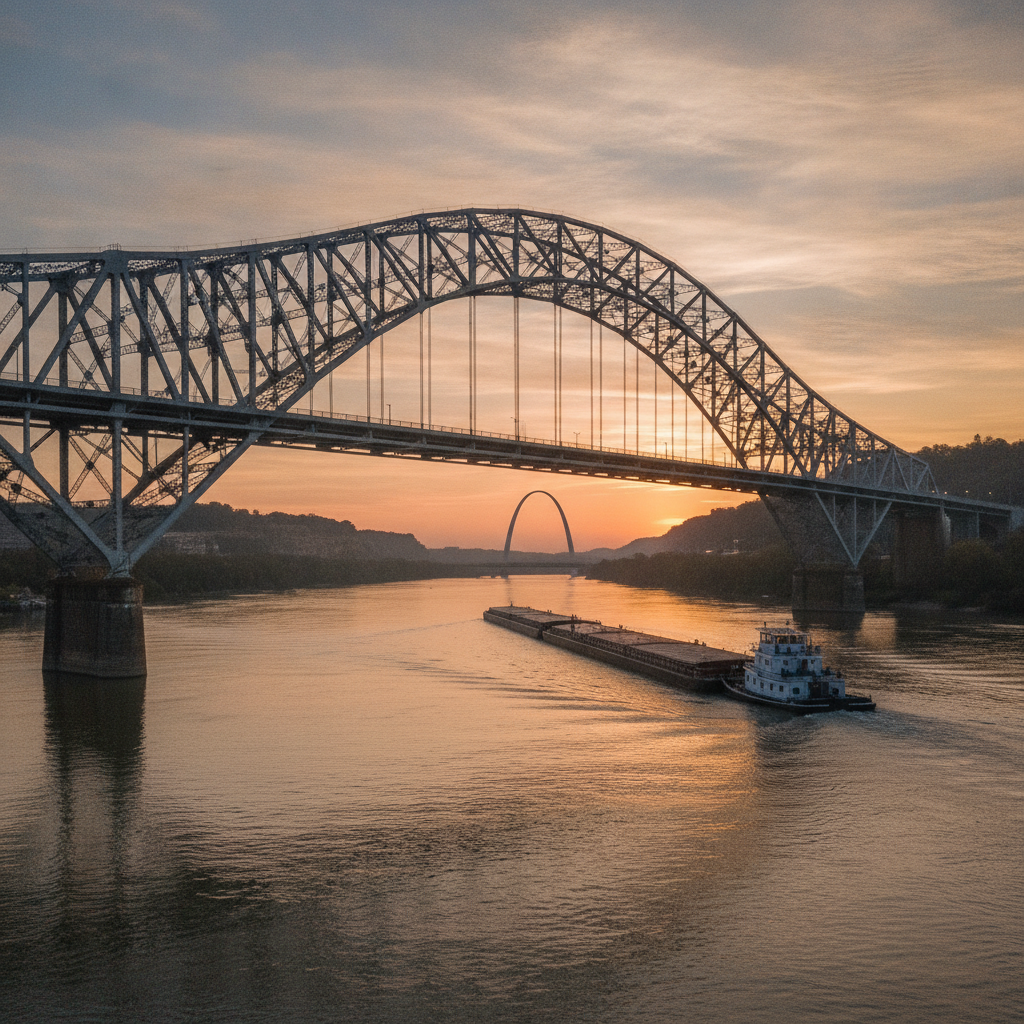
St. Louis R3: Scott Joplin (King of Ragtime born 1868 Texarkana, Maple Leaf Rag 1899 first sheet music 1M copies, Entertainer 1902 revived The Sting 1973 7 Oscars, Pulitzer 1976 posthumous, 2658 Delmar House State Historic Site), Josephine Baker (born 1906 St. Louis, Paris 1925 banana dance Folies Bergere most photographed woman 1920s, French Resistance Croix de Guerre Legion d'Honneur, March on Washington August 28 1963 only woman official speaker, French state funeral Notre-Dame April 15 1975 Rainbow Tribe 12 adopted children), Tennessee Williams (Glass Menagerie 1944 set St. Louis family 4633 Westminster Place 1918), Vincent Price (born 1911 St. Louis horror films), Eads Bridge (1874 first steel bridge in world, chromatic steel, pneumatic caissons 33m bedrock first US use, Grant ceremonial July 4 1874, Boeing 14,000 engineers Hazelwood), German food heritage (Forty-Eighters 1848 Missouri Rhineland vineyards, Hill neighborhood Italian toasted ravioli Charlie Gitto's, provel cheese St. Louis pizza Imos Pi Pizzeria Obama 2008, gooey butter cake 1930s mistake), St. Louis decline (856,000 1950 to 300,000 65% largest US city decline, city-county separation 1876, Cortex USD 2B Washington Avenue lofts 3000 units), day trips (Meramec Caverns Jesse James, Elephant Rocks 1.5B year granite, Missouri Wine Country Hermann Norton grape, Grant Hardscrabble farm 1850s).
St. Louis: Garden City, World Fair Parks and American Music Roots
St. Louis: World-Class Art, Ancient Cities and Neighborhood Soul
St. Louis: Gateway Arch, founding history, Forest Park, music, sports, and food
St. Louis: Victorian Parks, Rock and Roll Sidewalks and the Gateway West