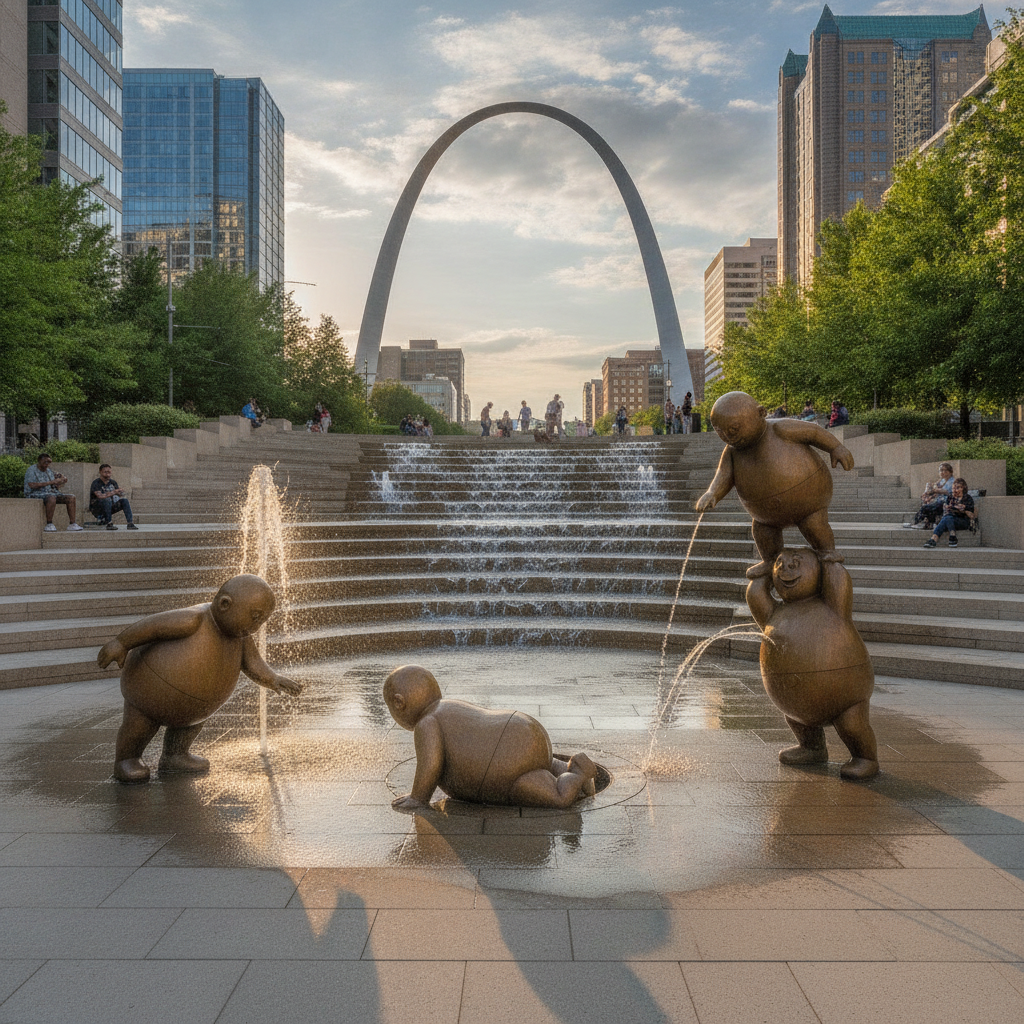
St. Louis: Gateway Arch, founding history, Forest Park, music, sports, and food
St. Louis overview: Gateway Arch 192m Eero Saarinen 1965 stainless steel tallest monument US (Washington Monument 169m), Louisiana Purchase 1803 Napoleon USD 15M 2.1M sq km, Lewis and Clark departed May 14 1804 returned September 23 1806 12,875km; Forest Park 1371 acres 1904 World's Fair 19.7M visitors ice cream cone waffle cone Ernest Hamwi, St Louis Art Museum Zoo free admission; Chuck Berry born St. Louis 1926 died 2017 duck walk Johnny B Goode No Chuck Berry no Beatles (Lennon), Miles Davis Alton Illinois 30km north Kind of Blue 1959 best-selling jazz album 5M; Cardinals 11 World Series NL record Busch Stadium Arch visible, Stan Musial 3630 hits .331, Gibson 1.12 ERA 1968 lowest live-ball era, Blues 2019 Stanley Cup worst record January 3 to champions; provel cheese controversy St. Louis-style pizza cracker crust square cut Imos 1964, toasted ravioli Hill neighborhood Yogi Berra Joe Garagiola grew up across street.
- 1
St. Louis - The Gateway City and the Gateway Arch
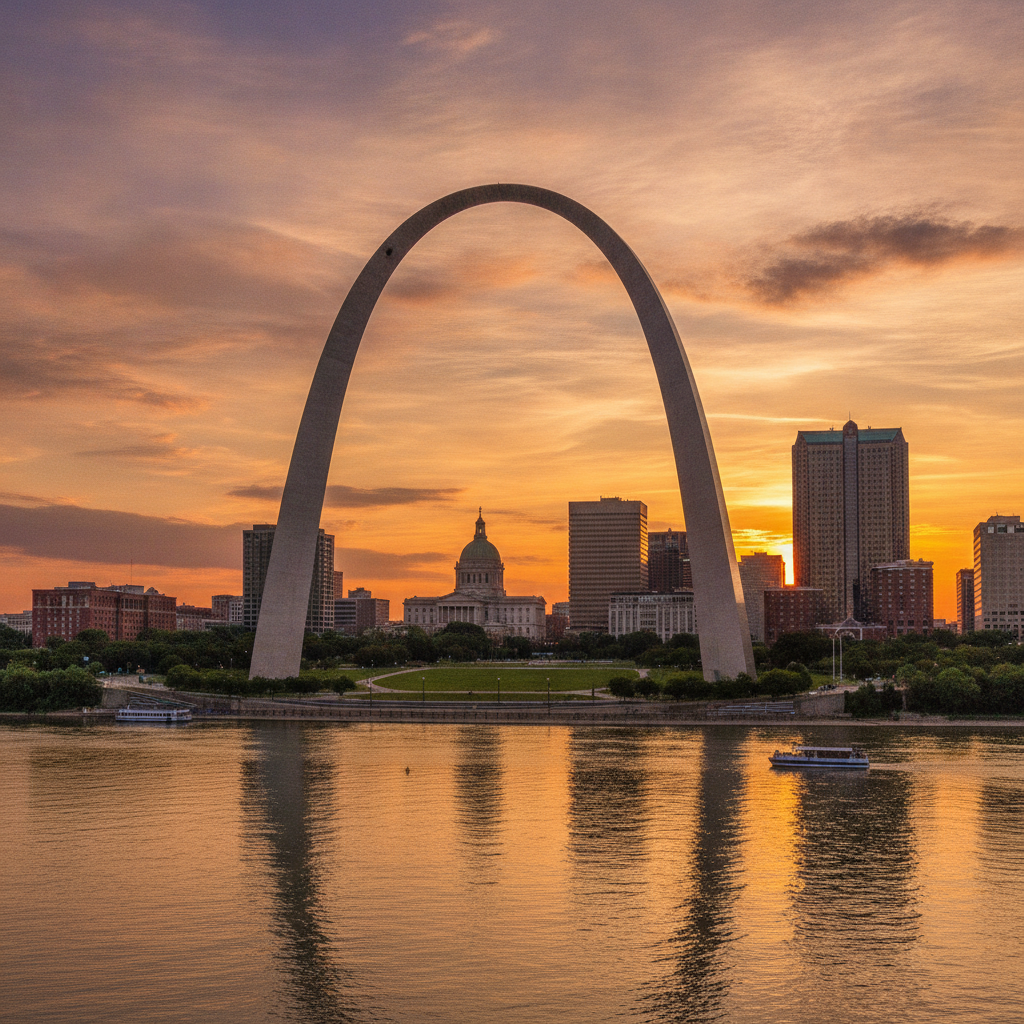
St. Louis sits at the confluence of the Missouri and Mississippi Rivers and was the most important inland city in the United States from approximately 1820 to 1920, serving as the departure point for the Lewis and Clark Expedition (1804-1806), the California Gold Rush emigrants (1849-1850s), the Oregon Trail pioneers, and the tens of thousands of settlers who crossed the continent via the overland trails. The Gateway Arch (the Jefferson National Expansion Memorial, at 11 N 4th Street, the St. Louis riverfront): the 630-foot (192-m) stainless steel catenary arch designed by Finnish-American architect Eero Saarinen, completed in October 1965 after a construction process that required extraordinary engineering precision (the two legs of the arch, built simultaneously from the ground up, had to meet at the apex within 1/64 inch of tolerance). The arch is the tallest man-made monument in the United States (taller than the Washington Monument at 555 feet and the Statue of Liberty at 305 feet including base), the tallest arch in the world, and the defining symbol of St. Louis. The tram to the top: visitors ascend to the observation deck at the apex of the arch via egg-shaped tram capsules (each holding 5 passengers, with 8 capsules on each side of the arch, completing the 4-minute journey on a track that changes from 5 degrees from vertical at the base to 66 degrees from vertical at the apex). The Museum at the Gateway Arch (the underground museum at the base of the arch, redesigned 2018): covering the story of westward expansion, Native American displacement, the Lewis and Clark Expedition, and the role of St. Louis as the Gateway to the West.
- 2
St. Louis - History as a French Creole City and the Louisiana Purchase
St. Louis founding: St. Louis was founded on February 15, 1764, by Pierre Laclede Liguest and his 13-year-old stepson Auguste Chouteau (who led the crew that cleared the site on Laclede's behalf), as a fur trading post for the New Orleans-based merchant firm Maxent, Laclede and Company. The name honors King Louis IX of France (Saint Louis), who is the only French king to have been canonized as a Roman Catholic saint (crowned 1226, died August 25, 1270, on crusade in Tunis). St. Louis was French from 1764 to 1770 (transferred to Spain in the Treaty of Fontainebleau, 1762, but not actually administered by Spain until 1770), Spanish from 1770 to 1800 (transferred back to France in the Treaty of San Ildefonso, 1800), French for 20 days in 1804 (Napoleon having already sold Louisiana to the United States in April 1803), and American from March 10, 1804. The Louisiana Purchase (April 30, 1803): Napoleon sold the entire Louisiana Territory (approximately 2.1 million square kilometers — roughly the western half of the continental United States) to the United States for USD 15 million (approximately USD 18 per square kilometer), doubling the size of the young nation. The transfer ceremony took place in St. Louis in March 1804. Lewis and Clark Expedition (1804-1806): Meriwether Lewis and William Clark departed from Camp Dubois (in Illinois, across the river from St. Louis) on May 14, 1804, with the Corps of Discovery of 33 men, and returned to St. Louis on September 23, 1806, having traveled approximately 12,875 km to the Pacific Ocean and back — the most important exploratory expedition in American history.
- 3
Forest Park and the 1904 World's Fair
Forest Park (1371 acres, approximately 6 km west of downtown St. Louis): the third largest urban park in the United States (after Fairmount Park in Philadelphia and Griffith Park in Los Angeles), and the site of the Louisiana Purchase Exposition of 1904 (the St. Louis World's Fair). The 1904 World's Fair: the Louisiana Purchase Exposition was held from April 30 to December 1, 1904, to commemorate the centennial of the Louisiana Purchase, covering 5 square km of Forest Park (the largest international exposition in history to that date), with approximately 19.7 million visitors (in a country with a total population of approximately 82 million). The cultural impact of the 1904 World's Fair: the fair introduced ice cream cones (the waffle cone was invented at the fair by Syrian immigrant Ernest Hamwi, who was selling waffles adjacent to an ice cream stall that ran out of bowls and began rolling his waffles to hold ice cream — a claimed invention disputed by several other World's Fair vendors), the hamburger in a bun, hot dogs, iced tea, peanut butter, and Dr Pepper to widespread American popular awareness (though none of these foods were actually invented at the fair). The Forest Park institutions: Forest Park contains the St. Louis Art Museum (free admission, one of the finest encyclopedic art museums in the United States, with a collection of approximately 34,000 works), the Missouri History Museum (in the old World's Fair Administration Building), the St. Louis Zoo (free admission, consistently voted one of the top five zoos in the United States), the St. Louis Science Center, and the Jewel Box (the Art Deco floral conservatory built in 1936). The Muny (Municipal Opera, at 1 Theatre Drive, Forest Park): the largest outdoor theater in the United States (11,500 seats), presenting musical theater each summer since 1919.
- 4
St. Louis and the Blues - Chuck Berry, Miles Davis, and Ike Turner
St. Louis as a music city: while Memphis and Nashville dominate the narrative of Southern popular music, St. Louis has produced a disproportionate share of the foundational artists of American popular music. Chuck Berry (born Charles Edward Anderson Berry, October 18, 1926, St. Louis; died March 18, 2017, St. Charles, Missouri): the most important single individual in the creation of rock and roll as a genre, whose guitar riff innovations (the double-string bends and the opening riff of Johnny B. Goode, 1958), showmanship (the duck walk), and songwriting (Maybellene 1955, Roll Over Beethoven 1956, Rock and Roll Music 1957, Carol 1958, Sweet Little Sixteen 1958, Johnny B. Goode 1958, Back in the USA 1959) define the grammar and vocabulary of rock and roll more completely than any other single artist. John Lennon: No Chuck Berry no Beatles. The Chuck Berry statue (at Blueberry Hill, 6504 Delmar Boulevard, the University City Loop, where Berry performed monthly until age 87) was moved to the new music venue at 2011 Olive Street after Blueberry Hill closed. Miles Davis (born May 26, 1926, Alton, Illinois, 30 km north of St. Louis; died September 28, 1991, Santa Monica): the most influential jazz musician of the second half of the 20th century (Kind of Blue, 1959, the best-selling jazz album of all time, with approximately 5M copies sold). Ike Turner (born November 5, 1931, Clarksdale, Mississippi; died December 12, 2007, San Marcos, California): the bandleader who recorded Rocket 88 (Chess Records, St. Louis, March 1951) — widely considered the first rock and roll record (though this claim is disputed with Sun Records for Elvis's 1954 recording).
- 5
St. Louis Cardinals, Blues, and Sports Culture
St. Louis Cardinals baseball: the Cardinals are the most successful National League franchise in history, with 11 World Series championships (only the New York Yankees, with 27, have more in either league). Busch Stadium (at 700 Clark Avenue, downtown St. Louis, opened 2006): the home of the Cardinals, with the Gateway Arch visible beyond the right-center field wall — the most photogenic outfield backdrop in American baseball. Cardinals mythology: the franchise has produced more Hall of Famers than any other NL team, including Stan The Man Musial (born November 21, 1920, Donora, Pennsylvania; died January 19, 2013, the greatest Cardinal of all time, with 3,630 career hits and a .331 career batting average), Bob Gibson (who in 1968 posted a 1.12 ERA — the lowest ERA of any pitcher with 200+ innings in the live-ball era, leading the Cardinals to the World Series and directly causing the Commissioner to lower the pitching mound from 15 to 10 inches for the 1969 season), and Mark McGwire (whose 1998 home run chase against Sammy Sosa, in which both players shattered Roger Maris's single-season record of 61 HRs and McGwire finished with 70 to Sosa's 66, was later revealed to be fueled by performance-enhancing drugs). The St. Louis Blues (NHL): the only major professional hockey team in Missouri, founded 1967, winning their first Stanley Cup in 2019 (defeating the Boston Bruins 4-3 in Game 7 — the most improbable championship in recent hockey history, as the Blues had the worst record in the NHL on January 3, 2019, and rallied to win 60 of their remaining games). Enterprise Center (at 1401 Clark Avenue, downtown St. Louis): the Blues arena, adjacent to Busch Stadium.
- 6
St. Louis Food Culture and Practical Guide
St. Louis food culture: St. Louis has a distinctive food culture shaped by its German and Italian immigrant history, its position at the crossroads of Southern, Midwestern, and Western culinary traditions, and the specific innovations of the St. Louis metropolitan area. The provel cheese controversy: provel (a processed cheese product made from cheddar, Swiss, and provolone, created by Costa Grocery in St. Louis in the 1940s) is the defining ingredient of the St. Louis-style pizza (thin, cracker-like crust, square-cut pieces, provel cheese) — beloved by St. Louisans and despised by pizza purists across the country as a culinary abomination. Imo's Pizza (at multiple locations throughout the St. Louis metro): the iconic St. Louis pizza chain, founded 1964 by Tom and Margie Imo. Toasted ravioli: breaded, deep-fried ravioli (filled with meat or cheese, served with marinara sauce and parmesan) is the signature appetizer of St. Louis Italian restaurants, reportedly invented at Charlie Gitto's restaurant on the Hill (the Italian American neighborhood of south St. Louis) in the 1940s. The Hill neighborhood (bounded by Kingshighway Boulevard, Macklind Avenue, Daggett Avenue, and Southwest Avenue): the Italian-American neighborhood of south St. Louis, where Yogi Berra (born Lawrence Peter Berra, May 12, 1925) and Joe Garagiola (born February 12, 1926) grew up across the street from each other, and which is home to the highest concentration of authentic Italian restaurants in the Midwest. Practical guide: Lambert-St. Louis International Airport (IATA: STL, 24 km northwest of downtown) serves approximately 10M passengers per year. Metrolink (the light rail system) connects the airport to downtown (35 minutes, approximately USD 2.50) and to the Illinois suburbs. Best seasons: spring (April-May) and fall (September-October).
Walk this route with audio
Stories play automatically as you reach each stop — no tapping needed.
More in st-louis
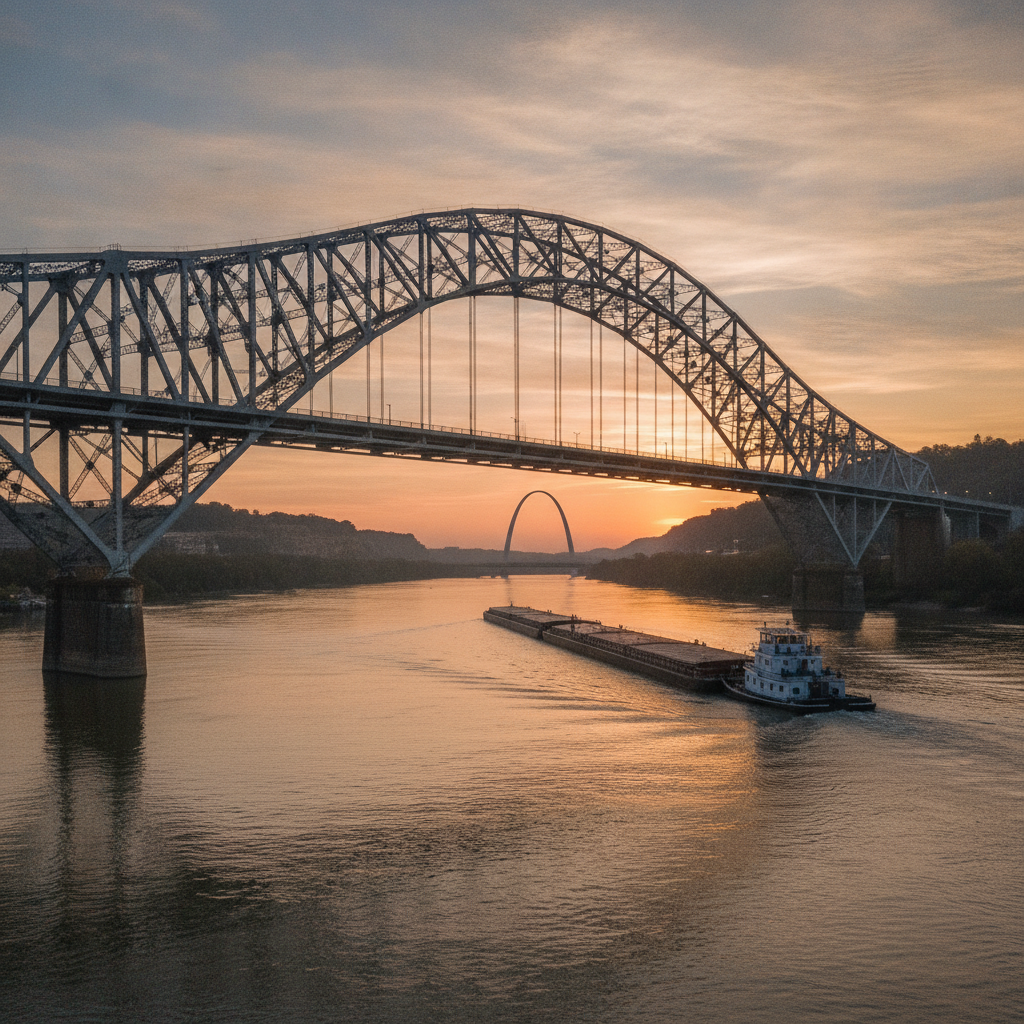
St. Louis R3: Scott Joplin (King of Ragtime born 1868 Texarkana, Maple Leaf Rag 1899 first sheet music 1M copies, Entertainer 1902 revived The Sting 1973 7 Oscars, Pulitzer 1976 posthumous, 2658 Delmar House State Historic Site), Josephine Baker (born 1906 St. Louis, Paris 1925 banana dance Folies Bergere most photographed woman 1920s, French Resistance Croix de Guerre Legion d'Honneur, March on Washington August 28 1963 only woman official speaker, French state funeral Notre-Dame April 15 1975 Rainbow Tribe 12 adopted children), Tennessee Williams (Glass Menagerie 1944 set St. Louis family 4633 Westminster Place 1918), Vincent Price (born 1911 St. Louis horror films), Eads Bridge (1874 first steel bridge in world, chromatic steel, pneumatic caissons 33m bedrock first US use, Grant ceremonial July 4 1874, Boeing 14,000 engineers Hazelwood), German food heritage (Forty-Eighters 1848 Missouri Rhineland vineyards, Hill neighborhood Italian toasted ravioli Charlie Gitto's, provel cheese St. Louis pizza Imos Pi Pizzeria Obama 2008, gooey butter cake 1930s mistake), St. Louis decline (856,000 1950 to 300,000 65% largest US city decline, city-county separation 1876, Cortex USD 2B Washington Avenue lofts 3000 units), day trips (Meramec Caverns Jesse James, Elephant Rocks 1.5B year granite, Missouri Wine Country Hermann Norton grape, Grant Hardscrabble farm 1850s).
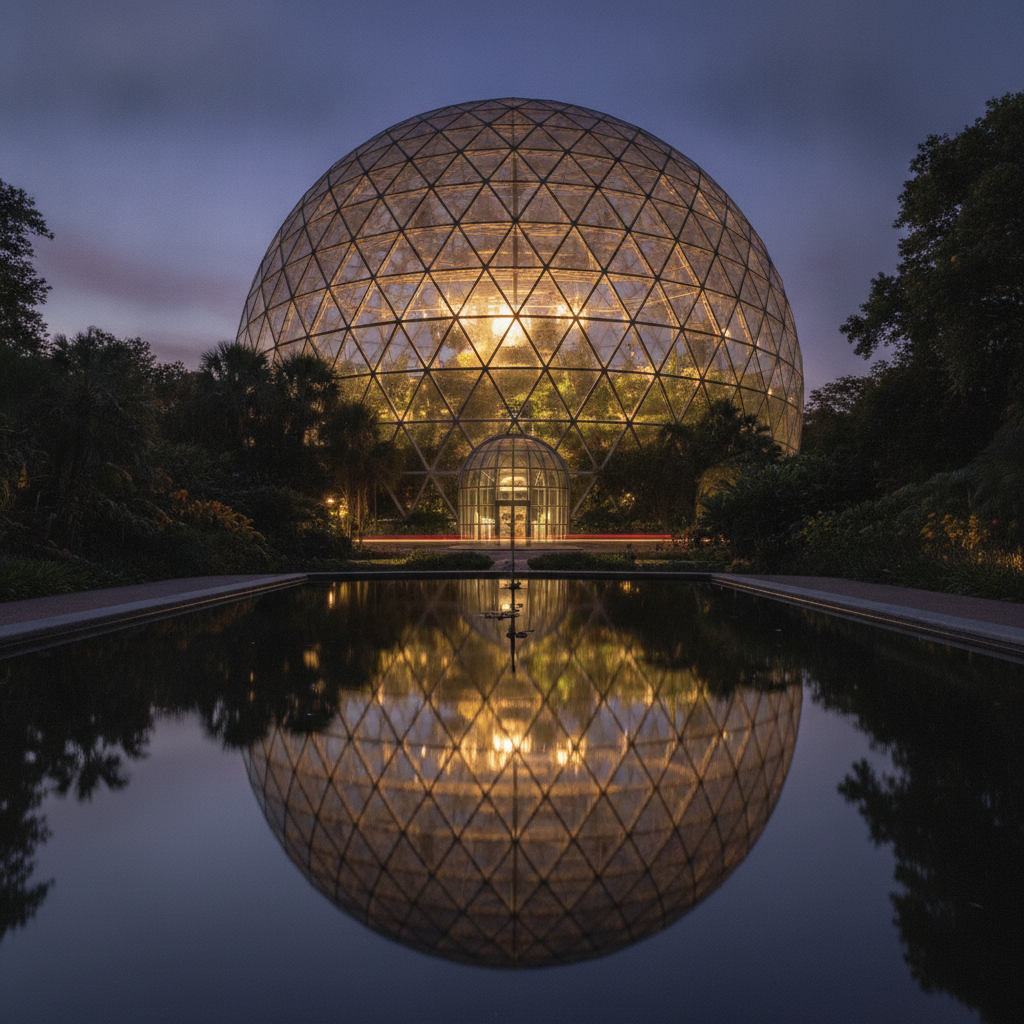
St. Louis: Garden City, World Fair Parks and American Music Roots
St. Louis: World-Class Art, Ancient Cities and Neighborhood Soul
St. Louis: Victorian Parks, Rock and Roll Sidewalks and the Gateway West
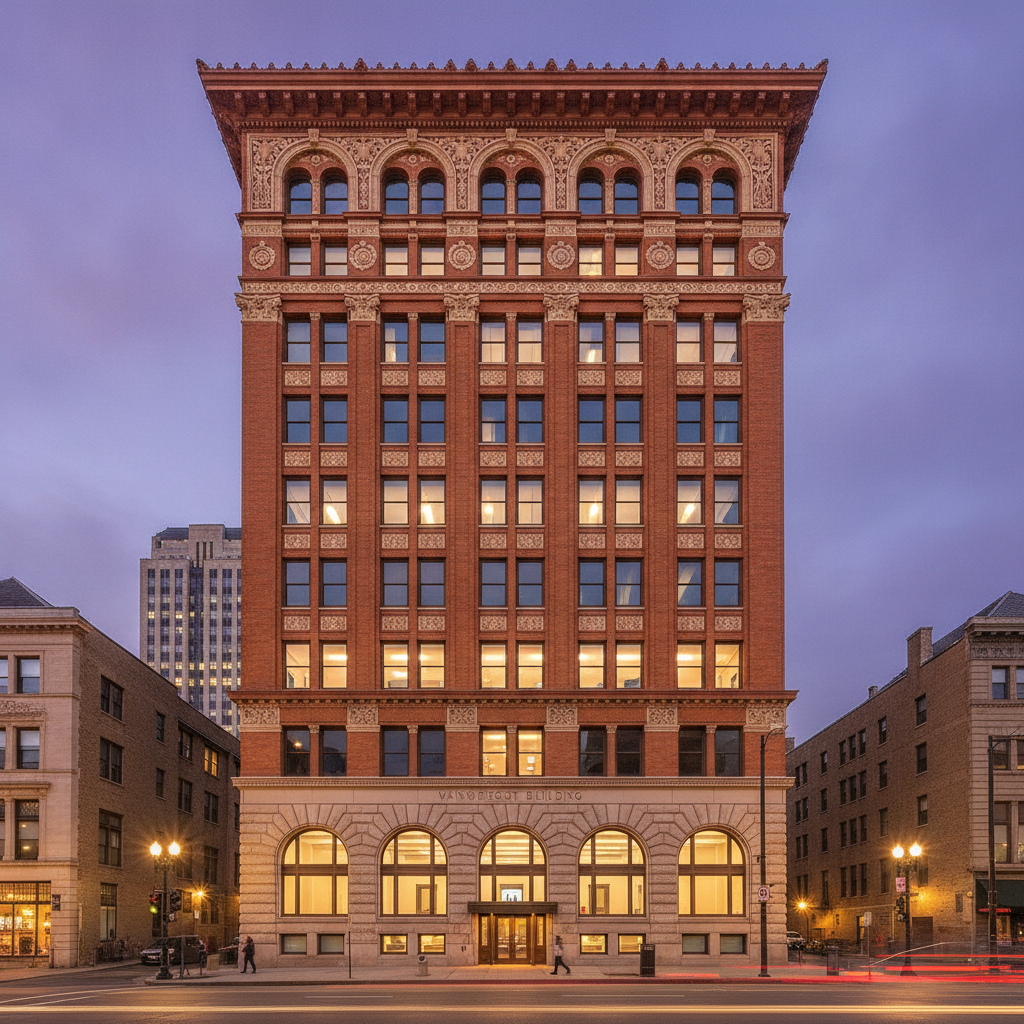
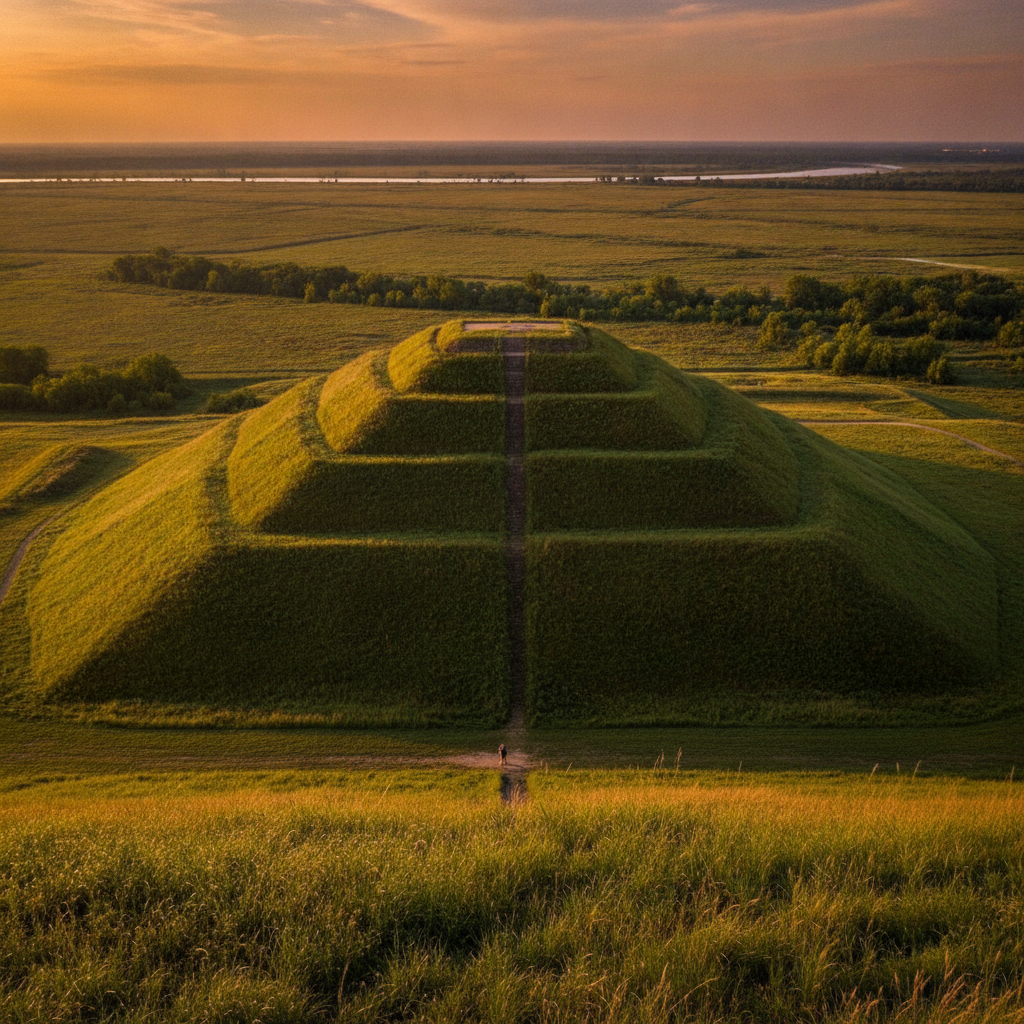
St. Louis R2-R4: Dred Scott (March 6 1857 worst Supreme Court decision, Taney ruling no Black citizenship no Congressional slavery limits precipitated Civil War, Scott freed May 1857, Old Courthouse trial 1846, Ferguson August 9 2014 Michael Brown BLM catalysis), Architecture (Wainwright Building 1891 Sullivan first coherent skyscraper, Old Courthouse cast-iron dome 1862, Union Station 1894 Theodore Link 100,000 daily peak 1940 now hotel aquarium Ferris wheel, Pruitt-Igoe 1956 Yamasaki demolished 1972-1976 symbol failed public housing), Universities (WashU top 20 US #14 25 Nobel laureates T.S. Eliot born St. Louis 1888 Nobel 1948, Saint Louis University 1818 oldest west Mississippi, Cortex USD 2B 450 companies Square Asana biotech), Anheuser-Busch (Budweiser 1876 pasteurization refrigerated rail cars, InBev 2008 USD 52B largest cash acquisition history, craft Perennial Urban Chestnut 4 Hands), 1993 Flood (75,000 sq km 50 dead USD 15B 79 days above flood stage, Cahokia Mounds UNESCO 1982 largest pre-Columbian city north Mexico 10,000-20,000 people, Monks Mound larger base than Giza pyramid abandoned 1300 CE), Neighborhoods (Delmar Divide racial segregation, Loop Walk of Fame Berry Baker Williams Eliot Grant Joplin, Soulard 1779 farmers market oldest west Mississippi Mardi Gras 200,000 second US largest).